Barbell Decline Bent Arm Pullover vs Bent Over Barbell Row

Compare target muscles, equipment, difficulty, movement type, and secondary muscles for Barbell Decline Bent Arm Pullover and Bent Over Barbell Row.

Change comparison Share

Get comparison link

Select the link and use your device's Copy command.

Comparison overview

AI-generated
Barbell Decline Bent Arm Pullover vs Bent Over Barbell Row — two barbell back moves that both target the lats but do so with different mechanics. You’ll get step-by-step technique cues, biomechanics that explain why one emphasizes a long muscle stretch while the other produces greater total tension, and clear winners for hypertrophy, strength, beginners, and home setups. Read on to learn setup angles, rep ranges (8–12 for hypertrophy, 3–6 for strength), and how to pair or substitute these moves in your program.

Exercise Comparison

Exercise A
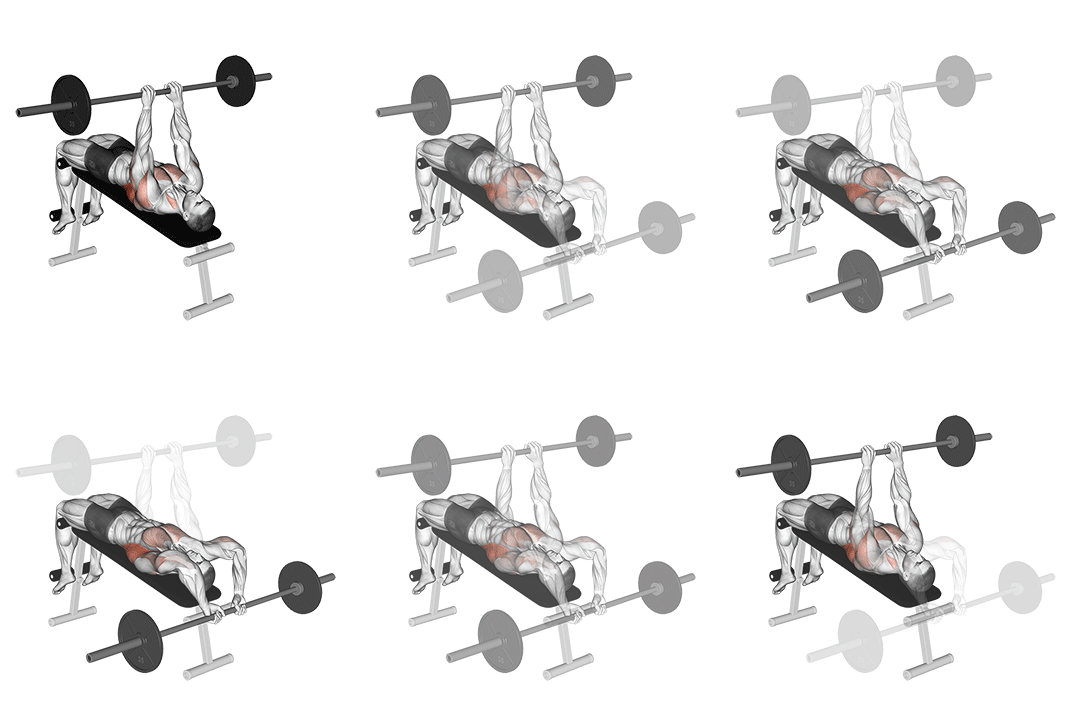
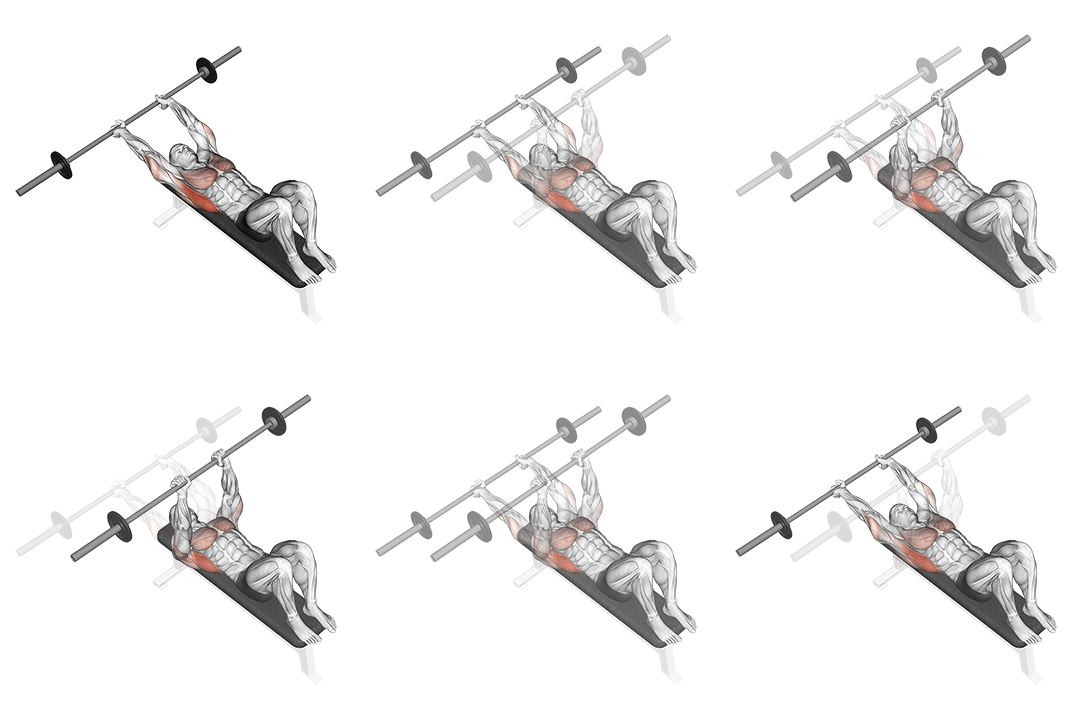
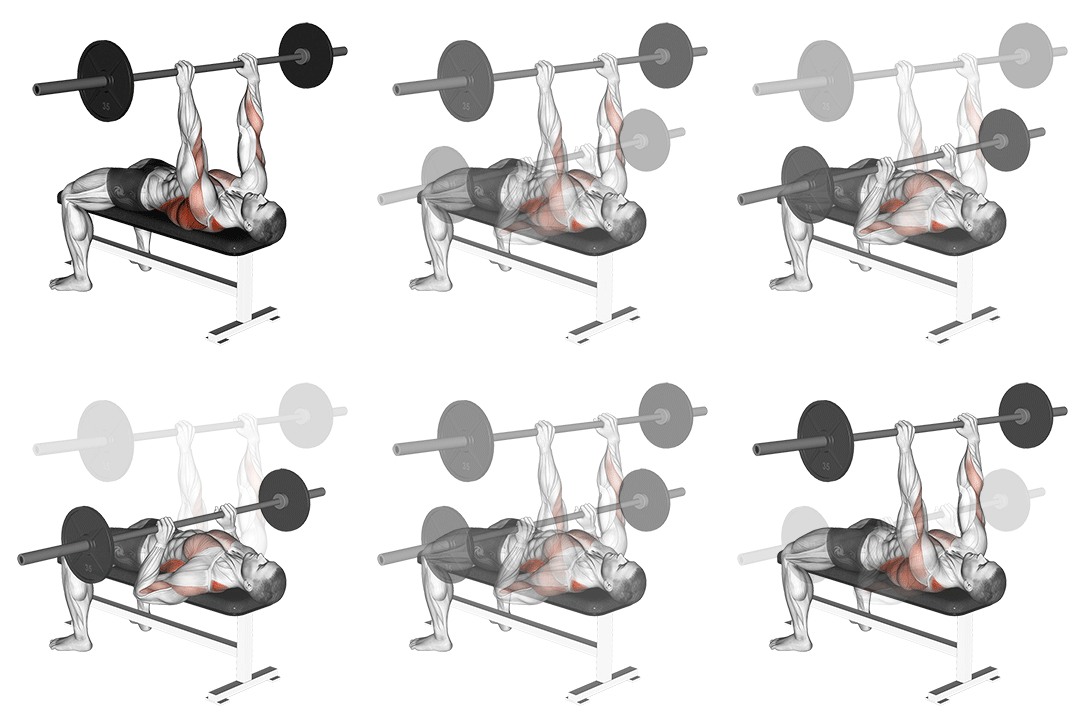
Barbell Decline Bent Arm Pullover demonstration

Barbell Decline Bent Arm Pullover

Target Lats
Equipment Barbell
Body Part Back
Difficulty Intermediate
Movement Isolation
Secondary Muscles
Triceps Chest
VS
Exercise B
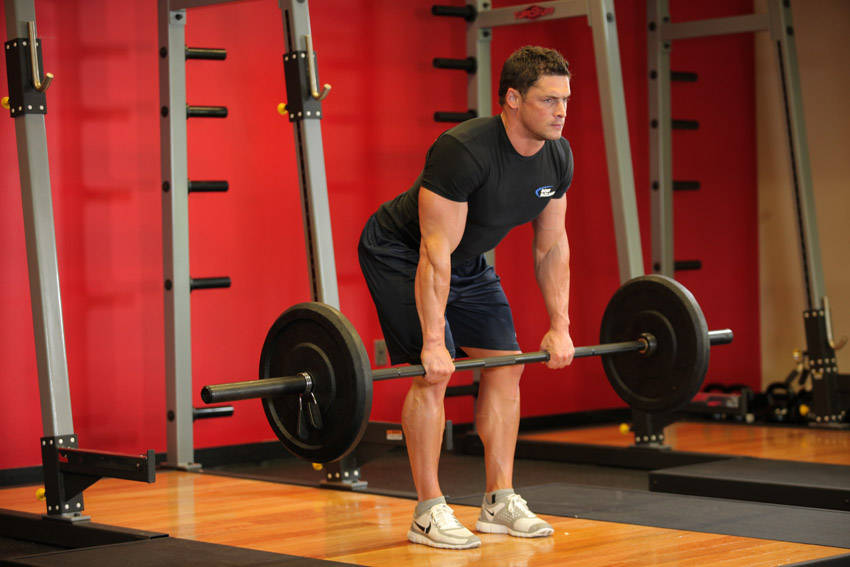
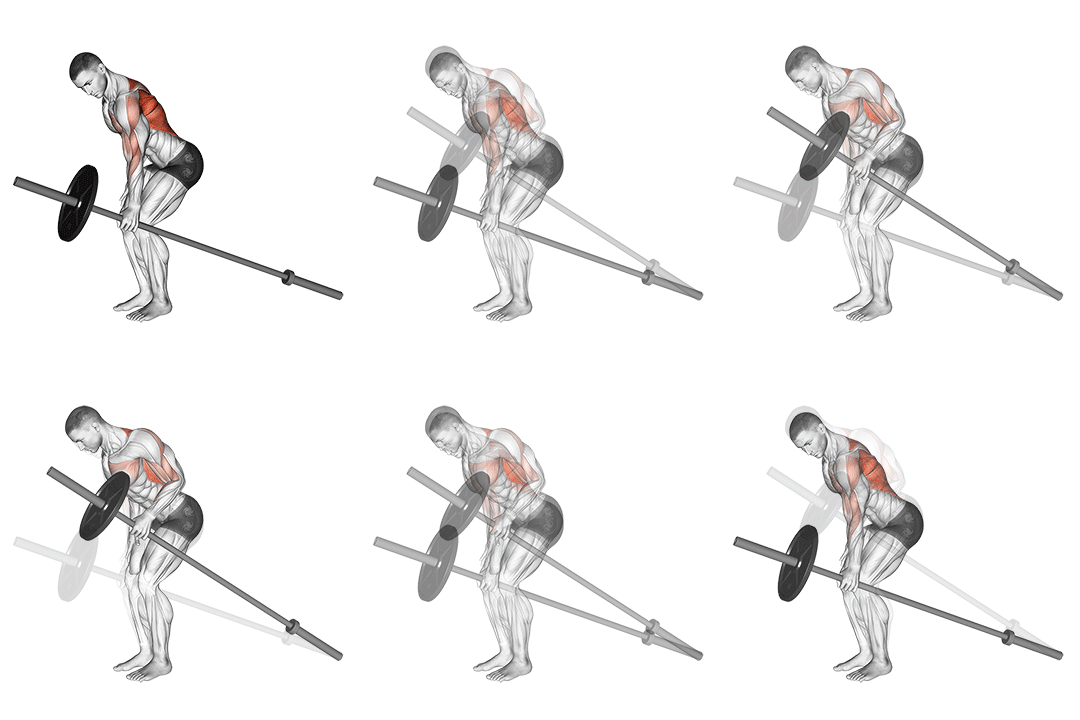
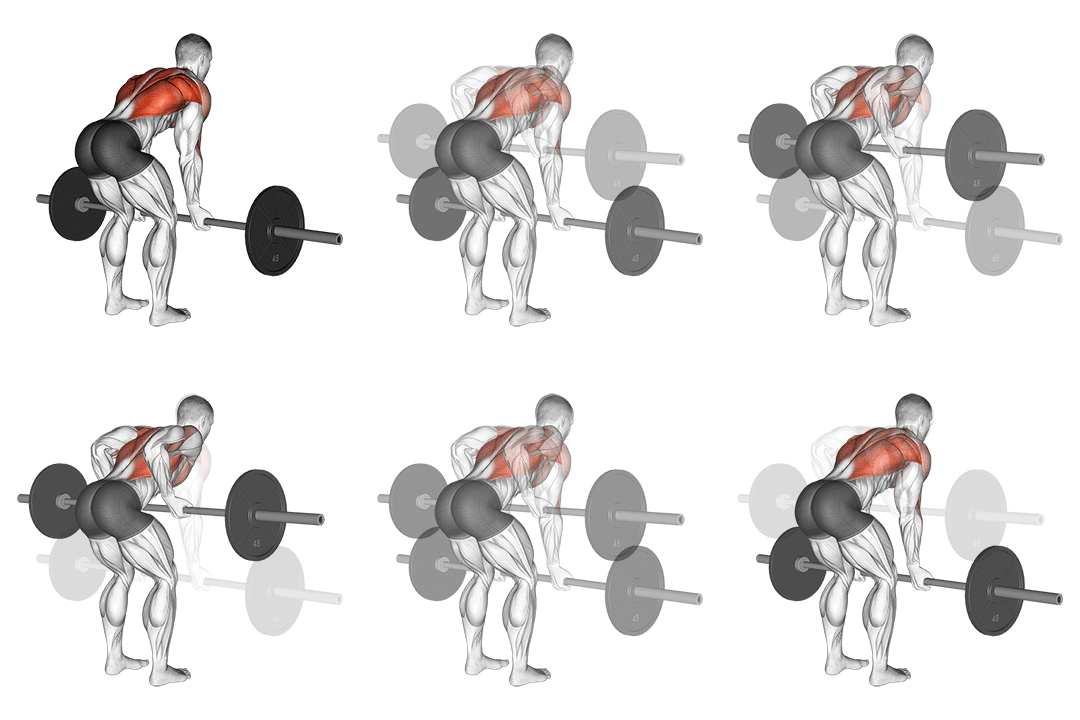
Bent Over Barbell Row demonstration

Bent Over Barbell Row

Target Lats
Equipment Barbell
Body Part Back
Difficulty Intermediate
Movement Compound
Secondary Muscles
Biceps Lats Shoulders

Head-to-Head Comparison

Different values are marked. These are catalogue attributes, not performance scores.

Muscles used

Listed target and secondary muscles, shown on the body. Locations, not activation or strength scores.

  • Target
  • Secondary
  • Not highlighted

Barbell Decline Bent Arm Pullover

Front
Barbell Decline Bent Arm Pullover: front muscle locationsSolid: listed target. Striped: listed secondary. Grey: not highlighted. Locations, not activation or strength scores. See the muscle names below.
Back
Barbell Decline Bent Arm Pullover: back muscle locationsSolid: listed target. Striped: listed secondary. Grey: not highlighted. Locations, not activation or strength scores. See the muscle names below.
Target
Lats
Secondary
Triceps, Chest

Bent Over Barbell Row

Front
Bent Over Barbell Row: front muscle locationsSolid: listed target. Striped: listed secondary. Grey: not highlighted. Locations, not activation or strength scores. See the muscle names below.
Back
Bent Over Barbell Row: back muscle locationsSolid: listed target. Striped: listed secondary. Grey: not highlighted. Locations, not activation or strength scores. See the muscle names below.
Target
Lats
Secondary
Biceps, Lats, Shoulders

Not shown on diagram: Shoulders. These labels do not identify a precise region on this map.

Grey does not mean a muscle is unused. The diagrams show only the mapped catalogue labels.

Attribute Barbell Decline Bent Arm Pullover Bent Over Barbell Row
Target Muscle
Lats
Lats
Body Part
Back
Back
Equipment
Barbell
Barbell
Difficulty
Intermediate
Intermediate
Movement Type Different
Isolation
Compound
Secondary Muscles Different
Triceps, Chest
Biceps, Lats, Shoulders

Visual Comparison

An illustrative 1–10 profile derived from catalog difficulty, equipment, and listed-muscle fields—not measured performance or muscle activation.

Key Differences

  • Barbell Decline Bent Arm Pullover is an isolation exercise, while Bent Over Barbell Row is a compound movement.
  • Both exercises target the Lats using Barbell. The catalogue does not establish which exercise is better for an individual goal.

Muscle comparison

Shared target muscles

Both exercises primarily load the latissimus dorsi, but they stress the muscle differently. The decline bent-arm pullover places the lats on a long-length stretch through shoulder extension and long-axis humeral motion, emphasizing the lat’s ability to produce movement across the shoulder. The bent-over row applies a horizontal pull vector that produces higher overall tension and greater concentric force through elbow flexion and scapular retraction.

Secondary muscle differences

Pullover secondarily loads the chest and triceps through the shoulder adduction and elbow stabilization pattern, while rows recruit the biceps brachii and posterior deltoids more strongly because of the combined elbow flexion and scapular retraction demands. Rows also tax the erector spinae and hip extensors to maintain the torso hinge.

Muscle involvement analysis

During the pullover the lats operate at longer muscle lengths with shoulder extension ~120–160° depending on range, increasing length-tension stretch on the lat fibers. In the bent-over row the lats are active during the concentric pull and scapular retraction; peak activation aligns with a 30–45° torso hinge where horizontal force vectors maximize tension on the posterior chain. Pullover is single-joint dominant (shoulder movement), row is multi-joint (shoulder + elbow + hips).

Equipment and setup

Barbell Decline Bent Arm Pullover: setup

Barbell Decline Bent Arm Pullover requires a decline bench set at a small decline (roughly 15–30°), a barbell (or EZ bar) and sufficient shoulder ROM; some lifters prefer a lighter barbell or dumbbell to control the overhead path.

Bent Over Barbell Row: setup

Bent Over Barbell Row needs a barbell, open floor space, and the ability to hinge at the hips to about 30–45° torso angle while maintaining a neutral spine. A lifting platform or bumper plates can help if you need to start from the floor.

Access and practicality

Bent Over Barbell Row is more accessible because it only needs a barbell and space; decline benches are less common at home and gyms, making the pullover harder to set up for many lifters.

Learning and progression

Learning the movements

Bent Over Barbell Row has a shallower learning curve for most lifters because the horizontal pull pattern is intuitive and you can use light loads to practice the hip hinge. The decline pullover requires coordinated control of the bar path overhead while managing shoulder ROM, which can be trickier for less experienced lifters.

Progression considerations

Bent Over Barbell Row offers greater linear progression potential — you can add 2.5–10 lbs per session and also vary tempo, paused reps, or T-bar/pendlay variations. Pullover progression is more limited by grip and shoulder tolerance; progressive overload is possible but often by increasing reps or slow eccentrics rather than large weight jumps.

Limitations and precautions

Bent Over Barbell Row carries higher lower-back risk if hip hinge and neutral spine are lost under load, and a higher spinal compressive load overall. Pullover carries greater shoulder impingement risk if you drop the bar too far behind the head; however, it generally produces lower compressive loads on the lumbar spine.

Pros & Cons

Barbell Decline Bent Arm Pullover

+ Pros

  • Isolates the lats through a long muscle-length stretch, improving peak contraction and stretch stimulus
  • Lower lumbar loading compared to heavy bent rows since you’re supine on a bench
  • Good mind-muscle connection for lat development and rib-cage expansion feel
  • Accessible for lifters who need to minimize spinal loading when performed correctly

− Cons

  • Requires a decline bench and adequate shoulder ROM, limiting practicality
  • Limited ability to load heavily — progressive overload in big jumps is harder
  • Higher risk of shoulder impingement if range of motion or scapular control are poor

Bent Over Barbell Row

+ Pros

  • Allows heavy loading and high mechanical tension for overall back thickness
  • Trains multiple joints — lats, biceps, posterior delts, and posterior chain — for better carryover
  • Simple equipment needs and many progression options (tempo, pauses, rows variants)
  • More transferable to pulling strength and compound back development

− Cons

  • Higher lumbar and spinal loading risk if form breaks down under heavy weight
  • Requires solid hip-hinge and core control to perform safely
  • Can be elbow- or grip-limited, reducing lat stimulus for some lifters

When Each Exercise Wins

1
For muscle hypertrophy: Bent Over Barbell Row

Rows allow heavier loads and generate greater total mechanical tension across the lats and accessory muscles, making them superior for building overall back thickness and hypertrophy when used in 8–12 rep ranges.

2
For strength gains: Bent Over Barbell Row

The row is a multi-joint, loadable exercise that supports 3–6 rep strength work and improves pulling strength and intermuscular coordination more directly than the isolation pullover.

3
For beginners: Bent Over Barbell Row

Rows teach a clear horizontal pulling pattern and can be practiced with light weight to build back strength; they’re more transferable to daily activities and compound lifts for novices.

4
For home workouts: Bent Over Barbell Row

Rows require only a barbell and space; many lifters can’t set up a decline bench at home, making rows the more practical choice for most home routines.

Frequently Asked Questions

Can I do both Barbell Decline Bent Arm Pullover and Bent Over Barbell Row in the same workout?
Yes — pair them smartly: perform heavy bent-over rows earlier for mechanical tension (3–6 or 6–12 reps), then use pullover as a finisher for 8–15 reps to capitalize on stretch and isolation without excessive spinal loading.

Which exercise is better for beginners?

Bent Over Barbell Row is generally better for beginners because it builds compound strength and is easier to scale with light loads; teach the hip hinge and neutral spine before adding heavy rows.

How do the muscle activation patterns differ?

Pullover emphasizes lat activation at longer muscle lengths via shoulder extension and a long-axis humeral motion, while bent rows activate lats through a horizontal pull and simultaneous elbow flexion and scapular retraction, producing higher peak force during the concentric phase.

Can Bent Over Barbell Row replace Barbell Decline Bent Arm Pullover?

For overall back development and strength, yes — the row can replace the pullover. If you specifically need the long-stretch stimulus or must spare your lower back, keep pullovers as an accessory rather than a full replacement.

Comparison Summary

Use the Barbell Decline Bent Arm Pullover when you want targeted lat stretching and a strong mind-muscle connection while minimizing lumbar load — aim for 8–15 reps with controlled eccentric tempo and a 15–30° decline bench. Choose the Bent Over Barbell Row when you want overall back thickness, heavier loading, and strength transfer; perform rows with a 30–45° torso hinge in 3–6 reps for strength or 6–12 reps for hypertrophy. For most lifters seeking maximum lat size and strength, prioritize rows and program pullovers as an accessory to emphasize end-range stretch and variety.

Exercise instructions

Steps from the exercise catalogue. Read the full sequence before starting.

Barbell Decline Bent Arm Pullover

  1. Lie down on a decline bench with your head lower than your hips and your feet secured.
  2. Hold a barbell with a pronated grip (palms facing away from you) and extend your arms straight above your chest.
  3. Lower the barbell behind your head in a controlled manner, keeping your arms slightly bent.
Read remaining steps for Barbell Decline Bent Arm Pullover
  1. Pause for a moment, then raise the barbell back to the starting position by contracting your lats.
  2. Repeat for the desired number of repetitions.

Bent Over Barbell Row

  1. Holding a barbell with a pronated grip (palms facing down), bend your knees slightly and bring your torso forward, by bending at the waist, while keeping the back straight until it is almost parallel to the floor. Tip: Make sure that you keep the head up. The barbell should hang directly in front of you as your arms hang perpendicular to the floor and your torso. This is your starting position.
  2. Now, while keeping the torso stationary, breathe out and lift the barbell to you. Keep the elbows close to the body and only use the forearms to hold the weight. At the top contracted position, squeeze the back muscles and hold for a brief pause.
  3. Then inhale and slowly lower the barbell back to the starting position.
Read remaining steps for Bent Over Barbell Row
  1. Repeat for the recommended amount of repetitions.

Also Compare

Compare another pair

Choose two exercises to see their differences side by side.

Compare Exercises