Barbell Decline Bent Arm Pullover vs Barbell Pullover

Compare target muscles, equipment, difficulty, movement type, and secondary muscles for Barbell Decline Bent Arm Pullover and Barbell Pullover.

Change comparison Share

Get comparison link

Select the link and use your device's Copy command.

Comparison overview

AI-generated
Barbell Decline Bent Arm Pullover vs Barbell Pullover. If you want to dial in lat development and choose the best pullover for your program, this head-to-head will help. You’ll learn how elbow angle and bench position change lat length-tension, how each exercise shifts load toward chest or triceps, and specific technique cues (bench decline 15–30°, bent-elbow ~80–100° vs straighter arm ~20–30° flexion). I’ll cover rep ranges for hypertrophy (8–15) and strength (4–6), progression tips, injury risks, and exactly when to use each exercise in your workouts.

Exercise Comparison

Exercise A
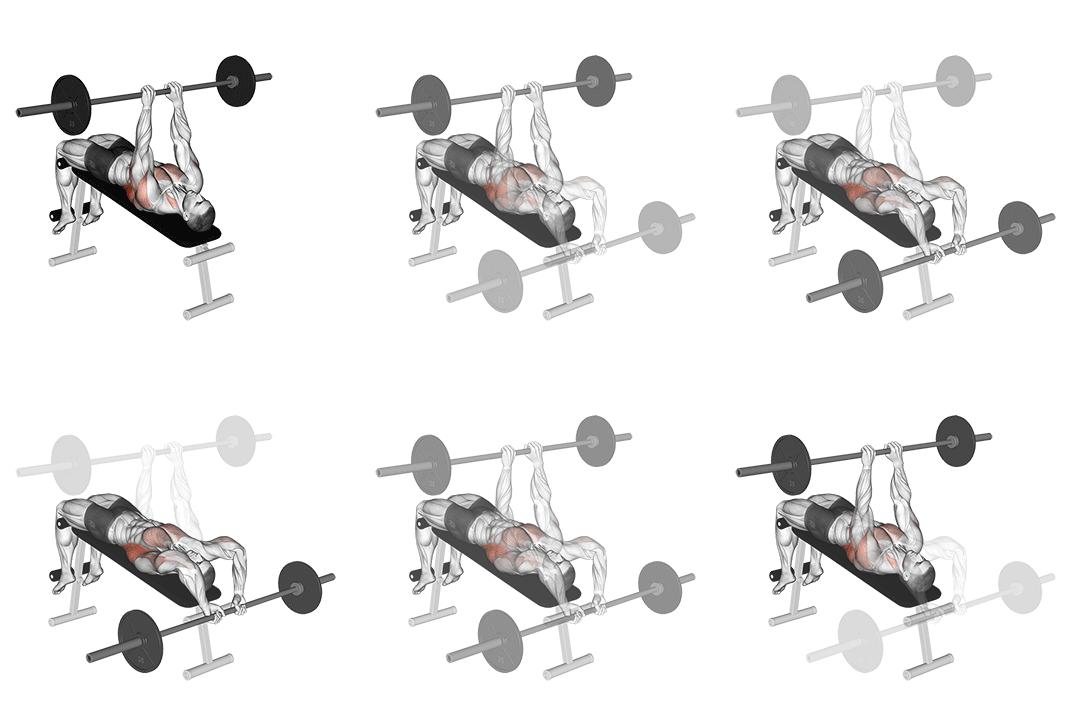
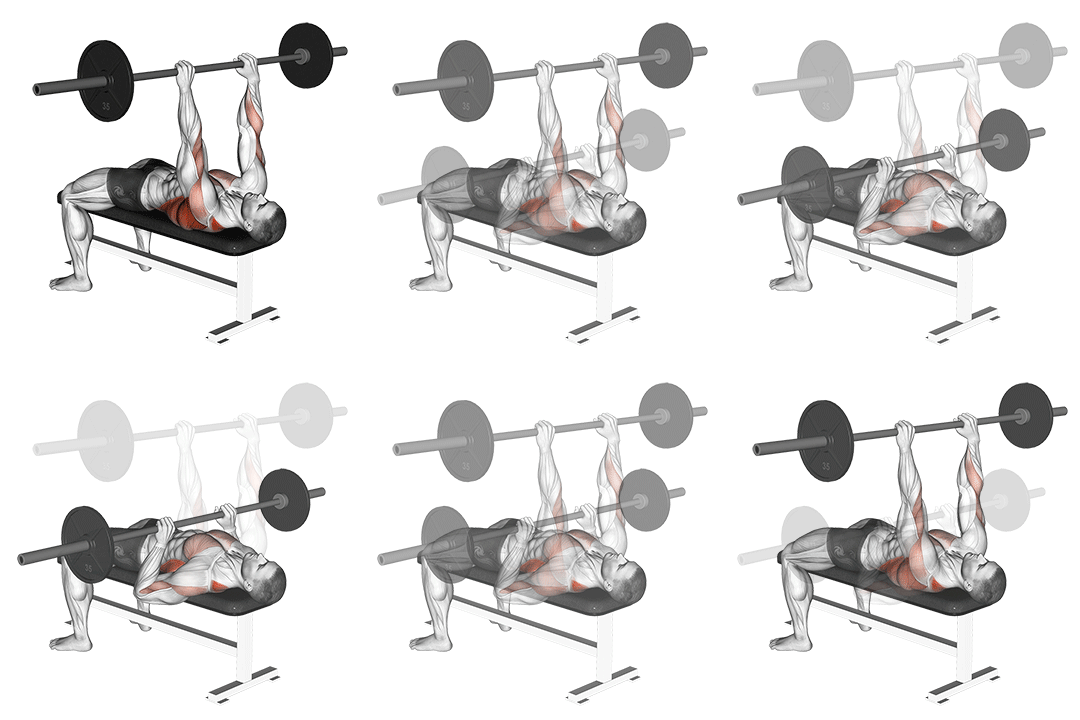
Barbell Decline Bent Arm Pullover demonstration

Barbell Decline Bent Arm Pullover

Target Lats
Equipment Barbell
Body Part Back
Difficulty Intermediate
Movement Isolation
Secondary Muscles
Triceps Chest
VS
Exercise B
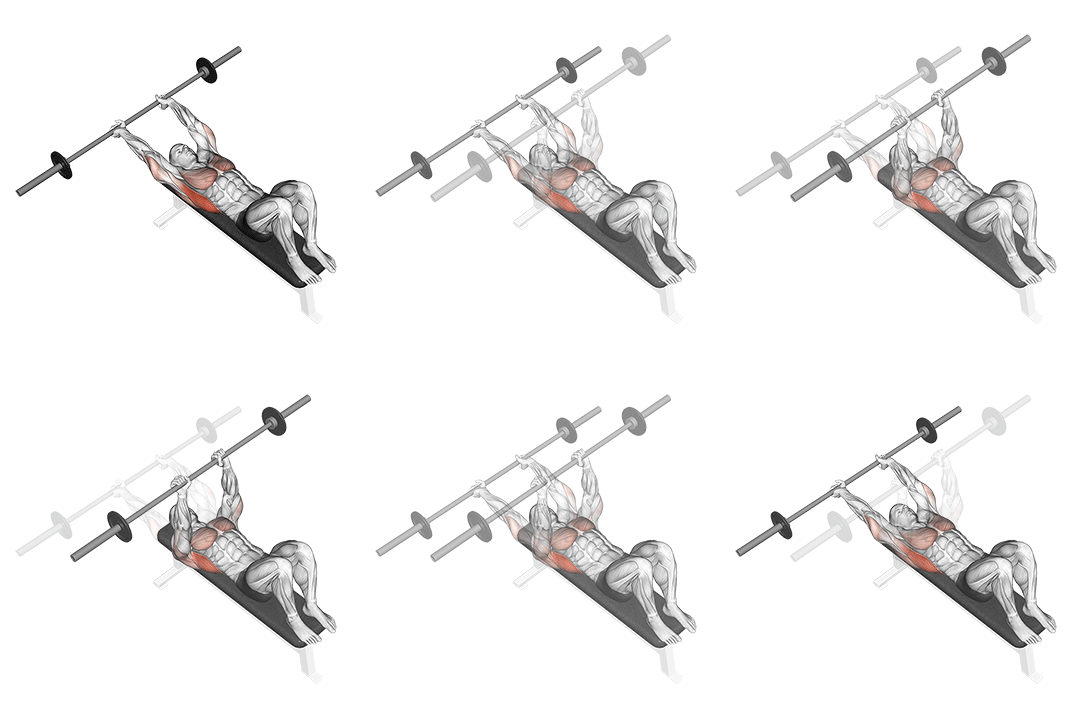
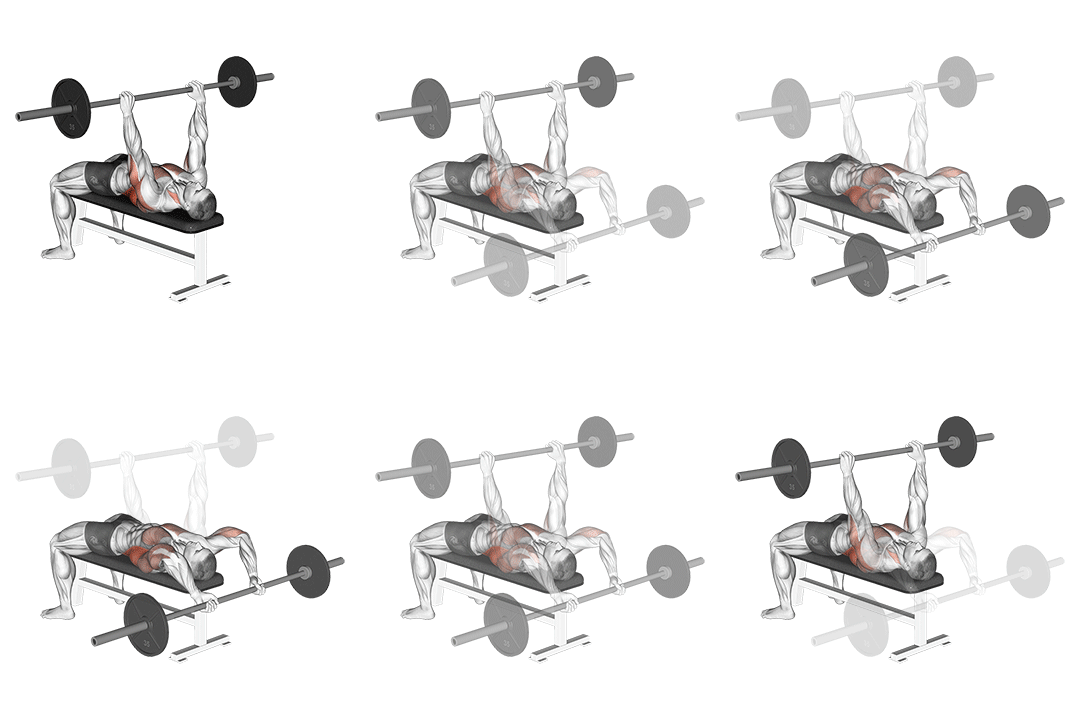
Barbell Pullover demonstration

Barbell Pullover

Target Lats
Equipment Barbell
Body Part Back
Difficulty Intermediate
Movement Isolation
Secondary Muscles
Chest Triceps

Head-to-Head Comparison

Different values are marked. These are catalogue attributes, not performance scores.

Muscles used

Listed target and secondary muscles, shown on the body. Locations, not activation or strength scores.

  • Target
  • Secondary
  • Not highlighted

Barbell Decline Bent Arm Pullover

Front
Barbell Decline Bent Arm Pullover: front muscle locationsSolid: listed target. Striped: listed secondary. Grey: not highlighted. Locations, not activation or strength scores. See the muscle names below.
Back
Barbell Decline Bent Arm Pullover: back muscle locationsSolid: listed target. Striped: listed secondary. Grey: not highlighted. Locations, not activation or strength scores. See the muscle names below.
Target
Lats
Secondary
Triceps, Chest

Barbell Pullover

Front
Barbell Pullover: front muscle locationsSolid: listed target. Striped: listed secondary. Grey: not highlighted. Locations, not activation or strength scores. See the muscle names below.
Back
Barbell Pullover: back muscle locationsSolid: listed target. Striped: listed secondary. Grey: not highlighted. Locations, not activation or strength scores. See the muscle names below.
Target
Lats
Secondary
Chest, Triceps

Grey does not mean a muscle is unused. The diagrams show only the mapped catalogue labels.

Attribute Barbell Decline Bent Arm Pullover Barbell Pullover
Target Muscle
Lats
Lats
Body Part
Back
Back
Equipment
Barbell
Barbell
Difficulty
Intermediate
Intermediate
Movement Type
Isolation
Isolation
Secondary Muscles
Triceps, Chest
Chest, Triceps

Visual Comparison

An illustrative 1–10 profile derived from catalog difficulty, equipment, and listed-muscle fields—not measured performance or muscle activation.

Key Differences

  • Both exercises target the Lats using Barbell. The catalogue does not establish which exercise is better for an individual goal.

Muscle comparison

Shared target muscles

Both exercises primarily load the lats via shoulder extension and long-head scapular control. Each creates a posterior force vector across the shoulder joint; EMG-style comparisons and biomechanics suggest lat activation is similar when range of motion and load are matched, usually within a 5–10% window. Both use the lat’s ability to produce extension and adduction of the humerus, but the starting length differs: the decline bent-arm variation puts the lat under a longer stretch due to torso angle and bench position.

Secondary muscle differences

The Barbell Pullover with straighter arms increases the moment arm at the shoulder and places more horizontal adduction demand on the chest (pectoralis major), so the chest contributes more to the lift. The Decline Bent Arm Pullover keeps the elbow flexed (~80–100°), reducing pectoral contribution and increasing relative lat isolation; triceps involvement is modest in both, but elbow extension torque is lower with the bent-arm version, shifting load away from the long head of the triceps.

Muscle involvement analysis

During the downward phase, the Barbell Pullover produces greater shoulder extension torque and a larger external moment arm, increasing passive stretch across the pecs and lats; this yields a longer eccentric phase under tension. The Decline Bent Arm Pullover shortens the lever at the elbow, concentrating force production at the shoulder while keeping the lat at a lengthened position throughout the range. In practice, the decline bent-arm feels more ‘lat-dominant’ while the straight-arm pullover blends lat and pec recruitment.

Equipment and setup

Barbell Decline Bent Arm Pullover: setup

Barbell Decline Bent Arm Pullover requires a barbell (or loaded straight bar) and a decline bench set to roughly 15–30°. You’ll want collars, a secure grip (overhand), and ideally a spotter if you load heavy because the bar travels behind the head.

Barbell Pullover: setup

Barbell Pullover requires a barbell and a flat bench (or stability ball/floor alternative). It can be performed on a flat bench, allowing easier setup and less specialized equipment than a decline bench.

Access and practicality

Barbell Pullover is more accessible because it only needs a flat bench (or even a floor/stability ball) and a barbell. The decline version demands a decline bench and slightly more setup, making it less practical for many home gyms.

Learning and progression

Learning the movements

Barbell Pullover is easier to learn: the flat setup and more obvious path make it simpler to control the bar path and breathing. Decline Bent Arm Pullover adds an angled torso and different balance demands, so it takes more practice to control the arc and maintain scapular stability.

Progression considerations

Decline Bent Arm Pullover offers clearer progression for lat-specific overload because the bent elbow reduces pectoral assistance and lets you progressively increase load and range of motion while maintaining lat tension. Barbell Pullover still progresses via load and tempo, but chest involvement can limit pure lat loading as weights increase.

Limitations and precautions

Barbell Pullover (straighter arms) carries higher shoulder joint and anterior capsule stress because of the larger moment arm; cuff strain or anterior instability risk rises if you overload or lack shoulder mobility. Decline Bent Arm Pullover reduces elbow torque and chest stretch but increases thoracic extension demand and can stress the lower scapular stabilizers if form breaks—both require controlled ROM to minimize injury risk.

Pros & Cons

Barbell Decline Bent Arm Pullover

+ Pros

  • Greater lat isolation thanks to bent elbow and decline angle
  • Longer lat stretch under tension for hypertrophy when performed to full ROM
  • Reduced pectoral contribution compared with straighter-arm pullover
  • Easier to progressively overload the lats while keeping elbow torque lower

− Cons

  • Requires a decline bench, less accessible for home gyms
  • More technical setup and balance demanded from your torso angle
  • Can stress thoracic spine if you hyperextend or use poor scapular control

Barbell Pullover

+ Pros

  • Simple setup on a flat bench or even the floor, very accessible
  • Larger external moment arm can allow heavier total loading for some lifters
  • Blends lat and chest recruitment, useful for upper-body thickness
  • Easier to teach and cue for general populations

− Cons

  • Increased shoulder and anterior capsule stress with straighter arms
  • More pectoral involvement reduces pure lat isolation
  • Long lever can force you to reduce ROM or load to stay safe

When Each Exercise Wins

1
For muscle hypertrophy: Barbell Decline Bent Arm Pullover

It keeps the lat under tension with a bent elbow and decline angle, increasing mechanical tension across a longer muscle length—ideal for 8–15 rep ranges and progressive overload focused on lat hypertrophy.

2
For strength gains: Barbell Pullover

The straighter-arm pullover allows a larger external moment arm and can be loaded heavier for low-rep work (4–6 reps) to build raw pressing and pull-link strength when you can control shoulder mechanics.

3
For beginners: Barbell Pullover

Simpler setup and easier bar path make the flat-bar pullover quicker to learn; start with light loads and a restricted ROM (stop before excessive shoulder extension) to build control.

4
For home workouts: Barbell Pullover

Requires only a barbell and flat surface (bench, stability ball, or floor), while the decline variant needs specialized equipment and more setup.

Frequently Asked Questions

Can I do both Barbell Decline Bent Arm Pullover and Barbell Pullover in the same workout?
Yes. Pair them by doing the decline bent-arm pullover first for lat isolation (2–3 sets of 8–12), then a few lighter sets of the flat-bar pullover to overload the end range or emphasize chest-lat synergy. Keep total volume reasonable—avoid heavy sets of both to reduce shoulder fatigue.

Which exercise is better for beginners?

Barbell Pullover is better for beginners because it’s easier to set up and control. Start with lighter loads, limit shoulder extension to a comfortable range, and focus on scapular stability before increasing weight or ROM.

How do the muscle activation patterns differ?

The bent-arm decline keeps the elbow flexed, shortening the elbow lever and concentrating extension torque at the shoulder—this biases lat activation and reduces pectoral contribution. The straighter-arm pullover increases the external moment arm, boosting chest involvement and overall shoulder joint torque.

Can Barbell Pullover replace Barbell Decline Bent Arm Pullover?

It can replace it if your priority is convenience or blended chest-lat development, but not if you specifically want maximal lat isolation. For focused lat hypertrophy, keep the decline bent-arm pullover in your plan; otherwise the flat pullover is an acceptable, more accessible alternative.

Comparison Summary

Use the Barbell Decline Bent Arm Pullover when your goal is targeted lat hypertrophy and you have a decline bench. The bent elbow reduces pectoral assistance and increases lat mechanical tension, so program it in 8–15 rep sets with controlled eccentrics and a 15–30° decline. Choose the Barbell Pullover when you need a simpler, more accessible movement that blends chest and lat work, or when training lower-rep strength (4–6). If you have shoulder mobility or past anterior shoulder issues, favor the bent-arm decline for safer elbow loading, and always prioritize scapular control and a controlled arc to protect the shoulder joint.
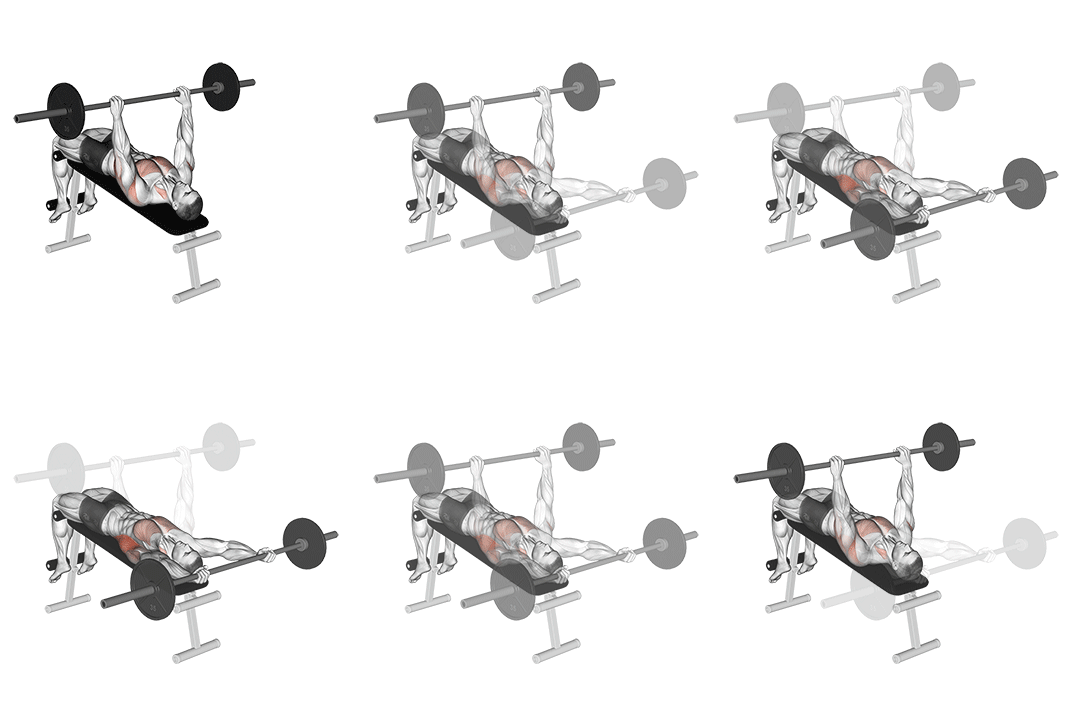
Exercise instructions

Steps from the exercise catalogue. Read the full sequence before starting.

Barbell Decline Bent Arm Pullover

  1. Lie down on a decline bench with your head lower than your hips and your feet secured.
  2. Hold a barbell with a pronated grip (palms facing away from you) and extend your arms straight above your chest.
  3. Lower the barbell behind your head in a controlled manner, keeping your arms slightly bent.
Read remaining steps for Barbell Decline Bent Arm Pullover
  1. Pause for a moment, then raise the barbell back to the starting position by contracting your lats.
  2. Repeat for the desired number of repetitions.

Barbell Pullover

  1. Lie flat on a bench with your head at one end and your feet on the floor.
  2. Hold a barbell with a shoulder-width grip and extend your arms straight above your chest.
  3. Keeping your arms straight, lower the barbell behind your head in a controlled manner until you feel a stretch in your lats.
Read remaining steps for Barbell Pullover
  1. Pause for a moment, then raise the barbell back to the starting position.
  2. Repeat for the desired number of repetitions.

Also Compare

Compare another pair

Choose two exercises to see their differences side by side.

Compare Exercises