

Barbell One Arm Bent Over Row vs Bent Over Barbell Row
Compare target muscles, equipment, difficulty, movement type, and secondary muscles for Barbell One Arm Bent Over Row and Bent Over Barbell Row.
Get comparison link
Select the link and use your device's Copy command.
Comparison overview
AI-generatedExercise Comparison
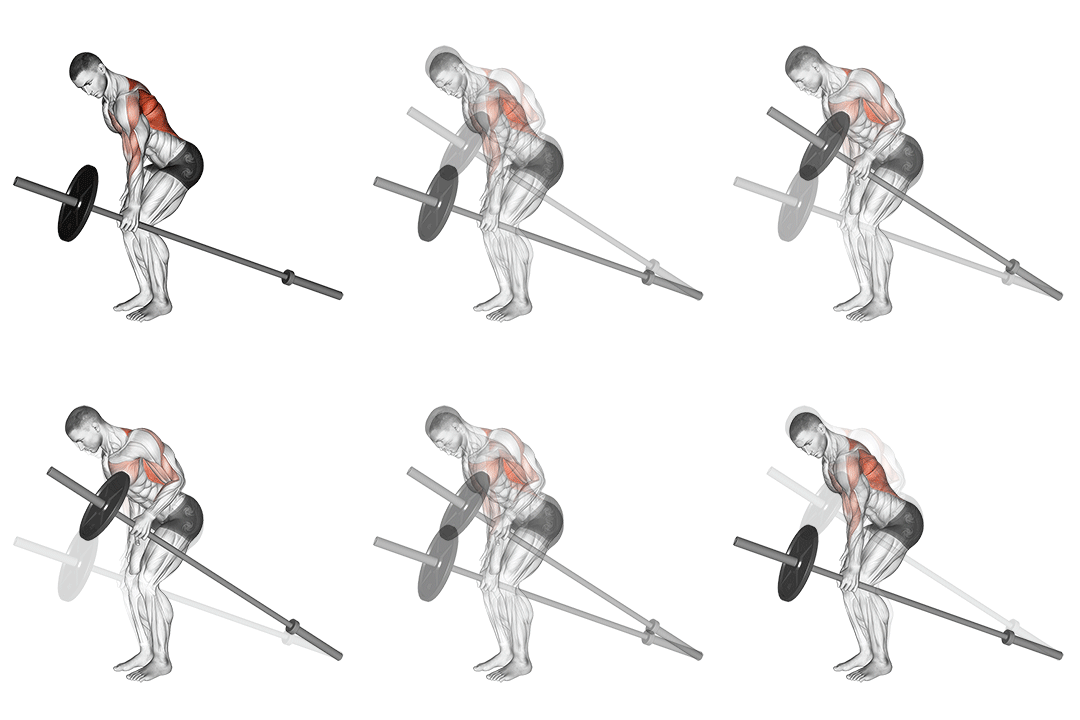
Barbell One Arm Bent Over Row
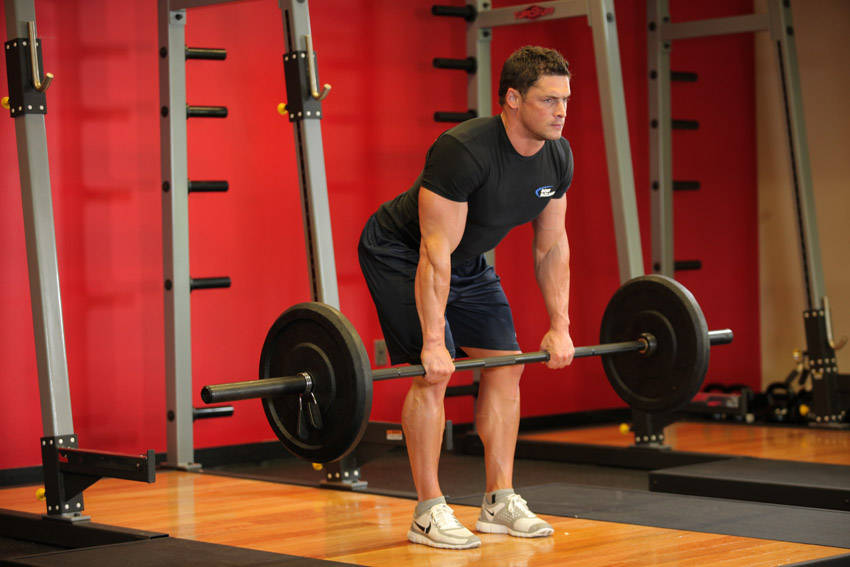
Bent Over Barbell Row
Head-to-Head Comparison
Different values are marked. These are catalogue attributes, not performance scores.
Muscles used
Listed target and secondary muscles, shown on the body. Locations, not activation or strength scores.
- Target
- Secondary
- Not highlighted
Barbell One Arm Bent Over Row
- Target
- Lats
- Secondary
- Biceps, Forearms
Bent Over Barbell Row
- Target
- Lats
- Secondary
- Biceps, Lats, Shoulders
Not shown on diagram: Shoulders. These labels do not identify a precise region on this map.
Grey does not mean a muscle is unused. The diagrams show only the mapped catalogue labels.
| Attribute | Barbell One Arm Bent Over Row | Bent Over Barbell Row |
|---|---|---|
| Target Muscle | Lats |
Lats |
| Body Part | Back |
Back |
| Equipment | Barbell |
Barbell |
| Difficulty | Intermediate |
Intermediate |
| Movement Type | Compound |
Compound |
| Secondary Muscles Different | Biceps, Forearms |
Biceps, Lats, Shoulders |
Visual Comparison
An illustrative 1–10 profile derived from catalog difficulty, equipment, and listed-muscle fields—not measured performance or muscle activation.
Key Differences
- Both exercises target the Lats using Barbell. The catalogue does not establish which exercise is better for an individual goal.
Muscle comparison
Shared target muscles
Secondary muscle differences
Muscle involvement analysis
Equipment and setup
Barbell One Arm Bent Over Row: setup
Bent Over Barbell Row: setup
Access and practicality
Learning and progression
Learning the movements
Progression considerations
Limitations and precautions
Pros & Cons
Barbell One Arm Bent Over Row
+ Pros
- Better unilateral control and ability to correct left-right imbalances
- Allows a deeper lat stretch and more focused peak contraction per side
- Lower absolute spinal compressive load compared to heavy bilateral rows
- Increases core anti-rotation and stability, improving carryover to unilateral tasks
− Cons
- Harder to load heavily with a standard barbell—limited absolute overload
- Requires more stability and coordination; steeper technical demand
- Can place asymmetric stress on the shoulder if mobility or bracing is poor
Bent Over Barbell Row
+ Pros
- Easier to add heavy load for maximum mechanical tension
- Symmetrical pattern reduces compensatory rotation and builds raw back strength
- Simple setup and execution for most gym environments
- Versatile: adjust grip width and torso angle (30–45°) to hit different posterior chain lines
− Cons
- Higher spinal compressive forces at heavy loads if form breaks down
- May limit single-side focus, making imbalances harder to correct
- Wider elbow flare can over-recruit traps and posterior delts, reducing lat isolation
When Each Exercise Wins
The unilateral setup gives you a longer lat stretch and better peak contraction per side, letting you use 8–15 reps and strict tempo to increase time under tension and regional hypertrophy.
Bilateral loading lets you apply heavier absolute loads (70–85% 1RM) and build overall pulling strength and spinal tolerance, which transfers to deadlifts and heavier compound lifts.
The symmetric pattern is easier to coach and learn; you can practice a consistent hip hinge and elbow path without added anti-rotation demands, making early technique progress quicker.
If your plate supply is limited, unilateral work lets you stimulate each lat effectively with lighter loading and higher reps, and it requires less absolute weight to challenge each side.
Frequently Asked Questions
Can I do both Barbell One Arm Bent Over Row and Bent Over Barbell Row in the same workout?
Which exercise is better for beginners?
How do the muscle activation patterns differ?
Can Bent Over Barbell Row replace Barbell One Arm Bent Over Row?
Comparison Summary
Exercise instructions
Steps from the exercise catalogue. Read the full sequence before starting.
Barbell One Arm Bent Over Row
- Stand with your feet shoulder-width apart, knees slightly bent, and hold a barbell with one hand using an overhand grip.
- Bend forward at the hips, keeping your back straight and your head in a neutral position.
- Pull the barbell up towards your chest, keeping your elbow close to your body and squeezing your shoulder blades together.
Read remaining steps for Barbell One Arm Bent Over Row
- Lower the barbell back down to the starting position in a controlled manner.
- Repeat for the desired number of repetitions, then switch to the other arm.
Bent Over Barbell Row
- Holding a barbell with a pronated grip (palms facing down), bend your knees slightly and bring your torso forward, by bending at the waist, while keeping the back straight until it is almost parallel to the floor. Tip: Make sure that you keep the head up. The barbell should hang directly in front of you as your arms hang perpendicular to the floor and your torso. This is your starting position.
- Now, while keeping the torso stationary, breathe out and lift the barbell to you. Keep the elbows close to the body and only use the forearms to hold the weight. At the top contracted position, squeeze the back muscles and hold for a brief pause.
- Then inhale and slowly lower the barbell back to the starting position.
Read remaining steps for Bent Over Barbell Row
- Repeat for the recommended amount of repetitions.
Also Compare
More comparisons with Barbell One Arm Bent Over Row

Compare another pair
Choose two exercises to see their differences side by side.