Barbell Decline Wide-grip Pullover vs Barbell One Arm Bent Over Row

Compare target muscles, equipment, difficulty, movement type, and secondary muscles for Barbell Decline Wide-grip Pullover and Barbell One Arm Bent Over Row.

Change comparison Share

Get comparison link

Select the link and use your device's Copy command.

Comparison overview

AI-generated
Barbell Decline Wide-grip Pullover vs Barbell One Arm Bent Over Row — you’re comparing two intermediate back moves that both target the lats but load them differently. This guide walks you through biomechanics, muscle activation, equipment needs, technique cues, and rep schemes so you can pick the right move for size, strength, or home training. You’ll get clear winners for common goals, practical progression tips (sets/reps and angles), and a quick {Exercise1} vs {Exercise2} summary to plan your next workout.

Exercise Comparison

Exercise A
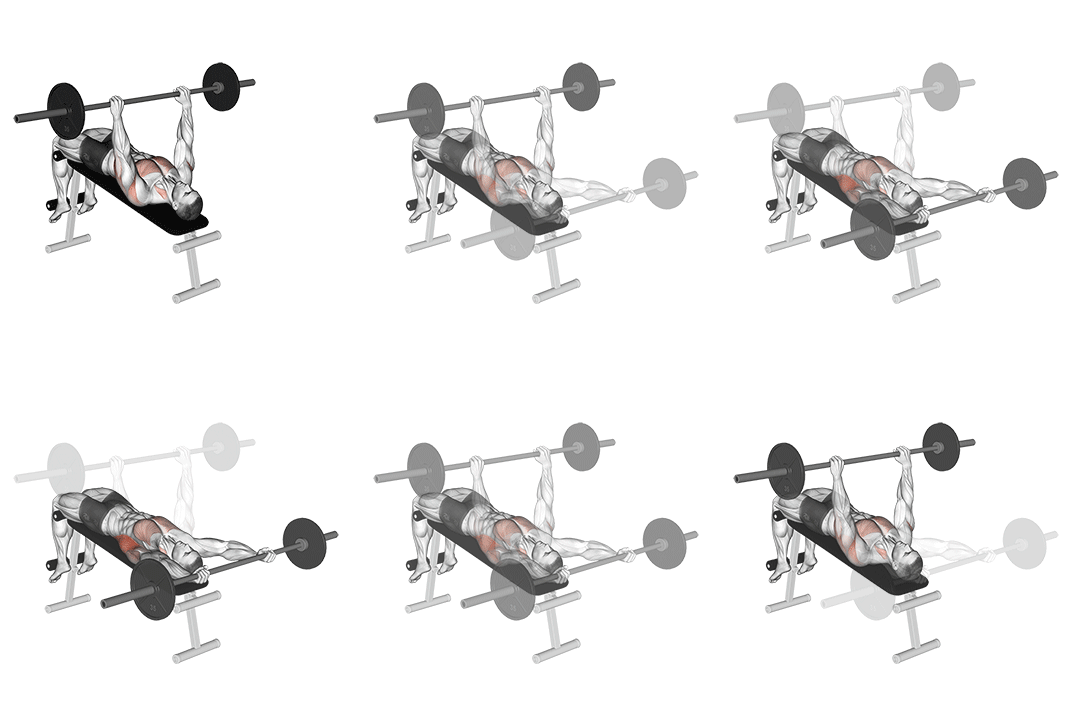
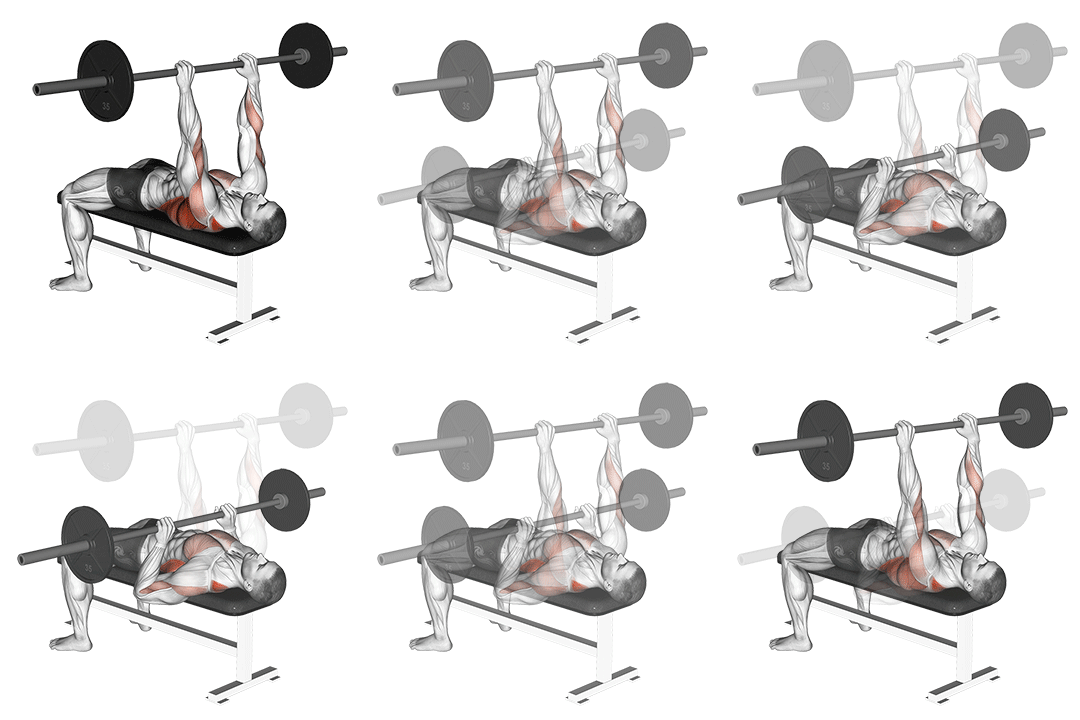
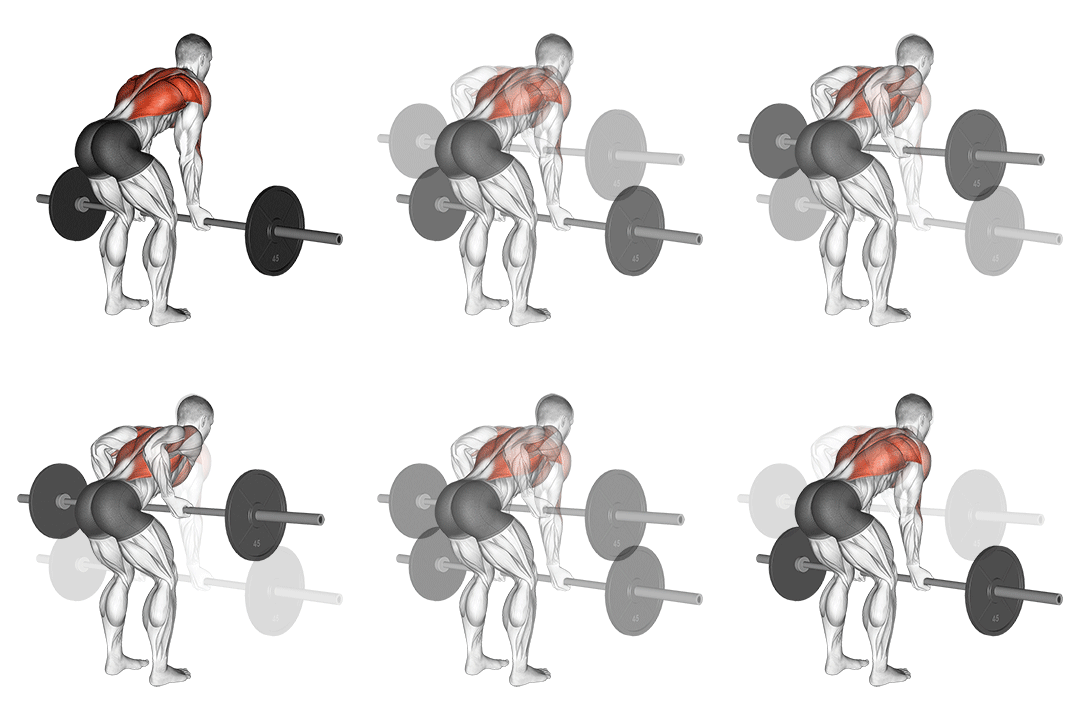
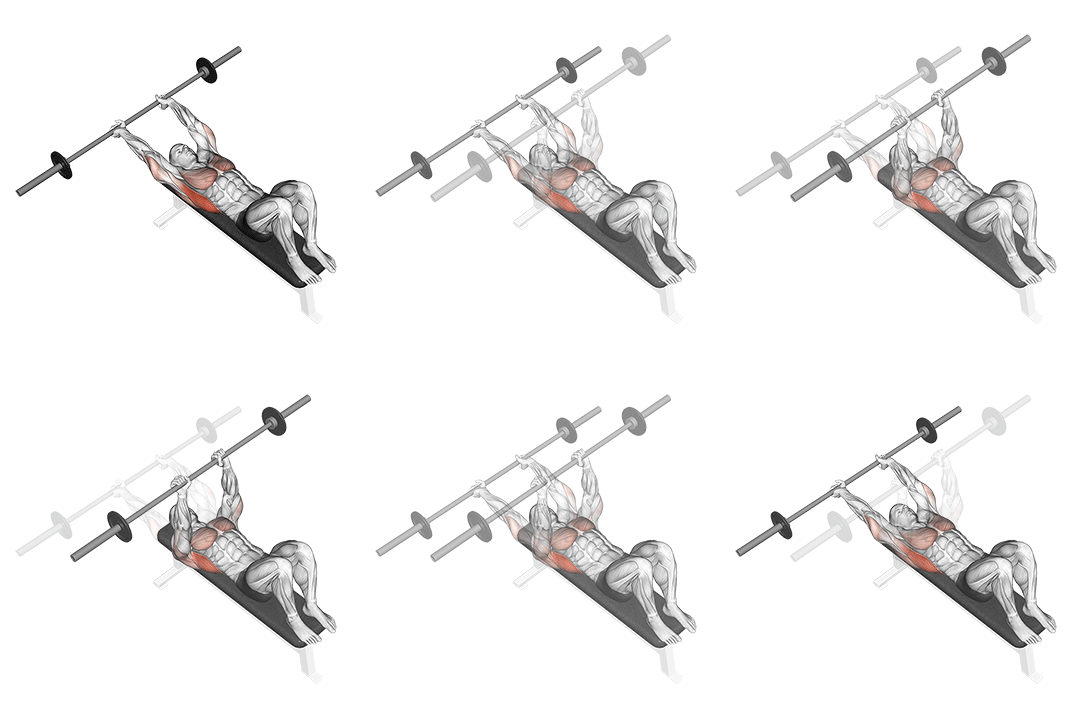
Barbell Decline Wide-grip Pullover demonstration

Barbell Decline Wide-grip Pullover

Target Lats
Equipment Barbell
Body Part Back
Difficulty Intermediate
Movement Isolation
Secondary Muscles
Triceps Chest
VS
Exercise B
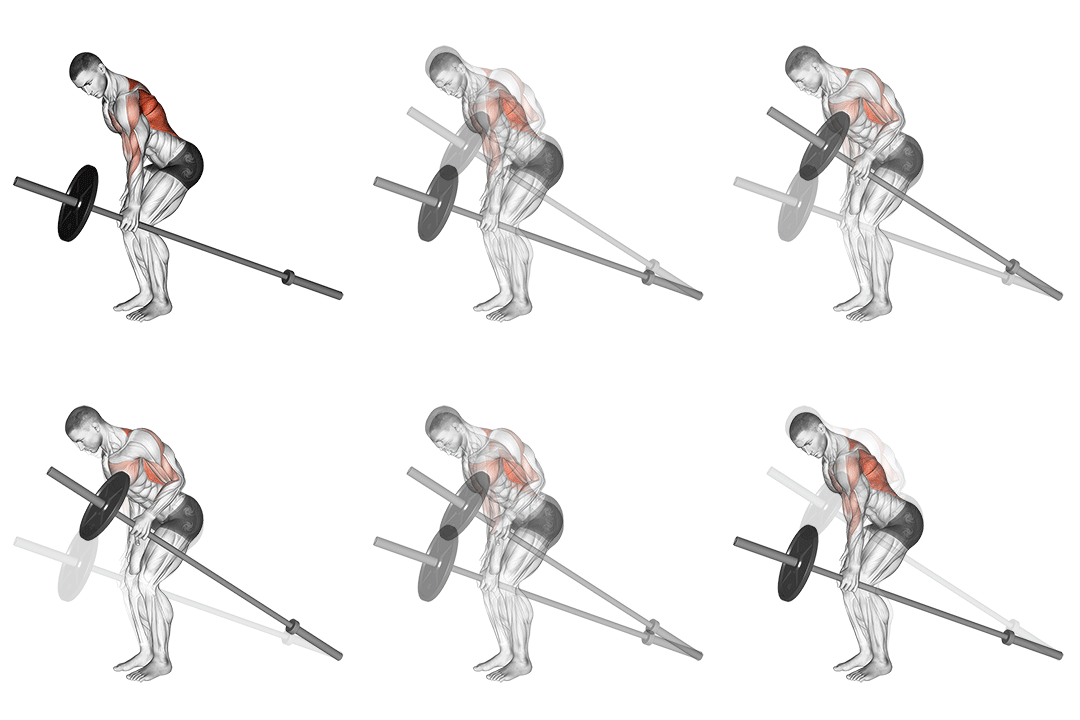
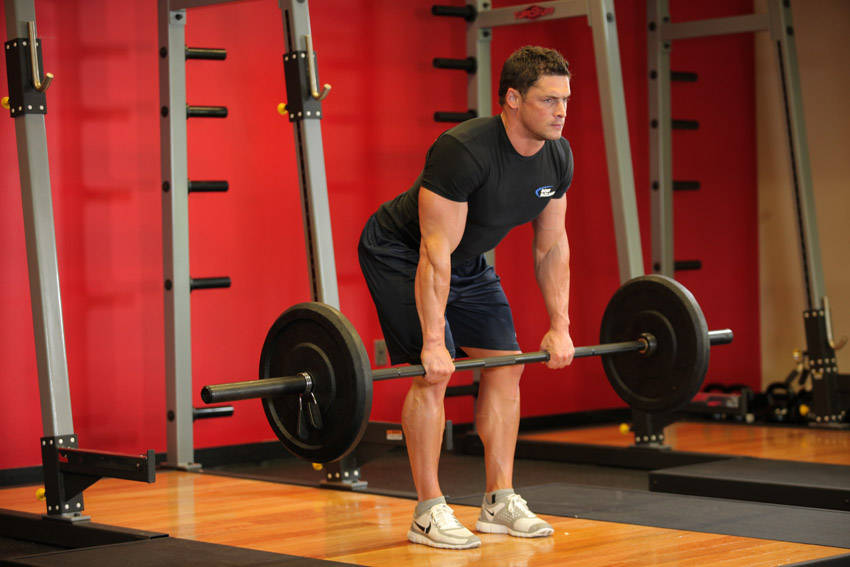
Barbell One Arm Bent Over Row demonstration

Barbell One Arm Bent Over Row

Target Lats
Equipment Barbell
Body Part Back
Difficulty Intermediate
Movement Compound
Secondary Muscles
Biceps Forearms

Head-to-Head Comparison

Different values are marked. These are catalogue attributes, not performance scores.

Muscles used

Listed target and secondary muscles, shown on the body. Locations, not activation or strength scores.

  • Target
  • Secondary
  • Not highlighted

Barbell Decline Wide-grip Pullover

Front
Barbell Decline Wide-grip Pullover: front muscle locationsSolid: listed target. Striped: listed secondary. Grey: not highlighted. Locations, not activation or strength scores. See the muscle names below.
Back
Barbell Decline Wide-grip Pullover: back muscle locationsSolid: listed target. Striped: listed secondary. Grey: not highlighted. Locations, not activation or strength scores. See the muscle names below.
Target
Lats
Secondary
Triceps, Chest

Barbell One Arm Bent Over Row

Front
Barbell One Arm Bent Over Row: front muscle locationsSolid: listed target. Striped: listed secondary. Grey: not highlighted. Locations, not activation or strength scores. See the muscle names below.
Back
Barbell One Arm Bent Over Row: back muscle locationsSolid: listed target. Striped: listed secondary. Grey: not highlighted. Locations, not activation or strength scores. See the muscle names below.
Target
Lats
Secondary
Biceps, Forearms

Grey does not mean a muscle is unused. The diagrams show only the mapped catalogue labels.

Attribute Barbell Decline Wide-grip Pullover Barbell One Arm Bent Over Row
Target Muscle
Lats
Lats
Body Part
Back
Back
Equipment
Barbell
Barbell
Difficulty
Intermediate
Intermediate
Movement Type Different
Isolation
Compound
Secondary Muscles Different
Triceps, Chest
Biceps, Forearms

Visual Comparison

An illustrative 1–10 profile derived from catalog difficulty, equipment, and listed-muscle fields—not measured performance or muscle activation.

Key Differences

  • Barbell Decline Wide-grip Pullover is an isolation exercise, while Barbell One Arm Bent Over Row is a compound movement.
  • Both exercises target the Lats using Barbell. The catalogue does not establish which exercise is better for an individual goal.

Muscle comparison

Shared target muscles

Both exercises primarily load the latissimus dorsi, but they stress different portions and actions. The pullover places the lats under long-axis stretch via shoulder extension, emphasizing the fibers responsible for humeral extension and adduction in a lengthened position. The one-arm bent-over row loads the lats through a stronger horizontal/diagonal force vector and combines shoulder extension with powerful scapular retraction, increasing total mechanical tension through a larger external load.

Secondary muscle differences

The pullover recruits the triceps long head and chest as stabilizers during the long lever of the arm; the wide grip increases pectoral and anterior shoulder involvement. The one-arm row uses more elbow flexor involvement — biceps and forearms — as secondary movers and demands greater lower-back and oblique bracing for the hip hinge.

Muscle involvement analysis

Pullover: high lat stretch early in the negative when the humerus passes behind the torso; peak tension at ~30–60° past neutral due to length-tension. One-arm row: lat activation ramps as the elbow drives to the hip and the scapula retracts; peak force occurs near full contraction as moment arm shortens and you can load heavier. The row shifts load from pure shoulder extension to combined elbow flexion + scapular retraction, increasing overall EMG across lats and biceps.

Equipment and setup

Barbell Decline Wide-grip Pullover: setup

Barbell Decline Wide-grip Pullover requires a decline bench (about 20–40° decline recommended), a barbell with collars, and enough space to lower the bar behind your head. You need the bench to stabilize the torso and allow that long humeral arc.

Barbell One Arm Bent Over Row: setup

Barbell One Arm Bent Over Row needs a barbell and open floor space to hinge. You can perform the lift with the barbell loaded at one side or use a landmine setup if available. Minimal benching gear is required, but a stable braced stance and some free space are essential.

Access and practicality

Barbell One Arm Bent Over Row — it’s more accessible because it requires only a barbell and space (no decline bench). You can also adapt it to a landmine or dumbbell if needed, while the pullover needs a specific bench angle to get the intended range and stretch.

Learning and progression

Learning the movements

The One Arm Bent Over Row is typically easier to learn: it follows a natural rowing pattern, allows progressive loading, and you can use a staggered stance for balance. The Barbell Decline Wide-grip Pullover has a steeper skill component — controlling the long lever behind the head, maintaining scapular stability, and managing shoulder mobility.

Progression considerations

One Arm Bent Over Row offers greater raw progression: you can add 5–10% load increments, manipulate tempo, use heavy sets (4–6 reps) for strength or 6–12 for hypertrophy, and vary torso angle. Pullover progression is more about tempo, increased reps (8–15), and gradual load increases, but absolute loads are limited by shoulder stability.

Limitations and precautions

Pullover carries higher shoulder risk for lifters with limited external rotation or anterior instability because of the extended humeral position and wide grip. One-arm rows pose more low-back risk if hip hinge and bracing are weak, but proper core tension and a neutral spine reduce that risk.

Pros & Cons

Barbell Decline Wide-grip Pullover

+ Pros

  • Places lats under a long, stretch-mediated tension beneficial for muscle growth
  • Isolates the lat movement pattern with minimal biceps involvement
  • Wide grip can increase chest and triceps stabilization for fuller upper‑torso tension
  • Good for time-under-tension protocols (8–15 rep ranges) and slow eccentrics

− Cons

  • Requires a decline bench and sufficient shoulder mobility
  • Limited ability to progressively overload heavy loads safely
  • Higher shoulder impingement risk if technique or mobility is poor

Barbell One Arm Bent Over Row

+ Pros

  • Allows heavier loading and clear progression for strength and size
  • Engages biceps and forearms, increasing overall pulling capacity
  • More accessible — no bench required and adaptable to a landmine
  • Better for building horizontal pulling force and scapular control

− Cons

  • Greater demand on lower-back and core stability — risk if hinge is poor
  • Unilateral setup can cause torso rotation if bracing is weak
  • Technique issues (elbow path, torso angle) reduce lat isolation

When Each Exercise Wins

1
For muscle hypertrophy: Barbell One Arm Bent Over Row

Rows let you apply greater mechanical tension with heavier loads and progressive overload (4–12 rep ranges). The combined elbow flexion and scapular retraction recruits more total muscle mass, allowing larger absolute loads and more stimulus for muscle growth.

2
For strength gains: Barbell One Arm Bent Over Row

The row provides a more favorable force vector and leverages heavier weights safely, enabling low-rep strength work (3–6 reps) and clear numeric progression compared with the limited loading of the pullover.

3
For beginners: Barbell One Arm Bent Over Row

The rowing pattern is more intuitive, easier to scale, and teaches hip-hinge and scapular control. Coaching cues are simpler and you can reduce load while maintaining technique to build baseline strength.

4
For home workouts: Barbell One Arm Bent Over Row

It needs only a barbell or a landmine/dumbbell substitute; no decline bench is required. That makes it easier to replicate at home and adapt to limited equipment.

Frequently Asked Questions

Can I do both Barbell Decline Wide-grip Pullover and Barbell One Arm Bent Over Row in the same workout?
Yes — pair them smartly: do heavy one-arm rows first (strength/hypertrophy sets, 3–5 sets of 4–12) and finish with pullover as an isolation finisher (2–4 sets of 8–15 with slow eccentrics). That order preserves your ability to lift heavy while using the pullover to increase time under tension.

Which exercise is better for beginners?

The Barbell One Arm Bent Over Row is generally better for beginners because the movement pattern is more intuitive and easier to scale. It also teaches hip-hinge and scapular control while allowing simpler load progression.

How do the muscle activation patterns differ?

The pullover stresses the lats through a long‑lever shoulder extension, emphasizing length-tension at end-range. The one-arm row combines elbow flexion and scapular retraction, producing higher absolute tension and wider recruitment across lats, biceps, and forearms as load increases.

Can Barbell One Arm Bent Over Row replace Barbell Decline Wide-grip Pullover?

Yes for most strength and hypertrophy goals: the row provides greater overload and functional carryover. Keep the pullover as an accessory when you need extra lat stretch and isolation for shaping or to emphasize the end-range length-tension stimulus.

Comparison Summary

Both moves target the lats but serve different purposes. Choose the Barbell One Arm Bent Over Row when you want heavy mechanical tension, clear progression, and greater carryover to strength — use 3–5 sets of 4–12 reps, hinge at ~30–45°–parallel torso, and drive the elbow to the hip with scapular retraction. Pick the Barbell Decline Wide-grip Pullover when you want isolation, a long‑muscle stretch, and targeted lat shaping — perform 3–4 sets of 8–15 reps with a 20–40° decline, slight elbow bend, and a controlled 3–4 second eccentric. Use rows as your foundation; add pullovers as an accessory to emphasize the lat stretch and range of motion.
Exercise instructions

Steps from the exercise catalogue. Read the full sequence before starting.

Barbell Decline Wide-grip Pullover

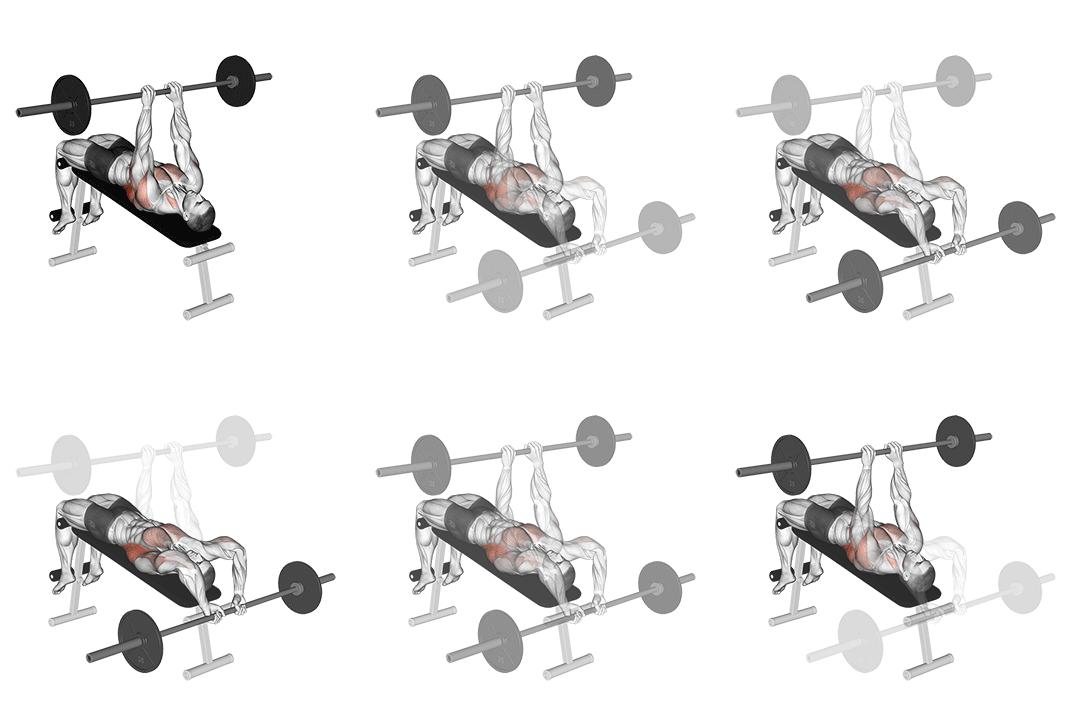
  1. Lie on a decline bench with your head lower than your hips and your feet secured.
  2. Hold a barbell with a wide grip and extend your arms straight above your chest.
  3. Lower the barbell behind your head in a controlled manner, keeping your arms straight.
Read remaining steps for Barbell Decline Wide-grip Pullover
  1. Pause for a moment, then raise the barbell back to the starting position.
  2. Repeat for the desired number of repetitions.

Barbell One Arm Bent Over Row

  1. Stand with your feet shoulder-width apart, knees slightly bent, and hold a barbell with one hand using an overhand grip.
  2. Bend forward at the hips, keeping your back straight and your head in a neutral position.
  3. Pull the barbell up towards your chest, keeping your elbow close to your body and squeezing your shoulder blades together.
Read remaining steps for Barbell One Arm Bent Over Row
  1. Lower the barbell back down to the starting position in a controlled manner.
  2. Repeat for the desired number of repetitions, then switch to the other arm.

Also Compare

Compare another pair

Choose two exercises to see their differences side by side.

Compare Exercises