

Barbell Seated Calf Raise vs Barbell Standing Leg Calf Raise: Complete Comparison Guide
Barbell Seated Calf Raise vs Barbell Standing Leg Calf Raise — you’re comparing two barbell-based isolation moves that target the calves but load them differently. If you want clear guidance on which to use for muscle growth, strength, and convenience, you’re in the right place. I’ll cover the biomechanics, which calf head each exercise stresses, precise technique cues, rep ranges (8–20+), equipment needs, and practical programming tips so you can pick the right move for your goals.
Exercise Comparison
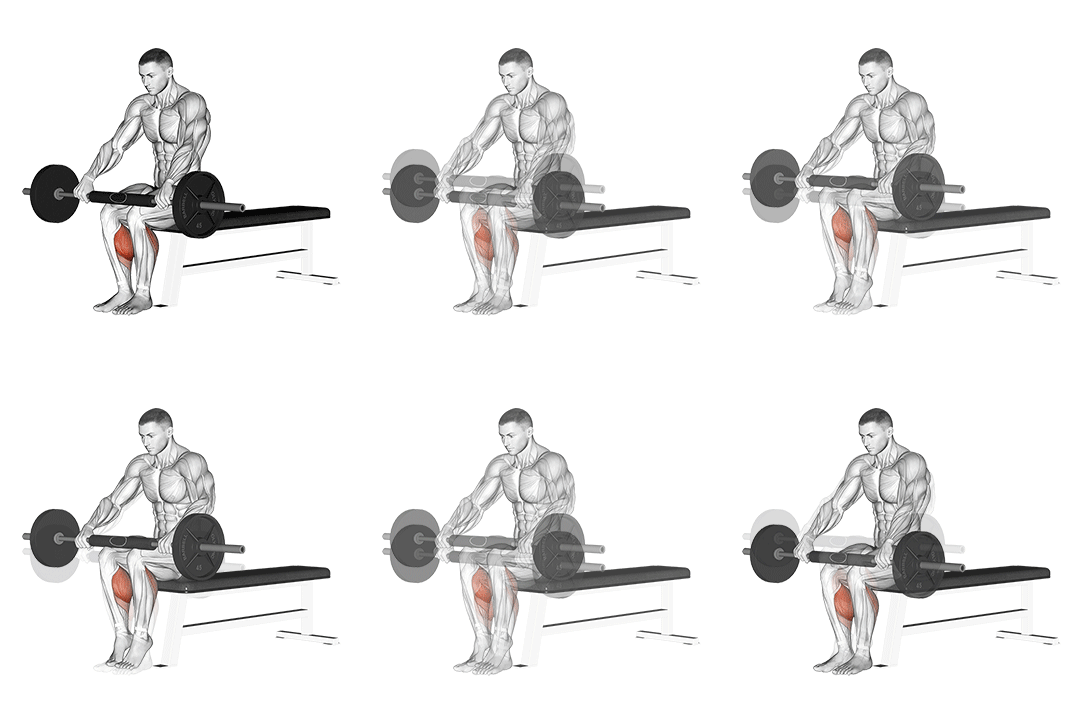
Barbell Seated Calf Raise
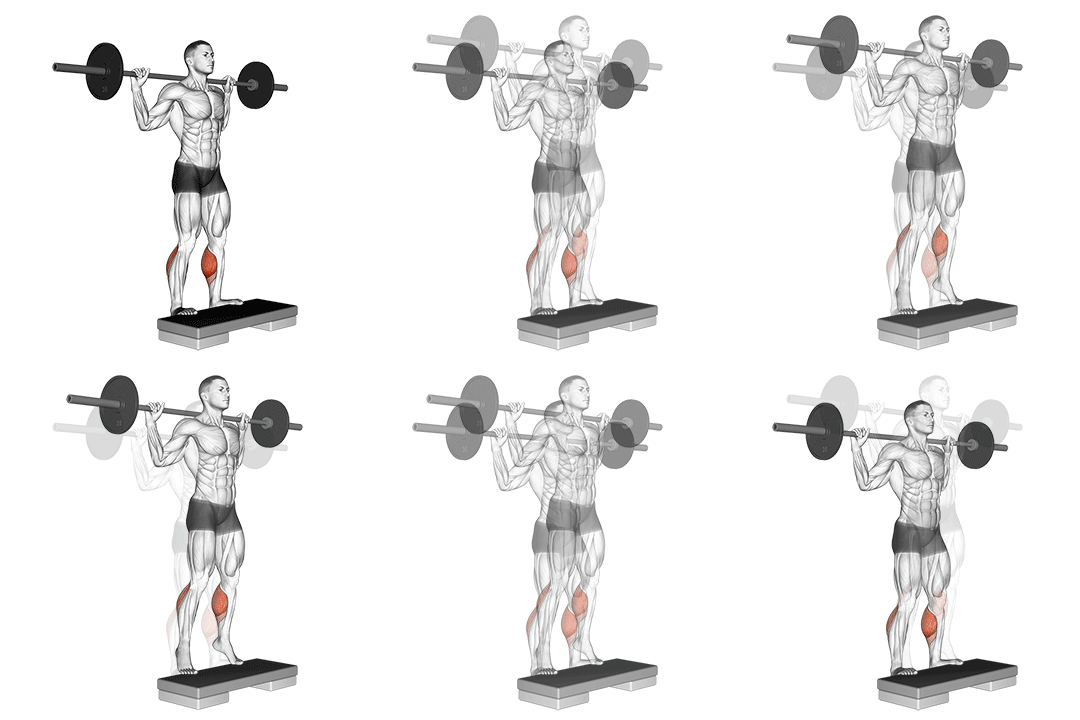
Barbell Standing Leg Calf Raise
Head-to-Head Comparison
| Attribute | Barbell Seated Calf Raise | Barbell Standing Leg Calf Raise |
|---|---|---|
| Target Muscle |
Calves
|
Calves
|
| Body Part |
Lower-legs
|
Lower-legs
|
| Equipment |
Barbell
|
Barbell
|
| Difficulty |
Beginner
|
Beginner
|
| Movement Type |
Isolation
|
Isolation
|
| Secondary Muscles |
2
|
2
|
Secondary Muscles Activated
Barbell Seated Calf Raise
Barbell Standing Leg Calf Raise
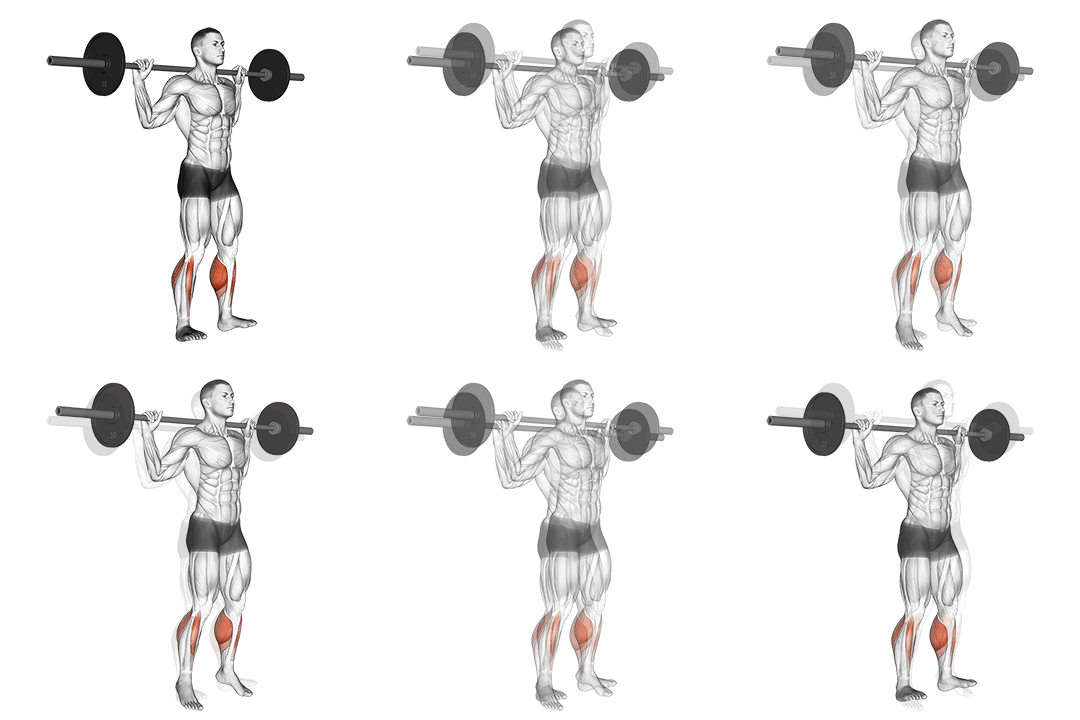
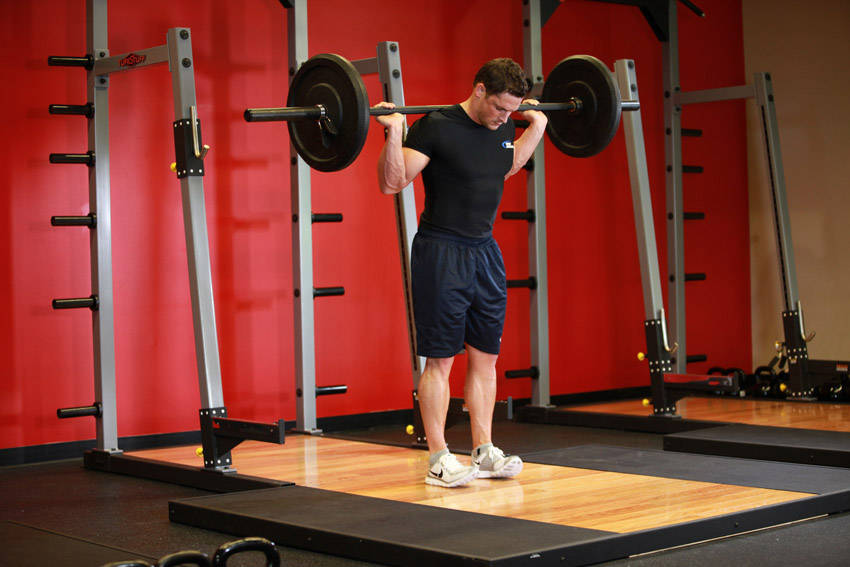
Visual Comparison
Overview
Barbell Seated Calf Raise vs Barbell Standing Leg Calf Raise — you’re comparing two barbell-based isolation moves that target the calves but load them differently. If you want clear guidance on which to use for muscle growth, strength, and convenience, you’re in the right place. I’ll cover the biomechanics, which calf head each exercise stresses, precise technique cues, rep ranges (8–20+), equipment needs, and practical programming tips so you can pick the right move for your goals.
Key Differences
- Both exercises target the Calves using Barbell. The main differences are in their movement patterns and muscle activation angles.
Pros & Cons
Barbell Seated Calf Raise
+ Pros
- Stronger isolation of the soleus due to knee flexion
- Stable position lowers balance and technique demands
- Easier to perform high-rep sets (12–25) for endurance and hypertrophy
- Lower axial spine load compared with heavy standing variations
− Cons
- Requires a bench or seat and an elevated platform
- Bar across knees can be uncomfortable without padding
- Less functional carryover to upright, single-leg activities
Barbell Standing Leg Calf Raise
+ Pros
- Higher gastrocnemius recruitment with knee extended
- Easier to load heavily for strength (6–12 reps) and progressive overload
- Better functional carryover to standing movements and sprinting
- Can be done unilaterally to address side-to-side differences
− Cons
- Requires balance and good core/bracing for heavy loads
- Greater axial load on the spine when using heavy weight
- Harder to isolate the soleus; gastrocnemius may dominate
When Each Exercise Wins
If your goal is to build thicker, denser calves from solid time under tension, seated raises let you target the soleus with long sets (12–25 reps) at a controlled tempo (2s concentric, 2s eccentric). The fixed position lets you accumulate volume without balance breakdown, which is ideal for hypertrophy.
Standing calf raises allow heavier absolute loading and better transfer to upright force production because the gastrocnemius is under greater tension with the knee extended. Use 4–8 rep ranges and heavier loads with strict bracing to maximize strength.
Beginners benefit from the seated position’s stability and easy focus on ankle motion. You can learn strict plantarflexion mechanics and work within higher-rep ranges (12–20) without managing balance or heavy axial loading.
Standing versions need only a barbell and an elevated surface, no bench required. You can perform double-leg or single-leg variations on a step, making them more practical when space and equipment are limited.
Frequently Asked Questions
Can I do both Barbell Seated Calf Raise and Barbell Standing Leg Calf Raise in the same workout?
Yes. Pairing seated first with higher-rep sets (12–20) to fatigue the soleus, then doing standing heavy sets (6–10) for the gastrocnemius is a common split. Keep total volume manageable—3–5 sets per exercise—and watch form as fatigue builds.
Which exercise is better for beginners?
Barbell Seated Calf Raise is better for beginners because it removes balance demands and lets you focus on ankle plantarflexion mechanics. Start with 3 sets of 12–15 reps, slow eccentrics, and a padded bar to avoid knee discomfort.
How do the muscle activation patterns differ?
Knee angle changes length-tension relationships: seated knee flexion shortens the gastrocnemius and shifts load to the soleus, increasing its relative activation during plantarflexion. Standing keeps the gastrocnemius longer under tension, so it contributes more to peak force.
Can Barbell Standing Leg Calf Raise replace Barbell Seated Calf Raise?
Not entirely—standing can replace seated if you prioritize gastrocnemius strength or have limited equipment, but it won’t stress the soleus the same way. For balanced calf development, include both or alternate them across training cycles.
Expert Verdict
Use both movements strategically. If you want to prioritize soleus hypertrophy, seated raises are your go-to: sit with the knee at ~90°, use a full heel drop (about 2–3 in) and higher reps (12–25) with slow eccentrics to maximize time under tension. For heavier strength work and gastrocnemius development, use standing raises with the knee near full extension, heavier loads, and 6–12 rep sets. Beginners should start seated to master ankle mechanics, then add standing variations for functional strength and unilateral work. Cycle both across weeks to hit different length-tension relationships and ensure balanced calf development.
Also Compare
More comparisons with Barbell Seated Calf Raise
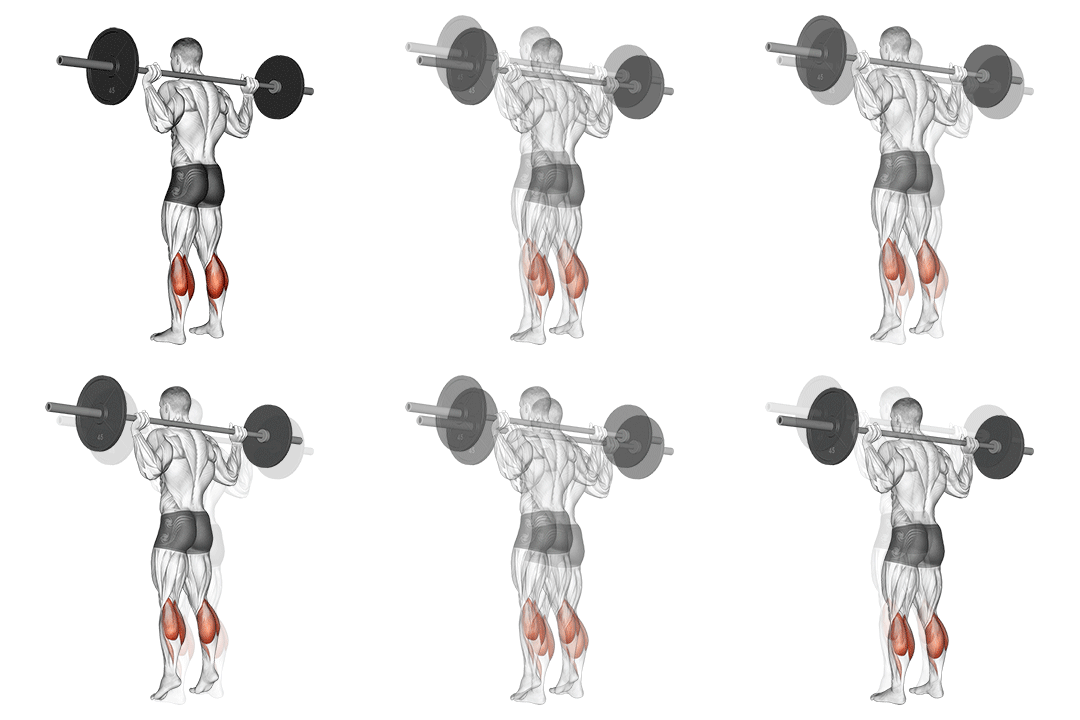
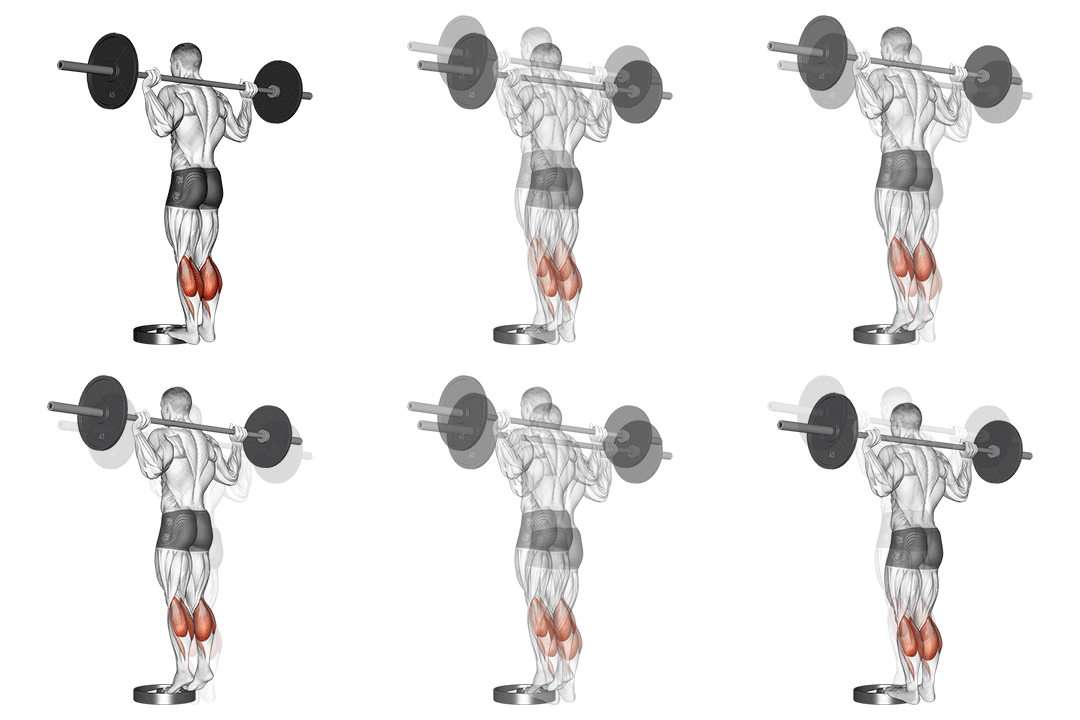
More comparisons with Barbell Standing Leg Calf Raise
Compare More Exercises
Use our free comparison tool to analyze any two exercises head-to-head.
Compare Exercises