

Barbell Standing Calf Raise vs Standing Barbell Calf Raise: Complete Comparison Guide
Barbell Standing Calf Raise vs Standing Barbell Calf Raise — two nearly identical names but meaningful differences for your training. If you want clear guidance, this comparison walks you through muscle activation, equipment and setup, technique cues, progression options, and injury considerations. You’ll learn which exercise gives a bigger stretch and heavier loading, which one is easier to set up at home or the gym, and how to pick reps and tempo for muscle growth or strength. Read on so you can pick the better option for your goals and program.
Exercise Comparison
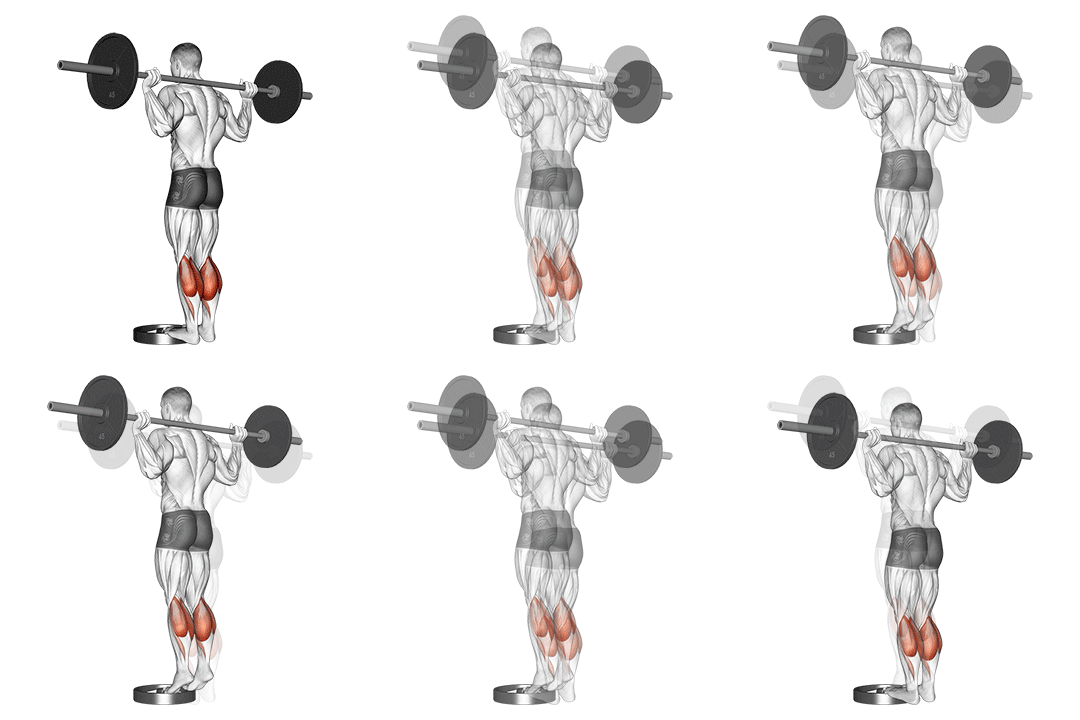
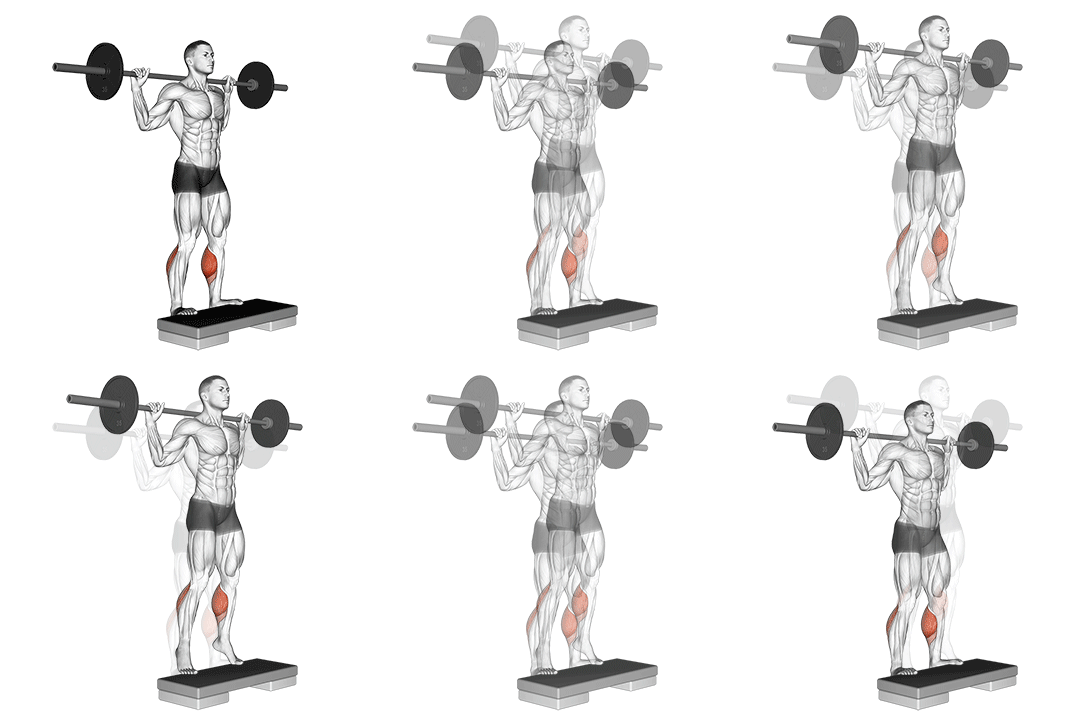
Barbell Standing Calf Raise
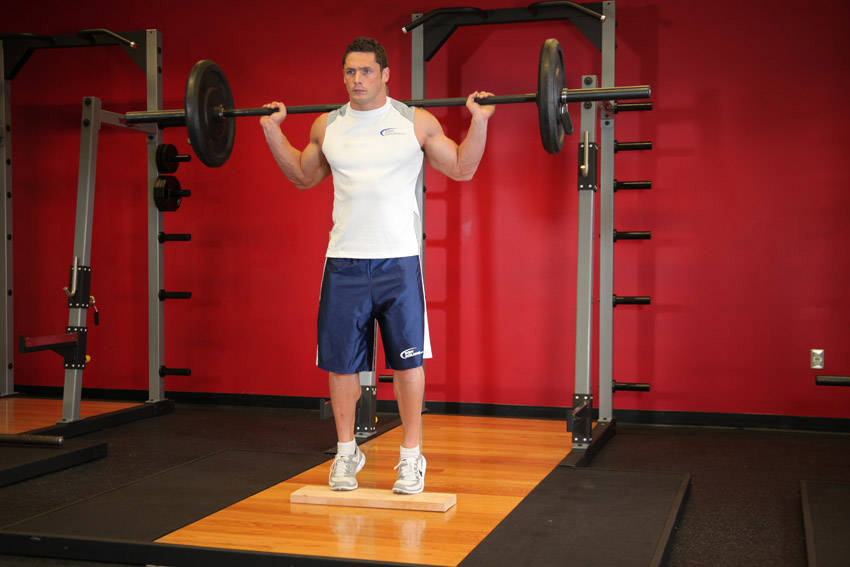
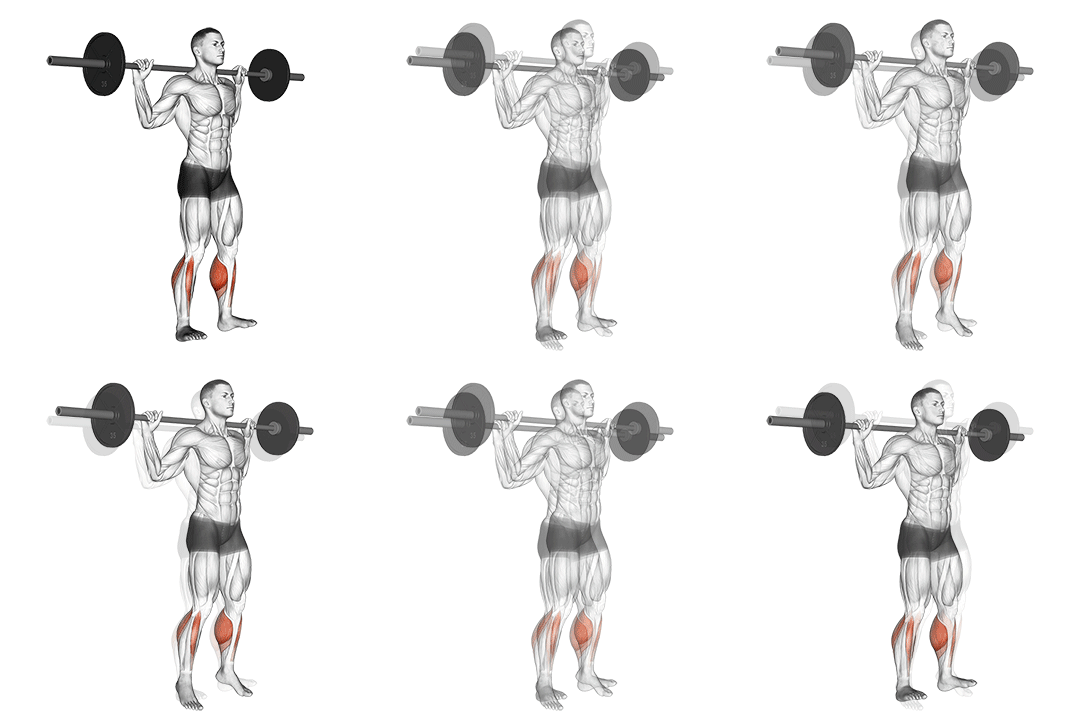
Standing Barbell Calf Raise
Head-to-Head Comparison
| Attribute | Barbell Standing Calf Raise | Standing Barbell Calf Raise |
|---|---|---|
| Target Muscle |
Calves
|
Calves
|
| Body Part |
Lower-legs
|
Lower-legs
|
| Equipment |
Barbell
|
Barbell
|
| Difficulty |
Intermediate
|
Beginner
|
| Movement Type |
Isolation
|
Isolation
|
| Secondary Muscles |
2
|
0
|
Secondary Muscles Activated
Barbell Standing Calf Raise
Standing Barbell Calf Raise
Visual Comparison
Overview
Barbell Standing Calf Raise vs Standing Barbell Calf Raise — two nearly identical names but meaningful differences for your training. If you want clear guidance, this comparison walks you through muscle activation, equipment and setup, technique cues, progression options, and injury considerations. You’ll learn which exercise gives a bigger stretch and heavier loading, which one is easier to set up at home or the gym, and how to pick reps and tempo for muscle growth or strength. Read on so you can pick the better option for your goals and program.
Key Differences
- Difficulty levels differ: Barbell Standing Calf Raise is intermediate, while Standing Barbell Calf Raise is beginner.
- Both exercises target the Calves using Barbell. The main differences are in their movement patterns and muscle activation angles.
Pros & Cons
Barbell Standing Calf Raise
+ Pros
- Allows greater dorsiflexion and stretch (≈20–30°) for better length‑tension stimulus
- Easier to load heavy for strength work (>80% 1RM) because bar is secured on the back
- Recruits hamstrings and glutes as stabilizers, offering a slight compound benefit
- Better for targeted progressive overload using blocks, tempo, and pauses
− Cons
- Requires squat rack and platform for safe setup
- Higher Achilles and calf strain risk with poor technique
- Harder to learn and balance, especially under heavy loads
Standing Barbell Calf Raise
+ Pros
- Simpler setup — can be done without a rack or elevated platform
- Lower technical demand; beginner friendly for learning ankle plantarflexion
- Less hip torque so reduced secondary fatigue in hamstrings/glutes
- Easier to use for higher-rep conditioning sets (12–20+ reps)
− Cons
- Smaller ROM (≈5–10° dorsiflexion) limits stretch-mediated hypertrophy
- Harder to load as heavily while maintaining balance
- Fewer options for progressive range-of-motion overload
When Each Exercise Wins
The extra dorsiflexion and ability to use a raised platform produce a larger stretch and longer time under tension, which supports stretch-mediated hypertrophy. Pair 8–15 rep sets with a 1–2 second pause at peak contraction for best results.
The back-loaded position lets you handle heavier absolute loads (>80% 1RM) and overload the gastrocnemius during the concentric phase, making it superior for building maximal plantarflexion strength.
Easier setup and lower balance demands let beginners learn ankle mechanics and build tolerance with higher reps (12–20) before progressing to heavier, more technical variations.
Requires less equipment and no elevated platform or rack, so you can perform effective calf work at home using a light-to-moderate barbell and focus on high-rep sets and tempo.
Frequently Asked Questions
Can I do both Barbell Standing Calf Raise and Standing Barbell Calf Raise in the same workout?
Yes — pair the Standing Barbell Calf Raise as a warm-up/volume exercise (12–20 reps) and follow with Barbell Standing Calf Raise for heavier sets (6–10 reps). That sequencing uses the easier variation to increase blood flow and the loaded variation to apply progressive overload.
Which exercise is better for beginners?
Standing Barbell Calf Raise is better for beginners because it has lower balance and setup demands. It lets you learn ankle plantarflexion mechanics and build tendon tolerance before progressing to heavier, full‑ROM back‑loaded raises.
How do the muscle activation patterns differ?
Activation shifts with range of motion and knee/hip torque: the back‑loaded Barbell Standing Calf Raise increases gastrocnemius recruitment at longer muscle lengths due to ~20–30° dorsiflexion, while the simpler Standing Barbell Calf Raise emphasizes shorter‑range contractions with less hamstring/glute stabilization.
Can Standing Barbell Calf Raise replace Barbell Standing Calf Raise?
For general conditioning and beginner progress, yes — Standing Barbell Calf Raise can substitute. For maximal hypertrophy or strength goals, it shouldn't fully replace the back‑loaded version because it limits ROM and absolute loading potential.
Expert Verdict
Choose Barbell Standing Calf Raise (Exercise A) when your goal is targeted hypertrophy or strength and you have access to a rack and platform. Its greater dorsiflexion and heavier loading produce stronger length‑tension stimulus for the gastrocnemius. Pick Standing Barbell Calf Raise (Exercise B) if you’re new, training at home, or prioritizing simplicity and higher-rep conditioning; it builds ankle strength with lower technical demand. Program both strategically: use Exercise B for warm-up and volume days (12–20 reps), and Exercise A for heavy or focused hypertrophy work (6–12 reps with controlled tempo).
Also Compare
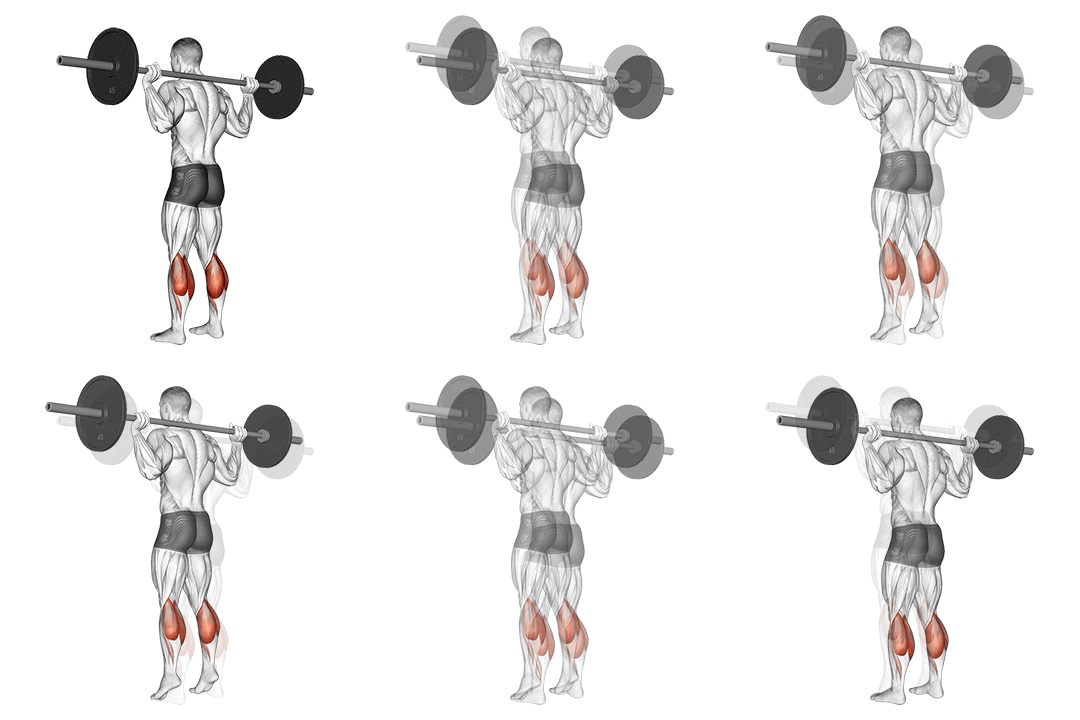
More comparisons with Barbell Standing Calf Raise
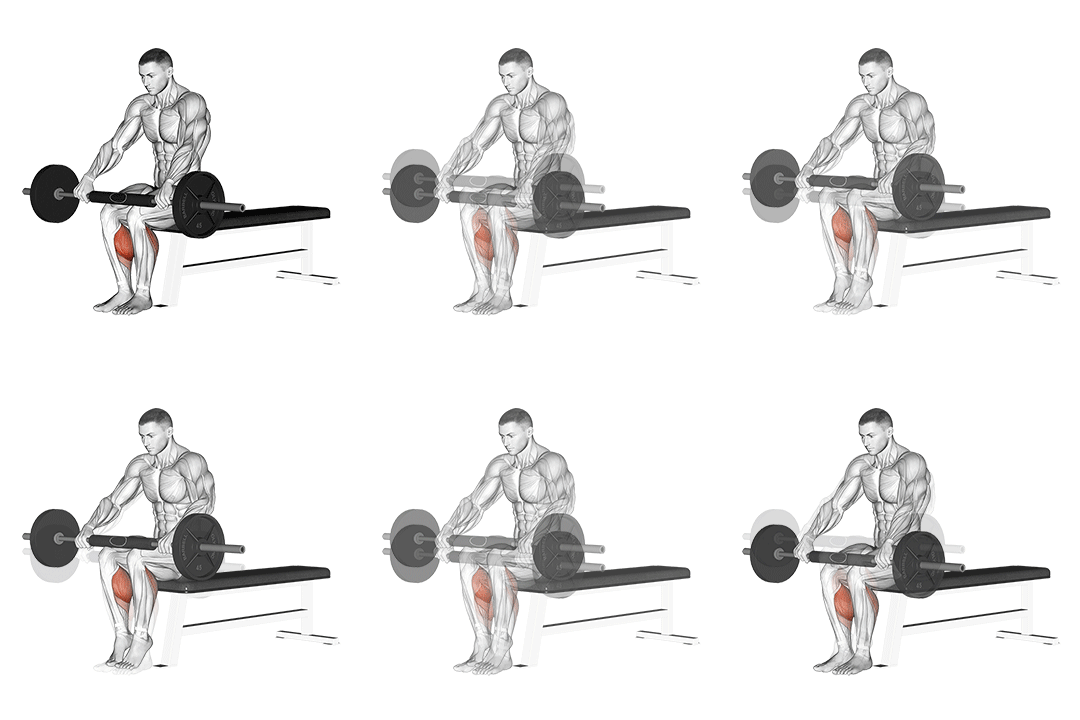
More comparisons with Standing Barbell Calf Raise
Compare More Exercises
Use our free comparison tool to analyze any two exercises head-to-head.
Compare Exercises