

Cable High Pulley Overhead Tricep Extension vs Cable Lying Triceps Extension
Compare target muscles, equipment, difficulty, movement type, and secondary muscles for Cable High Pulley Overhead Tricep Extension and Cable Lying Triceps Extension.
Get comparison link
Select the link and use your device's Copy command.
Comparison overview
AI-generatedExercise Comparison
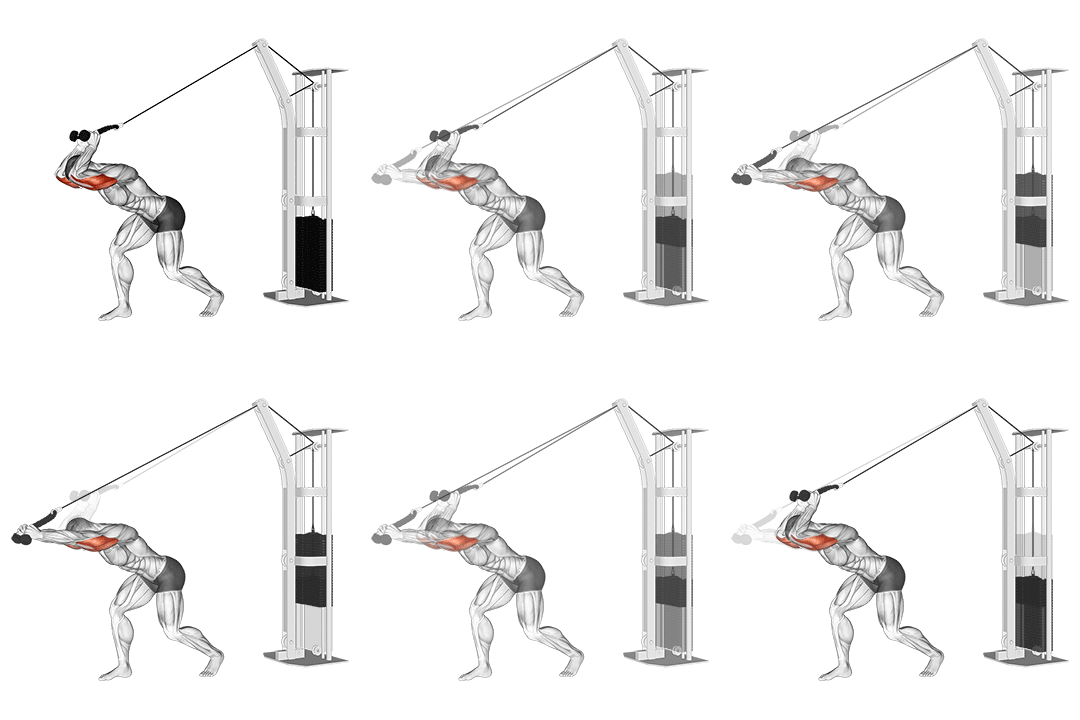
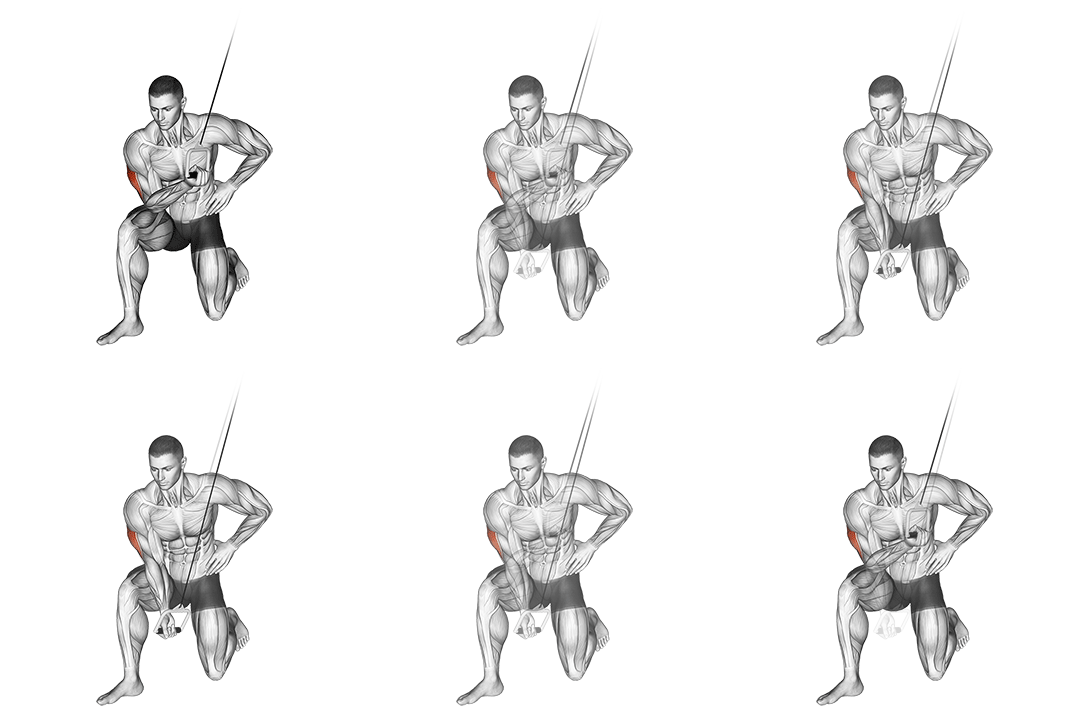
Cable High Pulley Overhead Tricep Extension
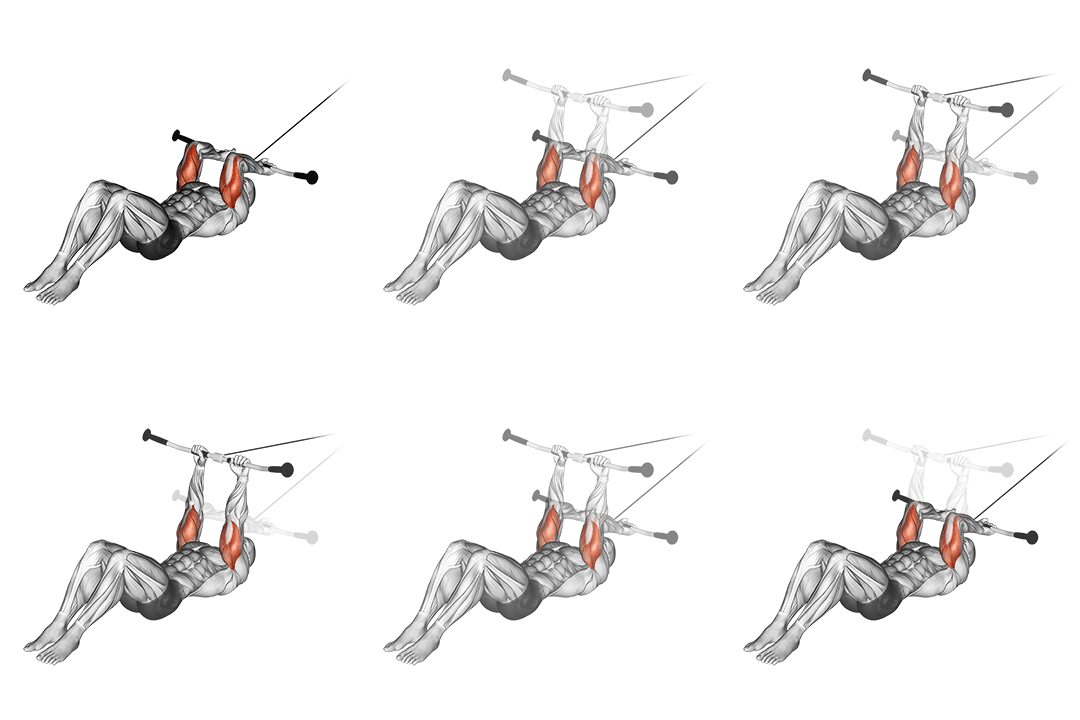
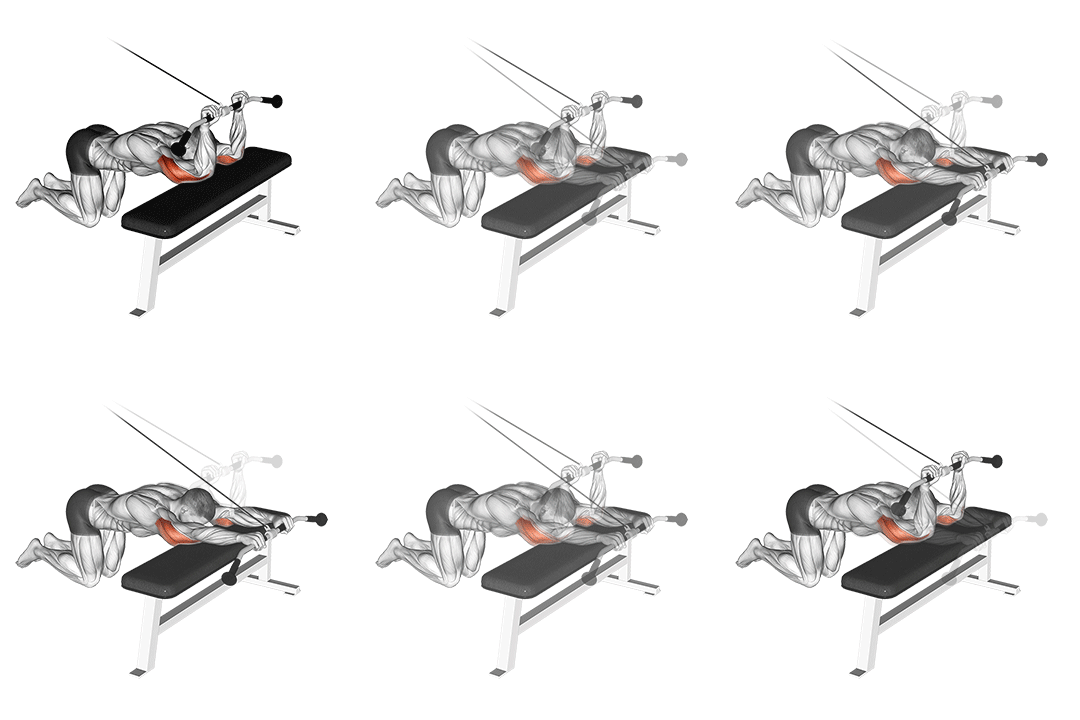
Cable Lying Triceps Extension
Head-to-Head Comparison
Different values are marked. These are catalogue attributes, not performance scores.
Muscles used
Listed target and secondary muscles, shown on the body. Locations, not activation or strength scores.
- Target
- Secondary
- Not highlighted
Cable High Pulley Overhead Tricep Extension
- Target
- Triceps
- Secondary
- Shoulders
Not shown on diagram: Shoulders. These labels do not identify a precise region on this map.
Cable Lying Triceps Extension
- Target
- Triceps
- Secondary
- Shoulders
Not shown on diagram: Shoulders. These labels do not identify a precise region on this map.
Grey does not mean a muscle is unused. The diagrams show only the mapped catalogue labels.
| Attribute | Cable High Pulley Overhead Tricep Extension | Cable Lying Triceps Extension |
|---|---|---|
| Target Muscle | Triceps |
Triceps |
| Body Part | Upper-arms |
Upper-arms |
| Equipment | Cable |
Cable |
| Difficulty Different | Intermediate |
Beginner |
| Movement Type | Isolation |
Isolation |
| Secondary Muscles | Shoulders |
Shoulders |
Visual Comparison
An illustrative 1–10 profile derived from catalog difficulty, equipment, and listed-muscle fields—not measured performance or muscle activation.
Key Differences
- Difficulty levels differ: Cable High Pulley Overhead Tricep Extension is intermediate, while Cable Lying Triceps Extension is beginner.
- Both exercises target the Triceps using Cable. The catalogue does not establish which exercise is better for an individual goal.
Muscle comparison
Shared target muscles
Secondary muscle differences
Muscle involvement analysis
Equipment and setup
Cable High Pulley Overhead Tricep Extension: setup
Cable Lying Triceps Extension: setup
Access and practicality
Learning and progression
Learning the movements
Progression considerations
Limitations and precautions
Pros & Cons
Cable High Pulley Overhead Tricep Extension
+ Pros
- Greater long-head stretch due to shoulder flexion (~90–120°), which improves length-tension for hypertrophy
- Standing or single-arm variations allow unilateral work and core engagement
- Versatile attachments and angles let you bias different triceps heads
- Strong progression options: tempo, partials, single-arm, and heavier loads
− Cons
- Requires more shoulder stability and coordination (intermediate difficulty)
- Slightly higher risk of shoulder discomfort if mobility is limited
- Needs a high cable column and space to stand
Cable Lying Triceps Extension
+ Pros
- Stable lying position makes it beginner-friendly and consistent
- Lower shoulder demand reduces irritation risk for those with shoulder issues
- Easy to load progressively with small increments (2.5–5 lb steps)
- Good for high-rep sets (12–20+) and finishers focusing on metabolic stress
− Cons
- Less long-head stretch compared with overhead variations
- Reduced core and unilateral challenge limits transferable stability benefits
- Requires a low pulley and bench or floor space
When Each Exercise Wins
The overhead position lengthens the long head (shoulder flexion ~90–120°), increasing stretch-mediated tension and mechanical stimulus. Use 8–12 reps, controlled tempo (2 s eccentric, 1 s pause, 1–2 s concentric) to maximize fiber recruitment.
Overhead variations allow heavier loading patterns and progressive overload while recruiting stabilizers; pair lower reps (4–6) with slower eccentrics to build force through the full range of motion and improve elbow extension strength.
Lying keeps the shoulder stable and isolates elbow extension, making motor learning simpler. Start with 10–15 reps, light load, and focus on keeping elbows tucked and wrists neutral.
Most home setups or compact cable stations can mimic the low-pulley, lying setup more easily than a stable high-pulley with room to stand. It also requires less balance and space.
Frequently Asked Questions
Can I do both Cable High Pulley Overhead Tricep Extension and Cable Lying Triceps Extension V. 2 in the same workout?
Which exercise is better for beginners?
How do the muscle activation patterns differ?
Can Cable Lying Triceps Extension V. 2 replace Cable High Pulley Overhead Tricep Extension?
Comparison Summary
Exercise instructions
Steps from the exercise catalogue. Read the full sequence before starting.
Cable High Pulley Overhead Tricep Extension
- Attach a rope to a high pulley and stand facing away from the machine.
- Grasp the rope with both hands and extend your arms overhead.
- Keep your elbows close to your head and your upper arms stationary.
Read remaining steps for Cable High Pulley Overhead Tricep Extension
- Slowly lower the rope behind your head by bending your elbows.
- Pause for a moment, then extend your arms back to the starting position.
- Repeat for the desired number of repetitions.
Cable Lying Triceps Extension
- Attach a rope handle to a low pulley cable machine.
- Lie down on a flat bench facing up, with your head towards the cable machine.
- Grasp the rope handle with both hands, palms facing each other, and extend your arms straight up over your chest.
Read remaining steps for Cable Lying Triceps Extension
- Keeping your upper arms stationary, slowly lower the rope handle towards your forehead by bending your elbows.
- Pause for a moment at the bottom, then extend your arms back up to the starting position.
- Repeat for the desired number of repetitions.
Also Compare
More comparisons with Cable High Pulley Overhead Tricep Extension

More comparisons with Cable Lying Triceps Extension
Compare another pair
Choose two exercises to see their differences side by side.