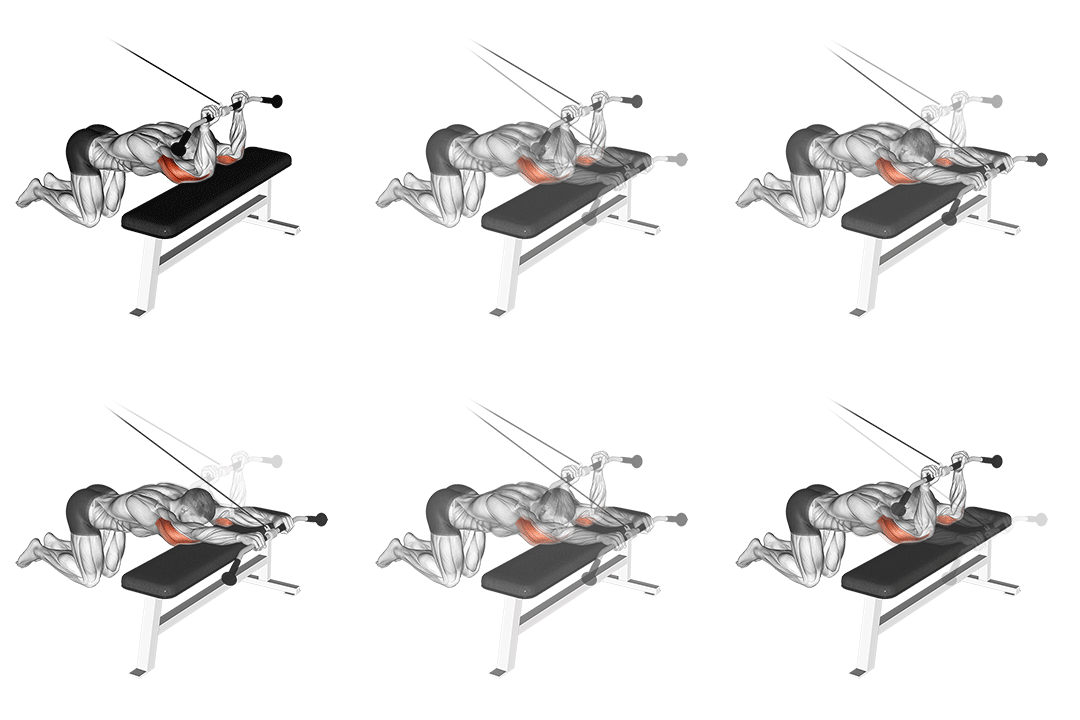
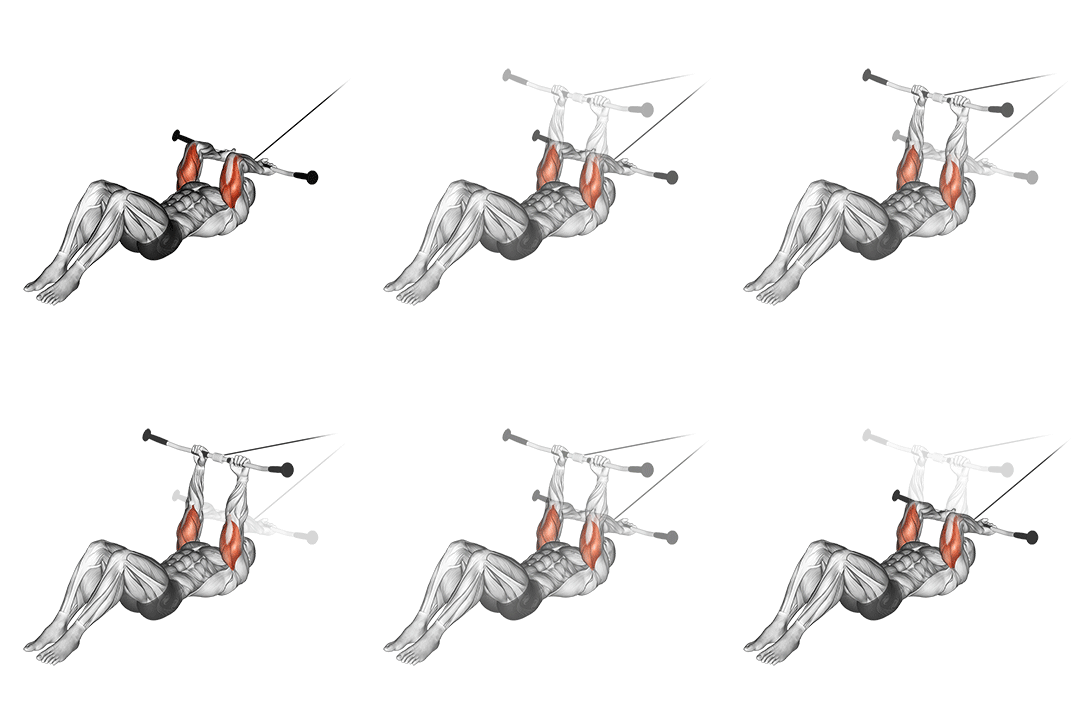
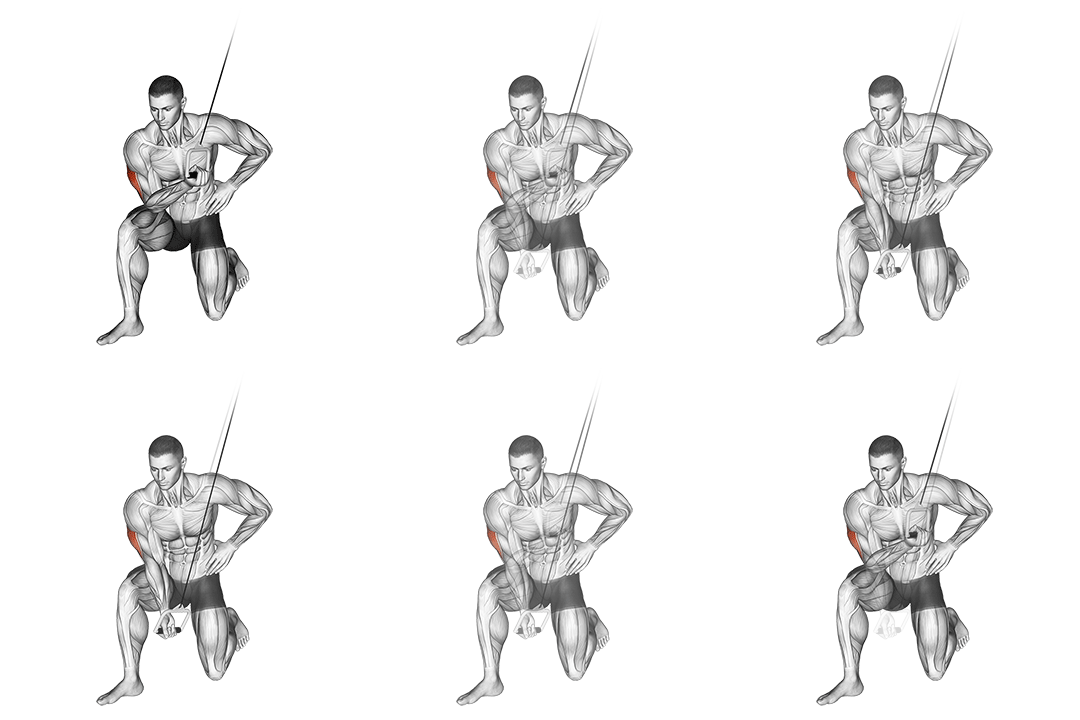
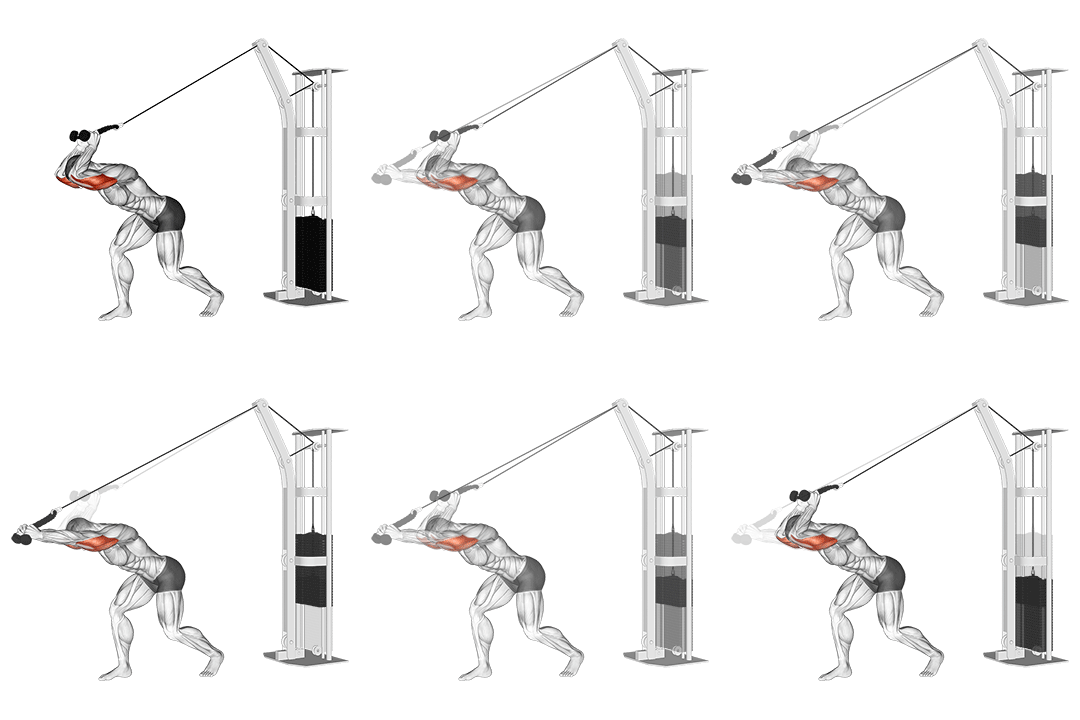
Cable Kneeling Triceps Extension vs Cable Lying Triceps Extension

Compare target muscles, equipment, difficulty, movement type, and secondary muscles for Cable Kneeling Triceps Extension and Cable Lying Triceps Extension.

Change comparison Share

Get comparison link

Select the link and use your device's Copy command.

Comparison overview

AI-generated
Cable Kneeling Triceps Extension vs Cable Lying Triceps Extension V. 2 — two cable isolation moves that both hit the triceps but load the muscle differently. You’ll get clear, practical guidance on muscle activation, equipment needs, step-by-step technique cues (keep elbows tucked, control a 2–3s eccentric, and avoid shoulder shrugging), progression options, and injury risk. Read this to decide which to program for hypertrophy (8–15 reps), strength (4–6 reps), or rehab-style arm work. I’ll also give quick setup tips so you can try both safely in your next session.

Exercise Comparison

Exercise A
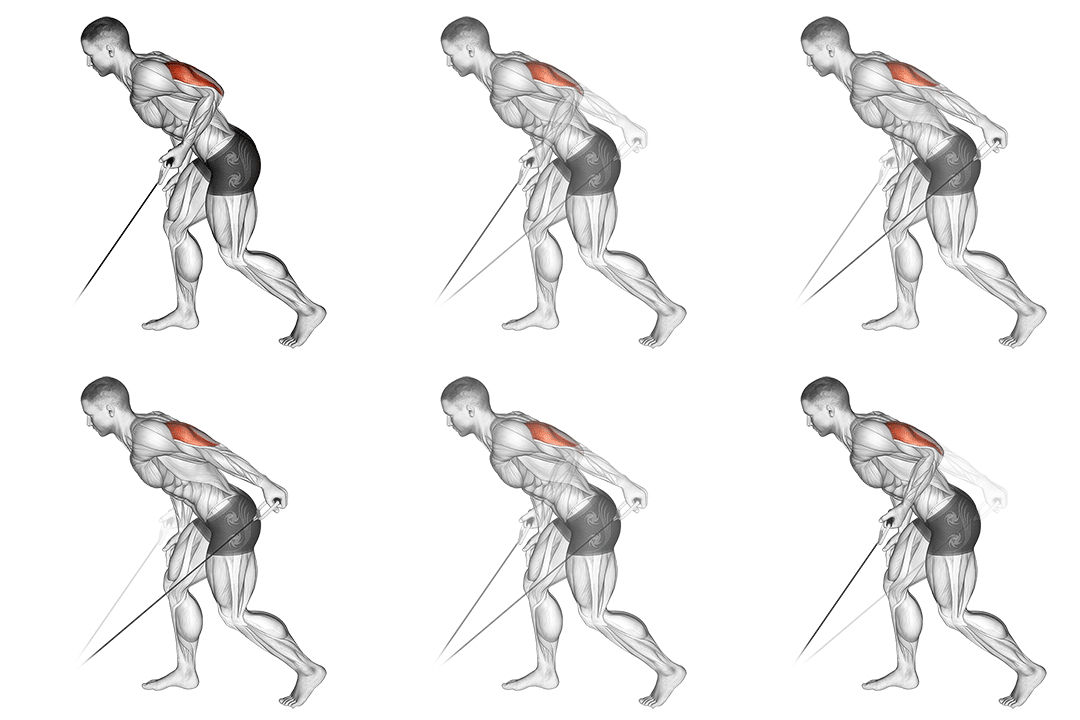
Cable Kneeling Triceps Extension demonstration

Cable Kneeling Triceps Extension

Target Triceps
Equipment Cable
Body Part Upper-arms
Difficulty Beginner
Movement Isolation
Secondary Muscles
Shoulders
VS
Exercise B
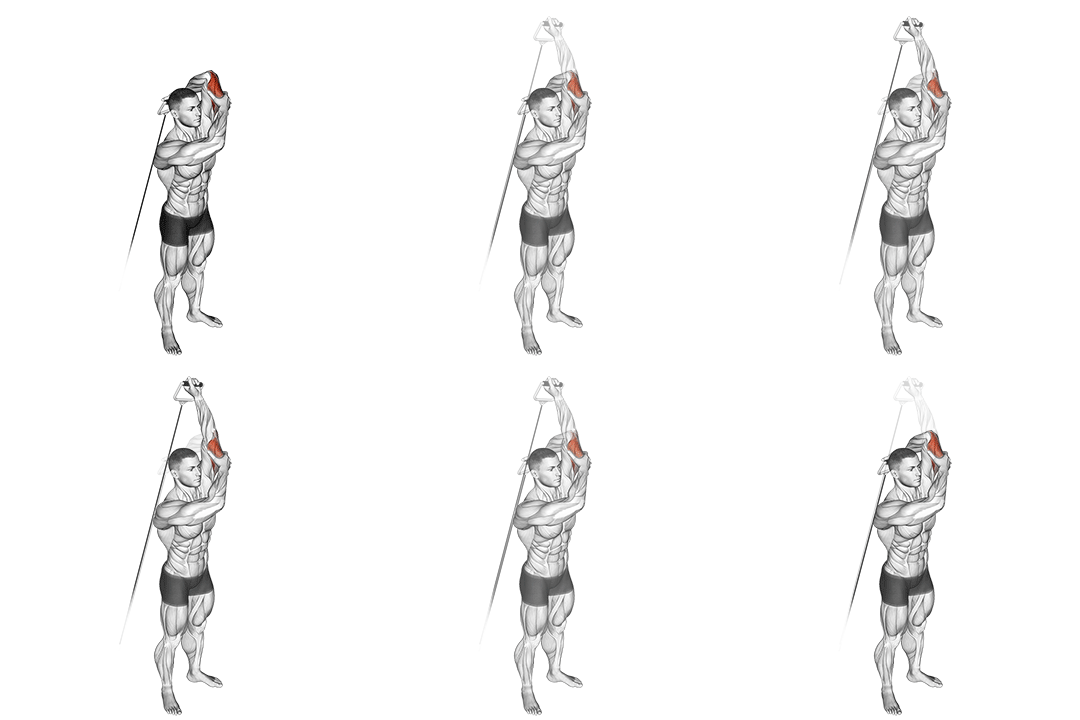
Cable Lying Triceps Extension demonstration

Cable Lying Triceps Extension

Target Triceps
Equipment Cable
Body Part Upper-arms
Difficulty Beginner
Movement Isolation
Secondary Muscles
Shoulders

Head-to-Head Comparison

Different values are marked. These are catalogue attributes, not performance scores.

Muscles used

Listed target and secondary muscles, shown on the body. Locations, not activation or strength scores.

  • Target
  • Secondary
  • Not highlighted

Cable Kneeling Triceps Extension

Front
Cable Kneeling Triceps Extension: front muscle locationsSolid: listed target. Striped: listed secondary. Grey: not highlighted. Locations, not activation or strength scores. See the muscle names below.
Back
Cable Kneeling Triceps Extension: back muscle locationsSolid: listed target. Striped: listed secondary. Grey: not highlighted. Locations, not activation or strength scores. See the muscle names below.
Target
Triceps
Secondary
Shoulders

Not shown on diagram: Shoulders. These labels do not identify a precise region on this map.

Cable Lying Triceps Extension

Front
Cable Lying Triceps Extension: front muscle locationsSolid: listed target. Striped: listed secondary. Grey: not highlighted. Locations, not activation or strength scores. See the muscle names below.
Back
Cable Lying Triceps Extension: back muscle locationsSolid: listed target. Striped: listed secondary. Grey: not highlighted. Locations, not activation or strength scores. See the muscle names below.
Target
Triceps
Secondary
Shoulders

Not shown on diagram: Shoulders. These labels do not identify a precise region on this map.

Grey does not mean a muscle is unused. The diagrams show only the mapped catalogue labels.

Attribute Cable Kneeling Triceps Extension Cable Lying Triceps Extension
Target Muscle
Triceps
Triceps
Body Part
Upper-arms
Upper-arms
Equipment
Cable
Cable
Difficulty
Beginner
Beginner
Movement Type
Isolation
Isolation
Secondary Muscles
Shoulders
Shoulders

Visual Comparison

An illustrative 1–10 profile derived from catalog difficulty, equipment, and listed-muscle fields—not measured performance or muscle activation.

Key Differences

  • Both exercises target the Triceps using Cable. The catalogue does not establish which exercise is better for an individual goal.

Muscle comparison

Shared target muscles

Both exercises target all three triceps heads with primary emphasis on elbow extension. They produce peak triceps torque near 20–30° of elbow flexion during the concentric phase, so both are effective for hypertrophy when loaded in the 8–15 rep range. Expect broadly similar overall triceps activation, with differences driven by shoulder position and force vector.

Secondary muscle differences

Kneeling (an overhead-style path) places the shoulder into flexion, increasing stretch and recruitment of the long head of the triceps and engaging the upper trapezius and anterior deltoid as stabilizers. The lying version keeps the shoulder more neutral and uses the bench to isolate elbow motion, shifting small emphasis toward the lateral and medial heads and reducing shoulder involvement.

Muscle involvement analysis

Biomechanically, the kneeling variation creates a more upward force vector against an elevated arm, increasing long-head length-tension at the start of the pull and favoring tension through the top half of the range. Lying keeps the humerus more fixed; the force vector acts more directly through the elbow joint, giving a steadier, constant torque curve. Expect ~8–12% greater long-head engagement in overhead positions versus supine positions in practical terms.

Equipment and setup

Cable Kneeling Triceps Extension: setup

Cable machine with a high pulley and single handle; open floor space to kneel. No bench required.

Cable Lying Triceps Extension: setup

Cable machine and a flat bench (or floor with stable back support) positioned so the cable path lines up with your forehead/face. A flat bench makes setup repeatable and keeps the torso stable.

Access and practicality

Cable Kneeling Triceps Extension — it needs only the cable and floor space. You don’t need a bench, so it’s easier in crowded gyms or limited setups.

Learning and progression

Learning the movements

Kneeling is slightly easier to learn because you control a single joint path while standing/kneeling; posture cues are straightforward. Lying requires consistent bench setup and attention to elbow tracking to avoid shoulder compensation.

Progression considerations

Lying offers more direct progressive overload options (heavier loads, stable bench support, microloading) and cleaner rep quality for heavy sets. Kneeling is easy to add volume, tempo changes, and band resistance for variety.

Limitations and precautions

Kneeling has a marginally higher shoulder strain risk if you lack overhead mobility or force the shoulder into end-range flexion. Lying reduces shoulder load but can place more stress on the elbow joint if you hammer heavy weight with poor control.

Pros & Cons

Cable Kneeling Triceps Extension

+ Pros

  • Greater long-head stretch due to shoulder flexion, aiding full-head development
  • No bench required — more accessible in tight gyms
  • Easier to control torso and core engagement while kneeling
  • Simple setup; excellent for high-rep volume and tempo work

− Cons

  • Slightly higher shoulder strain if mobility is limited
  • Harder to load extremely heavy due to balance constraints
  • Less absolute isolation of the elbow if shoulder compensation occurs

Cable Lying Triceps Extension

+ Pros

  • Stable bench position isolates elbow extension for cleaner loading
  • Better for progressive overload and heavier sets
  • Consistent force vector yields steady tension across reps
  • Reduces shoulder involvement compared with overhead variations

− Cons

  • Requires a bench and space for setup
  • May underload the long head compared with overhead positions
  • Need strict elbow tracking to avoid recruiting the chest or deltoid

When Each Exercise Wins

1
For muscle hypertrophy: Cable Kneeling Triceps Extension

The overhead line of pull increases long-head stretch and time under tension, which helps fuller triceps development. Use 8–15 reps and emphasize a 2–3s eccentric to exploit the length-tension relationship.

2
For strength gains: Cable Lying Triceps Extension V. 2

The bench stabilizes your torso so you can load heavier and focus on overload in the 4–6 or 6–8 rep ranges. That consistent force vector makes adding weight and tracking progress easier.

3
For beginners: Cable Kneeling Triceps Extension

It’s easier to set up, teaches basic elbow extension mechanics, and you can scale intensity by moving closer to the pulley. The upright posture also helps novices control form.

4
For home workouts: Cable Kneeling Triceps Extension

If you have a single cable station or functional trainer but no bench, kneeling still lets you perform an effective isolation movement. It requires less furniture and is simple to modify.

Frequently Asked Questions

Can I do both Cable Kneeling Triceps Extension and Cable Lying Triceps Extension V. 2 in the same workout?

Yes. Start with the version you’ll load heaviest for 3–4 working sets, then finish with the other for 2–3 high-quality sets of 8–15 reps as a finisher. Keep total triceps volume to 9–18 hard sets per week per muscle for recovery.

Which exercise is better for beginners?

Cable Kneeling Triceps Extension is generally better for beginners because setup is simpler and balance demands are low. It teaches elbow-extension mechanics while allowing easy intensity scaling by stance and distance to the pulley.

How do the muscle activation patterns differ?

Kneeling (overhead line) lengthens the long head and increases its contribution during the early concentric phase; lying keeps the humerus stable and shifts relative emphasis to the lateral/medial heads. Force vectors and shoulder angle change the length-tension curve and moment arm across the range of motion.

Can Cable Lying Triceps Extension V. 2 replace Cable Kneeling Triceps Extension?

It can replace it if your priority is heavier loading and stable technique, but you may lose some long-head stretch. For balanced triceps development, alternate both across training cycles rather than relying on just one.

Comparison Summary

Use Cable Kneeling Triceps Extension when your goal is balanced triceps shaping, especially the long head — program it for 8–15 reps with controlled 2–3s eccentrics and strict elbow position. Choose Cable Lying Triceps Extension V. 2 when you want maximal loading and consistent progressive overload; set up the bench so the pulley aligns with your forehead, keep upper arms fixed, and work in 4–8 reps for strength or 6–12 for heavier hypertrophy sets. Both are beginner-friendly isolation moves; rotate them across training blocks to hit different length-tension angles and avoid plateaus.

Exercise instructions

Steps from the exercise catalogue. Read the full sequence before starting.

Cable Kneeling Triceps Extension

  1. Attach a rope handle to a high pulley and kneel down facing the cable machine.
  2. Grasp the rope with a neutral grip (palms facing each other) and bring your hands to the sides of your head.
  3. Keep your elbows close to your head and your upper arms stationary throughout the exercise.
Read remaining steps for Cable Kneeling Triceps Extension
  1. Extend your forearms by contracting your triceps until your arms are fully extended.
  2. Pause for a moment, then slowly return to the starting position by bending your elbows.
  3. Repeat for the desired number of repetitions.

Cable Lying Triceps Extension

  1. Attach a rope handle to a low pulley cable machine.
  2. Lie down on a flat bench facing up, with your head towards the cable machine.
  3. Grasp the rope handle with both hands, palms facing each other, and extend your arms straight up over your chest.
Read remaining steps for Cable Lying Triceps Extension
  1. Keeping your upper arms stationary, slowly lower the rope handle towards your forehead by bending your elbows.
  2. Pause for a moment at the bottom, then extend your arms back up to the starting position.
  3. Repeat for the desired number of repetitions.

Also Compare

Compare another pair

Choose two exercises to see their differences side by side.

Compare Exercises