Cable High Pulley Overhead Tricep Extension vs Cable Kneeling Triceps Extension
Compare target muscles, equipment, difficulty, movement type, and secondary muscles for Cable High Pulley Overhead Tricep Extension and Cable Kneeling Triceps Extension.
Change comparison Share

Get comparison link

Select the link and use your device's Copy command.

Comparison overview

AI-generated
Cable High Pulley Overhead Tricep Extension vs Cable Kneeling Triceps Extension — you might assume they're just two triceps isolation tweaks, but they change muscle length, line of pull, and stability. In this guide I’ll show you clear technique cues, compare muscle activation (long head vs lateral/medial heads), list exact equipment needs, rank difficulty and injury risk, and give rep ranges and progression options. Read on to learn when to use the overhead for extra long-head stretch or the kneeling variation for stability and heavier loading in your upper-arm work.
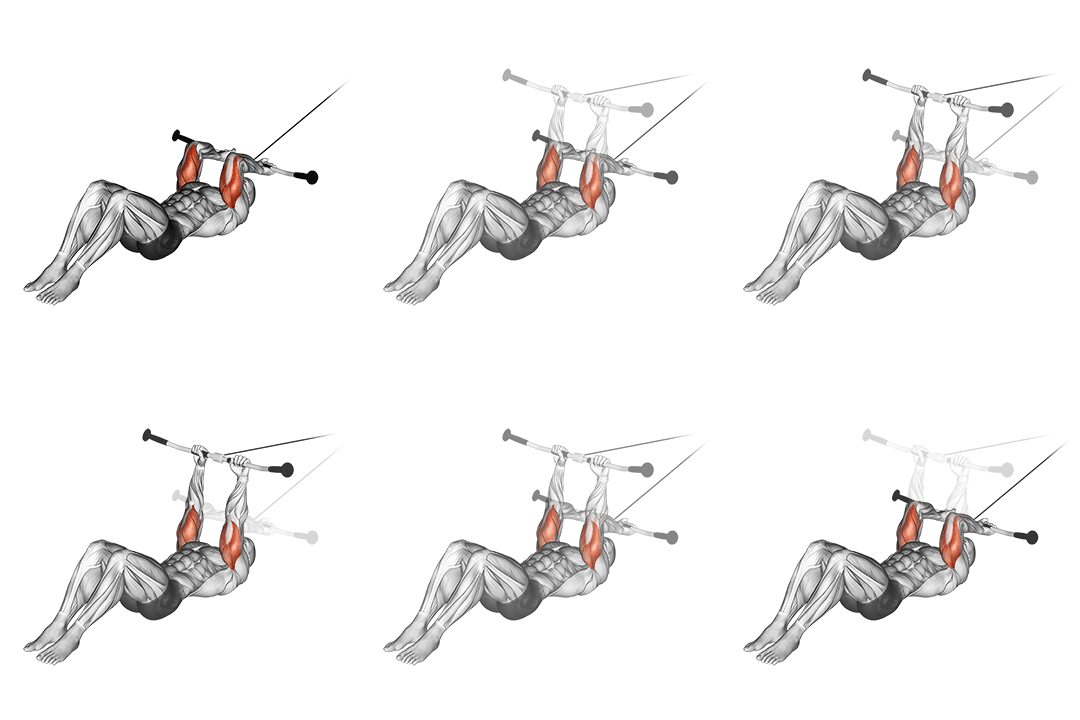
Exercise Comparison

Exercise A
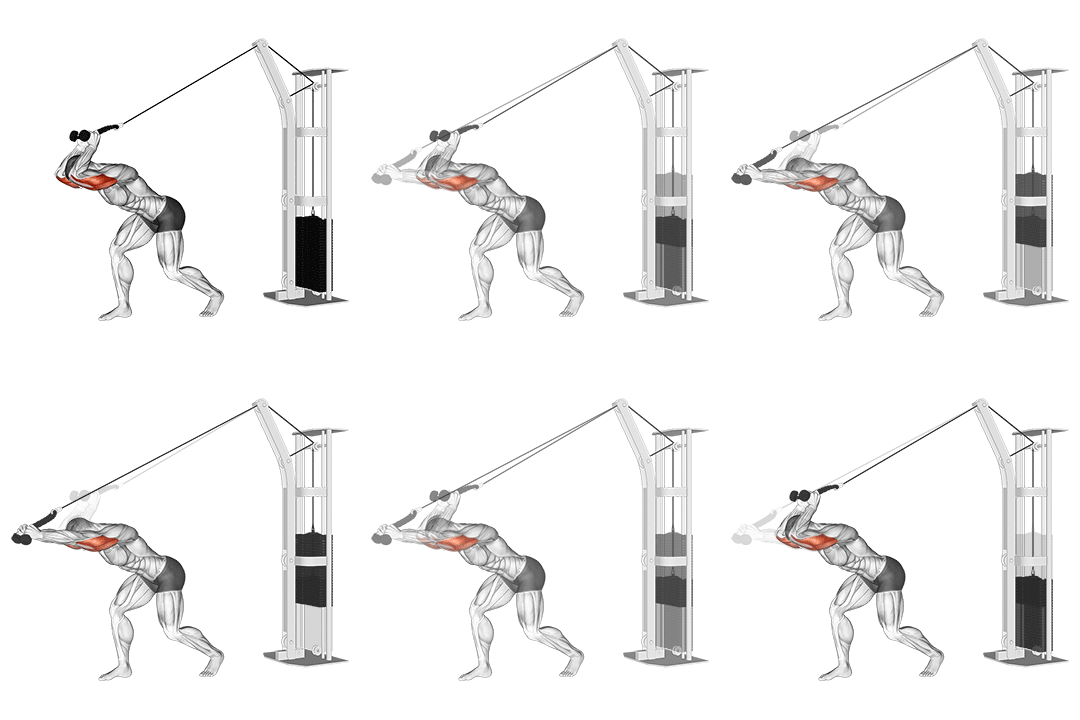
Cable High Pulley Overhead Tricep Extension demonstration
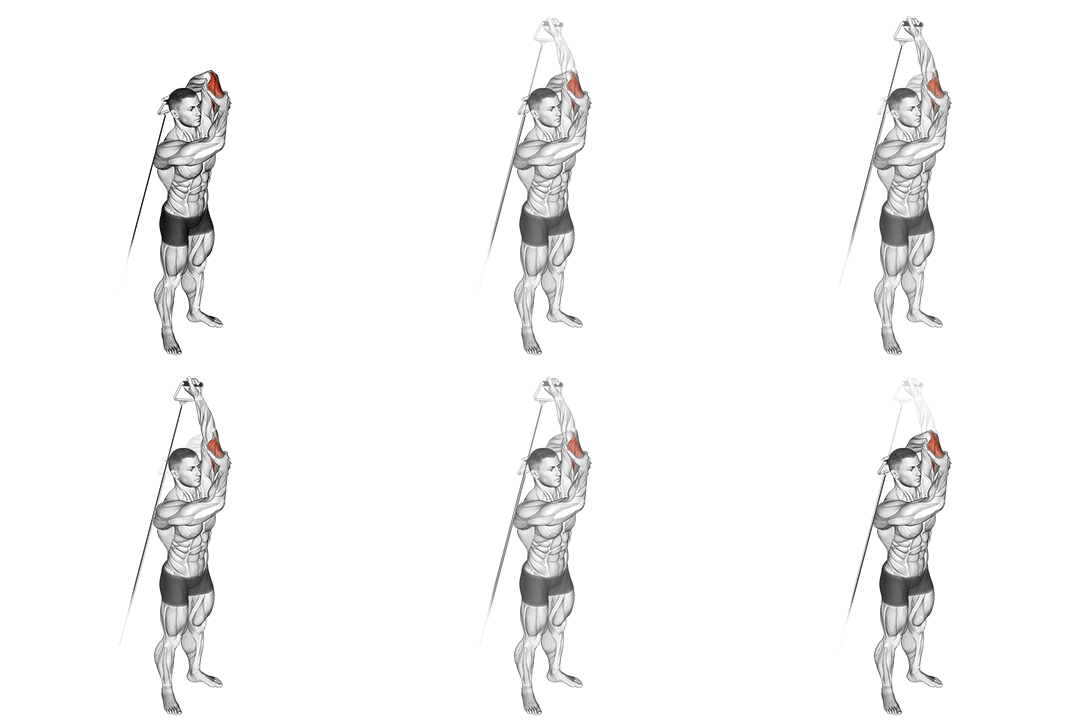
Cable High Pulley Overhead Tricep Extension

Target Triceps
Equipment Cable
Body Part Upper-arms
Difficulty Intermediate
Movement Isolation
Secondary Muscles
Shoulders
VS
Exercise B
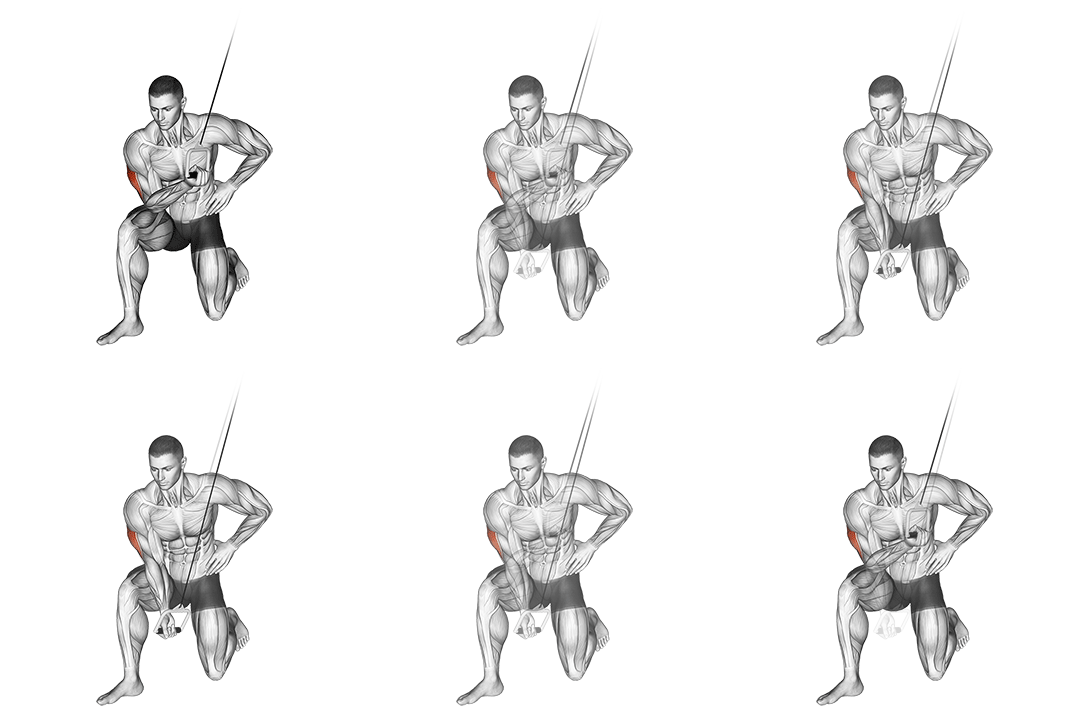
Cable Kneeling Triceps Extension demonstration

Cable Kneeling Triceps Extension

Target Triceps
Equipment Cable
Body Part Upper-arms
Difficulty Beginner
Movement Isolation
Secondary Muscles
Shoulders

Head-to-Head Comparison

Different values are marked. These are catalogue attributes, not performance scores.

Muscles used

Listed target and secondary muscles, shown on the body. Locations, not activation or strength scores.

  • Target
  • Secondary
  • Not highlighted

Cable High Pulley Overhead Tricep Extension

Front
Cable High Pulley Overhead Tricep Extension: front muscle locationsSolid: listed target. Striped: listed secondary. Grey: not highlighted. Locations, not activation or strength scores. See the muscle names below.
Back
Cable High Pulley Overhead Tricep Extension: back muscle locationsSolid: listed target. Striped: listed secondary. Grey: not highlighted. Locations, not activation or strength scores. See the muscle names below.
Target
Triceps
Secondary
Shoulders

Not shown on diagram: Shoulders. These labels do not identify a precise region on this map.

Cable Kneeling Triceps Extension

Front
Cable Kneeling Triceps Extension: front muscle locationsSolid: listed target. Striped: listed secondary. Grey: not highlighted. Locations, not activation or strength scores. See the muscle names below.
Back
Cable Kneeling Triceps Extension: back muscle locationsSolid: listed target. Striped: listed secondary. Grey: not highlighted. Locations, not activation or strength scores. See the muscle names below.
Target
Triceps
Secondary
Shoulders

Not shown on diagram: Shoulders. These labels do not identify a precise region on this map.

Grey does not mean a muscle is unused. The diagrams show only the mapped catalogue labels.

Attribute Cable High Pulley Overhead Tricep Extension Cable Kneeling Triceps Extension
Target Muscle
Triceps
Triceps
Body Part
Upper-arms
Upper-arms
Equipment
Cable
Cable
Difficulty Different
Intermediate
Beginner
Movement Type
Isolation
Isolation
Secondary Muscles
Shoulders
Shoulders

Visual Comparison

An illustrative 1–10 profile derived from catalog difficulty, equipment, and listed-muscle fields—not measured performance or muscle activation.

Key Differences

  • Difficulty levels differ: Cable High Pulley Overhead Tricep Extension is intermediate, while Cable Kneeling Triceps Extension is beginner.
  • Both exercises target the Triceps using Cable. The catalogue does not establish which exercise is better for an individual goal.

Muscle comparison

Shared target muscles

Both exercises primarily target the triceps brachii and produce high elbow-extension torque. They overlap in driving concentric elbow extension through the lateral and medial heads, but both still activate all three heads since the triceps act together to extend the elbow.

Secondary muscle differences

The overhead version biases the long head because the shoulder is placed in flexion (~90–120°), increasing long-head length and passive tension. The kneeling version keeps the shoulder closer to neutral, shifting relative emphasis toward the lateral and medial heads and demanding more scapular and core stability.

Muscle involvement analysis

During the overhead motion the long head starts at a more lengthened position, raising its contribution through length-tension mechanics and increasing time under tension during the stretch phase. In the kneeling variation the force vector is more horizontal/vertical depending on cable angle, creating a shorter long-head moment arm and relatively higher activation of lateral and medial heads during peak concentric torque.

Equipment and setup

Cable High Pulley Overhead Tricep Extension: setup

Cable high pulley set at top of tower, rope or long single-handle, enough overhead clearance, and a stable foot position. Optional: adjustable bench for seated support.

Cable Kneeling Triceps Extension: setup

Cable high pulley (or adjustable anchor) with rope or bar; space to kneel and a mat. No bench required; you can substitute a resistance band anchored high if needed.

Access and practicality

Cable Kneeling Triceps Extension is more accessible because it needs less setup, demands less shoulder mobility, and can be approximated with a band at home. Overhead requires more overhead clearance and shoulder range of motion.

Learning and progression

Learning the movements

Kneeling is easier to learn since you keep the torso more stable, elbows track down, and the movement is shorter and more intuitive. Overhead demands shoulder mobility and stricter elbow tracking to avoid compensatory lumbar extension.

Progression considerations

Overhead offers greater progression for targeting the long head via increased stretch and extended ROM; you can manipulate cable height, rope length, and loading tempo. Kneeling offers straightforward load increases and is easier to add heavy sets for strength-focused work.

Limitations and precautions

Overhead carries a higher shoulder and lower-back risk if you hyperextend the spine or lack shoulder flexion (risk of impingement). Kneeling has lower joint stress but can overload the elbow if you spike weight without strict form.

Pros & Cons

Cable High Pulley Overhead Tricep Extension

+ Pros

  • Greater long-head stretch and length-tension stimulus
  • Longer range of motion, increasing time under tension
  • Easy to vary cable angle for different force vectors
  • Good for isolation when shoulder mobility allows

− Cons

  • Higher demand on shoulder mobility and thoracic extension
  • Greater risk of lumbar compensation if core weak
  • Harder to load very heavy safely for maximal strength work

Cable Kneeling Triceps Extension

+ Pros

  • Beginner-friendly with simple setup and cues
  • More stable torso allows heavier, safer loading
  • Easier to approximate at home with bands
  • Lower shoulder mobility requirement

− Cons

  • Less stretch on the long head, reducing that specific stimulus
  • Shorter ROM can limit time under tension for hypertrophy
  • Requires good scapular control to avoid shrugging

When Each Exercise Wins

1
For muscle hypertrophy: Cable High Pulley Overhead Tricep Extension

The overhead position lengthens the long head and increases time under tension through a larger ROM, which promotes hypertrophy. Use 8–15 reps with a controlled 2–3 second eccentric to exploit length-tension benefits.

2
For strength gains: Cable Kneeling Triceps Extension

Kneeling provides a more stable base to handle heavier loads and train higher intensities with safer form. Focus on 4–8 reps with heavier resistance while keeping elbows tight to the ribs.

3
For beginners: Cable Kneeling Triceps Extension

Kneeling simplifies posture and reduces shoulder mobility demands, making it easier to learn elbow-extension mechanics and build base strength without compensatory lumbar extension.

4
For home workouts: Cable Kneeling Triceps Extension

Kneeling can be replicated with a high-anchored resistance band and requires less space and setup. It offers a practical way to train triceps isolation when you lack a full cable tower.

Frequently Asked Questions

Can I do both Cable High Pulley Overhead Tricep Extension and Cable Kneeling Triceps Extension in the same workout?

Yes — pair them strategically: use the kneeling variation first for heavier sets (3–5 sets of 4–8 reps) then finish with overhead sets for hypertrophy (2–3 sets of 8–15 reps) to pre-exhaust and emphasize the long head.

Which exercise is better for beginners?

Cable Kneeling Triceps Extension is better for beginners because it requires less shoulder mobility and provides a stable base to learn elbow-extension mechanics. Start light and focus on controlled range and elbow tracking.

How do the muscle activation patterns differ?

Overhead places the triceps long head at a longer length, increasing its relative activation via length-tension advantages, while kneeling keeps the long head shorter and shifts more relative load to the lateral and medial heads. Cable angle and elbow position change the force vector and moment arm at the elbow.

Can Cable Kneeling Triceps Extension replace Cable High Pulley Overhead Tricep Extension?

It can replace it if your goal is general triceps strength or limited equipment access, but it won't fully replicate the long-head stretch stimulus that the overhead variation provides. If long-head hypertrophy is a priority, include the overhead version periodically.

Comparison Summary

Use the Cable High Pulley Overhead Tricep Extension when your goal is to specifically target the long head and increase muscle growth through a stretched position and longer ROM; cue shoulder flexion around 90–120°, elbows close to the head, and a slow 2–3 second eccentric. Choose the Cable Kneeling Triceps Extension if you want a beginner-friendly, more stable option that lets you load heavier and progress strength safely; keep elbows fixed, torso upright, and use 4–8 reps for strength or 8–12 for hypertrophy. Alternate both across cycles to balance long-head stimulus and heavy-loading capacity.

Exercise instructions

Steps from the exercise catalogue. Read the full sequence before starting.

Cable High Pulley Overhead Tricep Extension

  1. Attach a rope to a high pulley and stand facing away from the machine.
  2. Grasp the rope with both hands and extend your arms overhead.
  3. Keep your elbows close to your head and your upper arms stationary.
Read remaining steps for Cable High Pulley Overhead Tricep Extension
  1. Slowly lower the rope behind your head by bending your elbows.
  2. Pause for a moment, then extend your arms back to the starting position.
  3. Repeat for the desired number of repetitions.

Cable Kneeling Triceps Extension

  1. Attach a rope handle to a high pulley and kneel down facing the cable machine.
  2. Grasp the rope with a neutral grip (palms facing each other) and bring your hands to the sides of your head.
  3. Keep your elbows close to your head and your upper arms stationary throughout the exercise.
Read remaining steps for Cable Kneeling Triceps Extension
  1. Extend your forearms by contracting your triceps until your arms are fully extended.
  2. Pause for a moment, then slowly return to the starting position by bending your elbows.
  3. Repeat for the desired number of repetitions.

Also Compare

Compare another pair

Choose two exercises to see their differences side by side.

Compare Exercises