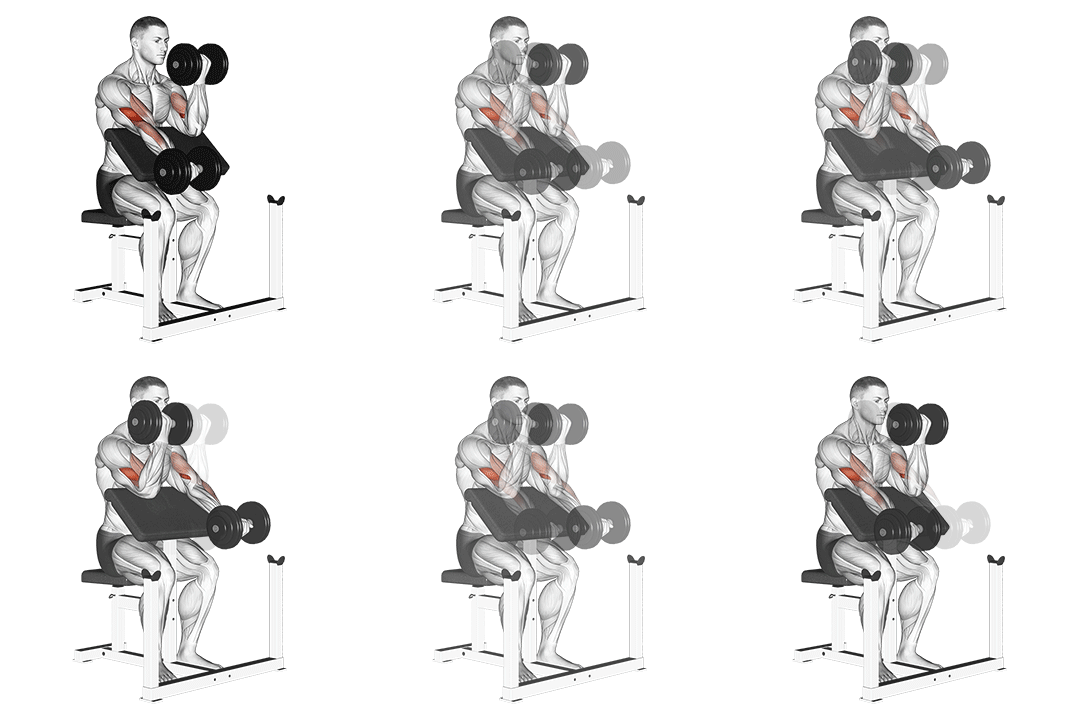
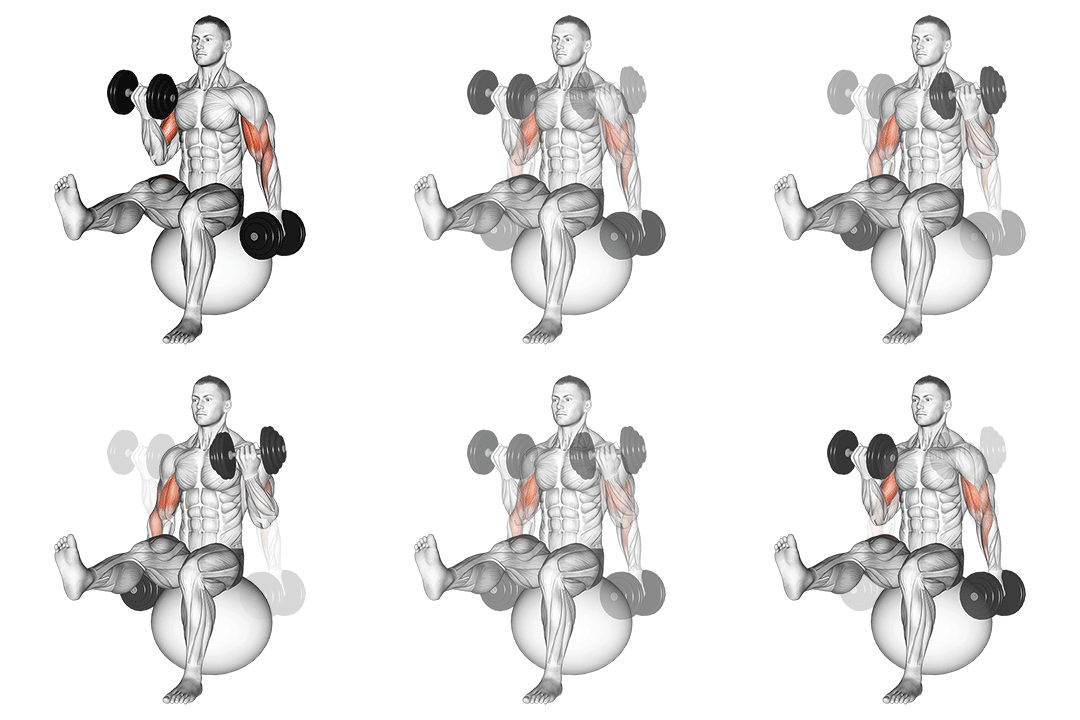
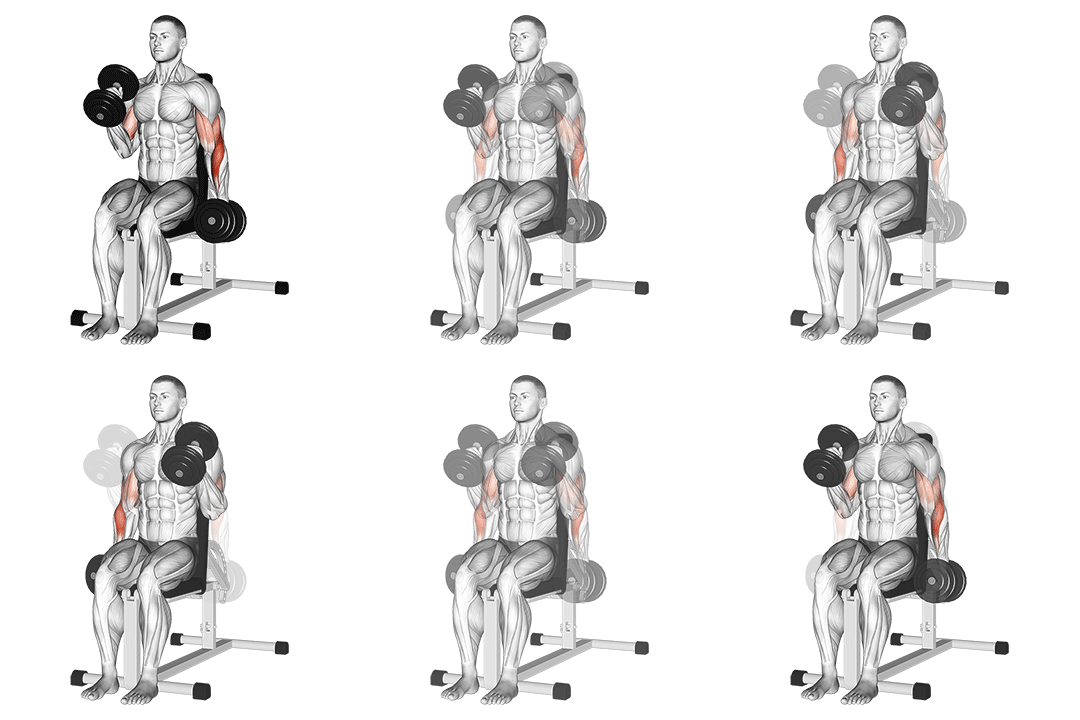
Dumbbell Alternate Biceps Curl vs Dumbbell Alternate Biceps Curl (with Arm Blaster)

Compare target muscles, equipment, difficulty, movement type, and secondary muscles for Dumbbell Alternate Biceps Curl and Dumbbell Alternate Biceps Curl (with Arm Blaster).

Change comparison Share

Get comparison link

Select the link and use your device's Copy command.

Comparison overview

AI-generated
Dumbbell Alternate Biceps Curl vs Dumbbell Alternate Biceps Curl (with Arm Blaster) — you want bigger, cleaner biceps contractions without wasted motion. I’ll walk you through how each version hits the biceps brachii and forearms, the movement mechanics, equipment needs, and which one suits hypertrophy, strength, or beginner work. Expect clear technique cues (elbow path, supination, tempo), rep ranges (6–12 for size, 8–15 for controlled isolation), and biomechanical notes like length-tension and force vectors so you can pick the right curl for your goals.

Exercise Comparison

Exercise A
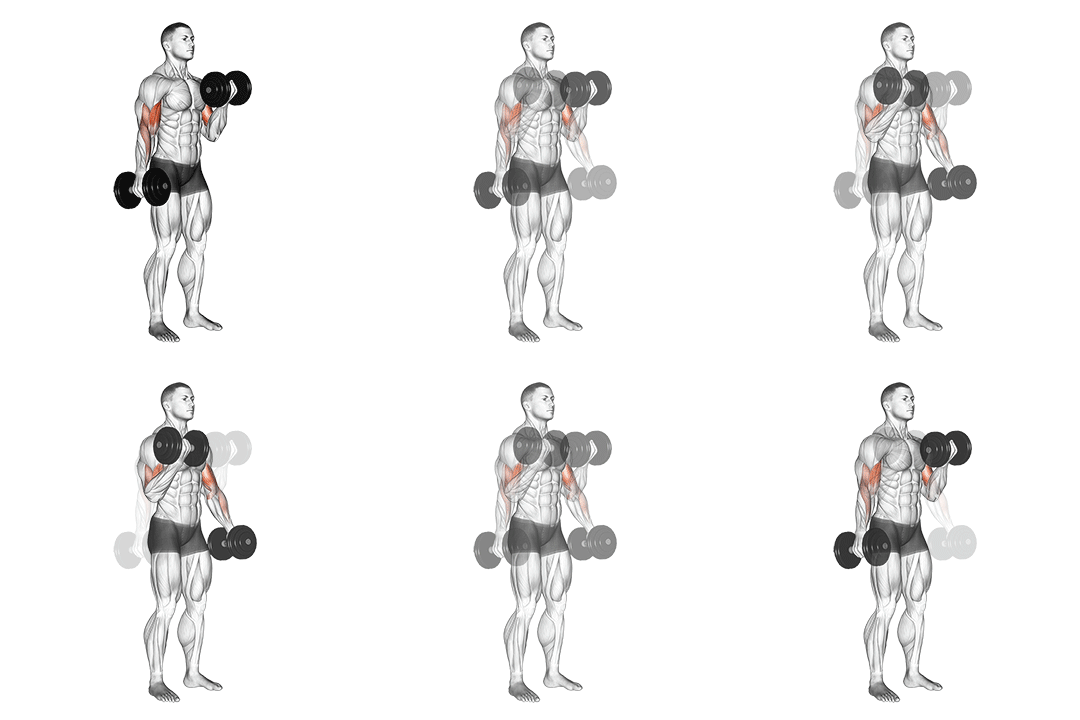
Dumbbell Alternate Biceps Curl demonstration

Dumbbell Alternate Biceps Curl

Target Biceps
Equipment Dumbbell
Body Part Upper-arms
Difficulty Beginner
Movement Isolation
Secondary Muscles
Forearms
VS
Exercise B
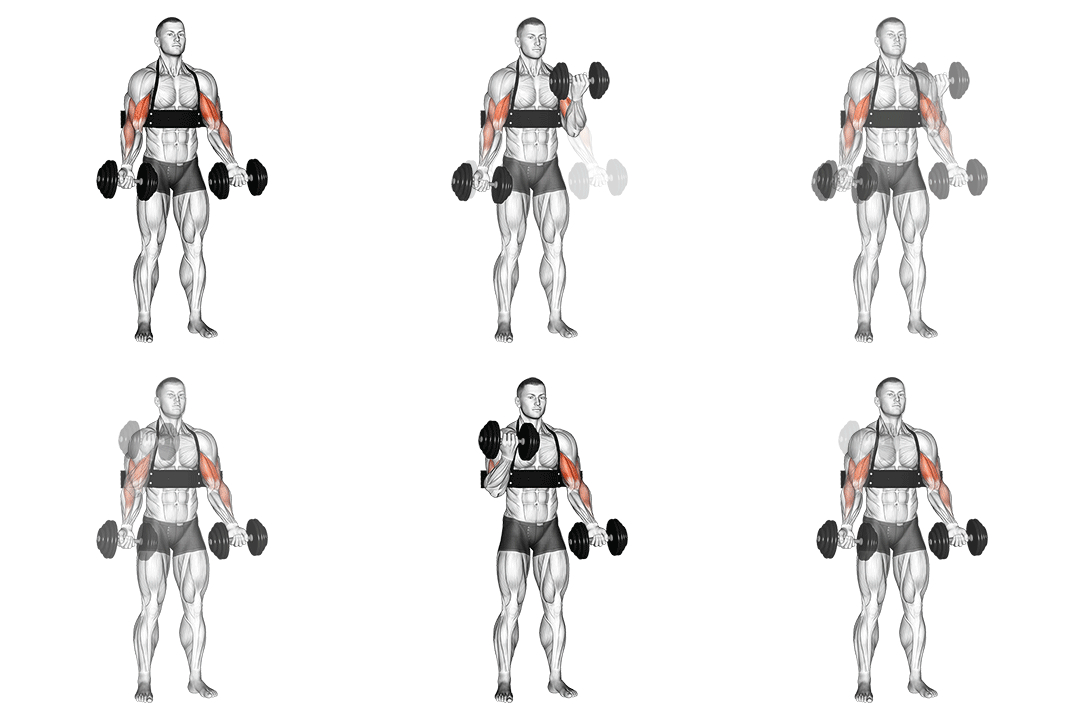
Dumbbell Alternate Biceps Curl (with Arm Blaster) demonstration

Dumbbell Alternate Biceps Curl (with Arm Blaster)

Target Biceps
Equipment Dumbbell
Body Part Upper-arms
Difficulty Beginner
Movement Isolation
Secondary Muscles
Forearms

Head-to-Head Comparison

Different values are marked. These are catalogue attributes, not performance scores.

Muscles used

Listed target and secondary muscles, shown on the body. Locations, not activation or strength scores.

  • Target
  • Secondary
  • Not highlighted

Dumbbell Alternate Biceps Curl

Front
Dumbbell Alternate Biceps Curl: front muscle locationsSolid: listed target. Striped: listed secondary. Grey: not highlighted. Locations, not activation or strength scores. See the muscle names below.
Back
Dumbbell Alternate Biceps Curl: back muscle locationsSolid: listed target. Striped: listed secondary. Grey: not highlighted. Locations, not activation or strength scores. See the muscle names below.
Target
Biceps
Secondary
Forearms

Dumbbell Alternate Biceps Curl (with Arm Blaster)

Front
Dumbbell Alternate Biceps Curl (with Arm Blaster): front muscle locationsSolid: listed target. Striped: listed secondary. Grey: not highlighted. Locations, not activation or strength scores. See the muscle names below.
Back
Dumbbell Alternate Biceps Curl (with Arm Blaster): back muscle locationsSolid: listed target. Striped: listed secondary. Grey: not highlighted. Locations, not activation or strength scores. See the muscle names below.
Target
Biceps
Secondary
Forearms

Grey does not mean a muscle is unused. The diagrams show only the mapped catalogue labels.

Attribute Dumbbell Alternate Biceps Curl Dumbbell Alternate Biceps Curl (with Arm Blaster)
Target Muscle
Biceps
Biceps
Body Part
Upper-arms
Upper-arms
Equipment
Dumbbell
Dumbbell
Difficulty
Beginner
Beginner
Movement Type
Isolation
Isolation
Secondary Muscles
Forearms
Forearms

Visual Comparison

An illustrative 1–10 profile derived from catalog difficulty, equipment, and listed-muscle fields—not measured performance or muscle activation.

Key Differences

  • Both exercises target the Biceps using Dumbbell. The catalogue does not establish which exercise is better for an individual goal.

Muscle comparison

Shared target muscles

Both exercises primarily load the biceps brachii (long and short heads) through elbow flexion and supination. The raw force vector is elbow flexion against gravity, so peak tension occurs in mid-range ~45–90° of elbow flexion. Both versions produce similar primary activation when performed with strict form because the same joint action drives the load.

Secondary muscle differences

The standard alternate curl allows more shoulder and core stabilization, so you’ll recruit trunk stabilizers and front deltoid micro-contributions if you cheat. The arm blaster pins the elbows by the ribs and limits shoulder travel, increasing isolation of the biceps and shifting more load onto the forearm supinators and brachialis by reducing momentum.

Muscle involvement analysis

With the regular alternate curl you see a broader activation pattern: biceps plus secondary stabilizers during the concentric and eccentric phases. With the arm blaster the pattern narrows: reduced scapular movement and consistent elbow position keep the biceps under continuous tension through concentric and eccentric phases, increasing time under tension and peak contraction in the mid-to-top range.

Equipment and setup

Dumbbell Alternate Biceps Curl: setup

One pair of dumbbells (or a single dumbbell for true alternate reps) and open space. No specialty gear required.

Dumbbell Alternate Biceps Curl (with Arm Blaster): setup

One pair of dumbbells plus an arm blaster device or similar elbow brace to pin the elbows against your torso for fixed elbow position.

Access and practicality

Dumbbell Alternate Biceps Curl — it requires only dumbbells, is cheaper and portable, and needs no extra gear, so it’s the obvious choice for most home and budget setups.

Learning and progression

Learning the movements

Dumbbell Alternate Biceps Curl is easier to learn: basic elbow flexion and supination with low coordination demand. Focus on 1–2 second concentric, 2–3 second eccentric and keep the elbow tucked. Arm Blaster version adds a setup step and requires consistent elbow placement to get the benefit.

Progression considerations

The arm blaster offers better progressive overload for strict isolation—use heavier loads once you master form or increase time under tension (e.g., 3–4 sets of 8–12 with 2–3s eccentrics). The regular curl allows more varied progressions (tempo, incline curls, heavier single-arm work) and is more scalable for overall upper-arm strength.

Limitations and precautions

Both are low-risk for beginners when performed with controlled tempo and appropriate weight. The arm blaster can increase elbow and anterior shoulder strain if you force heavier loads with poor posture; keep weights moderate and scapula neutral to minimize risk.

Pros & Cons

Dumbbell Alternate Biceps Curl

+ Pros

  • Requires only dumbbells — highly accessible and portable
  • Easier learning curve for beginners with basic elbow flexion
  • Allows more natural shoulder movement for heavier loads
  • Versatile: can change grip (supinated, hammer) to shift emphasis

Cons

  • Easier to cheat with shoulder swing or torso momentum
  • Less isolation — scapular motion can take tension off the biceps
  • Harder to maintain peak tension through full range without strict form

Dumbbell Alternate Biceps Curl (with Arm Blaster)

+ Pros

  • Improved isolation by fixing elbow position against torso
  • Keeps consistent elbow path, increasing mid-range peak contraction
  • Reduces momentum, increasing time under tension
  • Helps reinforce strict form and mind-muscle connection

Cons

  • Requires an arm blaster device — less portable and an extra cost
  • Can cause anterior shoulder or neck discomfort if set improperly
  • Limits shoulder mobility variations, which some lifters prefer

When Each Exercise Wins

1
For muscle hypertrophy: Dumbbell Alternate Biceps Curl (with Arm Blaster)

The arm blaster pins the elbow and reduces momentum, increasing time under tension and peak mid-range contraction—ideal for 8–12 rep hypertrophy sets and maximizing mechanical tension on the biceps.

2
For strength gains: Dumbbell Alternate Biceps Curl

Regular alternate curls allow you to safely load heavier and train heavier rep ranges (4–8) with accessory trunk stabilization, which better transfers to stronger elbow-flexion torque and overall arm strength.

3
For beginners: Dumbbell Alternate Biceps Curl

Simpler setup, fewer points of failure, and lower coordination demands make the standard curl the best entry point. Focus on strict tempo (1–2s concentric, 2–3s eccentric) and full supination to build a solid foundation.

4
For home workouts: Dumbbell Alternate Biceps Curl

Needs only dumbbells and floor space. The arm blaster is optional and adds cost and bulk, so the basic curl wins for convenience and accessibility at home.

Frequently Asked Questions

Can I do both Dumbbell Alternate Biceps Curl and Dumbbell Alternate Biceps Curl (with Arm Blaster) in the same workout?

Yes. Start with the arm blaster for 2–3 sets of strict isolation at 8–12 reps to pre-exhaust the biceps, then finish with regular alternate curls for 2–3 heavier sets or higher reps. Monitor fatigue to keep form strict.

Which exercise is better for beginners?

The standard Dumbbell Alternate Biceps Curl is better for beginners due to simpler setup and less demand on posture. Practice full supination and controlled eccentrics (2–3 seconds) before adding specialty gear.

How do the muscle activation patterns differ?

Both target elbow flexion and biceps brachii, but the arm blaster reduces scapular and shoulder involvement, concentrating activation in the biceps and forearm supinators across mid-range. The regular curl allows more accessory stabilization and slight shoulder assistance if form breaks.

Can Dumbbell Alternate Biceps Curl (with Arm Blaster) replace Dumbbell Alternate Biceps Curl?

It can replace it for focused hypertrophy blocks because it increases isolation, but don’t drop the regular curl entirely—use both for balanced progression, mobility, and to train heavier loading patterns.

Comparison Summary

Use the standard Dumbbell Alternate Biceps Curl as your default: it’s more accessible, easier to learn, and lets you progressively load for strength and size. When you want stricter isolation and to squeeze more time under tension from each rep, add the arm blaster version for 2–4 sets of 8–12 with controlled eccentrics. If you have shoulder or neck pain, prioritize form and lighter loads with either variation. Rotate both across training blocks—use arm blaster phases for focused hypertrophy and regular curls when emphasizing load progression or equipment-free training.

Exercise instructions

Steps from the exercise catalogue. Read the full sequence before starting.

Dumbbell Alternate Biceps Curl

  1. Stand up straight with a dumbbell in each hand, palms facing forward and arms fully extended.
  2. Keeping your upper arms stationary, exhale and curl the weights while contracting your biceps.
  3. Continue to raise the dumbbells until your biceps are fully contracted and the dumbbells are at shoulder level.
Read remaining steps for Dumbbell Alternate Biceps Curl
  1. Hold the contracted position for a brief pause as you squeeze your biceps.
  2. Inhale and slowly begin to lower the dumbbells back to the starting position.
  3. Repeat for the desired number of repetitions, alternating arms.

Dumbbell Alternate Biceps Curl (with Arm Blaster)

  1. Stand up straight with your feet shoulder-width apart and hold a dumbbell in each hand, palms facing forward.
  2. Place the arm blaster on your upper arms, ensuring a secure fit.
  3. Keeping your upper arms stationary, exhale and curl one dumbbell up towards your shoulder while contracting your biceps.
Read remaining steps for Dumbbell Alternate Biceps Curl (with Arm Blaster)
  1. Continue to raise the dumbbell until your biceps are fully contracted and the dumbbell is at shoulder level.
  2. Hold the contracted position for a brief pause as you squeeze your biceps.
  3. Inhale and slowly lower the dumbbell back to the starting position.
  4. Repeat the movement with the opposite arm.
  5. Continue alternating arms for the desired number of repetitions.

Also Compare

Compare another pair

Choose two exercises to see their differences side by side.

Compare Exercises