Dumbbell Alternate Biceps Curl vs Dumbbell Alternate Preacher Curl

Compare target muscles, equipment, difficulty, movement type, and secondary muscles for Dumbbell Alternate Biceps Curl and Dumbbell Alternate Preacher Curl.

Change comparison Share

Get comparison link

Select the link and use your device's Copy command.

Comparison overview

AI-generated
Dumbbell Alternate Biceps Curl vs Dumbbell Alternate Preacher Curl — you want a clear, practical comparison so you pick the right move for your upper-arm work. I'll walk you through how each exercise stresses the biceps (including peak torque near 60–90° of elbow flexion), which secondary muscles assist, exact technique cues, equipment needs, learning curve, and programming tips like rep ranges (6–12 for hypertrophy, 3–6 for strength). Read on and you’ll get biomechanics-based reasons to choose one over the other and actionable cues to perform both safely and effectively.

Exercise Comparison

Exercise A
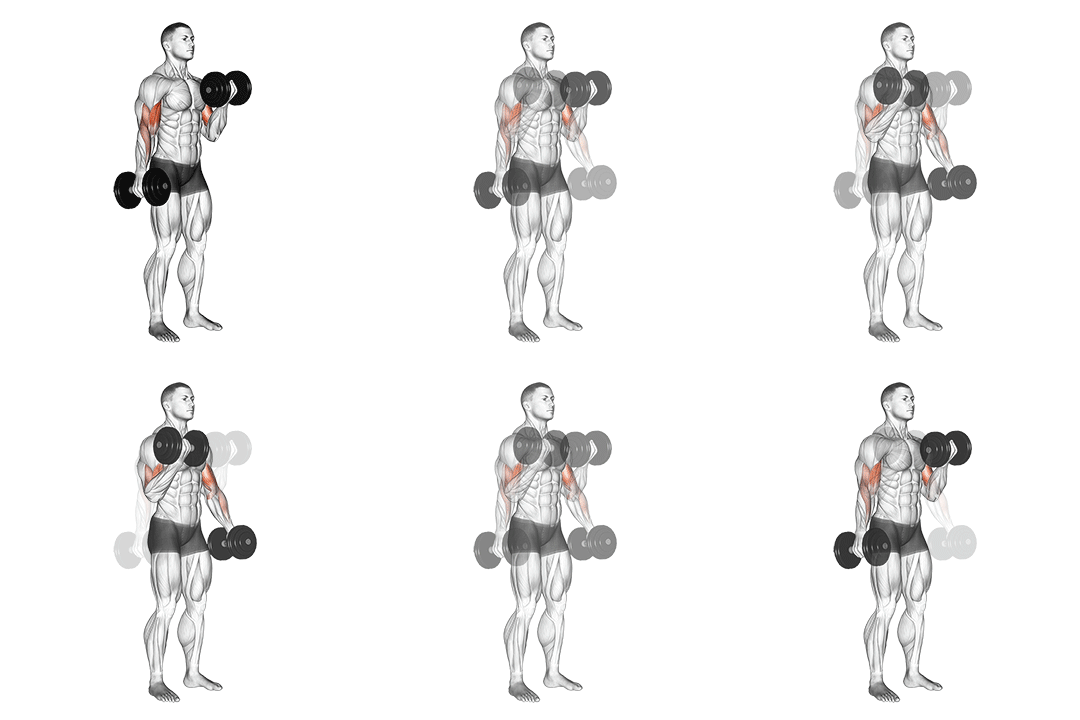
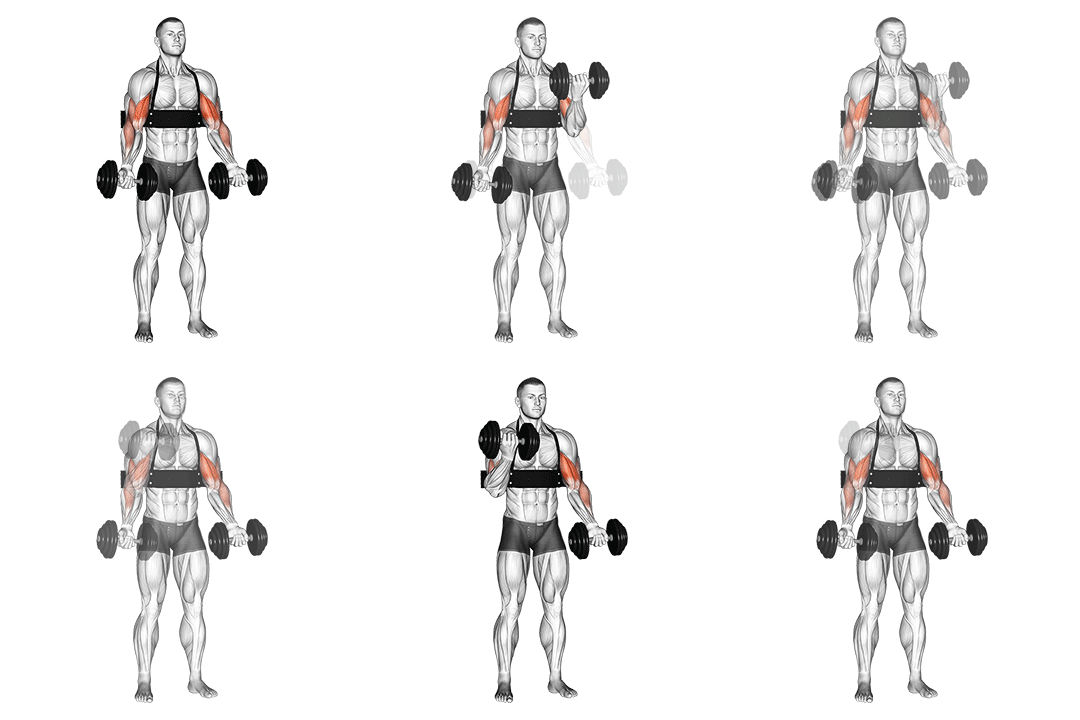
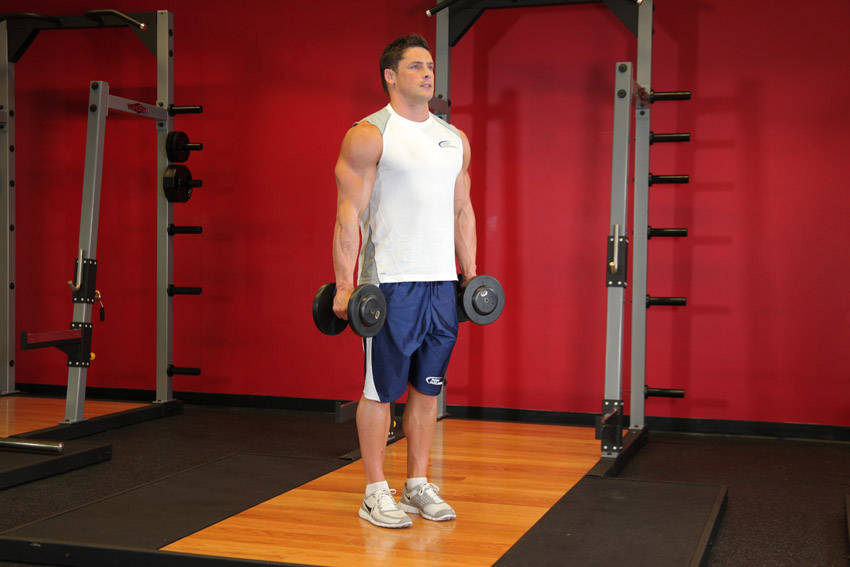
Dumbbell Alternate Biceps Curl demonstration

Dumbbell Alternate Biceps Curl

Target Biceps
Equipment Dumbbell
Body Part Upper-arms
Difficulty Beginner
Movement Isolation
Secondary Muscles
Forearms
VS
Exercise B
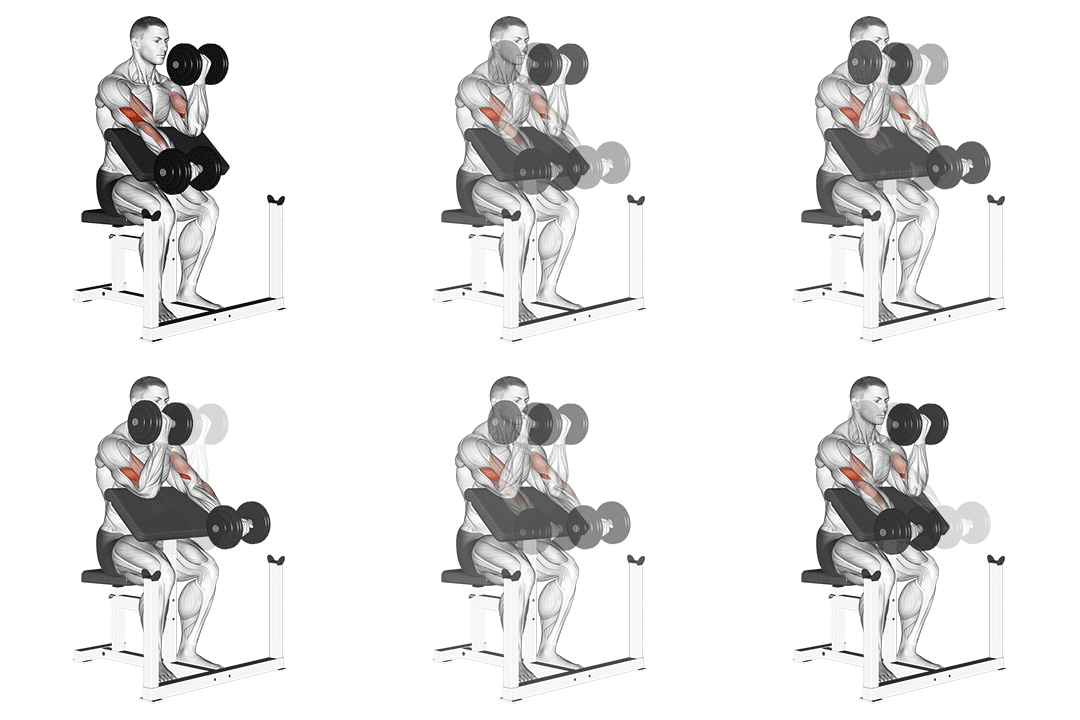
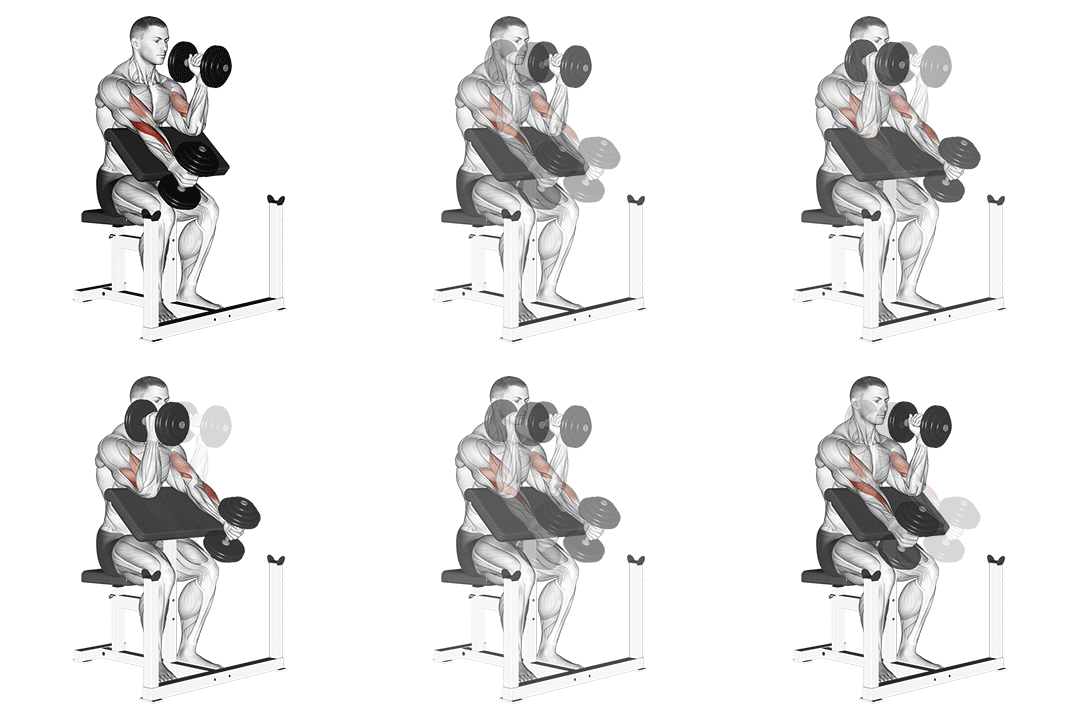
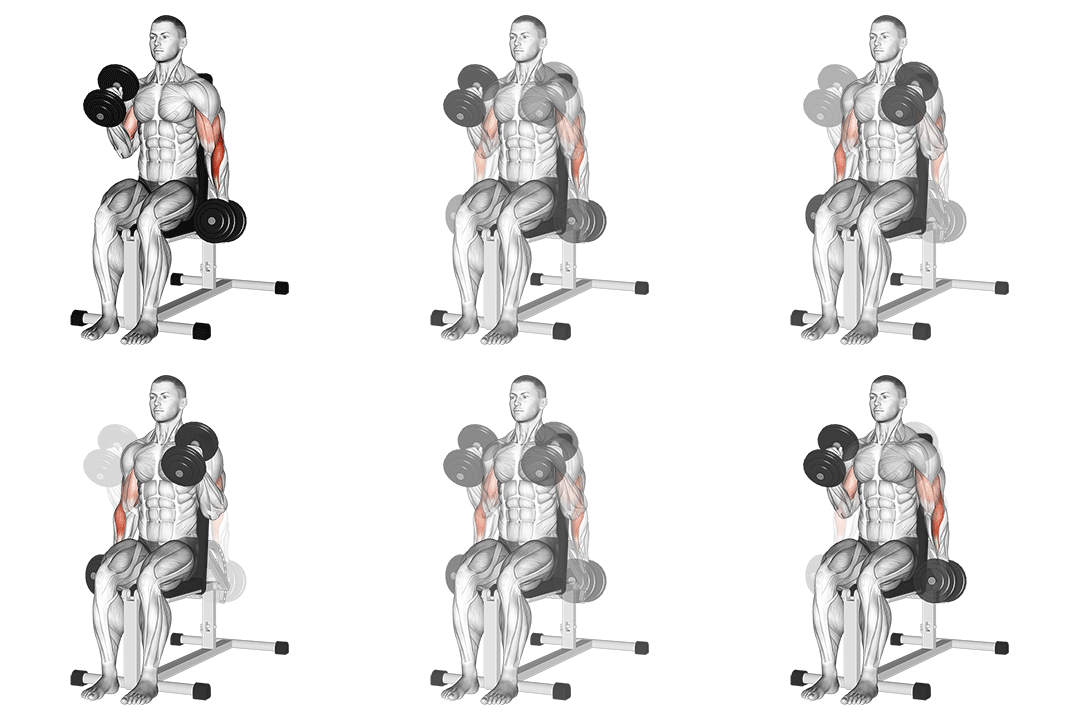
Dumbbell Alternate Preacher Curl demonstration

Dumbbell Alternate Preacher Curl

Target Biceps
Equipment Dumbbell
Body Part Upper-arms
Difficulty Beginner
Movement Isolation
Secondary Muscles
Forearms

Head-to-Head Comparison

Different values are marked. These are catalogue attributes, not performance scores.

Muscles used

Listed target and secondary muscles, shown on the body. Locations, not activation or strength scores.

  • Target
  • Secondary
  • Not highlighted

Dumbbell Alternate Biceps Curl

Front
Dumbbell Alternate Biceps Curl: front muscle locationsSolid: listed target. Striped: listed secondary. Grey: not highlighted. Locations, not activation or strength scores. See the muscle names below.
Back
Dumbbell Alternate Biceps Curl: back muscle locationsSolid: listed target. Striped: listed secondary. Grey: not highlighted. Locations, not activation or strength scores. See the muscle names below.
Target
Biceps
Secondary
Forearms

Dumbbell Alternate Preacher Curl

Front
Dumbbell Alternate Preacher Curl: front muscle locationsSolid: listed target. Striped: listed secondary. Grey: not highlighted. Locations, not activation or strength scores. See the muscle names below.
Back
Dumbbell Alternate Preacher Curl: back muscle locationsSolid: listed target. Striped: listed secondary. Grey: not highlighted. Locations, not activation or strength scores. See the muscle names below.
Target
Biceps
Secondary
Forearms

Grey does not mean a muscle is unused. The diagrams show only the mapped catalogue labels.

Attribute Dumbbell Alternate Biceps Curl Dumbbell Alternate Preacher Curl
Target Muscle
Biceps
Biceps
Body Part
Upper-arms
Upper-arms
Equipment
Dumbbell
Dumbbell
Difficulty
Beginner
Beginner
Movement Type
Isolation
Isolation
Secondary Muscles
Forearms
Forearms

Visual Comparison

An illustrative 1–10 profile derived from catalog difficulty, equipment, and listed-muscle fields—not measured performance or muscle activation.

Key Differences

  • Both exercises target the Biceps using Dumbbell. The catalogue does not establish which exercise is better for an individual goal.

Muscle comparison

Shared target muscles

Both exercises target the biceps brachii as the prime mover through elbow flexion and forearm supination. Peak mechanical tension occurs around mid-range (roughly 60–90° elbow flexion) in both lifts, so both stimulate similar muscle fibers when loaded to failure. Because the movement path is elbow-dominant with minimal shoulder motion, the primary overlap is high — both are isolation moves that place most of the force vector across the elbow joint to load the biceps long and short heads.

Secondary muscle differences

The standing alternate curl recruits stabilizers like the brachialis and wrist extensors more because you must resist trunk sway and shoulder motion; forearm muscles work to control grip and supination. The preacher curl reduces shoulder and scapular involvement, lowering demand on stabilizers and shifting slightly more load to the distal biceps and brachialis at the bottom of the range. Standing curls therefore use more core and shoulder stability, while preacher curls isolate the elbow flexors more tightly.

Muscle involvement analysis

Standing curls allow a small amount of shoulder extension/flexion and torso lean, which can increase peak activation by enabling slight momentum and altering the length-tension relationship across the biceps. Preacher curls fix the upper arm against a pad so the biceps works through a more consistent elbow-only arc; this increases tension at the bottom (near full extension) and reduces cheating. In terms of timing, standing curls show variable activation across repetitions due to stabilization demand, while preacher curls produce a steadier activation curve with higher tension in the terminal ranges.

Equipment and setup

Dumbbell Alternate Biceps Curl: setup

Dumbbell Alternate Biceps Curl requires only a pair of dumbbells and space to stand. No bench or special rig is necessary.

Dumbbell Alternate Preacher Curl: setup

Dumbbell Alternate Preacher Curl requires dumbbells plus a preacher bench or an angled pad to support the upper arm; some people substitute an incline bench set low to mimic the pad.

Access and practicality

Dumbbell Alternate Biceps Curl — it needs the least equipment and can be done in virtually any gym or at home with dumbbells, making it more accessible for most lifters.

Learning and progression

Learning the movements

Dumbbell Alternate Preacher Curl is slightly easier to learn because the pad stabilizes the upper arm and limits compensatory motion; beginners can focus purely on elbow flexion. Standing alternate curls require coordination to keep torso and shoulder neutral and to avoid swinging.

Progression considerations

Standing Dumbbell Alternate Biceps Curl offers broader progression: heavier dumbbells, tempo variations (3–1–1 eccentric/hold/concentric), partials, and unilateral stabilization work. Preacher curls progress by increasing load, tempo, or using advanced drop sets, but the supported position limits how heavy you can safely go compared to standing variations.

Limitations and precautions

Standing curls carry higher risk of cheating-related strain to the lower back and shoulders if posture is poor. Preacher curls reduce momentum but increase stress at the distal biceps insertion and anterior elbow at full extension; controlled ROM and not locking out under heavy load mitigates that risk.

Pros & Cons

Dumbbell Alternate Biceps Curl

+ Pros

  • High accessibility — needs only dumbbells and space
  • Trains stabilization (core, shoulder) alongside elbow flexion
  • Easy to vary grip, tempo, and unilateral loading for balanced development
  • Better for progressive overload with heavier dumbbells and compound sequencing

Cons

  • Higher chance of using momentum and poor form
  • Less strict isolation — more involvement from stabilizers
  • Can stress lower back if you lean or swing

Dumbbell Alternate Preacher Curl

+ Pros

  • Tighter isolation of the biceps with reduced shoulder involvement
  • Steadier tension at the bottom of the range improves time under tension
  • Easier to control the eccentric phase and reduce cheating
  • Good for emphasizing short-head or distal biceps work

Cons

  • Requires a preacher bench or angled pad
  • Can place extra stress on the elbow at full extension
  • Limited ability to safely increase load compared to standing variations

When Each Exercise Wins

1
For muscle hypertrophy: Dumbbell Alternate Preacher Curl

Preacher curls maintain consistent tension through the elbow arc and limit shoulder assistance, increasing time under tension at the biceps’ optimal length. Use 8–12 reps with 2–3 second eccentrics to maximize muscle growth.

2
For strength gains: Dumbbell Alternate Biceps Curl

Standing curls allow safer progression to heavier loads and train stabilizers that support heavier single-arm work; perform 3–6 reps with firm posture to build raw elbow-flexor strength.

3
For beginners: Dumbbell Alternate Preacher Curl

The preacher pad enforces upper-arm position and prevents common cheating patterns, letting a beginner learn strict elbow flexion mechanics before adding complexity.

4
For home workouts: Dumbbell Alternate Biceps Curl

Standing alternate curls only need dumbbells and space, so you can program effective biceps work at home without a specialized bench.

Frequently Asked Questions

Can I do both Dumbbell Alternate Biceps Curl and Dumbbell Alternate Preacher Curl in the same workout?

Yes. Start with the heavier or more technical movement for your primary goal — for example, do standing alternate curls first if you’re lifting heavy for strength, then use preacher curls as a strict isolation finisher for 2–3 sets of 8–12 reps.

Which exercise is better for beginners?

Dumbbell Alternate Preacher Curl is generally better for beginners because the pad stabilizes the arm and reduces common compensations, helping you learn strict elbow flexion before progressing to standing variations.

How do the muscle activation patterns differ?

Preacher curls produce steadier biceps activation with higher relative tension at the bottom of the ROM by removing shoulder involvement. Standing alternate curls show more variable activation and recruit additional stabilizers (shoulder and core), changing the force vectors across the elbow.

Can Dumbbell Alternate Preacher Curl replace Dumbbell Alternate Biceps Curl?

Preacher curls can replace standing curls when your goal is strict isolation or when you lack space, but they don’t fully replace standing curls for progressive overload and stabilizer development. Choose the exercise that matches your immediate training objective.

Comparison Summary

Both exercises deserve a place in a thoughtful program. Use Dumbbell Alternate Preacher Curl when you want strict isolation, steady tension, and to emphasize the biceps at the bottom of the range — ideal for hypertrophy phases (8–12 reps, controlled eccentrics). Choose Dumbbell Alternate Biceps Curl when you need accessibility, progressive overload, and to train stabilizers alongside the biceps — use for strength blocks (3–6 reps) or higher-rep endurance work (12–15). For a balanced routine, alternate them across weeks: prioritize preacher curls for finishers and standing curls for heavier primary sets.

Exercise instructions

Steps from the exercise catalogue. Read the full sequence before starting.

Dumbbell Alternate Biceps Curl

  1. Stand up straight with a dumbbell in each hand, palms facing forward and arms fully extended.
  2. Keeping your upper arms stationary, exhale and curl the weights while contracting your biceps.
  3. Continue to raise the dumbbells until your biceps are fully contracted and the dumbbells are at shoulder level.
Read remaining steps for Dumbbell Alternate Biceps Curl
  1. Hold the contracted position for a brief pause as you squeeze your biceps.
  2. Inhale and slowly begin to lower the dumbbells back to the starting position.
  3. Repeat for the desired number of repetitions, alternating arms.

Dumbbell Alternate Preacher Curl

  1. Sit on a preacher bench with a dumbbell in each hand, palms facing up.
  2. Rest your upper arms on the pad of the preacher bench, allowing your arms to fully extend.
  3. Keeping your upper arms stationary, exhale and curl the dumbbell in your right hand as you contract your biceps.
Read remaining steps for Dumbbell Alternate Preacher Curl
  1. Continue to curl the dumbbell until your biceps are fully contracted and the dumbbell is at shoulder level.
  2. Pause for a moment, then inhale and slowly lower the dumbbell back to the starting position.
  3. Repeat the movement with your left arm.
  4. Continue alternating arms for the desired number of repetitions.

Also Compare

Compare another pair

Choose two exercises to see their differences side by side.

Compare Exercises