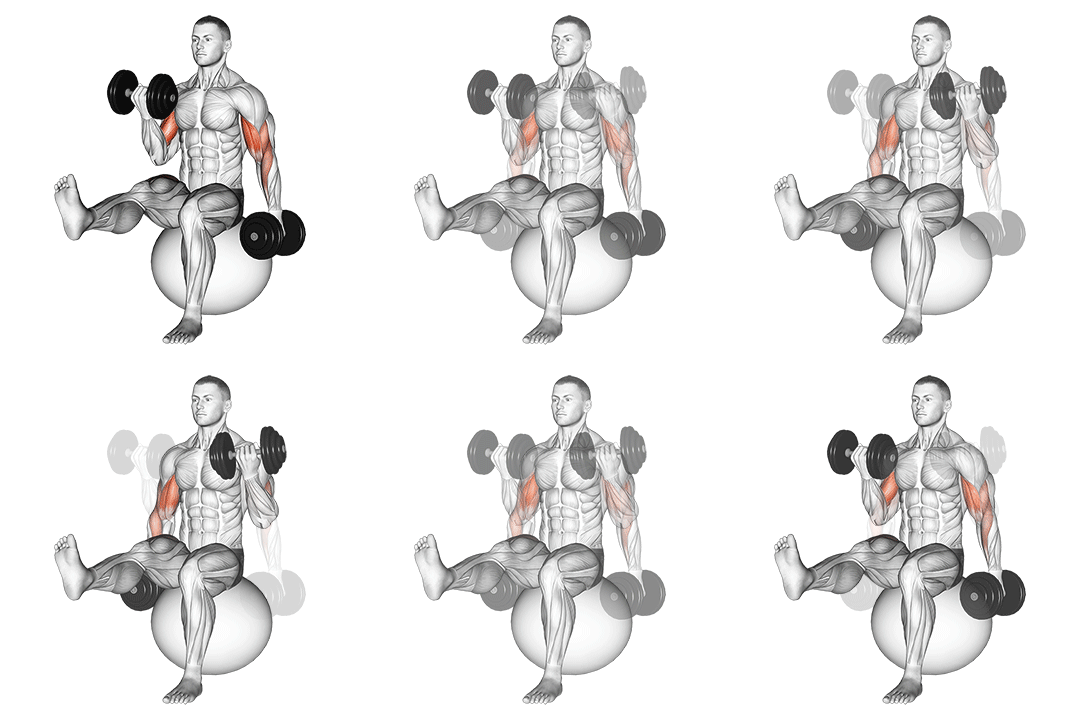
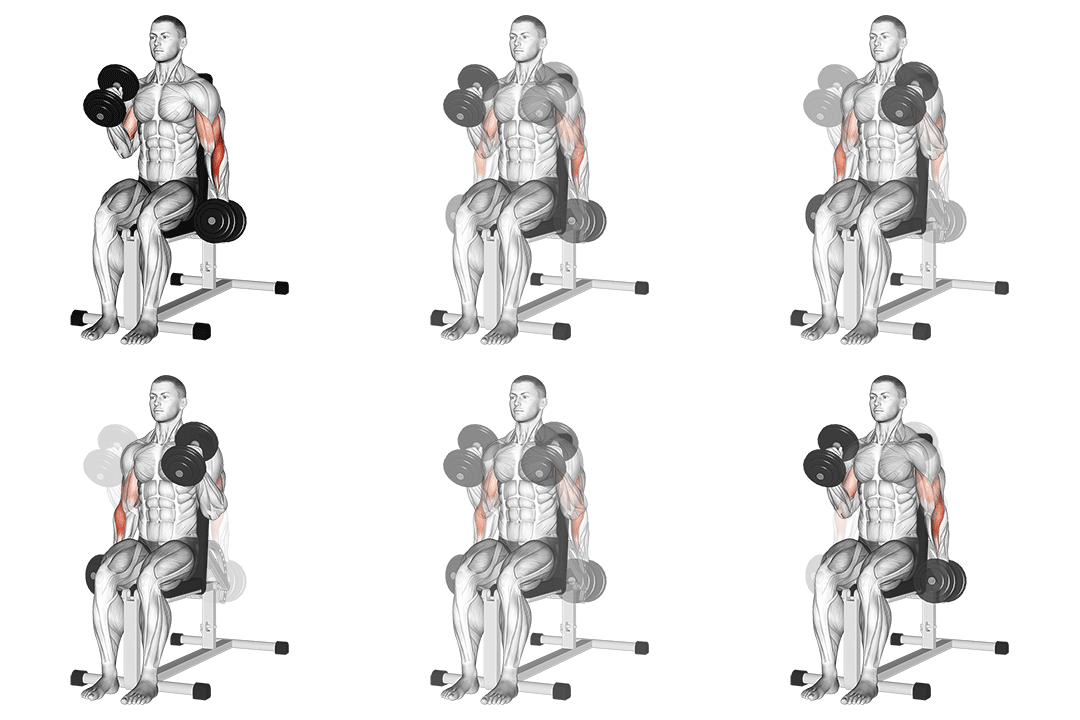
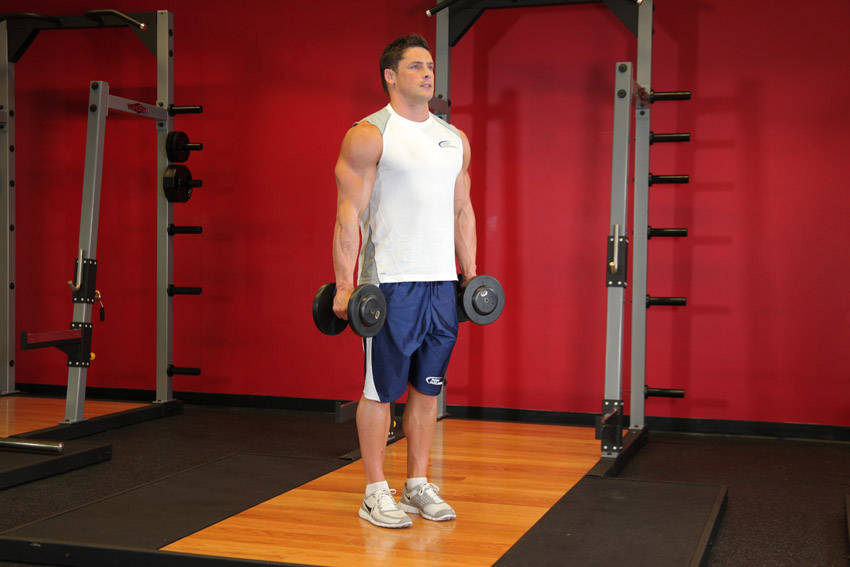
Dumbbell Alternate Biceps Curl (with Arm Blaster) vs Dumbbell Alternate Preacher Curl

Compare target muscles, equipment, difficulty, movement type, and secondary muscles for Dumbbell Alternate Biceps Curl (with Arm Blaster) and Dumbbell Alternate Preacher Curl.

Change comparison Share

Get comparison link

Select the link and use your device's Copy command.

Comparison overview

AI-generated
Dumbbell Alternate Biceps Curl (with Arm Blaster) vs Dumbbell Alternate Preacher Curl — which should you pick for thicker arms? You’ll get clear, practical guidance here. I’ll compare how each targets the biceps, how secondary muscles and joint angles alter force production, what equipment you need, and which move best fits your goal—hypertrophy, strength, beginner learning, or home workouts. Expect cues you can use immediately (elbow position, tempo, rep ranges), plus decisive recommendations so you can structure your next arm session with confidence.

Exercise Comparison

Exercise A
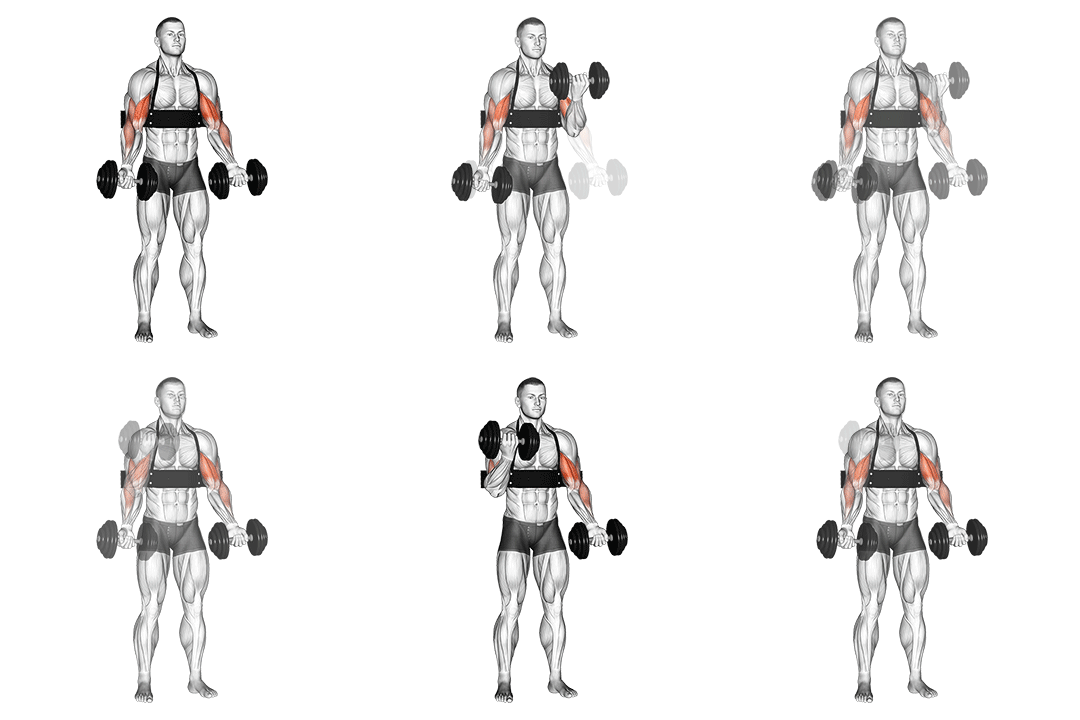
Dumbbell Alternate Biceps Curl (with Arm Blaster) demonstration

Dumbbell Alternate Biceps Curl (with Arm Blaster)

Target Biceps
Equipment Dumbbell
Body Part Upper-arms
Difficulty Beginner
Movement Isolation
Secondary Muscles
Forearms
VS
Exercise B
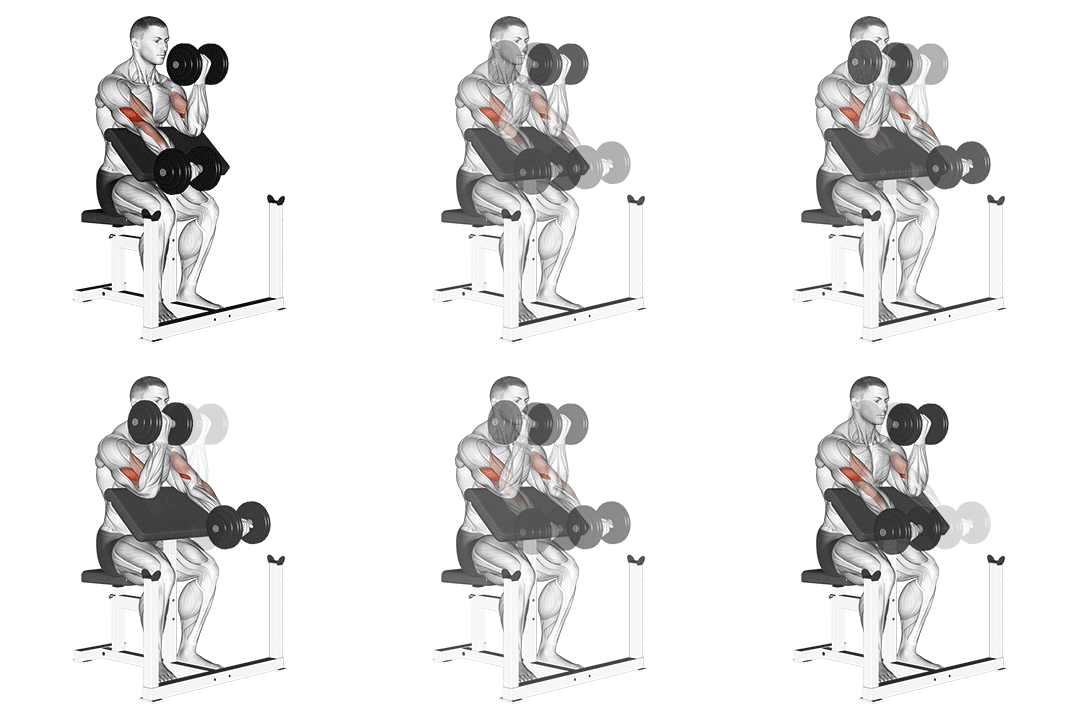
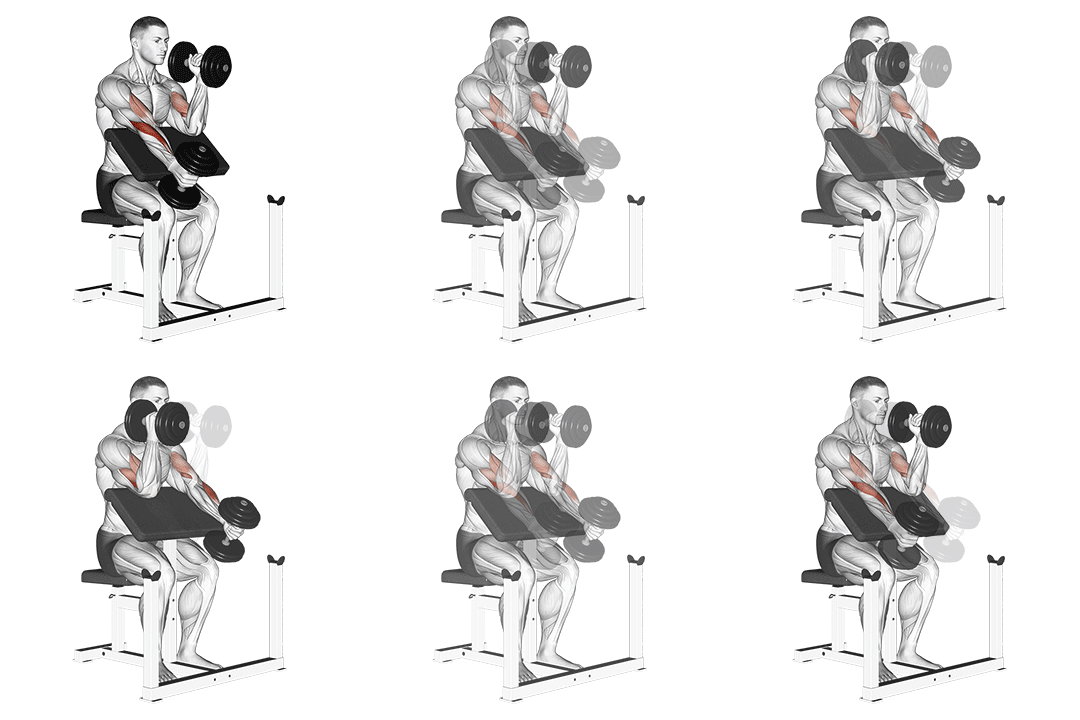
Dumbbell Alternate Preacher Curl demonstration

Dumbbell Alternate Preacher Curl

Target Biceps
Equipment Dumbbell
Body Part Upper-arms
Difficulty Beginner
Movement Isolation
Secondary Muscles
Forearms

Head-to-Head Comparison

Different values are marked. These are catalogue attributes, not performance scores.

Muscles used

Listed target and secondary muscles, shown on the body. Locations, not activation or strength scores.

  • Target
  • Secondary
  • Not highlighted

Dumbbell Alternate Biceps Curl (with Arm Blaster)

Front
Dumbbell Alternate Biceps Curl (with Arm Blaster): front muscle locationsSolid: listed target. Striped: listed secondary. Grey: not highlighted. Locations, not activation or strength scores. See the muscle names below.
Back
Dumbbell Alternate Biceps Curl (with Arm Blaster): back muscle locationsSolid: listed target. Striped: listed secondary. Grey: not highlighted. Locations, not activation or strength scores. See the muscle names below.
Target
Biceps
Secondary
Forearms

Dumbbell Alternate Preacher Curl

Front
Dumbbell Alternate Preacher Curl: front muscle locationsSolid: listed target. Striped: listed secondary. Grey: not highlighted. Locations, not activation or strength scores. See the muscle names below.
Back
Dumbbell Alternate Preacher Curl: back muscle locationsSolid: listed target. Striped: listed secondary. Grey: not highlighted. Locations, not activation or strength scores. See the muscle names below.
Target
Biceps
Secondary
Forearms

Grey does not mean a muscle is unused. The diagrams show only the mapped catalogue labels.

Attribute Dumbbell Alternate Biceps Curl (with Arm Blaster) Dumbbell Alternate Preacher Curl
Target Muscle
Biceps
Biceps
Body Part
Upper-arms
Upper-arms
Equipment
Dumbbell
Dumbbell
Difficulty
Beginner
Beginner
Movement Type
Isolation
Isolation
Secondary Muscles
Forearms
Forearms

Visual Comparison

An illustrative 1–10 profile derived from catalog difficulty, equipment, and listed-muscle fields—not measured performance or muscle activation.

Key Differences

  • Both exercises target the Biceps using Dumbbell. The catalogue does not establish which exercise is better for an individual goal.

Muscle comparison

Shared target muscles

Both exercises isolate the biceps brachii through elbow flexion, engaging the muscle across roughly the same ROM (elbow nearly extended to ~120–130° of flexion). Both emphasize concentric peak torque around 40–60° of elbow flexion, so they produce strong biceps activation when loaded in the 6–12 rep range for hypertrophy.

Secondary muscle differences

The arm blaster setup pins the elbows behind the torso, limiting shoulder horizontal flexion and reducing upper-arm inertia; this lowers deltoid/upper-chest contribution. The preacher bench places the upper arm forward (bench typically set ~45°), shortening the long head of the biceps and shifting relative load toward the short head and brachialis. Forearm flexors (brachioradialis) assist slightly more on heavy, neutral-grip variations.

Muscle involvement analysis

With the arm blaster you maintain a straighter force vector through the elbow by preventing forward elbow travel, so tension remains high through the full concentric and eccentric phases. The preacher curl fixes the humerus forward, reducing shoulder ROM and concentrating load early in the concentric phase; length-tension mechanics mean the long head contributes less when the shoulder is flexed, changing peak activation timing and emphasizing mid-range collapse prevention.

Equipment and setup

Dumbbell Alternate Biceps Curl (with Arm Blaster): setup

Dumbbell Alternate Biceps Curl (with Arm Blaster) requires one pair of dumbbells and an arm blaster (or a comparable DIY pad/strap to pin elbows). You need enough clearance to stand upright and let your forearm rotate freely.

Dumbbell Alternate Preacher Curl: setup

Dumbbell Alternate Preacher Curl requires a preacher bench (or incline bench set to ~45° with pad support) and dumbbells. The necessary setup fixes the humerus and limits body sway.

Access and practicality

Dumbbell Alternate Biceps Curl (with Arm Blaster) — more accessible because an arm blaster or simple elbow pin can be improvised and it needs only dumbbells; a preacher bench is less common outside gyms.

Learning and progression

Learning the movements

Dumbbell Alternate Preacher Curl is slightly easier to learn because the bench stabilizes the arm and reduces cheating; beginners can focus on elbow flexion without managing torso posture. The arm blaster variation requires learning to keep the elbows back and to control scapular position.

Progression considerations

Arm Blaster curls offer broader progression options: heavier loads, tempo changes (2–3s eccentric), and constant tension variations. Preacher curls progress well with strict loading but are limited if you rely on bench geometry for stability rather than muscular control.

Limitations and precautions

Both are low-risk when performed with light-to-moderate loads. Preacher curls can increase anterior elbow and biceps tendon stress if you lock the elbow or use excessive ROM; keep controlled eccentrics. Arm Blaster curls risk shoulder strain if you force retracted elbows with too-heavy weights; prioritize technique.

Pros & Cons

Dumbbell Alternate Biceps Curl (with Arm Blaster)

+ Pros

  • Maintains elbow position to minimize cheating and increase time under tension
  • Better for developing peak contraction and maintaining tension through full ROM
  • Easier to replicate at home with minimal kit
  • Versatile for tempo and loading variations (drop sets, slow eccentrics)

Cons

  • Requires an arm blaster or equivalent for optimal effect
  • Harder to learn proper elbow/supraspinatus positioning for beginners
  • Can place added anterior shoulder stress if form breaks with heavy load

Dumbbell Alternate Preacher Curl

+ Pros

  • Bench stabilizes the arm, making strict reps easier for novices
  • Shortens the long head to emphasize the short head and brachialis
  • Good for controlled negatives and tempo work
  • Limits torso cheating, improving pure elbow flexor isolation

Cons

  • Preacher bench is less available in home setups
  • Front-loaded arm position can reduce long-head contribution
  • Fixed position may feel uncomfortable for some elbow anatomies

When Each Exercise Wins

1
For muscle hypertrophy: Dumbbell Alternate Biceps Curl (with Arm Blaster)

The arm blaster keeps tension constant through the ROM and reduces elbow travel, increasing time under tension. Use 8–12 reps with 2–3 second eccentrics to maximize mechanical tension and metabolic stress.

2
For strength gains: Dumbbell Alternate Biceps Curl (with Arm Blaster)

Because it forces strict elbow position and allows heavier loading with less body swing, the arm blaster version supports progressive overload for 4–6 rep strength blocks better than the preacher variation.

3
For beginners: Dumbbell Alternate Preacher Curl

The preacher bench stabilizes the arm and removes torso compensation, making it easier to learn strict elbow flexion mechanics and safely groove the curl pattern at lighter weights (10–15 reps).

4
For home workouts: Dumbbell Alternate Biceps Curl (with Arm Blaster)

Requires only dumbbells and a simple arm‑blaster or improvised elbow pad, while preacher curls usually need a bench setup that many home gyms lack.

Frequently Asked Questions

Can I do both Dumbbell Alternate Biceps Curl (with Arm Blaster) and Dumbbell Alternate Preacher Curl in the same workout?

Yes. Start with the heavier, tension-focused exercise (arm blaster) for 3–4 sets of 6–10 reps, then finish with preacher curls for 2–3 sets of 10–15 reps to target the short head and add metabolic stress.

Which exercise is better for beginners?

Dumbbell Alternate Preacher Curl is better initially because the bench stabilizes the humerus and prevents torso cheat, helping you groove strict elbow flexion before adding complexity like an arm blaster.

How do the muscle activation patterns differ?

The arm blaster keeps the elbow posterior, preserving tension across the biceps’ full length and engaging the long head more through mid-to-peak contraction. The preacher position shortens the long head and shifts relative load toward the short head and brachialis due to shoulder flexion and altered length-tension.

Can Dumbbell Alternate Preacher Curl replace Dumbbell Alternate Biceps Curl (with Arm Blaster)?

Yes for isolation work focused on strict form or short-head emphasis, but not if your goal is maximum constant tension and progressive overload without torso compensation. Use preacher curls as a complementary movement rather than a strict one-to-one replacement for long-term variety.

Comparison Summary

Both curls isolate the biceps effectively, but choose based on your goal and gear. Use the arm blaster variation when you want constant tension, less cheating, and clear progression for hypertrophy or low-rep strength blocks—keep reps in 6–12 for hypertrophy and 4–6 for strength, with controlled 2–3s eccentrics. Pick the preacher curl when you’re a beginner learning strict elbow flexion or when you want to emphasize the short head and brachialis through a fixed lever arm. Rotate both across training phases to hit different length-tension scenarios and avoid adaptation.

Exercise instructions

Steps from the exercise catalogue. Read the full sequence before starting.

Dumbbell Alternate Biceps Curl (with Arm Blaster)

  1. Stand up straight with your feet shoulder-width apart and hold a dumbbell in each hand, palms facing forward.
  2. Place the arm blaster on your upper arms, ensuring a secure fit.
  3. Keeping your upper arms stationary, exhale and curl one dumbbell up towards your shoulder while contracting your biceps.
Read remaining steps for Dumbbell Alternate Biceps Curl (with Arm Blaster)
  1. Continue to raise the dumbbell until your biceps are fully contracted and the dumbbell is at shoulder level.
  2. Hold the contracted position for a brief pause as you squeeze your biceps.
  3. Inhale and slowly lower the dumbbell back to the starting position.
  4. Repeat the movement with the opposite arm.
  5. Continue alternating arms for the desired number of repetitions.

Dumbbell Alternate Preacher Curl

  1. Sit on a preacher bench with a dumbbell in each hand, palms facing up.
  2. Rest your upper arms on the pad of the preacher bench, allowing your arms to fully extend.
  3. Keeping your upper arms stationary, exhale and curl the dumbbell in your right hand as you contract your biceps.
Read remaining steps for Dumbbell Alternate Preacher Curl
  1. Continue to curl the dumbbell until your biceps are fully contracted and the dumbbell is at shoulder level.
  2. Pause for a moment, then inhale and slowly lower the dumbbell back to the starting position.
  3. Repeat the movement with your left arm.
  4. Continue alternating arms for the desired number of repetitions.

Also Compare

Compare another pair

Choose two exercises to see their differences side by side.

Compare Exercises