Dumbbell Alternate Biceps Curl vs Dumbbell Alternate Seated Hammer Curl
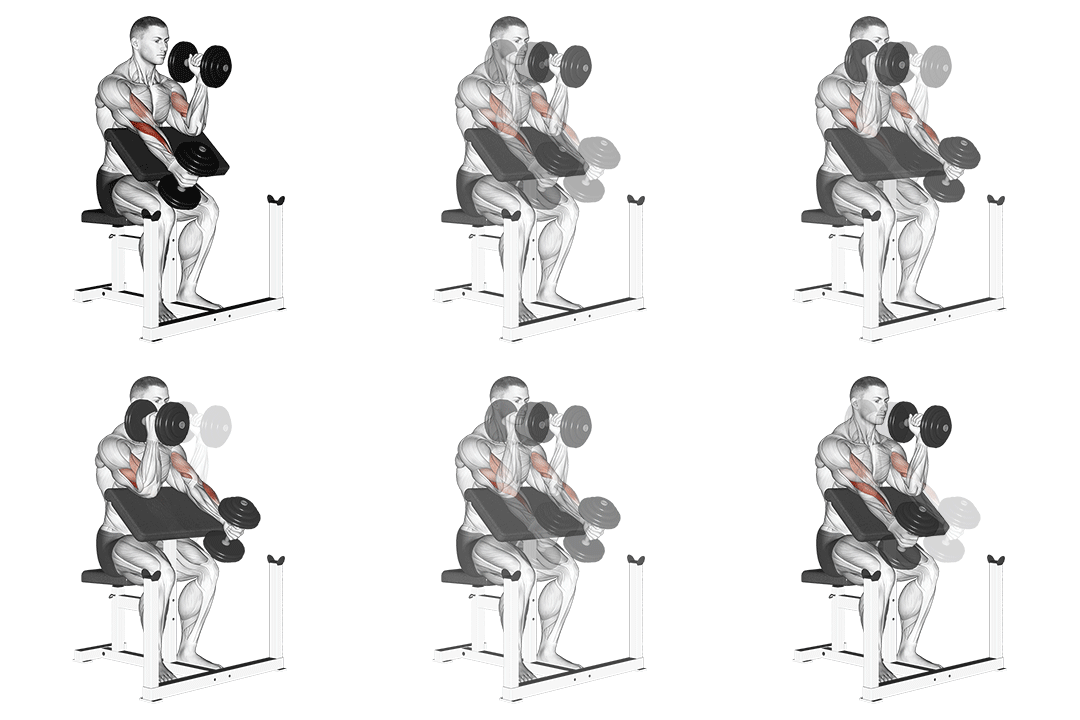
Compare target muscles, equipment, difficulty, movement type, and secondary muscles for Dumbbell Alternate Biceps Curl and Dumbbell Alternate Seated Hammer Curl.

Change comparison Share

Get comparison link

Select the link and use your device's Copy command.

Comparison overview

AI-generated
Dumbbell Alternate Biceps Curl vs Dumbbell Alternate Seated Hammer Curl — two beginner-friendly isolation moves that both target the biceps and forearms. If you want clear guidance on which to choose, this comparison walks you through muscle activation, biomechanics, equipment needs, learning curve, and practical progressions. You’ll get technique cues (elbow position, wrist orientation, tempo), rep-range recommendations (6–12 for strength, 8–15 for hypertrophy), and scenarios showing when to prioritize one exercise over the other. Read on so you can pick the option that fits your goals and training setup.
Exercise Comparison

Exercise A
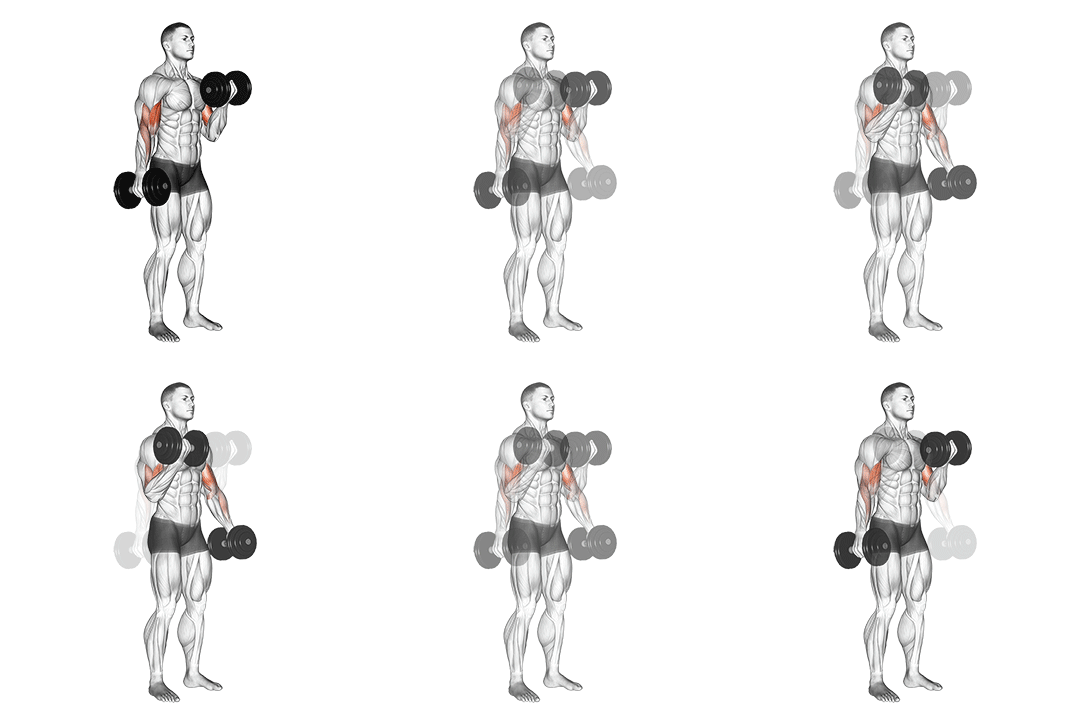
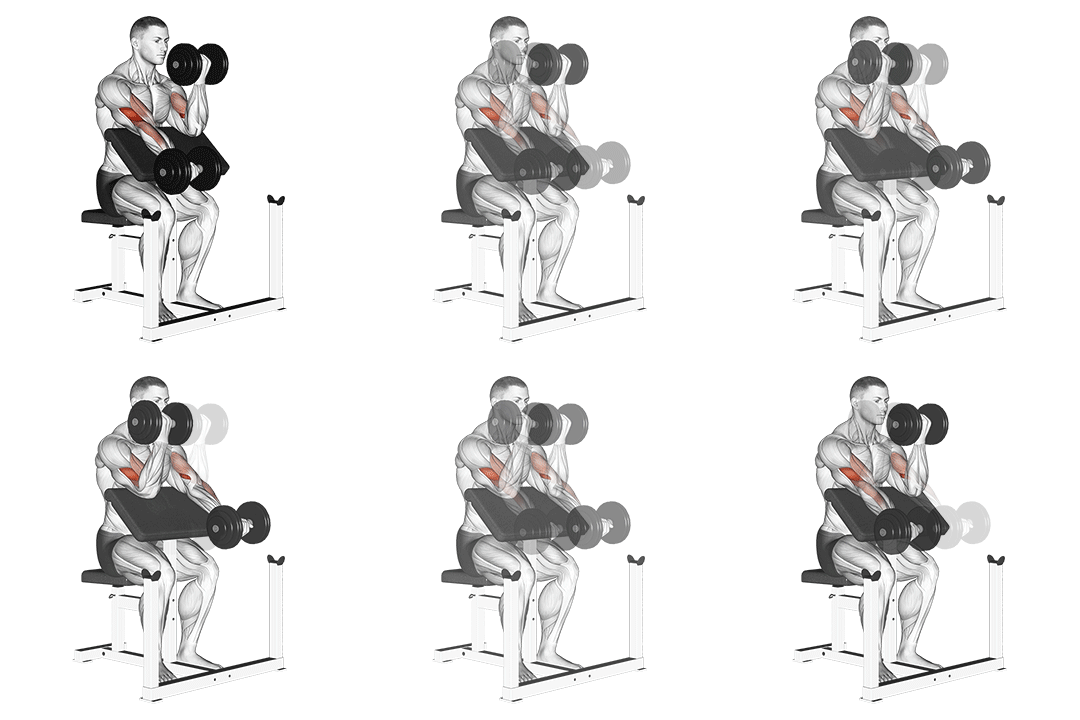
Dumbbell Alternate Biceps Curl demonstration

Dumbbell Alternate Biceps Curl

Target Biceps
Equipment Dumbbell
Body Part Upper-arms
Difficulty Beginner
Movement Isolation
Secondary Muscles
Forearms
VS
Exercise B
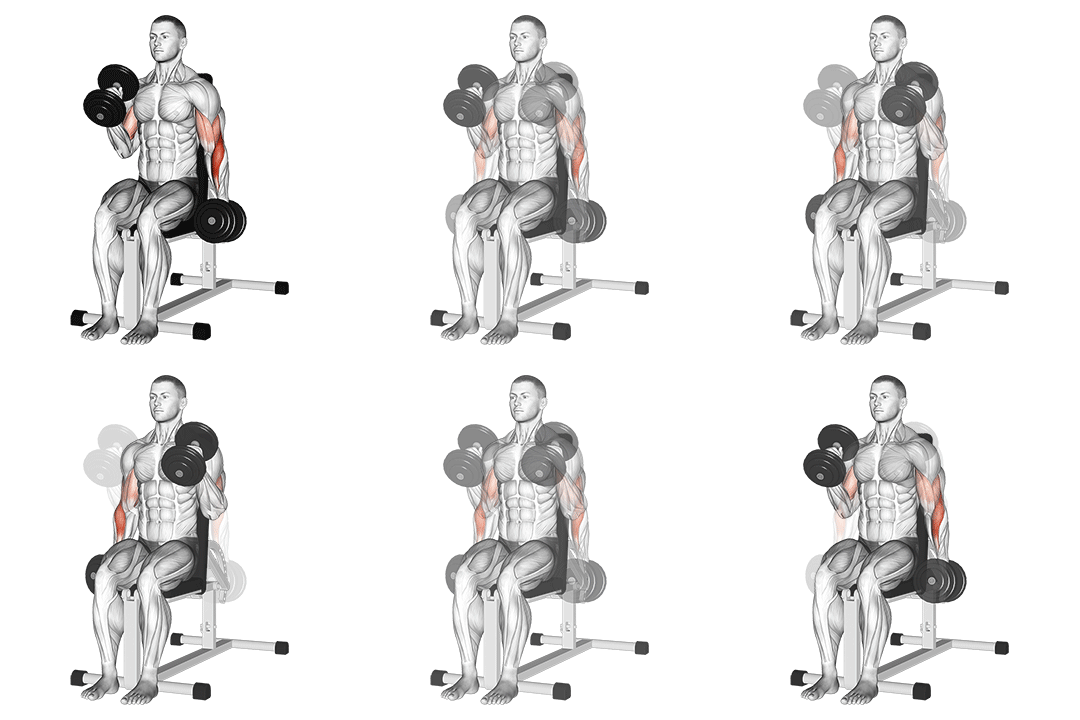
Dumbbell Alternate Seated Hammer Curl demonstration
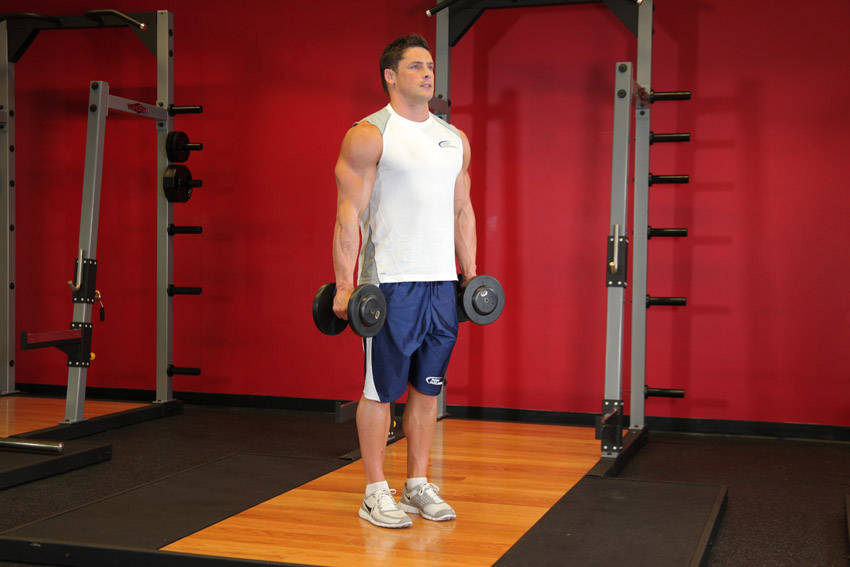
Dumbbell Alternate Seated Hammer Curl

Target Biceps
Equipment Dumbbell
Body Part Upper-arms
Difficulty Beginner
Movement Isolation
Secondary Muscles
Forearms

Head-to-Head Comparison

Different values are marked. These are catalogue attributes, not performance scores.

Muscles used

Listed target and secondary muscles, shown on the body. Locations, not activation or strength scores.

  • Target
  • Secondary
  • Not highlighted

Dumbbell Alternate Biceps Curl

Front
Dumbbell Alternate Biceps Curl: front muscle locationsSolid: listed target. Striped: listed secondary. Grey: not highlighted. Locations, not activation or strength scores. See the muscle names below.
Back
Dumbbell Alternate Biceps Curl: back muscle locationsSolid: listed target. Striped: listed secondary. Grey: not highlighted. Locations, not activation or strength scores. See the muscle names below.
Target
Biceps
Secondary
Forearms

Dumbbell Alternate Seated Hammer Curl

Front
Dumbbell Alternate Seated Hammer Curl: front muscle locationsSolid: listed target. Striped: listed secondary. Grey: not highlighted. Locations, not activation or strength scores. See the muscle names below.
Back
Dumbbell Alternate Seated Hammer Curl: back muscle locationsSolid: listed target. Striped: listed secondary. Grey: not highlighted. Locations, not activation or strength scores. See the muscle names below.
Target
Biceps
Secondary
Forearms

Grey does not mean a muscle is unused. The diagrams show only the mapped catalogue labels.

Attribute Dumbbell Alternate Biceps Curl Dumbbell Alternate Seated Hammer Curl
Target Muscle
Biceps
Biceps
Body Part
Upper-arms
Upper-arms
Equipment
Dumbbell
Dumbbell
Difficulty
Beginner
Beginner
Movement Type
Isolation
Isolation
Secondary Muscles
Forearms
Forearms

Visual Comparison

An illustrative 1–10 profile derived from catalog difficulty, equipment, and listed-muscle fields—not measured performance or muscle activation.

Key Differences

  • Both exercises target the Biceps using Dumbbell. The catalogue does not establish which exercise is better for an individual goal.

Muscle comparison

Shared target muscles

Both exercises primarily load the biceps brachii through elbow flexion. The alternate supinated curl emphasizes the biceps brachii more directly because supination increases the moment arm of the biceps tendon, allowing greater torque at the elbow. The seated hammer curl still uses the biceps but shifts some load to the brachialis because the neutral grip reduces supination demand while preserving elbow flexion.

Secondary muscle differences

The seated hammer curl recruits the brachialis and brachioradialis more strongly due to the neutral grip and line of pull; expect roughly 10–20% greater brachialis/BR engagement versus a full supinated curl. The alternate supinated curl brings more activation of the supinator muscles and the distal biceps fibers during the concentric phase, increasing peak biceps stress during the 60°–100° elbow range.

Muscle involvement analysis

During a supinated alternate curl, peak biceps activation occurs near 60°–90° of elbow flexion when length-tension and moment arm align for maximal torque. Hammer curls produce a more constant brachialis load across the ROM because the force vector is more aligned with the forearm; this reduces the dependence on forearm supination torque and increases involvement of the elbow flexor complex throughout both concentric and eccentric phases.

Equipment and setup

Dumbbell Alternate Biceps Curl: setup

Dumbbell Alternate Biceps Curl requires a pair of dumbbells. You can perform it standing or seated; no bench is required. Optional: mirror for form, wrist straps if grip fatigue is limiting.

Dumbbell Alternate Seated Hammer Curl: setup

Dumbbell Alternate Seated Hammer Curl requires dumbbells and a flat bench or sturdy chair to sit on for the seated variation. A bench helps remove lower-body momentum and enforces a strict vertical torso.

Access and practicality

Dumbbell Alternate Biceps Curl — more accessible because you can do it standing with any set of dumbbells and no bench. The standing variation also fits small spaces and minimal setups.

Learning and progression

Learning the movements

Both are beginner-friendly isolation moves, but the seated hammer curl has a slightly easier learning curve since the neutral grip and seated position limit momentum and spinal involvement. The alternate standing curl requires more elbow control to avoid swinging.

Progression considerations

Dumbbell Alternate Biceps Curl offers broader progression options (incline curls, preacher curls, heavier loads, iso-holds, advanced tempos) to emphasize long-head or short-head bias. Seated hammer curls progress well too via heavier dumbbells and slower eccentrics, but variation options are fewer for isolating the biceps brachii specifically.

Limitations and precautions

Both have low injury risk when performed with controlled tempo and proper elbow position. Standing alternate curls carry a higher risk of lower-back compensation if you swing the torso; seated hammer curls reduce that risk but can load the wrist and elbow if excessive weight is used.

Pros & Cons

Dumbbell Alternate Biceps Curl

+ Pros

  • Direct biceps brachii emphasis via supination and elbow flexion
  • Highly versatile — standing, seated, incline, preacher variations
  • Easy to emphasize peak contraction at 60°–90° elbow flexion
  • No bench required; very accessible for home training

Cons

  • Prone to cheating and torso swing with heavy loads
  • Slightly less emphasis on brachialis and brachioradialis
  • May stress the distal biceps tendon under poor form

Dumbbell Alternate Seated Hammer Curl

+ Pros

  • Neutral grip increases brachialis and brachioradialis recruitment for thicker arms
  • Seated position reduces momentum and lumbar involvement
  • Better carryover to pulling/grip tasks due to neutral wrist
  • Low technical demand — easy for beginners to adopt strict form

Cons

  • Requires a bench or chair for seated strictness
  • Less peak biceps brachii supination stress compared to supinated curl
  • Fewer exercise variations to isolate long-head vs short-head of biceps

When Each Exercise Wins

1
For muscle hypertrophy: Dumbbell Alternate Biceps Curl

The supinated curl places greater peak load on the biceps brachii, especially around 60°–90° elbow flexion, making it better for targeted hypertrophy. Use 8–12 reps with controlled 2–3s eccentrics to maximize muscle tension and metabolic stress.

2
For strength gains: Dumbbell Alternate Seated Hammer Curl

Hammer curls strengthen the brachialis and brachioradialis and often allow you to handle slightly heavier weights due to the neutral grip, improving overall elbow flexion strength and carryover to functional pulling movements.

3
For beginners: Dumbbell Alternate Seated Hammer Curl

Seated hammer curls limit torso swing and simplify mechanics, making it easier to learn strict elbow flexion and maintain a steady tempo. That controlled environment reduces technique errors and lowers injury risk.

4
For home workouts: Dumbbell Alternate Biceps Curl

You can perform standing alternate curls with only a set of dumbbells and minimal space. No bench is required, so they’re more practical when equipment is limited.

Frequently Asked Questions

Can I do both Dumbbell Alternate Biceps Curl and Dumbbell Alternate Seated Hammer Curl in the same workout?

Yes — pairing them in the same session gives balanced stimulus: use the seated hammer first for heavier compound-style sets (6–8 reps) to tax the brachialis, then the supinated alternate curl for higher-rep biceps isolation (8–12 reps). Sequence to match your priority and manage fatigue.

Which exercise is better for beginners?

Dumbbell Alternate Seated Hammer Curl is usually better for beginners because the seated, neutral-grip position minimizes momentum and simplifies form. It establishes solid elbow-flexion mechanics before progressing to strict supinated curls.

How do the muscle activation patterns differ?

Supinated alternate curls increase biceps brachii activation by improving the supination moment arm, with peak activation near 60°–90° elbow flexion. Hammer curls shift the force vector to recruit the brachialis and brachioradialis more evenly across the range, producing steadier elbow-flexor loading.

Can Dumbbell Alternate Seated Hammer Curl replace Dumbbell Alternate Biceps Curl?

It can replace it for building elbow-flexion strength and overall arm thickness, but it won’t target the biceps brachii long-head to the same extent. If maximal biceps peak and shape are your goals, keep the supinated curl in your program at least periodically.

Comparison Summary

Choose the Dumbbell Alternate Biceps Curl when your primary goal is targeted biceps hypertrophy and you want flexible variations without a bench. Focus on full supination, keep elbows tucked, and load the concentric peak at 60°–90° with 8–12 reps and slow 2–3s eccentrics. Opt for the Dumbbell Alternate Seated Hammer Curl when you want to build thicker arms via the brachialis and improve elbow-flexion strength with reduced momentum; sit tall, keep wrists neutral, and use 6–10 reps for heavier sets or 10–15 reps for metabolic work. Pair both across weeks for balanced development: prioritize the curl that matches your current goal but rotate to address weak links.

Exercise instructions

Steps from the exercise catalogue. Read the full sequence before starting.

Dumbbell Alternate Biceps Curl

  1. Stand up straight with a dumbbell in each hand, palms facing forward and arms fully extended.
  2. Keeping your upper arms stationary, exhale and curl the weights while contracting your biceps.
  3. Continue to raise the dumbbells until your biceps are fully contracted and the dumbbells are at shoulder level.
Read remaining steps for Dumbbell Alternate Biceps Curl
  1. Hold the contracted position for a brief pause as you squeeze your biceps.
  2. Inhale and slowly begin to lower the dumbbells back to the starting position.
  3. Repeat for the desired number of repetitions, alternating arms.

Dumbbell Alternate Seated Hammer Curl

  1. Sit on a bench with a dumbbell in each hand, palms facing your torso and arms extended down.
  2. Keep your back straight and your elbows close to your torso.
  3. Exhale and curl the dumbbell in your right hand towards your shoulder, keeping your upper arm stationary.
Read remaining steps for Dumbbell Alternate Seated Hammer Curl
  1. Continue to raise the dumbbell until your biceps are fully contracted and the dumbbell is at shoulder level.
  2. Pause for a brief moment, then inhale and slowly lower the dumbbell back to the starting position.
  3. Repeat the movement with your left arm.
  4. Continue alternating arms for the desired number of repetitions.

Also Compare

Compare another pair

Choose two exercises to see their differences side by side.

Compare Exercises