

Dumbbell Alternate Biceps Curl (With Arm Blaster) vs Dumbbell Alternating Bicep Curl With Leg Raised On Exercise Ball
Compare target muscles, equipment, difficulty, movement type, and secondary muscles for Dumbbell Alternate Biceps Curl (With Arm Blaster) and Dumbbell Alternating Bicep Curl With Leg Raised On Exercise Ball.
Get comparison link
Select the link and use your device's Copy command.
Comparison overview
AI-generatedExercise Comparison
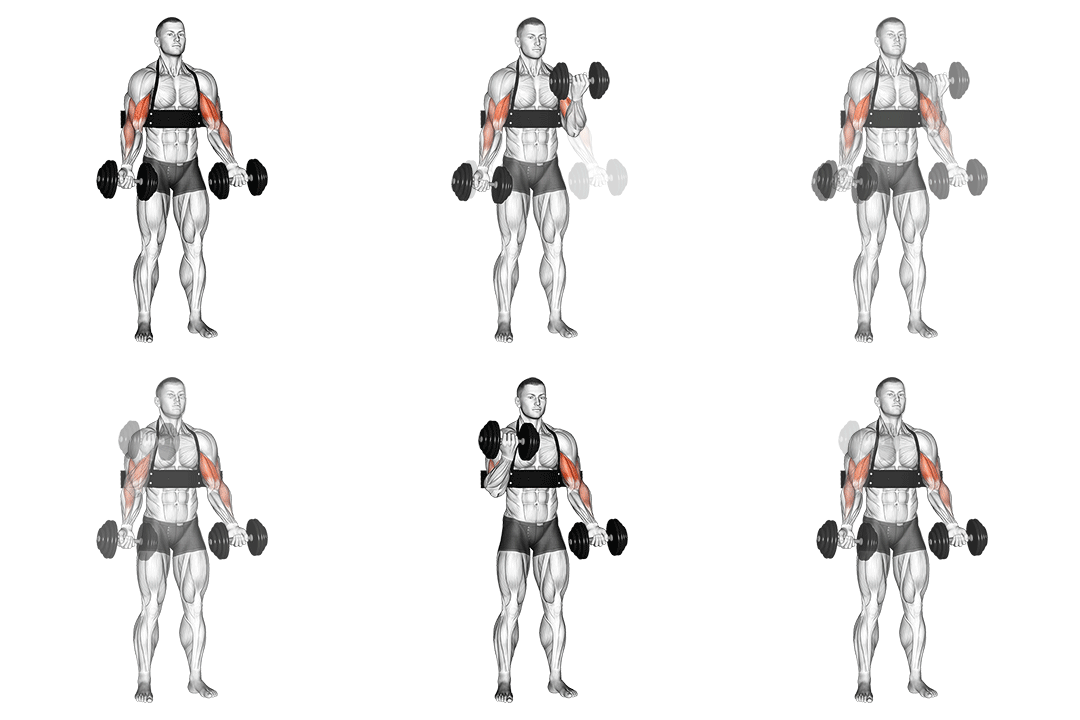
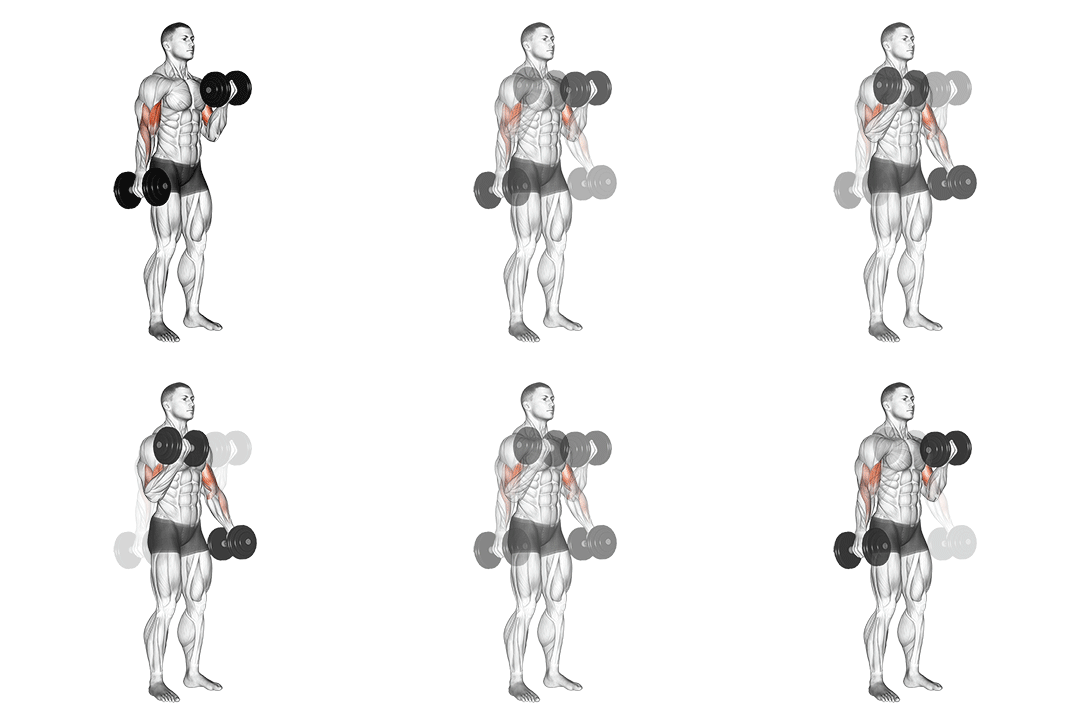
Dumbbell Alternate Biceps Curl (With Arm Blaster)
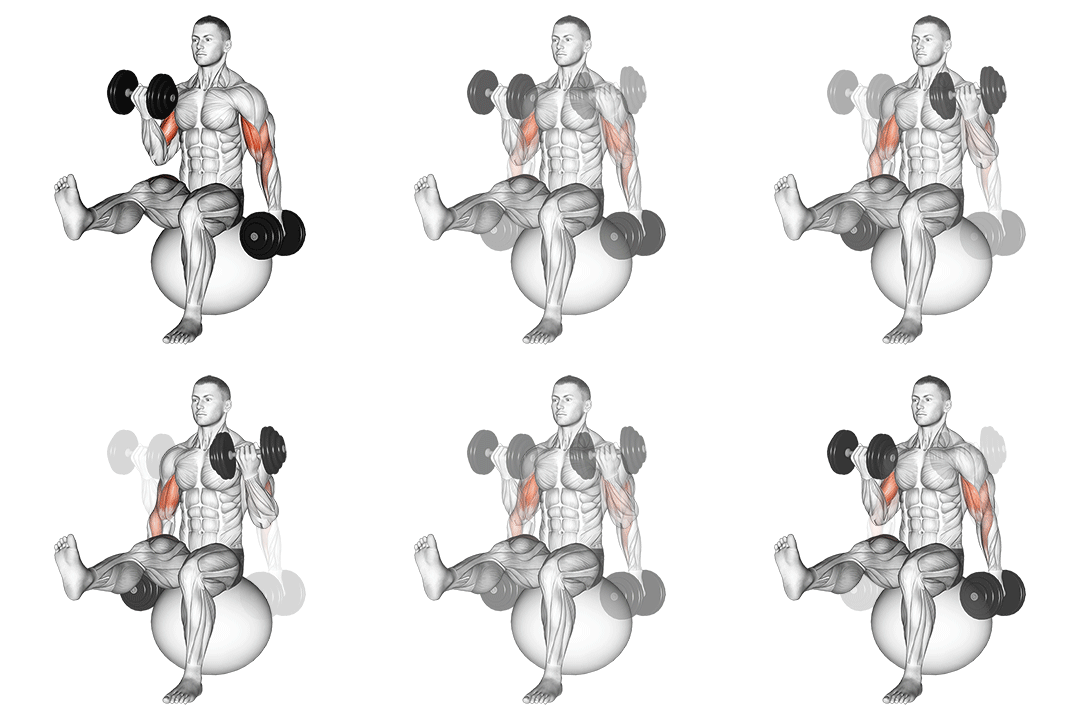
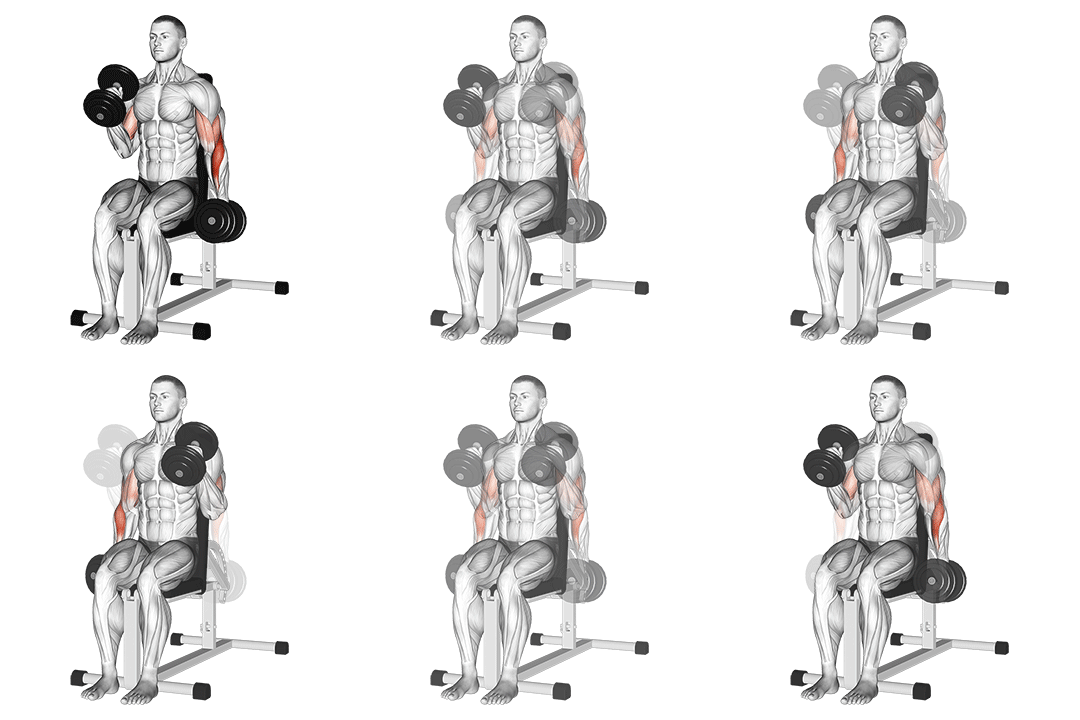
Dumbbell Alternating Bicep Curl With Leg Raised On Exercise Ball
Head-to-Head Comparison
Different values are marked. These are catalogue attributes, not performance scores.
Muscles used
Listed target and secondary muscles, shown on the body. Locations, not activation or strength scores.
- Target
- Secondary
- Not highlighted
Dumbbell Alternate Biceps Curl (With Arm Blaster)
- Target
- Biceps
- Secondary
- Forearms
Dumbbell Alternating Bicep Curl With Leg Raised On Exercise Ball
- Target
- Biceps
- Secondary
- Forearms, Shoulders
Not shown on diagram: Shoulders. These labels do not identify a precise region on this map.
Grey does not mean a muscle is unused. The diagrams show only the mapped catalogue labels.
| Attribute | Dumbbell Alternate Biceps Curl (With Arm Blaster) | Dumbbell Alternating Bicep Curl With Leg Raised On Exercise Ball |
|---|---|---|
| Target Muscle | Biceps |
Biceps |
| Body Part | Upper-arms |
Upper-arms |
| Equipment | Dumbbell |
Dumbbell |
| Difficulty Different | Beginner |
Intermediate |
| Movement Type | Isolation |
Isolation |
| Secondary Muscles Different | Forearms |
Forearms, Shoulders |
Visual Comparison
An illustrative 1–10 profile derived from catalog difficulty, equipment, and listed-muscle fields—not measured performance or muscle activation.
Key Differences
- Difficulty levels differ: Dumbbell Alternate Biceps Curl (With Arm Blaster) is beginner, while Dumbbell Alternating Bicep Curl With Leg Raised On Exercise Ball is intermediate.
- Both exercises target the Biceps using Dumbbell. The catalogue does not establish which exercise is better for an individual goal.
Muscle comparison
Shared target muscles
Secondary muscle differences
Muscle involvement analysis
Equipment and setup
Dumbbell Alternate Biceps Curl (With Arm Blaster): setup
Dumbbell Alternating Bicep Curl With Leg Raised On Exercise Ball: setup
Access and practicality
Learning and progression
Learning the movements
Progression considerations
Limitations and precautions
Pros & Cons
Dumbbell Alternate Biceps Curl (With Arm Blaster)
+ Pros
- Highly isolates the biceps by fixing elbow and limiting torso swing
- Easier to load heavier weights safely for mechanical tension
- Simple to teach and learn — good for beginners and hypertrophy phases
- Consistent length-tension curve across reps improves time under tension
− Cons
- Requires an arm blaster or similar device for full benefit
- Less core and shoulder activation — limited carryover to stability skills
- Potential elbow tendon stress if wrists are allowed to flex or flare
Dumbbell Alternating Bicep Curl With Leg Raised On Exercise Ball
+ Pros
- Adds a stability and anti-rotation challenge that trains core and glutes
- Increases shoulder stabilizer and forearm co-contraction
- Good for athletic carryover where balance and single-leg control matter
- Can be performed with minimal external devices beyond a stability ball
− Cons
- Harder to overload with heavy weight due to balance limits
- Steeper learning curve — form breakdown shows up quickly
- Greater risk of compensatory movement in lumbar spine or shoulder
When Each Exercise Wins
It isolates the biceps, minimizes cheating, and allows heavier loading and controlled tempo (8–12 reps, 3–4 sets). That consistent length-tension exposure boosts mechanical tension and metabolic stress for muscle growth.
Because you can load the movement progressively without balance limiting weight, the arm blaster lets you overload the biceps with lower rep ranges (4–6 reps) and stable biomechanics, which better drives force development.
Beginners benefit from reduced technical demand and clear elbow positioning; that builds confidence and solid motor patterns before adding instability or unilateral balance work.
Most people have dumbbells at home and an arm blaster is compact and cheap. The stability-ball version needs a ball and extra floor space and has a higher chance of form breakdown when training solo.
Frequently Asked Questions
Can I do both Dumbbell Alternate Biceps Curl (with Arm Blaster) and Dumbbell Alternating Bicep Curl With Leg Raised On Exercise Ball in the same workout?
Which exercise is better for beginners?
How do the muscle activation patterns differ?
Can Dumbbell Alternating Bicep Curl With Leg Raised On Exercise Ball replace Dumbbell Alternate Biceps Curl (with Arm Blaster)?
Comparison Summary
Exercise instructions
Steps from the exercise catalogue. Read the full sequence before starting.
Dumbbell Alternate Biceps Curl (With Arm Blaster)
- Stand up straight with your feet shoulder-width apart and hold a dumbbell in each hand, palms facing forward.
- Place the arm blaster on your upper arms, ensuring a secure fit.
- Keeping your upper arms stationary, exhale and curl one dumbbell up towards your shoulder while contracting your biceps.
Read remaining steps for Dumbbell Alternate Biceps Curl (With Arm Blaster)
- Continue to raise the dumbbell until your biceps are fully contracted and the dumbbell is at shoulder level.
- Hold the contracted position for a brief pause as you squeeze your biceps.
- Inhale and slowly lower the dumbbell back to the starting position.
- Repeat the movement with the opposite arm.
- Continue alternating arms for the desired number of repetitions.
Dumbbell Alternating Bicep Curl With Leg Raised On Exercise Ball
- Stand with your feet shoulder-width apart and hold a dumbbell in each hand, palms facing forward.
- Place an exercise ball behind you and position one foot on top of it, keeping your balance.
- With your arms fully extended and elbows close to your sides, curl one dumbbell towards your shoulder while keeping your upper arm stationary.
Read remaining steps for Dumbbell Alternating Bicep Curl With Leg Raised On Exercise Ball
- Lower the dumbbell back down to the starting position and repeat with the other arm.
- Continue alternating arms for the desired number of repetitions.
Also Compare
More comparisons with Dumbbell Alternate Biceps Curl (With Arm Blaster)
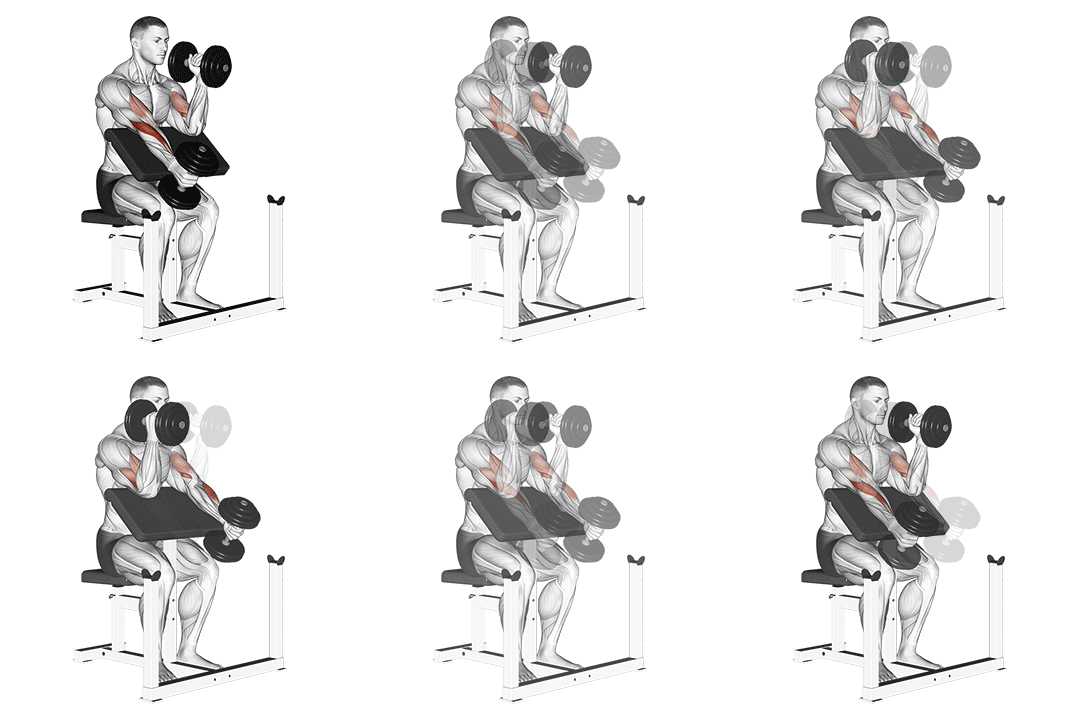
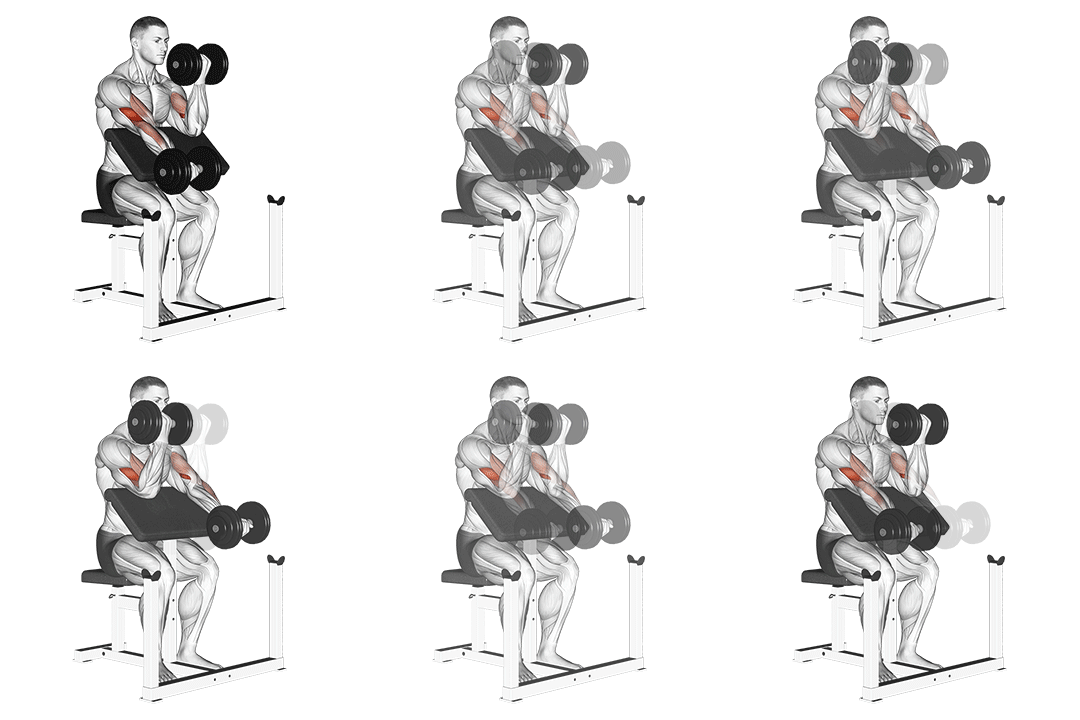
More comparisons with Dumbbell Alternating Bicep Curl With Leg Raised On Exercise Ball
Compare another pair
Choose two exercises to see their differences side by side.