Dumbbell Alternate Hammer Preacher Curl vs Dumbbell Alternate Preacher Curl
Compare target muscles, equipment, difficulty, movement type, and secondary muscles for Dumbbell Alternate Hammer Preacher Curl and Dumbbell Alternate Preacher Curl.
Change comparison Share

Get comparison link

Select the link and use your device's Copy command.

Comparison overview

AI-generated
Dumbbell Alternate Hammer Preacher Curl vs Dumbbell Alternate Preacher Curl — if you want clearer arm development, this comparison cuts through the noise. You’ll get concise, actionable guidance on muscle activation, equipment needs, difficulty, and programming. I’ll show how grip and elbow position change which parts of the biceps and forearms work hardest, give technique cues (angles, rep ranges, tempo), and tell you when to pick each variation so your sets produce measurable progress.
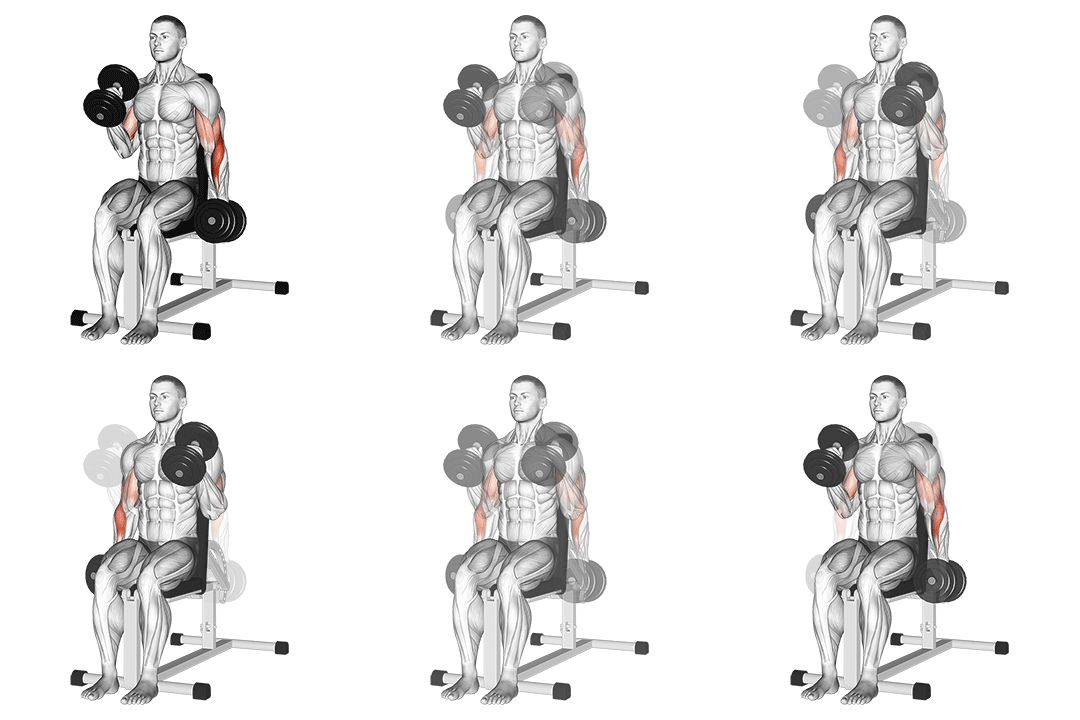
Exercise Comparison

Exercise A
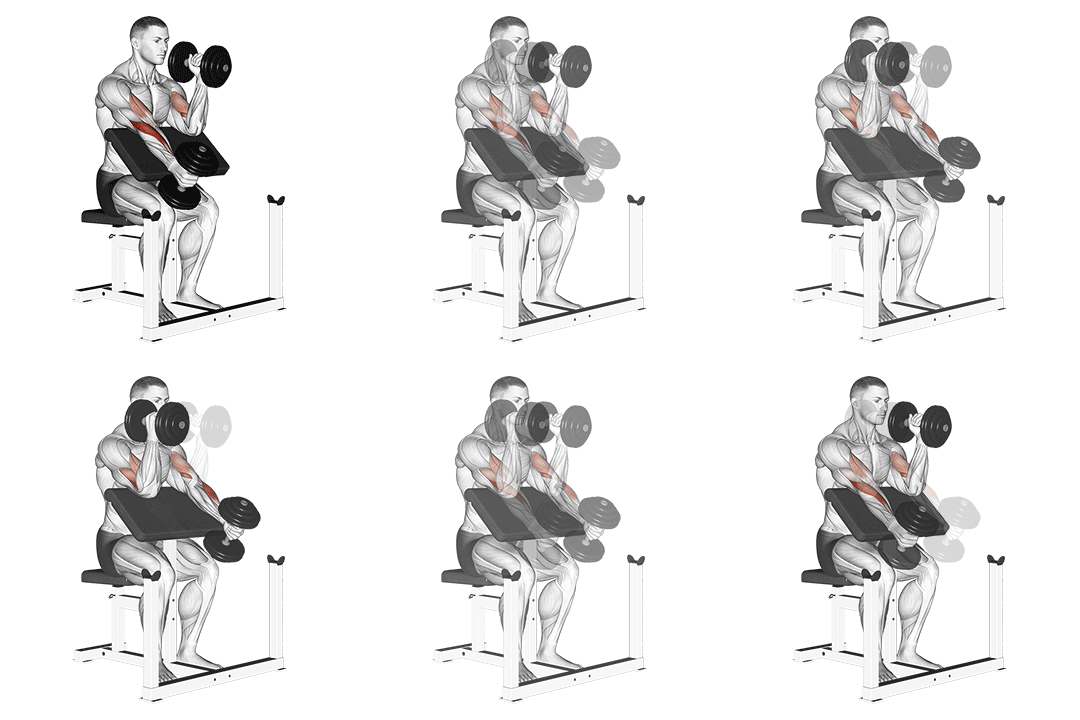
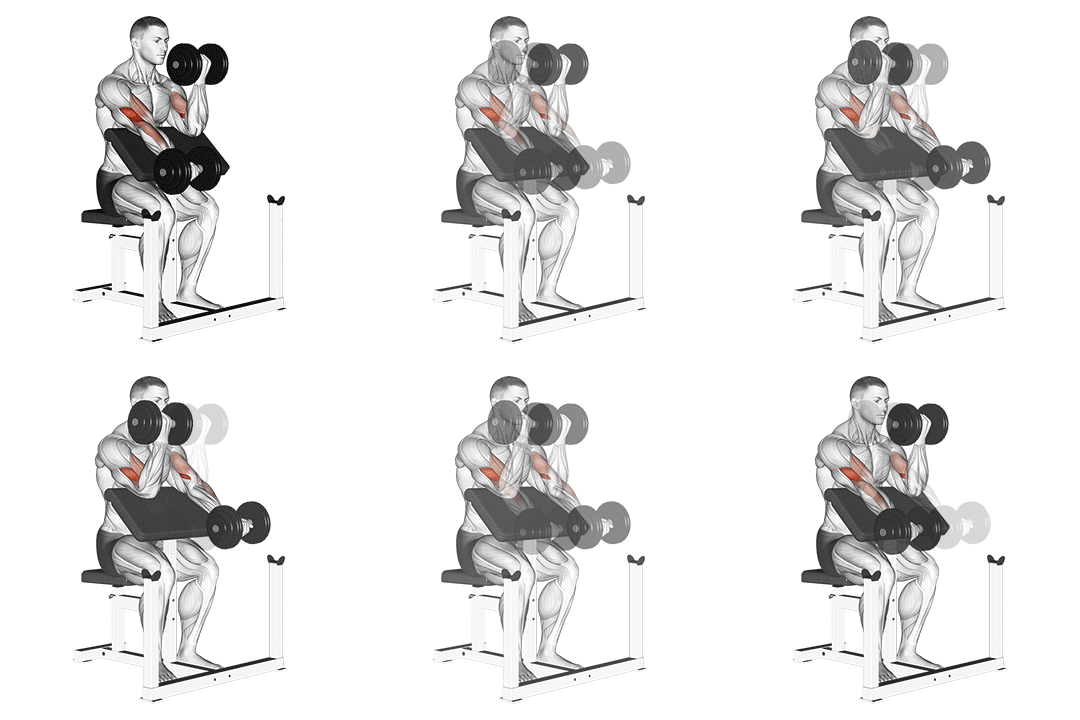
Dumbbell Alternate Hammer Preacher Curl demonstration
Dumbbell Alternate Hammer Preacher Curl
Target Biceps
Equipment Dumbbell
Body Part Upper-arms
Difficulty Intermediate
Movement Isolation
Secondary Muscles
Forearms
VS
Exercise B
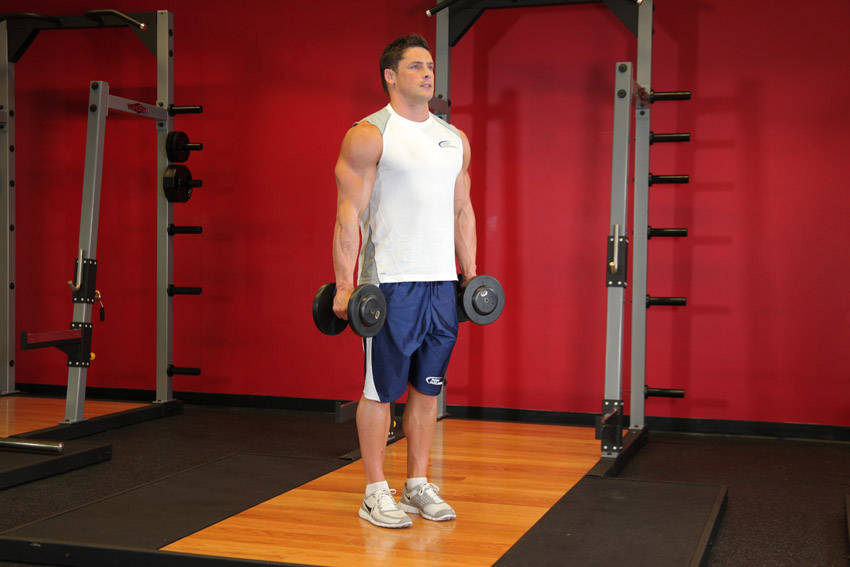
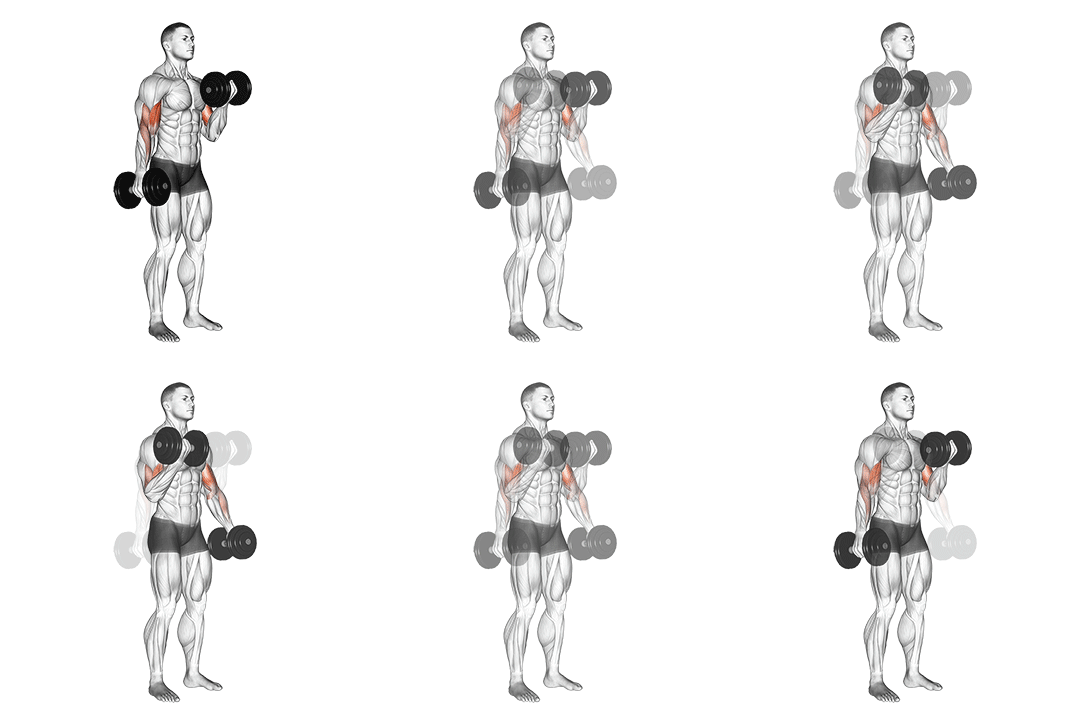
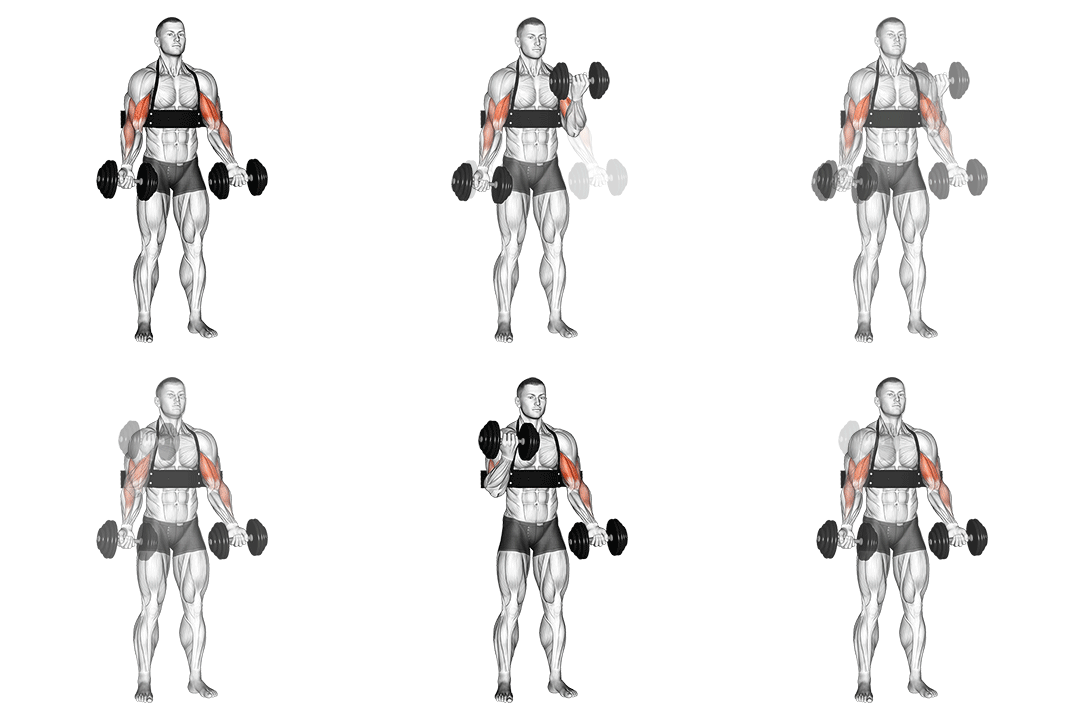
Dumbbell Alternate Preacher Curl demonstration

Dumbbell Alternate Preacher Curl

Target Biceps
Equipment Dumbbell
Body Part Upper-arms
Difficulty Beginner
Movement Isolation
Secondary Muscles
Forearms

Head-to-Head Comparison

Different values are marked. These are catalogue attributes, not performance scores.

Muscles used

Listed target and secondary muscles, shown on the body. Locations, not activation or strength scores.

  • Target
  • Secondary
  • Not highlighted

Dumbbell Alternate Hammer Preacher Curl

Front
Dumbbell Alternate Hammer Preacher Curl: front muscle locationsSolid: listed target. Striped: listed secondary. Grey: not highlighted. Locations, not activation or strength scores. See the muscle names below.
Back
Dumbbell Alternate Hammer Preacher Curl: back muscle locationsSolid: listed target. Striped: listed secondary. Grey: not highlighted. Locations, not activation or strength scores. See the muscle names below.
Target
Biceps
Secondary
Forearms

Dumbbell Alternate Preacher Curl

Front
Dumbbell Alternate Preacher Curl: front muscle locationsSolid: listed target. Striped: listed secondary. Grey: not highlighted. Locations, not activation or strength scores. See the muscle names below.
Back
Dumbbell Alternate Preacher Curl: back muscle locationsSolid: listed target. Striped: listed secondary. Grey: not highlighted. Locations, not activation or strength scores. See the muscle names below.
Target
Biceps
Secondary
Forearms

Grey does not mean a muscle is unused. The diagrams show only the mapped catalogue labels.

Attribute Dumbbell Alternate Hammer Preacher Curl Dumbbell Alternate Preacher Curl
Target Muscle
Biceps
Biceps
Body Part
Upper-arms
Upper-arms
Equipment
Dumbbell
Dumbbell
Difficulty Different
Intermediate
Beginner
Movement Type
Isolation
Isolation
Secondary Muscles
Forearms
Forearms

Visual Comparison

An illustrative 1–10 profile derived from catalog difficulty, equipment, and listed-muscle fields—not measured performance or muscle activation.

Key Differences

  • Difficulty levels differ: Dumbbell Alternate Hammer Preacher Curl is intermediate, while Dumbbell Alternate Preacher Curl is beginner.
  • Both exercises target the Biceps using Dumbbell. The catalogue does not establish which exercise is better for an individual goal.

Muscle comparison

Shared target muscles

Both exercises isolate the biceps complex and place the elbow on the preacher pad to limit shoulder involvement, so peak biceps brachii activation occurs over the terminal 30–40° of elbow flexion. Both stress the short head more than standing curls because the shoulder is flexed, shortening the long head and reducing its contribution. Expect roughly similar biceps activation overall, but differences show up based on forearm orientation.

Secondary muscle differences

The hammer version shifts load onto the brachialis and brachioradialis more than the supinated preacher curl. With a neutral (hammer) grip you recruit brachialis and brachioradialis ≈10–20% more, increasing upper-arm thickness and forearm brachioradialis development. The supinated Dumbbell Alternate Preacher Curl biases the biceps brachii, especially the short head, and increases supination demand on the forearm flexors.

Muscle involvement analysis

On both exercises the preacher pad fixes the shoulder so muscle length-tension is stable: the long head is slightly shortened at start, so the short head and brachialis work through the bulk of the ROM. In the hammer curl the force vector stays more vertical because the neutral grip reduces supination torque, keeping brachialis under constant tension throughout the concentric and eccentric phases. In the supinated preacher curl, biceps brachii must add a supination moment at the end range, increasing activation during the last 20–30° of flexion.

Equipment and setup

Dumbbell Alternate Hammer Preacher Curl: setup

Dumbbells (matched pair recommended), a preacher bench or a low-positioned incline bench to brace the upper arm, and a flat, stable platform for foot placement.

Dumbbell Alternate Preacher Curl: setup

Same basic setup: dumbbells and a preacher or incline bench. No extra equipment is required beyond the dumbbells and pad to isolate the elbow.

Access and practicality

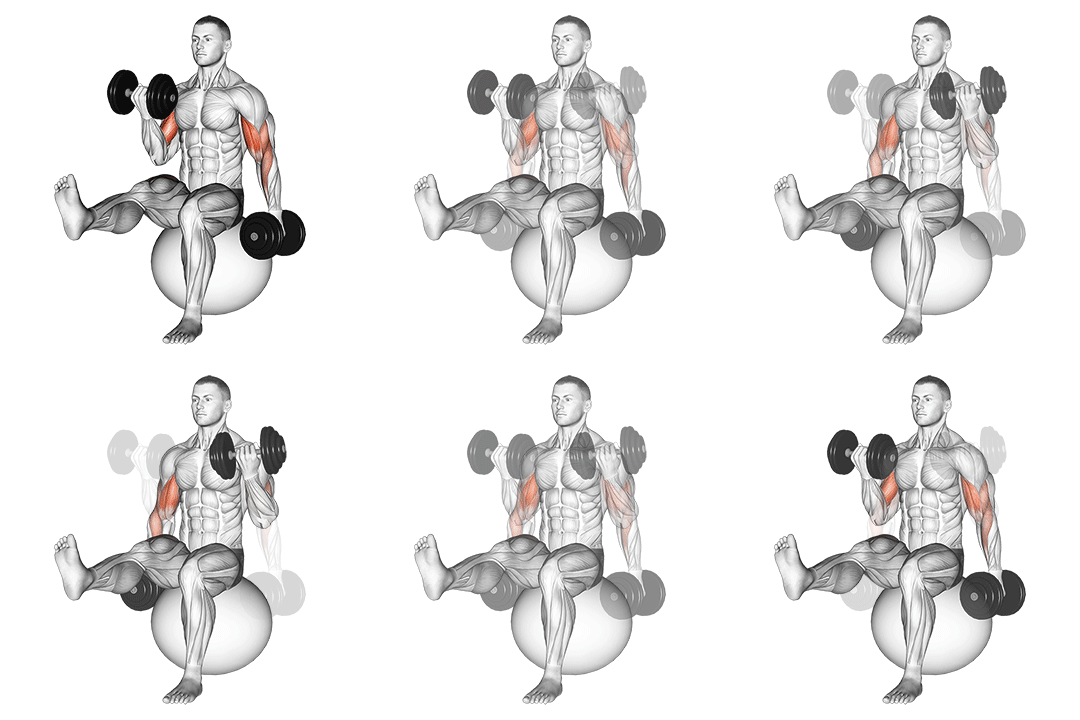
Dumbbell Alternate Preacher Curl — because technique is simpler for novices (supinated grip is more familiar) and you can easily mimic the setup with an incline bench or even a stability ball at home, it’s marginally more accessible for users without specialized benches.

Learning and progression

Learning the movements

Dumbbell Alternate Preacher Curl is easier to learn since a supinated grip is intuitive and the movement path is straightforward. The hammer preacher requires more wrist and forearm stability to keep a neutral grip and avoid rolling the dumbbell, so it’s better for intermediate lifters.

Progression considerations

Dumbbell Alternate Hammer Preacher Curl offers broader progression for forearm and pulling transfer because it strengthens brachialis and brachioradialis, which assist many pulling movements. Both allow standard progressions: increase load, slow tempo (3–4 s eccentrics), increase sets, or add partials and paused reps.

Limitations and precautions

Both are low-risk when done with controlled tempo and full contact on the pad. The hammer variation may reduce wrist supination strain and elbow tendon stress for some lifters, while improper shoulder positioning on either can increase anterior shoulder or distal biceps strain. Keep load conservative and avoid bouncing.

Pros & Cons

Dumbbell Alternate Hammer Preacher Curl

+ Pros

  • Stronger brachialis and brachioradialis recruitment, thickening the upper arm
  • Neutral grip reduces supination strain on the wrist and distal biceps
  • Maintains consistent tension through the ROM due to reduced rotational torque
  • Great carryover to pulling movements and forearm strength

Cons

  • Harder to stabilize for beginners due to neutral-grip control demands
  • Less direct long-head biceps emphasis compared to fully supinated curls
  • May feel awkward with heavy loads if wrist or grip strength is limited

Dumbbell Alternate Preacher Curl

+ Pros

  • Easier for beginners to learn—natural supinated grip and path
  • Stronger focus on biceps brachii short head for peak and contour
  • Excellent isolation due to preacher pad limiting shoulder involvement
  • Simple to scale with load, tempo, and set/rep adjustments

Cons

  • Places more supination demand on the wrist and forearm tendons
  • Less brachialis/brachioradialis emphasis, so less forearm carryover
  • Can encourage curling with the shoulder or cheating if pad setup is wrong

When Each Exercise Wins

1
For muscle hypertrophy: Dumbbell Alternate Preacher Curl

The supinated preacher curl targets the biceps brachii short head more directly and lets you focus on peak contraction—use 8–12 reps, 2–4 sets, with 2–3 s eccentrics to maximize time under tension.

2
For strength gains: Dumbbell Alternate Hammer Preacher Curl

Hammer preacher strengthens brachialis and brachioradialis, improving elbow flexion force production and carryover to rowing and pulling; train heavier (4–6 reps) or with doubles and triples for strength focus.

3
For beginners: Dumbbell Alternate Preacher Curl

Supinated preacher curls are more intuitive and easier to control on the pad, letting beginners learn elbow isolation and tempo before adding neutral-grip complexity.

4
For home workouts: Dumbbell Alternate Preacher Curl

You can mimic the preacher setup with an incline bench or stability ball and the supinated grip requires less forearm strength, making it simpler to execute with limited equipment.

Frequently Asked Questions

Can I do both Dumbbell Alternate Hammer Preacher Curl and Dumbbell Alternate Preacher Curl in the same workout?

Yes. Pair them by priority: do the variation aligned with your goal first (e.g., supinated for biceps focus), then add 2–3 sets of the other as a finish. Keep total volume sensible—avoid exceeding 12–16 hard sets for the elbow flexors per week per exercise.

Which exercise is better for beginners?

Dumbbell Alternate Preacher Curl is better for beginners because the supinated grip and straightforward path make it easier to learn strict elbow flexion and tempo control. Start light and master full contact on the pad before adding load.

How do the muscle activation patterns differ?

Neutral (hammer) grip increases brachialis and brachioradialis recruitment by roughly 10–20% compared with a supinated curl, while the supinated preacher curl increases terminal biceps brachii activation and supination torque in the last 20–30° of flexion. The preacher pad fixes shoulder position, keeping long-head contribution lower on both.

Can Dumbbell Alternate Preacher Curl replace Dumbbell Alternate Hammer Preacher Curl?

It can if your primary goal is biceps peak and isolation—supinated preacher curls handle that well. If you want improved forearm strength or better transfer to pulling, keep or add hammer preacher curls instead of fully replacing them.

Comparison Summary

Use the Dumbbell Alternate Preacher Curl when your priority is direct biceps hypertrophy, learning clean elbow isolation, or training at home with minimal equipment—target 8–12 reps, 2–4 sets, and focus on a 2–3 s eccentric. Choose the Dumbbell Alternate Hammer Preacher Curl when you want thicker upper-arms and forearms, better carryover to pulling movements, or reduced wrist supination stress—program heavier sets (4–6 reps) or moderate hypertrophy sets (8–10) with slow eccentrics. Rotate both across mesocycles: 4–6 weeks emphasizing supinated work for peak and 4–6 weeks hammer-focused for thickness and forearm development.

Exercise instructions

Steps from the exercise catalogue. Read the full sequence before starting.

Dumbbell Alternate Hammer Preacher Curl

  1. Sit on a preacher bench with a dumbbell in each hand, palms facing your torso and arms fully extended.
  2. Keep your upper arms stationary and exhale as you curl the weights while contracting your biceps.
  3. Continue to raise the dumbbells until your biceps are fully contracted and the dumbbells are at shoulder level.
Read remaining steps for Dumbbell Alternate Hammer Preacher Curl
  1. Hold the contracted position for a brief pause as you squeeze your biceps.
  2. Inhale and slowly begin to lower the dumbbells back to the starting position.
  3. Repeat for the recommended amount of repetitions.

Dumbbell Alternate Preacher Curl

  1. Sit on a preacher bench with a dumbbell in each hand, palms facing up.
  2. Rest your upper arms on the pad of the preacher bench, allowing your arms to fully extend.
  3. Keeping your upper arms stationary, exhale and curl the dumbbell in your right hand as you contract your biceps.
Read remaining steps for Dumbbell Alternate Preacher Curl
  1. Continue to curl the dumbbell until your biceps are fully contracted and the dumbbell is at shoulder level.
  2. Pause for a moment, then inhale and slowly lower the dumbbell back to the starting position.
  3. Repeat the movement with your left arm.
  4. Continue alternating arms for the desired number of repetitions.

Also Compare

Compare another pair

Choose two exercises to see their differences side by side.

Compare Exercises