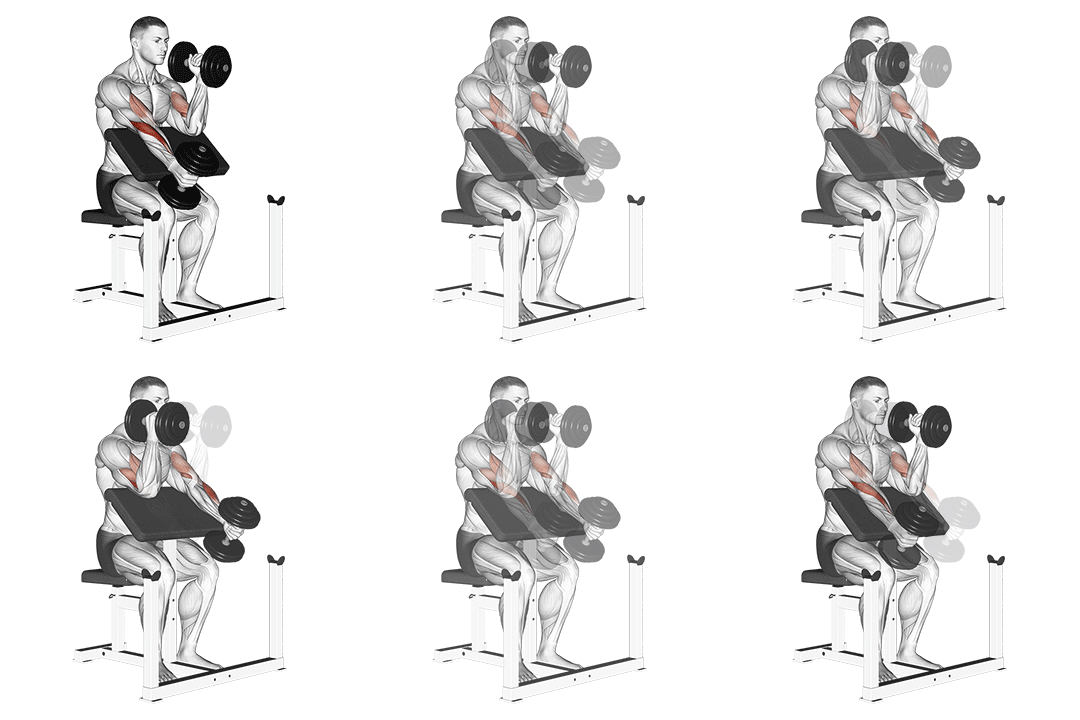
Dumbbell Alternate Hammer Preacher Curl vs Dumbbell Alternating Bicep Curl With Leg Raised On Exercise Ball
Compare target muscles, equipment, difficulty, movement type, and secondary muscles for Dumbbell Alternate Hammer Preacher Curl and Dumbbell Alternating Bicep Curl With Leg Raised On Exercise Ball.
Change comparison Share

Get comparison link

Select the link and use your device's Copy command.

Comparison overview

AI-generated
Dumbbell Alternate Hammer Preacher Curl vs Dumbbell Alternating Bicep Curl With Leg Raised On Exercise Ball — you’re comparing two intermediate isolation curls that both target the biceps but demand very different control. I’ll walk you through muscle activation, equipment needs, movement mechanics, and specific cues so you can choose the right tool for hypertrophy, strength, or stability work. Expect clear technique tips (arm angles, grip, tempo), rep ranges (6–8 strength, 8–12 hypertrophy, 12–15 endurance) and a final recommendation tailored to your goals.
Exercise Comparison

Exercise A
Dumbbell Alternate Hammer Preacher Curl demonstration
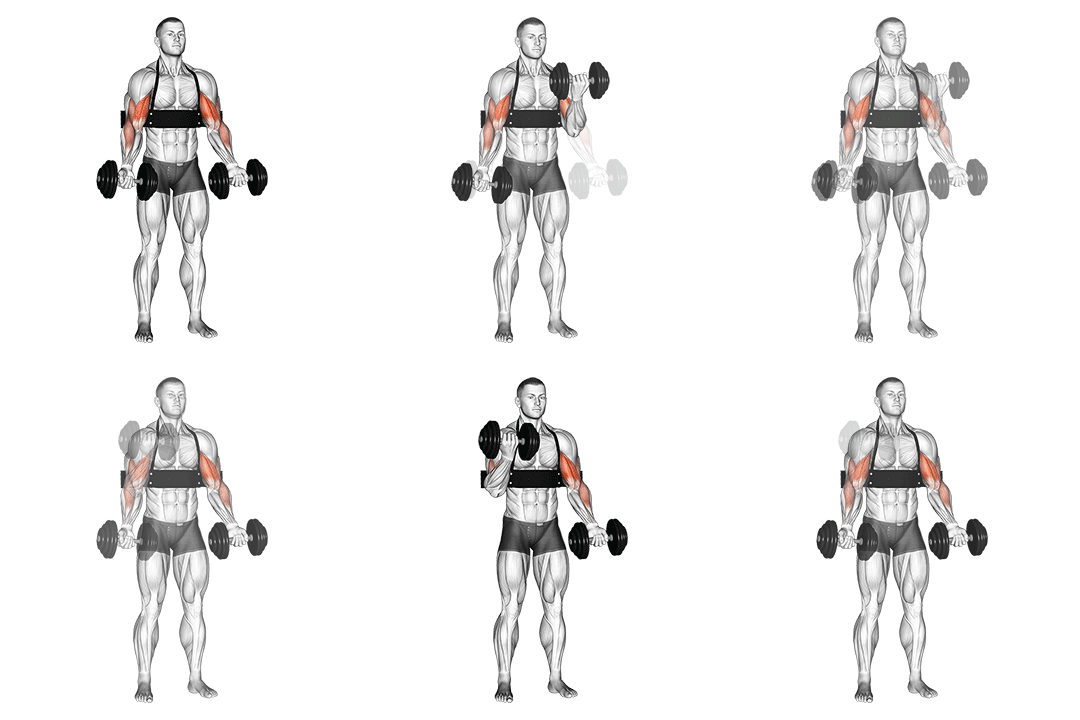
Dumbbell Alternate Hammer Preacher Curl
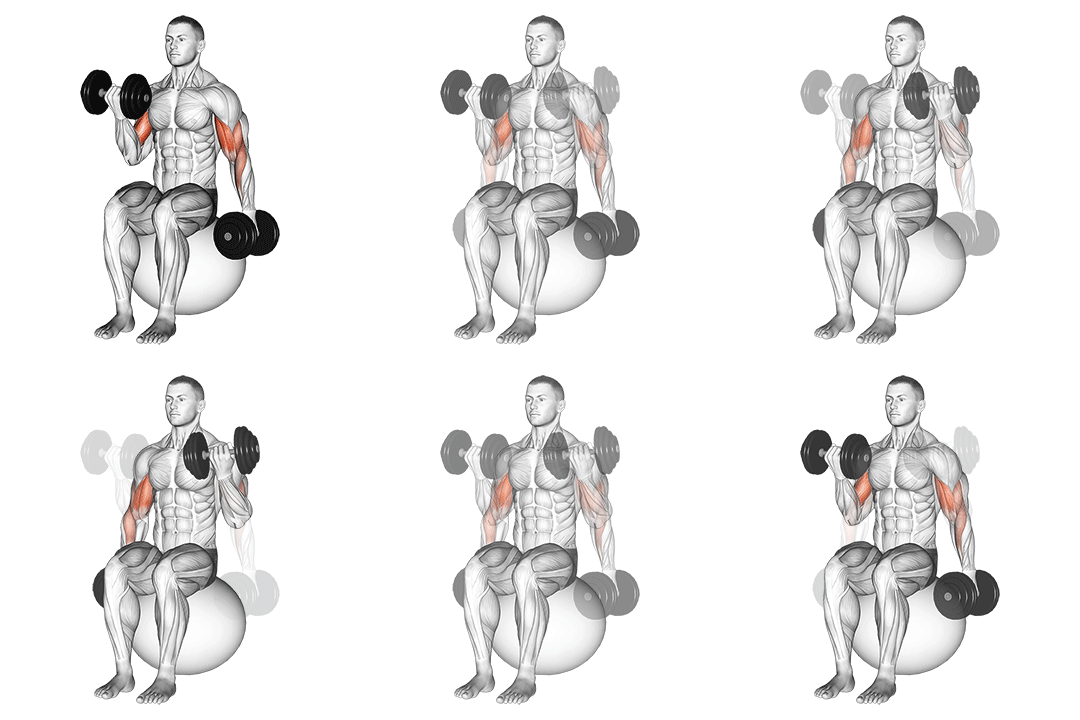
Target Biceps
Equipment Dumbbell
Body Part Upper-arms
Difficulty Intermediate
Movement Isolation
Secondary Muscles
Forearms
VS
Exercise B
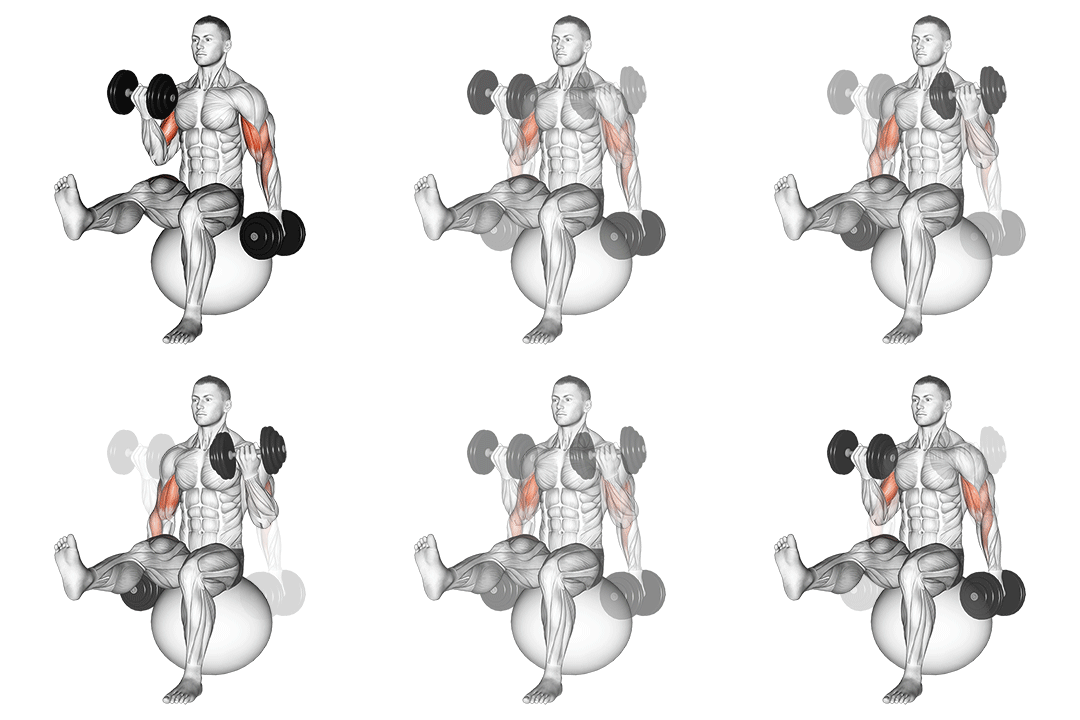
Dumbbell Alternating Bicep Curl With Leg Raised On Exercise Ball demonstration
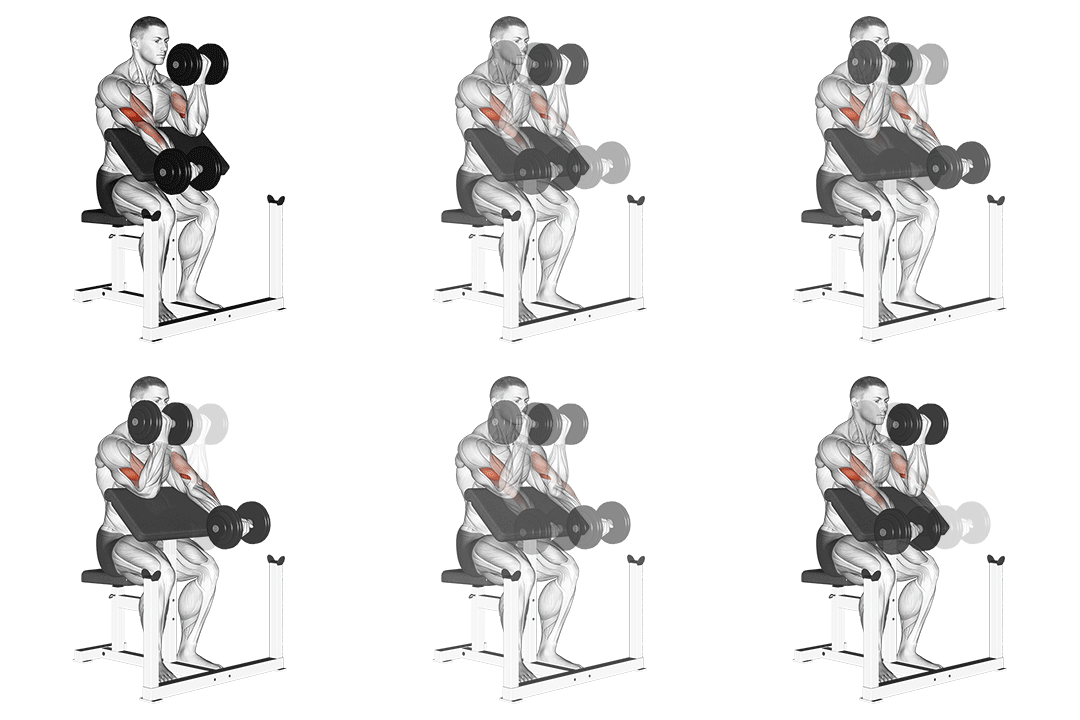
Dumbbell Alternating Bicep Curl With Leg Raised On Exercise Ball

Target Biceps
Equipment Dumbbell
Body Part Upper-arms
Difficulty Intermediate
Movement Isolation
Secondary Muscles
Forearms Shoulders

Head-to-Head Comparison

Different values are marked. These are catalogue attributes, not performance scores.

Muscles used

Listed target and secondary muscles, shown on the body. Locations, not activation or strength scores.

  • Target
  • Secondary
  • Not highlighted

Dumbbell Alternate Hammer Preacher Curl

Front
Dumbbell Alternate Hammer Preacher Curl: front muscle locationsSolid: listed target. Striped: listed secondary. Grey: not highlighted. Locations, not activation or strength scores. See the muscle names below.
Back
Dumbbell Alternate Hammer Preacher Curl: back muscle locationsSolid: listed target. Striped: listed secondary. Grey: not highlighted. Locations, not activation or strength scores. See the muscle names below.
Target
Biceps
Secondary
Forearms

Dumbbell Alternating Bicep Curl With Leg Raised On Exercise Ball

Front
Dumbbell Alternating Bicep Curl With Leg Raised On Exercise Ball: front muscle locationsSolid: listed target. Striped: listed secondary. Grey: not highlighted. Locations, not activation or strength scores. See the muscle names below.
Back
Dumbbell Alternating Bicep Curl With Leg Raised On Exercise Ball: back muscle locationsSolid: listed target. Striped: listed secondary. Grey: not highlighted. Locations, not activation or strength scores. See the muscle names below.
Target
Biceps
Secondary
Forearms, Shoulders

Not shown on diagram: Shoulders. These labels do not identify a precise region on this map.

Grey does not mean a muscle is unused. The diagrams show only the mapped catalogue labels.

Attribute Dumbbell Alternate Hammer Preacher Curl Dumbbell Alternating Bicep Curl With Leg Raised On Exercise Ball
Target Muscle
Biceps
Biceps
Body Part
Upper-arms
Upper-arms
Equipment
Dumbbell
Dumbbell
Difficulty
Intermediate
Intermediate
Movement Type
Isolation
Isolation
Secondary Muscles Different
Forearms
Forearms, Shoulders

Visual Comparison

An illustrative 1–10 profile derived from catalog difficulty, equipment, and listed-muscle fields—not measured performance or muscle activation.

Key Differences

  • Both exercises target the Biceps using Dumbbell. The catalogue does not establish which exercise is better for an individual goal.

Muscle comparison

Shared target muscles

Both exercises primarily target elbow flexion by loading the biceps brachii. The hammer preacher curl uses a neutral (hammer) grip which shifts some load from the biceps long head to the brachialis and brachioradialis, while the alternating leg-raised curl typically uses a supinated grip that emphasizes the biceps brachii, especially the long head. In practice expect roughly similar biceps activation across both if you use comparable loads, but the supinated alternating curl biases the biceps peak contraction more.

Secondary muscle differences

Secondary recruitment differs significantly: the hammer preacher curl minimizes shoulder and trunk involvement by bracing the upper arm on the pad, so forearms (brachioradialis) are the main secondary muscles. The leg-raised curl forces additional stabilizer work — shoulders and rotator cuff to control the arm path, and core (obliques, rectus abdominis) to resist rotation and maintain balance. Expect 10–20% greater stabilizer activation with the ball variation.

Muscle involvement analysis

On the preacher bench the pad fixes the humerus so the elbow flexors work through a cleaner elbow joint arc with peak tension near 30°–60° of flexion; force vector is almost pure elbow flexion. On the ball, anti-rotation and anti-flexion torques mean simultaneous trunk and shoulder muscle co-activation; the biceps still peak during mid-range, but stability demands create a longer, less pure tension curve across the movement.

Equipment and setup

Dumbbell Alternate Hammer Preacher Curl: setup

One dumbbell per set (or alternating single DB), a preacher bench or a high, angled pad that supports the upper arm at roughly 45° relative to the torso.

Dumbbell Alternating Bicep Curl With Leg Raised On Exercise Ball: setup

One dumbbell, an exercise ball sized so your knees and hips are ~90° when seated, and space to lift a leg; you’ll need good ankle stability and some balance.

Access and practicality

Dumbbell Alternating Bicep Curl With Leg Raised On Exercise Ball — exercise balls are inexpensive and common at home, while preacher benches are less available outside gyms. The ball variation wins on equipment accessibility despite higher balance requirements.

Learning and progression

Learning the movements

The Dumbbell Alternate Hammer Preacher Curl is easier to learn because the pad stabilizes the humerus and eliminates torso balance; you focus on elbow flexion. The ball leg-raised curl requires mastering balance and anti-rotation, increasing the initial coordination demand.

Progression considerations

The preacher curl offers more straightforward progression: add weight, use slower eccentrics (3–5 second negatives), or implement rest-pause and partial reps. The ball curl adds progression via instability (single-leg, unstable surfaces) but is limited by how much heavy load you can safely use.

Limitations and precautions

The ball variation carries higher acute risk due to balance failures and shoulder compensation; expect increased shoulder and low-back strain if form breaks. The preacher curl lowers momentum risk but can overstress the anterior shoulder or elbow if the pad position forces extreme flexion — set the pad so the elbow rests near the top of the thigh plane (about 10°–20° of forward lean).

Pros & Cons

Dumbbell Alternate Hammer Preacher Curl

+ Pros

  • Strict isolation of elbow flexors with minimal torso involvement
  • Easier to overload with heavier dumbbells for progressive tension
  • Reduces cheating and momentum—clean tempo improves eccentric control
  • Simple setup for unilateral focus and strict alternating reps

Cons

  • Requires a preacher bench or suitable pad not always available at home
  • Neutral hammer grip reduces long-head biceps stretch compared with supinated curls
  • Poor pad setup can place stress on the anterior shoulder or limit ROM

Dumbbell Alternating Bicep Curl With Leg Raised On Exercise Ball

+ Pros

  • Increases core and shoulder stabilizer recruitment through instability
  • More accessible at home using an exercise ball instead of a bench
  • Alternating pattern allows high time-under-tension and unilateral control
  • Can improve anti-rotation strength and functional carryover

Cons

  • Balance demands limit how much load you can use safely
  • Higher chance of compensatory shoulder or trunk movement under fatigue
  • Requires good proprioception; not ideal when recovering from shoulder or low-back injury

When Each Exercise Wins

1
For muscle hypertrophy: Dumbbell Alternate Hammer Preacher Curl

Preacher setup lets you use heavier loads and strict tempos (6–12 reps, 2–4 second eccentrics) to maximize mechanical tension on elbow flexors. It also reduces cheating so you can apply progressive overload more reliably for muscle growth.

2
For strength gains: Dumbbell Alternate Hammer Preacher Curl

The fixed upper arm and neutral grip let you safely increase absolute load and emphasize high-tension reps (4–8) and tempo control, which is more effective for increasing elbow-flexor strength than an unstable balance variation.

3
For beginners: Dumbbell Alternate Hammer Preacher Curl

Beginners benefit from the stability and simple joint mechanics of the preacher curl, which teaches strict elbow flexion without the added coordination demands of balancing on a ball.

4
For home workouts: Dumbbell Alternating Bicep Curl With Leg Raised On Exercise Ball

Most home gyms have an exercise ball but not a preacher bench; the ball version delivers biceps work plus core and shoulder stabilization using minimal equipment.

Frequently Asked Questions

Can I do both Dumbbell Alternate Hammer Preacher Curl and Dumbbell Alternating Bicep Curl With Leg Raised On Exercise Ball in the same workout?

Yes. Use the preacher curl early as a heavy compound-isolation set (3–4 sets at 6–10 reps) and add 2–3 lighter sets of the ball variation for stability and volume (10–15 reps). Keep total weekly volume consistent and avoid fatigue-driven form breakdown on the unstable sets.

Which exercise is better for beginners?

The Dumbbell Alternate Hammer Preacher Curl is better for beginners because the pad stabilizes the arm and simplifies the motor pattern. Beginners can learn strict elbow flexion and tempo before adding instability or anti-rotation challenges.

How do the muscle activation patterns differ?

Preacher hammer curls bias brachialis and brachioradialis more due to the neutral grip and fixed humerus; peak tension is concentrated around 30°–60° elbow flexion. The leg-raised alternating curl increases co-activation of shoulders and core to resist rotation, while a supinated grip shifts more load to the biceps long head during peak contraction.

Can Dumbbell Alternating Bicep Curl With Leg Raised On Exercise Ball replace Dumbbell Alternate Hammer Preacher Curl?

It can replace it when your goal is stability and core work, but not if your priority is maximal mechanical tension for muscle growth or strength. For best results, use the ball curl as a complementary movement rather than a strict substitute when targeting progressive overload.

Comparison Summary

Choose the Dumbbell Alternate Hammer Preacher Curl when your priority is pure elbow-flexor overload, controlled tempo, and safe progressive loading — ideal for hypertrophy and strength (6–12 rep ranges, heavy eccentrics). Pick the Dumbbell Alternating Bicep Curl With Leg Raised On Exercise Ball when you want to add core and shoulder stability demands, improve anti-rotation control, or lack a preacher bench. For a balanced program, use the preacher curl as your heavy, primary biceps movement and rotate in the ball variation for conditioning, unilateral stability, and deload phases.

Exercise instructions

Steps from the exercise catalogue. Read the full sequence before starting.

Dumbbell Alternate Hammer Preacher Curl

  1. Sit on a preacher bench with a dumbbell in each hand, palms facing your torso and arms fully extended.
  2. Keep your upper arms stationary and exhale as you curl the weights while contracting your biceps.
  3. Continue to raise the dumbbells until your biceps are fully contracted and the dumbbells are at shoulder level.
Read remaining steps for Dumbbell Alternate Hammer Preacher Curl
  1. Hold the contracted position for a brief pause as you squeeze your biceps.
  2. Inhale and slowly begin to lower the dumbbells back to the starting position.
  3. Repeat for the recommended amount of repetitions.

Dumbbell Alternating Bicep Curl With Leg Raised On Exercise Ball

  1. Stand with your feet shoulder-width apart and hold a dumbbell in each hand, palms facing forward.
  2. Place an exercise ball behind you and position one foot on top of it, keeping your balance.
  3. With your arms fully extended and elbows close to your sides, curl one dumbbell towards your shoulder while keeping your upper arm stationary.
Read remaining steps for Dumbbell Alternating Bicep Curl With Leg Raised On Exercise Ball
  1. Lower the dumbbell back down to the starting position and repeat with the other arm.
  2. Continue alternating arms for the desired number of repetitions.

Also Compare

Compare another pair

Choose two exercises to see their differences side by side.

Compare Exercises