

Dumbbell Alternate Preacher Curl vs Dumbbell Alternating Bicep Curl With Leg Raised On Exercise Ball
Compare target muscles, equipment, difficulty, movement type, and secondary muscles for Dumbbell Alternate Preacher Curl and Dumbbell Alternating Bicep Curl With Leg Raised On Exercise Ball.
Get comparison link
Select the link and use your device's Copy command.
Comparison overview
AI-generatedExercise Comparison
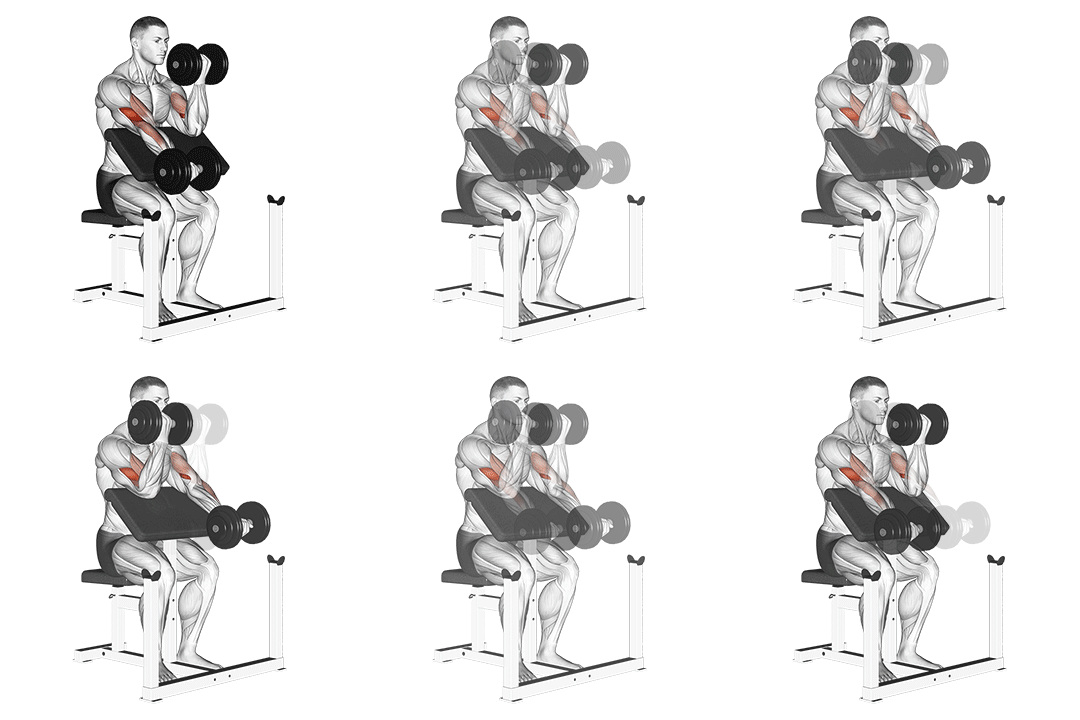
Dumbbell Alternate Preacher Curl
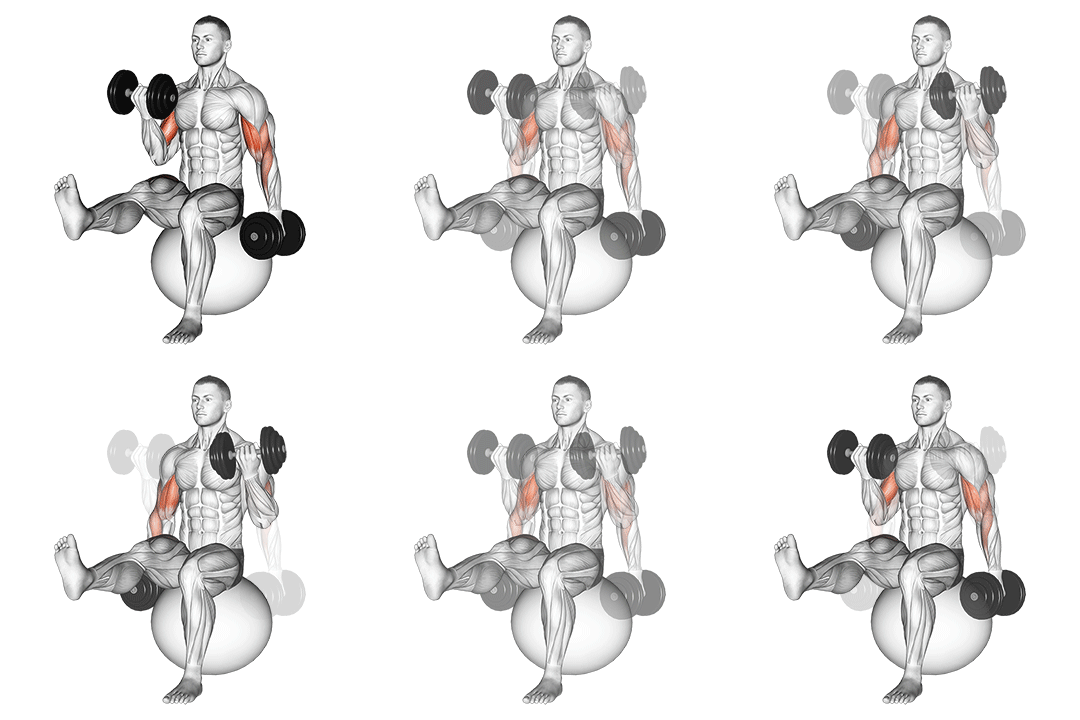
Dumbbell Alternating Bicep Curl With Leg Raised On Exercise Ball
Head-to-Head Comparison
Different values are marked. These are catalogue attributes, not performance scores.
Muscles used
Listed target and secondary muscles, shown on the body. Locations, not activation or strength scores.
- Target
- Secondary
- Not highlighted
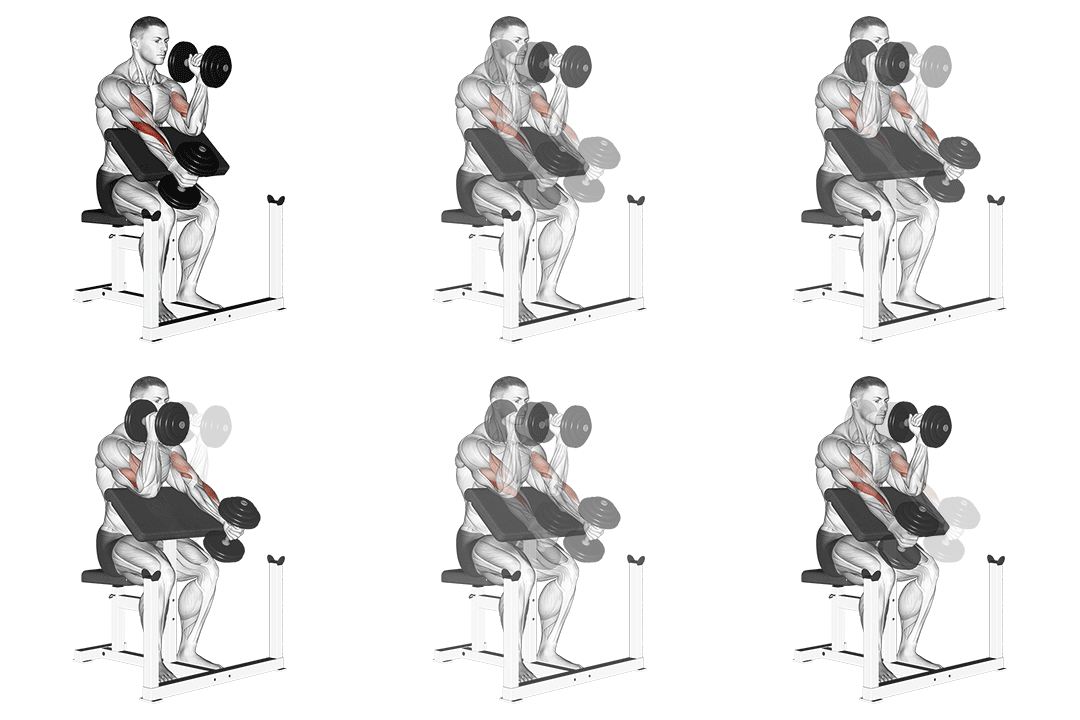
Dumbbell Alternate Preacher Curl
- Target
- Biceps
- Secondary
- Forearms
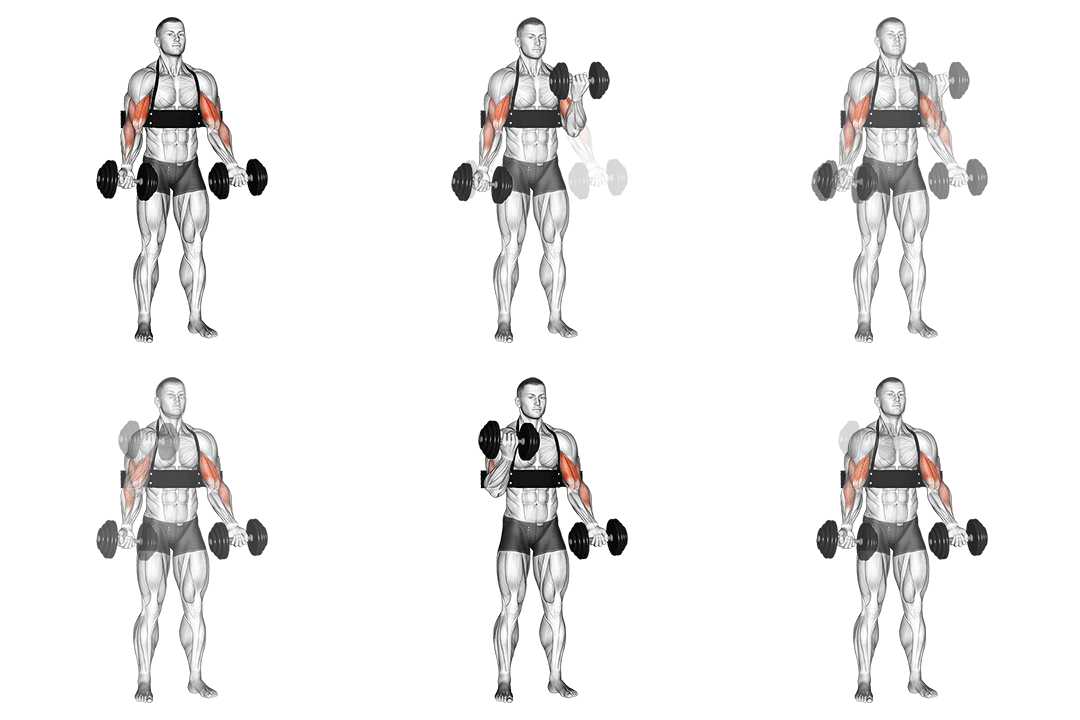
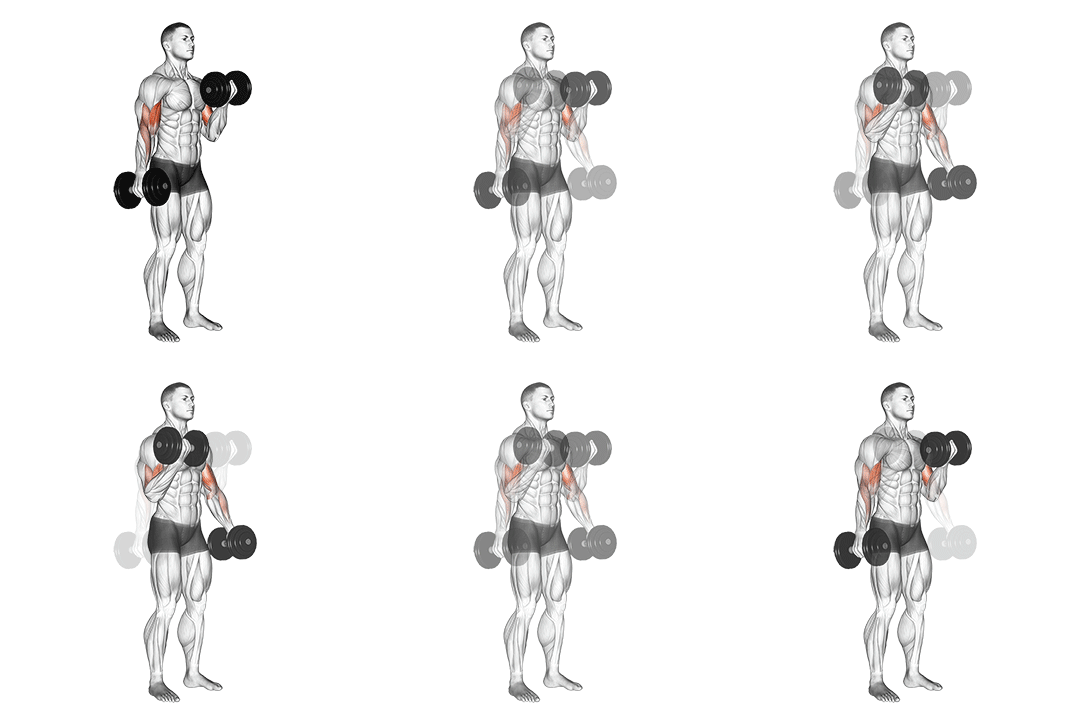
Dumbbell Alternating Bicep Curl With Leg Raised On Exercise Ball
- Target
- Biceps
- Secondary
- Forearms, Shoulders
Not shown on diagram: Shoulders. These labels do not identify a precise region on this map.
Grey does not mean a muscle is unused. The diagrams show only the mapped catalogue labels.
| Attribute | Dumbbell Alternate Preacher Curl | Dumbbell Alternating Bicep Curl With Leg Raised On Exercise Ball |
|---|---|---|
| Target Muscle | Biceps |
Biceps |
| Body Part | Upper-arms |
Upper-arms |
| Equipment | Dumbbell |
Dumbbell |
| Difficulty Different | Beginner |
Intermediate |
| Movement Type | Isolation |
Isolation |
| Secondary Muscles Different | Forearms |
Forearms, Shoulders |
Visual Comparison
An illustrative 1–10 profile derived from catalog difficulty, equipment, and listed-muscle fields—not measured performance or muscle activation.
Key Differences
- Difficulty levels differ: Dumbbell Alternate Preacher Curl is beginner, while Dumbbell Alternating Bicep Curl With Leg Raised On Exercise Ball is intermediate.
- Both exercises target the Biceps using Dumbbell. The catalogue does not establish which exercise is better for an individual goal.
Muscle comparison
Shared target muscles
Secondary muscle differences
Muscle involvement analysis
Equipment and setup
Dumbbell Alternate Preacher Curl: setup
Dumbbell Alternating Bicep Curl With Leg Raised On Exercise Ball: setup
Access and practicality
Learning and progression
Learning the movements
Progression considerations
Limitations and precautions
Pros & Cons
Dumbbell Alternate Preacher Curl
+ Pros
- High isolation of elbow flexors for focused biceps loading
- Stable setup reduces compensatory shoulder movement
- Easy to track progressive overload with heavier dumbbells
- Good for strict eccentrics and tempo work (3–4 s eccentrics)
− Cons
- Requires a preacher bench or pad that not all home gyms have
- May bias the short head if shoulder is held in slight flexion
- Less core and shoulder stabilization carryover
Dumbbell Alternating Bicep Curl With Leg Raised On Exercise Ball
+ Pros
- Adds shoulder and core stabilization, increasing functional carryover
- Greater range of motion can lengthen the long head for added stimulus
- Accessible with minimal equipment (ball + dumbbells)
- Challenging unilateral control improves motor coordination
− Cons
- Higher demand on balance and shoulder stabilizers limits load
- Harder to maintain strict isolation—may cheat with trunk movement
- Elevated fall or strain risk if ball setup is unstable
When Each Exercise Wins
The preacher curl permits higher absolute loads and stricter time under tension (try 8–12 reps, 3–4 s eccentrics), which optimizes mechanical tension on the biceps. Its isolation reduces compensatory movement, giving more direct stimulus for muscle growth.
Because the upper arm is fixed and stability demands are low, you can progressively load with heavier weights and focus on low-rep strength sets (4–6 reps) with clean technique. That direct overload transfers better to pure elbow-flexion strength.
Beginners benefit from the guided path and reduced coordination requirements of the preacher curl, which helps establish elbow-flexion mechanics before adding instability or shoulder involvement.
Most home setups have a Swiss ball and dumbbells but not a preacher bench, and the ball variation offers an effective, equipment-light option that also trains core stability alongside the biceps.
Frequently Asked Questions
Can I do both Dumbbell Alternate Preacher Curl and Dumbbell Alternating Bicep Curl With Leg Raised On Exercise Ball in the same workout?
Which exercise is better for beginners?
How do the muscle activation patterns differ?
Can Dumbbell Alternating Bicep Curl With Leg Raised On Exercise Ball replace Dumbbell Alternate Preacher Curl?
Comparison Summary
Exercise instructions
Steps from the exercise catalogue. Read the full sequence before starting.
Dumbbell Alternate Preacher Curl
- Sit on a preacher bench with a dumbbell in each hand, palms facing up.
- Rest your upper arms on the pad of the preacher bench, allowing your arms to fully extend.
- Keeping your upper arms stationary, exhale and curl the dumbbell in your right hand as you contract your biceps.
Read remaining steps for Dumbbell Alternate Preacher Curl
- Continue to curl the dumbbell until your biceps are fully contracted and the dumbbell is at shoulder level.
- Pause for a moment, then inhale and slowly lower the dumbbell back to the starting position.
- Repeat the movement with your left arm.
- Continue alternating arms for the desired number of repetitions.
Dumbbell Alternating Bicep Curl With Leg Raised On Exercise Ball
- Stand with your feet shoulder-width apart and hold a dumbbell in each hand, palms facing forward.
- Place an exercise ball behind you and position one foot on top of it, keeping your balance.
- With your arms fully extended and elbows close to your sides, curl one dumbbell towards your shoulder while keeping your upper arm stationary.
Read remaining steps for Dumbbell Alternating Bicep Curl With Leg Raised On Exercise Ball
- Lower the dumbbell back down to the starting position and repeat with the other arm.
- Continue alternating arms for the desired number of repetitions.
Also Compare
More comparisons with Dumbbell Alternate Preacher Curl
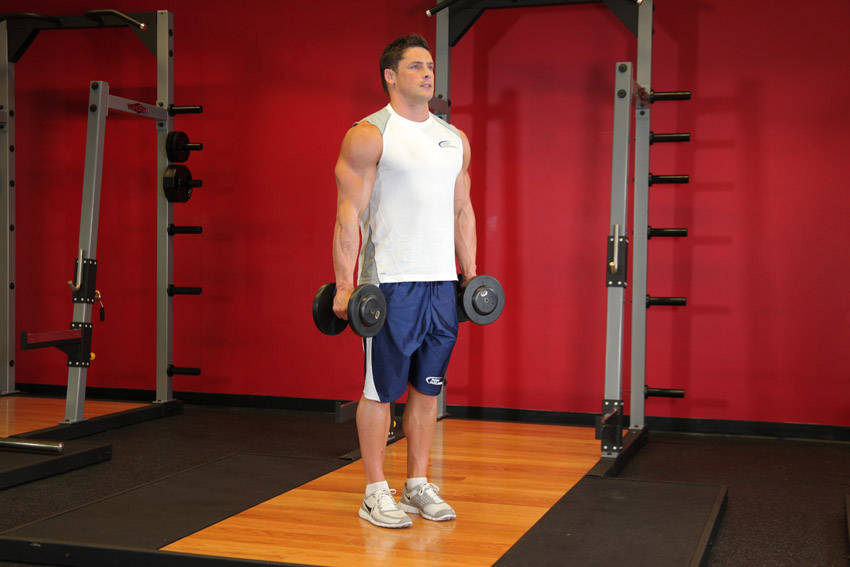
More comparisons with Dumbbell Alternating Bicep Curl With Leg Raised On Exercise Ball
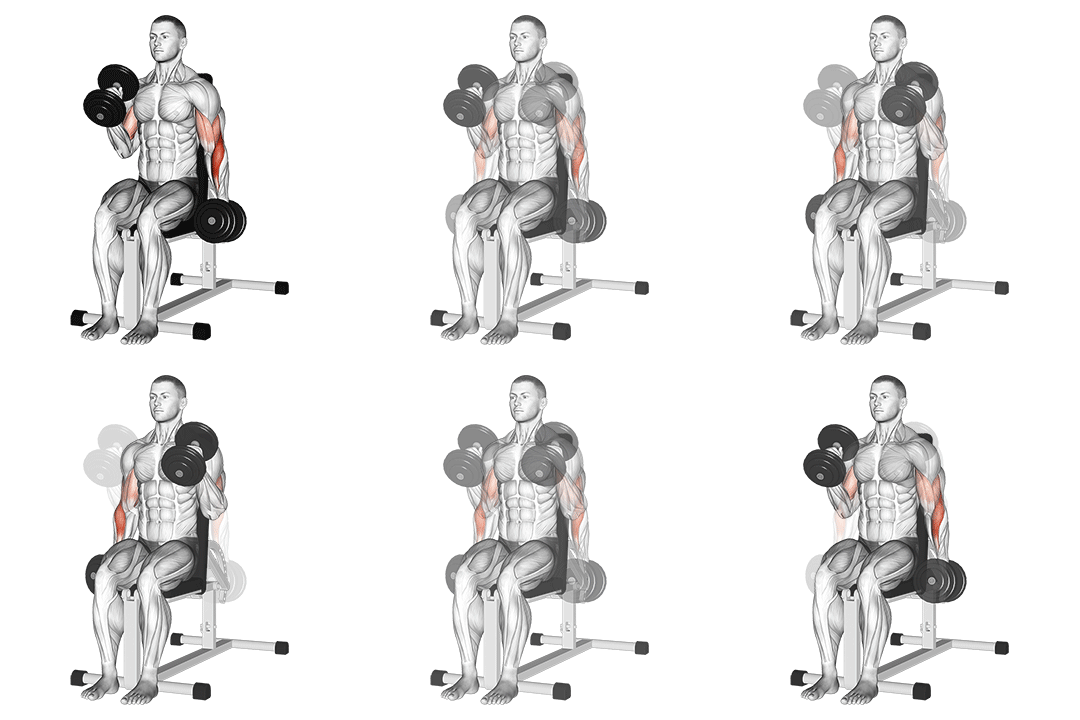
Compare another pair
Choose two exercises to see their differences side by side.