EZ Bar Standing French Press vs EZ Barbell Decline Triceps Extension

Compare target muscles, equipment, difficulty, movement type, and secondary muscles for EZ Bar Standing French Press and EZ Barbell Decline Triceps Extension.

Change comparison Share

Get comparison link

Select the link and use your device's Copy command.

Comparison overview

AI-generated
Ez Bar Standing French Press vs Ez Barbell Decline Triceps Extension — two ez-bar isolation moves that hit the triceps but feel very different. If you want clear guidance on which one to program, you’re in the right place. I’ll break down muscle activation, technique cues, equipment needs, injury risk, rep ranges (8–12 for hypertrophy, 3–6 for strength), and when to pick each for your goals. Read on and you’ll have practical steps to load, cue, and progress one or both in your upper-arm training.

Exercise Comparison

Exercise A
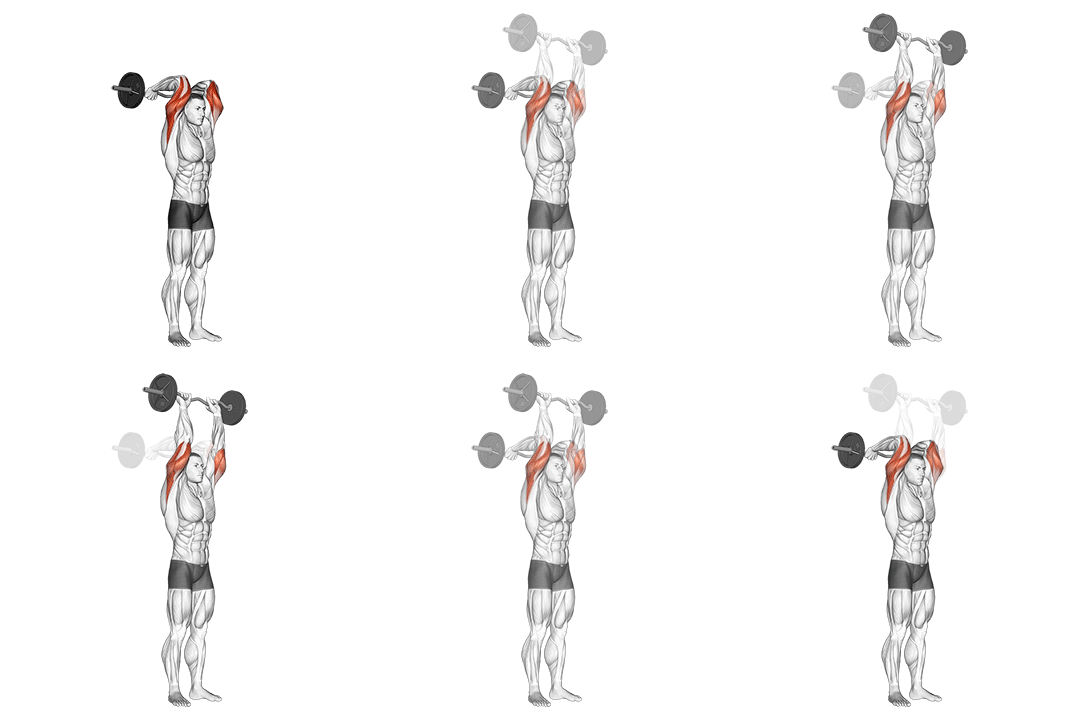
EZ Bar Standing French Press demonstration

EZ Bar Standing French Press

Target Triceps
Equipment Ez-barbell
Body Part Upper-arms
Difficulty Intermediate
Movement Isolation
Secondary Muscles
Shoulders
VS
Exercise B
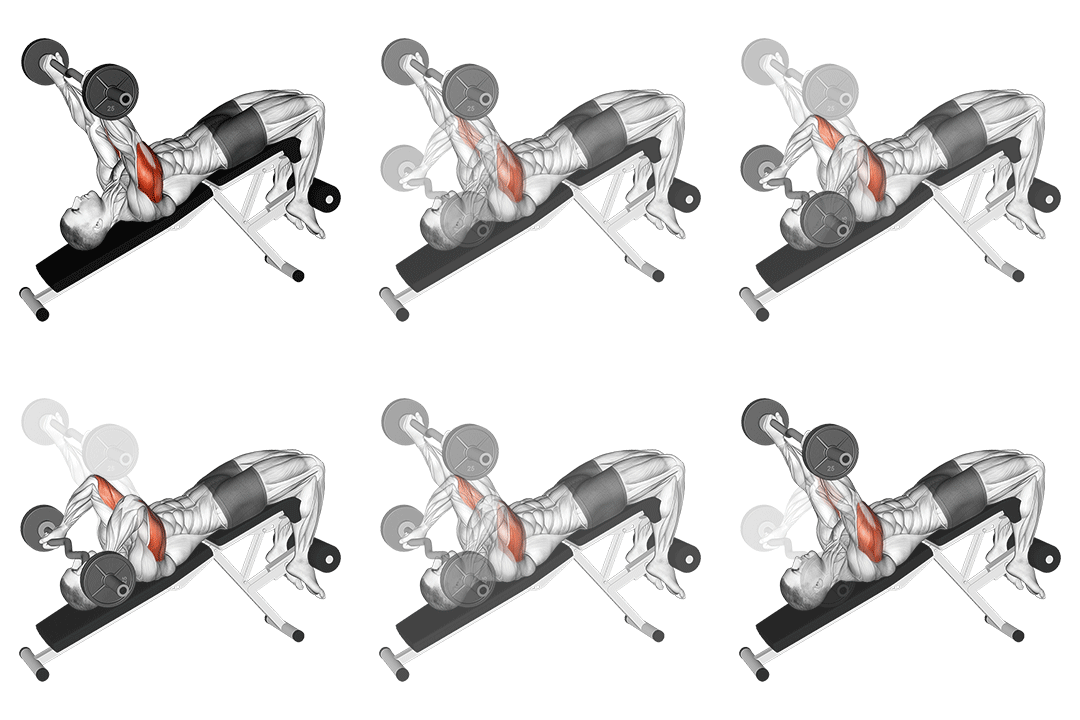
EZ Barbell Decline Triceps Extension demonstration
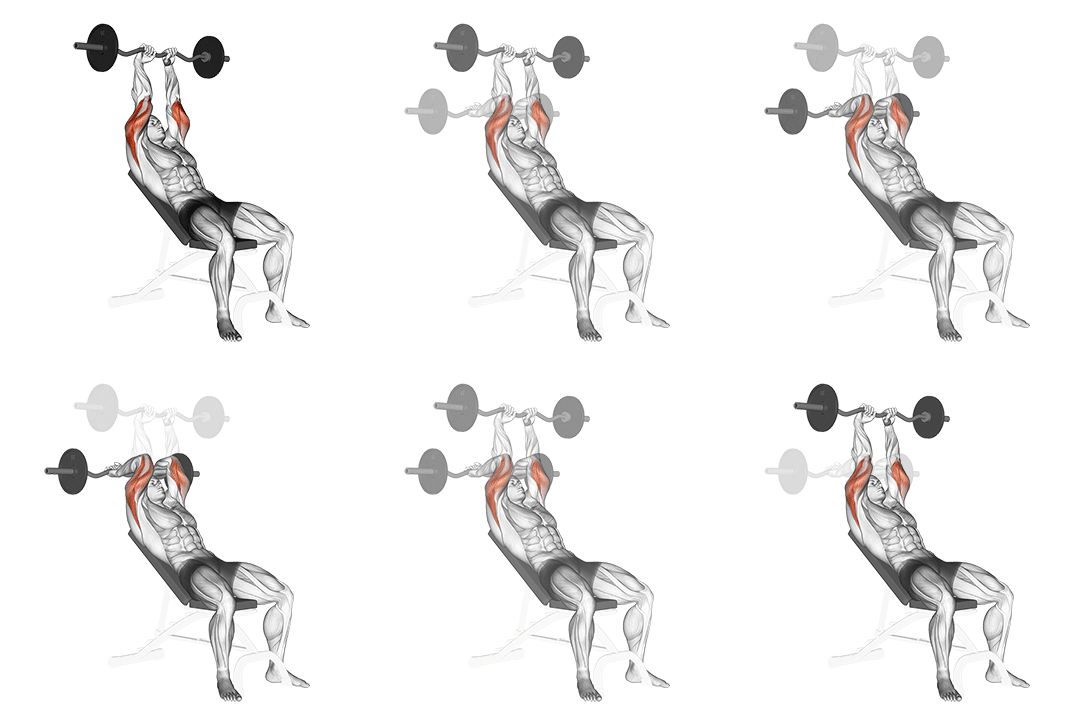
EZ Barbell Decline Triceps Extension

Target Triceps
Equipment Ez-barbell
Body Part Upper-arms
Difficulty Intermediate
Movement Isolation
Secondary Muscles
Shoulders

Head-to-Head Comparison

Different values are marked. These are catalogue attributes, not performance scores.

Muscles used

Listed target and secondary muscles, shown on the body. Locations, not activation or strength scores.

  • Target
  • Secondary
  • Not highlighted

EZ Bar Standing French Press

Front
EZ Bar Standing French Press: front muscle locationsSolid: listed target. Striped: listed secondary. Grey: not highlighted. Locations, not activation or strength scores. See the muscle names below.
Back
EZ Bar Standing French Press: back muscle locationsSolid: listed target. Striped: listed secondary. Grey: not highlighted. Locations, not activation or strength scores. See the muscle names below.
Target
Triceps
Secondary
Shoulders

Not shown on diagram: Shoulders. These labels do not identify a precise region on this map.

EZ Barbell Decline Triceps Extension

Front
EZ Barbell Decline Triceps Extension: front muscle locationsSolid: listed target. Striped: listed secondary. Grey: not highlighted. Locations, not activation or strength scores. See the muscle names below.
Back
EZ Barbell Decline Triceps Extension: back muscle locationsSolid: listed target. Striped: listed secondary. Grey: not highlighted. Locations, not activation or strength scores. See the muscle names below.
Target
Triceps
Secondary
Shoulders

Not shown on diagram: Shoulders. These labels do not identify a precise region on this map.

Grey does not mean a muscle is unused. The diagrams show only the mapped catalogue labels.

Attribute EZ Bar Standing French Press EZ Barbell Decline Triceps Extension
Target Muscle
Triceps
Triceps
Body Part
Upper-arms
Upper-arms
Equipment
Ez-barbell
Ez-barbell
Difficulty
Intermediate
Intermediate
Movement Type
Isolation
Isolation
Secondary Muscles
Shoulders
Shoulders

Visual Comparison

An illustrative 1–10 profile derived from catalog difficulty, equipment, and listed-muscle fields—not measured performance or muscle activation.

Key Differences

  • Both exercises target the Triceps using Ez-barbell. The catalogue does not establish which exercise is better for an individual goal.

Muscle comparison

Shared target muscles

Both exercises primarily target the triceps brachii — lateral, medial, and long heads — via elbow extension. The motor pattern is the same (elbow extension against resistance), so both place primary torque at the elbow joint. Because the long head crosses the shoulder, the shoulder angle changes how much the long head contributes; both recruit it but at different lengths.

Secondary muscle differences

Standing French Press recruits more shoulder stabilizers and upper-trapezius activity because you work from an overhead shoulder-flexed position. Decline triceps extensions reduce core and shoulder stabilization demand and shift secondary load to the posterior deltoid and scapular stabilizers due to the torso angle and fixed bench contact.

Muscle involvement analysis

Standing French Press places the long head on greater stretch at the bottom because shoulder flexion increases length-tension for that head, increasing passive tension and eccentric stress. Decline extension shortens the shoulder slightly compared with an overhead start, so force vector aligns more horizontally and the lateral/medial heads can take larger peak loads. Moment arm around the elbow varies: overhead position increases moment arm and torque, while the decline position lowers peak torque and lets you use heavier absolute load.

Equipment and setup

EZ Bar Standing French Press: setup

An EZ-barbell, a rack for unloading/loading, and open space to stand. No bench required. Optional: collars and a small step-through area to manage the bar safely.

EZ Barbell Decline Triceps Extension: setup

An EZ-barbell plus a decline bench set to roughly 15–30 degrees decline. You’ll also want collars and ideally a spotter for heavier sets or to rack/unrack on the decline angle.

Access and practicality

Ez Bar Standing French Press — it needs only an EZ-bar and space, so it’s more accessible in a typical gym or home setup without a decline bench.

Learning and progression

Learning the movements

Decline triceps extensions are easier to learn because the bench stabilizes your torso and limits compensatory movement. Standing French Press requires more shoulder mobility and trunk stability to keep elbows from flaring.

Progression considerations

Both scale well, but Decline Triceps Extension allows safer jumps in absolute load since your torso is supported. Standing French Press offers more variation (single-arm, seated, tempo) for long-head emphasis and higher time-under-tension progression.

Limitations and precautions

Standing French Press has a higher shoulder and long-head tendon stress risk if you lack overhead mobility or use excessive range of motion. Decline extensions risk elbow hyperextension or forehead contact if technique slips, but overall present lower shoulder strain due to bench support.

Pros & Cons

EZ Bar Standing French Press

+ Pros

  • Stronger long-head stretch due to shoulder flexion — better length-tension for growth
  • Requires minimal equipment (no bench)
  • Easy to vary tempo and partials for time-under-tension
  • Good standing balance and core integration improves overall stability

− Cons

  • Greater shoulder mobility required; can irritate impinged shoulders
  • Higher torque at the elbow — possible tendon stress if overloaded
  • Harder to control heavy loads without a spotter

EZ Barbell Decline Triceps Extension

+ Pros

  • Stable setup lets you handle heavier absolute loads safely
  • Simpler technique — easier for beginners to maintain elbow position
  • Less demand on core and shoulder stabilizers reduces compensations
  • Great for loading lateral and medial heads with higher mechanical tension

− Cons

  • Requires a decline bench — less accessible in some gyms or homes
  • Slightly reduced long-head stretch vs overhead variations
  • Can drive forehead contact or neck strain if bar path is poor

When Each Exercise Wins

1
For muscle hypertrophy: Ez Bar Standing French Press

The overhead start increases long-head length and passive tension at the bottom of the movement, improving length-tension stimulus. Use 8–12 reps with a controlled 2–3 second eccentric to maximize time under tension.

2
For strength gains: Ez Barbell Decline Triceps Extension

The decline bench stabilizes your torso so you can handle heavier absolute loads and train with lower rep ranges (3–6) while keeping tight technique and high mechanical tension on the elbow extensors.

3
For beginners: Ez Barbell Decline Triceps Extension

A supported decline position simplifies cues and reduces instability, letting beginners learn strict elbow-extension mechanics without balancing or compensatory shoulder movement.

4
For home workouts: Ez Bar Standing French Press

You only need an EZ-bar and space to stand, so you can perform an effective triceps isolation without a specialized decline bench or extra equipment.

Frequently Asked Questions

Can I do both Ez Bar Standing French Press and Ez Barbell Decline Triceps Extension in the same workout?

Yes. Pairing them back-to-back can work well: start with the decline extension for heavier sets (3–6 reps) to build mechanical tension, then finish with standing French press for 8–12 reps to emphasize long-head stretch and metabolic fatigue.

Which exercise is better for beginners?

Decline triceps extension is generally better for beginners because the bench stabilizes your torso and simplifies maintaining strict elbow alignment, reducing compensatory shoulder movement while you learn the pattern.

How do the muscle activation patterns differ?

Standing French Press increases long-head activation at the bottom due to increased shoulder flexion and length-tension, raising eccentric stress. Decline extensions shift the force vector more horizontally and let the lateral and medial heads accept higher absolute load with less shoulder involvement.

Can Ez Barbell Decline Triceps Extension replace Ez Bar Standing French Press?

It can replace it if your goal is heavier loading and simpler technique, but you’ll lose some long-head stretch. For balanced development, rotate both across training blocks rather than using only one.

Comparison Summary

Choose the Ez Bar Standing French Press when your goal is to specifically target the long head and maximize stretch-mediated hypertrophy; use 8–12 reps, a 2–3 second eccentric, and stop when shoulder discomfort appears. Pick the Ez Barbell Decline Triceps Extension when you want to overload the triceps with heavier absolute weight, teach clean elbow-extension mechanics, or cut down on stabilizer fatigue — use 3–6 heavy sets for strength or 6–10 for higher volume. Both are valuable: rotate them across cycles (4–8 weeks) to balance length-tension stimulus and pure mechanical overload while reducing repetitive loading on the same tendon paths.

Exercise instructions

Steps from the exercise catalogue. Read the full sequence before starting.

EZ Bar Standing French Press

  1. Stand with your feet shoulder-width apart and hold the ez barbell with an overhand grip.
  2. Raise the barbell above your head, fully extending your arms.
  3. Keeping your upper arms close to your head, slowly lower the barbell behind your head by bending your elbows.
Read remaining steps for EZ Bar Standing French Press
  1. Pause for a moment, then extend your arms back to the starting position.
  2. Repeat for the desired number of repetitions.

EZ Barbell Decline Triceps Extension

  1. Lie on a decline bench with your head lower than your feet and your feet secured.
  2. Hold the ez barbell with an overhand grip, hands shoulder-width apart.
  3. Extend your arms fully, keeping your elbows close to your head.
Read remaining steps for EZ Barbell Decline Triceps Extension
  1. Lower the barbell slowly towards your forehead, bending your elbows.
  2. Pause for a moment, then extend your arms back to the starting position.
  3. Repeat for the desired number of repetitions.

Also Compare

Compare another pair

Choose two exercises to see their differences side by side.

Compare Exercises