EZ Bar Lying Close Grip Triceps Extension Behind Head vs EZ Bar Standing French Press
Compare target muscles, equipment, difficulty, movement type, and secondary muscles for EZ Bar Lying Close Grip Triceps Extension Behind Head and EZ Bar Standing French Press.
Change comparison Share

Get comparison link

Select the link and use your device's Copy command.

Comparison overview

AI-generated
Ez Bar Lying Close Grip Triceps Extension Behind Head vs Ez Bar Standing French Press — if you want bigger, stronger triceps you need to pick the right variation. I’ll walk you through how each move loads the three triceps heads, which offers a bigger long‑head stretch, how shoulder position changes force vectors, and clear technique cues to use now. You’ll get rep ranges, risk pointers (especially for overhead shoulder mobility), and decisive recommendations so you can choose the exercise that matches your goals and equipment.

Exercise Comparison

Exercise A
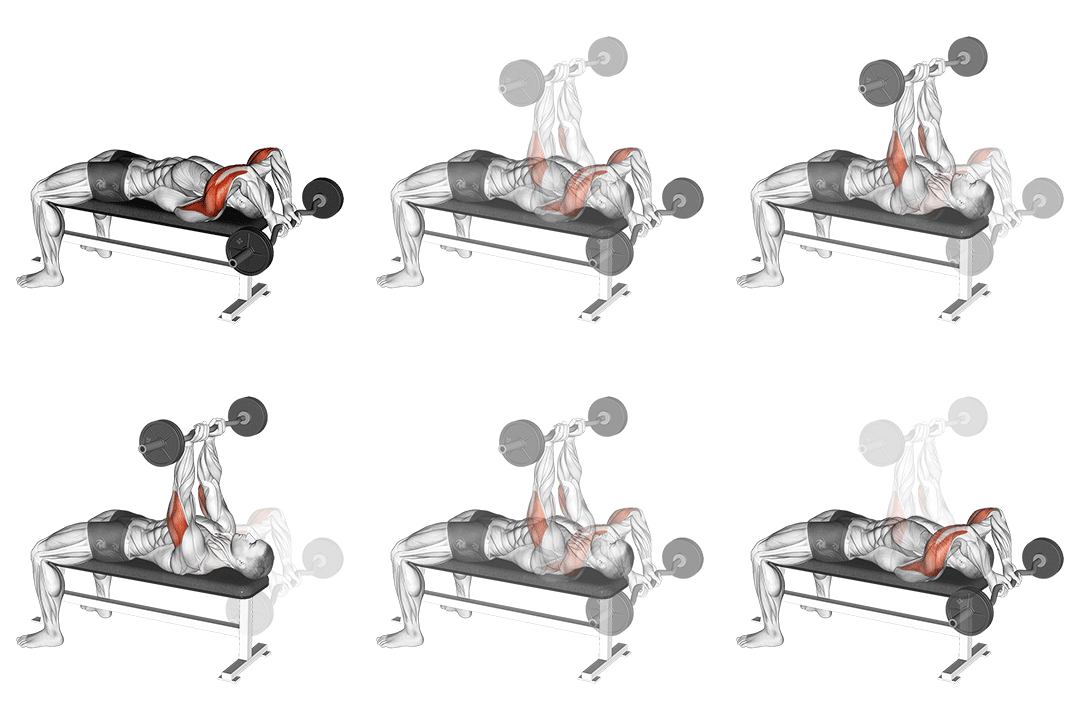
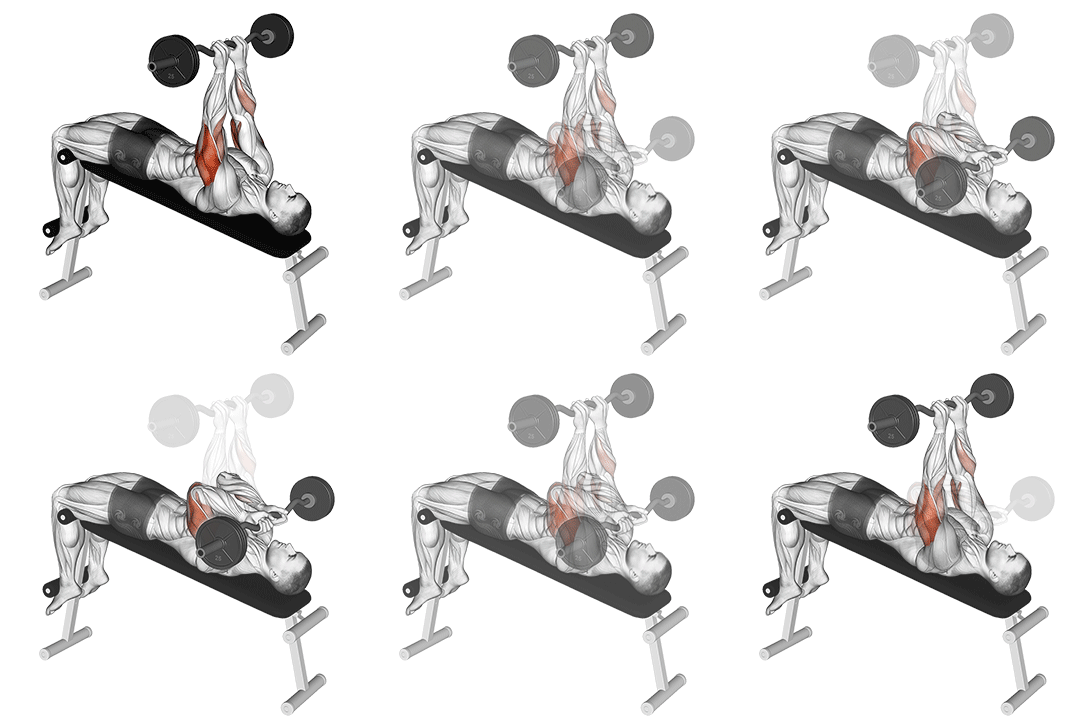
EZ Bar Lying Close Grip Triceps Extension Behind Head demonstration
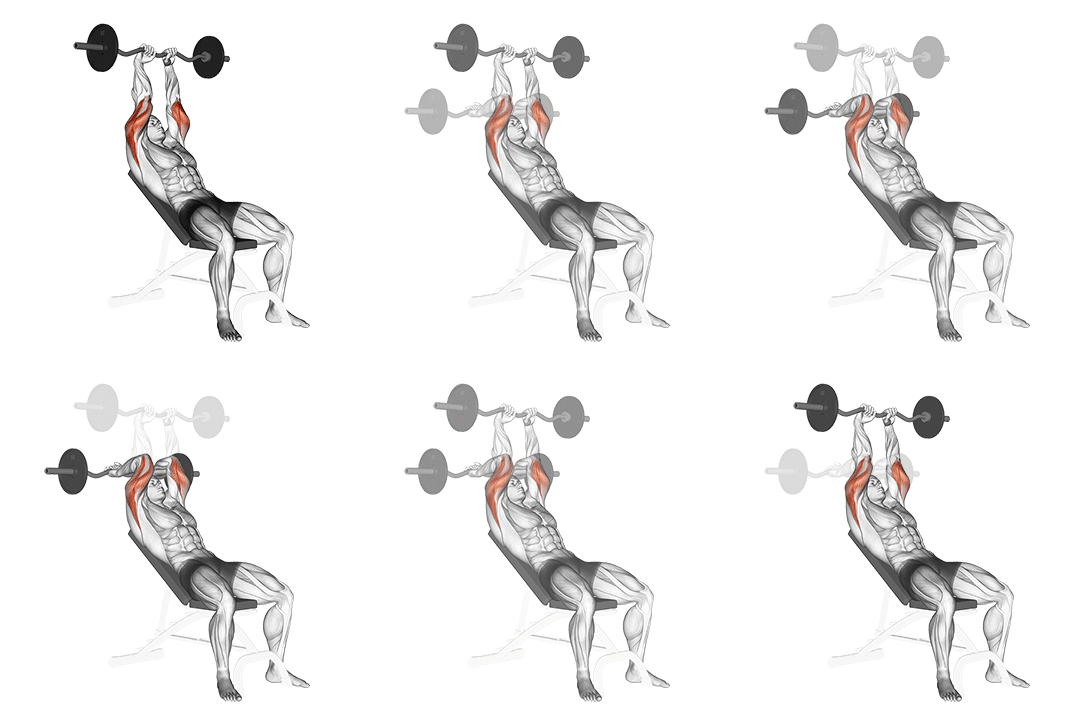
EZ Bar Lying Close Grip Triceps Extension Behind Head

Target Triceps
Equipment Ez-barbell
Body Part Upper-arms
Difficulty Intermediate
Movement Isolation
Secondary Muscles
Shoulders
VS
Exercise B
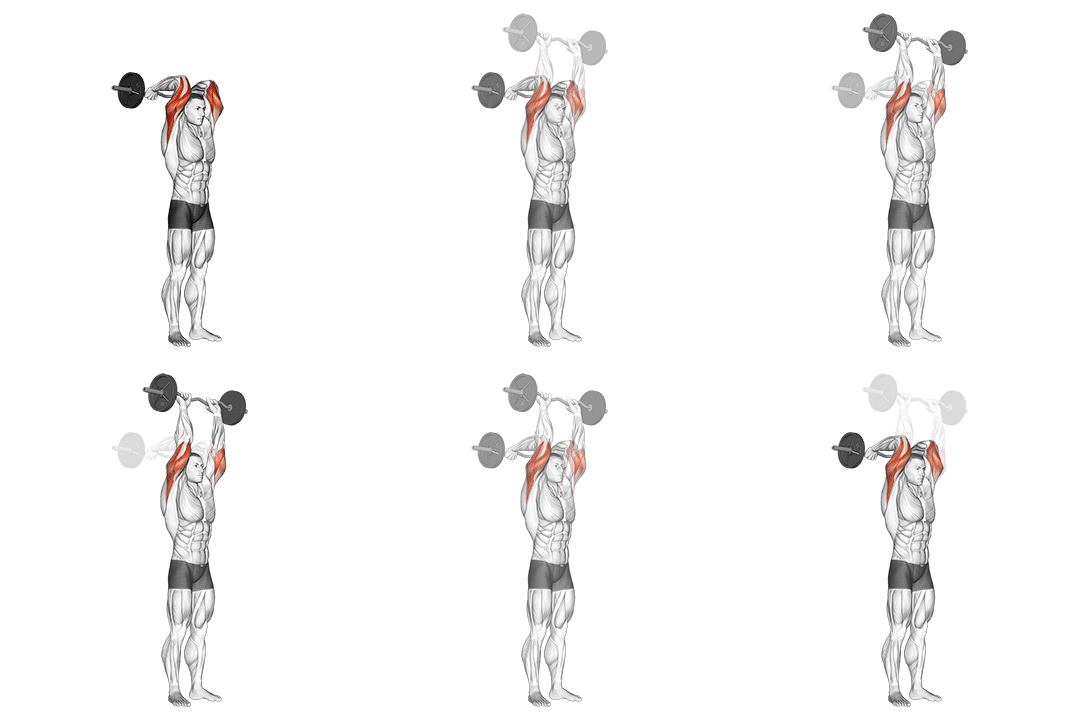
EZ Bar Standing French Press demonstration

EZ Bar Standing French Press

Target Triceps
Equipment Ez-barbell
Body Part Upper-arms
Difficulty Intermediate
Movement Isolation
Secondary Muscles
Shoulders

Head-to-Head Comparison

Different values are marked. These are catalogue attributes, not performance scores.

Muscles used

Listed target and secondary muscles, shown on the body. Locations, not activation or strength scores.

  • Target
  • Secondary
  • Not highlighted

EZ Bar Lying Close Grip Triceps Extension Behind Head

Front
EZ Bar Lying Close Grip Triceps Extension Behind Head: front muscle locationsSolid: listed target. Striped: listed secondary. Grey: not highlighted. Locations, not activation or strength scores. See the muscle names below.
Back
EZ Bar Lying Close Grip Triceps Extension Behind Head: back muscle locationsSolid: listed target. Striped: listed secondary. Grey: not highlighted. Locations, not activation or strength scores. See the muscle names below.
Target
Triceps
Secondary
Shoulders

Not shown on diagram: Shoulders. These labels do not identify a precise region on this map.

EZ Bar Standing French Press

Front
EZ Bar Standing French Press: front muscle locationsSolid: listed target. Striped: listed secondary. Grey: not highlighted. Locations, not activation or strength scores. See the muscle names below.
Back
EZ Bar Standing French Press: back muscle locationsSolid: listed target. Striped: listed secondary. Grey: not highlighted. Locations, not activation or strength scores. See the muscle names below.
Target
Triceps
Secondary
Shoulders

Not shown on diagram: Shoulders. These labels do not identify a precise region on this map.

Grey does not mean a muscle is unused. The diagrams show only the mapped catalogue labels.

Attribute EZ Bar Lying Close Grip Triceps Extension Behind Head EZ Bar Standing French Press
Target Muscle
Triceps
Triceps
Body Part
Upper-arms
Upper-arms
Equipment
Ez-barbell
Ez-barbell
Difficulty
Intermediate
Intermediate
Movement Type
Isolation
Isolation
Secondary Muscles
Shoulders
Shoulders

Visual Comparison

An illustrative 1–10 profile derived from catalog difficulty, equipment, and listed-muscle fields—not measured performance or muscle activation.

Key Differences

  • Both exercises target the Triceps using Ez-barbell. The catalogue does not establish which exercise is better for an individual goal.

Muscle comparison

Shared target muscles

Both exercises primarily target the triceps brachii—particularly the long, lateral, and medial heads through elbow extension. Overall triceps activation is similar if load and tempo match, but the lying behind‑head variation places the long head at a greater initial length due to shoulder flexion, increasing length‑tension potential for stretch‑mediated hypertrophy.

Secondary muscle differences

Secondary recruitment differs mainly in shoulder and scapular stabilizers. The lying behind‑head version requires more passive shoulder flexion and posterior deltoid/rotator cuff stabilization to maintain elbow positioning. The standing French press engages more core, scapular stabilizers and anterior deltoid activity to control torso position and resist forward flexion.

Muscle involvement analysis

With the bar behind the head the long head starts in a more lengthened position (shoulder flexion ≈ 100–130°), increasing tension early in the range; peak triceps moment occurs near 20–30° of elbow flexion to extension. Standing French press keeps the shoulder relatively neutral to slightly flexed, producing a more even triceps activation throughout the ROM and allowing higher external loads with reduced passive stretch.

Equipment and setup

EZ Bar Lying Close Grip Triceps Extension Behind Head: setup

Ez Bar Lying Close Grip Triceps Extension Behind Head requires an EZ‑bar, an adjustable bench (flat or slight incline) or the floor, and enough overhead clearance to lower the bar behind the head safely.

EZ Bar Standing French Press: setup

Ez Bar Standing French Press needs an EZ‑bar and open standing space; a power rack or mirror helps with setup but is not required. No bench is necessary.

Access and practicality

Ez Bar Standing French Press is more accessible because it only needs bar space and no bench. That makes it better for small home gyms or limited equipment setups.

Learning and progression

Learning the movements

Standing French Press is easier to learn—the movement is a straightforward overhead elbow extension with visible bar path, so beginners can self‑cue elbow tracking. The lying behind‑head version has a steeper learning curve due to bar path behind the skull and the need to control shoulder flexion and scapular position.

Progression considerations

Standing French Press offers more straightforward progression by adding weight and changing stance or tempo, and it tolerates heavier loads. Lying behind‑head allows progression through increased stretch (slower eccentrics), partials at end range, and tempo, which favors hypertrophy programming.

Limitations and precautions

Ez Bar Lying Close Grip Triceps Extension Behind Head carries higher shoulder risk for athletes with limited overhead mobility or impingement history because of sustained shoulder flexion and external rotation. Standing French Press has lower shoulder impingement risk but increases elbow tendon load and temptation to use body sway that can transfer stress to the low back.

Pros & Cons

EZ Bar Lying Close Grip Triceps Extension Behind Head

+ Pros

  • Greater long‑head stretch (shoulder flexion ~100–130°) increases mechanical tension early in ROM
  • Narrow/close grip keeps force vector focused on elbow extension, isolating triceps
  • Eccentric control options (3–5s lowers) promote hypertrophy via stretch‑mediated stimulus
  • Minimal lower‑body involvement lets you concentrate solely on arm mechanics

− Cons

  • Higher shoulder stress for lifters with limited overhead mobility
  • Requires bench or floor setup, making it less practical for small spaces
  • Bar path behind head is harder to coach and risks poor elbow tracking

EZ Bar Standing French Press

+ Pros

  • Easier setup and execution—no bench needed
  • Allows heavier loading and progressive overload for strength work
  • Better core and scapular engagement improves stability carryover to presses
  • Lower shoulder impingement risk due to more neutral shoulder position

− Cons

  • Greater temptation to use trunk lean or momentum, reducing strict triceps tension
  • Can overload elbow tendons if volume or load increases too quickly
  • Slightly less long‑head stretch compared with the behind‑head variation

When Each Exercise Wins

1
For muscle hypertrophy: Ez Bar Lying Close Grip Triceps Extension Behind Head

The behind‑head position lengthens the long head at the start of the rep, increasing stretch‑mediated mechanical tension. Use 8–15 reps with 2–4 sets and controlled 3–4s eccentrics to maximize hypertrophy.

2
For strength gains: Ez Bar Standing French Press

Standing French Press tolerates heavier loads and safer progressive overload, improving maximal elbow extension torque. Train in 4–6 rep ranges with 3–5 sets and full recovery to build strength.

3
For beginners: Ez Bar Standing French Press

Its visible bar path and simpler shoulder position make it easier to learn proper elbow tracking and load progression. Beginners should start with light weight focusing on strict form and 8–12 reps.

4
For home workouts: Ez Bar Standing French Press

No bench or extra equipment required and it needs minimal floor space, making it the practical choice for home gyms. Use tempo control to keep tension without heavy plates.

Frequently Asked Questions

Can I do both Ez Bar Lying Close Grip Triceps Extension Behind Head and Ez Bar Standing French Press in the same workout?

Yes. Start with the heavier, compound‑like standing French press for strength (3–5 sets), then follow with the lying behind‑head variation for focused hypertrophy (2–4 sets of 8–15). Watch total elbow volume to avoid tendon overload.

Which exercise is better for beginners?

Standing French press is better for beginners because it has an easier setup and clearer bar path. Beginners should focus on strict elbow tracking, moderate loads, and 8–12 reps before progressing.

How do the muscle activation patterns differ?

Behind‑head work places the long head at a longer starting length, increasing early‑range tension and favoring stretch‑mediated hypertrophy, while standing French press produces more uniform activation through the ROM and tolerates higher external loads for strength.

Can Ez Bar Standing French Press replace Ez Bar Lying Close Grip Triceps Extension Behind Head?

It can replace it for strength and practical needs, but not fully for long‑head stretch stimulus. If your goal is maximum long‑head hypertrophy, keep the lying behind‑head variation in your rotation at least periodically.

Comparison Summary

Both movements are valid triceps isolation tools but serve distinct needs. Choose Ez Bar Lying Close Grip Triceps Extension Behind Head when your priority is long‑head hypertrophy: use controlled eccentrics (3–4s), 8–15 reps, and ensure adequate shoulder mobility. Pick Ez Bar Standing French Press when you want to load heavier, build strength, or train in limited space—work in 4–8 or 8–12 rep ranges while keeping the torso braced to avoid momentum. Rotate them across phases: use behind‑head blocks for dedicated hypertrophy (4–6 weeks) and standing French press for strength or high‑load phases to optimize overall triceps development.

Exercise instructions

Steps from the exercise catalogue. Read the full sequence before starting.

EZ Bar Lying Close Grip Triceps Extension Behind Head

  1. Lie flat on a bench with your feet flat on the ground and your head at the end of the bench.
  2. Hold the ez barbell with a close grip, palms facing up, and extend your arms straight up over your chest.
  3. Keeping your upper arms stationary, slowly lower the barbell behind your head by bending your elbows.
Read remaining steps for EZ Bar Lying Close Grip Triceps Extension Behind Head
  1. Pause for a moment, then extend your arms back up to the starting position.
  2. Repeat for the desired number of repetitions.

EZ Bar Standing French Press

  1. Stand with your feet shoulder-width apart and hold the ez barbell with an overhand grip.
  2. Raise the barbell above your head, fully extending your arms.
  3. Keeping your upper arms close to your head, slowly lower the barbell behind your head by bending your elbows.
Read remaining steps for EZ Bar Standing French Press
  1. Pause for a moment, then extend your arms back to the starting position.
  2. Repeat for the desired number of repetitions.

Also Compare

Compare another pair

Choose two exercises to see their differences side by side.

Compare Exercises