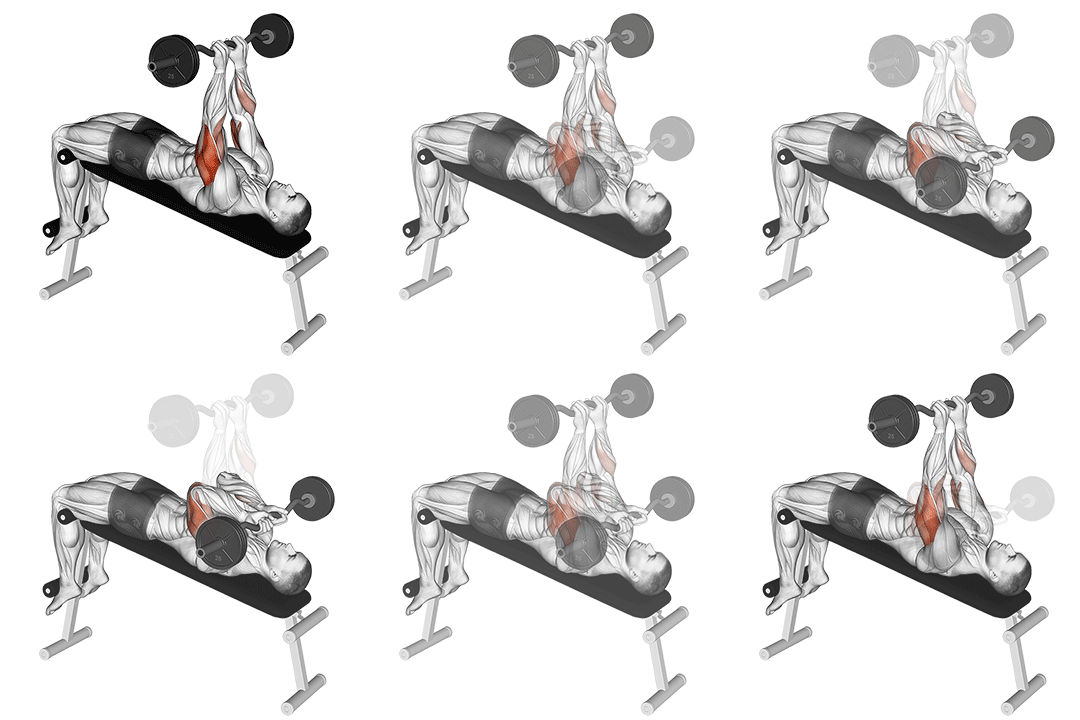
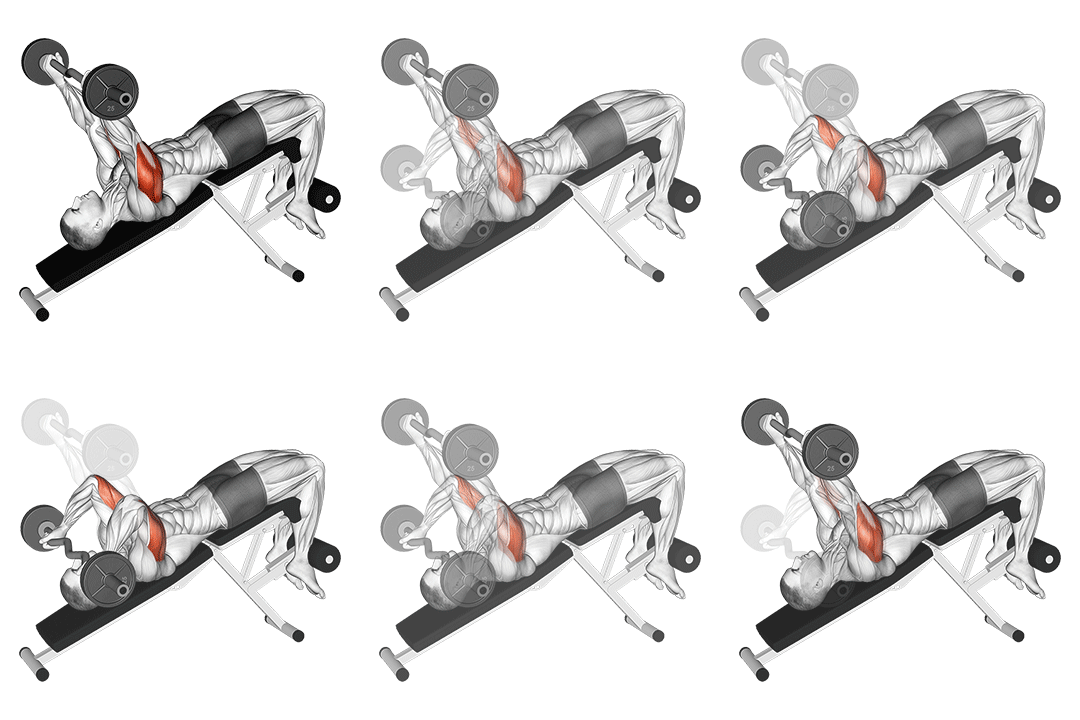
EZ Bar French Press On Exercise Ball vs EZ Bar Standing French Press

Compare target muscles, equipment, difficulty, movement type, and secondary muscles for EZ Bar French Press On Exercise Ball and EZ Bar Standing French Press.

Change comparison Share

Get comparison link

Select the link and use your device's Copy command.

Comparison overview

AI-generated
Ez Bar French Press On Exercise Ball vs Ez Bar Standing French Press is a practical head-to-head for anyone focused on stronger, fuller triceps. You’ll get straight answers about muscle activation, stability demands, technique cues, and progression options so you can pick the variant that matches your goals. I’ll explain how shoulder angle and trunk support change long-head recruitment, show specific rep ranges (6–12 for hypertrophy, 3–6 for strength), and give actionable setup and safety tips you can use the next time you train.

Exercise Comparison

Exercise A
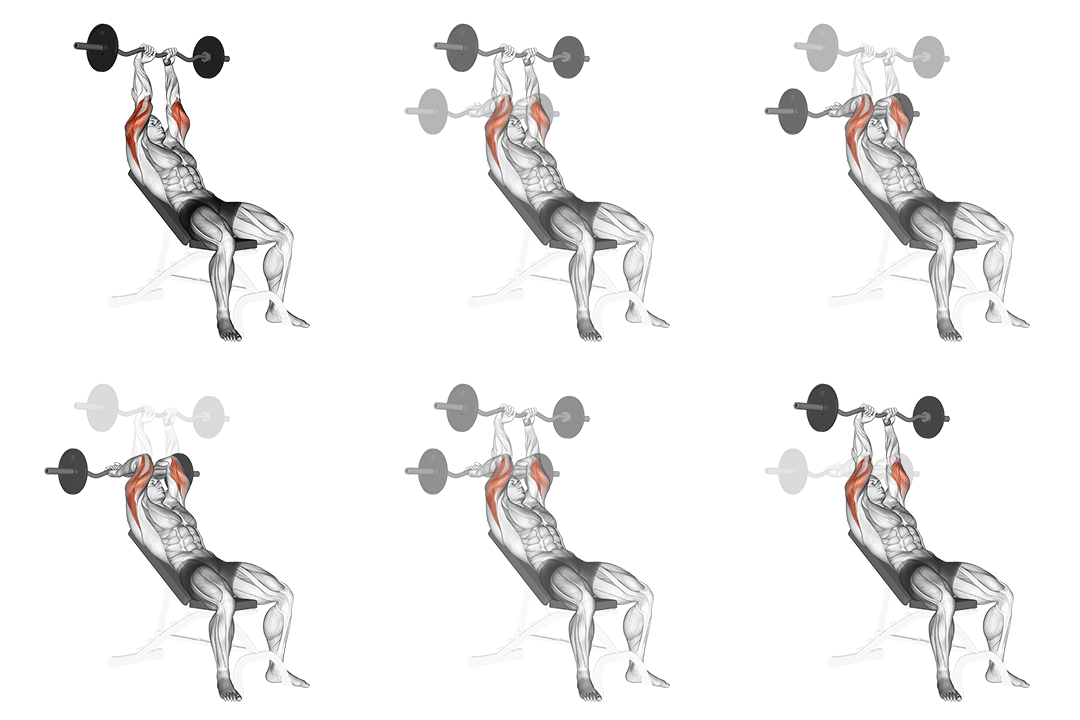
EZ Bar French Press On Exercise Ball demonstration

EZ Bar French Press On Exercise Ball
Target Triceps
Equipment Ez-barbell
Body Part Upper-arms
Difficulty Intermediate
Movement Isolation
Secondary Muscles
Shoulders
VS
Exercise B
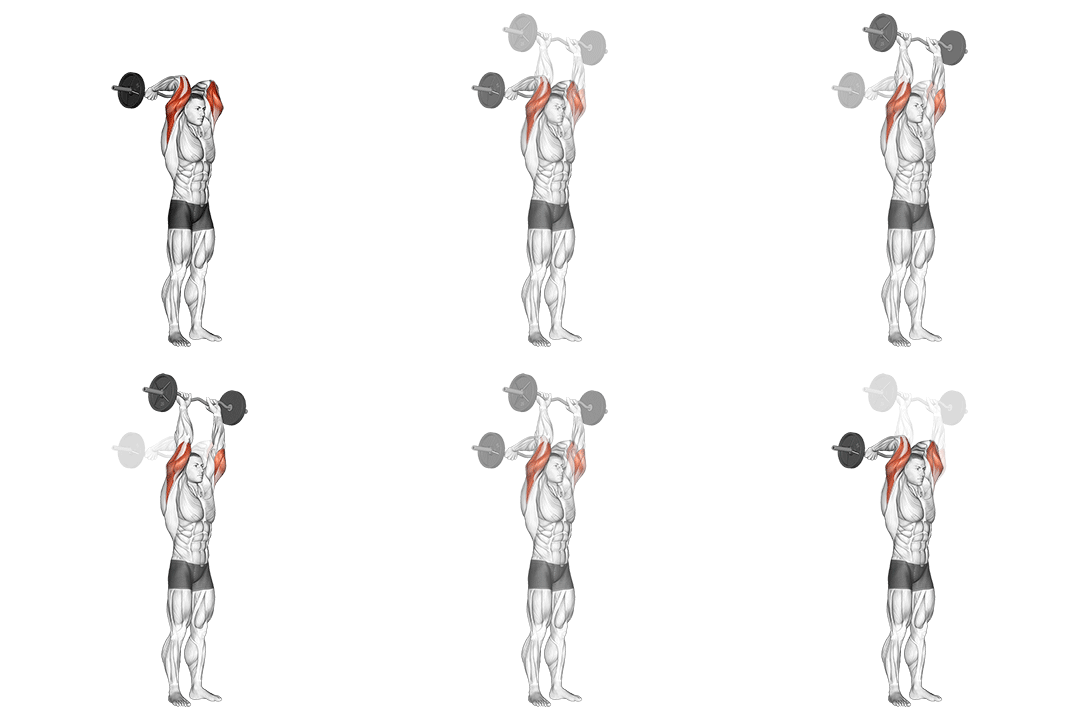
EZ Bar Standing French Press demonstration

EZ Bar Standing French Press

Target Triceps
Equipment Ez-barbell
Body Part Upper-arms
Difficulty Intermediate
Movement Isolation
Secondary Muscles
Shoulders

Head-to-Head Comparison

Different values are marked. These are catalogue attributes, not performance scores.

Muscles used

Listed target and secondary muscles, shown on the body. Locations, not activation or strength scores.

  • Target
  • Secondary
  • Not highlighted

EZ Bar French Press On Exercise Ball
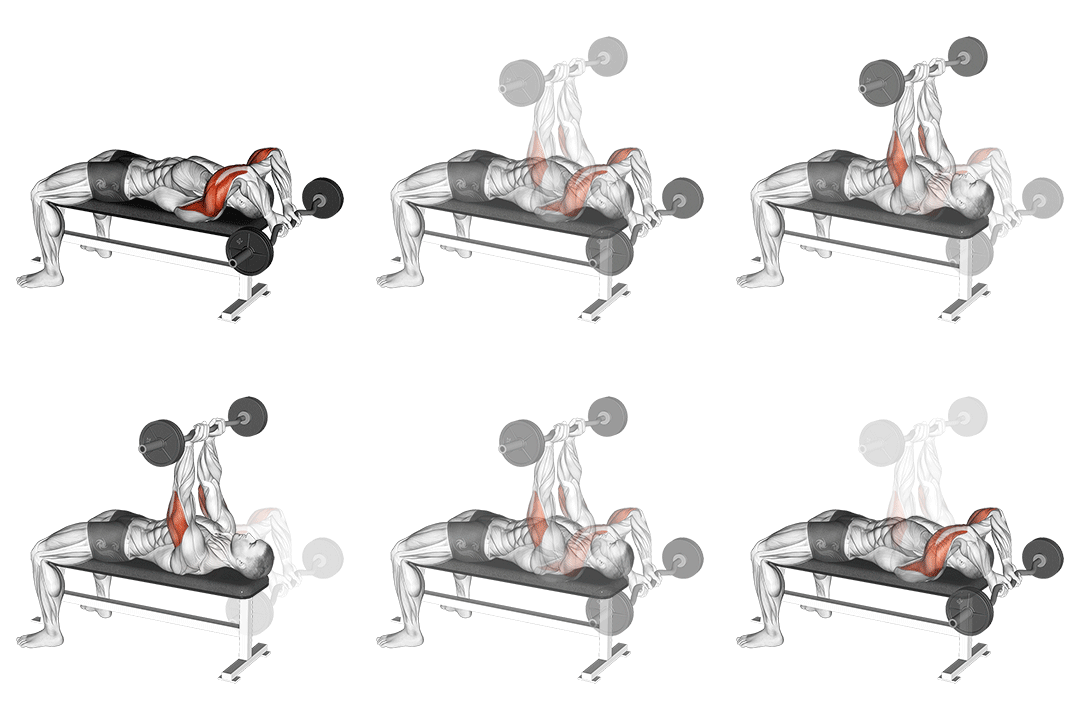
Front
EZ Bar French Press On Exercise Ball: front muscle locationsSolid: listed target. Striped: listed secondary. Grey: not highlighted. Locations, not activation or strength scores. See the muscle names below.
Back
EZ Bar French Press On Exercise Ball: back muscle locationsSolid: listed target. Striped: listed secondary. Grey: not highlighted. Locations, not activation or strength scores. See the muscle names below.
Target
Triceps
Secondary
Shoulders

Not shown on diagram: Shoulders. These labels do not identify a precise region on this map.

EZ Bar Standing French Press

Front
EZ Bar Standing French Press: front muscle locationsSolid: listed target. Striped: listed secondary. Grey: not highlighted. Locations, not activation or strength scores. See the muscle names below.
Back
EZ Bar Standing French Press: back muscle locationsSolid: listed target. Striped: listed secondary. Grey: not highlighted. Locations, not activation or strength scores. See the muscle names below.
Target
Triceps
Secondary
Shoulders

Not shown on diagram: Shoulders. These labels do not identify a precise region on this map.

Grey does not mean a muscle is unused. The diagrams show only the mapped catalogue labels.

Attribute EZ Bar French Press On Exercise Ball EZ Bar Standing French Press
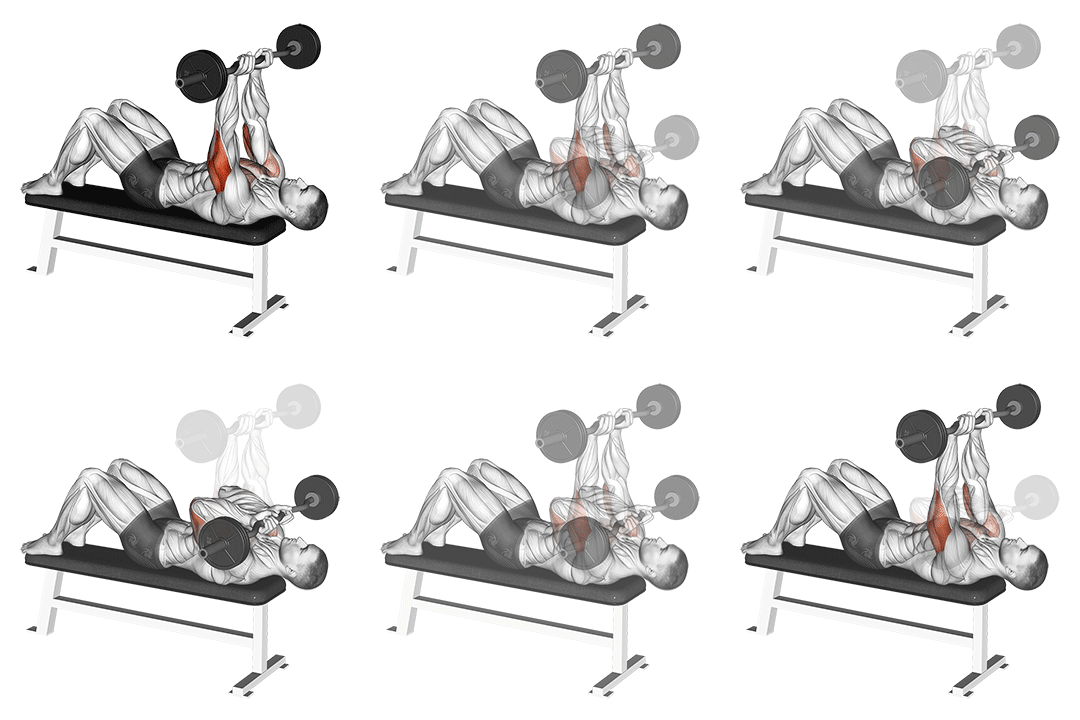
Target Muscle
Triceps
Triceps
Body Part
Upper-arms
Upper-arms
Equipment
Ez-barbell
Ez-barbell
Difficulty
Intermediate
Intermediate
Movement Type
Isolation
Isolation
Secondary Muscles
Shoulders
Shoulders

Visual Comparison

An illustrative 1–10 profile derived from catalog difficulty, equipment, and listed-muscle fields—not measured performance or muscle activation.

Key Differences

  • Both exercises target the Triceps using Ez-barbell. The catalogue does not establish which exercise is better for an individual goal.

Muscle comparison

Shared target muscles

Both versions primarily load the triceps brachii — especially the long head because the elbow extends with the shoulder in overhead position. Peak triceps torque occurs around 20–30° short of full elbow extension; both exercises emphasize that region. Mechanically they produce similar sagittal-plane force vectors for elbow extension, so peak concentric triceps activation is comparable when load and tempo are matched.

Secondary muscle differences

The exercise ball variant recruits more posterior chain and core stabilizers (glutes, hamstrings, erector spinae) because you brace in a bridge position; shoulder stabilizers (rotator cuff, scapular retractors) also work harder to maintain scapular position on the unstable surface. The standing version shifts more demand to spinal erectors and obliques for anti-extension and to the deltoids for controlling bar path under greater axial load.

Muscle involvement analysis

On the ball you’ll see increased co-contraction: the triceps do the prime extension while core and posterior chain fire to stabilize hip and torso alignment. Standing produces cleaner isolated elbow extension with less hip involvement but higher compressive spinal load; the long head stays under tension throughout the ROM in both, but small changes in shoulder angle (about 10–20°) on the ball can place the long head at a slightly longer length, increasing passive tension during the stretch phase.

Equipment and setup

EZ Bar French Press On Exercise Ball: setup

Ez-barbell, stable exercise ball sized to your height (so mid-back rests comfortably), flat floor, and space to brace feet. Optional: mat and light bumper plates for safety.

EZ Bar Standing French Press: setup

Ez-barbell, collars and sufficient ceiling clearance for overhead work, a weightlifting rack or mirror is helpful for setup and spotting but not required.

Access and practicality

Ez Bar Standing French Press — it needs less gear and less setup, making it more accessible for most home gyms; the ball version requires a properly sized ball and balance skill, which limits access for some users.

Learning and progression

Learning the movements

Standing French Press is easier to learn because you set your feet, brace your core, and follow a single vertical bar path. The ball version adds a balance element and requires learning hip bridge height (hips typically elevated ~10–20° above shoulders), so motor control takes longer.

Progression considerations

Standing French Press offers straightforward progression with heavier loads, tempo manipulations, and heavier barbell sets — suitable for linear strength progression (3–6 reps). The ball version provides progression via load and stability challenges (slow eccentrics, pause at 90°), but maximal load is limited by balance and core capacity.

Limitations and precautions

Ball version has higher fall/balance risk but less axial spine compression; instability increases potential for uncontrolled bar path. Standing version increases axial loading on the spine and shoulder joint under heavy loads, raising risk if core and thoracic extension are not controlled. Overall standing has higher risk for spinal overload; ball has higher risk for losing balance.

Pros & Cons

EZ Bar French Press On Exercise Ball

+ Pros

  • Greater core and posterior chain engagement — builds full-body tension
  • Slightly longer stretch on the long head due to torso angle changes
  • Lower axial spinal compression compared with standing
  • Good for metabolic sets and tempo variations (eccentric focus)

− Cons

  • Needs a properly sized exercise ball and balance skill
  • Limited maximal loading due to stability constraints
  • Higher chance of losing balance or dropping the bar if form breaks

EZ Bar Standing French Press

+ Pros

  • Simpler setup and easier to load progressively
  • Cleaner isolation of elbow extension for maximal triceps overload
  • Better for heavy strength work and straightforward programming
  • More accessible for typical home and commercial gyms

− Cons

  • Higher axial load on the spine under heavy sets
  • Less core/posterior chain involvement
  • Can stress the shoulders if thoracic extension and scapular control are poor

When Each Exercise Wins

1
For muscle hypertrophy: Ez Bar Standing French Press

Standing lets you safely load heavier (8–12 reps) to create greater mechanical tension on the triceps while keeping a consistent bar path. Use controlled 2–3 second eccentrics and 0–1 second pauses at 90° to increase time under tension.

2
For strength gains: Ez Bar Standing French Press

Strength progressions rely on load progression; the standing version supports heavier plates and lower rep ranges (3–6) with predictable spinal bracing and bar control, which helps you apply progressive overload.

3
For beginners: Ez Bar Standing French Press

Standing offers simpler motor patterns and easier coaching cues (elbows fixed, chest tall, brace core). Novices can focus on groove and load before adding instability.

4
For home workouts: Ez Bar Standing French Press

It requires only an EZ bar and weights, fewer setup steps, and less risk of balance mistakes — making it the safer, more practical home choice.

Frequently Asked Questions

Can I do both Ez Bar French Press On Exercise Ball and Ez Bar Standing French Press in the same workout?

Yes — pair standing sets first for heavy compound overload (3–6 or 6–12 reps) and finish with ball sets as a stability-focused burnout (8–15 reps). That order uses strength when fresh and stability/endurance later without risking form.

Which exercise is better for beginners?

Standing French Press is better for beginners because it has a simpler setup and clearer motor pattern. Learn elbow position and tempo standing before introducing the balance demands of the exercise ball.

How do the muscle activation patterns differ?

Both hit triceps long and lateral heads during elbow extension, but the ball version increases co-contraction of core, glutes, and scapular stabilizers due to instability and hip elevation. Standing isolates elbow extension more, shifting more load directly onto triceps and spinal erectors for anti-extension.

Can Ez Bar Standing French Press replace Ez Bar French Press On Exercise Ball?

Yes for strength and hypertrophy goals — standing is a practical replacement and often preferable for progressive overload. Keep the ball variation in your program when you want extra core work or to reduce spinal compression while maintaining overhead triceps tension.

Comparison Summary

Use the standing Ez Bar French Press when your priority is pure triceps overload, progressive loading, and straightforward programming — it’s the better option for hypertrophy and strength (aim 6–12 reps for size, 3–6 for strength). Choose the exercise ball version when you want additional core and posterior-chain engagement or to reduce axial spinal compression while maintaining overhead triceps tension; it's ideal for metabolic conditioning, rehab-compatible variations, and improving scapular control. Practically: start with standing to build strength and technique, then add the ball variation for variety and stability training once your load and control are solid.

Exercise instructions

Steps from the exercise catalogue. Read the full sequence before starting.

EZ Bar French Press On Exercise Ball

  1. Sit on an exercise ball and hold an EZ barbell with an overhand grip.
  2. Extend your arms straight up, keeping your elbows close to your head.
  3. Slowly lower the barbell behind your head by bending your elbows.
Read remaining steps for EZ Bar French Press On Exercise Ball
  1. Pause for a moment, then extend your arms back up to the starting position.
  2. Repeat for the desired number of repetitions.

EZ Bar Standing French Press

  1. Stand with your feet shoulder-width apart and hold the ez barbell with an overhand grip.
  2. Raise the barbell above your head, fully extending your arms.
  3. Keeping your upper arms close to your head, slowly lower the barbell behind your head by bending your elbows.
Read remaining steps for EZ Bar Standing French Press
  1. Pause for a moment, then extend your arms back to the starting position.
  2. Repeat for the desired number of repetitions.

Also Compare

Compare another pair

Choose two exercises to see their differences side by side.

Compare Exercises