EZ Bar Standing French Press vs EZ Barbell Incline Triceps Extension
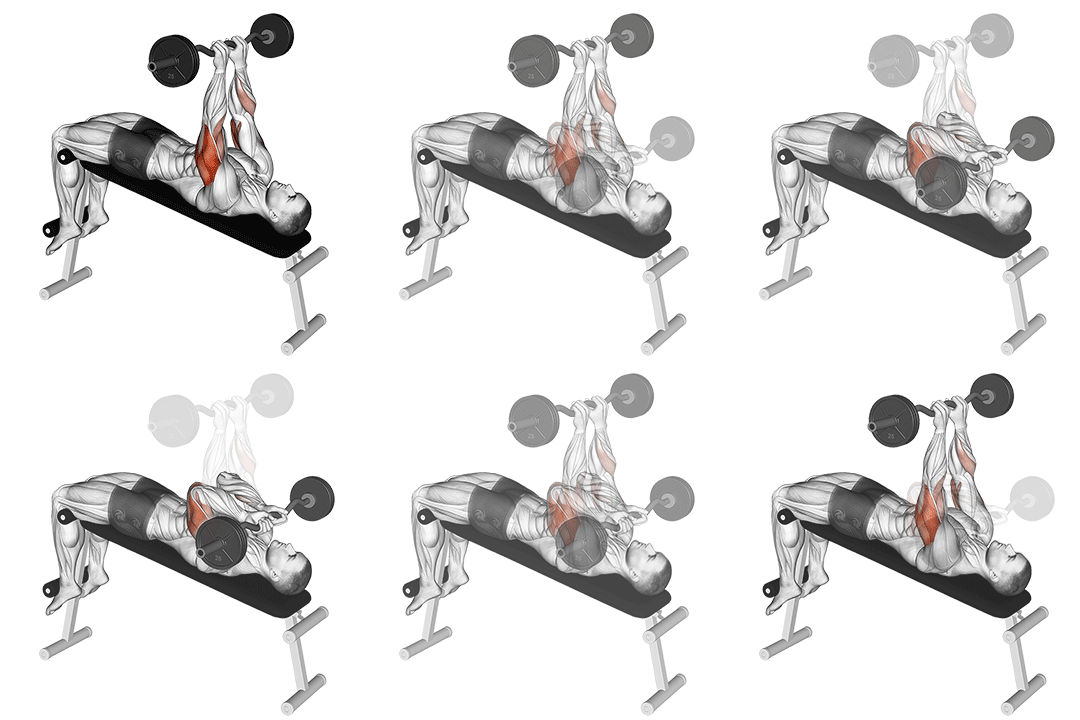
Compare target muscles, equipment, difficulty, movement type, and secondary muscles for EZ Bar Standing French Press and EZ Barbell Incline Triceps Extension.

Change comparison Share

Get comparison link

Select the link and use your device's Copy command.

Comparison overview

AI-generated
Ez Bar Standing French Press vs Ez Barbell Incline Triceps Extension — both isolate the triceps with an EZ-bar, but they load the muscle differently. You’ll get a clear breakdown of primary muscle activation, secondary shoulder involvement, equipment needs, technique cues, risk factors, and programming recommendations. Read on for concrete cues (elbow position, bench angle, tempo), rep ranges (6–12 for hypertrophy, 3–6 for strength), and short progressions so you can pick the exercise that best matches your goals and training environment.

Exercise Comparison

Exercise A
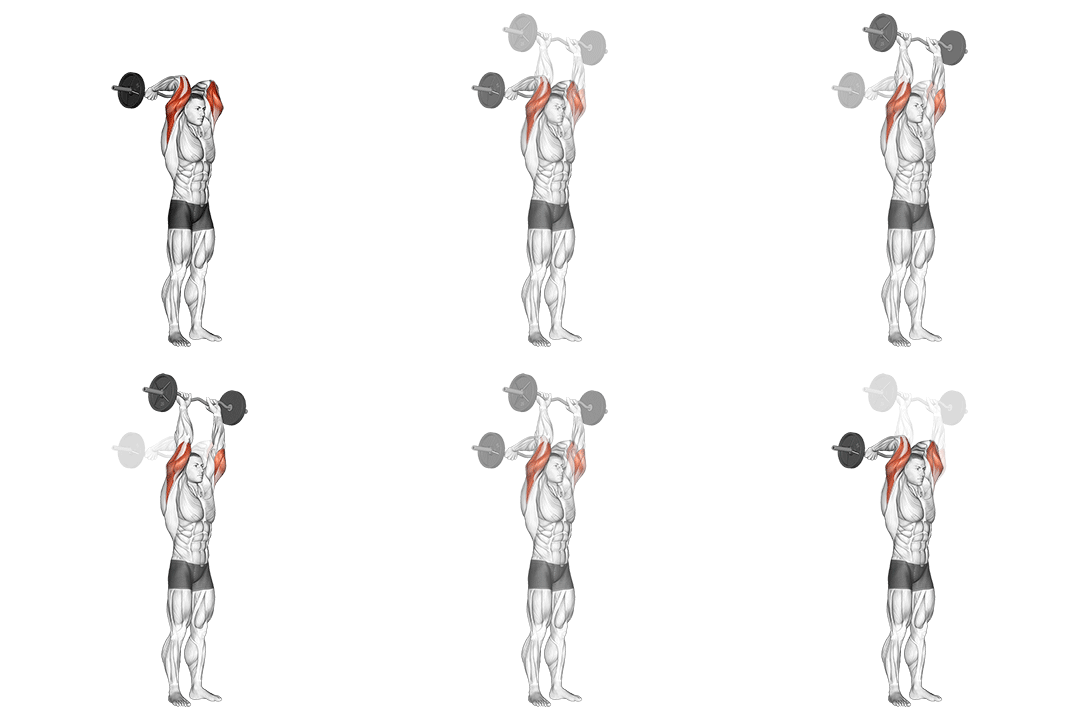
EZ Bar Standing French Press demonstration

EZ Bar Standing French Press

Target Triceps
Equipment Ez-barbell
Body Part Upper-arms
Difficulty Intermediate
Movement Isolation
Secondary Muscles
Shoulders
VS
Exercise B
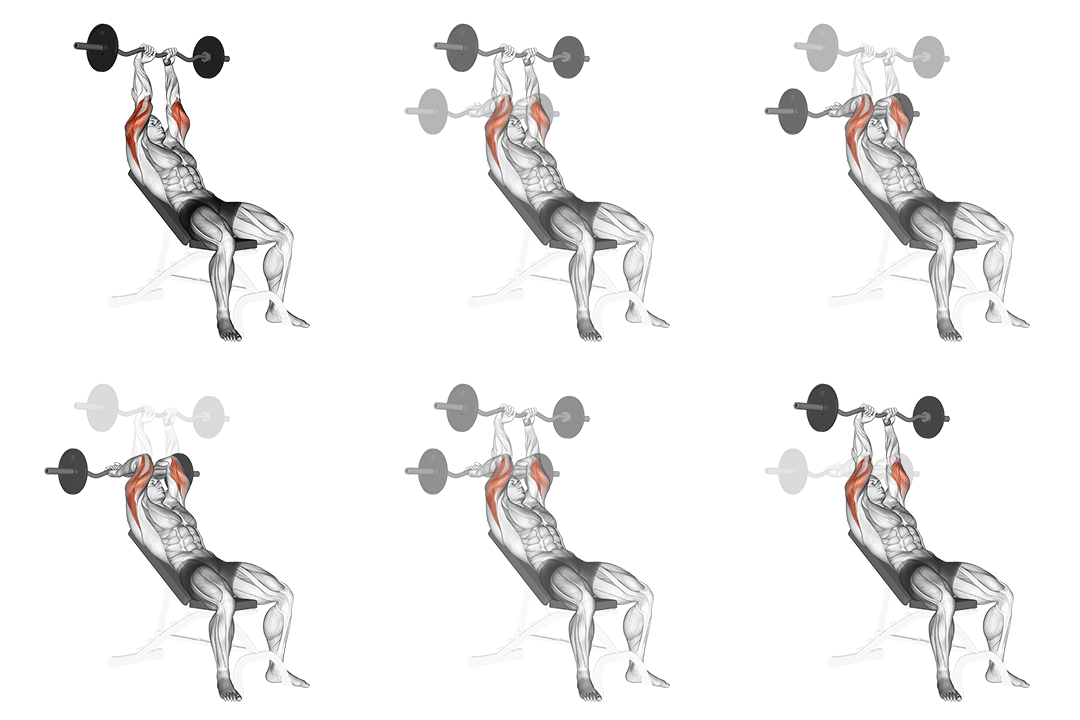
EZ Barbell Incline Triceps Extension demonstration
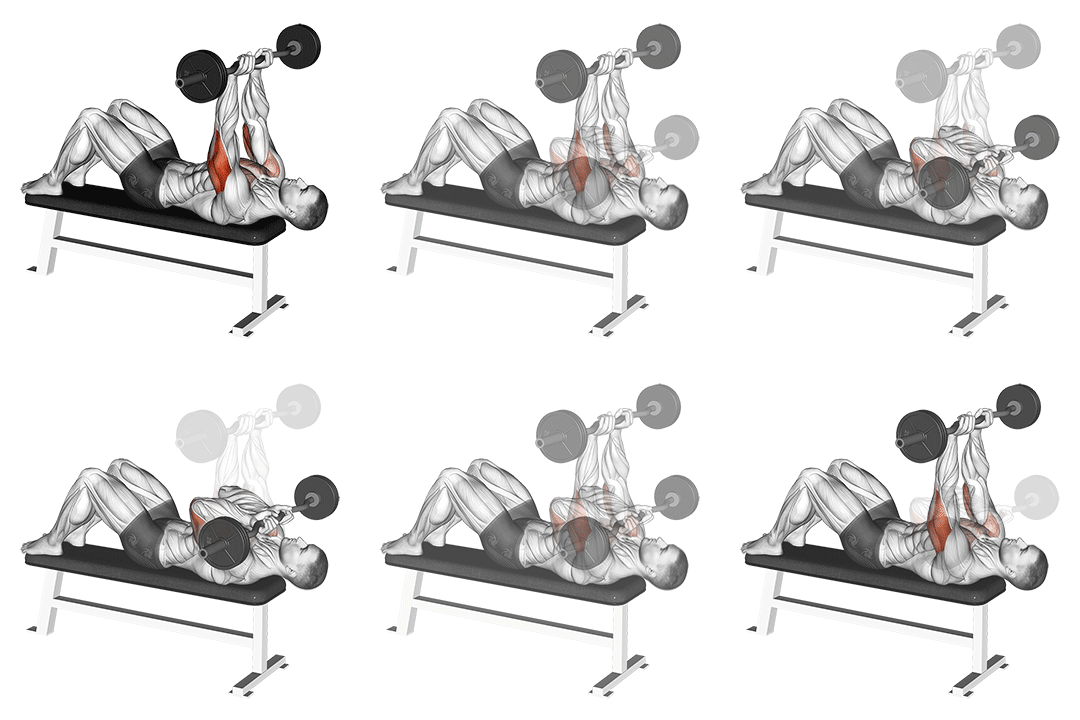
EZ Barbell Incline Triceps Extension

Target Triceps
Equipment Ez-barbell
Body Part Upper-arms
Difficulty Intermediate
Movement Isolation
Secondary Muscles
Shoulders

Head-to-Head Comparison

Different values are marked. These are catalogue attributes, not performance scores.

Muscles used

Listed target and secondary muscles, shown on the body. Locations, not activation or strength scores.

  • Target
  • Secondary
  • Not highlighted

EZ Bar Standing French Press

Front
EZ Bar Standing French Press: front muscle locationsSolid: listed target. Striped: listed secondary. Grey: not highlighted. Locations, not activation or strength scores. See the muscle names below.
Back
EZ Bar Standing French Press: back muscle locationsSolid: listed target. Striped: listed secondary. Grey: not highlighted. Locations, not activation or strength scores. See the muscle names below.
Target
Triceps
Secondary
Shoulders

Not shown on diagram: Shoulders. These labels do not identify a precise region on this map.

EZ Barbell Incline Triceps Extension

Front
EZ Barbell Incline Triceps Extension: front muscle locationsSolid: listed target. Striped: listed secondary. Grey: not highlighted. Locations, not activation or strength scores. See the muscle names below.
Back
EZ Barbell Incline Triceps Extension: back muscle locationsSolid: listed target. Striped: listed secondary. Grey: not highlighted. Locations, not activation or strength scores. See the muscle names below.
Target
Triceps
Secondary
Shoulders

Not shown on diagram: Shoulders. These labels do not identify a precise region on this map.

Grey does not mean a muscle is unused. The diagrams show only the mapped catalogue labels.

Attribute EZ Bar Standing French Press EZ Barbell Incline Triceps Extension
Target Muscle
Triceps
Triceps
Body Part
Upper-arms
Upper-arms
Equipment
Ez-barbell
Ez-barbell
Difficulty
Intermediate
Intermediate
Movement Type
Isolation
Isolation
Secondary Muscles
Shoulders
Shoulders

Visual Comparison

An illustrative 1–10 profile derived from catalog difficulty, equipment, and listed-muscle fields—not measured performance or muscle activation.

Key Differences

  • Both exercises target the Triceps using Ez-barbell. The catalogue does not establish which exercise is better for an individual goal.

Muscle comparison

Shared target muscles

Both exercises primarily load the triceps long head, lateral head, and medial head through elbow extension. Mechanically they produce similar torque at the elbow when matched for load, so peak triceps activation is comparable when you use full range of motion and near-lockout contraction. Expect similar EMG-style overlap when sets are matched for effort and range.

Secondary muscle differences

Standing French Press places the upper arm more vertical and slightly behind the torso, increasing shoulder stabilization demand and recruiting the posterior deltoid and long-head tension from a more extended shoulder position. The incline triceps extension shifts the shoulder into 30–45° of flexion (bench incline), which lengthens the long head more and increases passive tension in that head and the anterior deltoid’s stabilizing role.

Muscle involvement analysis

The incline version biases the long head via increased shoulder flexion, raising its length-tension contribution by roughly 10–20% compared with a neutral shoulder position. The standing French Press keeps the vector of force more vertical; elbow extension occurs with a slightly greater external moment arm early in the range, producing higher concentric demand near mid-range. In short, incline extends length-tension time under tension for the long head; standing concentrates force through a steadier vertical vector and greater shoulder stabilization.

Equipment and setup

EZ Bar Standing French Press: setup

Ez Bar Standing French Press requires an EZ-bar (or cambered bar) and open floor space. You don’t need a bench; a rack for warm-up safety is optional.

EZ Barbell Incline Triceps Extension: setup

Ez Barbell Incline Triceps Extension requires an EZ-bar plus an adjustable bench set to 30–45° incline. A spotter or safety pins are helpful for heavy sets.

Access and practicality

Ez Bar Standing French Press is more accessible because it needs only an EZ-bar and space. The incline version requires a bench, making it less practical for minimal-equipment setups.

Learning and progression

Learning the movements

The standing French Press has a slightly steeper learning curve for elbow-path control and trunk stability; you must keep elbows tucked and avoid letting them drift. The incline extension is easier to groove because the bench stabilizes the torso and sets a consistent upper-arm angle.

Progression considerations

Incline triceps extensions offer cleaner progressive overload (bench angle and tempo changes, heavier loads, partials) and easier isolation for progressive hypertrophy over 8–12+ week cycles. The standing French Press scales via heavier loads and tempo but also challenges core and shoulder stability, which can slow raw load increases.

Limitations and precautions

Standing French Press risks elbow flaring and shoulder strain if technique breaks (higher shear at the shoulder if elbows move). Incline extensions concentrate stress on the long head at end-range; with excessive load or aggressive lockout this raises tendinopathy risk. Overall, standing French Press has slightly higher acute injury risk without strict cueing.

Pros & Cons

EZ Bar Standing French Press

+ Pros

  • Needs only an EZ-bar—no bench required, so great for limited setups
  • Strong vertical force vector improves mid-range elbow torque
  • Adds shoulder stabilization challenge that improves upper-arm control
  • Easy to load heavy for strength-focused 3–6 rep sets

− Cons

  • Harder to keep consistent upper-arm angle—elbows can drift forward
  • Greater trunk and shoulder stabilization required, which limits pure isolation
  • Slightly higher acute risk to elbow/shoulder if technique fails

EZ Barbell Incline Triceps Extension

+ Pros

  • Bench stabilizes torso—cleaner isolation of the triceps long head
  • Adjustable 30–45° incline shifts length-tension to favor the long head
  • Easier to maintain strict upper-arm position and full ROM
  • Simple to program for hypertrophy with 8–12 rep ranges and drop sets

− Cons

  • Requires an adjustable bench—less accessible at home without one
  • End-range stress on long head can aggravate tendon issues if overloaded
  • Slightly harder to load extremely heavy compared to standing variations

When Each Exercise Wins

1
For muscle hypertrophy: Ez Barbell Incline Triceps Extension

The incline angle (30–45°) increases long-head length-tension and time under tension, improving hypertrophy stimulus. Bench stabilization lets you target 8–12 rep sets with cleaner ROM and controlled eccentrics.

2
For strength gains: Ez Bar Standing French Press

Standing allows heavier loading and stronger vertical force vectors when you maintain torso bracing, making it better for low-rep (3–6) strength work. It also builds shoulder stability that supports heavier compound lifts.

3
For beginners: Ez Barbell Incline Triceps Extension

The bench supports the torso and locks the upper-arm angle, so beginners can learn strict elbow extension patterns and safer eccentrics. Fewer stability demands speed up motor learning.

4
For home workouts: Ez Bar Standing French Press

Standing French Press needs only an EZ-bar and space, so you can do it without a bench. It delivers a robust triceps stimulus when bench access is limited.

Frequently Asked Questions

Can I do both Ez Bar Standing French Press and Ez Barbell Incline Triceps Extension in the same workout?

Yes. Pairing them works well—use the standing French Press first for heavier, lower-rep strength sets (3–6), then finish with incline extensions for 8–12 hypertrophy-focused sets. Keep total weekly volume in check and avoid training both to failure in the same session to limit tendon strain.

Which exercise is better for beginners?

Ez Barbell Incline Triceps Extension is better for beginners because the bench stabilizes the torso and enforces a consistent upper-arm angle. That reduces coordination demands and speeds up learning strict elbow extension mechanics.

How do the muscle activation patterns differ?

Incline extensions increase long-head length and passive tension via ~30–45° shoulder flexion, biasing that head during end-range. Standing French Press produces a more vertical force vector and greater mid-range elbow torque, increasing concentric demand and shoulder stabilization during the lift.

Can Ez Barbell Incline Triceps Extension replace Ez Bar Standing French Press?

You can substitute incline extensions for standing French Press when your goal is triceps hypertrophy and you have bench access. For strength or when you need minimal equipment, keep the standing French Press; it offers heavier loading and carries over to pressing strength.

Comparison Summary

Use the Ez Barbell Incline Triceps Extension when you want precise long-head overload for hypertrophy—set the bench at 30–45°, focus on slow eccentrics and strict upper-arm position, and train 8–12 reps. Choose the Ez Bar Standing French Press when you want heavier loading, stronger mid-range torque, or you lack a bench—brace your core, keep elbows tucked, and use 3–6 reps for strength or 6–10 for mixed hypertrophy. Both are effective; pick incline for isolation-driven growth and standing for load-focused strength and accessibility.

Exercise instructions

Steps from the exercise catalogue. Read the full sequence before starting.

EZ Bar Standing French Press

  1. Stand with your feet shoulder-width apart and hold the ez barbell with an overhand grip.
  2. Raise the barbell above your head, fully extending your arms.
  3. Keeping your upper arms close to your head, slowly lower the barbell behind your head by bending your elbows.
Read remaining steps for EZ Bar Standing French Press
  1. Pause for a moment, then extend your arms back to the starting position.
  2. Repeat for the desired number of repetitions.

EZ Barbell Incline Triceps Extension

  1. Set up an incline bench at a 45-degree angle.
  2. Sit on the bench with your back against the pad and hold the ez barbell with an overhand grip.
  3. Extend your arms fully overhead, keeping your elbows close to your head.
Read remaining steps for EZ Barbell Incline Triceps Extension
  1. Lower the barbell behind your head by bending your elbows, keeping your upper arms stationary.
  2. Pause for a moment, then extend your arms back to the starting position.
  3. Repeat for the desired number of repetitions.

Also Compare

Compare another pair

Choose two exercises to see their differences side by side.

Compare Exercises