

Seated Good Mornings vs Stiff Leg Barbell Good Morning
Compare target muscles, equipment, difficulty, movement type, and secondary muscles for Seated Good Mornings and Stiff Leg Barbell Good Morning.
Get comparison link
Select the link and use your device's Copy command.
Comparison overview
AI-generatedExercise Comparison
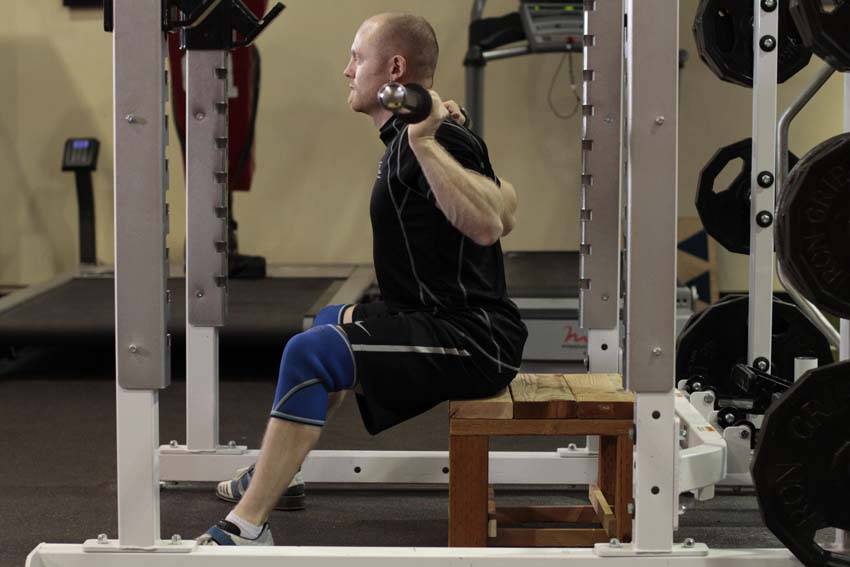
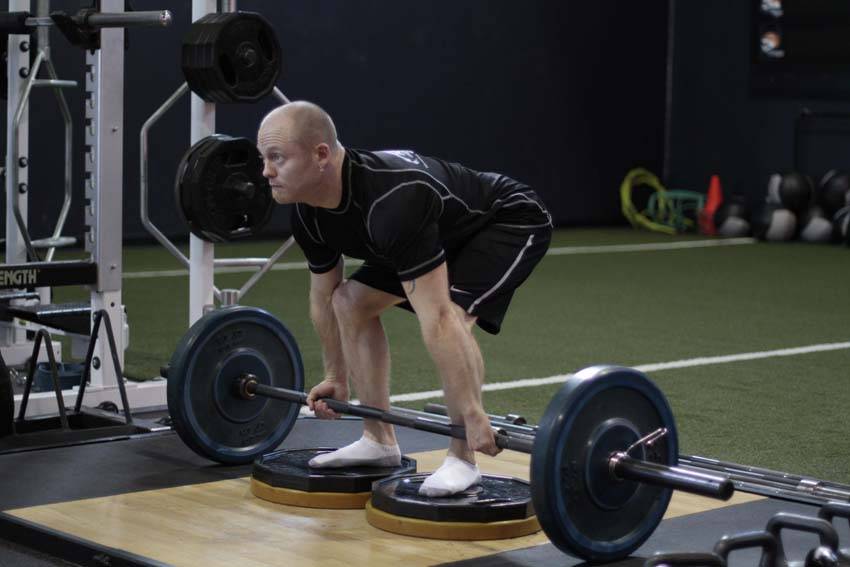
Seated Good Mornings
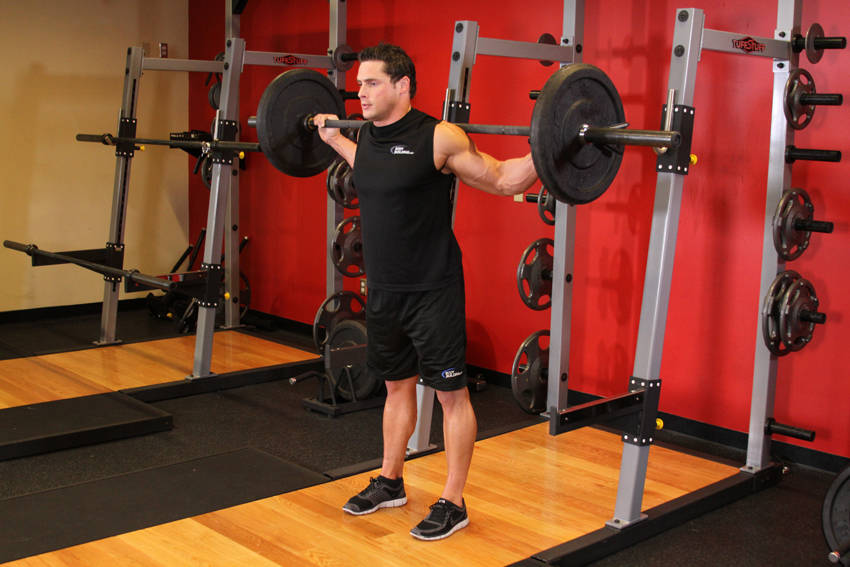
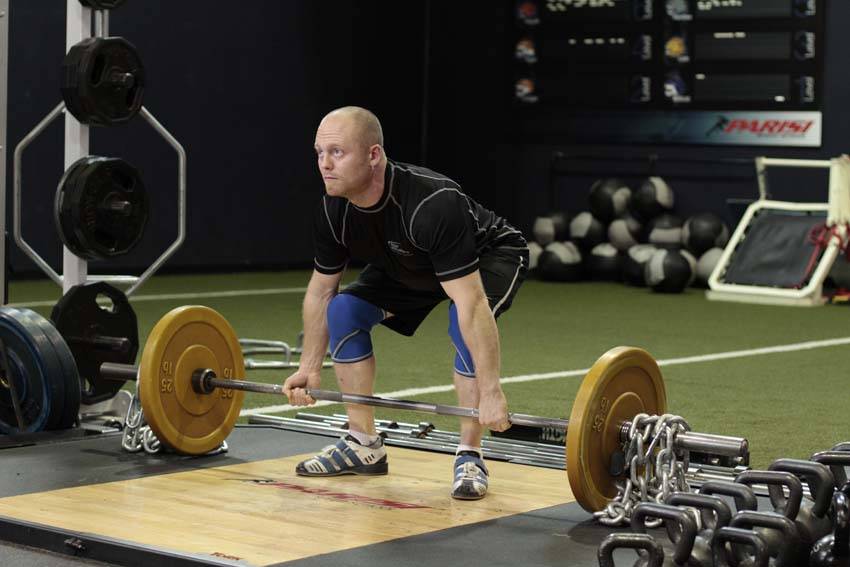
Stiff Leg Barbell Good Morning
Head-to-Head Comparison
Different values are marked. These are catalogue attributes, not performance scores.
Muscles used
Listed target and secondary muscles, shown on the body. Locations, not activation or strength scores.
- Target
- Secondary
- Not highlighted
Seated Good Mornings
- Target
- Erector-spinae
- Secondary
- Glutes
Not shown on diagram: Erector-spinae. These labels do not identify a precise region on this map.
Stiff Leg Barbell Good Morning
- Target
- Erector-spinae
- Secondary
- Glutes, Hamstrings
Not shown on diagram: Erector-spinae. These labels do not identify a precise region on this map.
Grey does not mean a muscle is unused. The diagrams show only the mapped catalogue labels.
| Attribute | Seated Good Mornings | Stiff Leg Barbell Good Morning |
|---|---|---|
| Target Muscle | Erector-spinae |
Erector-spinae |
| Body Part | Back |
Back |
| Equipment | Barbell |
Barbell |
| Difficulty | Advanced |
Advanced |
| Movement Type | Compound |
Compound |
| Secondary Muscles Different | Glutes |
Glutes, Hamstrings |
Visual Comparison
An illustrative 1–10 profile derived from catalog difficulty, equipment, and listed-muscle fields—not measured performance or muscle activation.
Key Differences
- Both exercises target the Erector-spinae using Barbell. The catalogue does not establish which exercise is better for an individual goal.
Muscle comparison
Shared target muscles
Secondary muscle differences
Muscle involvement analysis
Equipment and setup
Seated Good Mornings: setup
Stiff Leg Barbell Good Morning: setup
Access and practicality
Learning and progression
Learning the movements
Progression considerations
Limitations and precautions
Pros & Cons
Seated Good Mornings
+ Pros
- Greater isolation of lumbar erectors for targeted spinal-extension strength
- Easier to control pelvis position and limit hip torque
- Useful as an accessory for improving lockout and posture under load
- Allows heavy loading without maximal hamstring fatigue
− Cons
- Requires bench/seat and careful setup
- Higher local lumbar shear if technique or bracing fail
- Less hamstring development and carryover to hip-dominant lifts
Stiff Leg Barbell Good Morning
+ Pros
- Stronger posterior-chain transfer — loads hamstrings and glutes as well as erectors
- More accessible — minimal equipment and simple setup
- Greater ROM and stretch-mediated hypertrophy potential for hamstrings
- Easier to integrate with deadlift/hinge progressions
− Cons
- Places more demand on hamstring flexibility and control
- Can round the spine under fatigue if bracing fails
- Heavier loads increase technical breakdown risk for inexperienced lifters
When Each Exercise Wins
Stiff Leg Good Mornings produce a larger stretch and active lengthening in the hamstrings plus substantial erector loading, giving a wider stimulus for posterior-chain hypertrophy. Use 8–15 reps with controlled 2–3 second eccentrics to exploit length-tension relationships.
Seated Good Mornings isolate spinal extensors and let you load the lumbar erectors more directly, which helps increase spinal extension strength and tolerance to heavy trunk flexion. Work in 4–8 rep ranges with tight bracing and progressive overload.
Stiff Leg Good Mornings teach the hip-hinge that transfers to deadlifts and swings; they’re simpler to cue (hip back, neutral spine, soft knees) and can be scaled with lighter loads or Romanian deadlift regressions.
Stiff Leg Good Mornings require only a barbell and floor space, making them practical for home setups. You can progress with bands or tempo without needing a bench or rack modifications.
Frequently Asked Questions
Can I do both Seated Good Mornings and Stiff Leg Barbell Good Morning in the same workout?
Which exercise is better for beginners?
How do the muscle activation patterns differ?
Can Stiff Leg Barbell Good Morning replace Seated Good Mornings?
Comparison Summary
Exercise instructions
Steps from the exercise catalogue. Read the full sequence before starting.
Seated Good Mornings
- Set up a box in a power rack. The pins should be set at an appropriate height. Begin by stepping under the bar and placing it across the back of the shoulders, not on top of your traps. Squeeze your shoulder blades together and rotate your elbows forward, attempting to bend the bar across your shoulders.
- Remove the bar from the rack, creating a tight arch in your lower back. Keep your head facing forward. With your back, shoulders, and core tight, push your knees and butt out and you begin your descent. Sit back with your hips until you are seated on the box. This will be your starting position.
- Keeping the bar tight, bend forward at the hips as much as possible. If you set the pins to what would be parallel, you not only have a safety if you fail, but know when to stop.
Read remaining steps for Seated Good Mornings
- Pause just above the pins and reverse the motion until your torso it upright.
Stiff Leg Barbell Good Morning
- This exercise is best performed inside a squat rack for safety purposes. To begin, first set the bar on a rack that best matches your height. Once the correct height is chosen and the bar is loaded, step under the bar and place the back of your shoulders (slightly below the neck) across it.
- Hold on to the bar using both arms at each side and lift it off the rack by first pushing with your legs and at the same time straightening your torso.
- Step away from the rack and position your legs using a shoulder width medium stance. Keep your head up at all times as looking down will get you off balance and also maintain a straight back. This will be your starting position.
Read remaining steps for Stiff Leg Barbell Good Morning
- Keeping your legs stationary, move your torso forward by bending at the hips while inhaling. Lower your torso until it is parallel with the floor.
- Begin to raise the bar as you exhale by elevating your torso back to the starting position.
- Repeat for the recommended amount of repetitions.
Also Compare
More comparisons with Seated Good Mornings
Compare another pair
Choose two exercises to see their differences side by side.