Last updated: July 2026. FitnessVolt rebuilt this supplement guide with current glutamine research, practical dose context, safety notes, updated internal links, and relevant supplement visuals.
Glutamine may help some recovery markers after hard or eccentric exercise, but it is not a reliable muscle-building supplement for lifters who already eat enough protein. The strongest practical case is narrow: soreness or strength recovery after damaging exercise, heavy training blocks, or situations where recovery is clearly lagging. It is not in the same evidence tier as creatine, protein powder, caffeine, or basic sleep and nutrition.
That matters because glutamine marketing often promises too much. Your body already makes glutamine, and high-protein foods provide it. Supplementing more does not automatically build muscle, stop muscle breakdown, or upgrade immune function in healthy athletes. The evidence is mixed, with some positive soreness and muscle-damage findings and broader meta-analytic results that are much less impressive.
Key Facts
- Best use case: Short-term recovery support after unusually hard, high-volume, or eccentric training.
- Weakest claim: Glutamine does not appear to build muscle like creatine or adequate protein.
- Typical study range: Many sports studies use roughly 0.1-0.3 g/kg/day or fixed doses around 5-10 g, but protocols vary.
- Best timing: Post-exercise dosing has a stronger recovery rationale than random daily use.
- Skip first if: You are missing total protein, sleep, calories, hydration, or progressive training.

Does glutamine help muscle recovery?
It can, but the effect is not consistent enough to call glutamine a must-have recovery supplement. The best human evidence points toward possible reductions in soreness and muscle-damage markers after demanding exercise, especially eccentric exercise. The broader evidence does not show a clear performance or body-composition upgrade for healthy athletes.
A small study on eccentric knee-extension exercise found that oral L-glutamine improved strength recovery and reduced soreness over the 24-72 hour recovery period. A study in professional basketball players also reported lower muscle-damage biomarkers with glutamine during a high-demand sport context. Those findings are useful, but they do not prove every lifter should take glutamine year-round.
The stronger interpretation is practical: glutamine may be worth testing during a hard block if soreness, repeated eccentric work, or recovery between sessions is the limiting factor. It is a weaker buy if your regular diet already supplies plenty of protein and you are looking for direct muscle growth.
Does glutamine build muscle?
For healthy lifters, glutamine is not a proven muscle-building supplement. It participates in many biological processes, but that does not mean extra glutamine automatically increases muscle protein synthesis enough to change your physique.
Athletes usually get glutamine from protein-rich foods such as meat, dairy, eggs, fish, soy, legumes, and protein powders. If total daily protein is low, fixing protein intake is the priority. If protein is already adequate, glutamine is unlikely to add the kind of muscle and strength effect people expect from creatine.
For direct muscle gain, compare glutamine with more evidence-backed options in our guide to the supplements worth taking, and use the protein calculator before adding another amino acid supplement.
What does the evidence say overall?
The evidence is mixed because studies ask different questions. Some test soreness after eccentric exercise. Some test immune markers after endurance events. Some test strength, body composition, aerobic performance, or blood markers. A supplement can help one narrow marker without becoming a broad performance enhancer.
| Claim | Evidence Signal | Practical Verdict |
|---|---|---|
| Reduces soreness after damaging exercise | Some positive human data | Possible, especially after eccentric or unusually hard training. |
| Improves strength recovery | Some positive findings, limited sample sizes | Worth testing only if recovery between sessions is a clear bottleneck. |
| Builds muscle mass | Weak for healthy lifters | Do not buy glutamine for hypertrophy. |
| Improves aerobic performance | Meta-analysis does not show a general benefit | Weak. |
| Supports immune function in athletes | Mixed, not reliable as a general claim | Do not use it as insurance against poor sleep, under-eating, or overtraining. |
| Improves body composition | Generally weak outside specific contexts | Calories, protein, lifting, and steps matter far more. |
Who is most likely to benefit?
The best candidate is not a beginner looking for a muscle shortcut. The best candidate is a trained person with a clear recovery problem during a defined training phase.
- High eccentric loading: Heavy negatives, downhill running, new movements, long sports sessions, or intense lower-body volume.
- Repeated hard sessions: Tournaments, training camps, two-a-days, or blocks where recovery time is short.
- Diet stress: Cutting phases where soreness and recovery feel worse, assuming protein and calories are still sensible.
- Gut or medical context: This is separate from bodybuilding use and belongs under clinician guidance.
If your main issue is strength, creatine has a better case. Start with our comparison of creatine monohydrate vs. creatine ethyl ester and our guide on how to load creatine.
How does glutamine compare with other recovery supplements?
Glutamine is often sold beside creatine, BCAAs, HMB, and protein powder. That shelf placement can make the supplements look interchangeable, but they do not solve the same problem.
| Supplement | Main Job | Evidence For Lifters | Priority |
|---|---|---|---|
| Creatine monohydrate | Strength, power, repeated high-intensity work | Strong | First-tier supplement for most lifters. |
| Protein powder | Convenient protein target support | Strong when diet protein is low | Useful if food alone misses the target. |
| Glutamine | Possible soreness and recovery-marker support | Mixed, narrower use case | Optional test during hard blocks. |
| HMB | Possible muscle-damage support in select groups | Mixed and context-dependent | Read the evidence before buying. See our HMB guide. |
| BCAAs | Amino acid support when protein is low | Weak if total protein is adequate | Usually lower priority than complete protein. |
This comparison is where many glutamine articles get too soft. If a lifter is not already using creatine and hitting protein, glutamine is usually not the next best move. If both basics are handled and recovery is still the problem, then glutamine becomes a reasonable short test.
How much glutamine should you take?
There is no single best dose for every lifter. Many sports-nutrition protocols use either fixed servings around 5-10 grams or body-weight-based dosing around 0.1-0.3 grams per kilogram per day. Studies vary by training type, timing, and outcome, so treat dosing as a trial, not a universal rule.
| Body Weight | 0.1 g/kg | 0.2 g/kg | Simple Trial Dose |
|---|---|---|---|
| 60 kg / 132 lb | 6 g | 12 g | 5 g after hard training |
| 80 kg / 176 lb | 8 g | 16 g | 5-10 g after hard training |
| 100 kg / 220 lb | 10 g | 20 g | 10 g after hard training |
For most lifters, the cleanest test is 5-10 grams after the sessions most likely to create soreness, repeated for 2-4 weeks. Track soreness, next-session performance, sleep, digestive comfort, and training volume. If nothing improves, stop.
When should you take glutamine?
Post-workout makes the most sense if the goal is recovery. A 2026 narrative review noted that post-exercise supplementation may be more relevant than prevention-style dosing in some models, although much of that timing discussion still depends on limited and preclinical data.
Do not overcomplicate timing. If you test glutamine, take it after the hard session, with a meal or shake if that helps digestion. If your training block has multiple hard days in a row, you can test a daily dose during that block. If training is normal and recovery is fine, there is no strong reason to keep taking it indefinitely.
How should you test glutamine without fooling yourself?
Run it like a small experiment. Do not start glutamine the same week you change your program, add creatine, increase calories, start a deload, and sleep more. That makes the result impossible to read.
- Pick the problem: Soreness, next-session strength, or recovery between hard sessions.
- Keep training stable: Do not change volume or exercise selection during the test unless injury risk requires it.
- Use a consistent dose: Try 5-10 g after the sessions that cause the problem.
- Track for 2-4 weeks: Rate soreness, note sleep, record loads and reps, and log digestive side effects.
- Use a stop rule: Keep it only if the benefit is obvious enough to justify the cost.
A useful supplement makes training more repeatable. A placebo effect is not automatically bad if the product is safe and cheap, but you should still know whether the result is worth paying for.
Is glutamine better than creatine for recovery?
No for most lifters. Creatine has a much stronger evidence base for strength, power, lean mass, and repeated high-intensity performance. Glutamine’s case is narrower and mostly recovery-marker focused.
That does not mean creatine and glutamine do the same job. Creatine helps the phosphocreatine system and training output. Glutamine is more tied to nitrogen transport, immune and gut-cell fuel, and stress-related demand. If your budget covers only one supplement for lifting results, creatine usually wins.
If your main concern is conditioning rather than muscle soreness, use the VO2 max calculator to track aerobic fitness instead of relying on supplement feel.
What side effects and cautions matter?
Glutamine is generally well tolerated at common supplement doses, but common use does not mean zero risk. Digestive discomfort, nausea, headache, or bloating can occur. People with kidney disease, liver disease, seizure disorders, cancer treatment, pregnancy, breastfeeding, or complex medication use should speak with a clinician before supplementing.
Also separate over-the-counter sports glutamine from medical glutamine products used under supervision. Medical use cases, such as specific sickle cell disease treatment, are not the same as taking a bodybuilding supplement after leg day.
What should you check on a glutamine label?
Glutamine labels should be boring and specific. If the label hides the dose inside a recovery blend, it is harder to judge value. If the product stacks glutamine with stimulants, proprietary amino blends, or aggressive claims, you are no longer testing glutamine alone.
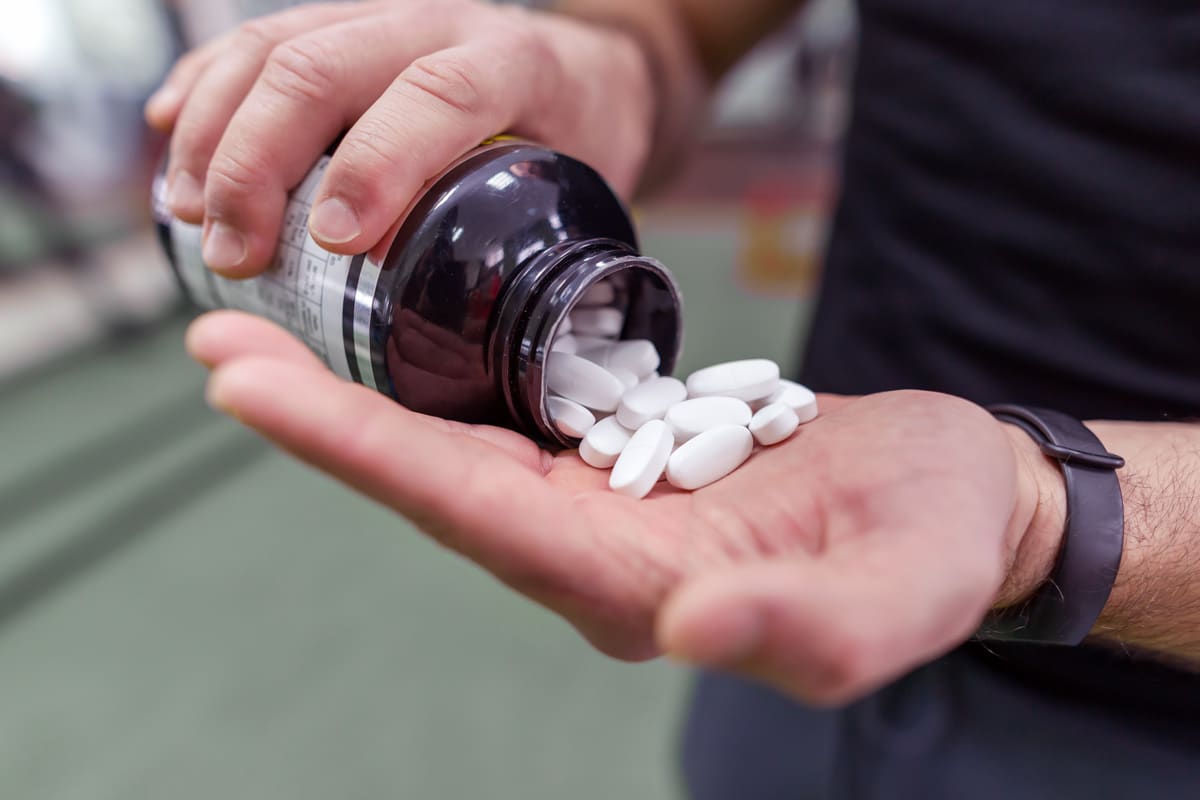
- Dose per serving: You should know exactly how many grams of L-glutamine you are taking.
- Form: Most lifters are comparing plain L-glutamine powder or capsules, not a multi-ingredient recovery blend.
- Third-party testing: Look for NSF Certified for Sport, Informed Sport, or a similar testing program if you compete.
- Serving math: Some tubs look cheap until you calculate grams of glutamine per dollar.
- Claim quality: “Supports recovery” is reasonable. “Builds muscle fast” is a red flag.
How to decide in 30 seconds
| Your Situation | Decision | Reason |
|---|---|---|
| You eat low protein | Skip glutamine for now | Fix total protein first. |
| You want bigger muscles | Skip as a primary supplement | Creatine, protein, calories, and training have stronger evidence. |
| You are in a brutal high-volume block | Test 5-10 g post-workout | Recovery is the most defensible use case. |
| You get severe soreness after eccentric work | Test for 2-4 weeks | Some studies show soreness and strength-recovery signals. |
| You have medical conditions or take medication | Ask a clinician first | Risk context matters more than supplement marketing. |
Frequently asked questions
Can I get enough glutamine from food?
Yes, most healthy lifters eating enough protein get plenty from food. Meat, fish, dairy, eggs, soy, legumes, and protein powders all contribute amino acids, including glutamine.
Should I take glutamine every day?
Only if you have a reason. A short daily trial during a hard block is reasonable. Long-term daily use without a measurable benefit is hard to justify.
Can glutamine help with soreness?
Possibly. Some human studies report lower soreness after damaging exercise. The effect is not guaranteed, and it should be judged against your own recovery log.
Can I stack glutamine with creatine?
Yes, many people can take both, but they do different jobs. Creatine should usually be the priority for strength and muscle gain.
Is glutamine worth buying?
It is worth testing only if the recovery problem is specific. If you are missing protein, sleep, calories, hydration, or progressive training, spend your effort there first. If you still want a product comparison, see our best glutamine supplements guide.
Bottom line
Glutamine is not useless, but it is overmarketed. It may help soreness or recovery markers after hard, damaging training. It does not deserve top billing for muscle gain, strength, or body composition in healthy lifters who already eat enough protein.
Use it like a test, not a belief system. Pick a clear recovery problem, take a consistent dose for 2-4 weeks, track the result, and stop if it does not improve training.
Sources
- Ahmadi et al. The effect of glutamine supplementation on athletic performance, body composition, and immune function: systematic review and meta-analysis.
- PubMed record: Glutamine supplementation and athletic performance meta-analysis.
- Legault et al. Oral L-glutamine supplementation, muscle strength recovery, and soreness after eccentric exercise.
- Egea et al. Glutamine supplementation and muscular damage biomarkers in professional basketball players.
- Glutamine supplementation and exercise: narrative review of recovery, immunity, and timing.
- L-glutamine after exhaustive exercise: treatment versus prevention timing study.
- Effect of L-glutamine supplementation on quadriceps injury markers after eccentric exercise.
- Glutamine as an anti-fatigue amino acid in sports nutrition.
- FDA. L-glutamine oral powder approval for sickle cell disease complications.