HMB can help some people, but it is not a first-line muscle-building or fat-loss supplement for most healthy lifters. The best evidence supports a more specific use case: HMB may be worth considering during hard training blocks, aggressive cutting phases, injury layoffs, older age, or periods where preserving muscle and strength is harder than usual. If your protein intake, calories, sleep, and training plan are weak, HMB will not fix the problem.
For a typical gym-goer deciding where to spend money, creatine and enough high-quality protein still come first. HMB is a second-tier option: safe at common doses, biologically plausible, and useful in select situations, but far less proven than creatine for strength and performance.
| Claim | Verdict | Best fit |
|---|---|---|
| Builds more muscle in young trained lifters | Weak to mixed | Do not buy HMB before creatine, protein, or a better training plan. |
| Helps preserve strength in older adults | Promising but modest | Most relevant when combined with resistance training and adequate protein. |
| Burns fat directly | Not convincing | Any fat-loss benefit likely comes from better training tolerance or lean-mass retention. |
| Improves recovery during hard blocks | Plausible, mixed | Most useful during high-volume training, cuts, or return-to-training phases. |
| Safety at standard doses | Generally favorable | Common research dose is around 3 grams daily. |
What Is HMB?
HMB stands for beta-hydroxy beta-methylbutyrate. Your body makes small amounts of it when it metabolizes leucine, one of the essential amino acids involved in muscle protein synthesis. Supplement companies sell HMB because it may support two processes lifters care about: stimulating muscle protein synthesis and reducing muscle protein breakdown.
That mechanism sounds impressive, but a mechanism is not the same as a visible change in muscle size. A supplement can influence signaling pathways and still produce small or inconsistent real-world results once diet, training, and recovery are already strong.
HMB is usually sold in two forms:
- HMB-Ca: The calcium salt form. It is the older and more common version in capsules and powders.
- HMB-FA: The free-acid form. It may raise blood HMB faster in some studies, but the practical superiority over HMB-Ca remains uncertain.
Does HMB Build Muscle?
In young adults doing resistance training, the best skeptical reading is that HMB does not reliably add meaningful muscle or strength beyond training itself. A 2020 systematic review and meta-analysis in adults aged 18 to 45 found a small effect on total body mass, but no significant improvement in fat-free mass, fat mass, bench press strength, lower-body strength, or total one-rep-max outcomes.
That does not mean every HMB study is negative. Some trials report benefits, and the 2025 International Society of Sports Nutrition position stand takes a more favorable view, especially when HMB is paired with robust training and dietary control. The issue for everyday lifters is consistency. Creatine has a deeper and more repeatable performance case. HMB has a narrower and more conditional one.
If you are new to lifting, you are already primed to gain muscle from progressive training and enough protein. If you are experienced, your results depend heavily on smart programming and recovery. In both cases, HMB is unlikely to be the missing factor if the basics are not already handled.
Does HMB Burn Fat?
HMB is sometimes marketed as a muscle-building and fat-burning supplement. The fat-loss claim is the weaker half of that promise. Research does not show that HMB directly burns fat in the way a calorie deficit does. In studies where body composition improves, the more realistic explanation is that HMB may help some people train harder, recover better, or hold onto lean mass while dieting.
That matters during a cut. Losing fat while preserving strength is easier when training quality stays high and protein intake is sufficient. HMB might support that goal for some lifters, but it should sit behind the major levers: calorie control, resistance training, protein, sleep, and step count.
For practical fat loss, HMB belongs in the “maybe useful under pressure” category. It is not a replacement for a diet plan, and it is not a thermogenic.
Who Is Most Likely to Benefit?
The strongest case for HMB is not the healthy lifter in a normal training phase. It is the person at higher risk of muscle loss or recovery problems.
- Older adults doing resistance training: A 2025 meta-analysis in adults 60 and older found modest improvements in physical function and muscle strength when HMB was combined with resistance training, but no consistent body-composition benefit.
- Lifters in a calorie deficit: HMB may be worth testing during aggressive cuts where performance is sliding and muscle retention is a priority.
- Return-to-training phases: After a layoff or injury, HMB may have more value when muscle breakdown risk is higher.
- High-volume training blocks: If soreness and recovery are limiting training quality, HMB is a reasonable experiment after sleep, calories, and protein are in place.
- Clinical or age-related muscle-loss risk: This is a medical context. Use a clinician-guided plan, not supplement-store guesswork.
This is also where FitnessVolt readers using GLP-1 drugs should pay attention. Muscle retention during rapid weight loss requires protein and resistance training first. HMB might be an adjunct, but it should not replace the core plan in our GLP-1 muscle-loss guide.
Who Should Skip HMB?
Skip HMB if you are still inconsistent with the basics. That includes lifters who miss protein targets, train without progressive overload, sleep poorly, or expect a supplement to compensate for a chaotic diet.
You can also skip it if you already use creatine, eat enough protein, train well, and are not cutting hard or struggling with recovery. In that case, HMB may add little for the cost.
If you are building a supplement stack from scratch, start with the options that have the clearest payoff. Our guide to the supplements worth taking is a better starting point than chasing every recovery claim.
HMB Dose and Timing
The common research dose is about 3 grams per day. Some papers express this as roughly 38 milligrams per kilogram of body weight, which lands close to 3 grams for many adults. Most lifters can use the simpler 3-gram target unless a clinician or sports dietitian gives a different plan.
Practical dosing options:
- Training days: Take 3 grams 30-120 minutes before training, or split it across the day if your stomach prefers smaller servings.
- Rest days: Take 3 grams with a meal.
- Cutting phases: Use it daily for at least 3-4 weeks before judging whether it helps performance or soreness.
- Older adults or clinical use: Dose and timing should fit the full nutrition and resistance-training plan.
HMB is not caffeine. Do not expect a same-day “kick.” If it helps, the benefit is more likely to show up as better recovery, less performance drop-off, or improved consistency across several weeks.
HMB-Ca vs. HMB-FA: Which Form Is Better?
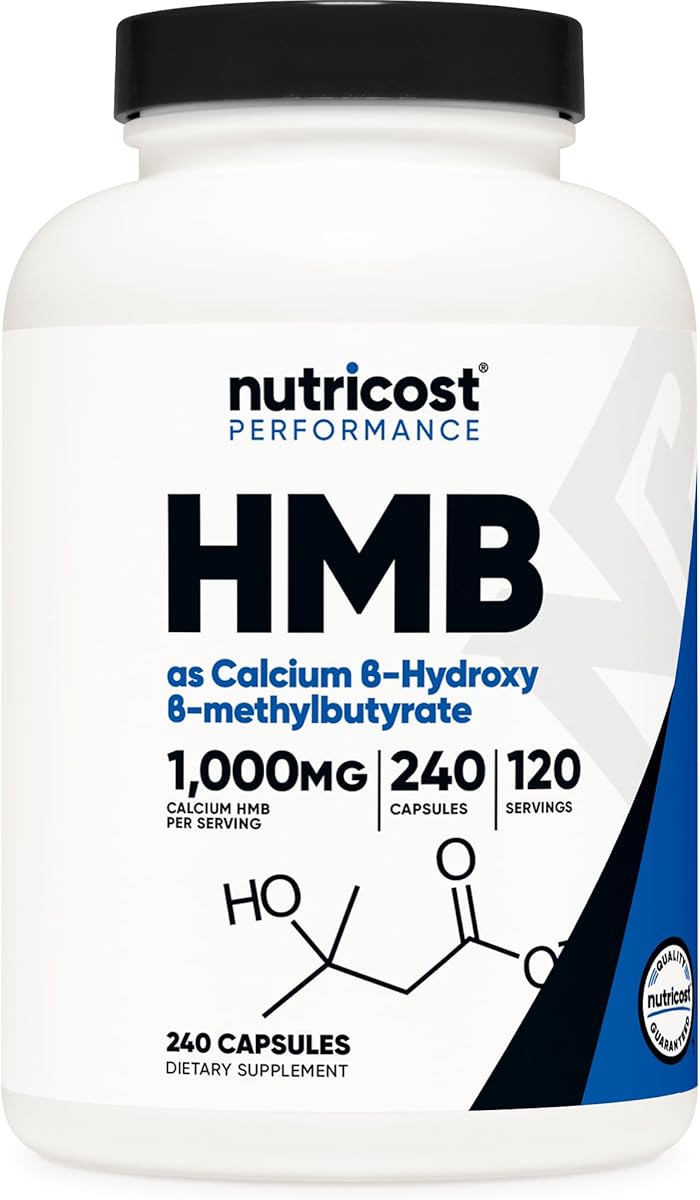
HMB-Ca is easier to find and usually cheaper. HMB-FA may raise blood levels faster, but the practical difference is not strong enough for most lifters to pay a premium automatically. If you want the conservative choice, use a third-party-tested HMB-Ca product and judge results over a full training block.
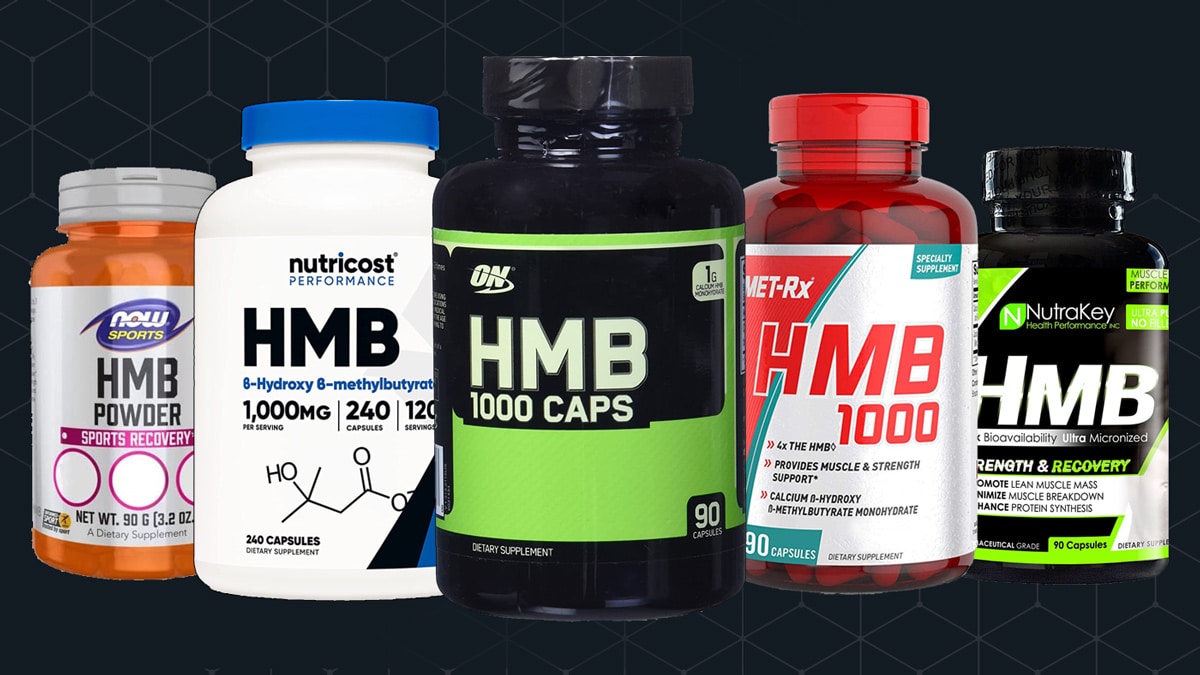
If you are shopping for one, choose products with a clear label, a realistic serving size, and ideally third-party testing. Our best HMB supplements guide compares current options, but the bigger decision is whether HMB belongs in your stack at all.
Safety and Side Effects
Standard-dose HMB appears to have a favorable safety profile in healthy adults, and the ISSN position stand notes safety data for oral HMB use up to at least one year. Reported side effects are usually mild when they occur, with occasional gastrointestinal complaints in supplement studies.
That does not make HMB risk-free for everyone. Speak with a healthcare professional before using it if you are pregnant, breastfeeding, managing kidney or liver disease, treating a medical condition, or taking medications that affect metabolism, blood sugar, or fluid balance.
Also check the full supplement label. Combination products may include creatine, stimulants, herbal extracts, or other ingredients that change the safety profile. The risk is often in the stack, not the HMB itself.
HMB vs. Creatine, Protein, and Beta-Alanine
HMB should not sit above the basics in a muscle-building stack.
| Supplement | Primary use | Evidence strength for lifters |
|---|---|---|
| Protein powder | Hit daily protein targets | High, if food intake falls short |
| Creatine monohydrate | Strength, power, repeated high-intensity work | High |
| Beta-alanine | Hard efforts lasting roughly 1-4 minutes | Good for the right sport or workout style |
| HMB | Muscle retention and recovery support in select contexts | Mixed for young trained lifters, more interesting for older or at-risk adults |
If you already have creatine covered, compare HMB with your actual goal. For high-rep conditioning, beta-alanine may make more sense. For strength and lean mass, creatine is usually the better first purchase. For cutting or muscle-loss risk, HMB becomes more interesting.
How to Test HMB Without Fooling Yourself
If you try HMB, run it like a short experiment instead of guessing from one good workout. Pick a four-to-eight-week block where training, calories, protein, and sleep are consistent enough to judge the supplement.
- Track two main lifts or performance markers. Use reps at a fixed load, total volume, or estimated one-rep max, not vague “felt strong” notes.
- Track recovery signals. Record soreness, sleep quality, resting fatigue, and whether you can repeat hard sessions on schedule.
- Keep protein stable. If protein jumps from 90 grams to 170 grams while you add HMB, you cannot credit HMB for the result.
- Do not change three supplements at once. Add HMB by itself or you will not know what worked.
- Use a stop rule. If performance, recovery, or body-composition markers do not improve after the block, stop buying it.
This is especially important because HMB benefits, when they appear, are usually modest. A simple tracking plan keeps the decision tied to your training data rather than the label copy.
The Bottom Line
HMB can be useful, but the target audience is narrower than the marketing suggests. Healthy young lifters should not expect dramatic muscle gain or fat loss from it. Older adults, lifters in hard cuts, people returning from layoffs, and athletes in demanding training blocks have a better reason to test it.
Use 3 grams per day for at least several weeks, track training performance, body weight, measurements, soreness, and recovery, then decide. If nothing improves, drop it. A good supplement earns its place in the stack.
Sources
- Rathmacher JA, Pitchford LM, Stout JR, et al. 2025. International Society of Sports Nutrition position stand: beta-hydroxy-beta-methylbutyrate (HMB). Journal of the International Society of Sports Nutrition. doi: 10.1080/15502783.2024.2434734. Accessed July 8, 2026.
- Jakubowski JS, Nunes EA, Teixeira FJ, et al. 2020. Supplementation with the Leucine Metabolite beta-hydroxy-beta-methylbutyrate (HMB) does not Improve Resistance Exercise-Induced Changes in Body Composition or Strength in Young Subjects: A Systematic Review and Meta-Analysis. Nutrients. doi: 10.3390/nu12051523. Accessed July 8, 2026.
- Alvarez-Barbosa F, et al. 2025. The Role of HMB Supplementation in Enhancing the Effects of Resistance Training in Older Adults: A Systematic Review and Meta-Analysis. Nutrients. doi: 10.3390/nu17213624. Accessed July 8, 2026.
- Courel-Ibanez J, Vetrovsky T, Dadova K, Pallarés JG, Steffl M. 2019. Health Benefits of beta-Hydroxy-beta-Methylbutyrate (HMB) Supplementation in Addition to Physical Exercise in Older Adults: A Systematic Review with Meta-Analysis. Nutrients. doi: 10.3390/nu11092082. Accessed July 8, 2026.
- Gepner Y, Varanoske AN, Boffey D, Hoffman JR. 2019. Benefits of beta-hydroxy-beta-methylbutyrate supplementation in trained and untrained individuals. Research in Sports Medicine. doi: 10.1080/15438627.2018.1533470. Accessed July 8, 2026.