
Master the Bent-Over Dumbbell Lateral Raise for Strong Shoulders

How to do the head-supported bent-over dumbbell lateral raise.

Dr. Malik
By
Dr. Malik
Dr. Malik is an MD and fitness expert who has published on reputable websites. He combines medical knowledge with a passion for fitness to provide readers...
|
2 Min Read

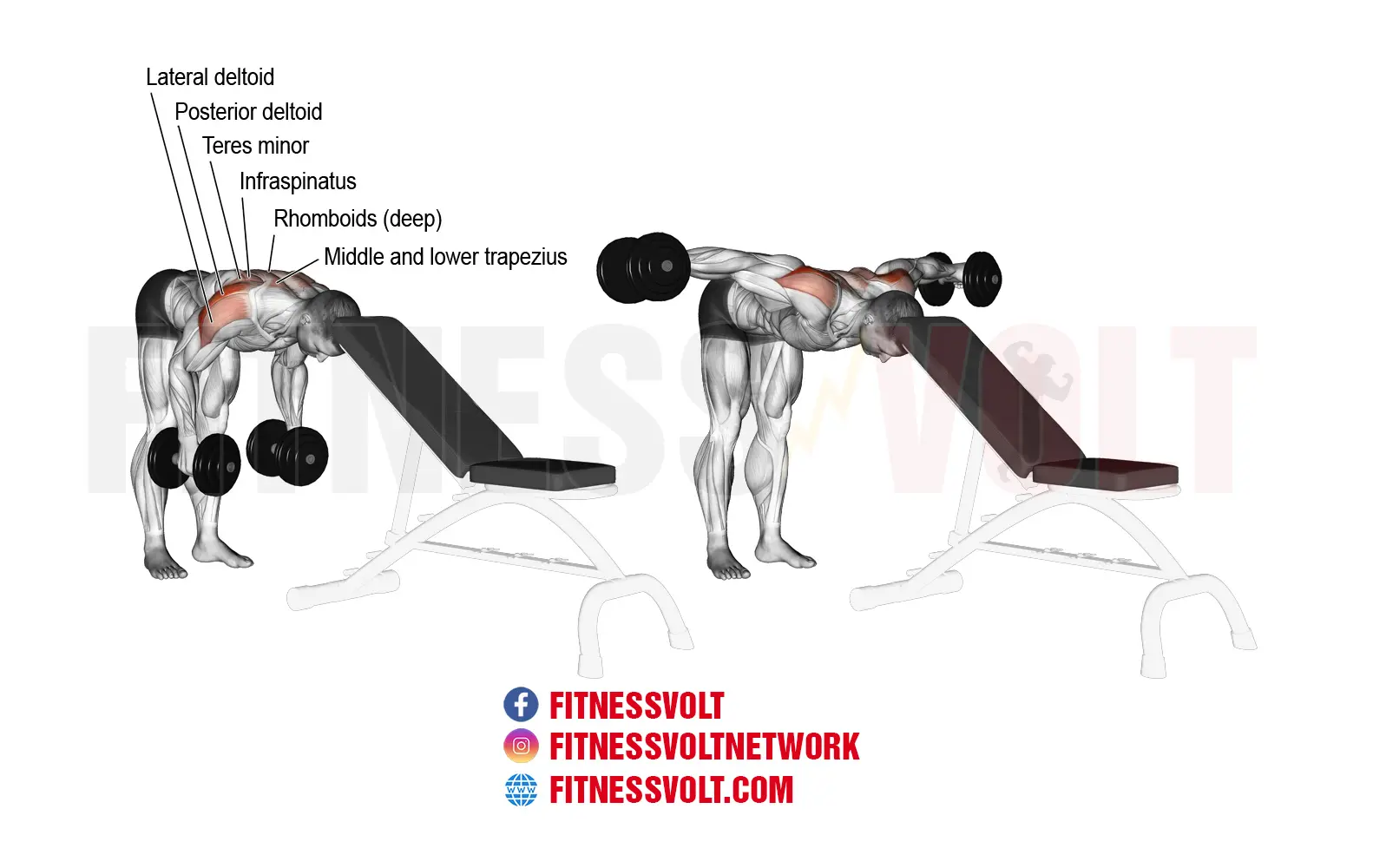
The head-supported bent-over lateral raise is an effective isolation movement used specifically for developing the rear deltoids. Keeping your head stable on the bench prevents you from cheating during the exercise but you have to train with less weight.

Going too heavy will compromise good form and increase the risk of developing a joint injury. So, train smart and feel the posterior deltoids contract during the movement. It’s important to work the deltoids thoroughly so make sure to train with enough sets to exhaust the muscle. And the rear deltoids when fully developed will give your torso a more complete look, so give them lots of attention.

Bent-Over Dumbbell Lateral Raise Details
Basic Information
Body Part
Shoulders
Primary Muscles
Secondary Muscles
Equipment
Dumbbells, Weight Bench Or Sturdy Surface
Exercise Characteristics
Exercise Type
Strength
Movement Pattern
Pull
Force Type
Concentric
Unilateral/Bilateral
Unilateral
Compound/Isolation
Isolation
Bodyweight Exercise
No
Training Parameters
Difficulty Level
Intermediate
Target Training Goals
Hypertrophy
Suitable Workout Phases
Main workout
Risk Level
Moderate
Weight Category
Light (e.g., light dumbbells, medicine balls)
Recommended Rep Ranges
GoalRep Range
Strength8-12
Hypertrophy8-12
Endurance12-20
Power3-5
Muscular endurance12-15
Stability core8-12
Flexibility mobility10-15

Exercise Instructions

  1. Rest your head on the top of a raised bench. 
  2. Bend your knees and arch your back slightly. 
  3. Raise both dumbbells laterally and contract your rear deltoids. 
  4. Lower the dumbbells to the beginning position and repeat the movement.

Variations & Tips:

  • Avoid using too much weight as it’ll be harder to perform the exercise effectively. 
  • Turn your wrists slightly outward to avoid internal shoulder rotation which is dangerous for your joints.
  • The head-supported bent-over dumbbell lateral raise is a great movement for really isolating the rear shoulders. 

Watch: How to do the head-supported bent-over dumbbell lateral raise 

Interested in measuring your progress? Check out our strength standards for Dumbbell Lateral Raise.

Stay on top of the latest fitness news and updates by adding Fitness Volt to your Google News feed: Follow us on Google News You can also follow us on Twitter, Facebook, Instagram, and YouTube for even more content.

If you have any questions or need further clarification about this article, please leave a comment below, and Dr. Malik will get back to you as soon as possible.

Stay Updated with FitnessVolt Get the latest fitness news, workouts & nutrition tips delivered to your feed

Tip: If you're signed in to Google, tap Follow.

Share This Article
Dr. Malik is an MD and fitness expert who has published on reputable websites. He combines medical knowledge with a passion for fitness to provide readers with accurate and scientifically-backed advice on exercise, muscle building, and overall wellness.
Leave a Comment