

Most people have no idea what hypoxic training is, and I don’t blame them. It sounds like something out of a science fiction novel, and to be honest, it looks and feels like that, too.
Hypoxic training is also known as altitude training or low oxygen training and involves exercising while breathing in oxygen-reduced air. Although this might sound very complex, there are several ways of doing it. The simplest method involves holding your breath for a few seconds at the end of each minute during an exercise.
Hypoxic training has been shown to have numerous benefits, including improved athletic performance and metabolic response, better glucose transport, pH regulation, glycolytic enzymes, and enhanced acclimation to altitude. (1) (2)
Make no mistake, hypoxic training isn’t just for mountaineers. Whether you want to run your first marathon or are just trying to get fit, learning how your body responds to low-oxygen, demanding conditions can help unlock maximum potential.
As a personal trainer who coaches several elite athletes, I can attest that an increasing number of people are taking up hypoxic training to boost their cardiovascular performance and overall stamina.
In this article, I’ll take you over everything you need to know about hypoxic training, including the science behind it, its different methods, and how you can incorporate it into your own training regime safely.
Science Behind Hypoxic Training

Hypoxic Training has several other benefits besides the ones mentioned above, including increased red blood cell production, improved VO2 max, and enhanced lactic threshold.
But how does hypoxic training do all this? This is what makes this protocol tick:
EPO and The Red Blood Cell Boost
Red blood cells are what carry the oxygen to your muscles.
In a low-oxygen environment, your body releases a hormone called erythropoietin (EPO). EPO signals your bone marrow to produce more red blood cells, which helps deliver more oxygen to the working muscles, boosting your endurance and performance. (3)
This increase in red blood cell volume can improve VO2 max, which is your body’s ability to use oxygen and it can help increase the time to exhaustion during exercise. To put it briefly, regular hypoxic exercise can help you train harder and for longer.
HIF: The Master Adaptor
Hypoxia-inducible factor (HIF) is like the master switch, as it could result in a whole host of genetic changes in your body when oxygen levels drop.
HIF can push your body to become more efficient at using oxygen, generating energy, and even forming new blood vessels. This is a game changer for people and athletes trying to take their physical conditioning to the next level.
HIF activation can also increase the mitochondrial density in your muscle cells. For the uninitiated, mitochondria is the powerhouse of your muscle cells which helps produce the energy that is required during exercise. More mitochondria can result in improved physical performance.
Benefits of Hypoxic Training

Now that you understand the physiological changes of this training protocol let’s quickly touch upon some of the benefits you can expect:
Endurance, Power, and Recovery
The increase in the number of red blood cells boosts blood and oxygen supply to the muscles. This allows you to work harder and for longer, making it an excellent choice for athletes participating in aerobic and anaerobic sports like marathons or MMA.
An increase in the number of mitochondria is a godsend for athletes who depend on explosive power generation. Olympic weightlifting, boxing, and sprinting all require a ton of quick power and speed, and the hypoxic training program delivers on every front.
Now, this is where it all comes together. HIF leads to new blood vessel formation, and EPO boosts RBC production. Put two and two together, and you’ll realize that hypoxic training can take your recovery to the next level by boosting blood flow to the target muscles.
How is that, you ask?
This ensures faster nutrient delivery to the target muscles and facilitates the elimination of metabolites from the target muscles after a training session, leading to quicker recovery and minimizing the occurrence of delayed onset muscle soreness (DOMS).
Working Capacity of the Brain
Training in a low-oxygen environment is as mentally demanding as it is physically challenging. Your mind begins to play games on you when it realizes you cannot breathe well enough. The most basic instinct is to stop exercising and gasp for air. (4)
However, you must stare this challenge in the face and go full steam ahead.
Regular hypoxic training can significantly boost mental grit and determination. This is one of the biggest reasons why the most lethal armed force units include this in their combat training regimen.
Think of it like this: you’re training in a very challenging environment, so when you return to normal conditions, you’ll transform into an absolute tank that will be unstoppable.
Methods of Hypoxic Training

Hypoxic training comes in various shapes and sizes, and you must pick the method that best suits your needs. Here are the three types of training protocols that you should be aware of:
Altitude Training
Reinhold Messner was the first mountaineer to summit Mount Everest without supplemental oxygen. Scaling the world’s highest peak without an oxygen cylinder is easier said than done. The thin air and brutal conditions can spell doom for the unprepared.
That said, hypoxic training is one of the best ways to prepare for such challenges.
There are two main ways you can approach altitude training:
1. Living high, training high
This protocol involves training at high altitudes (typically above 2,500 meters) where the air pressure is lower and oxygen levels are reduced. It increases RBC production and enhances cardiovascular fitness and endurance.
However, there is a high risk of altitude sickness, including headaches, nausea, and chronic fatigue.
If you are planning to opt for this approach, you must undergo optimal acclimatization, which can be logistically challenging and expensive.
2. Living high, training low
In this approach, you’ll live at a high altitude but train at lower heights, minimizing the risk of altitude sickness and all the bad things that come along with it. This will also allow you to train at a higher intensity, boosting your overall cardiovascular strength and endurance.
The biggest challenge of this protocol is that it can be incredibly challenging to plan and manage your schedule. After all, climbing up and down a mountain multiple times a day won’t be easy — or convenient.
Simulated Altitude Training
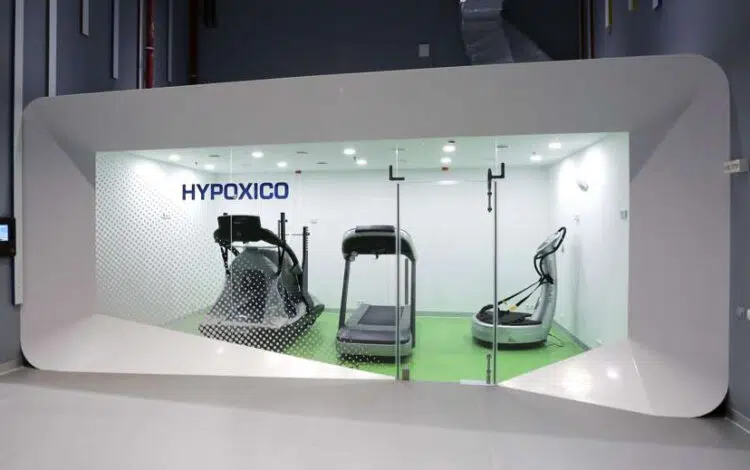
In this method, you’ll be using gadgets and equipment to implement a low-oxygen environment.
1. Hypoxic chambers
These chambers are a bigger version of what Steven Rogers enters to turn into Captain America. They stimulate high altitudes by reducing the oxygen concentration of the air inside.
While it might be convenient and accessible, it can be fairly expensive and out of reach for most ordinary folks. Nonetheless, it is an incredibly effective tool to have if you have the dough and are very particular and consistent about your training environment.
I must add that these chambers can make the best of us feel claustrophobia, so proceed with caution.
2. Hypoxic tents
These are toned-down versions of hypoxic chambers. Let’s be honest here; chambers is an intimidating word.
You can put these tents on your bed to create a very specific low-oxygen environment. (However, I won’t recommend beginners sleep in them.)
As you might have guessed, these tents are portable and very easy to set up. However, since they are significantly smaller, they might limit your movement and might not be as effective for high-intensity (HIIT) training.
3. Altitude masks
You’ve probably seen these on social media. These are the masks with two to three valves that make you look like a ninja. They work by filtering out some of the oxygen you breathe, creating a hypoxic environment.
The biggest benefit altitude masks have over the other protocols is that they are convenient, portable, and cost-effective. Plus, they allow you to train in familiar environments.
However, they do come with a break-in period and might not be comfortable for extended use. Not to mention, their hypoxic effect is also not as pronounced as the other methods.
Intermittent Hypoxic Training (IHT)
This method involves alternating between periods of hypoxia and normoxia (normal oxygen levels). The typical work-to-rest ratio ranges from 1:1 to 1:3, with workouts lasting between 30 and 60 minutes.
The IHT method improves cardiovascular fitness and endurance and boosts muscle metabolism and energy production.
This method, however, requires careful monitoring, as you must gradually increase the duration and intensity of hypoxic exposure.
How To Choose The Right Hypoxic Training Method

The most optimal training protocol for you will depend on multiple factors, including:
- Accessibility: Some methods are more expensive than others. Pick something that you can stick to for the long run.
- Convenience: Does using an altitude mask feel easier than setting up a hypoxic tent every day? Use that.
- Health Risks: Training at high altitudes carries the risk of altitude sickness, making the first method listed in this article useless for you.
- Training Intensity: If you like HIIT training, the IHT method might be the most suitable for you.
Sample Hypoxic Training Plans
With these factors out of the way, here are a few sample training protocols for trainers of varying experience levels:
Beginners Exercisers
| Week | Simulated Altitude | Workout Duration | Focus |
| 1-2 | 5,000-8,000 feet | 20-30 minutes | Low-intensity activities like walking or jogging. |
| 3-4 | 8,000-10,000 feet | 30-45 minutes | Intervals of moderate-intensity exercises like cycling or swimming. |
| 5-6 | 10,000-12,000 feet | 45-60 minutes | Incorporate strength training exercises with lighter weights. |
Intermediate Exercisers
| Week | Simulated Altitude | Workout Duration | Focus |
| 1-2 | 8,000-12,000 feet | 45-60 minutes | Moderate-intensity workouts combining cardio and strength training. |
| 3-4 | 12,000-15,000 feet | 60-75 minutes | Increase intensity and focus on challenging your cardiovascular system. |
| 5-6 | 15,000-18,000 feet | 75-90 minutes | Incorporate high-intensity interval training (HIIT) with adequate rest periods. |
Advanced Exercisers
| Week | Simulated Altitude | Workout Duration | Focus |
| 1-2 | 12,000-15,000 feet | 60-90 minutes | Combine cardio, strength training, and HIIT. |
| 3-4 | 15,000-18,000 feet | 90-120 minutes | Push your limits with more challenging workouts. |
| 5-6 | 18,000-21,000 feet | 120-150 minutes | Incorporate advanced hypoxic training methods like intermittent hypoxic exposure (IHE) or live-high, train-low strategies. |
How To Safely Incorporate Hypoxic Training into Your Regimen

Below are the things you must consider while starting your hypoxic training journey:
Start Slow and Small
In a low-oxygen environment, your body must work harder to deliver oxygen to every part of the body, especially the working muscles. Over time, this stress triggers your body to become more efficient at using oxygen.
The keywords here are ‘over time.’ Don’t try to do too much too soon, as it can compromise your safety.
Gradually increase the intensity, altitude, and duration of your workouts as your body adapts to the new demands.
Listen To Your Body
With all said and done, I highly recommend you get your doctor’s clearance before beginning hypoxic training, especially if you are dealing with a pre-existing disease.
Learn to listen to your body and discontinue a workout if something feels weird or uncomfortable. Remember, pushing too hard in low-oxygen situations can risk your health and overall well-being.
Hydration and Nutrition
Most people are unaware of this fact, but thinner air dehydrates you faster. So, you must drink at least a couple of glasses of water before, during, and after your training session to avoid dehydration.
Furthermore, ensure that you are eating a nutrient-dense, balanced diet to fuel your body and recovery. Use this TDEE calculator to determine your ideal daily calorie and macronutrient intake.
Conclusion
Hypoxic training can help unlock peak performance and athletic potential by boosting your endurance, power, and recovery. This versatile training approach can be adapted for people of all experience levels chasing different goals.
However, you must ensure proper planning, implementation, and monitoring to ensure safety and consistent progress while following this high-risk exercise regime.
Like any other program, you must stay consistent, dedicated, and disciplined to get the best bang for your buck.
If you have any questions about the hypoxic training program or need help implementing it into your routine, post them in the comments below, and I’ll be happy to help!
References:
- Wee, J., & Climstein, M. (2015). Hypoxic training: Clinical benefits on cardiometabolic risk factors. Journal of science and medicine in sport, 18(1), 56–61. https://doi.org/10.1016/j.jsams.2013.10.247
- Jung WS, Kim SW, Park HY. Interval Hypoxic Training Enhances Athletic Performance and Does Not Adversely Affect Immune Function in Middle- and Long-Distance Runners. Int J Environ Res Public Health. 2020 Mar 16;17(6):1934. doi: 10.3390/ijerph17061934. PMID: 32188027; PMCID: PMC7143158.
- Jacob A. Sinex, Robert F. Chapman, Hypoxic training methods for improving endurance exercise performance, Journal of Sport and Health Science, Volume 4, Issue 4, 2015, Pages 325-332, ISSN 2095-2546, https://doi.org/10.1016/j.jshs.2015.07.005.
- Rybnikova EA, Nalivaeva NN, Zenko MY, Baranova KA. Intermittent Hypoxic Training as an Effective Tool for Increasing the Adaptive Potential, Endurance, and Working Capacity of the Brain. Front Neurosci. 2022 Jun 21;16:941740. doi: 10.3389/fnins.2022.941740. PMID: 35801184; PMCID: PMC9254677.