
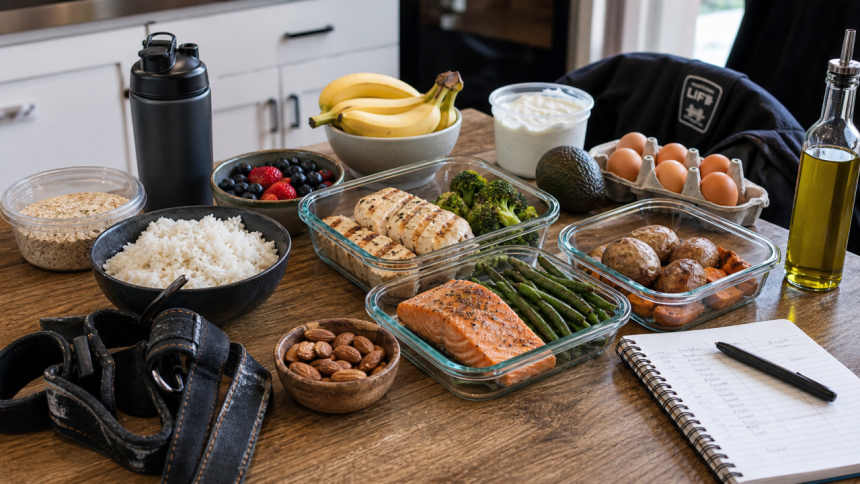
Most bulks fail in the same boring way: calories jump too fast, the scale moves, lifts feel better for two weeks, and then the lifter spends the next cut undoing avoidable fat gain. A lean bulk fixes that by treating weight gain like a dial, not a light switch.
This guide gives you the exact surplus, macros, weekly gain targets, adjustment rules, meal template, and stopping criteria we would use with a lifter who wants muscle without turning the next diet phase into damage control.
Quick Answer: How Do You Lean Bulk Without Getting Fat?
A lean bulk uses a small calorie surplus, usually 5-10% above maintenance, while gaining about 0.25-0.5% of body weight per week. Set protein at 1.6-2.2 grams per kilogram of body weight, keep fats near 0.6-1.0 grams per kilogram, put the rest of calories into carbs, and adjust every 2 weeks from your average scale weight.
What Is a Lean Bulk?
A lean bulk is a planned muscle-gain phase where the calorie surplus is just large enough to support harder training and recovery. It is not a license to eat randomly. It is also not a recomp, because the scale should move up on purpose.
The tradeoff is speed. Dirty bulking can make the scale climb faster, but muscle gain has a ceiling. Once protein, calories, and training are covered, extra calories mostly buy extra fat, not extra muscle. A lean bulk accepts slower weekly gain so the eventual cut is shorter.
Skip a lean bulk if you are already uncomfortable with your current body-fat level, your waist is climbing faster than your lifts, or you cannot track food honestly for at least 14 days. In that case, maintain, cut briefly, or use a slower recomp phase first.
Lean Bulk Targets: Surplus, Rate of Gain, and Timeline
The best lean-bulk target is based on your training age. Beginners can use a slightly larger surplus because they can gain muscle faster. Advanced lifters should gain slower because their muscle-building ceiling is lower and extra calories spill into fat more easily.
| Lifter type | Daily surplus | Weekly gain target | Good timeline |
|---|---|---|---|
| Beginner or returning lifter | 8-12% above TDEE | 0.5-0.75% body weight | 12-24 weeks |
| Intermediate lifter | 5-10% above TDEE | 0.25-0.5% body weight | 16-32 weeks |
| Advanced lifter | 3-5% above TDEE | 0.1-0.25% body weight | 20-40 weeks |
For a 180-pound intermediate lifter, 0.25-0.5% body weight equals about 0.45-0.9 pounds per week. That is slower than most people want, but it is fast enough to show up in gym performance and slow enough to keep the waistline honest.
Lean Bulk Calculator Workflow
A calculator gives you a starting estimate, not a verdict. Use the FitnessVolt TDEE calculator to estimate maintenance, add a lean surplus, then use real weigh-ins for 2 weeks before deciding whether the number is right.
Step 1: Find Maintenance Calories
Enter body weight, height, age, sex, and activity into a TDEE calculator. If you know body fat, include it. Most calorie formulas are still estimates, and the NIDDK Body Weight Planner exists for the same reason: body weight changes are dynamic, not perfectly linear.
Step 2: Add the Smallest Useful Surplus
Add 150-250 calories if you are advanced, 200-350 calories if you are intermediate, or 300-500 calories if you are newer and training hard. A 2,700-calorie maintenance intake would usually become 2,900-3,000 calories for a normal lean bulk.
Step 3: Judge the Trend, Not One Weigh-In
Weigh daily if you can, then compare 7-day averages. Sodium, carbs, digestion, menstrual-cycle changes, and hard leg sessions can move body weight by 1-4 pounds without changing tissue. The 14-day trend is the decision point.
Macro Setup for Lean Bulking
Macros should be set in grams, not percentages. The International Society of Sports Nutrition protein position stand recommends 1.4-2.0 g/kg/day for most exercising people, and Morton et al.’s meta-analysis found a strong practical case for roughly 1.6 g/kg/day, with the upper confidence interval near 2.2 g/kg/day.
We like 1.6-2.2 g/kg for protein, 0.6-1.0 g/kg for fat, and carbs for the remaining calories. Carbs are not magic, but they are useful during a bulk because high-volume hypertrophy training runs better when glycogen is not constantly low. The ISSN nutrient timing stand notes that carbohydrate intake supports glycogen restoration and training adaptation in demanding exercise blocks.
| Body weight | Example calories | Protein | Fat | Carbs |
|---|---|---|---|---|
| 150 lb / 68 kg | 2,500 kcal | 140 g | 60 g | 350 g |
| 180 lb / 82 kg | 2,950 kcal | 165 g | 75 g | 405 g |
| 220 lb / 100 kg | 3,600 kcal | 200 g | 95 g | 485 g |
Use the FitnessVolt macronutrient calculator if you want the math done for you, but check the output against the gram ranges above. If a percentage split gives you very low protein or very low fat, fix the grams first and let carbs fill the rest.
Lean Bulk vs Dirty Bulk vs Recomp
Lean bulking, dirty bulking, and recomping are different tools. The right choice depends on body-fat level, training age, and how urgently you need the scale to move. The wrong choice is usually the one that ignores your starting point.
| Approach | Calories | Scale goal | Best for | Main risk |
|---|---|---|---|---|
| Lean bulk | 3-10% surplus | Slow gain | Most natural lifters | Too slow if under-eating |
| Dirty bulk | Large surplus | Fast gain | Very underweight hardgainers | Unnecessary fat gain |
| Recomp | Maintenance or small deficit | Stable weight | Beginners, detrained lifters, higher body fat | Progress can be hard to measure |
If you are deciding between approaches, read our comparison of clean bulking and dirty bulking. The short version: use a dirty bulk only if gaining any weight has been a repeated failure and health markers, digestion, and waist measurements are still controlled.
The 2-Week Adjustment Rule
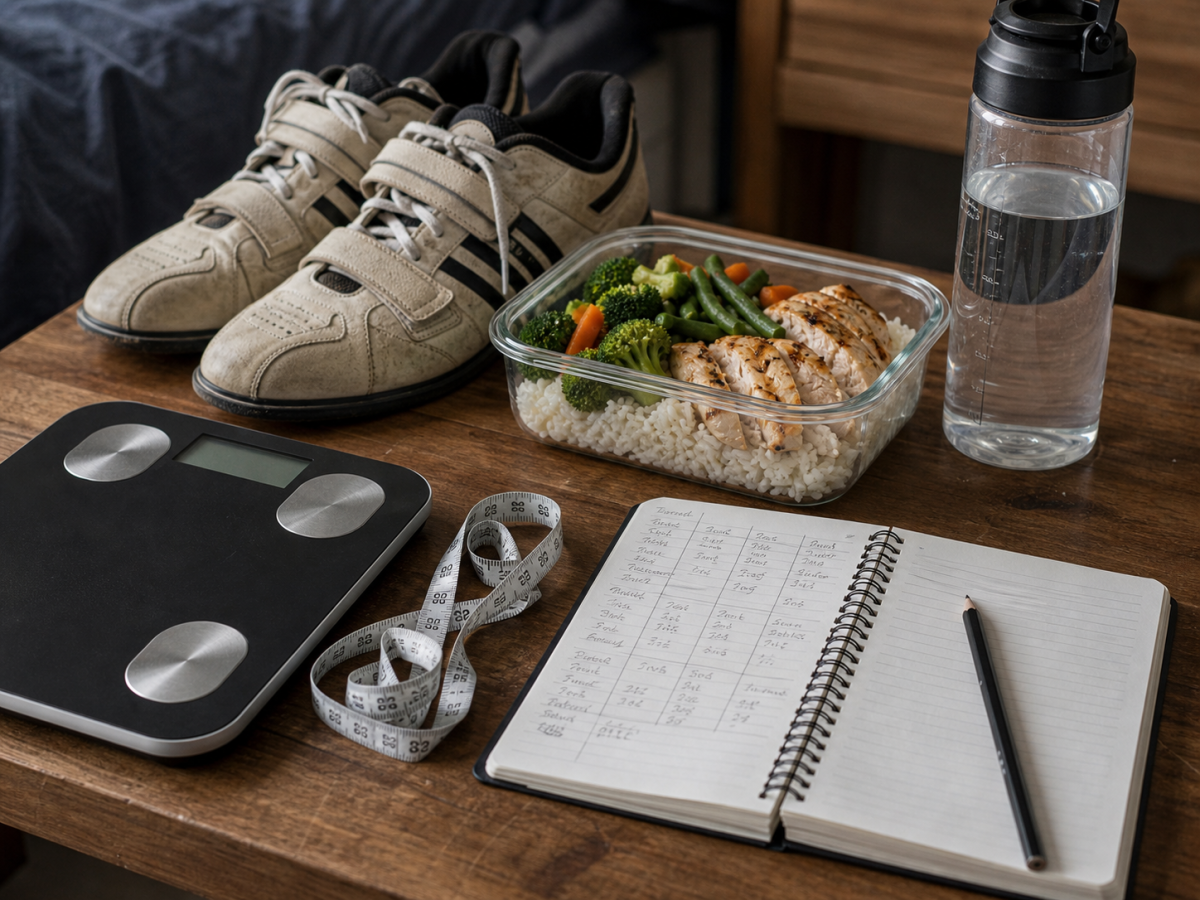
Adjust calories only after two full weeks at the same target. This prevents you from chasing water weight. Use your 7-day average body weight, waist measurement, gym performance, and appetite before changing the plan.
| After 2 weeks | What it means | Calorie move |
|---|---|---|
| No gain and training flat | Surplus is too small | Add 100-150 kcal/day |
| Gain below target but lifts improving | Plan is close | Add 50-100 kcal/day or hold |
| Gain within target | Keep going | No change |
| Gain above target and waist jumps | Surplus is too large | Subtract 100-200 kcal/day |
| Weight up, strength down, poor sleep | Recovery problem, not just calories | Hold calories and reduce training stress |
Sample Lean Bulk Meal Plan
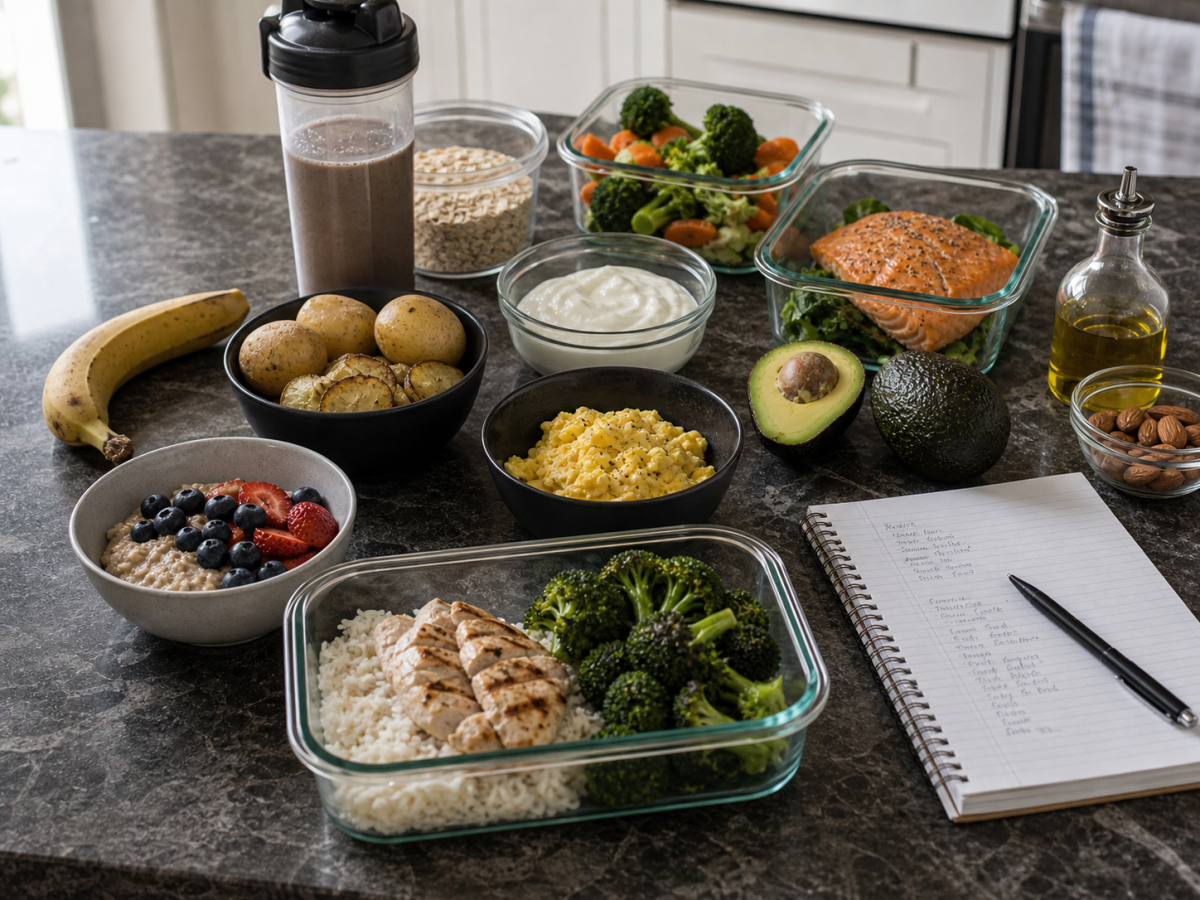
A lean-bulk meal plan should be repeatable, not fancy. Build it from protein anchors, carb bases, fats you can measure, and produce that keeps digestion moving. For more food options, use our healthy bulking foods guide.
| Meal | Food | Approx. macros | Swap |
|---|---|---|---|
| Breakfast | 90 g oats, 1 cup Greek yogurt, banana, 1 tbsp peanut butter | 730 kcal, 43 g protein | Use soy yogurt if dairy bothers you |
| Lunch | 6 oz chicken breast, 2 cups cooked rice, vegetables, 1 tbsp olive oil | 780 kcal, 55 g protein | Swap tofu or lean beef |
| Pre-workout | Bagel, honey, whey shake | 500 kcal, 35 g protein | Use cereal and milk if appetite is low |
| Dinner | 6 oz salmon, large baked potato, salad, fruit | 650 kcal, 45 g protein | Use tuna, eggs, or tempeh |
| Snack | Cottage cheese, berries, granola | 380 kcal, 30 g protein | Use casein or silken tofu pudding |
This sample lands near 3,000 calories and more than 180 grams of protein, depending on brands and portions. Use USDA FoodData Central or your food scale app for exact entries, because one tablespoon of oil and one heavy pour are not the same thing.
Training During a Lean Bulk
A surplus only helps if training gives your body a reason to build muscle. Most lifters should train each muscle 2 times per week, use 10-20 hard sets per muscle per week, and keep most working sets within 1-3 reps of failure.
Schoenfeld, Ogborn, and Krieger’s volume meta-analysis found a dose-response relationship between weekly resistance-training volume and hypertrophy, but more is not endless magic. If recovery, joints, sleep, or performance are getting worse, the surplus is not covering the training you wrote on paper.
- Use 6-12 reps for most compound lifts and 10-20 reps for many isolation lifts.
- Progress one variable at a time: weight, reps, sets, range of motion, or technique quality.
- Keep 2-4 weekly cardio sessions if health and appetite are better with them.
- Deload when performance drops for 2 straight weeks despite calories and sleep being stable.
- Use our progressive overload guide if your logbook has not moved in a month.
When Should You Stop Lean Bulking?
Stop a lean bulk when the next pound is more likely to be fat than useful training support. That usually shows up as a fast waist increase, stalled strength, poor conditioning, or appetite fatigue that makes food quality collapse.
- Waist is up more than 1 inch in 4 weeks without matching strength progress.
- Average weight is gaining above target for 2 straight check-ins.
- Performance has stalled for 3-4 weeks across major lifts.
- Sleep, blood pressure, reflux, or digestion are clearly worse.
- You have reached the body-fat level where a longer cut would hurt adherence.
A smart exit is simple: hold maintenance for 2-4 weeks before cutting. That lets training stabilize, drops some food-volume bloat, and gives you a cleaner read on what you actually gained.
Common Lean Bulking Mistakes
The biggest lean-bulk mistakes are not exotic. They are boring tracking errors, oversized surplus jumps, and training plans that turn every week into a recovery debt.
- Mistake: adding 700 calories on day one. Fix: start with 5-10% above TDEE.
- Mistake: using one weigh-in as proof. Fix: compare 7-day averages after 14 days.
- Mistake: letting protein drop because calories are high. Fix: keep 1.6-2.2 g/kg daily.
- Mistake: chasing pump volume instead of progressive overload. Fix: track top sets and weekly hard sets.
- Mistake: removing all cardio. Fix: keep low-dose cardio for appetite, conditioning, and health.
Lean Bulking FAQ
How many calories should I eat for a lean bulk?
Start with 5-10% above maintenance. For many lifters, that is 200-350 extra calories per day. Beginners can use the higher end, advanced lifters should use the lower end, and everyone should adjust after 2 weeks of trend data.
How fast should I gain weight on a lean bulk?
Most intermediate lifters should gain 0.25-0.5% of body weight per week. A 180-pound lifter would aim for roughly 0.45-0.9 pounds weekly. Faster gain is not automatically wrong, but it raises the chance that more of the gain is fat.
Can I lean bulk and lose fat at the same time?
Some beginners, detrained lifters, and higher-body-fat lifters can gain muscle while losing fat, but that is closer to recomping than lean bulking. If your goal is a true bulk, the scale should rise slowly while waist gain stays controlled.
What should I eat before training during a lean bulk?
Eat 25-40 grams of protein and 40-100 grams of carbs 1-3 hours before training. A bagel with whey, rice with chicken, oats with yogurt, or cereal with milk all work. Keep fats lower if heavy meals sit in your stomach.
Do I need supplements for a lean bulk?
No supplement replaces calories, protein, and progressive training. Creatine monohydrate, whey or plant protein, caffeine, and vitamin D if deficient can help specific gaps, but the bulk should still work with normal food.
Should I use a weight-gain calculator?
A calculator is useful for the first target. The FitnessVolt weight gain calculator can estimate the starting intake, but your 14-day body-weight trend decides whether calories need to rise, hold, or drop.
Bottom Line
A good lean bulk is boring in the best way. Eat 5-10% above maintenance, gain 0.25-0.5% of body weight per week, keep protein at 1.6-2.2 g/kg, train with measurable progression, and make calorie changes only after 2 weeks of trend data. That is how you make the scale move without handing your future cut a mess.
Sources
- Jager, R., Kerksick, C. M., Campbell, B. I., et al. International Society of Sports Nutrition Position Stand: protein and exercise. Journal of the International Society of Sports Nutrition. 2017. doi:10.1186/s12970-017-0177-8.
- Aragon, A. A., Schoenfeld, B. J., Wildman, R., et al. International society of sports nutrition position stand: diets and body composition. Journal of the International Society of Sports Nutrition. 2017. doi:10.1186/s12970-017-0174-y.
- Kerksick, C. M., Arent, S., Schoenfeld, B. J., et al. International society of sports nutrition position stand: nutrient timing. Journal of the International Society of Sports Nutrition. 2017. doi:10.1186/s12970-017-0189-4.
- Morton, R. W., Murphy, K. T., McKellar, S. R., et al. A systematic review, meta-analysis and meta-regression of the effect of protein supplementation on resistance training-induced gains in muscle mass and strength in healthy adults. British Journal of Sports Medicine. 2018. PMID:28698222. doi:10.1136/bjsports-2017-097608.
- Schoenfeld, B. J., Ogborn, D., Krieger, J. W. Dose-response relationship between weekly resistance training volume and increases in muscle mass: A systematic review and meta-analysis. Journal of Sports Sciences. 2017. PMID:27433992. doi:10.1080/02640414.2016.1210197.
- U.S. Department of Agriculture. FoodData Central API Guide. USDA Agricultural Research Service. Accessed May 31, 2026.
- National Institute of Diabetes and Digestive and Kidney Diseases. About the Body Weight Planner. National Institutes of Health. Accessed May 31, 2026.