Powerlifting is a weight class sport. You compete against lifters of a similar bodyweight, so the class you choose affects where you place.
Below are the IPF classes, the traditional classes many other federations use, and advice on choosing yours and carrying as much muscle as you can within it.
Powerlifting Weight Classes
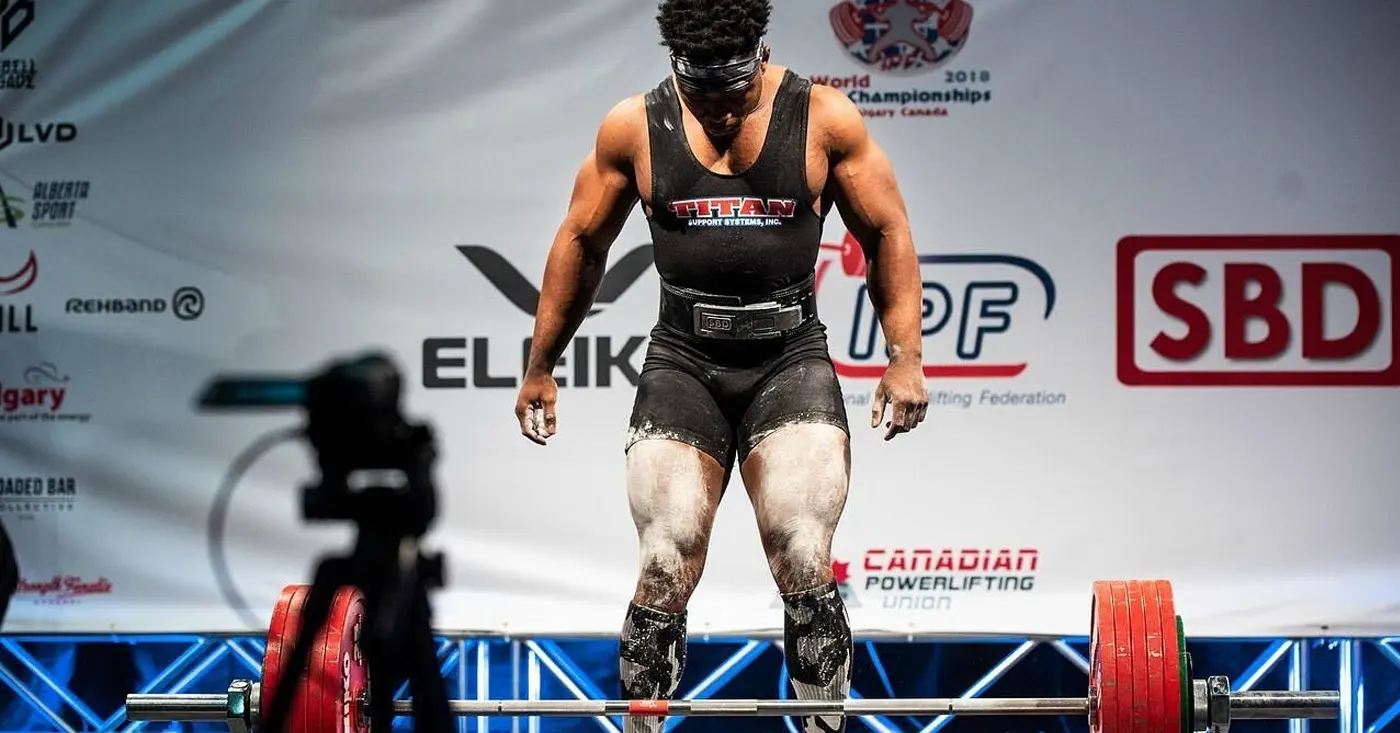
Each federation sets its own classes. The IPF and its national affiliates, such as the CPU and British Powerlifting, use the IPF weight classes. Many other federations, such as the USPA, WRPF, RPS and SPF, use the traditional classes in the right-hand columns.
| International Powerlifting Federation | Other Federations | ||
| Male | Female | Male | Female |
| 59 kg / 130 lbs | 47 kg / 104 lbs | 56 kg / 123 lbs | 44 kg / 97 lbs |
| 66 kg / 145 lbs | 52 kg / 115 lbs | 60 kg / 132 lbs | 48 kg / 106 lbs |
| 74 kg / 163 lbs | 57 kg / 126 lbs | 67.5 kg / 148 lbs | 52 kg / 115 lbs |
| 83 kg / 183 lbs | 63 kg / 139 lbs | 75 kg / 165 lbs | 56 kg / 123 lbs |
| 93 kg / 205 lbs | 69 kg / 152 lbs | 82.5 kg / 181 lbs | 60 kg / 132 lbs |
| 105 kg / 231 lbs | 76 kg / 168 lbs | 90 kg / 198 lbs | 67.5 kg / 148 lbs |
| 120 kg / 265 lbs | 84 kg / 185 lbs | 100 kg / 220 lbs | 75 kg / 165 lbs |
| > 120 kg / > 265 lbs | > 84 kg / > 185 lbs | 110 kg / 242 lbs | 82.5 kg / 181 lbs |
| – | – | 125 kg / 275 lbs | 90 kg / 198 lbs |
| – | – | 140 kg / 308 lbs | > 90 kg / > 198 lbs |
| – | – | > 140 kg / > 308 lbs | – |
The IPF lists its classes in its technical rules. Sub-juniors and juniors also have a 53 kg men’s class and a 43 kg women’s class. In 2021 the IPF replaced its 72 kg women’s class with the 69 kg and 76 kg classes, so older tables that still show 72 kg are out of date.
Some federations that use the traditional classes, including the USPA and the APF, add a 52 kg men’s class below 56 kg.
The weigh-in decides your class. In the IPF you must weigh in within the limits of the class you entered, and if you cannot make weight in the time allowed, you are out of the meet.
For the heaviest lifts ever made in each class, see our all-time powerlifting records by weight class.
Selecting Your Weight Class
When it comes to selecting your weight class, there is only really one main consideration.
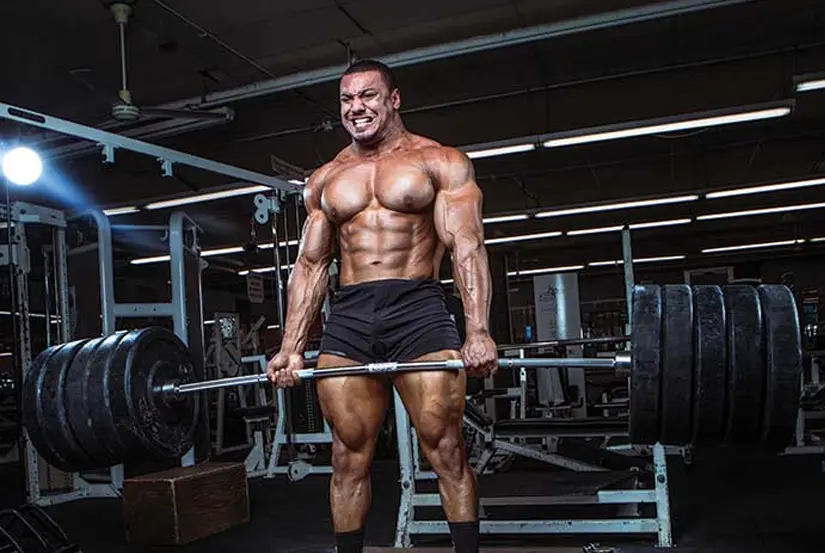
The weight class you compete in should be the class that allows you to carry as much muscle mass as possible.
Ideally, you should be towards the top end of your weight class too, as being at the lighter end of the class may be disadvantageous in terms of strength.
It is not uncommon for powerlifters to carry an excessive amount of body fat. However, powerlifters should maintain a fairly lean physique in order to maximize performance.
To see where your total would rank in your current class and the classes either side of it, try our weight class analyzer. If you are thinking about moving up, the weight class advisor shows what happened to other lifters who made the same move.
Adding Fat Does Not Impact Leverage
In an attempt to reach a certain weight class, some powerlifters consume a diet that causes them to put on a great amount of body fat.
Some believe that the bigger you are, the better you will perform in competition.
While body fat is needed to drive many bodily functions, it does not contract or contribute in any way to force development (1). Therefore, fat cannot provide you with any additional leverage.
That being said, some overweight or obese powerlifters may find that their additional body fat does have a positive impact on performance.
Because of their size, it is possible that the range of motion will become more restricted. When it comes to powerlifting, reducing the range of motion may allow you to lift heavier loads.
However, generally speaking, being extremely overweight and carrying a lot of body fat will not help you generate any additional leverage or significantly boost powerlifting performance.
Why Putting On Weight May Boost Powerlifting Performance
While body fat does not necessarily improve leverage, gaining weight may still have an impact on your overall performance.
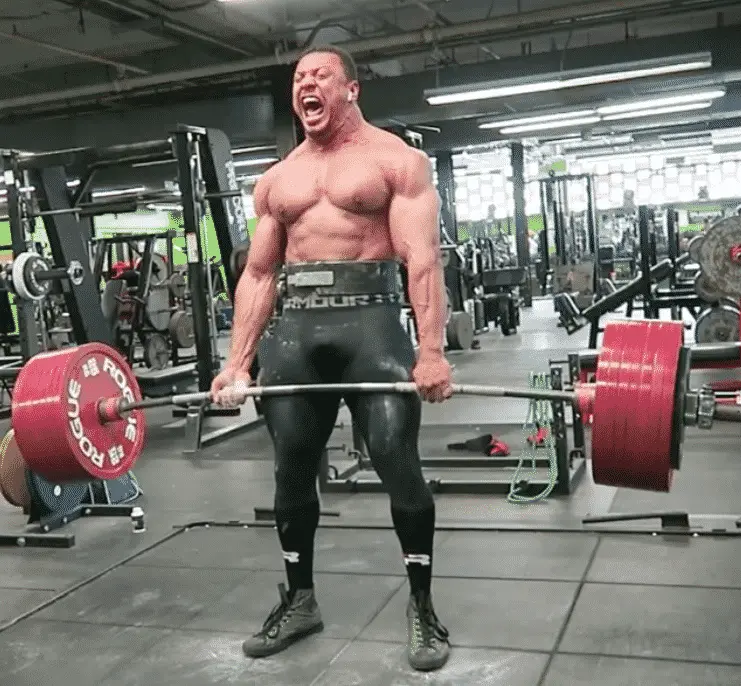
Many powerlifters have felt stronger when at a greater weight. This is potentially more to do with nutrition and the “overfed” state.
Consuming an excessive amount of calories over a prolonged period of time may lead to an increase in glycogen levels (2).
Glycogen is the stored form of glucose which is the substance that the body uses for energy.
It is possible that this increase in energy reserves is responsible for an improved powerlifting performance.
In addition, being in an overfed state in combination with strength training will lead to an increase in muscle size (3).
Consequently, the muscles will be capable of generating more power, boosting performance further.
Weight Class Case Studies
To highlight the importance of maximizing muscle development, this section will present three case studies.
Case One – Overweight vs Lean
| Powerlifter | Height | Weight | Body Fat % | Lean Body Mass |
| A | 5’ 6” | 181 lbs | 20% | 145 lbs |
| B | 5’ 6” | 181 lbs | 8% | 167 lbs |
This case study serves to emphasize the importance of maintaining a relatively lean physique regardless of your weight class.
Based on appearance, you may assume that athlete A will be capable of lifting heavier weight. However, athlete B will likely outperform athlete A.
By doing some quick calculations based on the athlete’s weight and body fat percentage, it is possible to evaluate their lean body mass. This is the amount of fat-free mass a person carries.
As highlighted in the table, athlete B has a greater amount of lean body mass than athlete A. As a result, athlete B will be able to generate more power and lift greater loads than athlete A.
Case Two – Tall vs Short
| Powerlifter | Height | Weight | Body Fat % | Lean Body Mass |
| A | 6’ 10” | 181 lbs | 8% | 167 lbs |
| B | 5’ 6” | 181 lbs | 8% | 167 lbs |
This second case study highlights how important it is to carry as much muscle as you possibly can into a competition.
While the previous case study was straightforward, case two is a little more challenging.
On the face of things, they both weigh the same and have the same body fat percentage and lean body mass. Consequently, you may conclude that they will have similar performance.
However, lean body mass does not simply refer to muscles only. It also takes into account bones, organs, soft tissues, and blood, amongst other things.
Therefore, because athlete A is taller, other structures, such as the skeleton, will contribute more significantly to their total lean body mass.
With athlete B, however, because their skeleton weighs less, it can be assumed that more of their lean body mass comes from muscle.
By carrying a greater amount of muscle, it is likely that athlete B will outperform athlete A.
Case Three – Skinny vs Stocky
| Powerlifter | Height | Weight | Body Fat % | Lean Body Mass |
| A | 5’ 6” | 165 lbs | 8% | 152 lbs |
| B | 5’ 6” | 181 lbs | 8% | 167 lbs |
This final case study is more theoretical as these athletes would compete in different weight classes. However, once again, it underlines how crucial it is to develop muscle mass.
Based on their physical attributes and the weight classes that the athletes fall in, athlete B is likely to be more competitive than athlete A.
Athlete B is likely to have the most muscle in his weight class, which improves his chances of being competitive.
Although still muscular, athlete A is not likely to be the most muscular individual in his class, which puts him at a disadvantage.
Final Word
It must be noted that there are a number of factors that influence lifting ability. That said, maximizing the amount of muscle in relation to your weight class is undoubtedly one of the most substantial factors.
Ultimately, if you want to maximize your performance, the goal must be to become the most muscular person in your weight class.
References:
- Coelho, Marisa; Oliveira, Teresa; Fernandes, Ruben (2013-04-20). “Biochemistry of adipose tissue: an endocrine organ”. Archives of Medical Science : AMS. 9 (2): 191–200. doi:10.5114/aoms.2013.33181. ISSN 1734-1922. PMC 3648822. PMID 23671428.
- Murray, Bob; Rosenbloom, Christine (2018-4). “Fundamentals of glycogen metabolism for coaches and athletes”. Nutrition Reviews. 76 (4): 243–259. doi:10.1093/nutrit/nuy001. ISSN 0029-6643. PMC 6019055. PMID 29444266.
- Leaf, Alex; Antonio, Jose (2017-12-01). “The Effects of Overfeeding on Body Composition: The Role of Macronutrient Composition – A Narrative Review”. International Journal of Exercise Science. 10 (8): 1275–1296. PMC 5786199. PMID 29399253.