What is a good Deadlift?
For a 180 lb male, an Intermediate Deadlift is about 340 lb (1.89x bodyweight). Advanced starts around 430 lb. Enter your own bodyweight below to get the exact standard and FVCP rank.
Deadlift Standards by Bodyweight
Levels from the FitnessVolt strength standards model, not meet percentiles. Gym and competition data have their own sections below. Updated June 10, 2026. Find the row closest to your bodyweight. Beginner is a first target for a new lifter, Novice a few months in, Intermediate about one to two years of structured training, Advanced several years, Elite the top of the table.
| BW (lbs) | Beginner | Novice | Intermediate | Advanced | Elite |
|---|---|---|---|---|---|
| 110 | 96 | 144 | 204 | 275 | 352 |
| 120 | 111 | 162 | 225 | 300 | 380 |
| 130 | 126 | 179 | 246 | 323 | 407 |
| 140 | 140 | 197 | 266 | 346 | 433 |
| 150 | 154 | 213 | 286 | 368 | 457 |
| 160 | 168 | 229 | 304 | 389 | 481 |
| 170 | 181 | 245 | 322 | 410 | 503 |
| 180 | 195 | 261 | 340 | 430 | 525 |
| 190 | 208 | 275 | 357 | 449 | 546 |
| 200 | 220 | 290 | 373 | 467 | 567 |
| 210 | 233 | 304 | 389 | 485 | 587 |
| 220 | 245 | 318 | 405 | 503 | 606 |
| 230 | 257 | 332 | 420 | 520 | 624 |
| 240 | 268 | 345 | 435 | 536 | 642 |
| 250 | 280 | 358 | 450 | 552 | 660 |
| 260 | 291 | 370 | 464 | 568 | 677 |
| 270 | 302 | 383 | 478 | 583 | 694 |
| 280 | 313 | 395 | 491 | 598 | 710 |
| 290 | 323 | 407 | 504 | 613 | 726 |
| 300 | 333 | 418 | 517 | 627 | 741 |
| 310 | 344 | 430 | 530 | 641 | 756 |
| 90 | 54 | 90 | 139 | 198 | 264 |
| 100 | 61 | 99 | 150 | 211 | 279 |
| 110 | 67 | 108 | 161 | 224 | 294 |
| 120 | 74 | 116 | 171 | 235 | 307 |
| 130 | 80 | 124 | 180 | 246 | 319 |
| 140 | 86 | 131 | 189 | 257 | 331 |
| 150 | 92 | 138 | 197 | 267 | 343 |
| 160 | 97 | 145 | 205 | 276 | 353 |
| 170 | 103 | 152 | 213 | 285 | 363 |
| 180 | 108 | 158 | 221 | 294 | 373 |
| 190 | 113 | 164 | 228 | 302 | 382 |
| 200 | 118 | 170 | 235 | 310 | 391 |
| 210 | 123 | 176 | 241 | 317 | 400 |
| 220 | 127 | 181 | 248 | 325 | 408 |
| 230 | 132 | 186 | 254 | 332 | 416 |
| 240 | 136 | 192 | 260 | 339 | 424 |
| 250 | 140 | 197 | 266 | 345 | 431 |
| 260 | 144 | 201 | 272 | 352 | 438 |
The Deadlift standard at each level as bodyweight rises, for the sex selected above. Exact numbers in the table above.
Deadlift Standards by Age
How the Deadlift standards change with age, as a 1RM in lb. This table is not tied to one bodyweight, so read it for the trend and use the bodyweight table above for your own number.
| Age | Beginner | Novice | Intermediate | Advanced | Elite |
|---|---|---|---|---|---|
| 15 | 147 | 209 | 286 | 375 | 470 |
| 20 | 169 | 240 | 327 | 429 | 538 |
| 25 | 173 | 246 | 336 | 440 | 552 |
| 30 | 173 | 246 | 336 | 440 | 552 |
| 35 | 173 | 246 | 336 | 440 | 552 |
| 40 | 173 | 246 | 336 | 440 | 552 |
| 45 | 164 | 233 | 319 | 417 | 524 |
| 50 | 154 | 219 | 299 | 392 | 492 |
| 55 | 142 | 202 | 277 | 362 | 455 |
| 60 | 130 | 185 | 252 | 331 | 415 |
| 65 | 118 | 167 | 228 | 299 | 375 |
| 70 | 105 | 150 | 205 | 268 | 336 |
| 75 | 94 | 134 | 183 | 240 | 301 |
| 80 | 84 | 120 | 164 | 214 | 269 |
| 85 | 76 | 107 | 147 | 192 | 241 |
| 90 | 68 | 97 | 132 | 173 | 217 |
| 15 | 72 | 112 | 164 | 226 | 294 |
| 20 | 82 | 128 | 188 | 258 | 337 |
| 25 | 84 | 132 | 193 | 265 | 345 |
| 30 | 84 | 132 | 193 | 265 | 345 |
| 35 | 84 | 132 | 193 | 265 | 345 |
| 40 | 84 | 132 | 193 | 265 | 345 |
| 45 | 80 | 125 | 183 | 252 | 328 |
| 50 | 75 | 117 | 171 | 236 | 308 |
| 55 | 69 | 108 | 159 | 218 | 284 |
| 60 | 63 | 99 | 145 | 199 | 260 |
| 65 | 57 | 89 | 131 | 180 | 235 |
| 70 | 51 | 80 | 117 | 162 | 210 |
| 75 | 46 | 72 | 105 | 145 | 188 |
| 80 | 41 | 64 | 94 | 129 | 168 |
| 85 | 37 | 57 | 84 | 116 | 151 |
| 90 | 33 | 52 | 76 | 104 | 136 |
The Deadlift standard at each level as age rises, for the sex selected above. Exact numbers in the table above.
Deadlift in the Gym
Self-reported lifts from the Symmetric Strength gym dataset, n=399,440, updated June 5, 2026. These are real logged lifts as estimated 1RM. Bodyweight classes with fewer than 100 entries are not shown.
| Bodyweight class | Sample size | 25th %ile | Median | 75th %ile | 90th %ile | Median × BW |
|---|---|---|---|---|---|---|
| 59kg | 6,591 | 181 lb (82.0 kg) | 219 lb (99.2 kg) | 262 lb (118.8 kg) | 312 lb (141.4 kg) | 1.68x |
| 66kg | 26,337 | 216 lb (97.9 kg) | 257 lb (116.7 kg) | 302 lb (137.1 kg) | 350 lb (158.7 kg) | 1.77x |
| 74kg | 69,175 | 244 lb (110.8 kg) | 291 lb (132.0 kg) | 341 lb (154.8 kg) | 391 lb (177.3 kg) | 1.78x |
| 83kg | 113,316 | 273 lb (124.0 kg) | 326 lb (147.6 kg) | 379 lb (172.0 kg) | 429 lb (194.5 kg) | 1.78x |
| 93kg | 96,522 | 291 lb (132.0 kg) | 350 lb (158.7 kg) | 413 lb (187.5 kg) | 470 lb (213.3 kg) | 1.71x |
| 105kg | 42,875 | 306 lb (138.8 kg) | 368 lb (167.1 kg) | 433 lb (196.3 kg) | 494 lb (224.1 kg) | 1.59x |
| 120kg | 16,076 | 309 lb (140.2 kg) | 378 lb (171.5 kg) | 461 lb (209.0 kg) | 526 lb (238.8 kg) | 1.43x |
| 120+kg | 5,681 | 288 lb (130.6 kg) | 377 lb (171.1 kg) | 470 lb (213.3 kg) | 564 lb (255.7 kg) | 1.33x |
Deadlift in Competition
The FitnessVolt Competition Percentile (FVCP) data: best successful raw deadlift from judged powerlifting meets in the OpenPowerlifting dataset, n=1,143,662 meet entries in the classes shown. Older weight classes (82.5 kg) and current IPF classes (83 kg) are listed separately because federations use both.
| Weight class | Sample size | 10th %ile | Median | 75th %ile | 90th %ile | 95th %ile | 99th %ile |
|---|---|---|---|---|---|---|---|
| 52 kg | 3,289 | 124 lb (56.4 kg) | 220 lb (100.0 kg) | 281 lb (127.5 kg) | 336 lb (152.5 kg) | 365 lb (165.3 kg) | 426 lb (193.2 kg) |
| 53 kg | 3,103 | 171 lb (77.5 kg) | 265 lb (120.0 kg) | 331 lb (150.0 kg) | 380 lb (172.5 kg) | 402 lb (182.5 kg) | 446 lb (202.5 kg) |
| 56 kg | 4,496 | 201 lb (91.0 kg) | 305 lb (138.2 kg) | 364 lb (165.0 kg) | 413 lb (187.5 kg) | 441 lb (200.0 kg) | 513 lb (232.5 kg) |
| 59 kg | 13,077 | 243 lb (110.0 kg) | 353 lb (160.0 kg) | 419 lb (190.0 kg) | 463 lb (210.0 kg) | 491 lb (222.5 kg) | 546 lb (247.5 kg) |
| 60 kg | 9,738 | 237 lb (107.5 kg) | 353 lb (160.0 kg) | 403 lb (183.0 kg) | 452 lb (205.0 kg) | 480 lb (217.5 kg) | 535 lb (242.5 kg) |
| 66 kg | 28,574 | 298 lb (135.0 kg) | 408 lb (185.0 kg) | 463 lb (210.0 kg) | 507 lb (230.0 kg) | 535 lb (242.5 kg) | 595 lb (270.0 kg) |
| 67.5 kg | 30,391 | 286 lb (129.7 kg) | 402 lb (182.5 kg) | 452 lb (205.0 kg) | 502 lb (227.5 kg) | 529 lb (240.0 kg) | 584 lb (265.0 kg) |
| 74 kg | 56,787 | 342 lb (155.0 kg) | 446 lb (202.5 kg) | 502 lb (227.5 kg) | 551 lb (250.0 kg) | 577 lb (261.5 kg) | 634 lb (287.5 kg) |
| 75 kg | 56,443 | 331 lb (150.0 kg) | 441 lb (200.0 kg) | 496 lb (225.0 kg) | 540 lb (245.0 kg) | 573 lb (260.0 kg) | 634 lb (287.5 kg) |
| 77 kg | 1,338 | 331 lb (150.0 kg) | 441 lb (200.0 kg) | 489 lb (222.0 kg) | 542 lb (246.0 kg) | 574 lb (260.2 kg) | 628 lb (285.0 kg) |
| 82.5 kg | 71,024 | 353 lb (160.0 kg) | 474 lb (215.0 kg) | 525 lb (238.1 kg) | 573 lb (260.0 kg) | 606 lb (275.0 kg) | 667 lb (302.5 kg) |
| 83 kg | 80,506 | 375 lb (170.0 kg) | 480 lb (217.5 kg) | 535 lb (242.5 kg) | 584 lb (265.0 kg) | 617 lb (280.0 kg) | 672 lb (305.0 kg) |
| 85 kg | 1,790 | 353 lb (160.0 kg) | 463 lb (210.0 kg) | 513 lb (232.9 kg) | 556 lb (252.0 kg) | 584 lb (265.0 kg) | 633 lb (287.1 kg) |
| 90 kg | 77,437 | 380 lb (172.5 kg) | 502 lb (227.5 kg) | 551 lb (250.0 kg) | 606 lb (275.0 kg) | 639 lb (290.0 kg) | 705 lb (320.0 kg) |
| 93 kg | 82,658 | 397 lb (180.0 kg) | 507 lb (230.0 kg) | 562 lb (255.0 kg) | 617 lb (280.0 kg) | 645 lb (292.5 kg) | 705 lb (320.0 kg) |
| 94 kg | 1,491 | 397 lb (180.0 kg) | 489 lb (222.0 kg) | 545 lb (247.0 kg) | 595 lb (270.0 kg) | 617 lb (280.0 kg) | 683 lb (310.0 kg) |
| 100 kg | 74,229 | 402 lb (182.5 kg) | 524 lb (237.5 kg) | 584 lb (265.0 kg) | 639 lb (290.0 kg) | 672 lb (305.0 kg) | 739 lb (335.0 kg) |
| 105 kg | 61,964 | 419 lb (190.0 kg) | 529 lb (240.0 kg) | 595 lb (270.0 kg) | 639 lb (290.0 kg) | 672 lb (305.0 kg) | 733 lb (332.5 kg) |
| 110 kg | 53,083 | 413 lb (187.5 kg) | 541 lb (245.5 kg) | 606 lb (275.0 kg) | 661 lb (300.0 kg) | 700 lb (317.5 kg) | 772 lb (350.0 kg) |
| 120 kg | 32,803 | 430 lb (195.0 kg) | 551 lb (250.0 kg) | 612 lb (277.5 kg) | 667 lb (302.5 kg) | 705 lb (320.0 kg) | 766 lb (347.5 kg) |
| 125 kg | 36,482 | 424 lb (192.5 kg) | 562 lb (255.0 kg) | 628 lb (285.0 kg) | 683 lb (310.0 kg) | 722 lb (327.5 kg) | 794 lb (360.0 kg) |
| 140 kg | 14,621 | 424 lb (192.5 kg) | 573 lb (260.0 kg) | 639 lb (290.0 kg) | 705 lb (320.0 kg) | 744 lb (337.5 kg) | 816 lb (370.0 kg) |
Deadlift in the Gym by Age
The same Symmetric Strength gym lifts, grouped by age bracket across all bodyweights. Age brackets with fewer than 100 entries are not shown.
| Age bracket | Sample size | 25th %ile | Median | 75th %ile | 90th %ile |
|---|---|---|---|---|---|
| <20 | 51,992 | 251 lb (113.7 kg) | 309 lb (140.0 kg) | 368 lb (166.7 kg) | 432 lb (196.0 kg) |
| 20-29 | 193,714 | 270 lb (122.5 kg) | 329 lb (149.4 kg) | 394 lb (178.8 kg) | 459 lb (208.0 kg) |
| 30-39 | 81,180 | 267 lb (121.3 kg) | 329 lb (149.3 kg) | 391 lb (177.4 kg) | 449 lb (203.7 kg) |
| 40-49 | 23,901 | 273 lb (124.0 kg) | 327 lb (148.2 kg) | 386 lb (175.0 kg) | 437 lb (198.3 kg) |
| 50-59 | 6,847 | 257 lb (116.4 kg) | 320 lb (145.1 kg) | 365 lb (165.3 kg) | 423 lb (192.0 kg) |
| 60+ | 2,236 | 226 lb (102.7 kg) | 272 lb (123.6 kg) | 316 lb (143.5 kg) | 379 lb (172.0 kg) |
Check Your Deadlift Level
Over 40? Add your age and the calculator also shows an age-adjusted level and an age-30 equivalent, using the McCulloch age factor to scale your lift to peak age. Every age band is in the standards by age table above.
Competition percentile (FVCP): .
Gym percentile: .
What the Deadlift Strength Levels Mean
You are developing the hip-hinge pattern for the Deadlift, learning to load your hamstrings and glutes while keeping a neutral spine under tension.
You can perform the Deadlift with a consistent hinge pattern and controlled eccentric. You are building posterior chain strength and grip endurance through progressive loading.
Your Deadlift leverages a strong hip drive and solid lockout. You program variations strategically, use RPE to manage intensity, and have built serious hamstring and glute development.
You have optimized your Deadlift setup, grip strategy, and bracing sequence for maximal output. You train with periodized blocks and manage recovery to handle high-intensity pulling sessions.
Your Deadlift is competition-caliber. You have dialed in every variable from stance width to breathing cadence and can execute near-maximal pulls with technical consistency.
How to Progress Your Deadlift
Tier-specific training recommendations to move your Deadlift to the next level.
- Train the Deadlift 1-2x per week, drilling the hip-hinge pattern with moderate loads.
- Focus on keeping a neutral spine throughout the entire range of motion.
- Use linear progression: add 5-10 lbs per session while form remains solid.
- Build grip endurance with holds at the top of each set.
- Add a hinge variation (deficit, pause, or tempo) to address weak positions.
- Program the Deadlift with RPE 7-8 working sets and occasional heavier singles.
- Strengthen your grip separately if it becomes a limiting factor.
- Begin tracking volume load to manage posterior chain fatigue.
- Run 4-6 week blocks alternating between volume accumulation and intensity peaks.
- Use RPE 8-9 for top sets, with calculated backoff sets at RPE 7.
- Address posterior chain weak points with targeted Romanian deadlifts, hip thrusts, or glute-ham raises.
- Manage weekly hinge volume (10-16 hard sets) to avoid CNS fatigue.
- Run peaking cycles with precise RPE targets for each session.
- Optimize your setup: stance, grip, hip height, and bracing sequence.
- Manage recovery carefully - heavy hinge work has high systemic fatigue.
- Test your Deadlift in competition or mock-meet conditions.
How to Perform Deadlift
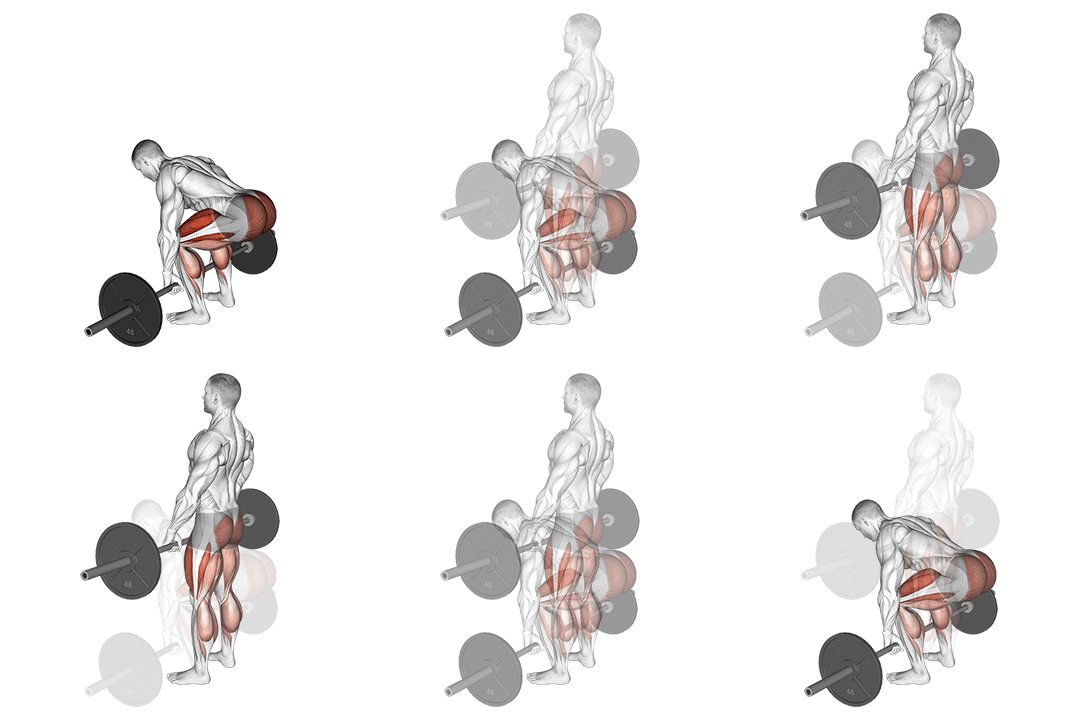
- Stand with feet hip-width apart, toes under the barbell, and shins close to the bar.
- Hinge at the hips and bend your knees to grip the barbell with hands just outside your knees.
- Keep your back straight, chest up, and shoulders back. Engage your core.
- Inhale, then drive through your heels to lift the barbell, keeping it close to your body.
- Extend your hips and knees simultaneously until you stand upright with the barbell at hip level.
- Exhale at the top, then reverse the movement by hinging at the hips and bending your knees, lowering the barbell back to the ground in a controlled manner.
Tips
- Maintain a neutral spine throughout the lift to prevent injury.
- Do not round your back; keep it straight and strong.
- Engage your core before lifting to stabilize your torso.
- Ensure the barbell stays close to your body throughout the lift.
- Start with lighter weights to master the form before progressing to heavier loads.
Where Do These Deadlift Standards Come From?
The levels on this page are the FitnessVolt strength standards model, not meet percentiles. The Deadlift in Competition section shows real raw meet percentiles from the OpenPowerlifting dataset. The Deadlift in the Gym section uses self-reported Symmetric Strength data and is kept separate. Reader-submitted benchmarks appear only after enough entries are logged for this lift.
Standards data last refreshed: June 10, 2026
- Competition data: OpenPowerlifting - open database of verified meet results from 200+ federations worldwide (data license).
- Method: FVCP methodology - how the competition percentiles and cohorts (sex, equipment, bodyweight) are computed.
- Reference: Wilks, R. (1994), and Vanderburgh & Batterham, on coefficient-based normalization of strength across bodyweight - the lineage FVCP builds on for fair cross-bodyweight comparison.
Fitness Volt Competition Percentile (FVCP), 2026. Competition percentiles from 2.5M+ verified meet results, OpenPowerlifting. Beginner to Elite levels are the FitnessVolt strength standards model. https://fitnessvolt.com/strength-standards/methodology/
Frequently Asked Questions
Related Exercise Standards
Compare Deadlift
See how Deadlift standards compare side by side with other exercises.