What is a good Leg Extension?
For a 180 lb male, an Intermediate Leg Extension is about 222 lb (1.23x bodyweight). Advanced starts around 313 lb. Enter your own bodyweight below to get the exact standard and FVCP rank.
Leg Extension Standards by Bodyweight
Estimates from the FitnessVolt standards model. Updated March 29, 2026. Find the row closest to your bodyweight. Beginner is a first target for a new lifter, Novice a few months in, Intermediate about one to two years of structured training, Advanced several years, Elite the top of the table.
| BW (lbs) | Beginner | Novice | Intermediate | Advanced | Elite |
|---|---|---|---|---|---|
| 110 | 46 | 89 | 149 | 225 | 311 |
| 120 | 52 | 98 | 161 | 239 | 328 |
| 130 | 59 | 107 | 172 | 253 | 345 |
| 140 | 65 | 115 | 183 | 266 | 360 |
| 150 | 72 | 124 | 193 | 278 | 374 |
| 160 | 78 | 132 | 203 | 290 | 388 |
| 170 | 84 | 139 | 213 | 302 | 401 |
| 180 | 89 | 147 | 222 | 313 | 414 |
| 190 | 95 | 154 | 231 | 323 | 426 |
| 200 | 101 | 161 | 239 | 333 | 437 |
| 210 | 106 | 168 | 248 | 343 | 449 |
| 220 | 111 | 175 | 256 | 353 | 459 |
| 230 | 117 | 181 | 264 | 362 | 470 |
| 240 | 122 | 187 | 271 | 371 | 480 |
| 250 | 127 | 193 | 279 | 379 | 490 |
| 260 | 132 | 199 | 286 | 388 | 499 |
| 270 | 136 | 205 | 293 | 396 | 509 |
| 280 | 141 | 211 | 300 | 404 | 518 |
| 290 | 146 | 217 | 306 | 412 | 526 |
| 300 | 150 | 222 | 313 | 419 | 535 |
| 310 | 154 | 228 | 319 | 426 | 543 |
| 90 | 26 | 57 | 102 | 160 | 227 |
| 100 | 29 | 61 | 107 | 167 | 236 |
| 110 | 32 | 65 | 113 | 173 | 244 |
| 120 | 34 | 69 | 118 | 180 | 251 |
| 130 | 37 | 72 | 122 | 185 | 258 |
| 140 | 39 | 76 | 127 | 191 | 264 |
| 150 | 42 | 79 | 131 | 196 | 270 |
| 160 | 44 | 82 | 135 | 201 | 276 |
| 170 | 46 | 85 | 139 | 205 | 281 |
| 180 | 48 | 88 | 142 | 210 | 286 |
| 190 | 50 | 91 | 146 | 214 | 291 |
| 200 | 52 | 93 | 149 | 218 | 296 |
| 210 | 54 | 96 | 152 | 222 | 300 |
| 220 | 56 | 98 | 155 | 225 | 305 |
| 230 | 58 | 101 | 158 | 229 | 309 |
| 240 | 59 | 103 | 161 | 232 | 313 |
| 250 | 61 | 105 | 164 | 236 | 317 |
| 260 | 63 | 107 | 167 | 239 | 320 |
The Leg Extension standard at each level as bodyweight rises, for the sex selected above. Exact numbers in the table above.
Leg Extension Standards by Age
How the Leg Extension standards change with age, as a 1RM in lb. This table is not tied to one bodyweight, so read it for the trend and use the bodyweight table above for your own number.
| Age | Beginner | Novice | Intermediate | Advanced | Elite |
|---|---|---|---|---|---|
| 15 | 66 | 115 | 180 | 260 | 350 |
| 20 | 76 | 132 | 206 | 298 | 401 |
| 25 | 78 | 135 | 212 | 306 | 411 |
| 30 | 78 | 135 | 212 | 306 | 411 |
| 35 | 78 | 135 | 212 | 306 | 411 |
| 40 | 78 | 135 | 212 | 306 | 411 |
| 45 | 74 | 128 | 201 | 290 | 390 |
| 50 | 69 | 120 | 189 | 272 | 366 |
| 55 | 64 | 111 | 174 | 252 | 339 |
| 60 | 59 | 102 | 159 | 230 | 309 |
| 65 | 53 | 92 | 144 | 208 | 279 |
| 70 | 48 | 82 | 129 | 186 | 251 |
| 75 | 43 | 74 | 115 | 167 | 224 |
| 80 | 38 | 66 | 103 | 149 | 200 |
| 85 | 34 | 59 | 93 | 133 | 180 |
| 90 | 31 | 53 | 83 | 120 | 162 |
| 15 | 33 | 65 | 109 | 165 | 229 |
| 20 | 38 | 74 | 125 | 188 | 262 |
| 25 | 39 | 76 | 128 | 193 | 268 |
| 30 | 39 | 76 | 128 | 193 | 268 |
| 35 | 39 | 76 | 128 | 193 | 268 |
| 40 | 39 | 76 | 128 | 193 | 268 |
| 45 | 37 | 72 | 121 | 183 | 255 |
| 50 | 35 | 68 | 114 | 172 | 239 |
| 55 | 32 | 63 | 105 | 159 | 221 |
| 60 | 29 | 57 | 96 | 145 | 202 |
| 65 | 26 | 52 | 87 | 131 | 182 |
| 70 | 24 | 46 | 78 | 118 | 164 |
| 75 | 21 | 41 | 70 | 105 | 146 |
| 80 | 19 | 37 | 62 | 94 | 131 |
| 85 | 17 | 33 | 56 | 84 | 117 |
| 90 | 15 | 30 | 50 | 76 | 106 |
The Leg Extension standard at each level as age rises, for the sex selected above. Exact numbers in the table above.
Check Your Leg Extension Level
Over 40? Add your age and the calculator also shows an age-adjusted level and an age-30 equivalent, using the McCulloch age factor to scale your lift to peak age. Every age band is in the standards by age table above.
What the Leg Extension Strength Levels Mean
You are learning to isolate the target muscle during the Leg Extension, focusing on controlled movement through the full range of motion without compensating with momentum.
You can execute the Leg Extension with consistent form and a strong mind-muscle connection. You are adding resistance progressively and building the joint stability needed for heavier loads.
Your Leg Extension shows solid control through the full range. You use tempo manipulation and RPE to drive adaptation, and this movement plays a defined role in your leg training program.
You have developed significant strength on the Leg Extension through years of targeted training. You program it strategically alongside compound movements for complete lower body development.
Your Leg Extension strength is exceptional for an isolation movement. You have maximized the development of the target muscle through precise loading and years of consistent training.
How to Progress Your Leg Extension
Tier-specific training recommendations to move your Leg Extension to the next level.
- Train the Leg Extension 2x per week with controlled tempo (3 seconds up, 3 seconds down).
- Focus on full range of motion before adding resistance.
- Keep sets at RPE 6-7 to build joint resilience and movement quality.
- Use this exercise to develop the mind-muscle connection with the target muscle.
- Progressively increase load while maintaining strict form on the Leg Extension.
- Program 3-4 sets of 8-15 reps at RPE 7-8.
- Place isolation work after compound movements in your training sessions.
- Use tempo variations to increase time under tension without adding weight.
- Use drop sets, rest-pause, and mechanical advantage sets to push past plateaus on the Leg Extension.
- Program the movement at RPE 8-9 with a focus on peak contraction.
- Pair with compound movements for pre-exhaust or post-exhaust protocols.
- Manage isolation volume carefully - target 8-12 hard sets per muscle group per week.
- Maximize Leg Extension performance through precise load selection and fatigue management.
- Use periodized training blocks even for isolation movements.
- Focus on the quality of each rep rather than chasing heavier loads.
- Your development at this level requires advanced programming and recovery management.
How to Perform Leg Extension
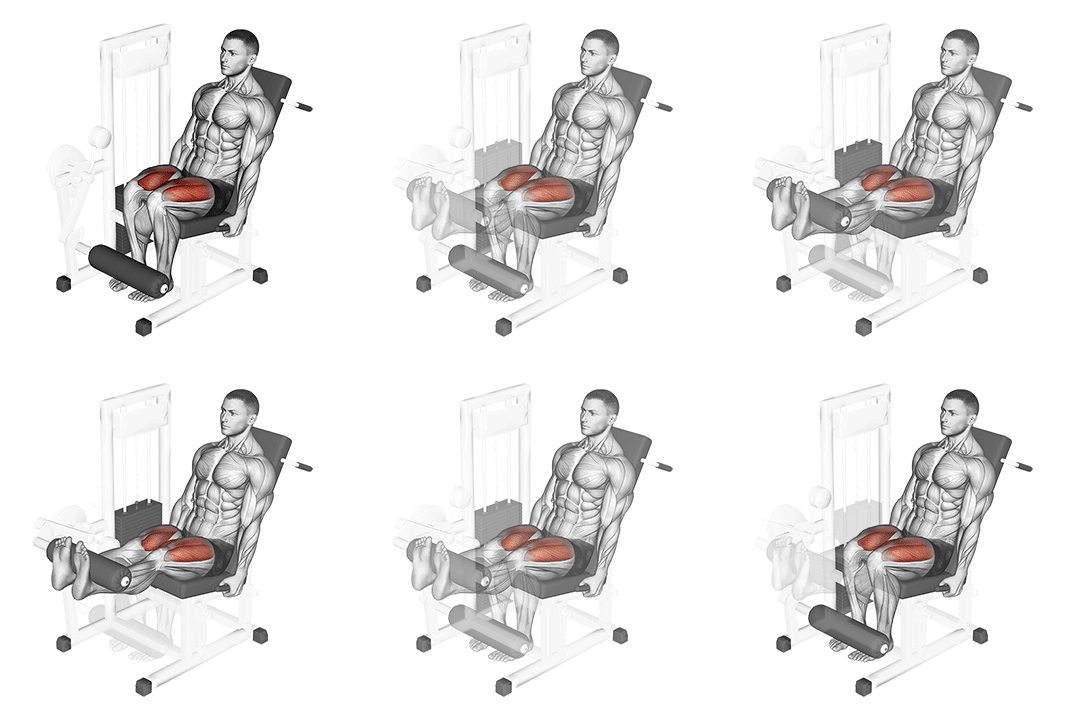
- Adjust the leg extension machine to fit your body. Sit on the machine with your back against the pad.
- Place your feet under the padded lever, with your knees bent at a 90-degree angle.
- Grip the side handles for stability.
- Exhale and extend your legs fully by straightening your knees, engaging your quadriceps.
- Hold the extended position briefly, ensuring your knees do not lock.
- Inhale and slowly lower the weight back to the starting position, maintaining control.
- Repeat for the desired number of reps.
Tips
- Ensure the machine is properly adjusted to your body size to avoid knee strain.
- Focus on a slow, controlled movement to maximize muscle engagement.
- Avoid locking your knees at the top of the movement to prevent joint strain.
- Keep your back firmly against the pad to maintain proper posture.
Where Do These Leg Extension Standards Come From?
The levels on this page are estimates from the FitnessVolt strength standards model. The Leg Extension table is an editorial FitnessVolt table, not a measured population. There is no competition or gym dataset for the Leg Extension itself. Reader-submitted benchmarks appear only after enough entries are logged for this lift.
Standards data last refreshed: March 29, 2026
- Level tables: the FitnessVolt strength standards model, not meet data.
- Method: Strength standards methodology - how the level tables are built and where each data source on the site comes from.
Fitness Volt strength standards model, 2026. Beginner to Elite levels are model values, not competition percentiles. https://fitnessvolt.com/strength-standards/methodology/
Frequently Asked Questions
Related Exercise Standards