

10 Best Band Shrug Alternatives for Strength & Size
If you can’t do the Band Shrug, use dumbbell shrugs, barbell shrugs, cable shrugs, face pulls, or farmer carries to target the traps. For pure scapular elevation go with a loaded shrug (keep arms straight and lift the scapula toward the ears); for scapular control pick face pulls to emphasize mid-trap activation.
Original Exercise: Band Shrug
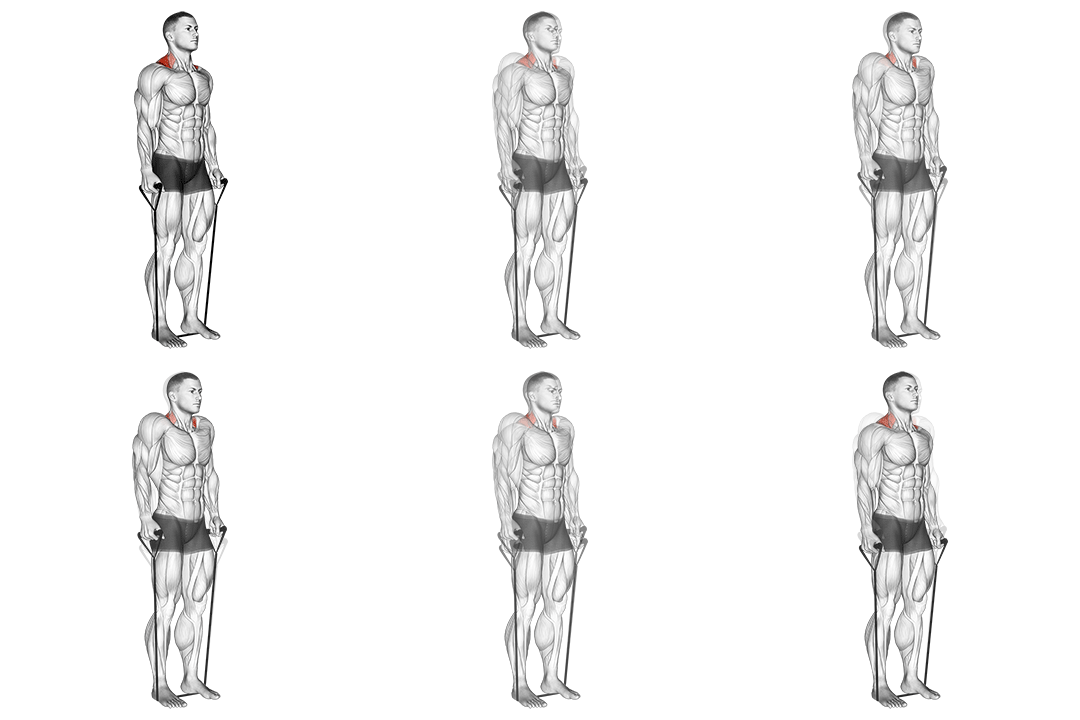
How to Perform Band Shrug
- Stand with your feet shoulder-width apart and place the band under your feet, holding the ends with your hands.
- Keep your arms straight and relaxed, and let the band hang in front of your thighs.
- Engage your traps by shrugging your shoulders upward, lifting the band as high as possible.
- Hold the contraction for a moment, then slowly lower your shoulders back down to the starting position.
- Repeat for the desired number of repetitions.
Ranked Band Shrug Alternatives
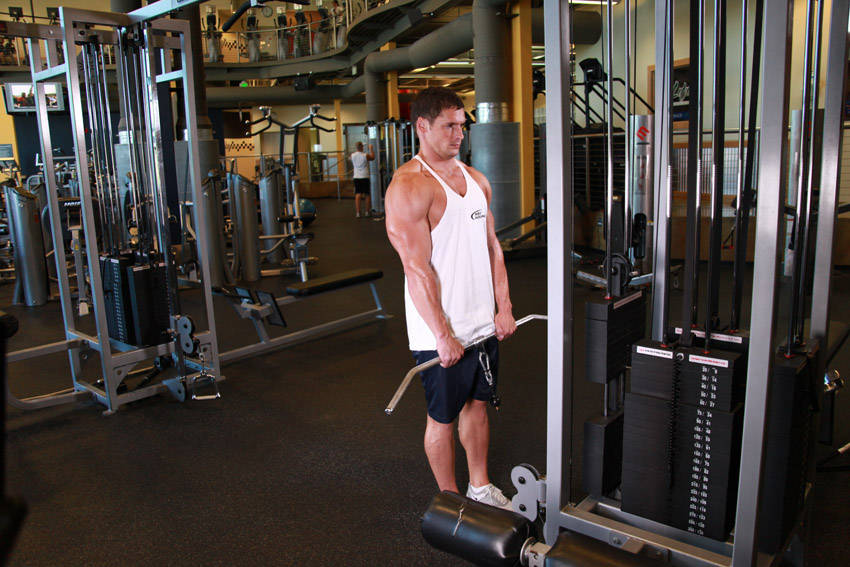
1. Cable Shrugs
84.4% MatchHow to perform this exercise
- Grasp a cable bar attachment that is attached to a low pulley with a shoulder width or slightly wider overhand (palms facing down) grip.
- Stand erect close to the pulley with your arms extended in front of you holding the bar. This will be your starting position.
- Lift the bar by elevating the shoulders as high as possible as you exhale. Hold the contraction at the top for a second. Tip: The arms should remain extended at all times. Refrain from using the biceps to help lift the bar. Only the shoulders should be moving up and down.
- Lower the bar back to the original position.
- Repeat for the recommended amount of repetitions.
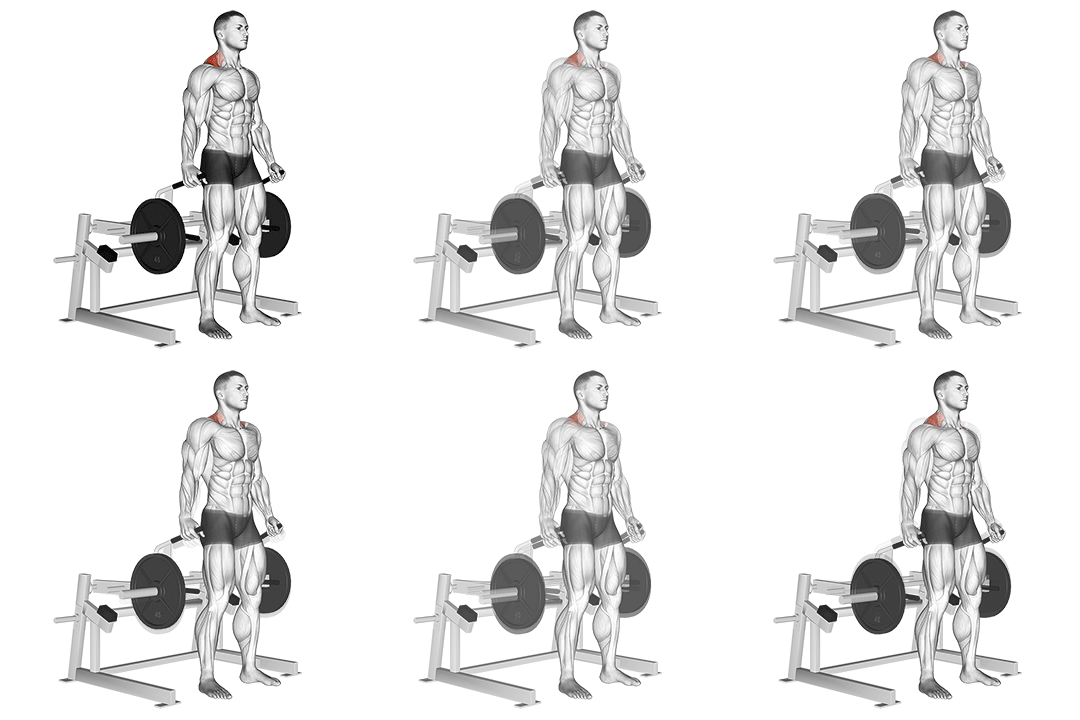
2. Lever Shrug
83.9% MatchHow to perform this exercise
- Adjust the seat height and position yourself on the leverage machine with your back against the pad.
- Grasp the handles with an overhand grip and keep your arms straight.
- Keeping your back straight, lift your shoulders up towards your ears as high as possible.
- Hold the contraction for a moment, then slowly lower your shoulders back down to the starting position.
- Repeat for the desired number of repetitions.
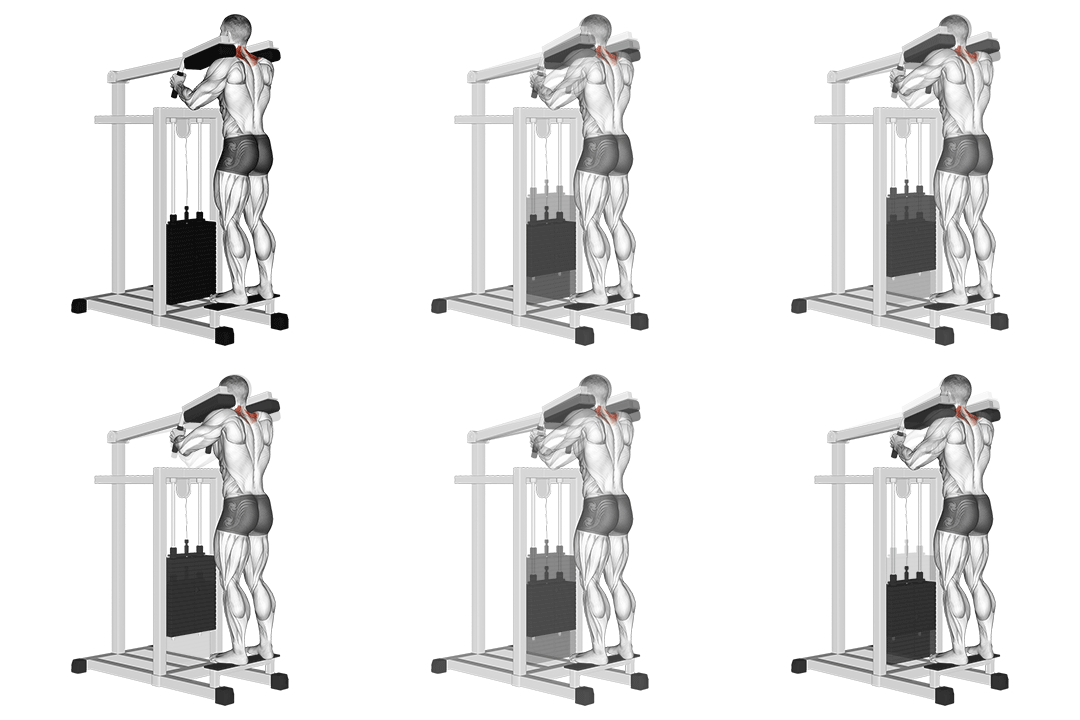
3. Lever Gripless Shrug V. 2
80.4% MatchHow to perform this exercise
- Adjust the seat height and position yourself on the machine with your back against the pad.
- Grasp the handles or bars with an overhand grip, keeping your arms straight.
- Keeping your back straight, lift your shoulders up towards your ears as high as possible.
- Hold the contraction for a moment, then slowly lower your shoulders back down to the starting position.
- Repeat for the desired number of repetitions.
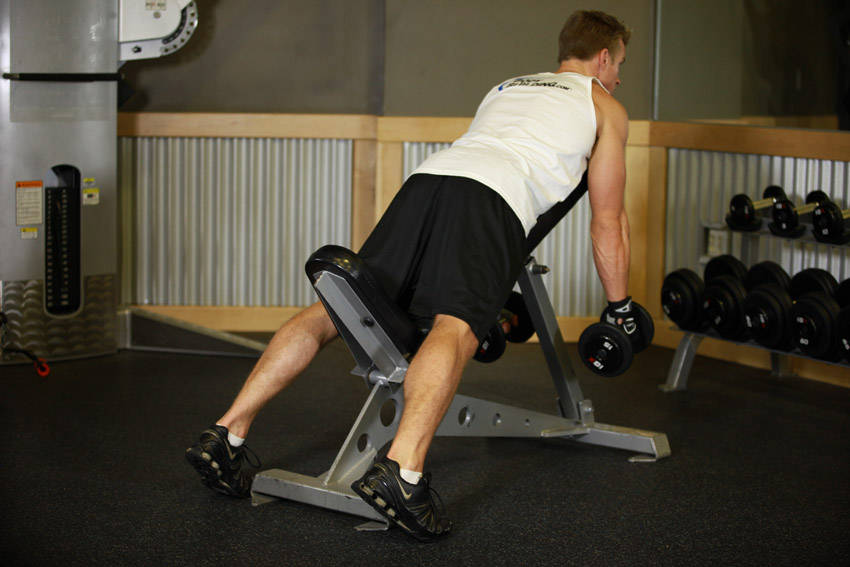
4. Middle Back Shrug
71% MatchHow to perform this exercise
- Lie facedown on an incline bench while holding a dumbbell in each hand. Your arms should be fully extended hanging down and pointing towards the floor. The palms of your hands should be facing each other. This will be your starting position.
- As you exhale, squeeze your shoulder blades together and hold the contraction for a full second. Tip: This movement is just like the reverse action of a hug, or trying to perform rear laterals as if you had no arms.
- As you inhale go back to the starting position.
- Repeat for the recommended amount of repetitions.
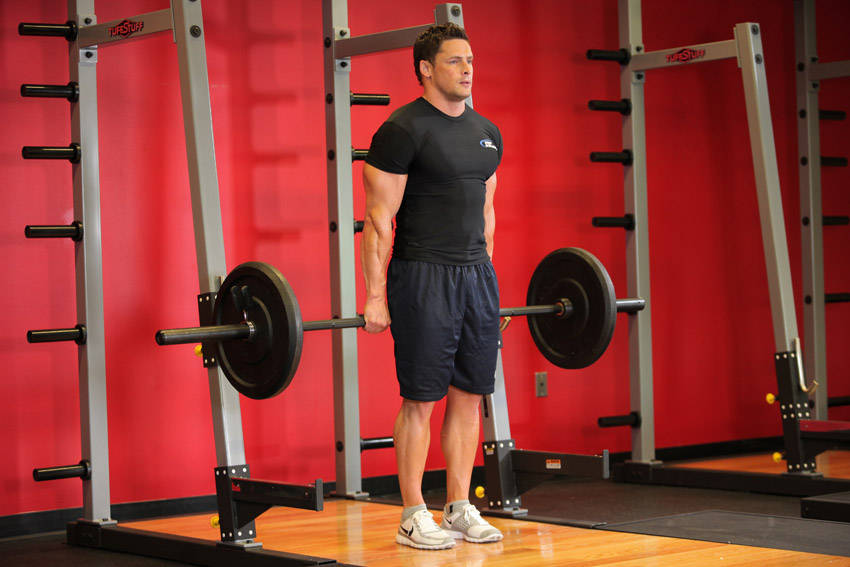
5. Barbell Shrug Behind The Back
69.4% MatchHow to perform this exercise
- Stand up straight with your feet at shoulder width as you hold a barbell with both hands behind your back using a pronated grip (palms facing back). Tip: Your hands should be a little wider than shoulder width apart. You can use wrist wraps for this exercise for better grip. This will be your starting position.
- Raise your shoulders up as far as you can go as you breathe out and hold the contraction for a second. Tip: Refrain from trying to lift the barbell by using your biceps. The arms should remain stretched out at all times.
- Slowly return to the starting position as you breathe in.
- Repeat for the recommended amount of repetitions.
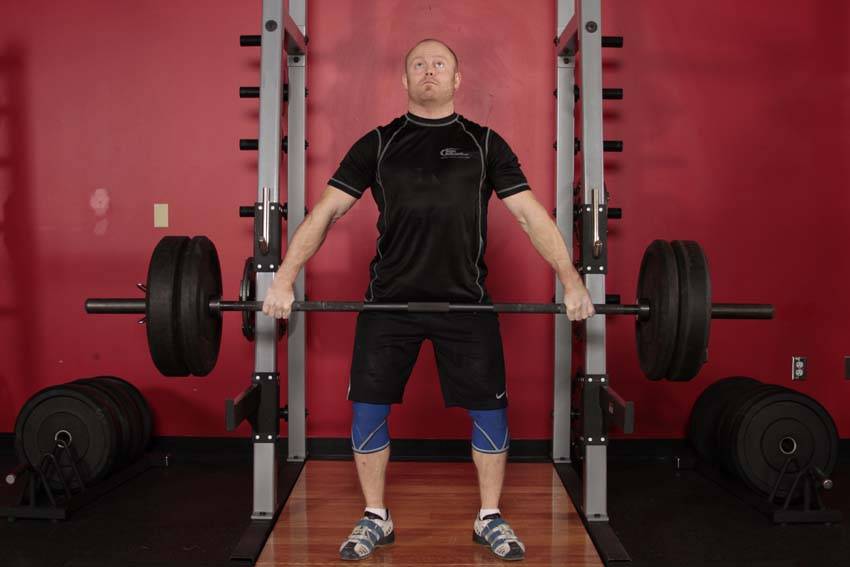
6. Snatch Shrug
69.4% MatchHow to perform this exercise
- Begin with a wide grip, with the bar hanging at the mid thigh position. You can use a hook or overhand grip. Your back should be straight and inclined slightly forward.
- Shrug your shoulders towards your ears. While this exercise can usually by loaded with heavier weight than a snatch, avoid overloading to the point that the execution slows down.
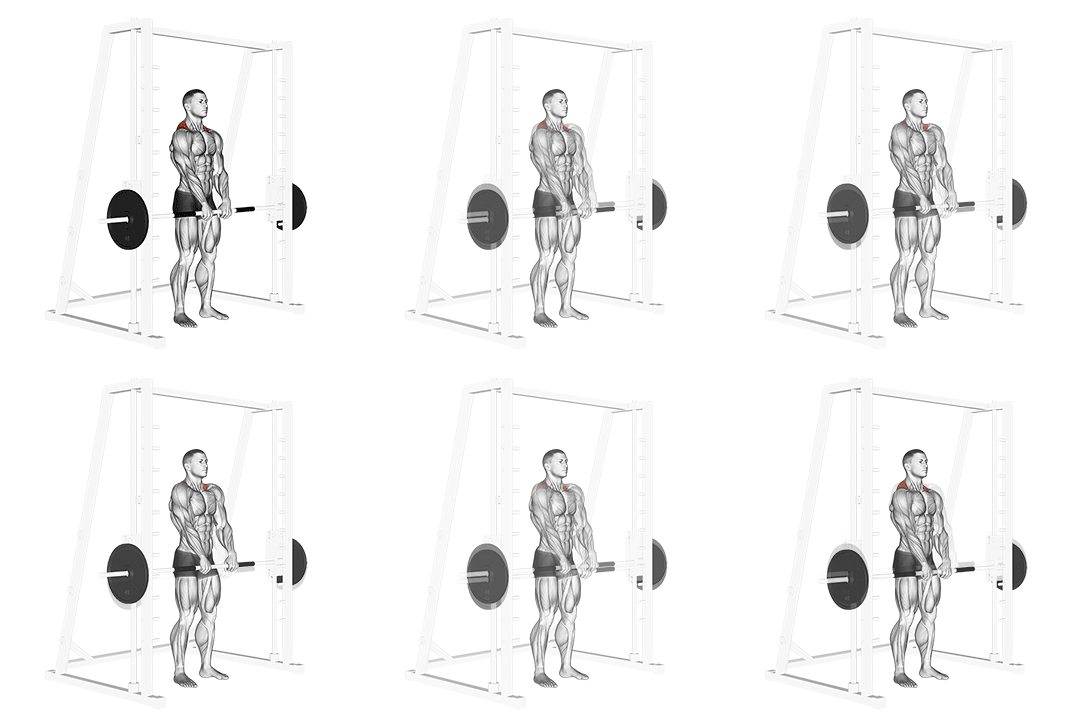
7. Smith Shrug
67.1% MatchHow to perform this exercise
- Stand with your feet shoulder-width apart and your knees slightly bent.
- Grasp the barbell with an overhand grip, hands slightly wider than shoulder-width apart.
- Keep your arms straight and your shoulders relaxed.
- Lift your shoulders up towards your ears, squeezing your traps at the top.
- Hold for a moment, then slowly lower your shoulders back down to the starting position.
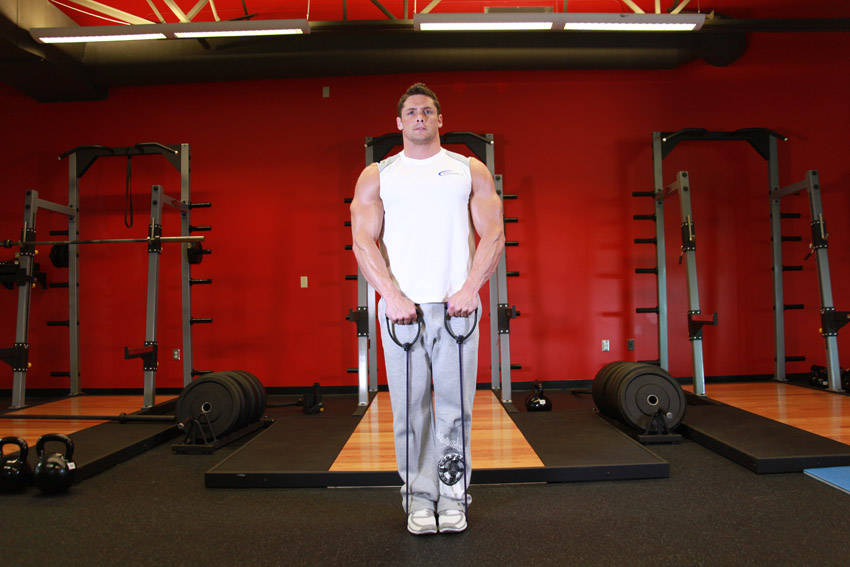
8. Upright Row - With Bands
66.4% MatchHow to perform this exercise
- To begin, stand on an exercise band so that tension begins at arm's length. Grasp the handles using a pronated (palms facing your thighs) grip that is slightly less than shoulder width. The handles should be resting on top of your thighs. Your arms should be extended with a slight bend at the elbows and your back should be straight. This will be your starting position.
- Use your side shoulders to lift the handles as you exhale. The handles should be close to the body as you move them up. Continue to lift the handles until they nearly touches your chin. Tip: Your elbows should drive the motion. As you lift the handles, your elbows should always be higher than your forearms. Also, keep your torso stationary and pause for a second at the top of the movement.
- Lower the handles back down slowly to the starting position. Inhale as you perform this portion of the movement.
- Repeat for the recommended amount of repetitions.
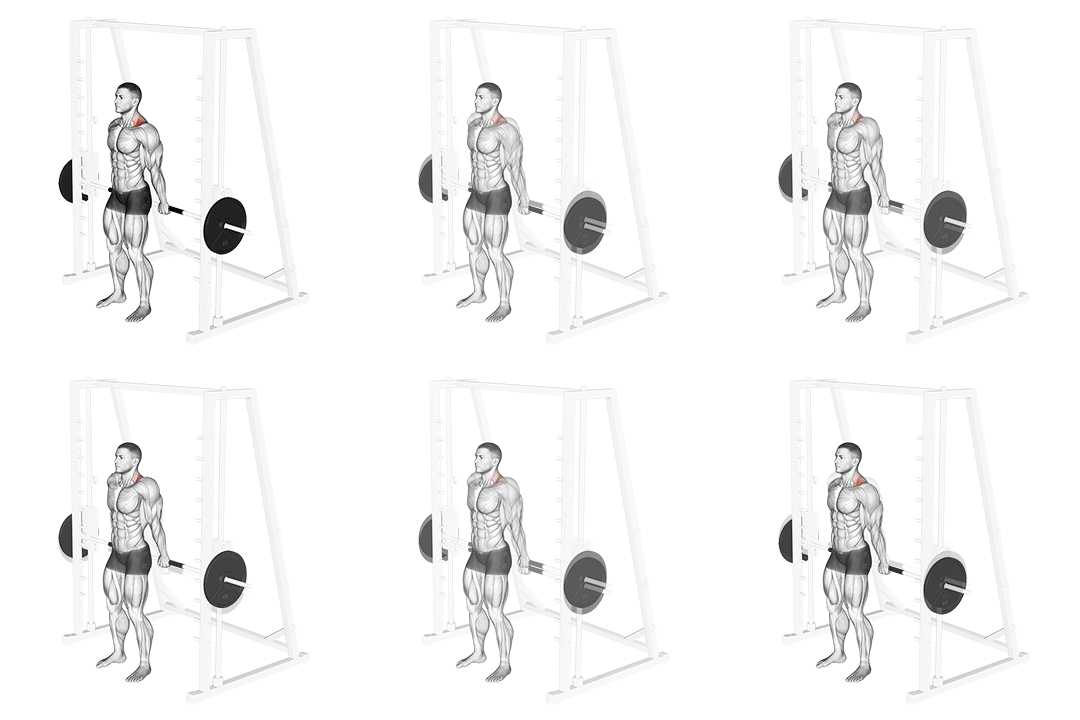
9. Smith Back Shrug
64.4% MatchHow to perform this exercise
- Stand with your feet shoulder-width apart and your knees slightly bent.
- Grasp the barbell with an overhand grip, hands slightly wider than shoulder-width apart.
- Keep your arms straight and allow the barbell to hang in front of your thighs.
- Lift your shoulders straight up towards your ears, squeezing your traps at the top.
- Hold for a moment, then lower your shoulders back down to the starting position.
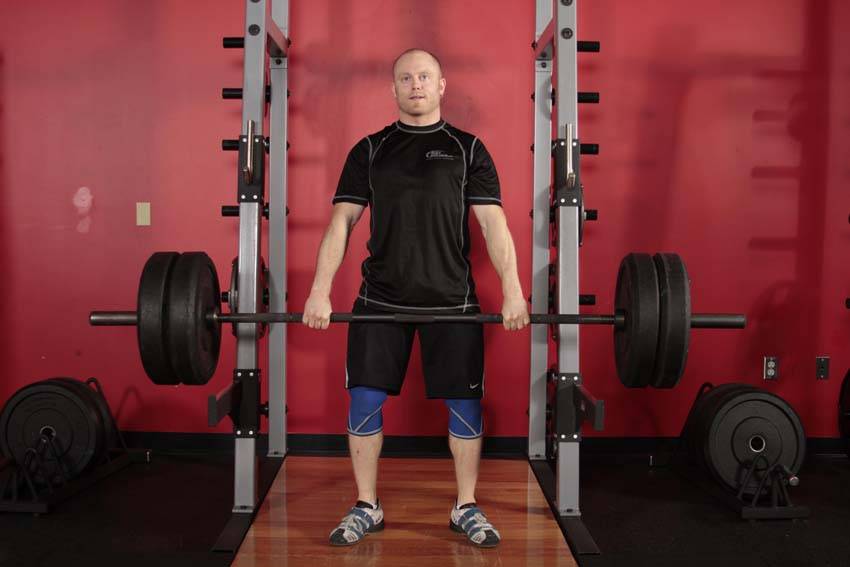
10. Clean Shrug
63.9% MatchHow to perform this exercise
- Begin with a shoulder width, double overhand or hook grip, with the bar hanging at the mid thigh position. Your back should be straight and inclined slightly forward.
- Shrug your shoulders towards your ears. While this exercise can usually by loaded with heavier weight than a clean, avoid overloading to the point that the execution slows down.
Why You Might Need a Band Shrug Alternative
You might substitute Band Shrugs for several practical reasons: limited band tension, shoulder or neck irritation from band angles, or a need for different loading curves to progress hypertrophy. Bands provide variable resistance that shifts peak tension; free weights and cables deliver consistent axial or linear load, changing muscle activation. For example, dumbbell or barbell shrugs increase peak load on the upper trapezius through heavier constant resistance, while face pulls shift emphasis to scapular retraction and mid/lower trap fibers. Choose a substitute when you need greater overload, improved scapular mechanics, or reduced neck extension, cue: maintain neutral cervical alignment and drive scapulae upward without shrugging the ribs.
How to Choose the Right Substitute
Match the substitute to your training goal, equipment, and joint tolerance. If you want maximal hypertrophy, pick a heavy shrug (dumbbell or barbell) and use 6–12 reps while cueing full scapular elevation and controlled eccentrics. If posture and scapular control are the goal, choose face pulls or cable shrugs and emphasize scapular retraction and rotation. For limited equipment or shoulder pain, use farmer carries or hanging scapular shrugs to load the traps functionally, stand tall, retract scapulae, and avoid neck extension. Also consider grip strength and progressive overload, if you can’t increase band tension, switch to a load that lets you add weight or reps consistently.
Frequently Asked Questions
What muscles does Band Shrug work?
Band Shrugs primarily target the upper trapezius via scapular elevation. They also recruit the levator scapulae and upper rhomboids to a lesser degree, plus the forearms for grip; cue: elevate the scapula toward the ears while keeping the neck neutral to maximize upper-trap activation.
What is the best bodyweight alternative to Band Shrug?
A hanging scapular shrug (scapular pull) is the best bodyweight substitute: hang from a bar with straight arms and elevate the shoulders without bending the elbows, hold briefly, then lower under control. This isolates scapular elevation and reproduces the trap contraction without external load.
Can I build muscle without doing Band Shrug?
Yes. You can build the traps with other movements that produce high mechanical tension and repetition volume, dumbbell/barbell shrugs, cables, heavy carries, and face pulls all work. Prioritize progressive overload and cue full scapular elevation or targeted retraction depending on the exercise to drive hypertrophy.
More Exercise Alternatives
Find Alternatives for Any Exercise
Use the exercise substitution finder to compare ranked alternatives for your available equipment and training preference.
Try the Exercise Substitution Finder →