

10 Best Cable High Row (Kneeling) Alternatives for Limited Equipment
If you can’t perform the kneeling cable high row, use standing cable high rows, single-arm dumbbell high rows, face pulls, inverted rows with feet elevated, or bent-over high rows. Cue: pull with elbows high and retract the scapula to emphasize upper-trap activation and minimize lat-dominant compensation.
Original Exercise: Cable High Row (Kneeling)
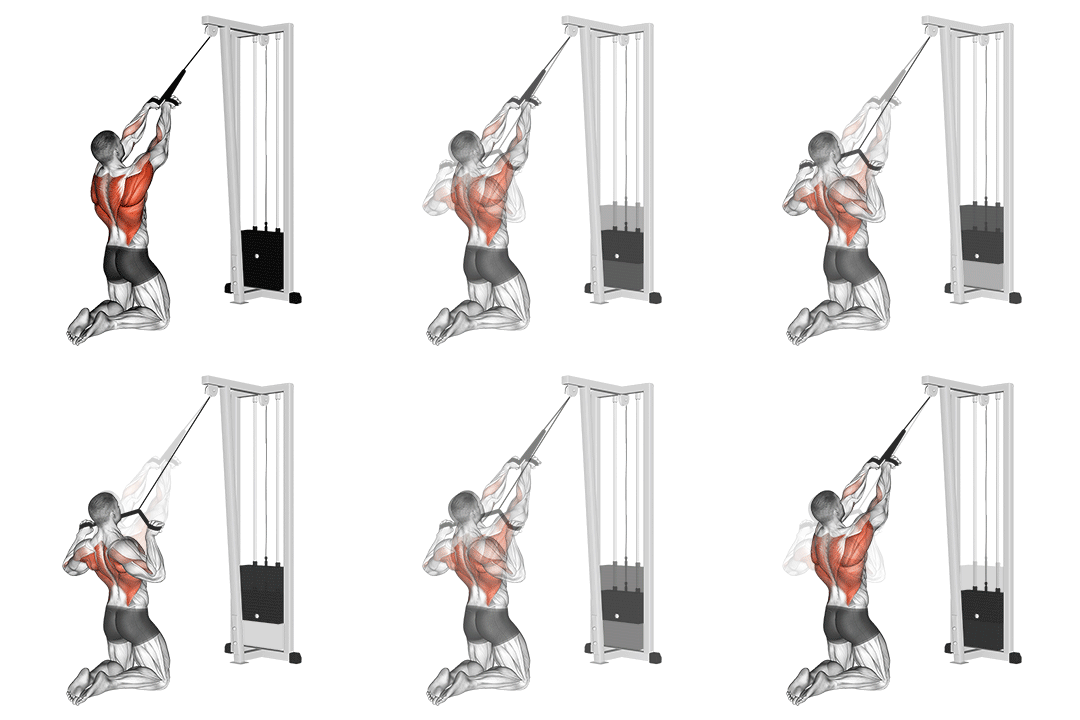
How to Perform Cable High Row (Kneeling)
- Attach a straight bar to a cable machine at chest height.
- Kneel down in front of the cable machine and grab the bar with an overhand grip, hands shoulder-width apart.
- Sit back on your heels, keeping your back straight and your core engaged.
- Pull the bar towards your upper abdomen, squeezing your shoulder blades together.
- Pause for a moment at the top of the movement, then slowly release the bar back to the starting position.
- Repeat for the desired number of repetitions.
Ranked Cable High Row (Kneeling) Alternatives
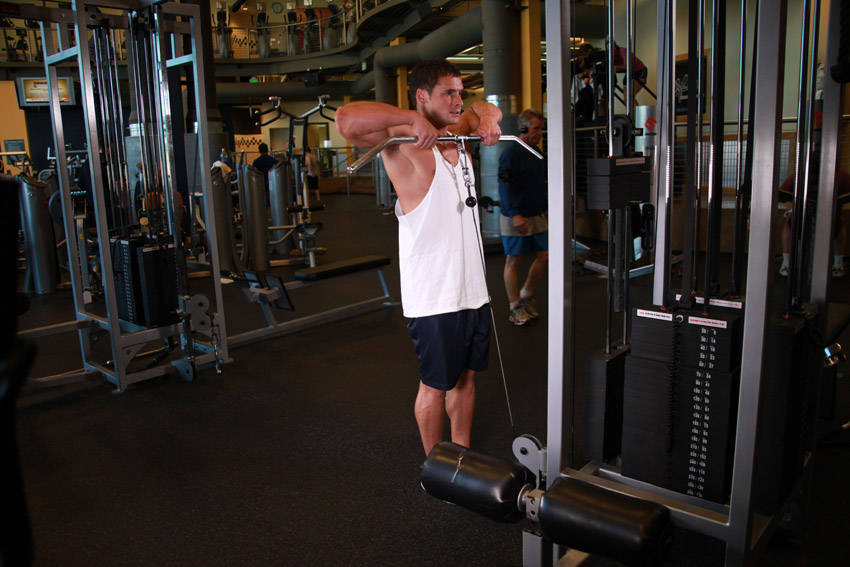
1. Upright Cable Row
82.4% MatchHow to perform this exercise
- Grasp a straight bar cable attachment that is attached to a low pulley with a pronated (palms facing your thighs) grip that is slightly less than shoulder width. The bar should be resting on top of your thighs. Your arms should be extended with a slight bend at the elbows and your back should be straight. This will be your starting position.
- Use your side shoulders to lift the cable bar as you exhale. The bar should be close to the body as you move it up. Continue to lift it until it nearly touches your chin. Tip: Your elbows should drive the motion. As you lift the bar, your elbows should always be higher than your forearms. Also, keep your torso stationary and pause for a second at the top of the movement.
- Lower the bar back down slowly to the starting position. Inhale as you perform this portion of the movement.
- Repeat for the recommended amount of repetitions.
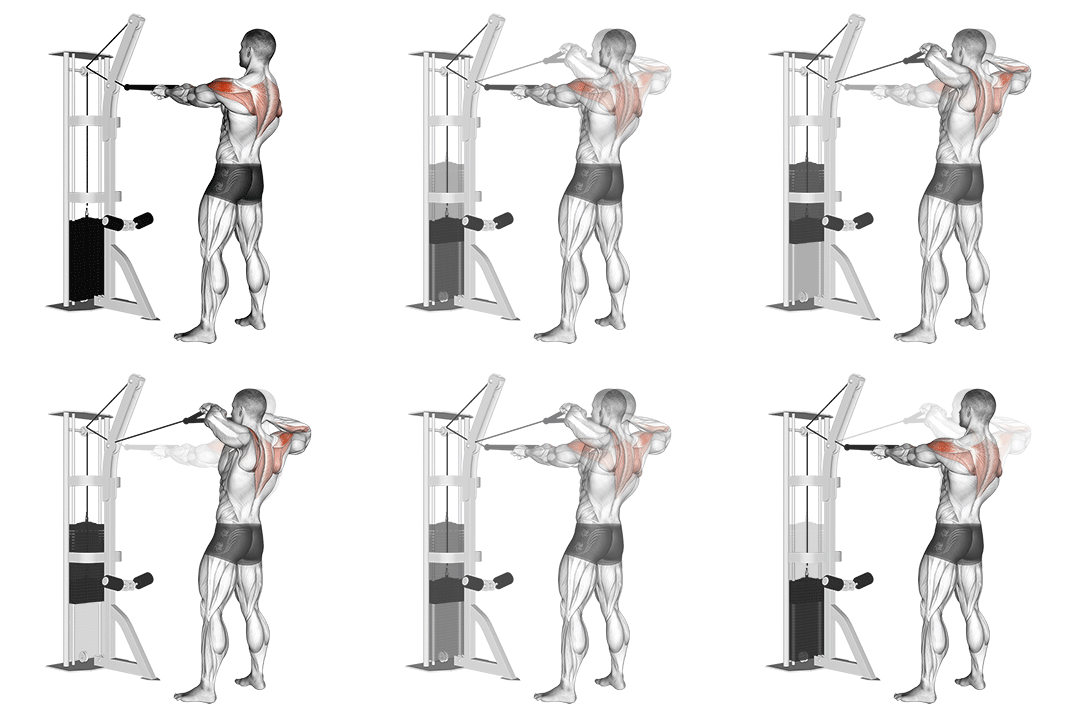
2. Cable Standing Rear Delt Row (with Rope)
77% MatchHow to perform this exercise
- Stand facing a cable machine with your feet shoulder-width apart.
- Hold the cable attachment with both hands, palms facing each other, and step back to create tension in the cable.
- Keep your back straight and your core engaged.
- Pull the cable towards your body, squeezing your shoulder blades together.
- Pause for a moment at the peak of the movement, then slowly release the cable back to the starting position.
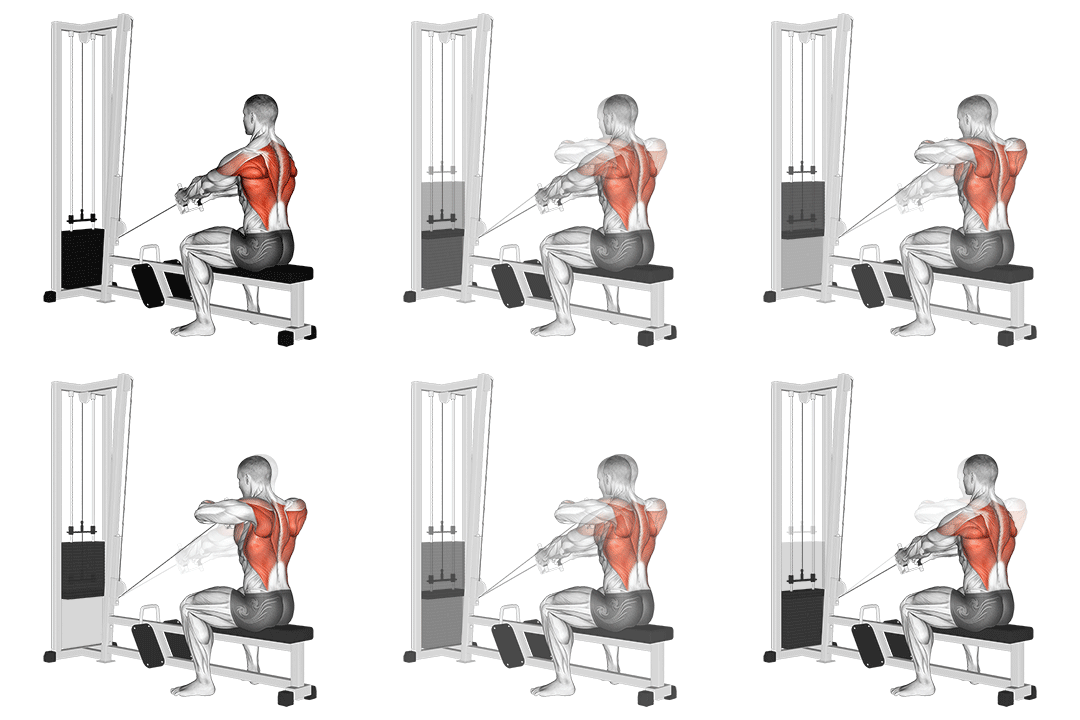
3. Cable Upper Row
70.7% MatchHow to perform this exercise
- Attach a straight bar to a cable machine at chest height.
- Stand facing the machine with your feet shoulder-width apart.
- Grasp the bar with an overhand grip, hands slightly wider than shoulder-width apart.
- Keep your back straight and your core engaged.
- Pull the bar towards your upper chest, squeezing your shoulder blades together.
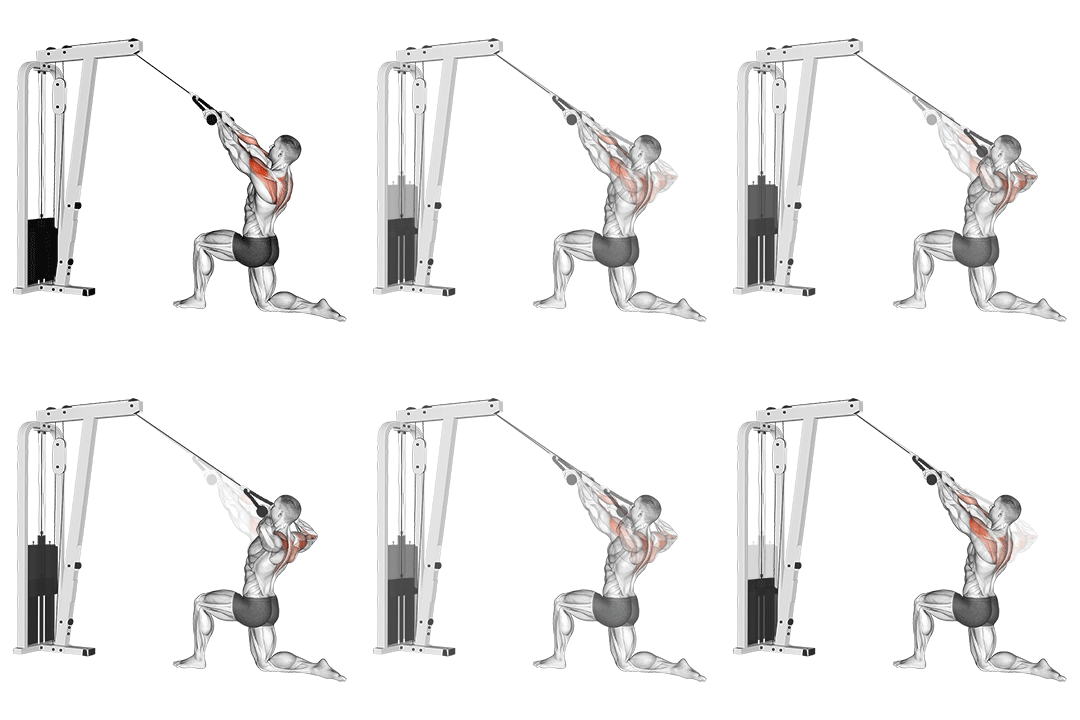
4. Cable Kneeling Rear Delt Row (with Rope) (male)
70% MatchHow to perform this exercise
- Attach a rope handle to a low cable pulley and kneel down facing the machine.
- Grasp the rope with a neutral grip (palms facing each other) and extend your arms fully in front of you.
- Keeping your back straight and core engaged, pull the rope towards your body by retracting your shoulder blades.
- Squeeze your shoulder blades together at the end of the movement and hold for a brief pause.
- Slowly release the tension and return to the starting position.
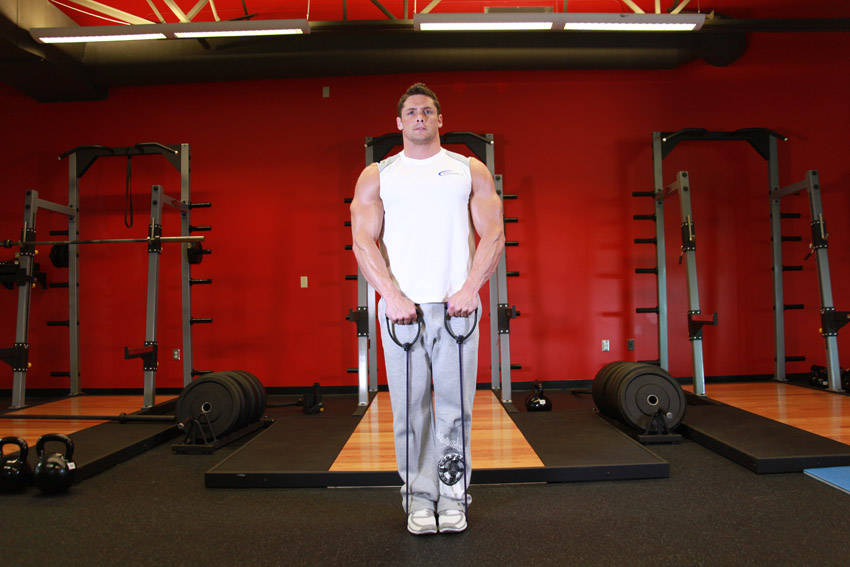
5. Upright Row - With Bands
67.7% MatchHow to perform this exercise
- To begin, stand on an exercise band so that tension begins at arm's length. Grasp the handles using a pronated (palms facing your thighs) grip that is slightly less than shoulder width. The handles should be resting on top of your thighs. Your arms should be extended with a slight bend at the elbows and your back should be straight. This will be your starting position.
- Use your side shoulders to lift the handles as you exhale. The handles should be close to the body as you move them up. Continue to lift the handles until they nearly touches your chin. Tip: Your elbows should drive the motion. As you lift the handles, your elbows should always be higher than your forearms. Also, keep your torso stationary and pause for a second at the top of the movement.
- Lower the handles back down slowly to the starting position. Inhale as you perform this portion of the movement.
- Repeat for the recommended amount of repetitions.
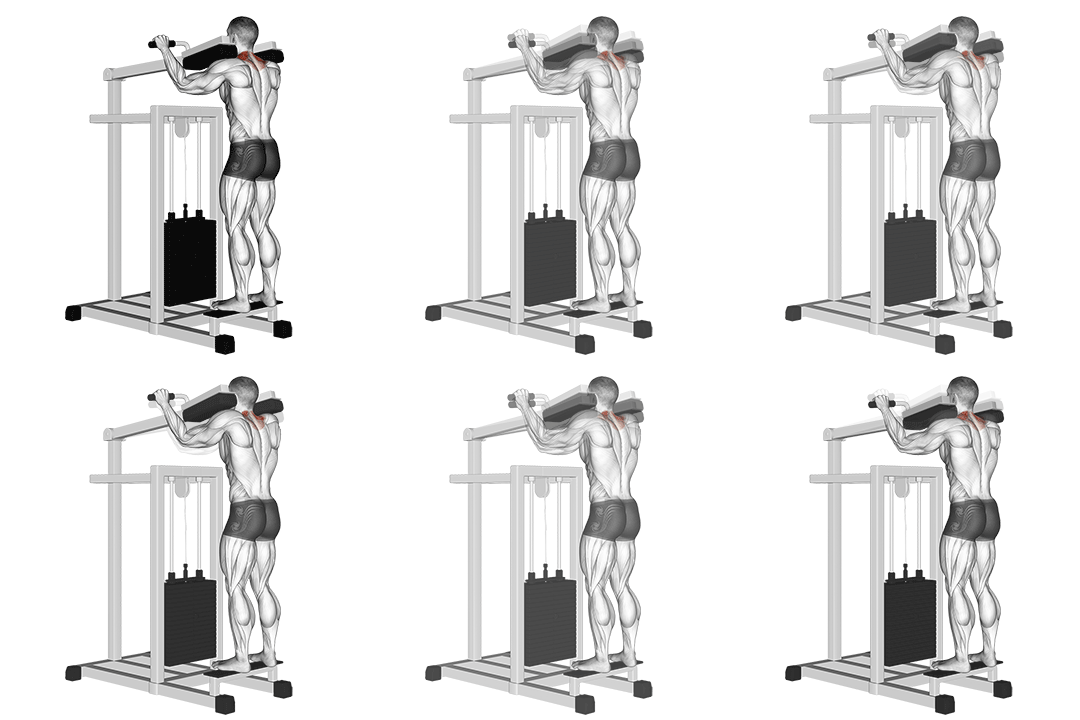
6. Lever Gripless Shrug
66.1% MatchHow to perform this exercise
- Adjust the seat height and position yourself on the leverage machine.
- Grasp the handles with your palms facing inwards and your arms fully extended.
- Keeping your back straight, exhale and elevate your shoulders as high as possible.
- Hold the contraction for a brief moment, then inhale and slowly lower your shoulders back down to the starting position.
- Repeat for the desired number of repetitions.
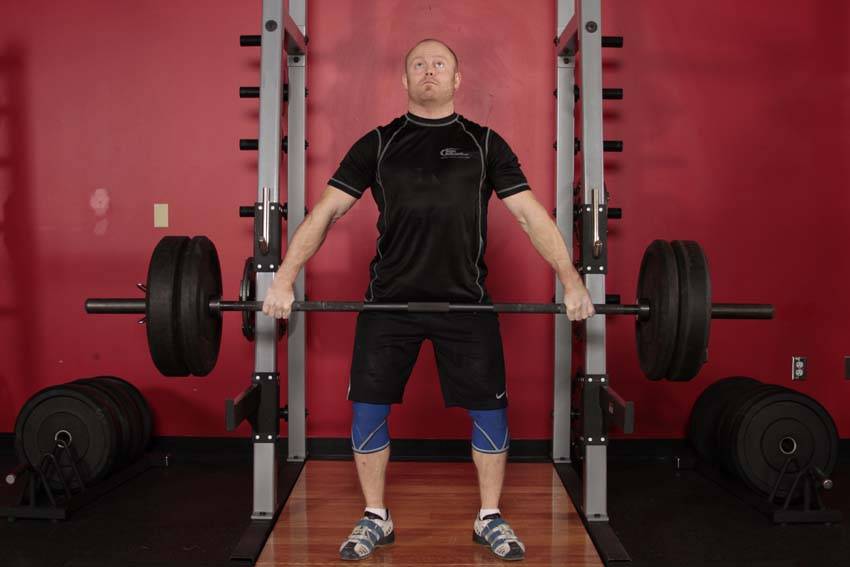
7. Snatch Shrug
62.7% MatchHow to perform this exercise
- Begin with a wide grip, with the bar hanging at the mid thigh position. You can use a hook or overhand grip. Your back should be straight and inclined slightly forward.
- Shrug your shoulders towards your ears. While this exercise can usually by loaded with heavier weight than a snatch, avoid overloading to the point that the execution slows down.
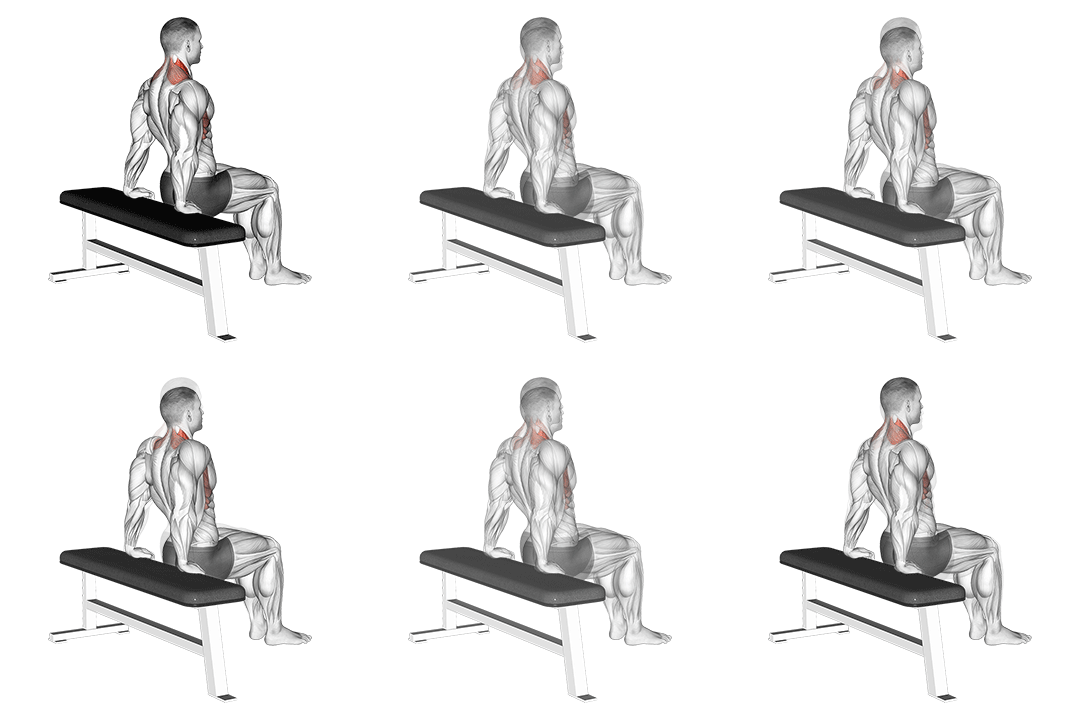
8. Scapula Dips
62.4% MatchHow to perform this exercise
- Start by standing with your feet shoulder-width apart and your arms extended in front of you.
- Bend your knees slightly and hinge forward at the hips, keeping your back straight.
- Lower your body by bending your elbows and retracting your shoulder blades, as if you are trying to squeeze a pencil between them.
- Pause for a moment at the bottom, then push through your hands to extend your elbows and return to the starting position.
- Repeat for the desired number of repetitions.
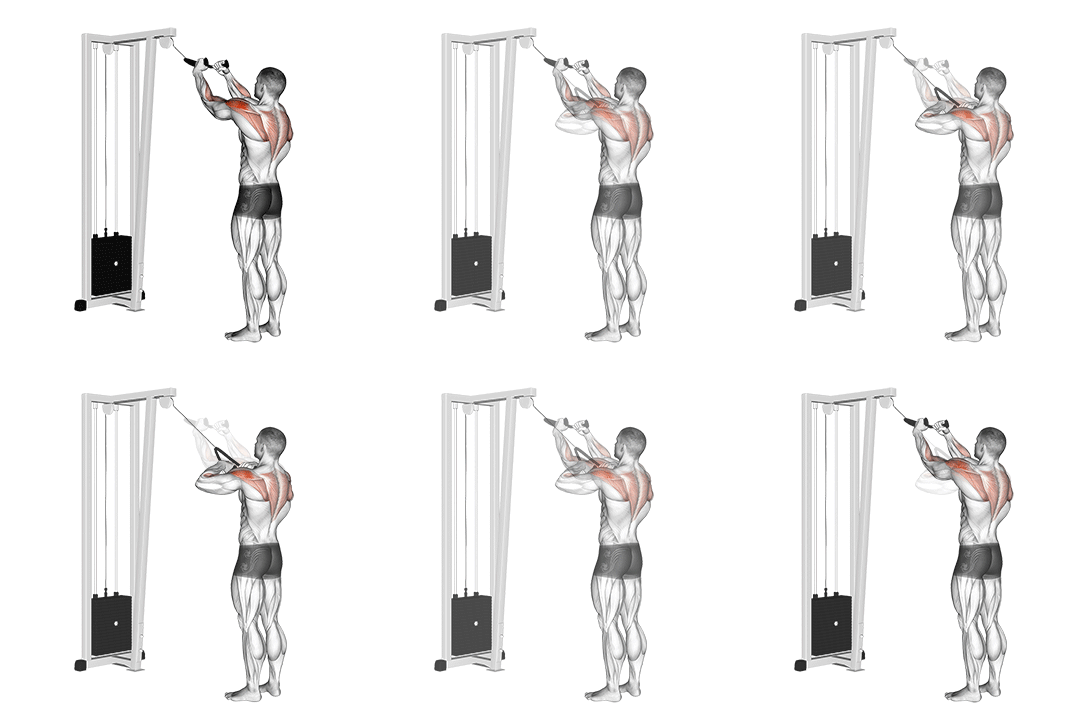
9. Cable Rear Delt Row (with Rope)
62% MatchHow to perform this exercise
- Attach a rope handle to a low pulley cable machine.
- Stand facing the machine with your feet shoulder-width apart.
- Grasp the rope handle with an overhand grip, palms facing each other.
- Bend your knees slightly and hinge forward at the hips, keeping your back straight.
- Keep your elbows slightly bent and pull the rope towards your chest, squeezing your shoulder blades together.
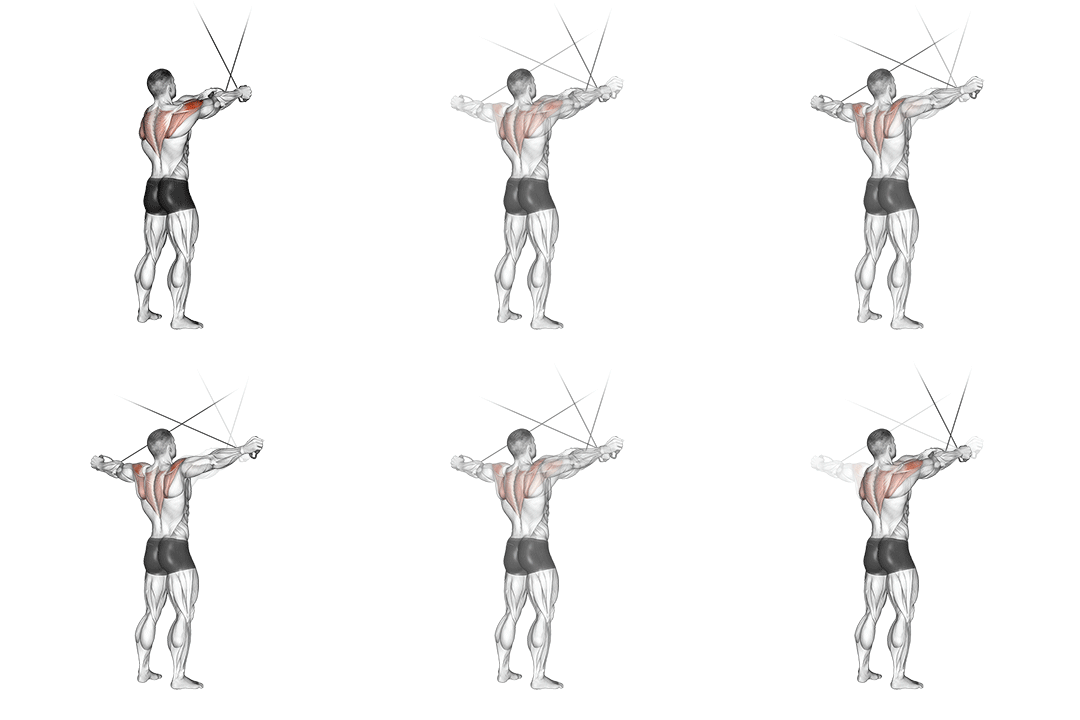
10. Cable Standing Cross-over High Reverse Fly
62% MatchHow to perform this exercise
- Attach a D-handle to each side of a cable machine at shoulder height.
- Stand in the middle of the cable machine with your feet shoulder-width apart.
- Grasp the handles with an overhand grip and extend your arms out to the sides, palms facing forward.
- Keep a slight bend in your elbows and maintain a straight back throughout the exercise.
- Engage your shoulder muscles and squeeze your shoulder blades together as you pull the handles towards the front of your body.
Why You Might Need a Cable High Row (Kneeling) Alternative
You may substitute the kneeling cable high row for several reasons: no cable machine, knee or hip pain from kneeling, shoulder irritation from the pull angle, or a need for unilateral work. Changing exercise selection alters the pull vector and humeral elevation, which shifts activation between upper traps, mid traps, and posterior deltoids. Use a standing cable or single-arm dumbbell row if you need a similar line of pull; use face pulls to prioritize external rotation and scapular control. Technique cue: maintain a neutral spine, initiate the pull by retracting the scapula, and avoid elevating the shoulders to keep trap engagement controlled.
How to Choose the Right Substitute
Choose a substitute based on equipment, required load, and specific muscle emphasis. If you lack a cable, pick a dumbbell high row and keep the elbow path high to replicate the cable angle. For shoulder issues, select face pulls or band high rows to reduce compressive shear while maintaining scapular upward rotation. For unilateral imbalances, use single-arm rows to equalize force output. Technique cue: pick an option that lets you pull to the upper chest while holding scapular retraction for a one-second squeeze to maximize upper-trap recruitment and improve proprioception.
Frequently Asked Questions
What muscles does Cable High Row (kneeling) work?
The kneeling cable high row primarily targets the upper and middle trapezius and posterior deltoids, with secondary activation of the rhomboids and rotator cuff. Cue: lead the movement with the elbows and squeeze the shoulder blades to bias trap and upper-back fibers.
What is the best bodyweight alternative to Cable High Row (kneeling)?
An inverted row with feet elevated is the best bodyweight option; it preserves a high elbow path and scapular retraction. Cue: pull chest to the bar, keep elbows high and pause at the top for a one-second scapular squeeze to hit the traps and posterior delts.
Can I build muscle without doing Cable High Row (kneeling)?
Yes. You can build the same trap and upper-back muscle with standing cable rows, single-arm dumbbell high rows, face pulls, and bent-over variations provided you match load, volume, and tempo. Cue: focus on the pull angle and maintain scapular retraction at each rep to ensure consistent trap recruitment.
More Exercise Alternatives
Find Alternatives for Any Exercise
Use the exercise substitution finder to compare ranked alternatives for your available equipment and training preference.
Try the Exercise Substitution Finder →