

10 Best Cable Shrugs Alternatives for Limited Equipment
What can I do instead of Cable Shrugs? Use movements that preserve scapular elevation and upper-trapezius activation, such as barbell shrugs, dumbbell shrugs, farmer carries, and suspension scapular shrugs. Cue: keep arms straight, drive the scapulae upward, and avoid cervical extension to prioritize trap contraction and reduce neck compensation.
Original Exercise: Cable Shrugs
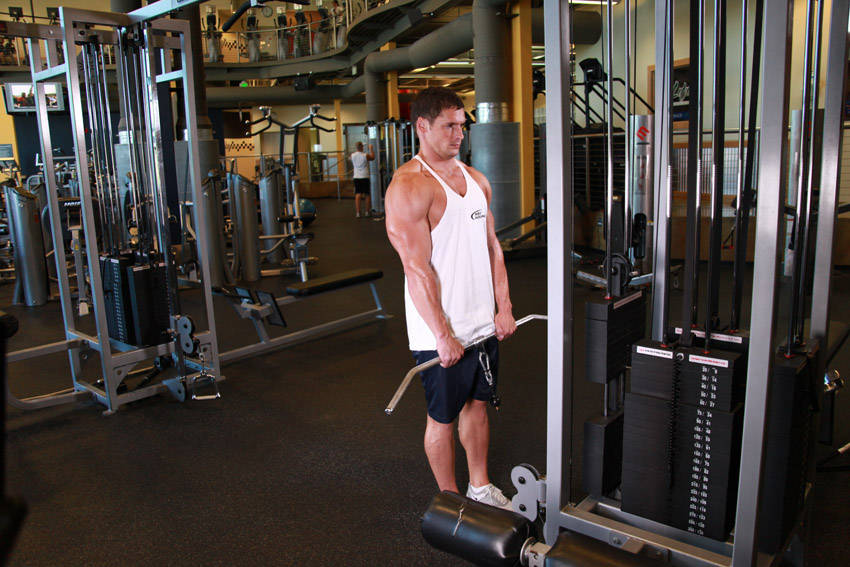
How to Perform Cable Shrugs
- Grasp a cable bar attachment that is attached to a low pulley with a shoulder width or slightly wider overhand (palms facing down) grip.
- Stand erect close to the pulley with your arms extended in front of you holding the bar. This will be your starting position.
- Lift the bar by elevating the shoulders as high as possible as you exhale. Hold the contraction at the top for a second. Tip: The arms should remain extended at all times. Refrain from using the biceps to help lift the bar. Only the shoulders should be moving up and down.
- Lower the bar back to the original position.
- Repeat for the recommended amount of repetitions.
Pro Tips
- Category: Strength
- Force: Pull
- Movement type: Isolation
Ranked Cable Shrugs Alternatives
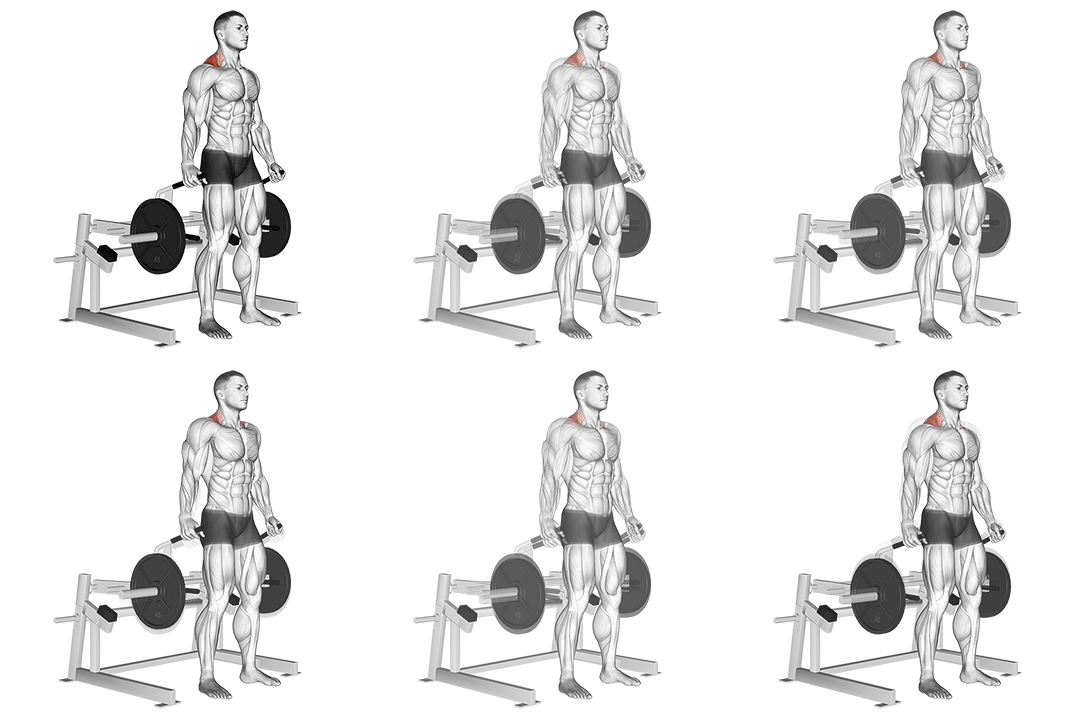
1. Lever Shrug
89.4% MatchHow to perform this exercise
- Adjust the seat height and position yourself on the leverage machine with your back against the pad.
- Grasp the handles with an overhand grip and keep your arms straight.
- Keeping your back straight, lift your shoulders up towards your ears as high as possible.
- Hold the contraction for a moment, then slowly lower your shoulders back down to the starting position.
- Repeat for the desired number of repetitions.
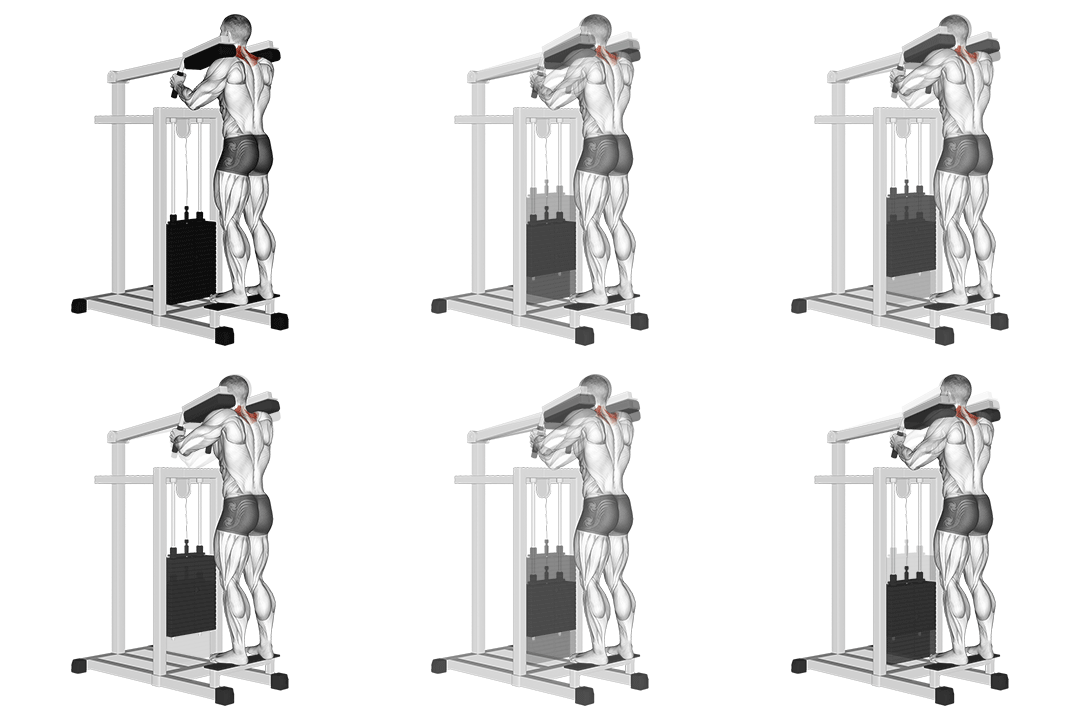
2. Lever Gripless Shrug V. 2
86% MatchHow to perform this exercise
- Adjust the seat height and position yourself on the machine with your back against the pad.
- Grasp the handles or bars with an overhand grip, keeping your arms straight.
- Keeping your back straight, lift your shoulders up towards your ears as high as possible.
- Hold the contraction for a moment, then slowly lower your shoulders back down to the starting position.
- Repeat for the desired number of repetitions.
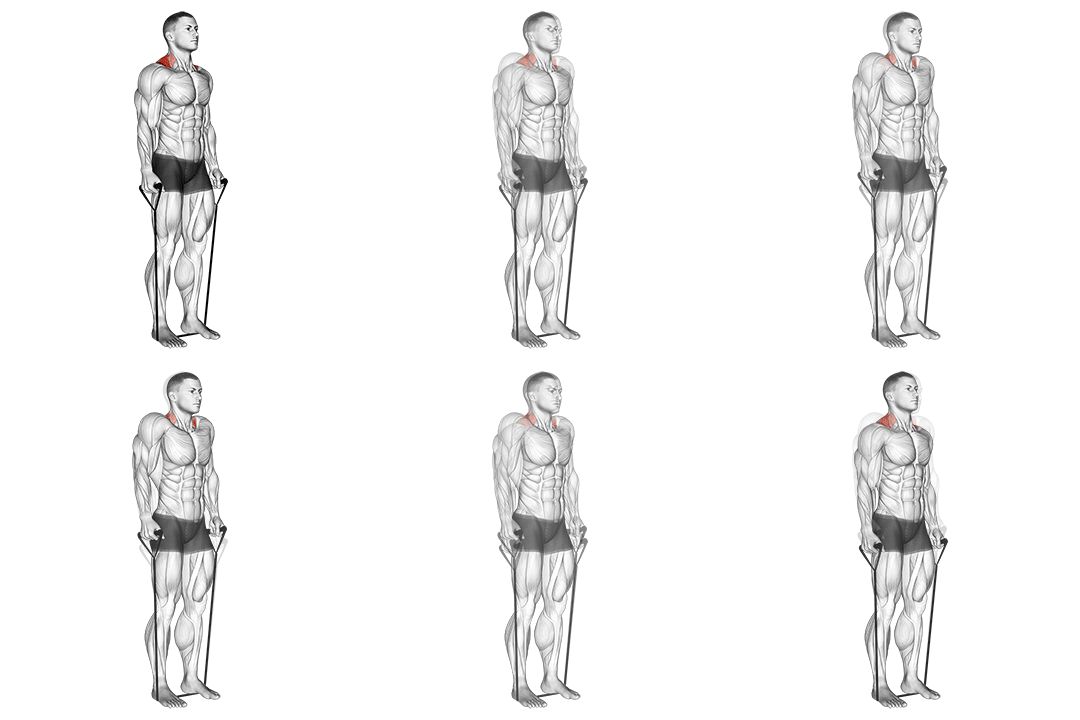
3. Band Shrug
84.4% MatchHow to perform this exercise
- Stand with your feet shoulder-width apart and place the band under your feet, holding the ends with your hands.
- Keep your arms straight and relaxed, and let the band hang in front of your thighs.
- Engage your traps by shrugging your shoulders upward, lifting the band as high as possible.
- Hold the contraction for a moment, then slowly lower your shoulders back down to the starting position.
- Repeat for the desired number of repetitions.
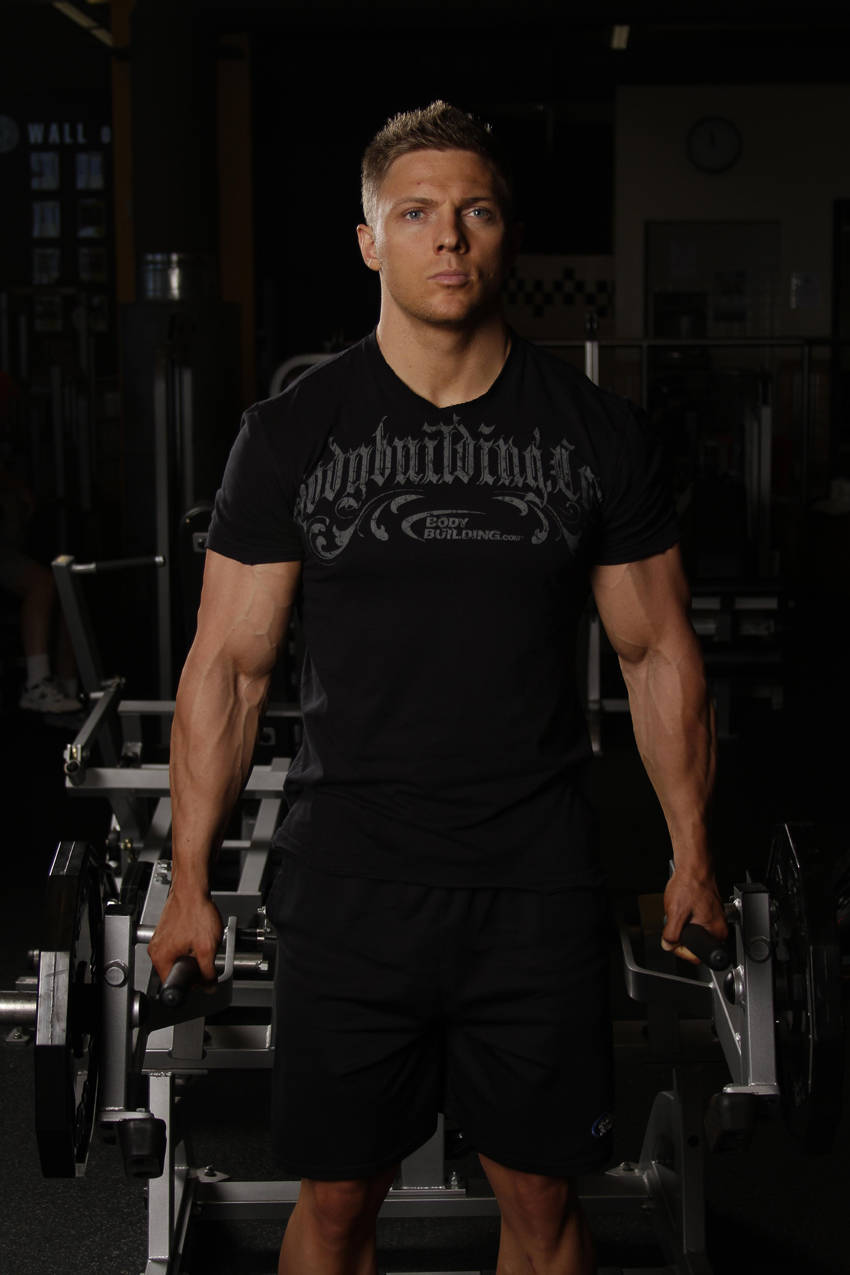
4. Leverage Shrug
68.7% MatchHow to perform this exercise
- Load the pins to an appropriate weight. Position yourself directly between the handles.
- Grasp the top handles with a comfortable grip, and then lower your hips as you take a breath. Look forward with your head and keep your chest up.
- Drive through the floor with your heels, extending your hips and knees as you rise to a standing position. Keep your arms straight throughout the movement, finishing with your shoulders back. This will be your starting position.
- Raise the weight by shrugging the shoulders towards your ears, moving straight up and down.
- Pause at the top of the motion, and then return the weight to the starting position.
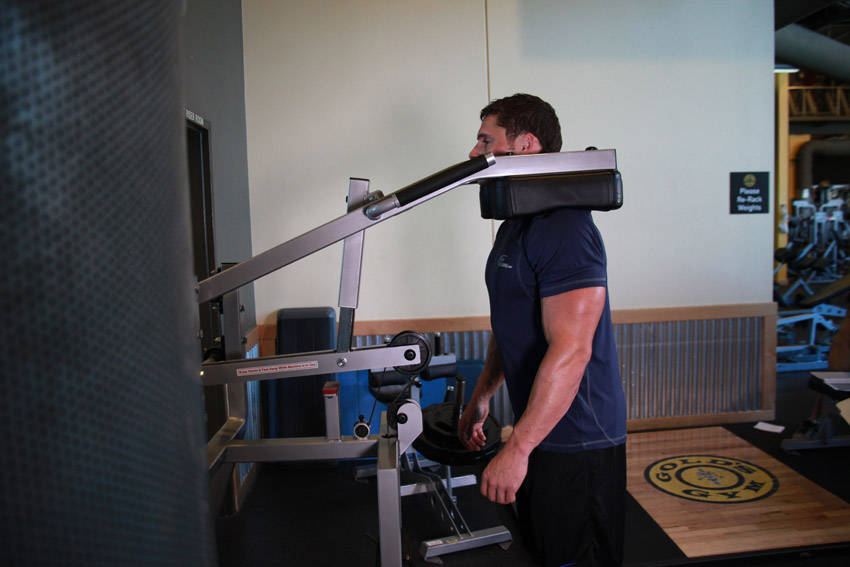
5. Calf-Machine Shoulder Shrug
68.3% MatchHow to perform this exercise
- Position yourself on the calf machine so that the shoulder pads are above your shoulders. Your torso should be straight with the arms extended normally by your side. This will be your starting position.
- Raise your shoulders up towards your ears as you exhale and hold the contraction for a full second.
- Slowly return to the starting position as you inhale.
- Repeat for the recommended amount of repetitions.
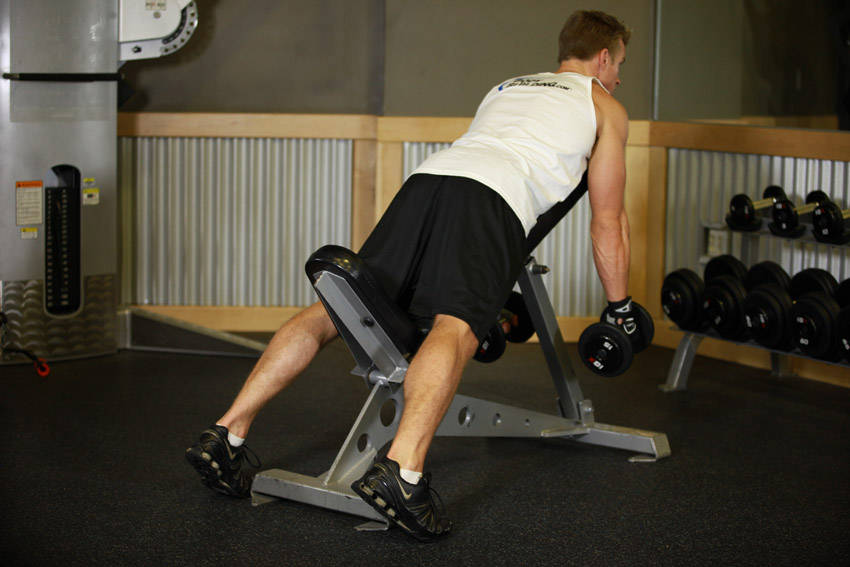
6. Middle Back Shrug
66% MatchHow to perform this exercise
- Lie facedown on an incline bench while holding a dumbbell in each hand. Your arms should be fully extended hanging down and pointing towards the floor. The palms of your hands should be facing each other. This will be your starting position.
- As you exhale, squeeze your shoulder blades together and hold the contraction for a full second. Tip: This movement is just like the reverse action of a hug, or trying to perform rear laterals as if you had no arms.
- As you inhale go back to the starting position.
- Repeat for the recommended amount of repetitions.
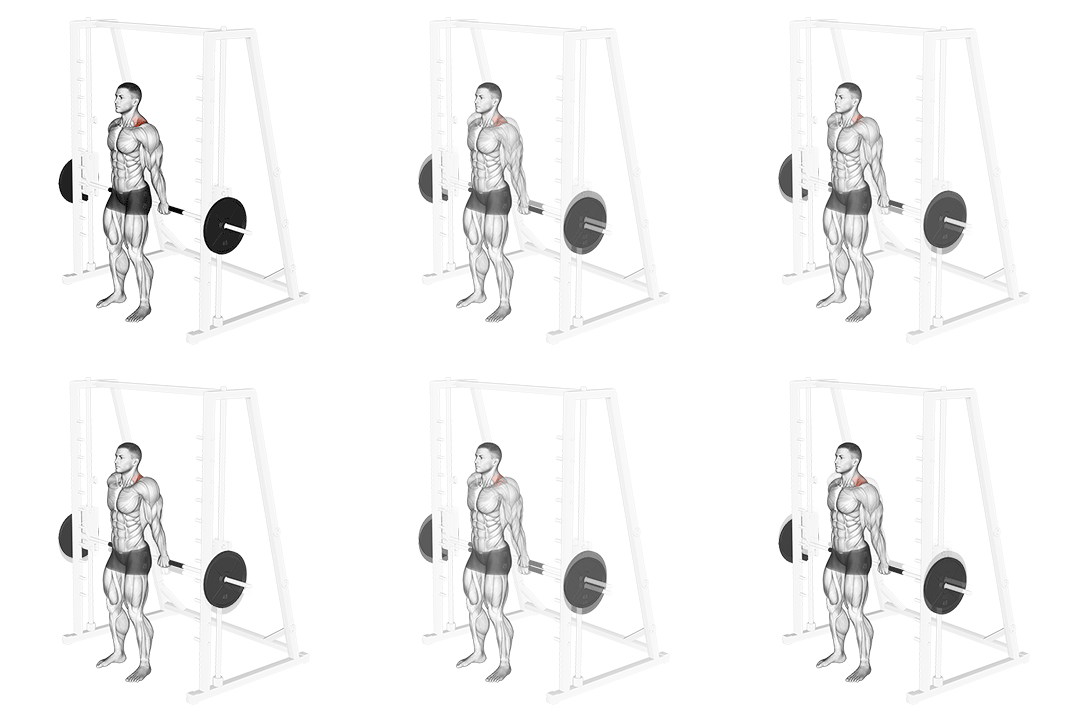
7. Smith Back Shrug
66% MatchHow to perform this exercise
- Stand with your feet shoulder-width apart and your knees slightly bent.
- Grasp the barbell with an overhand grip, hands slightly wider than shoulder-width apart.
- Keep your arms straight and allow the barbell to hang in front of your thighs.
- Lift your shoulders straight up towards your ears, squeezing your traps at the top.
- Hold for a moment, then lower your shoulders back down to the starting position.
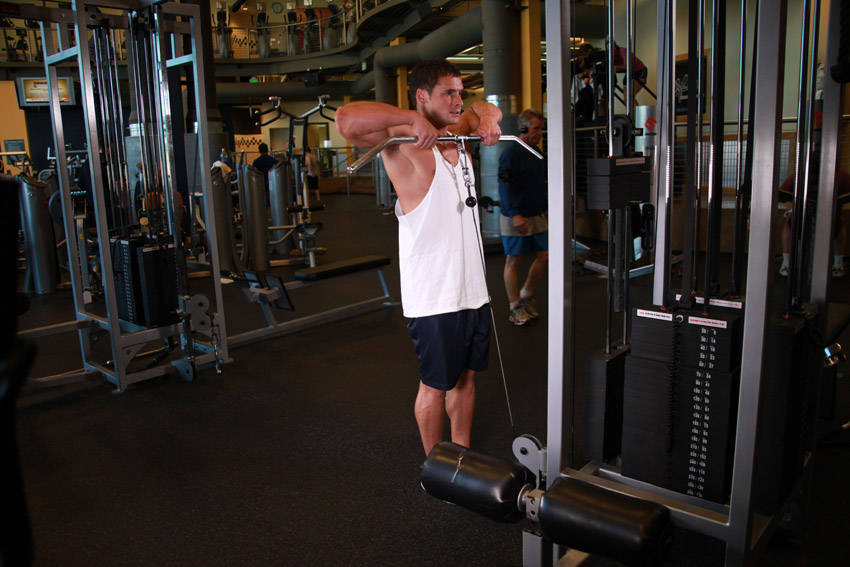
8. Upright Cable Row
65.7% MatchHow to perform this exercise
- Grasp a straight bar cable attachment that is attached to a low pulley with a pronated (palms facing your thighs) grip that is slightly less than shoulder width. The bar should be resting on top of your thighs. Your arms should be extended with a slight bend at the elbows and your back should be straight. This will be your starting position.
- Use your side shoulders to lift the cable bar as you exhale. The bar should be close to the body as you move it up. Continue to lift it until it nearly touches your chin. Tip: Your elbows should drive the motion. As you lift the bar, your elbows should always be higher than your forearms. Also, keep your torso stationary and pause for a second at the top of the movement.
- Lower the bar back down slowly to the starting position. Inhale as you perform this portion of the movement.
- Repeat for the recommended amount of repetitions.
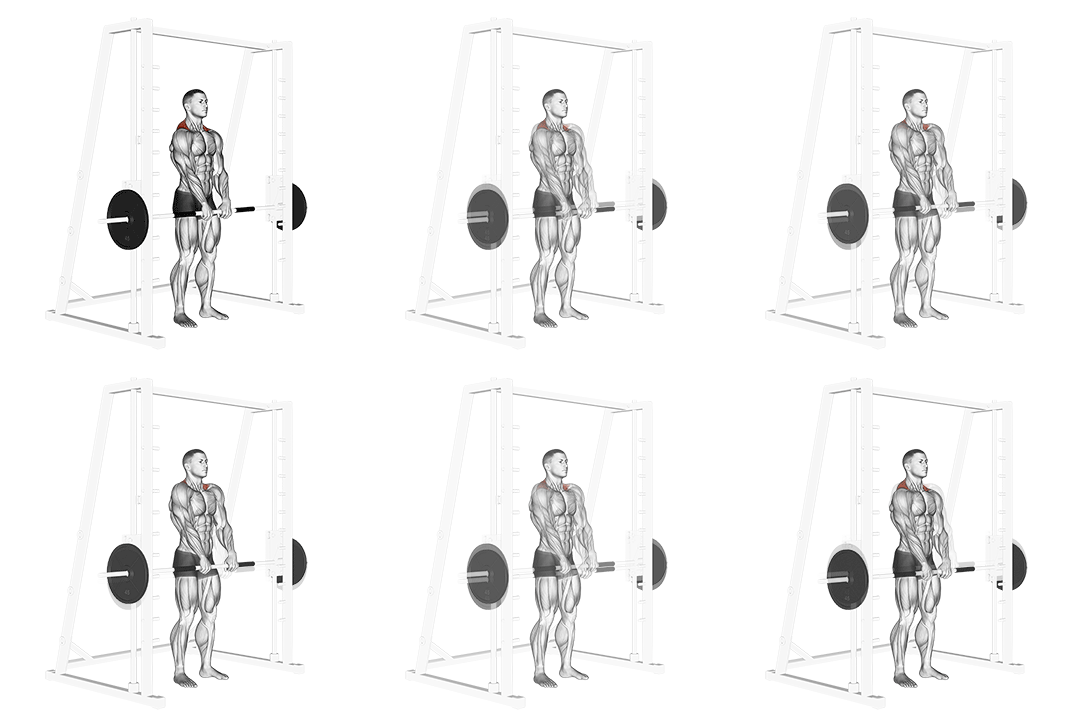
9. Smith Shrug
64.7% MatchHow to perform this exercise
- Stand with your feet shoulder-width apart and your knees slightly bent.
- Grasp the barbell with an overhand grip, hands slightly wider than shoulder-width apart.
- Keep your arms straight and your shoulders relaxed.
- Lift your shoulders up towards your ears, squeezing your traps at the top.
- Hold for a moment, then slowly lower your shoulders back down to the starting position.
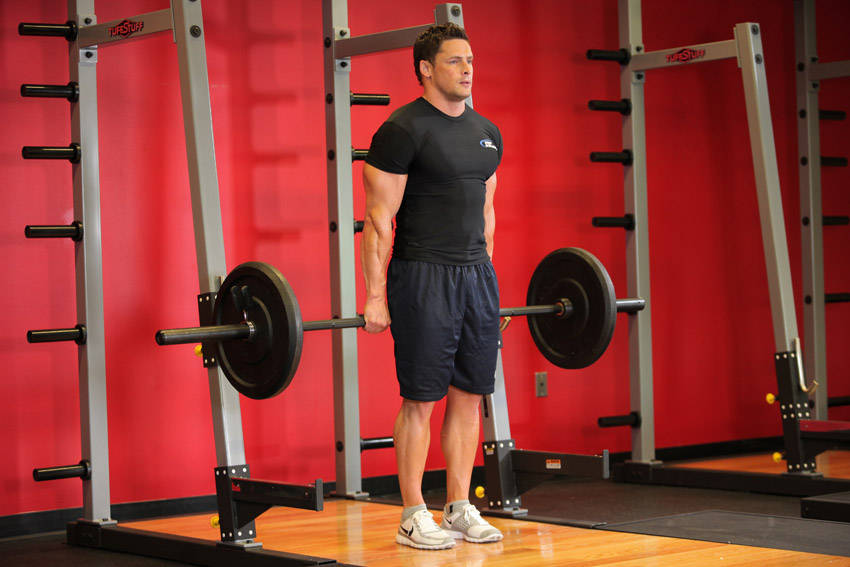
10. Barbell Shrug Behind The Back
63.9% MatchHow to perform this exercise
- Stand up straight with your feet at shoulder width as you hold a barbell with both hands behind your back using a pronated grip (palms facing back). Tip: Your hands should be a little wider than shoulder width apart. You can use wrist wraps for this exercise for better grip. This will be your starting position.
- Raise your shoulders up as far as you can go as you breathe out and hold the contraction for a second. Tip: Refrain from trying to lift the barbell by using your biceps. The arms should remain stretched out at all times.
- Slowly return to the starting position as you breathe in.
- Repeat for the recommended amount of repetitions.
Why You Might Need a Cable Shrugs Alternative
You may substitute Cable Shrugs for several reasons: no cable machine, shoulder or neck irritation from the movement pattern, a need for heavier loading, or a desire for unilateral or carry-based carryover. Cables give constant tension and a cleaner line of pull, but heavy free-weight shrugs increase absolute mechanical tension to drive hypertrophy. If you have impingement, choose variations that limit cervical extension and focus on pure scapular elevation, keep a neutral neck and elevate the scapulae without shrugging the head. For rehab, use lighter eccentrics or suspension-based scapular shrugs to maintain trap activation while minimizing joint stress.
How to Choose the Right Substitute
Match the substitute to the trunk and scapular mechanics you need. Choose barbell or dumbbell shrugs to maximize axial load; cue: keep elbows straight, briefly retract or pause the scapula at the top, and avoid neck extension. Pick farmer carries or heavy holds to train trap endurance and scapulothoracic stability, maintain tall posture and shoulder packing. For unilateral control or imbalance correction, use single-arm dumbbell shrugs with a controlled 2–3 second eccentric to boost neuromuscular recruitment. For low-load rehab, select banded or suspension scapular shrugs to keep tension while limiting joint stress.
Frequently Asked Questions
What muscles does Cable Shrugs work?
Cable shrugs primarily load the upper trapezius by producing scapular elevation; they also recruit the levator scapulae and to a lesser extent the middle traps. Cue: keep arms straight and lift the scapulae without extending the neck to maximize upper-trap activation and avoid cervical compensation.
What is the best bodyweight alternative to Cable Shrugs?
A suspension-ring or TRX scapular shrug is the best bodyweight option, hang with straight arms and pull only by elevating the scapulae to target the upper traps. Keep the neck neutral and control the eccentric descent to maintain muscle tension and prevent shoulder-driven compensation.
Can I build muscle without doing Cable Shrugs?
Yes. You can build trap size with heavy dumbbell or barbell shrugs, rack pulls, and farmer carries using progressive overload focused on scapular elevation. Use slow eccentrics, brief pauses at peak contraction, and incremental load increases while maintaining proper scapular mechanics.
More Exercise Alternatives
Find Alternatives for Any Exercise
Use the exercise substitution finder to compare ranked alternatives for your available equipment and training preference.
Try the Exercise Substitution Finder →