

10 Calf Push Stretch Alternatives for Tight Calves
The Calf Push Stretch With Hands Against Wall is done standing. Ranked closest by our scoring: the Standing Soleus And Achilles Stretch, the Standing Calves Calf Stretch and the Calf Stretch With Hands Against Wall.
Updated Ranked by our 12-factor similarity model How it works
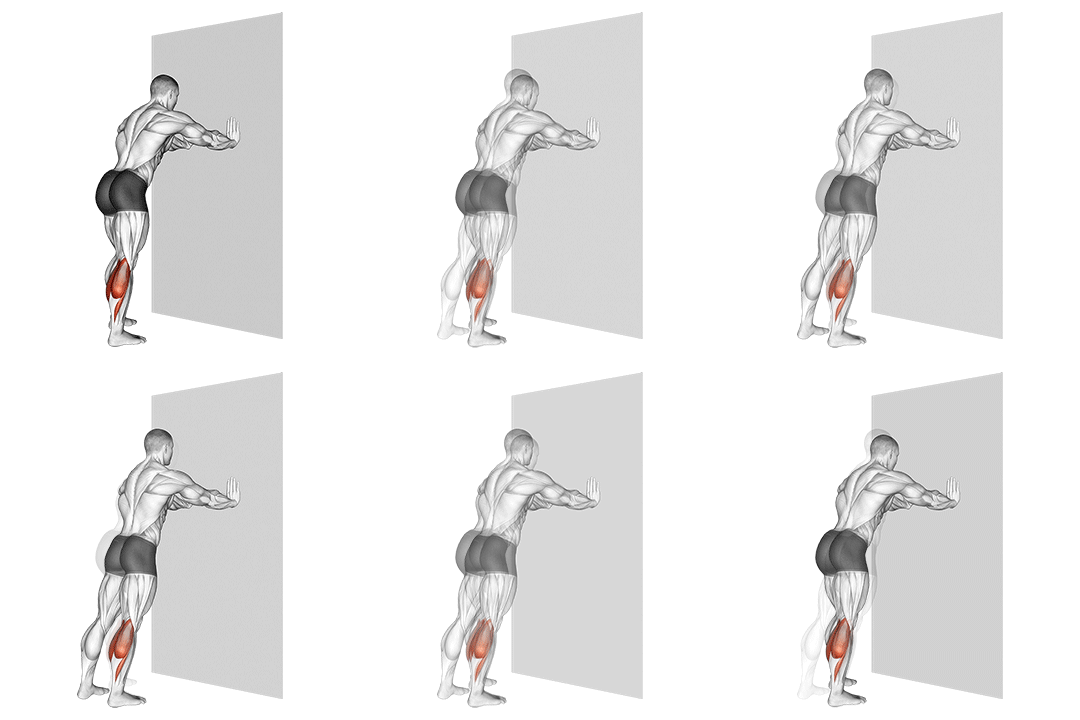
Original Exercise: Calf Push Stretch With Hands Against Wall
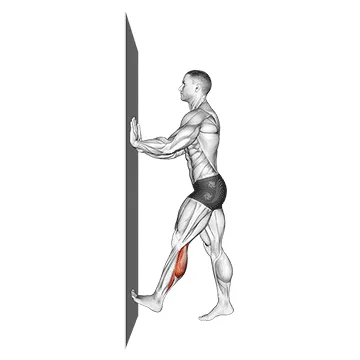
- Primary muscle
- Calves
- Equipment
- Bodyweight
- Difficulty
- Beginner
- Type
- Isolation
Secondary muscles: Hamstrings
How to perform Calf Push Stretch With Hands Against Wall
- Stand facing a wall with your feet hip-width apart.
- Place your hands against the wall at shoulder height.
- Step back with one foot, keeping your heel on the ground and your leg straight.
- Bend your front knee slightly and lean forward, feeling a stretch in your calf.
- Hold the stretch for 20-30 seconds.
- Switch legs and repeat the stretch.
Ranked Calf Push Stretch With Hands Against Wall Alternatives
10 substitutes, ranked by how closely each one matches the Calf Push Stretch With Hands Against Wall on movement pattern, muscles worked, equipment and body position. The higher the score, the less you change. Open "How to perform this exercise" on a card for the steps; every card title links to that exercise's own alternatives page.
Best match 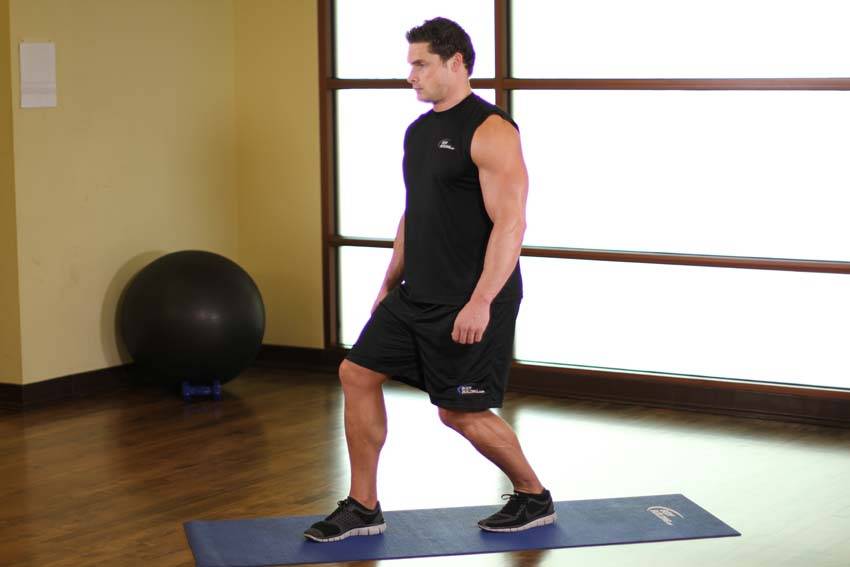
- Calves
- Other
- Beginner
- Isolation
A straight swap when you want to keep working the calves.
How to perform this exercise
- Stand with your feet hip-distance apart, one foot slightly in front of the other.
- Bend both knees, keeping your back heel on the floor. Switch sides.
Sets and reps: Hold for 20 to 30 seconds, 3 sets.
Why this matches
- Movement: static stretch, the same as the Calf Push Stretch With Hands Against Wall
- Primary muscle: calves, the same as the Calf Push Stretch With Hands Against Wall
- Equipment: bodyweight only, the same as the Calf Push Stretch With Hands Against Wall
2. Standing Calves Calf Stretch
99% match- Calves
- Bodyweight
- Beginner
- Isolation
It uses the same equipment and still works the calves.
How to perform this exercise
- Stand facing a wall or sturdy object, about an arm's length away.
- Place your hands on the wall or object at shoulder height.
- Step back with one foot, keeping your heel flat on the ground.
- Bend your front knee slightly and lean forward, keeping your back leg straight.
- You should feel a stretch in your calf muscle.
- Hold the stretch for 20-30 seconds.
- Repeat on the other leg.
Sets and reps: Hold for 20 to 30 seconds, 3 sets.
Why this matches
- Movement: static stretch, the same as the Calf Push Stretch With Hands Against Wall
- Primary muscle: calves, the same as the Calf Push Stretch With Hands Against Wall
- Equipment: bodyweight only, the same as the Calf Push Stretch With Hands Against Wall
- Body position: standing, the same as the Calf Push Stretch With Hands Against Wall
- Calves
- Bodyweight
- Beginner
- Isolation
How to perform this exercise
- Stand facing a wall with your feet hip-width apart.
- Place your hands against the wall at shoulder height.
- Step your right foot back, keeping your heel on the ground and your leg straight.
- Bend your left knee and lean forward, keeping your back leg straight and your heel on the ground.
- Hold the stretch for 20-30 seconds.
- Switch legs and repeat the stretch.
Sets and reps: Hold for 30 to 60 seconds and repeat 2 or 3 times.
Why this matches
- Movement: static stretch, the same as the Calf Push Stretch With Hands Against Wall
- Primary muscle: calves, the same as the Calf Push Stretch With Hands Against Wall
- Equipment: bodyweight only, the same as the Calf Push Stretch With Hands Against Wall
- Body position: standing, the same as the Calf Push Stretch With Hands Against Wall
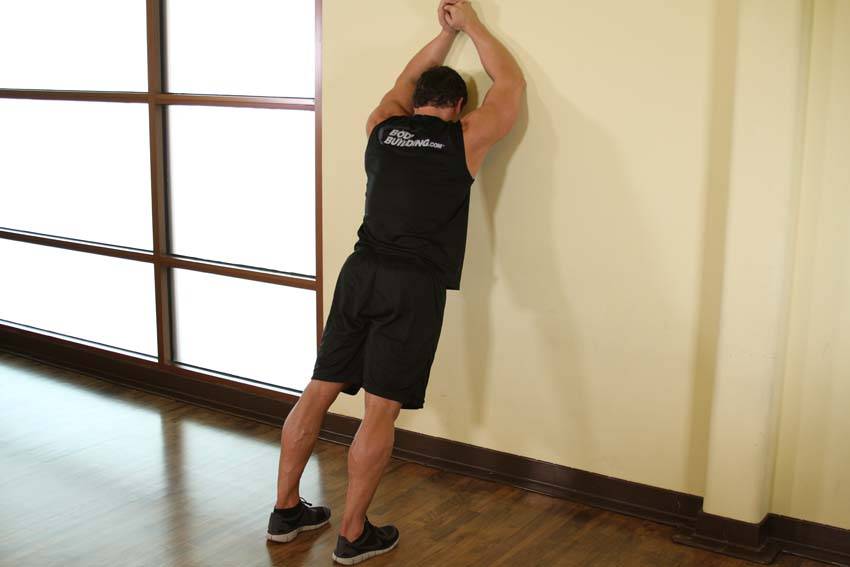
4. Calf Stretch Elbows Against Wall
94% match- Calves
- Bodyweight
- Beginner
- Isolation
How to perform this exercise
- Stand facing a wall from a couple feet away.
- Lean against the wall, placing your weight on your forearms.
- Attempt to keep your heels on the ground. Hold for 10-20 seconds. You may move further or closer the wall, making it more or less difficult, respectively.
Sets and reps: Hold for 20 to 30 seconds, 3 sets.
Why this matches
- Movement: static stretch, the same as the Calf Push Stretch With Hands Against Wall
- Primary muscle: calves, the same as the Calf Push Stretch With Hands Against Wall
- Equipment: bodyweight only, the same as the Calf Push Stretch With Hands Against Wall
- Body position: standing, the same as the Calf Push Stretch With Hands Against Wall
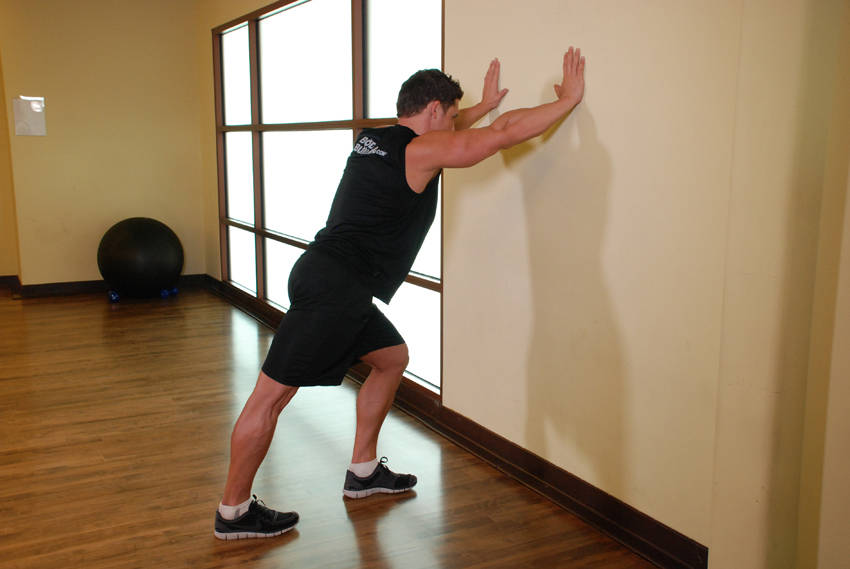
5. Calf Stretch Hands Against Wall
94% match- Calves
- Bodyweight
- Beginner
- Isolation
How to perform this exercise
- Stand facing a wall from several feet away. Stagger your stance, placing one foot forward.
- Lean forward and rest your hands on the wall, keeping your heel, hip and head in a straight line.
- Attempt to keep your heel on the ground. Hold for 10-20 seconds and then switch sides.
Sets and reps: Hold for 20 to 30 seconds, 3 sets.
Why this matches
- Movement: static stretch, the same as the Calf Push Stretch With Hands Against Wall
- Primary muscle: calves, the same as the Calf Push Stretch With Hands Against Wall
- Equipment: bodyweight only, the same as the Calf Push Stretch With Hands Against Wall
- Body position: standing, the same as the Calf Push Stretch With Hands Against Wall
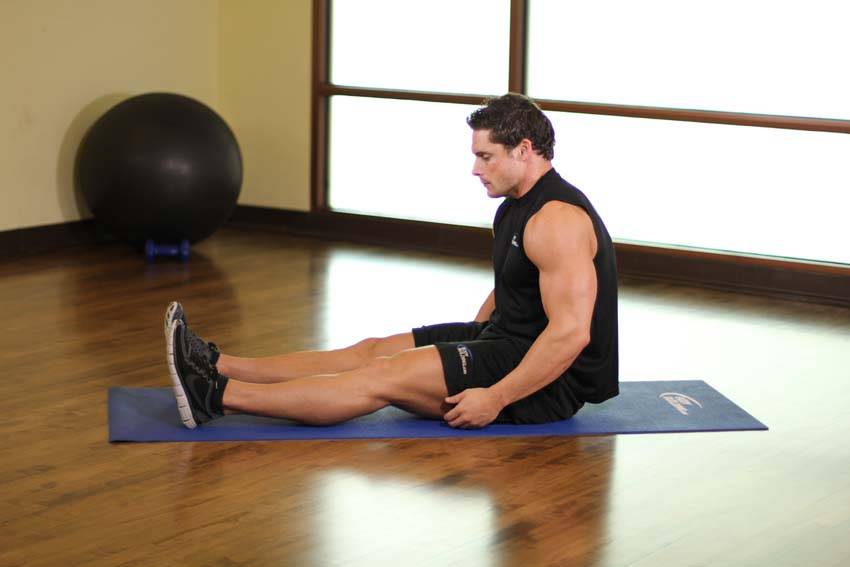
6. Seated Calf Stretch
91% match- Calves
- Bodyweight
- Beginner
- Isolation
The same equipment, done seated instead.
How to perform this exercise
- Sit up straight on an exercise mat.
- Bend one knee and put that foot on the floor to stabilize the torso.
- Straighten your other leg and flex your ankle.
- Using a band, towel, or your hand if you can reach, pull the toes toward you. Hold for 10 to 20 seconds, then switch sides.
Sets and reps: Hold for 20 to 30 seconds, 3 sets.
Why this matches
- Movement: static stretch, the same as the Calf Push Stretch With Hands Against Wall
- Primary muscle: calves, the same as the Calf Push Stretch With Hands Against Wall
- Equipment: bodyweight only, the same as the Calf Push Stretch With Hands Against Wall
- Body position: seated, not standing
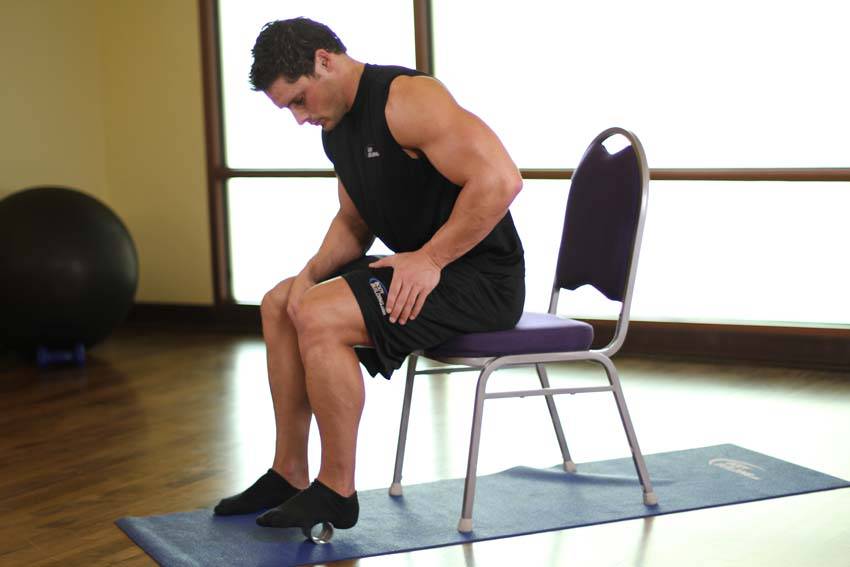
7. Foot-smr
91% match- Calves
- Other
- Beginner
- Isolation
How to perform this exercise
- This exercise stretches the fascia of the muscles in the feet. Start off seated with your shoes removed. Using a foot roller or a similar object, such as a small section of pvc pipe, place your foot against the roller across the arch of your foot. This will be your starting position.
- Press down firmly, rolling across the arch of your foot. Hold for 10-30 seconds, and then switch feet.
Sets and reps: Hold for 20 to 30 seconds, 3 sets.
Why this matches
- Primary muscle: calves, the same as the Calf Push Stretch With Hands Against Wall
- Equipment: bodyweight only, the same as the Calf Push Stretch With Hands Against Wall
- Body position: seated, not standing
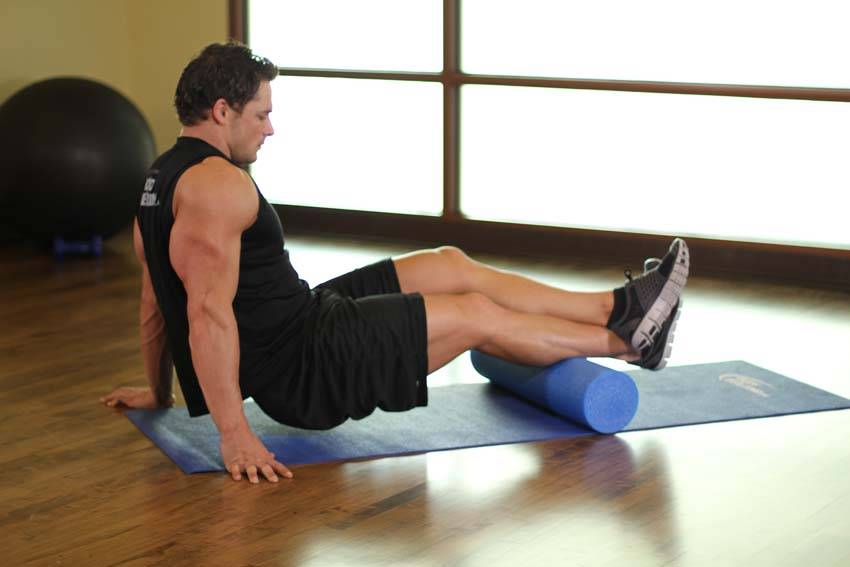
8. Calves-smr
88% match- Calves
- Foam-roll
- Beginner
- Isolation
How to perform this exercise
- Begin seated on the floor. Place a foam roller underneath your lower leg. Your other leg can either be crossed over the opposite or be placed on the floor, supporting some of your weight. This will be your starting position.
- Place your hands to your side or just behind you, and press down to raise your hips off of the floor, placing much of your weight against your calf muscle. Roll from below the knee to above the ankle, pausing at points of tension for 10-30 seconds. Repeat for the other leg.
Sets and reps: Hold for 30 to 60 seconds and repeat 2 or 3 times.
Why this matches
- Primary muscle: calves, the same as the Calf Push Stretch With Hands Against Wall
- Equipment: bodyweight only, the same as the Calf Push Stretch With Hands Against Wall
- Body position: seated, not standing
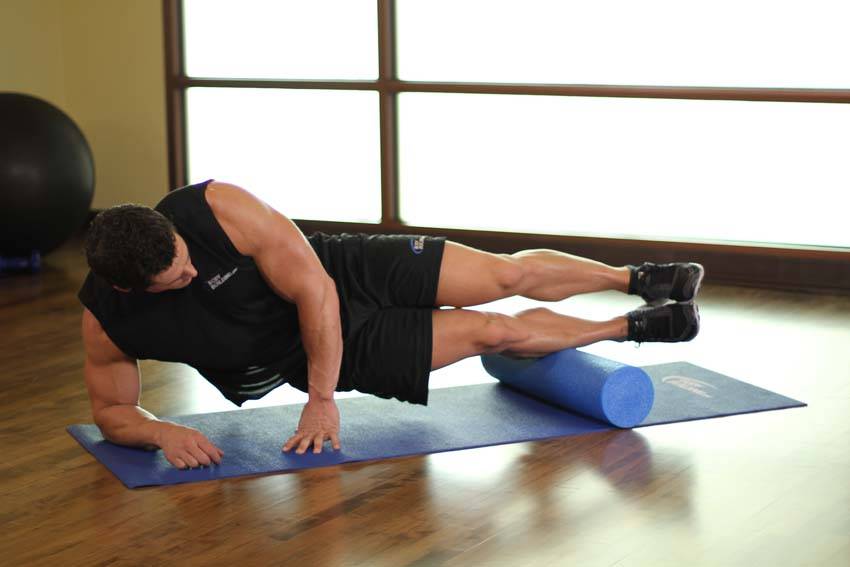
9. Peroneals-smr
87% match- Calves
- Foam-roll
- Beginner
- Isolation
How to perform this exercise
- Lay on your side, supporting your weight on your forearm and on a foam roller placed on the outside of your lower leg. Your upper leg can either be on top of your lower leg, or you can cross it in front of you. This will be your starting position.
- Raise your hips off of the ground and begin to roll from below the knee to above the ankle on the side of your leg, pausing at points of tension for 10-30 seconds. Repeat on the other leg.
Sets and reps: Hold for 30 to 60 seconds and repeat 2 or 3 times.
Why this matches
- Primary muscle: calves, the same as the Calf Push Stretch With Hands Against Wall
- Equipment: bodyweight only, the same as the Calf Push Stretch With Hands Against Wall
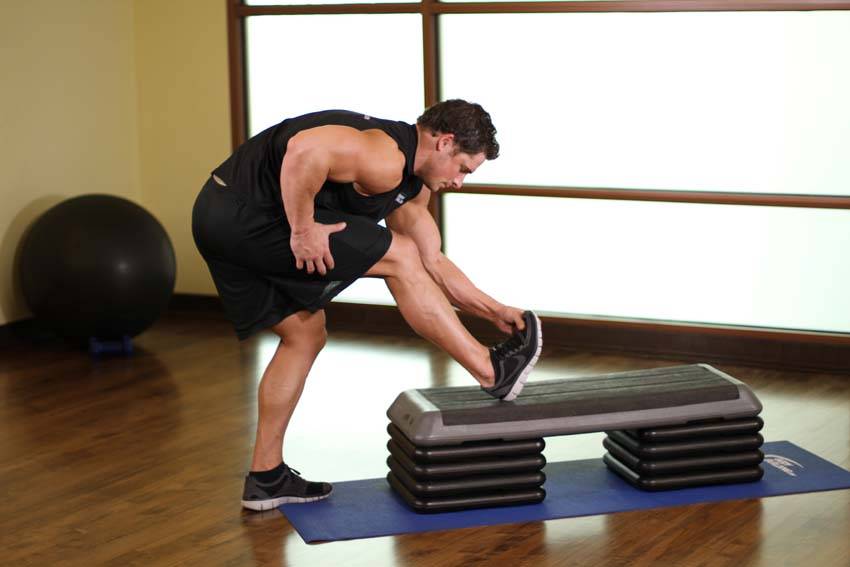
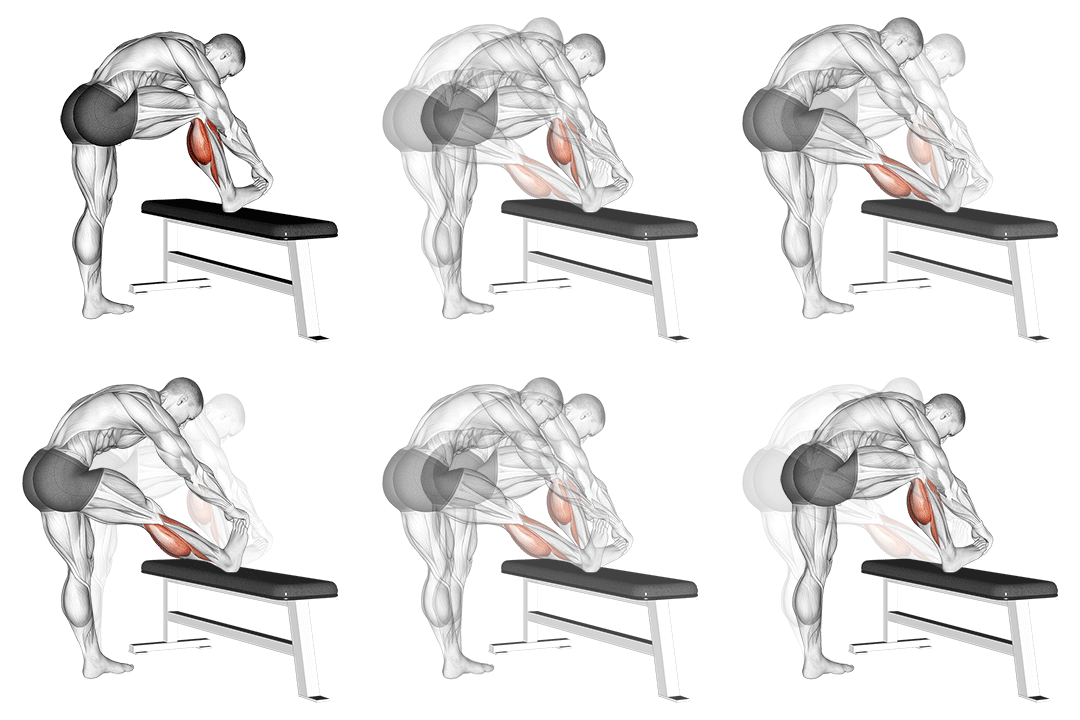
- Calves
- Other
- Beginner
- Isolation
How to perform this exercise
- Place your right heel on a step with your knee extended and lean forward to grab your right toe with your right hand. Your left knee should be slightly bent and your back should be straight.
- Support your weight on your left leg and place your left hand on your left thigh.
- Pull your right toes toward your knee until you feel a stretch in your calf.
Sets and reps: Hold for 30 to 60 seconds and repeat 2 or 3 times.
Why this matches
- Movement: static stretch, the same as the Calf Push Stretch With Hands Against Wall
- Primary muscle: calves, the same as the Calf Push Stretch With Hands Against Wall
- Equipment: -, not bodyweight only
- Body position: standing, the same as the Calf Push Stretch With Hands Against Wall
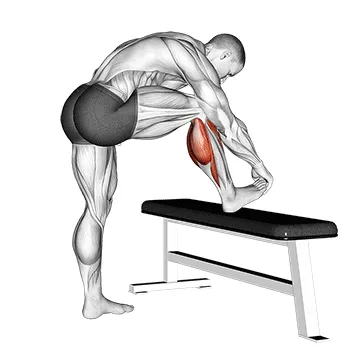
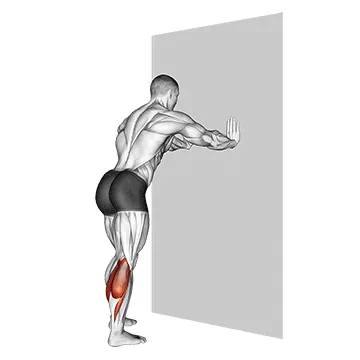
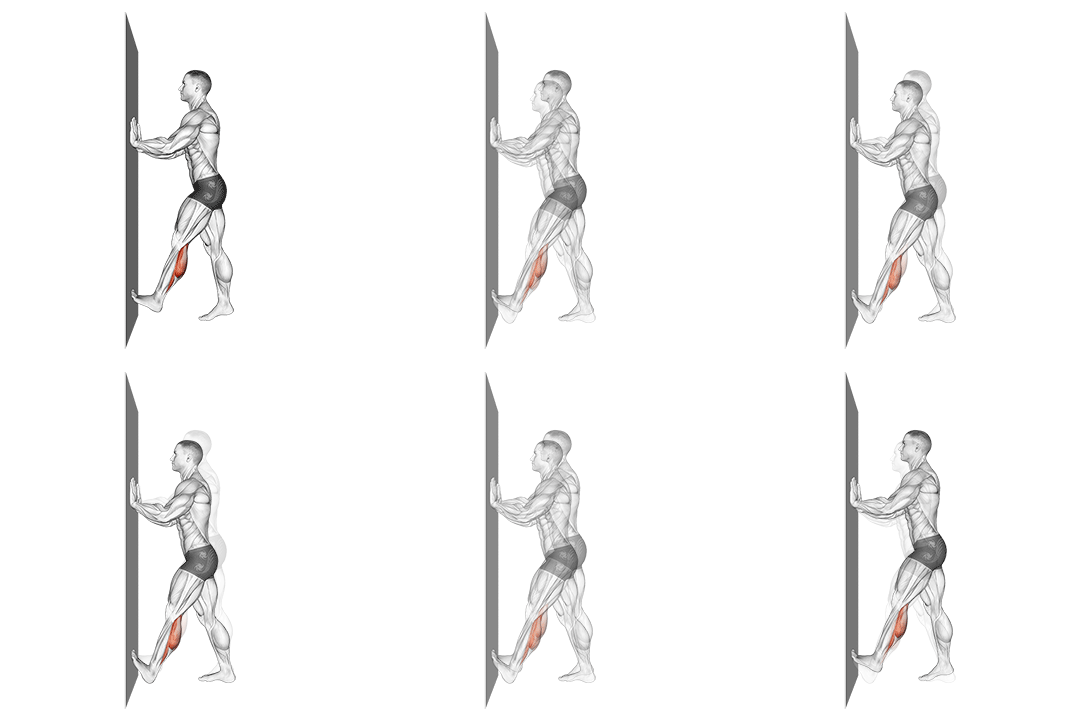
Why You Might Need a Calf Push Stretch With Hands Against Wall Alternative
You may substitute the wall push if you lack a stable wall, have wrist or shoulder pain, limited balance, or need a different training stimulus. For example, heel drops on a step add eccentric loading to strengthen the gastroc–soleus complex, while a bent-knee standing stretch shifts activation toward the soleus. Use cues such as “drive the knee forward over the toes” to increase ankle dorsiflexion, or “keep the heel anchored” to emphasize a true calf stretch. Rehab protocols often prefer passive or seated stretches to limit load while improving dorsiflexion biomechanics.
How to Choose the Right Calf Push Stretch With Hands Against Wall Substitute
Decide based on goal, pain, and equipment. For strength and tendon loading choose slow single-leg heel drops (3 sets of 8–12 eccentrics, lower for 3–4 seconds) to increase tensile stimulus. For mobility or plantar fascia issues use seated towel stretches or a bent-knee standing stretch to target the soleus without high load, cue a 20° knee bend and hold 30–60 seconds. If you need a full-leg option with core engagement, use downward dog and cue hips back and heels driving toward the floor to optimize ankle dorsiflexion and gastrocnemius stretch.
Calf Push Stretch With Hands Against Wall FAQ
What muscles does Calf Push Stretch With Hands Against Wall work?
It primarily stretches the gastrocnemius and soleus muscles of the lower leg. Keeping the knee straight biases the gastrocnemius, while a bent knee increases soleus activation due to the gastrocnemius crossing the knee joint.
What is the best bodyweight alternative to Calf Push Stretch With Hands Against Wall?
Single-leg heel drops on a step are the best bodyweight alternative for both mobility and strength; descend slowly to load the tendon and calf muscles eccentrically. Cue: control the descent for 3–4 seconds and keep the heel below the step to achieve full dorsiflexion.
Can I build muscle without doing Calf Push Stretch With Hands Against Wall?
Yes, use progressive loaded or bodyweight calf raises and eccentric heel drops to build calf hypertrophy and tendon resilience. Focus on full range dorsiflexion and controlled tempo (2–3 second concentric, 3–4 second eccentric) to maximize muscle activation.
Find Alternatives for Any Exercise
Search the exercise database and filter the ranked substitutes by the equipment you own.
Similarity scores compare exercise metadata such as movement pattern, muscles, equipment and body position. They are not a safety rating or a check that you own the equipment. Learn about our methodology