

10 Best Calf Stretch With Rope Alternatives for No-Rope Workouts
Can't use a rope? Do standing wall calf stretches, towel/strap stretches, slant-board heel drops, seated soleus stretches, or downward dog to target the gastrocnemius and soleus. Cue: dorsiflex the ankle and press the heel down; bend the knee to emphasize the soleus and keep it straight for the gastrocnemius.
Original Exercise: Calf Stretch With Rope
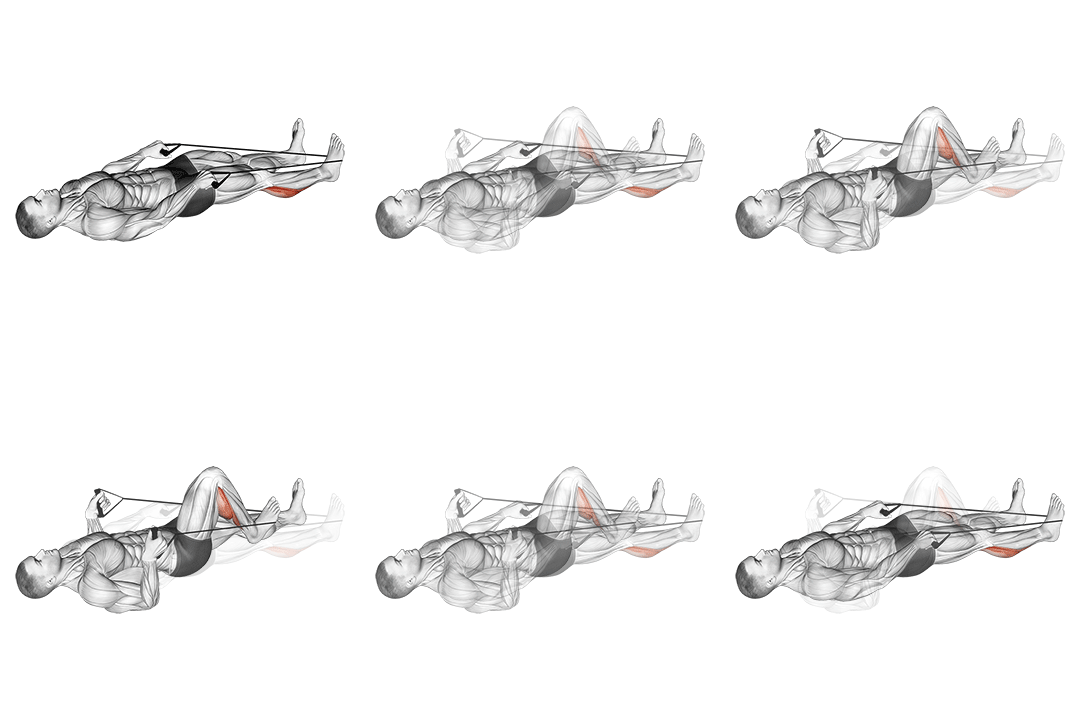
How to Perform Calf Stretch With Rope
- Stand facing a wall or sturdy object with your feet hip-width apart.
- Hold the ends of the rope in each hand and place the middle of the rope around the ball of your right foot.
- Step back with your left foot, keeping your heel on the ground and your leg straight.
- Lean forward, keeping your back straight, and gently pull on the rope to stretch your calf.
- Hold the stretch for 20-30 seconds, then release.
- Repeat on the other leg.
Ranked Calf Stretch With Rope Alternatives
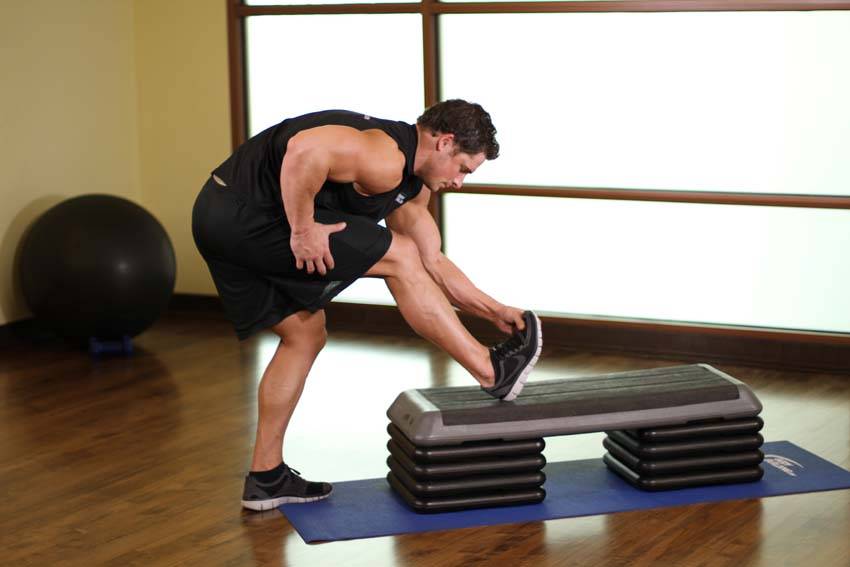
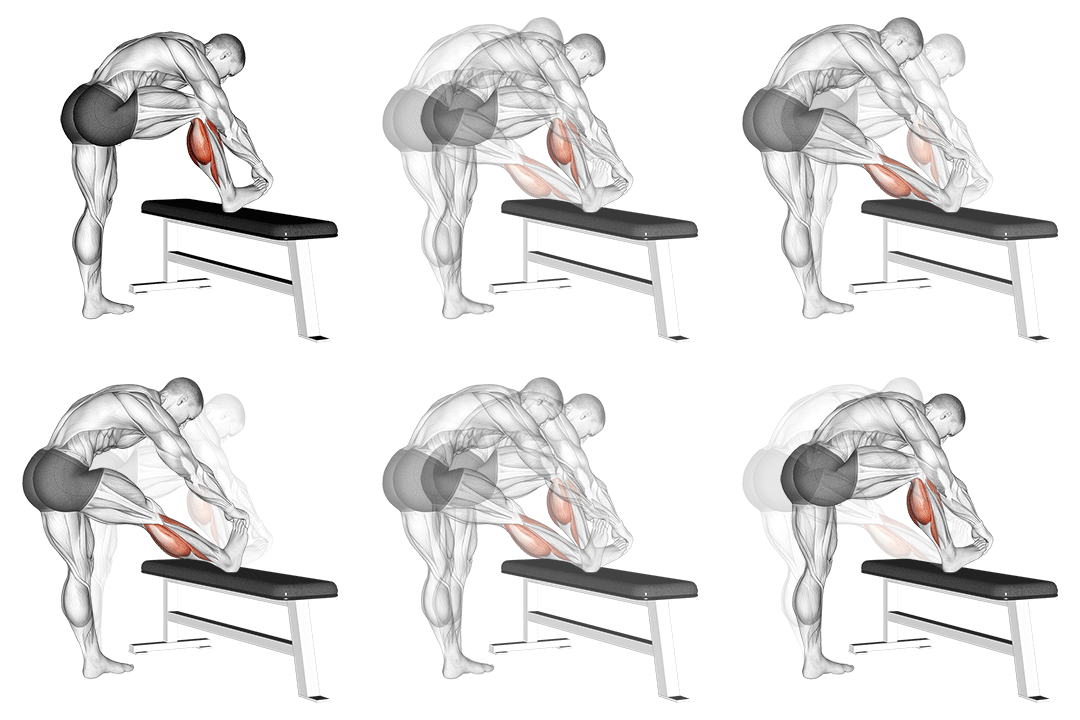
1. Standing Gastrocnemius Calf Stretch
86% MatchHow to perform this exercise
- Place your right heel on a step with your knee extended and lean forward to grab your right toe with your right hand. Your left knee should be slightly bent and your back should be straight.
- Support your weight on your left leg and place your left hand on your left thigh.
- Pull your right toes toward your knee until you feel a stretch in your calf.
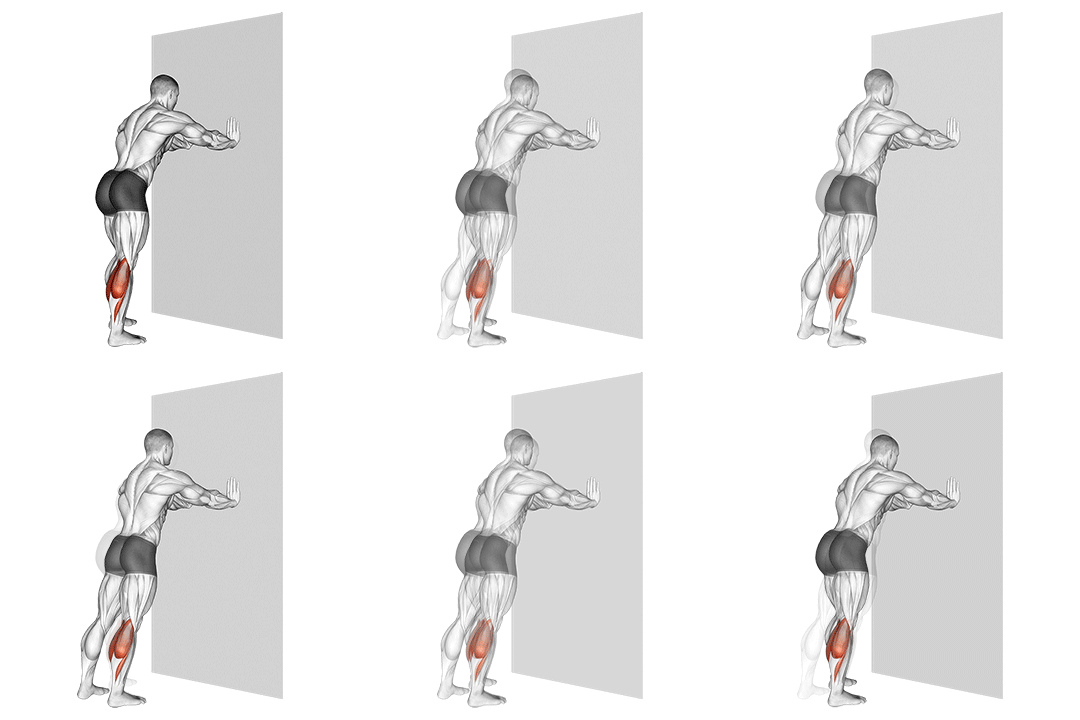
2. Calf Stretch With Hands Against Wall
85.2% MatchHow to perform this exercise
- Stand facing a wall with your feet hip-width apart.
- Place your hands against the wall at shoulder height.
- Step your right foot back, keeping your heel on the ground and your leg straight.
- Bend your left knee and lean forward, keeping your back leg straight and your heel on the ground.
- Hold the stretch for 20-30 seconds.
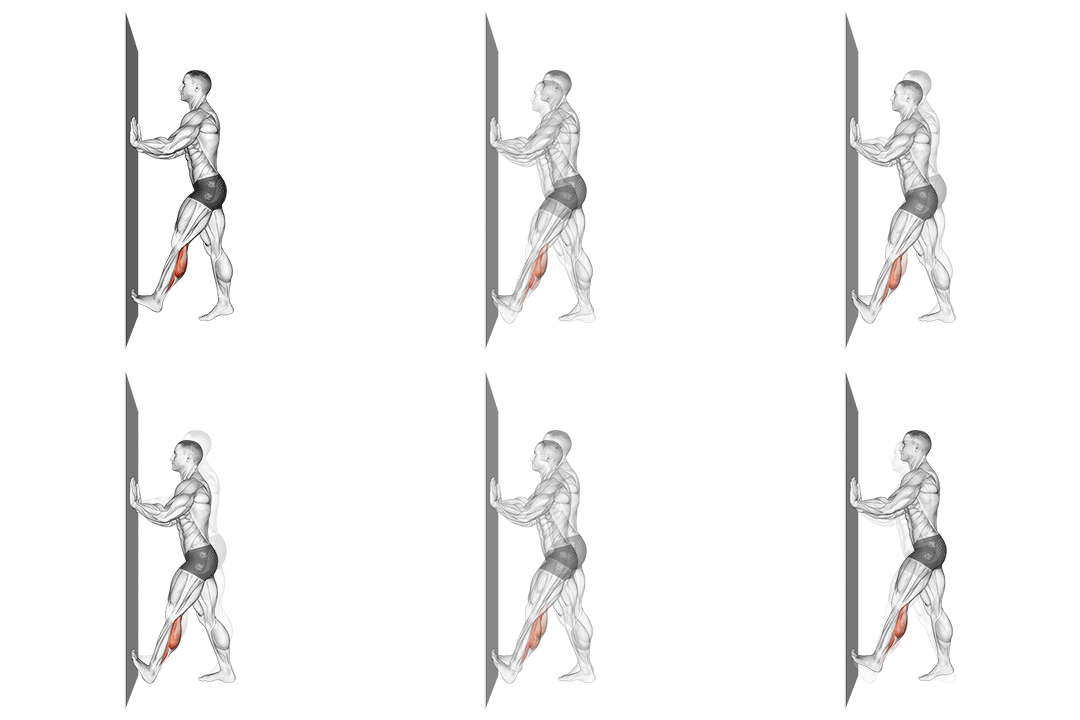
3. Calf Push Stretch With Hands Against Wall
82% MatchHow to perform this exercise
- Stand facing a wall with your feet hip-width apart.
- Place your hands against the wall at shoulder height.
- Step back with one foot, keeping your heel on the ground and your leg straight.
- Bend your front knee slightly and lean forward, feeling a stretch in your calf.
- Hold the stretch for 20-30 seconds.
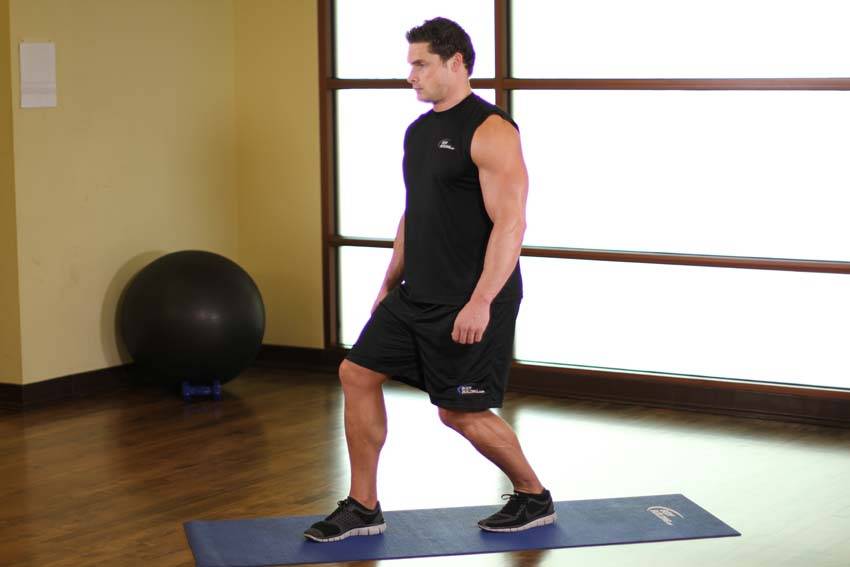
4. Standing Soleus And Achilles Stretch
82% MatchHow to perform this exercise
- Stand with your feet hip-distance apart, one foot slightly in front of the other.
- Bend both knees, keeping your back heel on the floor. Switch sides.
5. Standing Calves Calf Stretch
81.2% MatchHow to perform this exercise
- Stand facing a wall or sturdy object, about an arm's length away.
- Place your hands on the wall or object at shoulder height.
- Step back with one foot, keeping your heel flat on the ground.
- Bend your front knee slightly and lean forward, keeping your back leg straight.
- You should feel a stretch in your calf muscle.
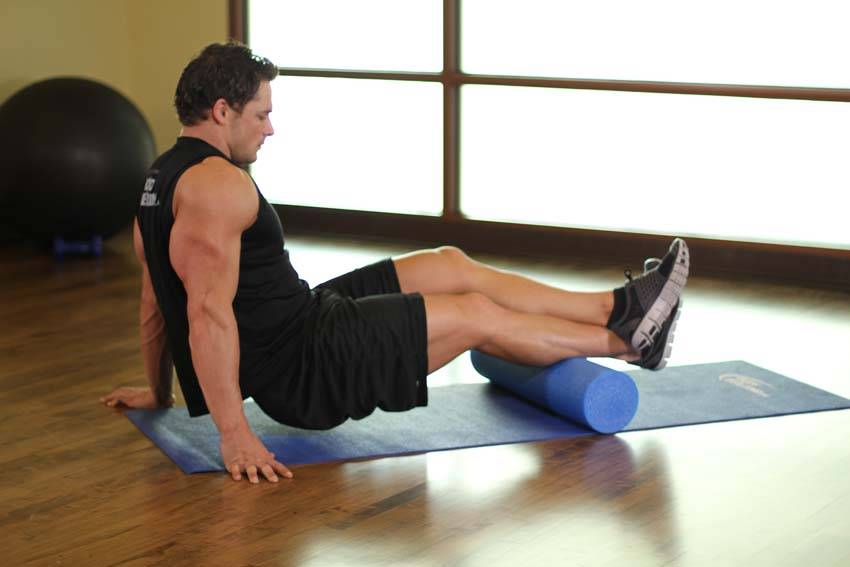
6. Calves-SMR
78% MatchHow to perform this exercise
- Begin seated on the floor. Place a foam roller underneath your lower leg. Your other leg can either be crossed over the opposite or be placed on the floor, supporting some of your weight. This will be your starting position.
- Place your hands to your side or just behind you, and press down to raise your hips off of the floor, placing much of your weight against your calf muscle. Roll from below the knee to above the ankle, pausing at points of tension for 10-30 seconds. Repeat for the other leg.
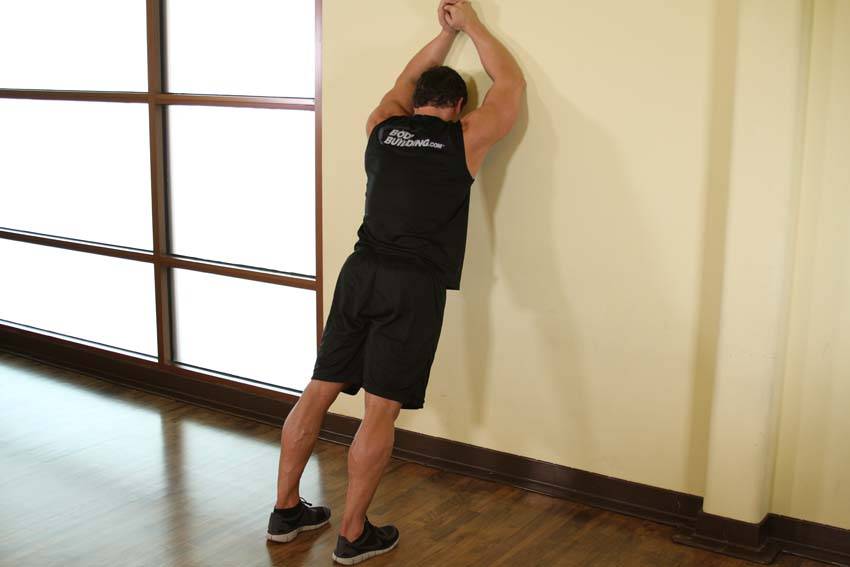
7. Calf Stretch Elbows Against Wall
76.2% MatchHow to perform this exercise
- Stand facing a wall from a couple feet away.
- Lean against the wall, placing your weight on your forearms.
- Attempt to keep your heels on the ground. Hold for 10-20 seconds. You may move further or closer the wall, making it more or less difficult, respectively.
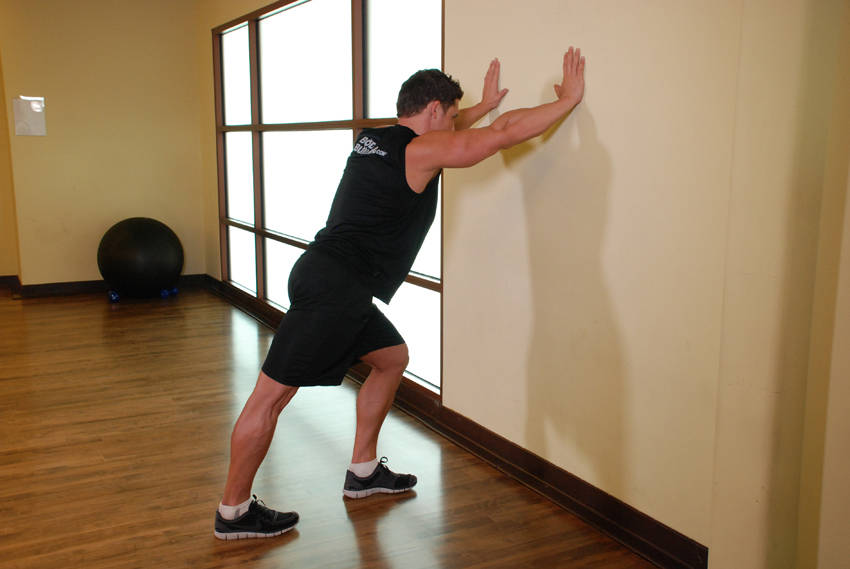
8. Calf Stretch Hands Against Wall
76.2% MatchHow to perform this exercise
- Stand facing a wall from several feet away. Stagger your stance, placing one foot forward.
- Lean forward and rest your hands on the wall, keeping your heel, hip and head in a straight line.
- Attempt to keep your heel on the ground. Hold for 10-20 seconds and then switch sides.
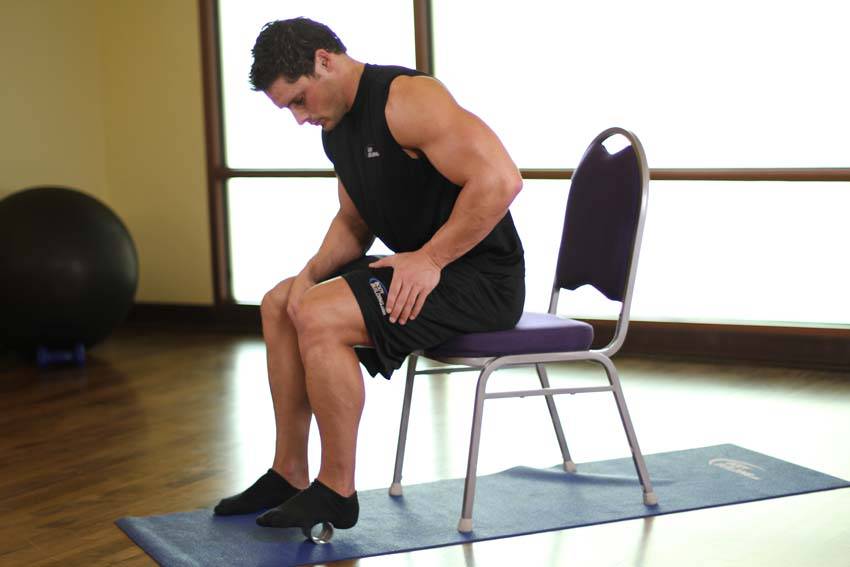
9. Foot-SMR
73.2% MatchHow to perform this exercise
- This exercise stretches the fascia of the muscles in the feet. Start off seated with your shoes removed. Using a foot roller or a similar object, such as a small section of pvc pipe, place your foot against the roller across the arch of your foot. This will be your starting position.
- Press down firmly, rolling across the arch of your foot. Hold for 10-30 seconds, and then switch feet.
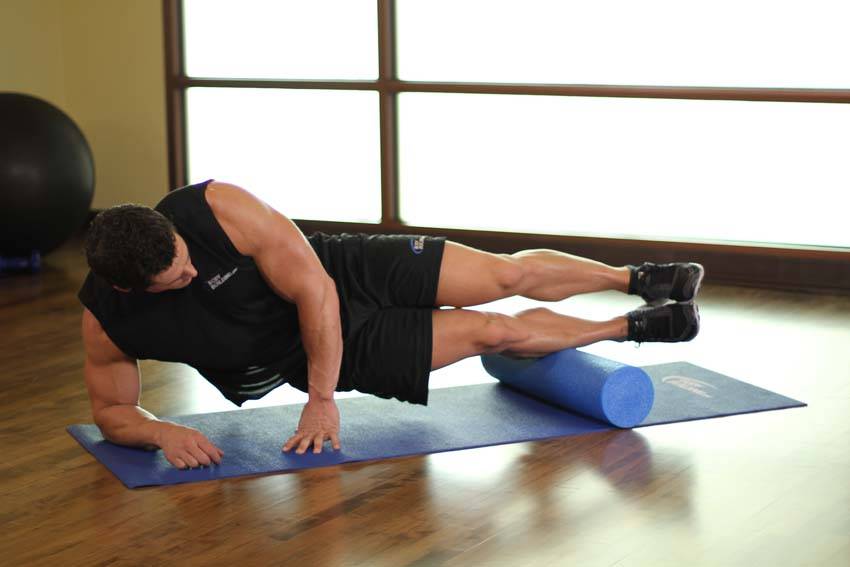
10. Peroneals-SMR
73.2% MatchHow to perform this exercise
- Lay on your side, supporting your weight on your forearm and on a foam roller placed on the outside of your lower leg. Your upper leg can either be on top of your lower leg, or you can cross it in front of you. This will be your starting position.
- Raise your hips off of the ground and begin to roll from below the knee to above the ankle on the side of your leg, pausing at points of tension for 10-30 seconds. Repeat on the other leg.
Why You Might Need a Calf Stretch With Rope Alternative
You may need substitutes if you lack a rope, have limited space, or feel discomfort using a strap across the foot. Injuries such as Achilles tendinopathy or recent calf strains often demand gentler joint angles and less tensile load; for example, a bent-knee soleus stretch reduces gastrocnemius stretch and lowers tension on the Achilles. Preferences matter too: some lifters prefer weight-bearing stretches to load muscle-tendon units, while others want passive stretches for mobility. Technique cues, keep the ankle dorsiflexed and avoid forcing range, preserve muscle activation patterns and protect the tendon while still improving dorsiflexion and calf length.
How to Choose the Right Substitute
Match the substitute to your goal: increase passive range (choose a seated strap or wall stretch with slow dorsiflexion) or load the muscle-tendon unit (use slant-board heel drops). Consider knee position: straight knee emphasizes gastrocnemius; bent knee targets soleus. Factor in pain and tissue tolerance, start with low-intensity holds and shorter durations if you have tendon pain. Also assess equipment and space: a towel or strap, step, or wall cover most needs. Cue: control dorsiflexion through the ankle and monitor heel pressure to ensure the intended muscle (gastroc vs soleus) is being stretched.
Frequently Asked Questions
What muscles does Calf Stretch With Rope work?
Calf Stretch With Rope primarily stretches the gastrocnemius and soleus, the two major plantarflexors. Knee position alters emphasis: a straight knee increases stretch on the gastrocnemius, while a bent knee shifts load to the soleus and reduces gastroc tension.
What is the best bodyweight alternative to Calf Stretch With Rope?
A standing wall calf stretch or runner's lunge stretch is the best bodyweight option. Stand facing a wall, drive the front knee over the toes while keeping the rear heel down to dorsiflex the ankle; keep the rear leg straight for gastroc emphasis or bend it slightly to load the soleus.
Can I build muscle without doing Calf Stretch With Rope?
Yes; building calf muscle relies on progressive loading (calf raises, eccentric heel drops), not on a specific stretch. Use calf raises and loaded eccentric work to increase muscle size, and include targeted stretches or mobility work to maintain ankle range of motion and support full activation.
More Exercise Alternatives
Find Alternatives for Any Exercise
Use the exercise substitution finder to compare ranked alternatives for your available equipment and training preference.
Try the Exercise Substitution Finder →