

10 Best Dumbbell One Arm Pullover Alternatives for Limited Equipment
The Dumbbell One Arm Pullover On Exercise Ball is done lying on your back with dumbbells. Ranked closest by our scoring: the One Arm Dumbbell Bench Press, the Dumbbell Bench Press With Neutral Grip and the Dumbbell Lying Pullover On Exercise Ball. A harder version, the Dumbbell Pullover Hip Extension On Exercise Ball, is listed below as a progression rather than a swap.
Updated Ranked by our 12-factor similarity model How it works
Original Exercise: Dumbbell One Arm Pullover On Exercise Ball
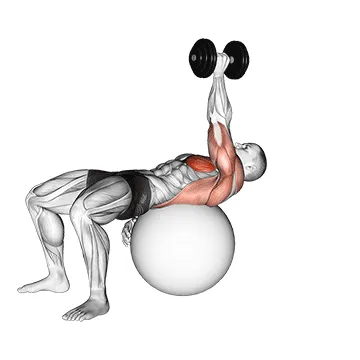
- Primary muscle
- Pectorals
- Equipment
- Dumbbell
- Difficulty
- Intermediate
- Type
- Compound
Secondary muscles: Triceps, Latissimus Dorsi, Rhomboids
How to perform Dumbbell One Arm Pullover On Exercise Ball
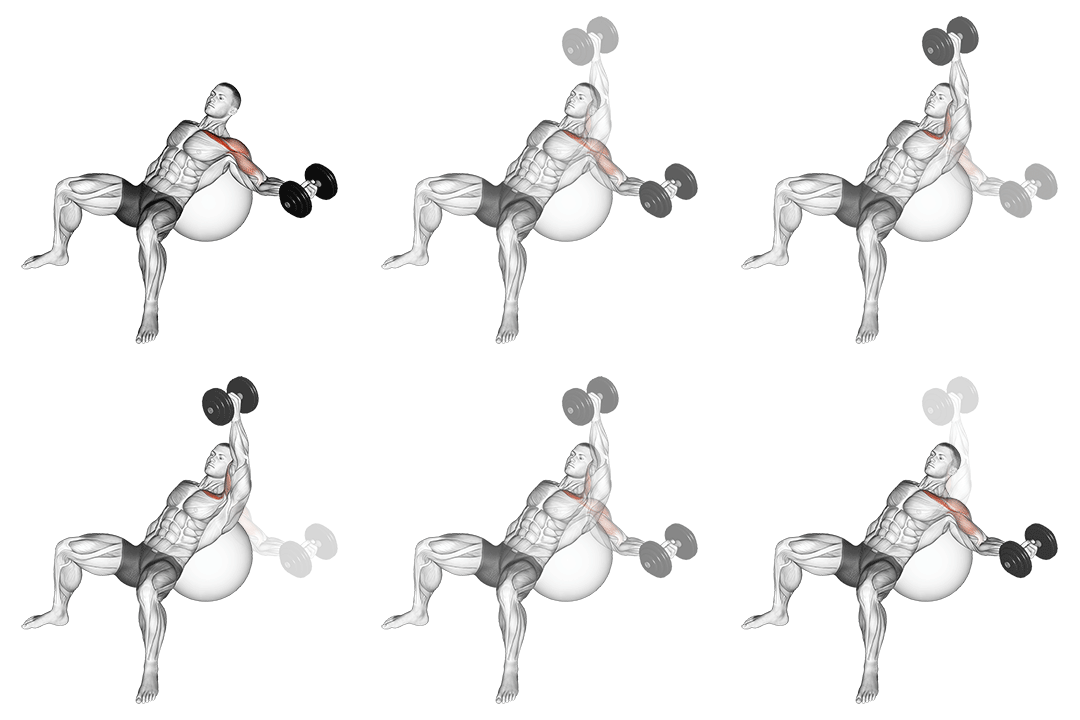
- Sit on an exercise ball with your feet flat on the ground and your knees bent at a 90-degree angle.
- Hold a dumbbell with one hand and extend your arm straight up above your chest.
- Slowly lower the dumbbell behind your head while keeping your arm straight.
- Pause for a moment, then raise the dumbbell back to the starting position.
- Repeat for the desired number of repetitions, then switch arms.
Ranked Dumbbell One Arm Pullover On Exercise Ball Alternatives
10 substitutes, ranked by how closely each one matches the Dumbbell One Arm Pullover On Exercise Ball on movement pattern, muscles worked, equipment and body position. The higher the score, the less you change. Open "How to perform this exercise" on a card for the steps; every card title links to that exercise's own alternatives page. Harder versions are tagged as progressions and kept out of the top spot even when they score higher.
Best match 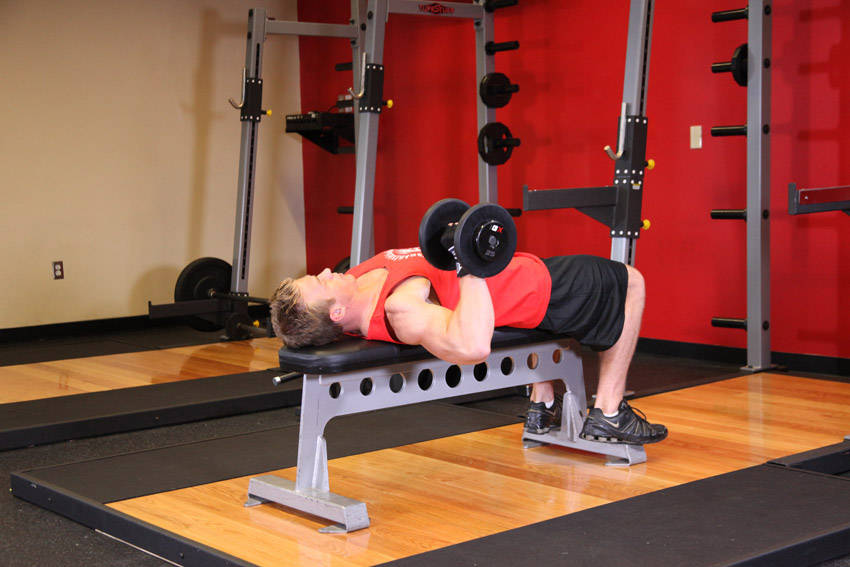
1. One Arm Dumbbell Bench Press
93% match- Pectorals
- Dumbbell
- Intermediate
- Compound
Pick this when you want to work the pectorals with less balance to manage.
How to perform this exercise
- Lie down on a flat bench with a dumbbell in one hand on top of your thigh.
- By using your thigh to help you get the dumbbell up, clean the dumbbell up so that you can hold it in front of you at shoulder width. Use the hand you are not lifting with to help position the dumbbell over you properly.
- Once at shoulder width, rotate your wrist forward so that the palm of your hand is facing away from you. This will be your starting position.
- Bring down the weights slowly to your side as you breathe in. Keep full control of the dumbbell at all times. Tip: Use the hand that you are not lifting with to help keep the dumbbell balance as you may struggle a bit at first. Only use your non-lifting hand if it is needed. Otherwise, keep it resting to the side.
- As you breathe out, push the dumbbells up using your pectoral muscles. Lock your arms in the contracted position, squeeze your chest, hold for a second and then start coming down slowly. Tip: It should take at least twice as long to go down than to come up.
- Repeat the movement for the prescribed amount of repetitions of your training program.
- Switch arms and repeat the movement.
Sets and reps: 3 or 4 sets of 6 to 10 reps on each side.
Why this matches
- Primary muscle: pectorals, the same as the Dumbbell One Arm Pullover On Exercise Ball
- Equipment: free weights, the same as the Dumbbell One Arm Pullover On Exercise Ball
- Body position: lying on your back, the same as the Dumbbell One Arm Pullover On Exercise Ball
- Balance: easier to stay steady on than the Dumbbell One Arm Pullover On Exercise Ball
Progression
- Pectorals
- Dumbbell
- Advanced
- Compound
Pick this when you want a harder version that still works the pectorals.
How to perform this exercise
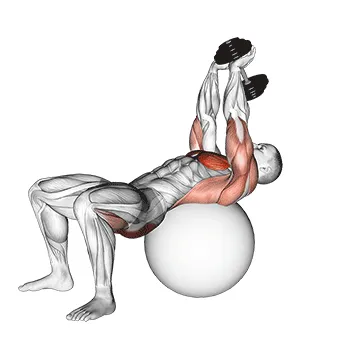
- Sit on an exercise ball with your feet flat on the ground and the dumbbell resting on your thighs.
- Slowly walk your feet forward, rolling the exercise ball down your back until your head, neck, and upper back are supported on the ball.
- Hold the dumbbell with both hands and extend your arms straight up over your chest, keeping a slight bend in your elbows.
- Lower the dumbbell behind your head, keeping your arms straight and maintaining control.
- Pause for a moment, then raise the dumbbell back to the starting position.
- While keeping your arms extended, lift your hips off the ground, squeezing your glutes and engaging your core.
- Lower your hips back down to the starting position.
- Repeat for the desired number of repetitions.
Sets and reps: 3 to 5 sets of 5 to 8 reps.
Why this matches
- Primary muscle: pectorals, the same as the Dumbbell One Arm Pullover On Exercise Ball
- Equipment: free weights, the same as the Dumbbell One Arm Pullover On Exercise Ball
- Body position: lying on your back, the same as the Dumbbell One Arm Pullover On Exercise Ball
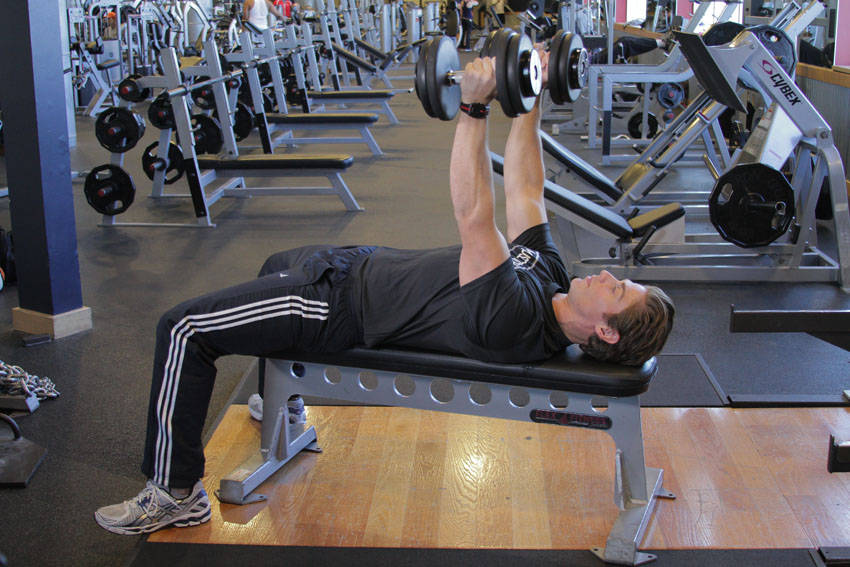
- Pectorals
- Dumbbell
- Intermediate
- Compound
How to perform this exercise
- Take a dumbbell in each hand and lay back onto a flat bench. Your feet should be flat on the floor and your shoulder blades retracted.
- Maintaining a neutral grip, palms facing each other, begin with your arms extended directly above you, perpendicular to the floor. This will be your starting position.
- Begin the movement by flexing the elbow, lowering the upper arms to the side. Descend until the dumbbells are to your torso.
- Pause, then extend the elbow and return to the starting position.
Sets and reps: 3 or 4 sets of 6 to 10 reps.
Why this matches
- Primary muscle: pectorals, the same as the Dumbbell One Arm Pullover On Exercise Ball
- Equipment: free weights, the same as the Dumbbell One Arm Pullover On Exercise Ball
- Body position: lying on your back, the same as the Dumbbell One Arm Pullover On Exercise Ball
- Balance: easier to stay steady on than the Dumbbell One Arm Pullover On Exercise Ball
- Pectorals
- Stability-ball
- Intermediate
- Isolation
A good swap when you have a stability ball to work with, and it still works the pectorals.
How to perform this exercise
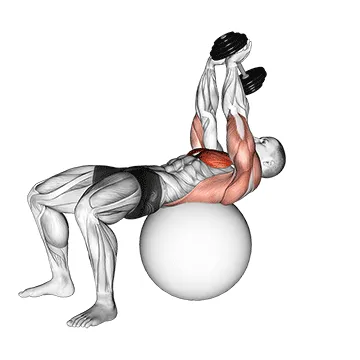
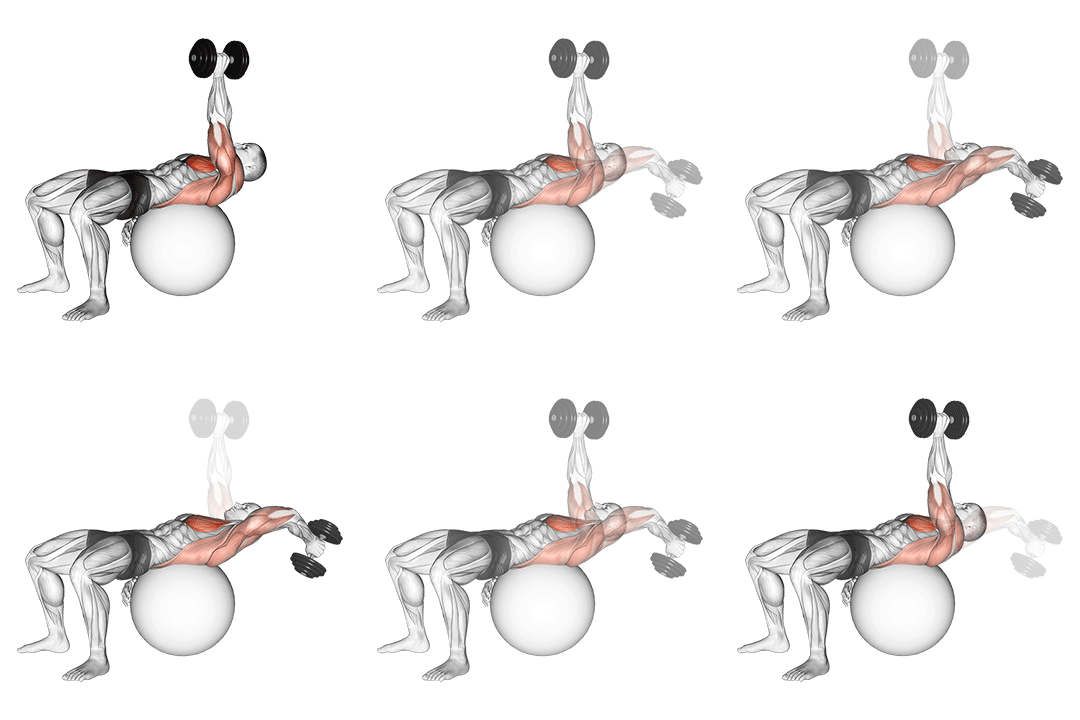
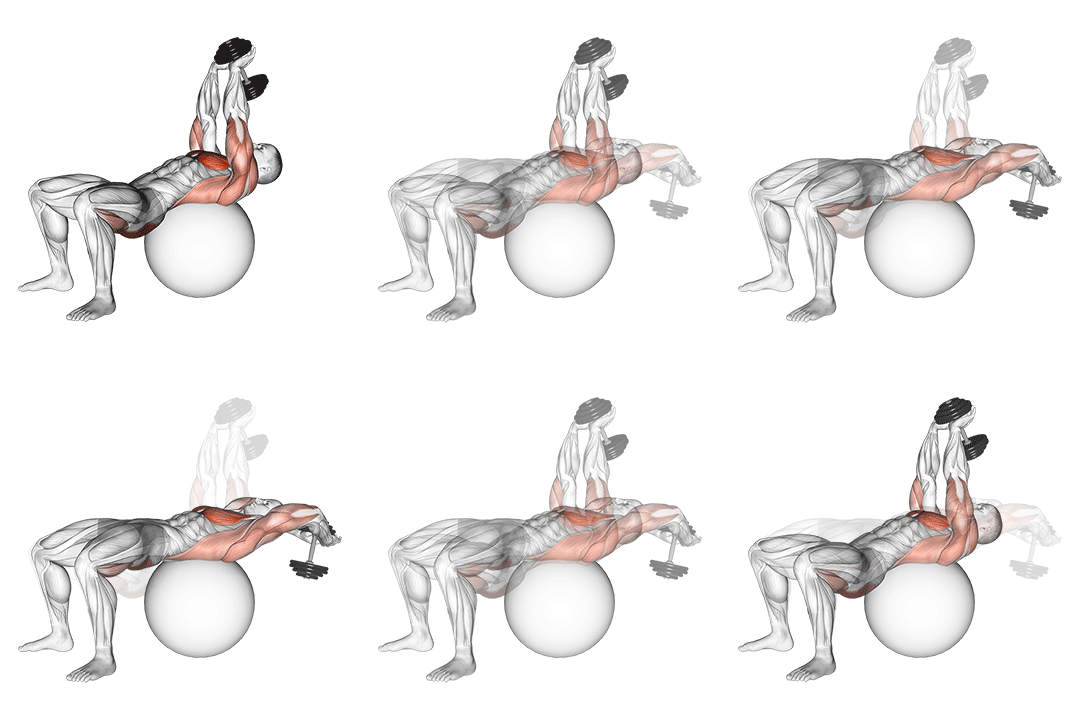
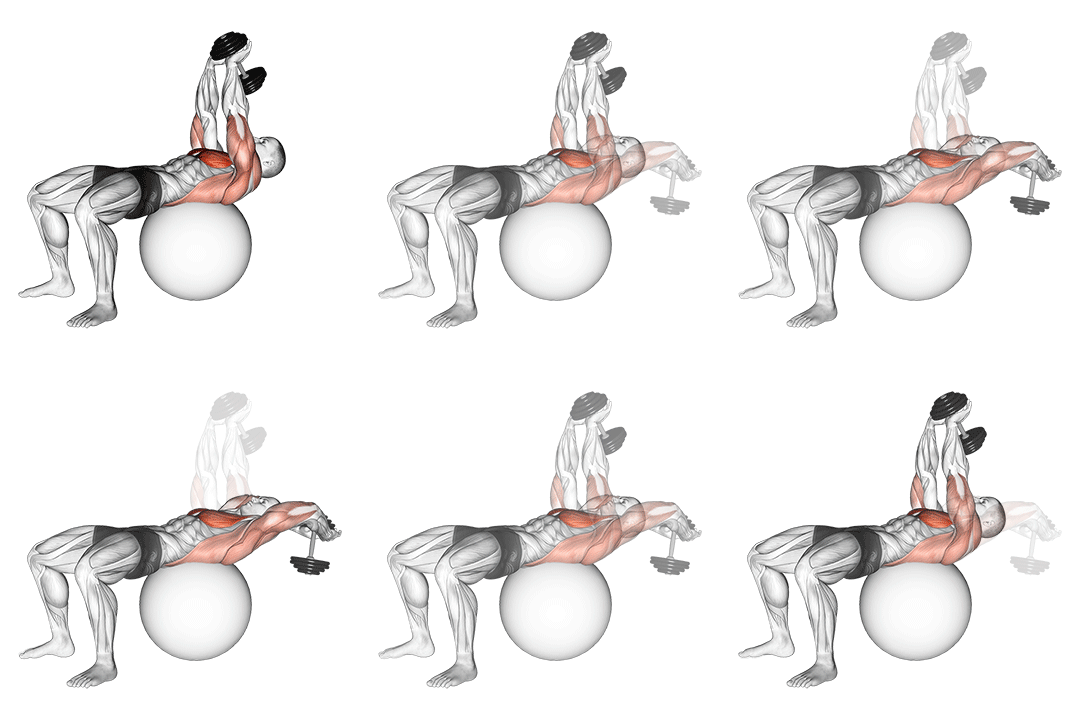
- Sit on an exercise ball and roll forward until your upper back is resting on the ball.
- Hold a dumbbell with both hands and extend your arms straight up over your chest.
- Slowly lower the dumbbell behind your head while keeping your arms straight.
- Pause for a moment, then raise the dumbbell back to the starting position.
- Repeat for the desired number of repetitions.
Sets and reps: 3 sets of 10 to 15 reps.
Why this matches
- Primary muscle: pectorals, the same as the Dumbbell One Arm Pullover On Exercise Ball
- Body position: lying on your back, the same as the Dumbbell One Arm Pullover On Exercise Ball
- Pectorals
- Dumbbell
- Intermediate
- Compound
It still works the pectorals, through a different movement.
How to perform this exercise
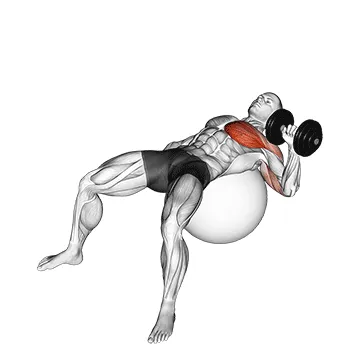
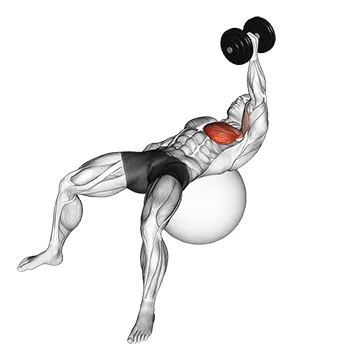
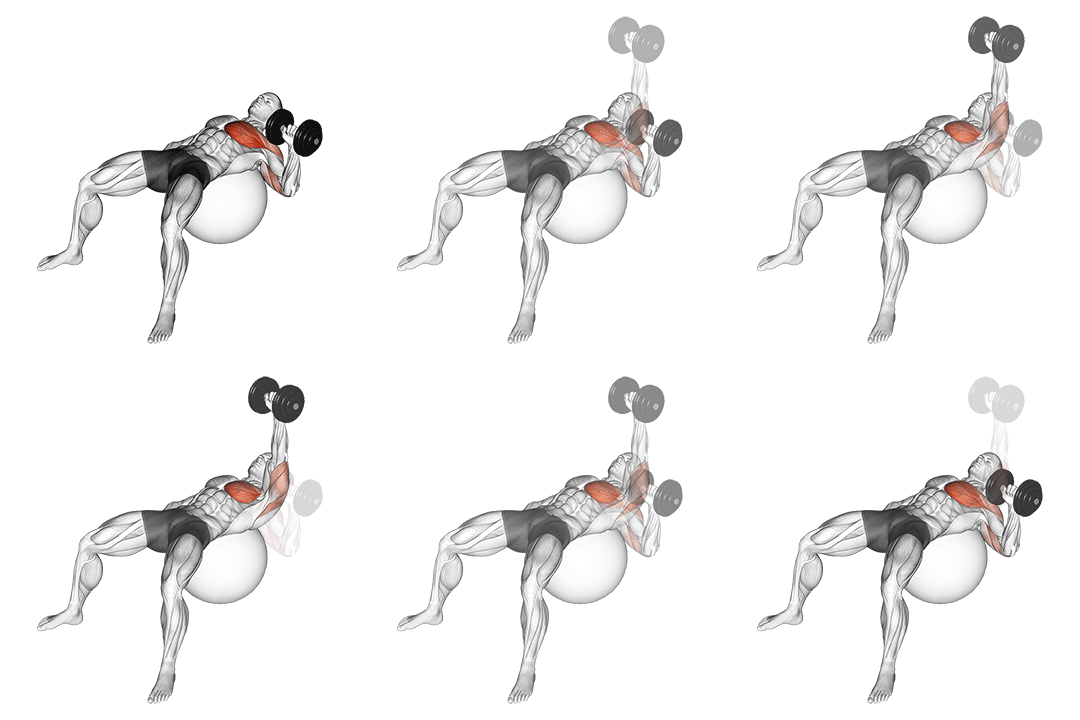
- Sit on an exercise ball with your feet flat on the ground and your knees bent at a 90-degree angle.
- Hold a dumbbell in one hand and position it at shoulder height, with your elbow bent and palm facing forward.
- Slowly press the dumbbell upward until your arm is fully extended, while keeping your core engaged and maintaining balance on the exercise ball.
- Pause for a moment at the top, then slowly lower the dumbbell back to the starting position.
- Repeat for the desired number of repetitions, then switch to the other arm.
Sets and reps: 3 or 4 sets of 6 to 10 reps on each side.
Why this matches
- Primary muscle: pectorals, the same as the Dumbbell One Arm Pullover On Exercise Ball
- Equipment: free weights, the same as the Dumbbell One Arm Pullover On Exercise Ball
- Body position: lying on your back, the same as the Dumbbell One Arm Pullover On Exercise Ball
- Pectorals
- Stability-ball
- Advanced
- Isolation
How to perform this exercise
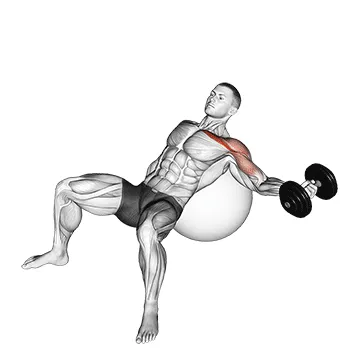
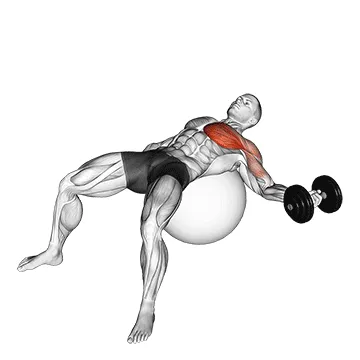
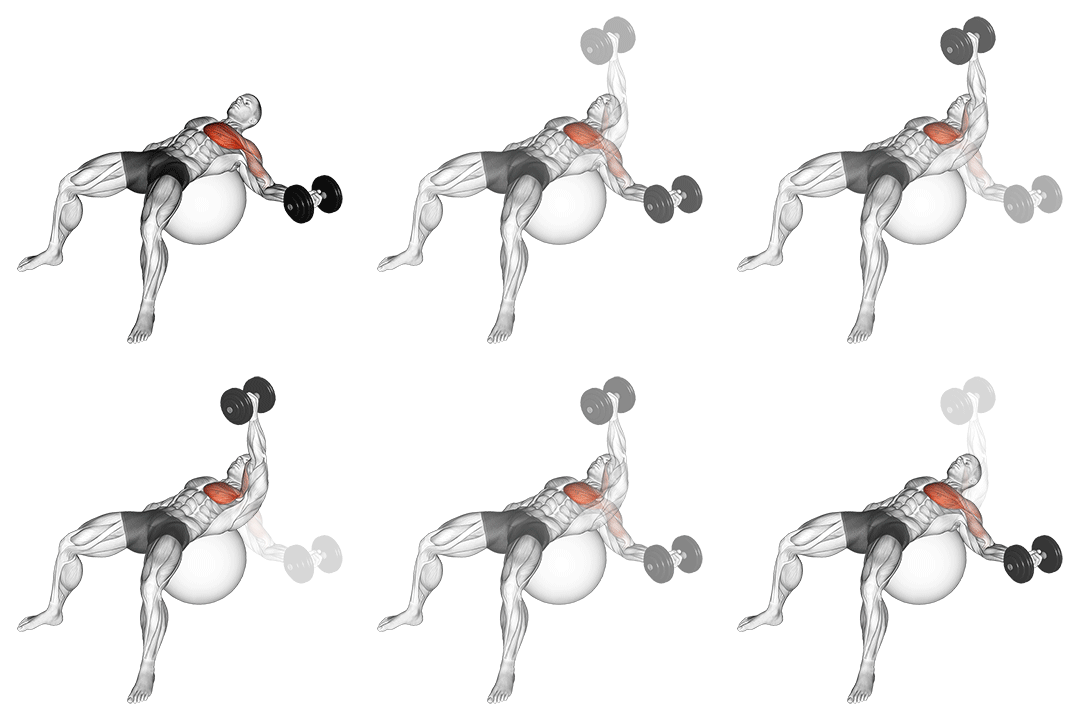
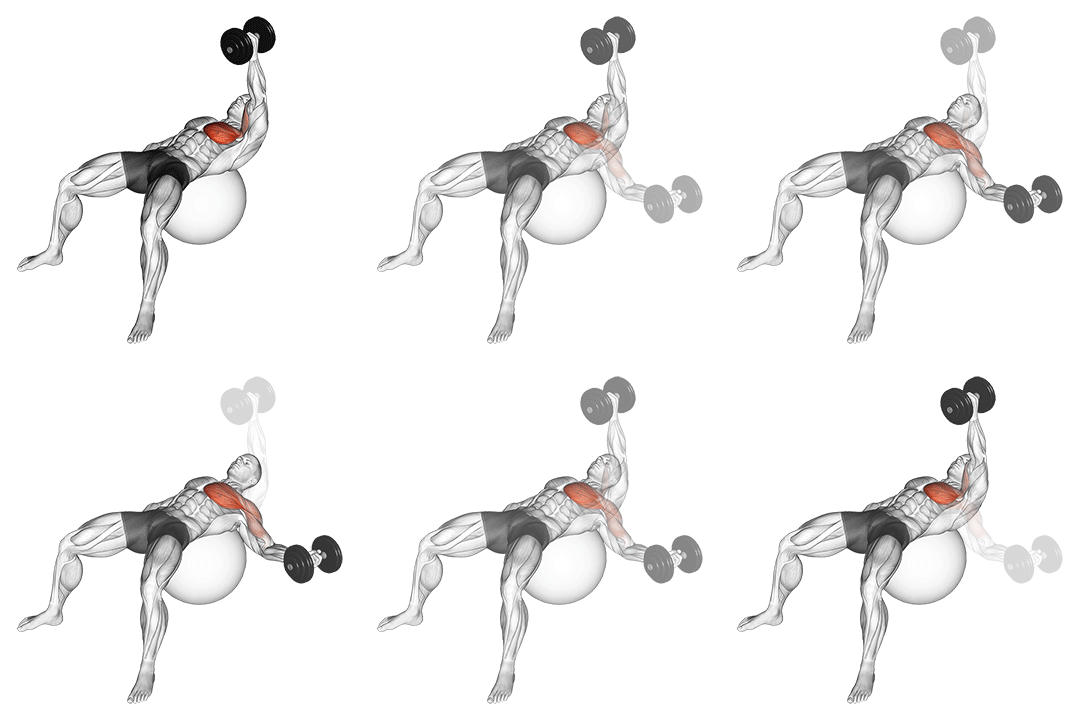
- Sit on an exercise ball with a dumbbell in one hand.
- Walk your feet forward and roll your body down until your head, neck, and upper back are supported on the ball.
- Hold the dumbbell with your arm extended straight up over your chest, palm facing inwards.
- Slowly lower the dumbbell out to the side, keeping a slight bend in your elbow.
- Pause for a moment when your arm is parallel to the ground.
- Engage your chest muscles to bring the dumbbell back up to the starting position.
- Repeat for the desired number of repetitions, then switch arms.
Sets and reps: 3 sets of 10 to 15 reps on each side.
Why this matches
- Primary muscle: pectorals, the same as the Dumbbell One Arm Pullover On Exercise Ball
- Body position: lying on your back, the same as the Dumbbell One Arm Pullover On Exercise Ball
- Pectorals
- Stability-ball
- Advanced
- Isolation
How to perform this exercise
- Sit on an exercise ball with a dumbbell in one hand and your feet flat on the ground.
- Walk your feet forward, rolling the ball until your upper back is supported on the ball and your head, neck, and shoulders are off the ball.
- Extend your arm with the dumbbell straight up above your chest, palm facing inward.
- Slowly lower the dumbbell out to the side, keeping a slight bend in your elbow.
- Pause for a moment when your arm is parallel to the ground.
- Engage your chest muscles to bring the dumbbell back up to the starting position.
- Repeat for the desired number of repetitions, then switch arms.
Sets and reps: 3 sets of 10 to 15 reps on each side.
Why this matches
- Primary muscle: pectorals, the same as the Dumbbell One Arm Pullover On Exercise Ball
- Body position: lying on your back, the same as the Dumbbell One Arm Pullover On Exercise Ball
- Pectorals
- Stability-ball
- Advanced
- Isolation
How to perform this exercise
- Sit on an exercise ball with a dumbbell in one hand and your feet flat on the ground.
- Walk your feet forward and roll your body down until your upper back is resting on the exercise ball.
- Extend your arm with the dumbbell straight up above your chest, palm facing inwards.
- Slowly lower the dumbbell out to the side, keeping a slight bend in your elbow.
- Pause for a moment, then squeeze your chest muscles to bring the dumbbell back to the starting position.
- Repeat for the desired number of repetitions, then switch arms.
Sets and reps: 3 sets of 10 to 15 reps on each side.
Why this matches
- Primary muscle: pectorals, the same as the Dumbbell One Arm Pullover On Exercise Ball
- Body position: lying on your back, the same as the Dumbbell One Arm Pullover On Exercise Ball
- Pectorals
- Barbell
- Advanced
- Compound
How to perform this exercise
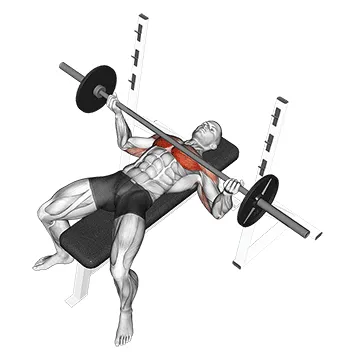
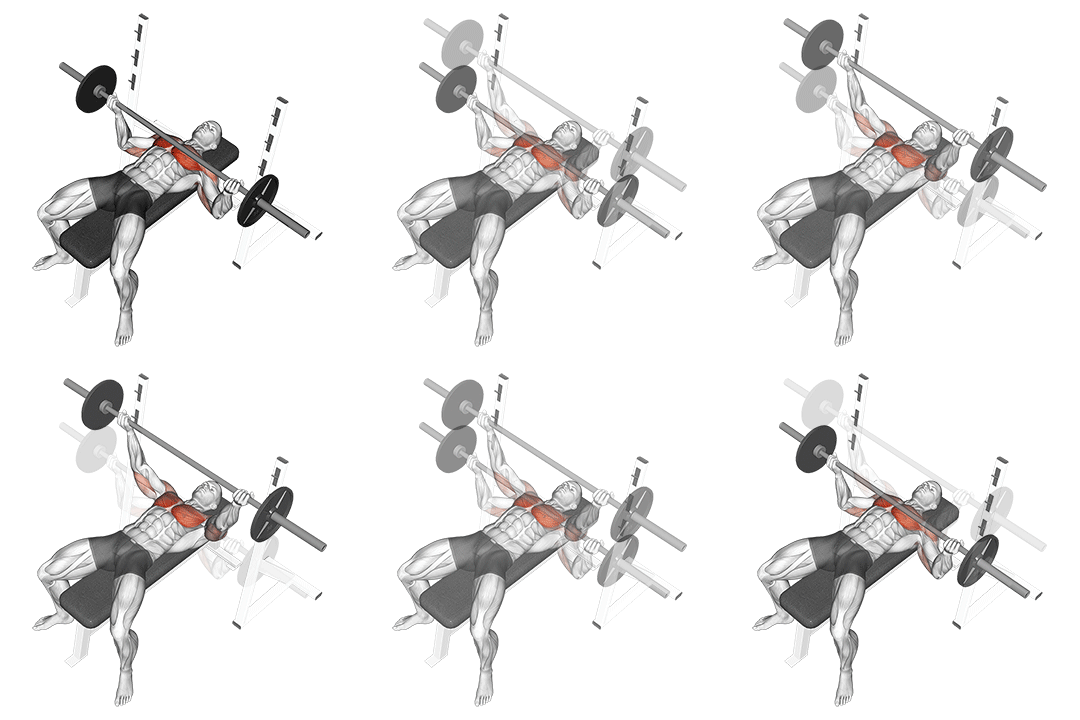
- Lie flat on a bench with your feet flat on the ground and your back pressed against the bench.
- Grasp the barbell with a wide reverse grip, slightly wider than shoulder-width apart.
- Lift the barbell off the rack and hold it directly above your chest with your arms fully extended.
- Lower the barbell slowly towards your chest, keeping your elbows tucked in and your wrists straight.
- Pause for a moment when the barbell touches your chest, then push it back up to the starting position.
- Repeat for the desired number of repetitions.
Sets and reps: 3 to 5 sets of 5 to 8 reps.
Why this matches
- Primary muscle: pectorals, the same as the Dumbbell One Arm Pullover On Exercise Ball
- Equipment: free weights, the same as the Dumbbell One Arm Pullover On Exercise Ball
- Body position: lying on your back, the same as the Dumbbell One Arm Pullover On Exercise Ball
- Balance: easier to stay steady on than the Dumbbell One Arm Pullover On Exercise Ball
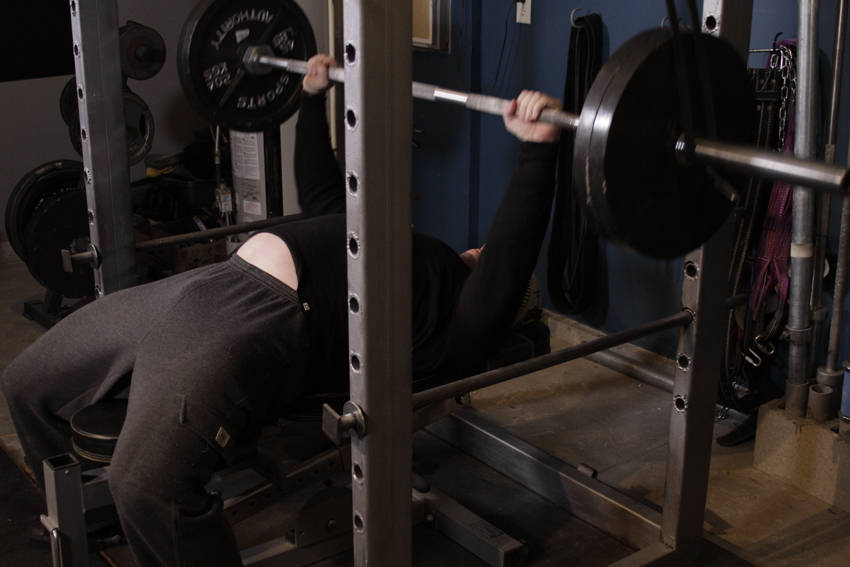
10. Reverse Band Bench Press
85% match- Pectorals
- Barbell
- Intermediate
- Compound
How to perform this exercise
- Position a bench inside a power rack, with the bar set to the correct height. Begin by anchoring bands either to band pegs or to the top of the rack. Ensure that you will be position properly under the bands. Attach the other end to the barbell.
- Lie on the bench, tuck your feet underneath you and arch your back. Using the bar to help support your weight, lift your shoulder off the bench and retract them, squeezing the shoulder blades together. Use your feet to drive your traps into the bench. Maintain this tight body position throughout the movement. However wide your grip, it should cover the ring on the bar.
- Pull the bar out of the rack without protracting your shoulders. Focus on squeezing the bar and trying to pull it apart. Lower the bar to your lower chest or upper stomach. The bar, wrist, and elbow should stay in line at all times.
- Pause when the barbell touches your torso, and then drive the bar up with as much force as possible. The elbows should be tucked in until lockout.
Sets and reps: 3 or 4 sets of 6 to 10 reps.
Why this matches
- Primary muscle: pectorals, the same as the Dumbbell One Arm Pullover On Exercise Ball
- Equipment: free weights, the same as the Dumbbell One Arm Pullover On Exercise Ball
- Body position: lying on your back, the same as the Dumbbell One Arm Pullover On Exercise Ball
- Balance: easier to stay steady on than the Dumbbell One Arm Pullover On Exercise Ball
Why You Might Need a Dumbbell One Arm Pullover On Exercise Ball Alternative
You might substitute this exercise because of shoulder pain, poor balance on the ball, lack of an exercise ball, or a desire to shift emphasis across the chest. The one-arm pullover places the glenohumeral joint in long-lever shoulder extension and challenges scapular control; that increases risk for impingement if you lack cuff strength. Choose alternatives that reduce unstable torque (for example, lying on a bench) or split the load bilaterally to lower shear and preserve pectoral activation. Cue: stop at neutral shoulder extension and keep the ribcage braced to limit lumbar compensation while still targeting the sternal and clavicular heads of the pecs.
Dumbbell One Arm Pullover On Exercise Ball FAQ
What muscles does Dumbbell One Arm Pullover On Exercise Ball work?
The exercise primarily stresses the pectoralis major, especially the sternal fibers, while also loading the latissimus dorsi, serratus anterior, and triceps as stabilizers. Biomechanically it combines shoulder extension and upper torso stabilization, so cue scapular retraction and a long eccentrically controlled descent to maximize chest tension.
Find Alternatives for Any Exercise
Search the exercise database and filter the ranked substitutes by the equipment you own.
Similarity scores compare exercise metadata such as movement pattern, muscles, equipment and body position. They are not a safety rating or a check that you own the equipment. Learn about our methodology