

6 Best Dumbbell Seated Alternate Front Raise Alternatives for Home Gym
The Dumbbell Seated Alternate Front Raise is done seated with dumbbells. Ranked closest by our scoring: Handstand Push-ups.
Updated Ranked by our 12-factor similarity model How it works
Original Exercise: Dumbbell Seated Alternate Front Raise
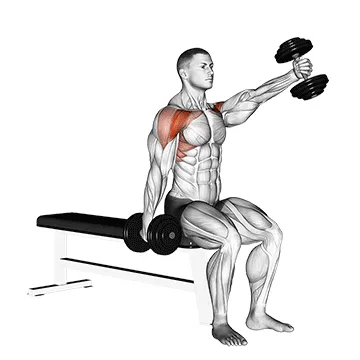
- Primary muscle
- Delts
- Equipment
- Dumbbell
- Difficulty
- Beginner
- Type
- Isolation
Secondary muscles: Trapezius, Biceps
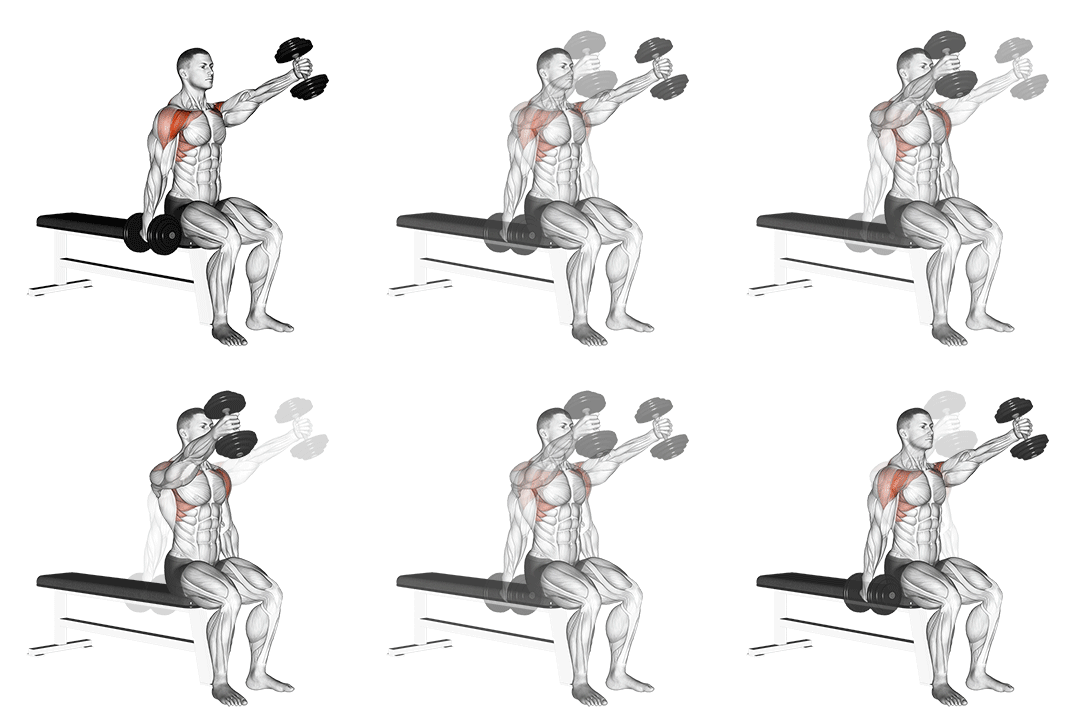
How to perform Dumbbell Seated Alternate Front Raise
- Sit on a bench with your back straight and feet flat on the ground.
- Hold a dumbbell in each hand with your palms facing your body and arms extended down by your sides.
- Keeping your arms straight, raise one dumbbell in front of you until it is parallel to the ground.
- Pause for a moment at the top, then slowly lower the dumbbell back down to the starting position.
- Repeat with the other arm.
- Alternate between arms for the desired number of repetitions.
Ranked Dumbbell Seated Alternate Front Raise Alternatives
6 substitutes, ranked by how closely each one matches the Dumbbell Seated Alternate Front Raise on movement pattern, muscles worked, equipment and body position. The higher the score, the less you change. Open "How to perform this exercise" on a card for the steps; every card title links to that exercise's own alternatives page.
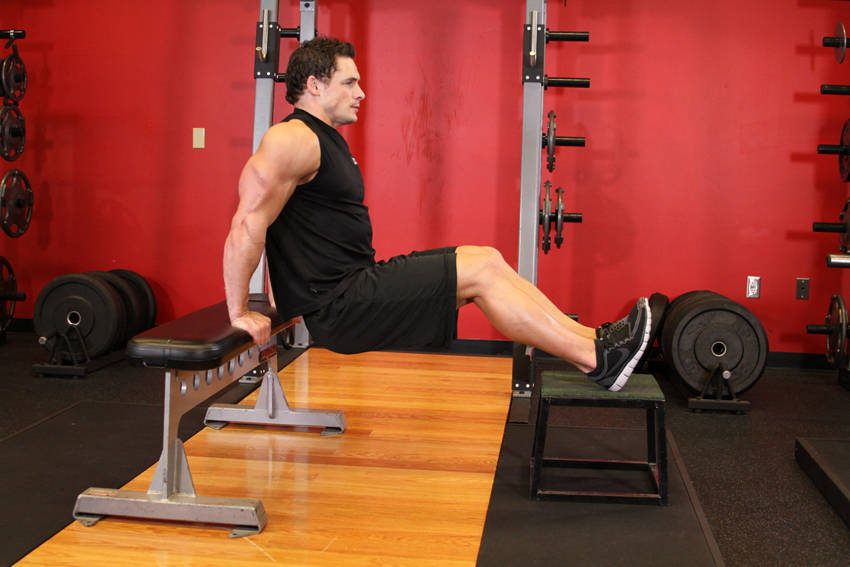
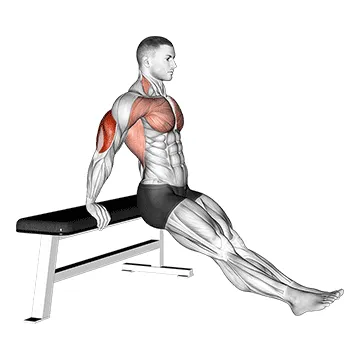
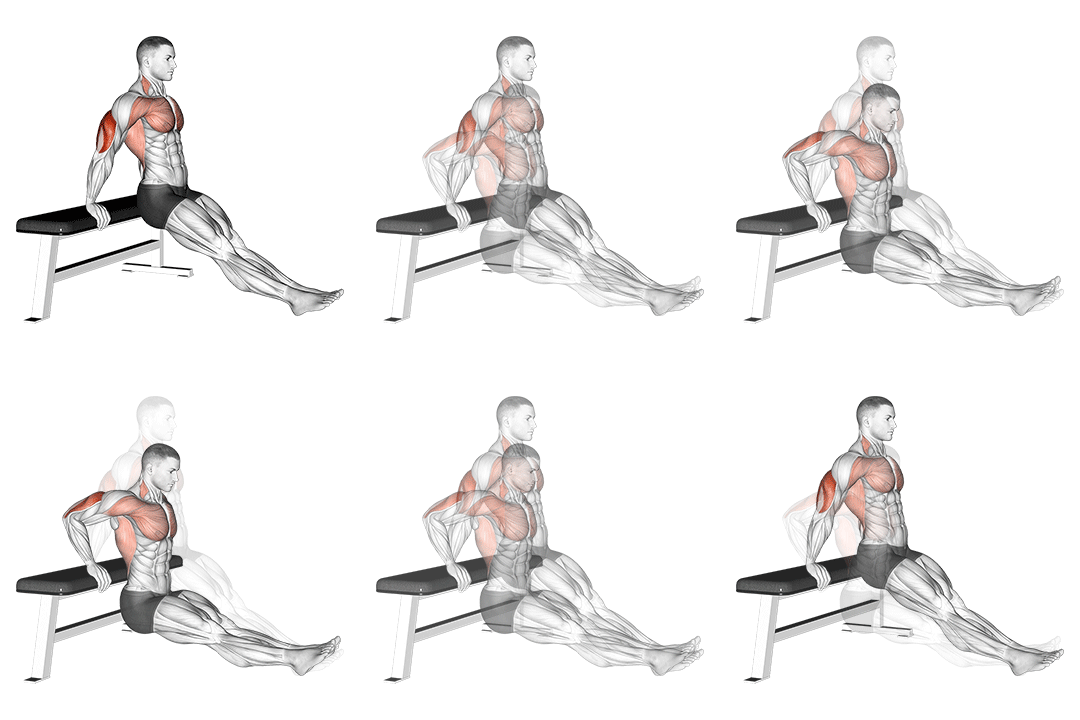
1. Bench Dips
34% match- Triceps
- Bodyweight
- Intermediate
- Compound
A looser match: it works the triceps rather than the delts.
How to perform this exercise
- For this exercise you will need to place a bench behind your back. With the bench perpendicular to your body, and while looking away from it, hold on to the bench on its edge with the hands fully extended, separated at shoulder width. The legs will be extended forward, bent at the waist and perpendicular to your torso. This will be your starting position.
- Slowly lower your body as you inhale by bending at the elbows until you lower yourself far enough to where there is an angle slightly smaller than 90 degrees between the upper arm and the forearm. Tip: Keep the elbows as close as possible throughout the movement. Forearms should always be pointing down.
- Using your triceps to bring your torso up again, lift yourself back to the starting position.
- Repeat for the recommended amount of repetitions.
Sets and reps: 3 or 4 sets of 6 to 10 reps.
Why this matches
- Primary muscle: triceps, not delts
- Equipment: bodyweight only, not free weights
- Body position: seated, the same as the Dumbbell Seated Alternate Front Raise
Best match 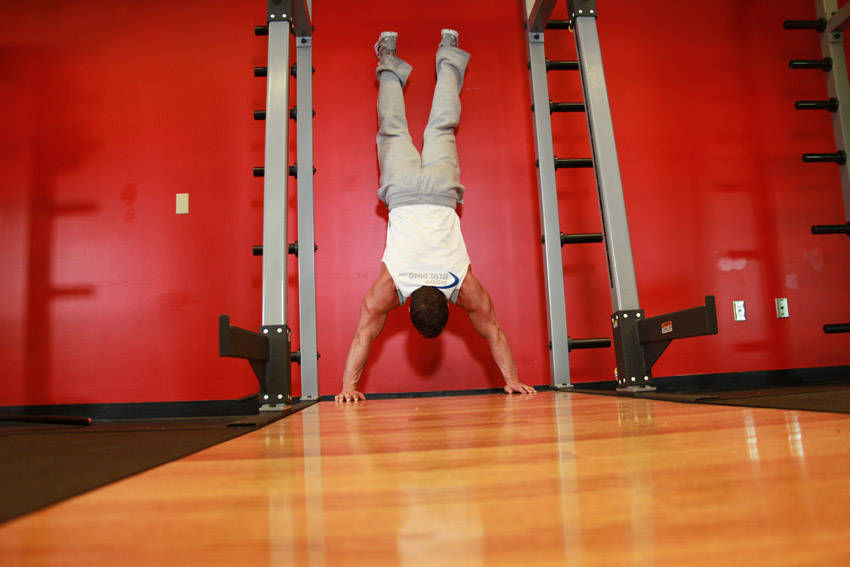
2. Handstand Push-ups
31% match- Delts
- Bodyweight
- Advanced
- Compound
Use this when you have nothing to train with, because it works the delts with bodyweight alone.
How to perform this exercise
- With your back to the wall bend at the waist and place both hands on the floor at shoulder width.
- Kick yourself up against the wall with your arms straight. Your body should be upside down with the arms and legs fully extended. Keep your whole body as straight as possible. Tip: If doing this for the first time, have a spotter help you. Also, make sure that you keep facing the wall with your head, rather than looking down.
- Slowly lower yourself to the ground as you inhale until your head almost touches the floor. Tip: It is of utmost importance that you come down slow in order to avoid head injury.
- Push yourself back up slowly as you exhale until your elbows are nearly locked.
- Repeat for the recommended amount of repetitions.
Sets and reps: 3 or 4 sets of 6 to 10 reps.
Why this matches
- Primary muscle: delts, the same as the Dumbbell Seated Alternate Front Raise
- Equipment: bodyweight only, not free weights
- Body position: inverted, not seated
- Balance: harder to stay steady on than the Dumbbell Seated Alternate Front Raise
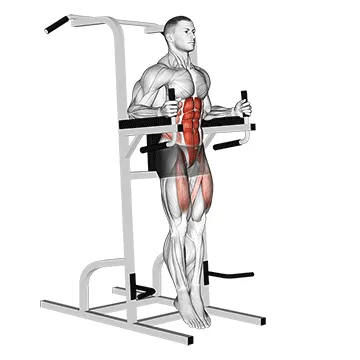
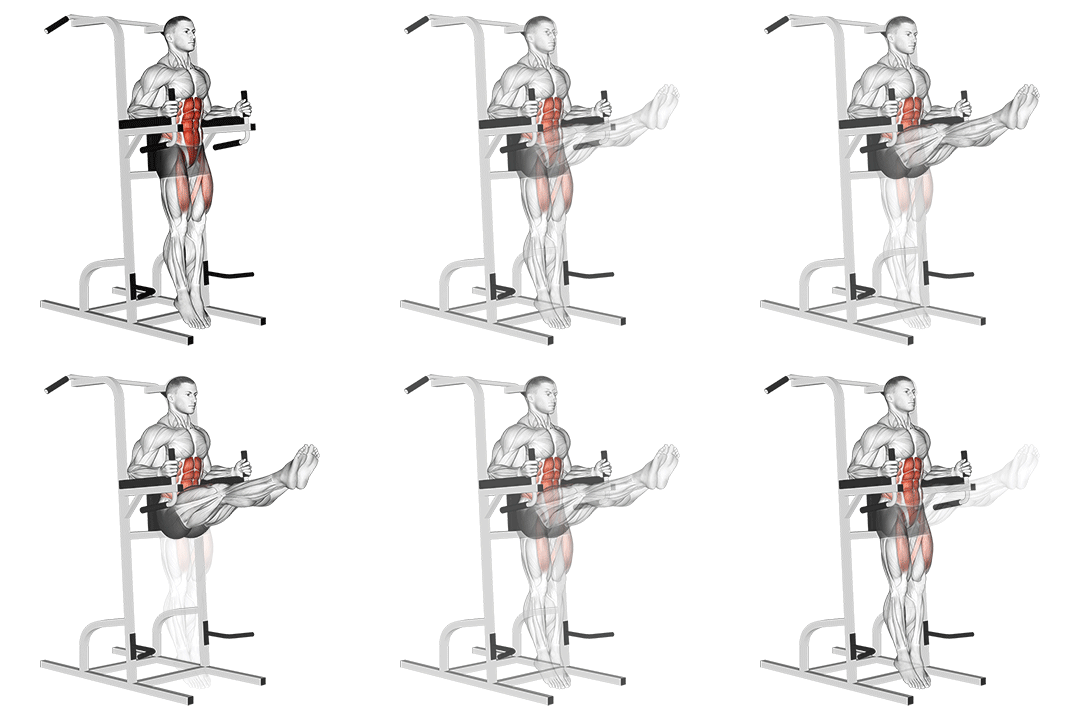
3. Captains Chair Straight Leg Raise
31% match- Abs
- Bodyweight
- Intermediate
- Compound
A looser match: it works the abs rather than the delts.
How to perform this exercise
- Sit on the captain's chair with your back against the backrest and your forearms resting on the arm pads.
- Keep your upper body stable and your back straight.
- Engage your abs and lift your legs up in front of you, keeping them straight.
- Continue lifting until your legs are parallel to the ground or as high as you can comfortably go.
- Pause for a moment at the top, then slowly lower your legs back down to the starting position.
- Repeat for the desired number of repetitions.
Sets and reps: 3 or 4 sets of 6 to 10 reps.
Why this matches
- Primary muscle: abs, not delts
- Equipment: bodyweight only, not free weights
- Body position: hanging, not seated
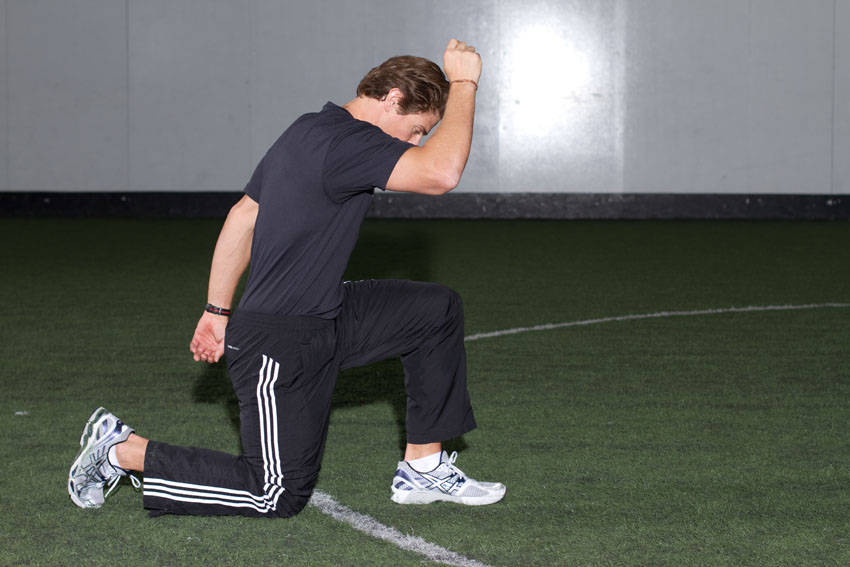
4. Kneeling Arm Drill
31% match- Shoulders
- Bodyweight
- Beginner
- Isolation
A looser match: it works the shoulders rather than the delts.
How to perform this exercise
- This drill helps increase arm efficiency during the run. Begin kneeling, left foot in front, right knee down. Apply pressure through the front heel to keep your glutes and hamstrings activated.
- Begin by blocking the arms in long, pendulum like swings. Close the arm angle, blocking with the arms as you would when jogging, progressing to a run and finally a sprint.
- As soon as your hands pass the hip, accelerate them forward during the sprinting motion to move them as quickly as possible.
- Switch knees and repeat.
Sets and reps: 3 sets of 8 to 12 reps on each side, and add reps before you add load.
Why this matches
- Primary muscle: shoulders, not delts
- Equipment: bodyweight only, not free weights
- Body position: kneeling, not seated
- Balance: harder to stay steady on than the Dumbbell Seated Alternate Front Raise
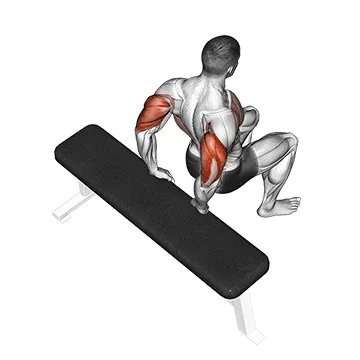
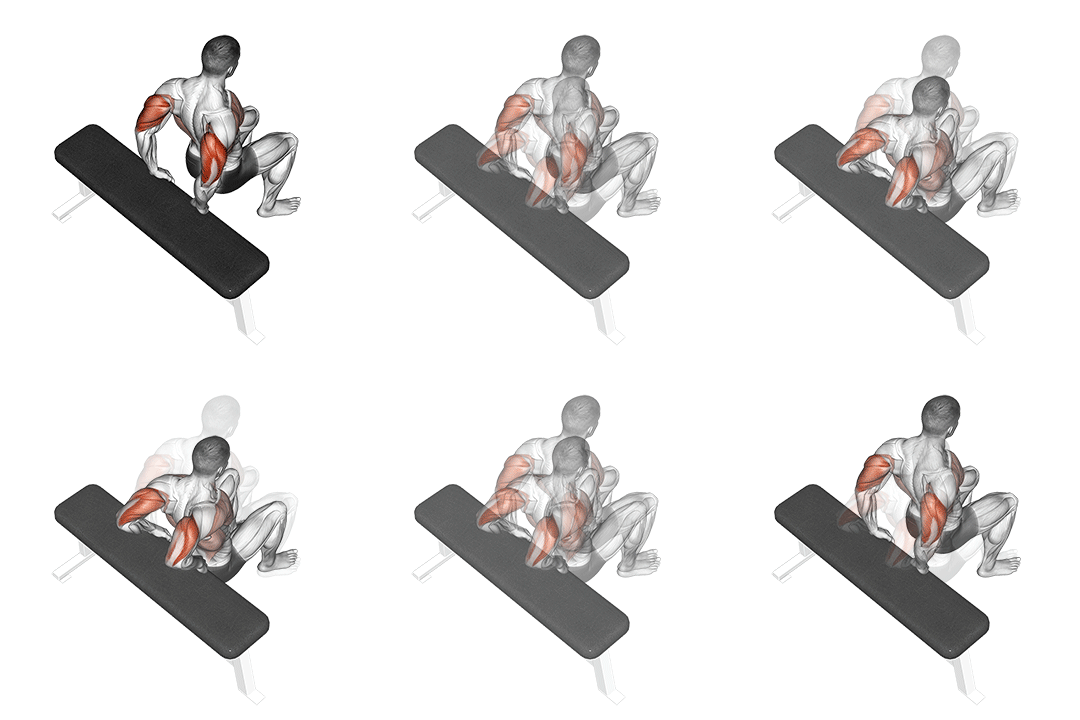
5. Bench Dip On Floor
31% match- Triceps
- Bodyweight
- Intermediate
- Compound
How to perform this exercise
- Sit on the edge of a bench or chair with your hands gripping the edge, fingers pointing forward.
- Slide your butt off the bench, supporting your weight with your hands.
- Lower your body by bending your elbows until your upper arms are parallel to the floor.
- Push yourself back up to the starting position by straightening your arms.
- Repeat for the desired number of repetitions.
Sets and reps: 3 or 4 sets of 6 to 10 reps.
Why this matches
- Primary muscle: triceps, not delts
- Equipment: bodyweight only, not free weights
- Body position: seated, the same as the Dumbbell Seated Alternate Front Raise
- Balance: harder to stay steady on than the Dumbbell Seated Alternate Front Raise
6. Bench Dip (Knees Bent)
30% match- Triceps
- Bodyweight
- Beginner
- Compound
How to perform this exercise
- Sit on the edge of a bench or chair with your hands gripping the edge next to your hips.
- Slide your butt off the bench and straighten your legs in front of you, keeping your heels on the ground.
- Bend your elbows and lower your body towards the ground, keeping your back close to the bench.
- Pause for a moment at the bottom, then push yourself back up to the starting position.
- Repeat for the desired number of repetitions.
Sets and reps: 3 sets of 8 to 12 reps, and add reps before you add load.
Why this matches
- Primary muscle: triceps, not delts
- Equipment: bodyweight only, not free weights
- Body position: seated, the same as the Dumbbell Seated Alternate Front Raise
- Balance: harder to stay steady on than the Dumbbell Seated Alternate Front Raise
Why You Might Need a Dumbbell Seated Alternate Front Raise Alternative
You might substitute the seated alternate front raise for pain, limited equipment, or to target the delts with different loading patterns. Shoulder impingement often requires reducing the external moment arm or switching to a neutral grip; for example, a plate raise shortens the lever and reduces subacromial pressure. Equipment limits (no dumbbells or bench) push you to choose cables or landmine setups that keep continuous tension. Performance goals, strength versus hypertrophy, also dictate choices: cables maintain constant tension for hypertrophy, while landmine presses allow higher loads for strength. Cue: when switching, keep the scapula depressed and lead with the elbow to emphasize anterior delt activation and limit upper-trap compensation.
How to Choose the Right Dumbbell Seated Alternate Front Raise Substitute
Select a substitute based on equipment, shoulder health, and the movement’s moment arm. If you lack dumbbells, use a cable or landmine to preserve a vertical flexion vector; cue: pull the handle with a straight path and a slight elbow bend to emphasize glenohumeral flexion. If you have shoulder pain, prefer exercises that shorten the lever (plate raises) or change hand position (neutral-grip front raises) to reduce impingement. For progressive overload pick an option that allows incremental loading, cables or machines are best. Also assess muscle activation: if your traps take over, reduce range of motion and focus on scapular stabilization during the lift.
Dumbbell Seated Alternate Front Raise FAQ
What muscles does Dumbbell Seated Alternate Front Raise work?
The exercise primarily targets the anterior deltoid through shoulder flexion while the clavicular portion of the pectoralis major provides secondary assistance. Cue: keep the scapula stable and lead with the elbow to maximize anterior delt activation and minimize upper-trap recruitment.
Find Alternatives for Any Exercise
Search the exercise database and filter the ranked substitutes by the equipment you own.
Similarity scores compare exercise metadata such as movement pattern, muscles, equipment and body position. They are not a safety rating or a check that you own the equipment. Learn about our methodology