

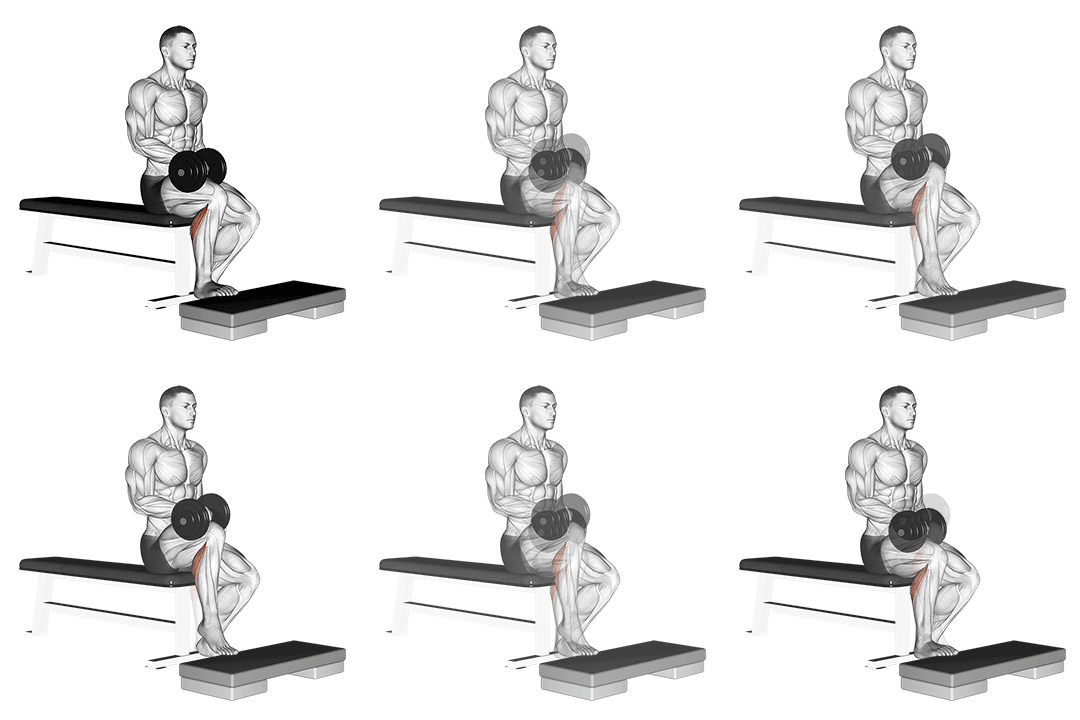
10 Dumbbell Seated One Leg Calf Raise - Palm Up Alternatives for Home
The Dumbbell Seated One Leg Calf Raise - Palm Up is done seated with dumbbells. Ranked closest by our scoring: the Dumbbell Seated One Leg Calf Raise - Hammer Grip, the Dumbbell Seated Calf Raise and the Smith Seated One Leg Calf Raise.
Updated Ranked by our 12-factor similarity model How it works
Original Exercise: Dumbbell Seated One Leg Calf Raise - Palm Up
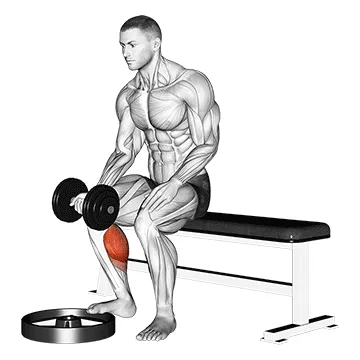
- Primary muscle
- Calves
- Equipment
- Dumbbell
- Difficulty
- Intermediate
- Type
- Isolation
Secondary muscles: Hamstrings, Glutes
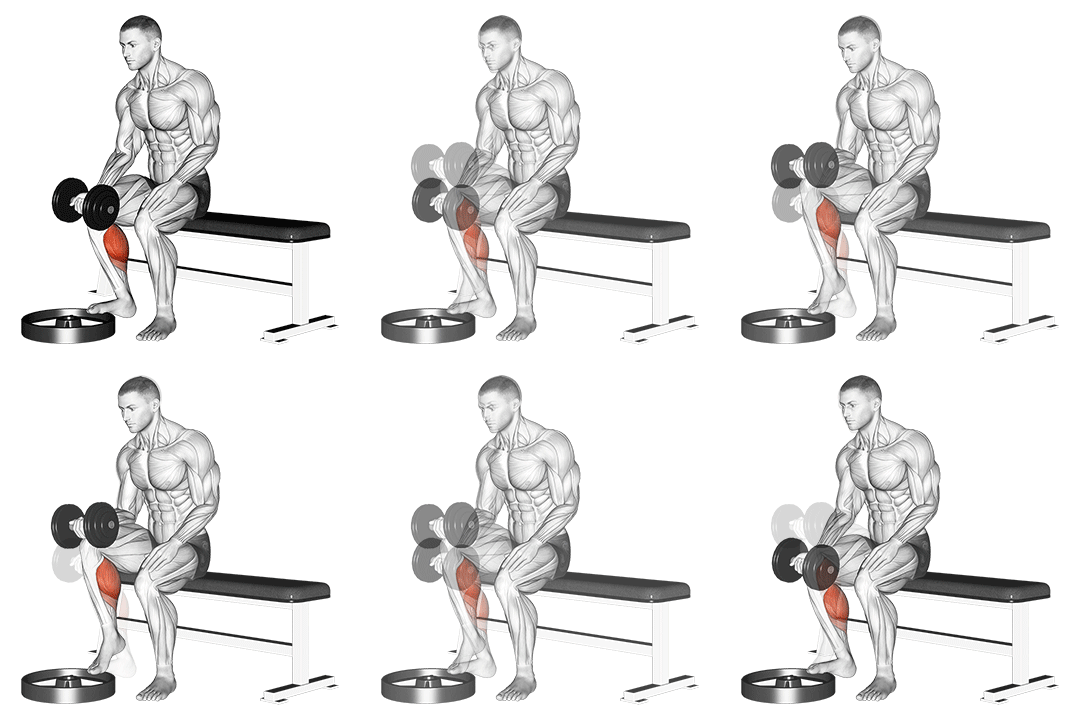
How to perform Dumbbell Seated One Leg Calf Raise - Palm Up
- Sit on a bench or chair with your back straight and your feet flat on the ground.
- Hold a dumbbell in one hand and place it on top of your thigh, palm facing up.
- Lift one leg off the ground and extend it in front of you, keeping your knee slightly bent.
- Raise your heel as high as possible by pushing through the ball of your foot.
- Pause for a moment at the top, then slowly lower your heel back down.
- Repeat for the desired number of repetitions, then switch legs and repeat.
Ranked Dumbbell Seated One Leg Calf Raise - Palm Up Alternatives
10 substitutes, ranked by how closely each one matches the Dumbbell Seated One Leg Calf Raise - Palm Up on movement pattern, muscles worked, equipment and body position. The higher the score, the less you change. Open "How to perform this exercise" on a card for the steps; every card title links to that exercise's own alternatives page.
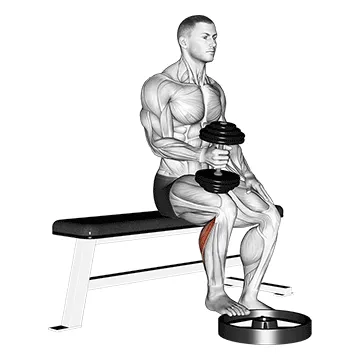
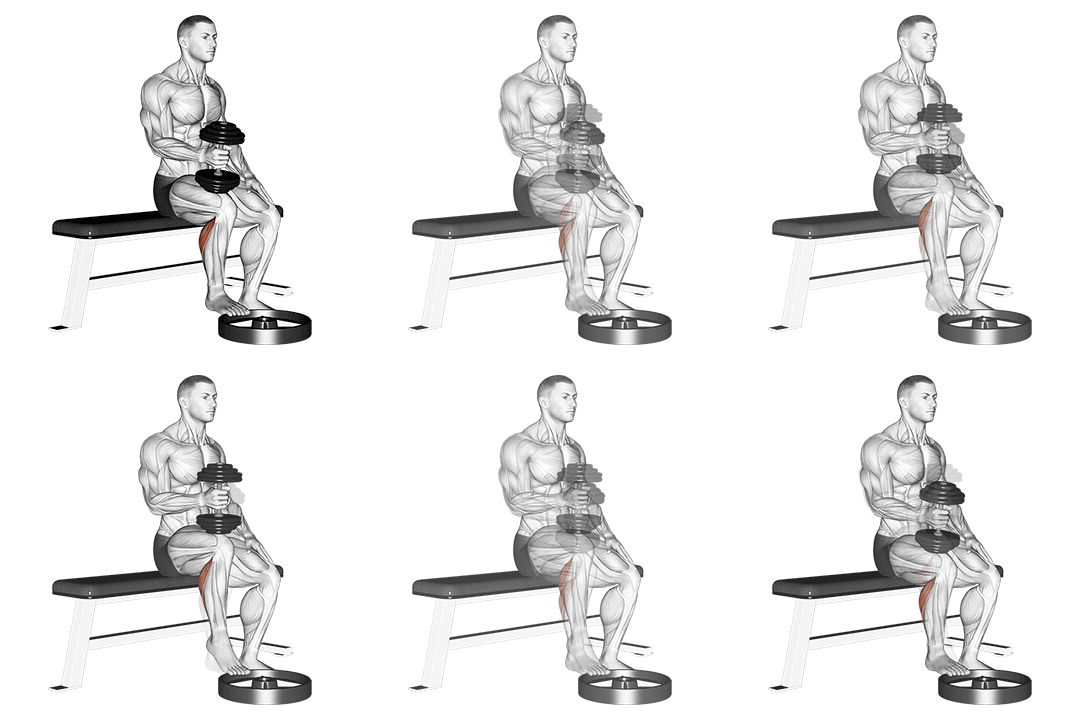
Best match - Calves
- Dumbbell
- Intermediate
- Isolation
It uses the same equipment and still works the calves.
How to perform this exercise
- Sit on a bench or chair with your feet flat on the ground and a dumbbell resting on your thighs.
- Place one foot on a raised surface, such as a step or block, with your heel hanging off the edge.
- Hold the dumbbell with a hammer grip, meaning your palms are facing each other and your fingers are wrapped around the handle.
- Keeping your core engaged and your back straight, slowly raise your heel as high as possible by pushing through the ball of your foot.
- Pause for a moment at the top, then slowly lower your heel back down to the starting position.
- Repeat for the desired number of repetitions, then switch to the other leg.
Sets and reps: 3 sets of 10 to 15 reps on each side.
Why this matches
- Movement: raise, the same as the Dumbbell Seated One Leg Calf Raise - Palm Up
- Primary muscle: calves, the same as the Dumbbell Seated One Leg Calf Raise - Palm Up
- Equipment: free weights, the same as the Dumbbell Seated One Leg Calf Raise - Palm Up
- Body position: seated, the same as the Dumbbell Seated One Leg Calf Raise - Palm Up
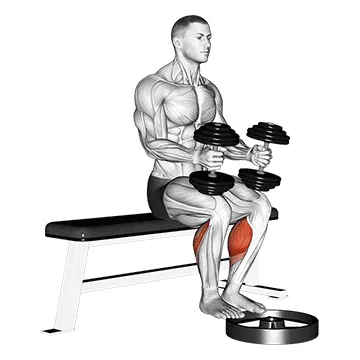
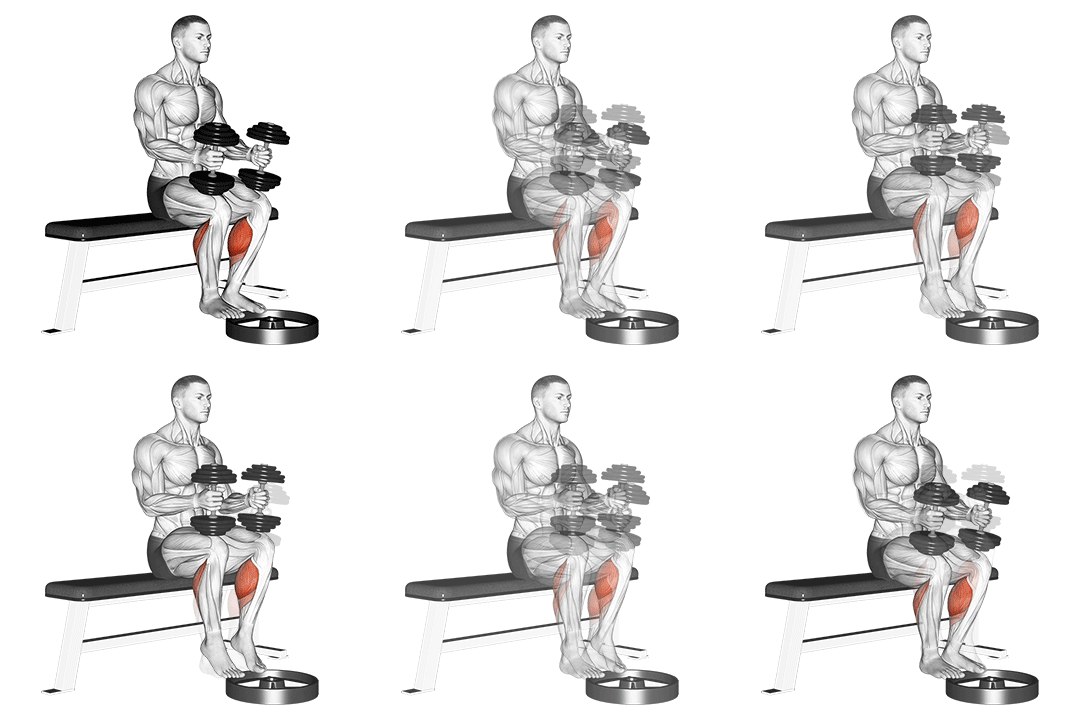
2. Dumbbell Seated Calf Raise
87% match- Calves
- Dumbbell
- Beginner
- Isolation
Pick this when you want an easier version that still works the calves.
How to perform this exercise
- Sit on a bench or chair with your feet flat on the ground and a dumbbell resting on your thighs.
- Place the balls of your feet on a raised surface such as a step or block, with your heels hanging off the edge.
- Hold onto the dumbbell for stability.
- Raise your heels as high as possible, lifting your body weight onto the balls of your feet.
- Pause for a moment at the top, then slowly lower your heels back down to the starting position.
- Repeat for the desired number of repetitions.
Sets and reps: 3 sets of 10 to 15 reps.
Why this matches
- Movement: raise, the same as the Dumbbell Seated One Leg Calf Raise - Palm Up
- Primary muscle: calves, the same as the Dumbbell Seated One Leg Calf Raise - Palm Up
- Equipment: free weights, the same as the Dumbbell Seated One Leg Calf Raise - Palm Up
- Body position: seated, the same as the Dumbbell Seated One Leg Calf Raise - Palm Up
- Balance: easier to stay steady on than the Dumbbell Seated One Leg Calf Raise - Palm Up
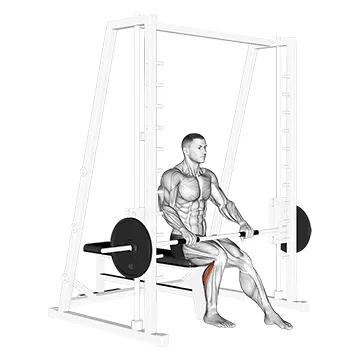
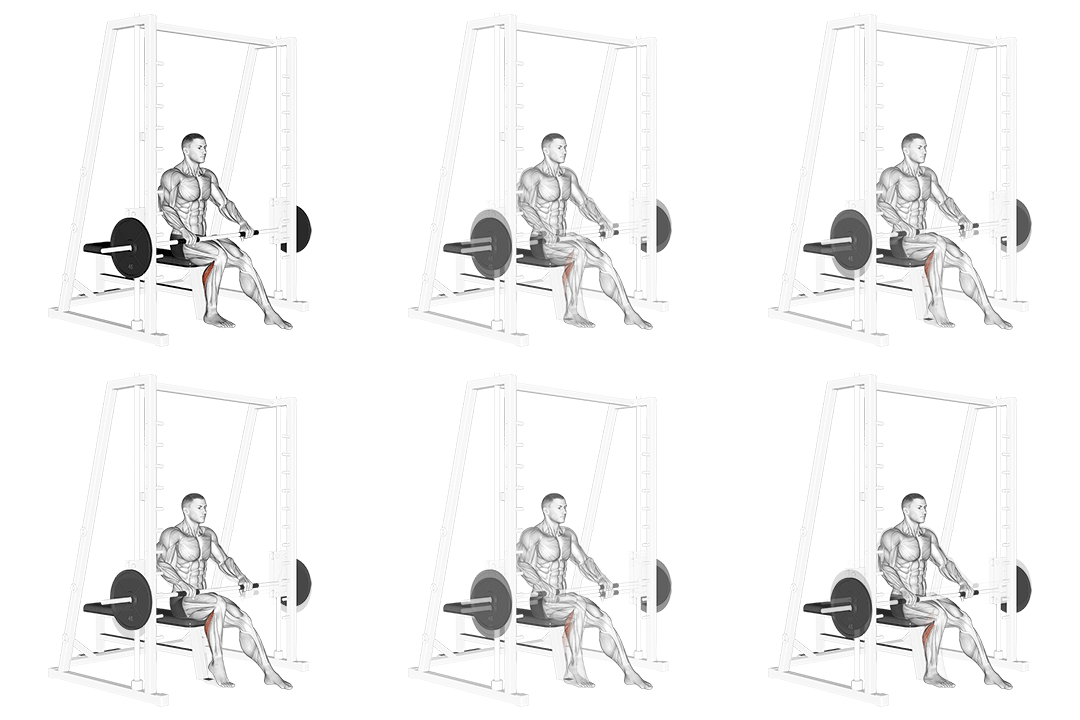
3. Smith Seated One Leg Calf Raise
83% match- Calves
- Smith-machine
- Intermediate
- Isolation
A good swap when you have a Smith machine to work with, and it still works the calves.
How to perform this exercise
- Sit on the machine with your back against the pad and your feet on the footrest.
- Place one leg on the footrest and keep the other leg off the footrest.
- Using your calf muscles, raise your heel as high as possible.
- Pause for a moment at the top, then slowly lower your heel back down to the starting position.
- Repeat for the desired number of repetitions, then switch legs and repeat.
Sets and reps: 3 sets of 10 to 15 reps on each side.
Why this matches
- Movement: raise, the same as the Dumbbell Seated One Leg Calf Raise - Palm Up
- Primary muscle: calves, the same as the Dumbbell Seated One Leg Calf Raise - Palm Up
- Equipment: a machine, not free weights
- Body position: seated, the same as the Dumbbell Seated One Leg Calf Raise - Palm Up
- Balance: easier to stay steady on than the Dumbbell Seated One Leg Calf Raise - Palm Up
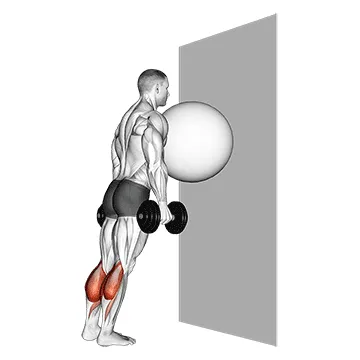
- Calves
- Dumbbell
- Beginner
- Isolation
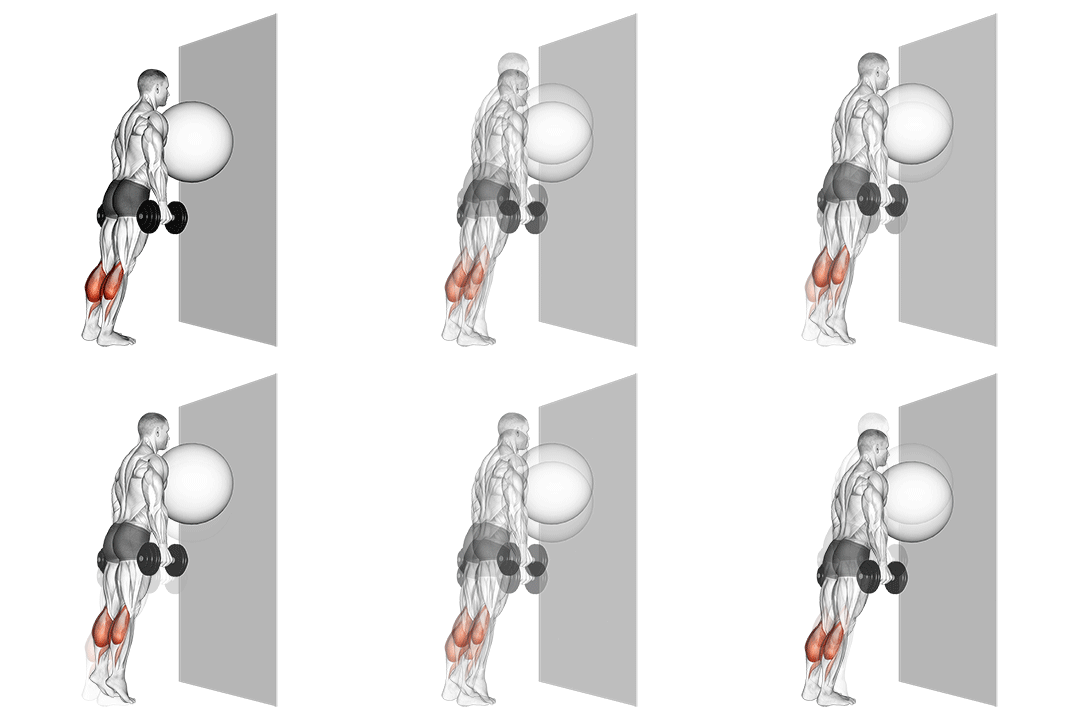
How to perform this exercise
- Stand with your back against a wall and place an exercise ball between your lower back and the wall.
- Position your feet shoulder-width apart, with your toes pointing forward.
- Hold a dumbbell in each hand, with your arms extended by your sides.
- Raise your heels off the ground, lifting your body weight onto the balls of your feet.
- Pause for a moment at the top, then slowly lower your heels back down to the starting position.
- Repeat for the desired number of repetitions.
Sets and reps: 3 sets of 10 to 15 reps.
Why this matches
- Movement: raise, the same as the Dumbbell Seated One Leg Calf Raise - Palm Up
- Primary muscle: calves, the same as the Dumbbell Seated One Leg Calf Raise - Palm Up
- Equipment: free weights, the same as the Dumbbell Seated One Leg Calf Raise - Palm Up
- Body position: standing, not seated
- Balance: easier to stay steady on than the Dumbbell Seated One Leg Calf Raise - Palm Up
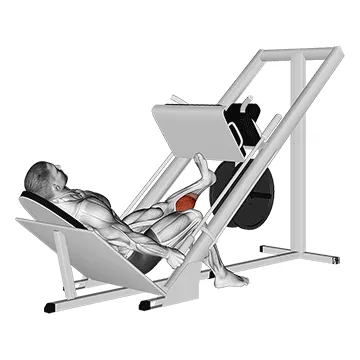
- Calves
- Sled
- Intermediate
- Isolation
A good swap when you have a sled to work with, and it still works the calves.
How to perform this exercise
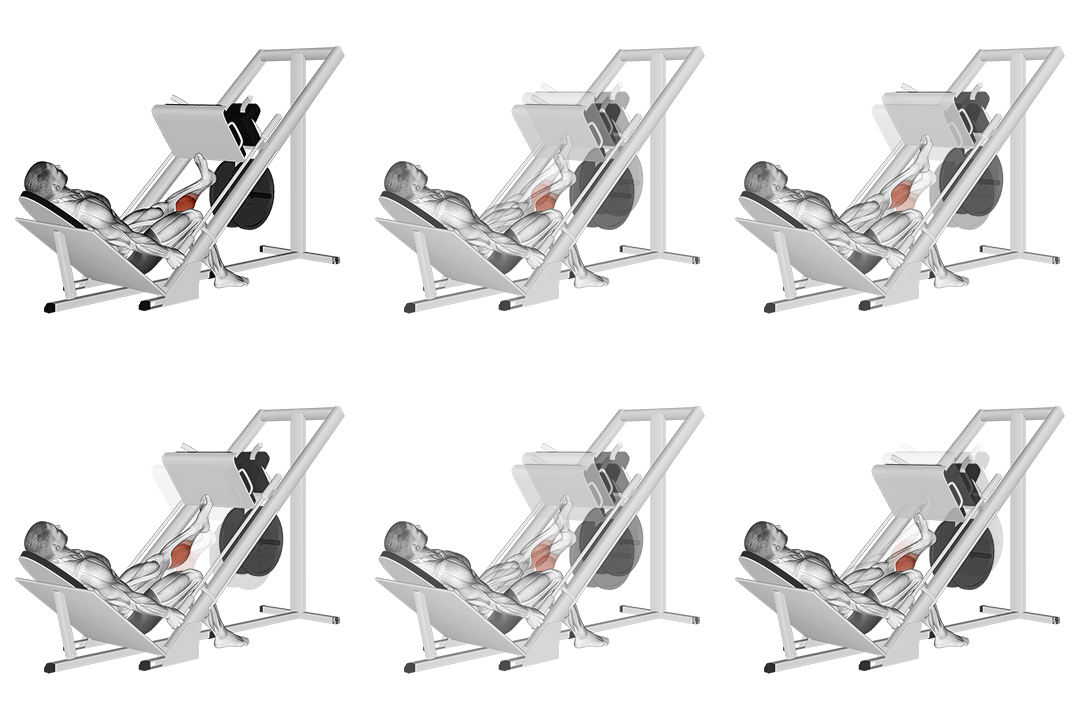
- Adjust the seat of the leg press machine so that your knees are slightly bent when your feet are on the sled.
- Sit on the machine with your back against the backrest and your feet on the sled, shoulder-width apart.
- Place your toes and the balls of your feet on the sled, keeping your heels off.
- Push the sled forward by extending your ankles, keeping your knees slightly bent.
- Pause for a moment at the top, then slowly lower the sled back down by flexing your ankles.
- Repeat for the desired number of repetitions.
Sets and reps: 3 sets of 10 to 15 reps on each side.
Why this matches
- Primary muscle: calves, the same as the Dumbbell Seated One Leg Calf Raise - Palm Up
- Equipment: a machine, not free weights
- Body position: seated, the same as the Dumbbell Seated One Leg Calf Raise - Palm Up
- Balance: easier to stay steady on than the Dumbbell Seated One Leg Calf Raise - Palm Up
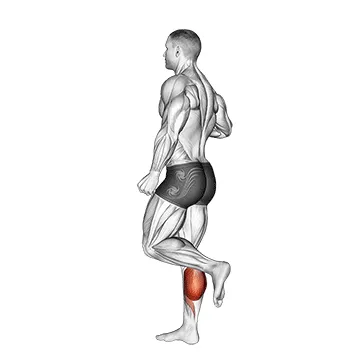
6. One Leg Floor Calf Raise
77% match- Calves
- Bodyweight
- Beginner
- Isolation
Use this when you have nothing to train with, because it works the calves with bodyweight alone.
How to perform this exercise
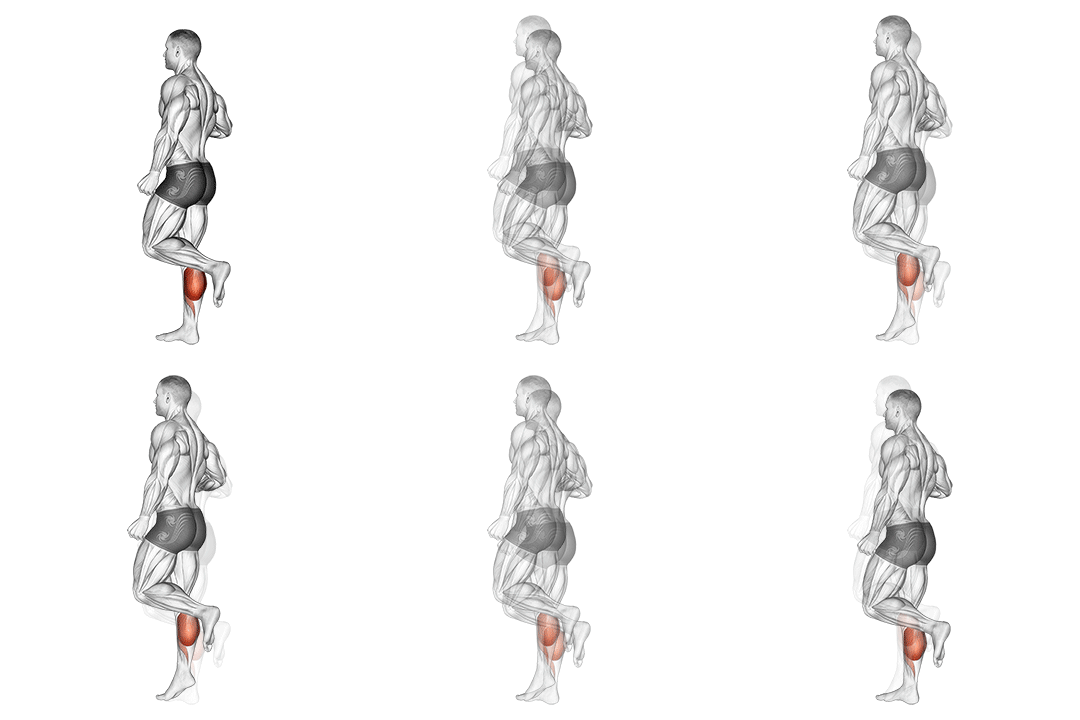
- Stand with your feet hip-width apart and place your hands on a wall or sturdy object for balance.
- Lift one foot off the ground and balance on the other foot.
- Slowly raise your heel off the ground, lifting your body up onto the ball of your foot.
- Pause for a moment at the top, then slowly lower your heel back down to the starting position.
- Repeat for the desired number of repetitions, then switch legs and repeat.
Sets and reps: 3 sets of 8 to 12 reps on each side, and add reps before you add load.
Why this matches
- Movement: raise, the same as the Dumbbell Seated One Leg Calf Raise - Palm Up
- Primary muscle: calves, the same as the Dumbbell Seated One Leg Calf Raise - Palm Up
- Equipment: bodyweight only, not free weights
- Body position: standing, not seated
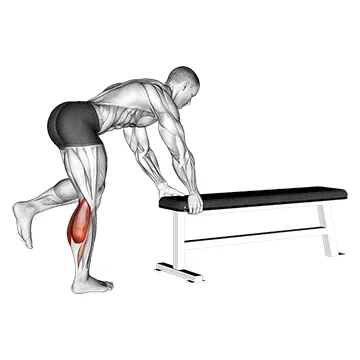
7. One Leg Donkey Calf Raise
77% match- Calves
- Bodyweight
- Beginner
- Isolation
How to perform this exercise
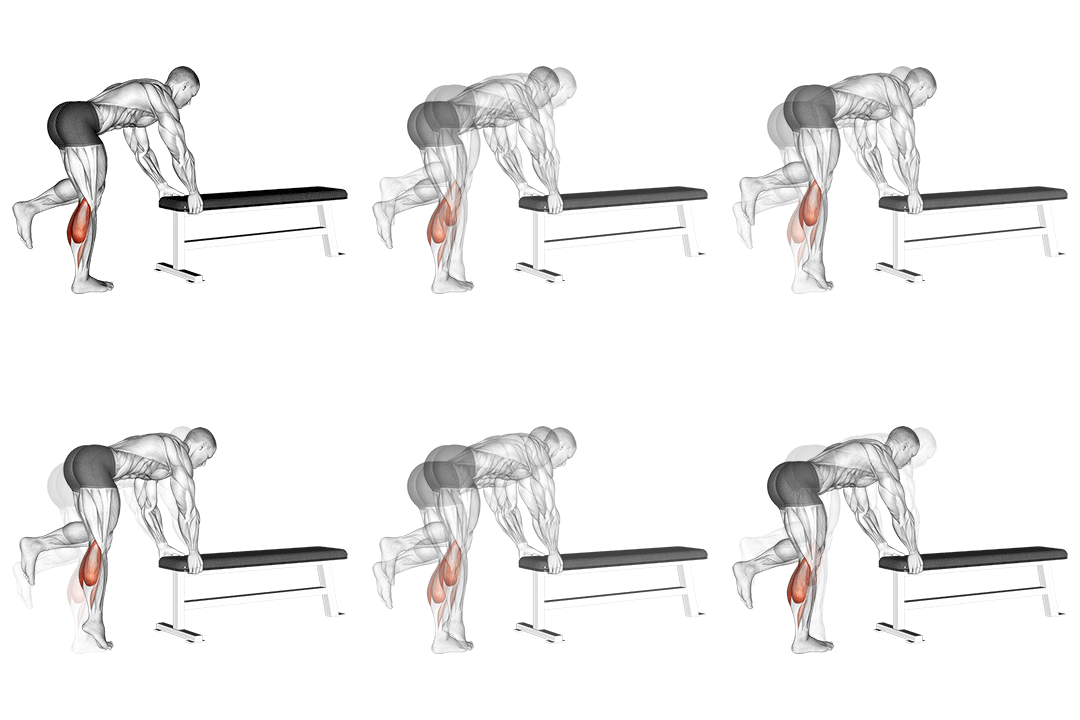
- Stand with your feet shoulder-width apart, toes pointing forward.
- Place your hands on a stable surface for support, such as a wall or a bar.
- Lift one leg off the ground, keeping your knee slightly bent.
- Raise your heel as high as possible, using your calf muscles.
- Pause for a moment at the top, then slowly lower your heel back down.
- Repeat for the desired number of repetitions, then switch legs.
Sets and reps: 3 sets of 8 to 12 reps on each side, and add reps before you add load.
Why this matches
- Movement: raise, the same as the Dumbbell Seated One Leg Calf Raise - Palm Up
- Primary muscle: calves, the same as the Dumbbell Seated One Leg Calf Raise - Palm Up
- Equipment: bodyweight only, not free weights
- Body position: standing, not seated
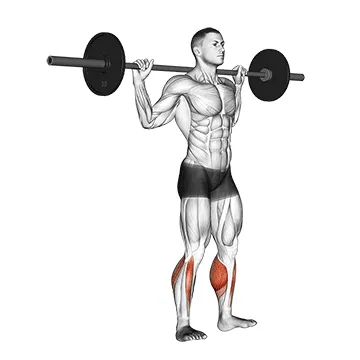
- Calves
- Barbell
- Intermediate
- Isolation
How to perform this exercise
- Stand with your feet shoulder-width apart and hold a barbell across your upper back.
- Raise your heels off the ground as high as possible, balancing on the balls of your feet.
- Slowly lower your heels back down to the starting position.
- Repeat for the desired number of repetitions.
Sets and reps: 3 sets of 10 to 15 reps on each side.
Why this matches
- Movement: raise, the same as the Dumbbell Seated One Leg Calf Raise - Palm Up
- Primary muscle: calves, the same as the Dumbbell Seated One Leg Calf Raise - Palm Up
- Equipment: free weights, the same as the Dumbbell Seated One Leg Calf Raise - Palm Up
- Body position: standing, not seated
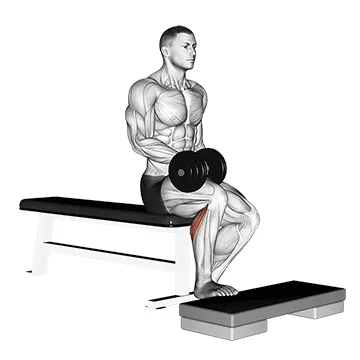
- Calves
- Dumbbell
- Intermediate
- Isolation
How to perform this exercise
- Sit on a bench or chair with your feet flat on the ground and a dumbbell resting on your right thigh.
- Extend your left leg straight out in front of you, keeping your foot flexed.
- Place the ball of your right foot on an elevated surface, such as a step or weight plate.
- Using your calf muscles, raise your right heel as high as possible.
- Pause for a moment at the top, then slowly lower your heel back down to the starting position.
- Repeat for the desired number of repetitions, then switch legs.
Sets and reps: 3 sets of 10 to 15 reps on each side.
Why this matches
- Primary muscle: calves, the same as the Dumbbell Seated One Leg Calf Raise - Palm Up
- Equipment: free weights, the same as the Dumbbell Seated One Leg Calf Raise - Palm Up
- Body position: seated, the same as the Dumbbell Seated One Leg Calf Raise - Palm Up
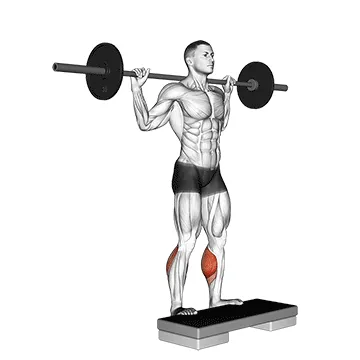
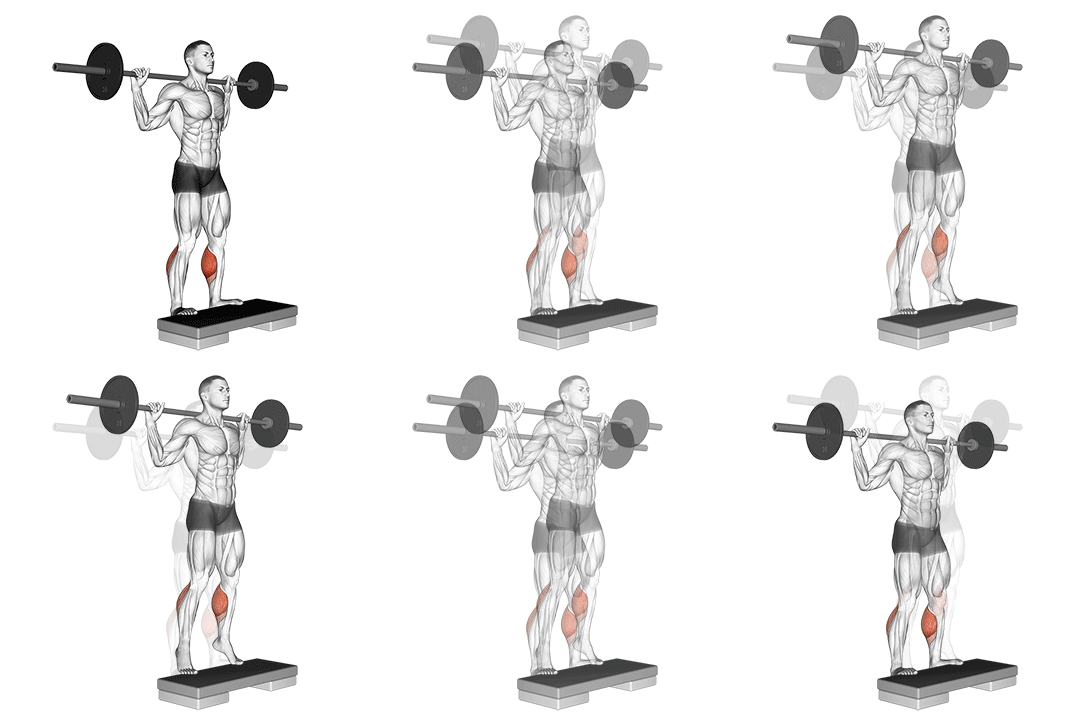
10. Barbell Standing Leg Calf Raise
76% match- Calves
- Barbell
- Beginner
- Isolation
How to perform this exercise
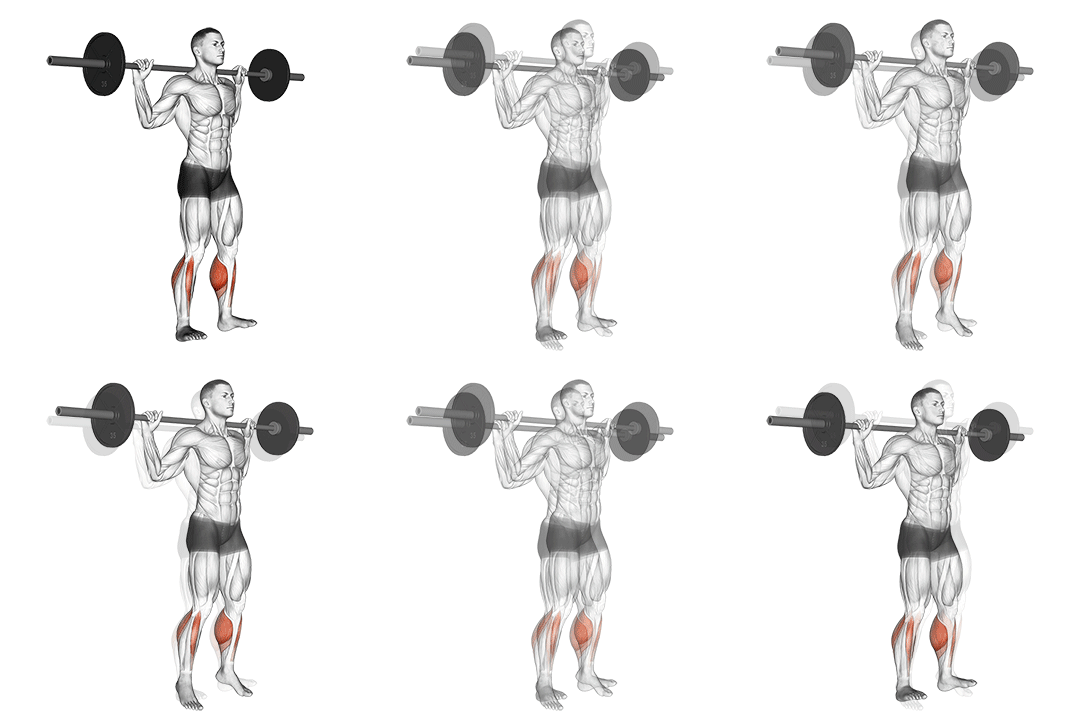
- Stand with your feet shoulder-width apart and place a barbell across your upper back.
- Raise your heels off the ground as high as possible, using your calves.
- Pause for a moment at the top, then slowly lower your heels back down to the starting position.
- Repeat for the desired number of repetitions.
Sets and reps: 3 sets of 10 to 15 reps.
Why this matches
- Movement: raise, the same as the Dumbbell Seated One Leg Calf Raise - Palm Up
- Primary muscle: calves, the same as the Dumbbell Seated One Leg Calf Raise - Palm Up
- Equipment: free weights, the same as the Dumbbell Seated One Leg Calf Raise - Palm Up
- Body position: standing, not seated
Why You Might Need a Dumbbell Seated One Leg Calf Raise - Palm Up Alternative
You may substitute this exercise for several reasons: limited or no dumbbells, knee or ankle pain, travel, or a need for greater loading options. Palm-up grip only affects how you hold the weight, not plantarflexion mechanics, so alternatives that reproduce ankle motion still target the calves. Use seated variations with a bent knee to bias the soleus and standing variations with a straight knee to load the gastrocnemius. If joint pain limits dorsiflexion, pick exercises with a smaller ROM or use band tension to control loading while maintaining muscle activation.
Dumbbell Seated One Leg Calf Raise - Palm Up FAQ
What muscles does Dumbbell Seated One Leg Calf Raise - Palm Up work?
The move primarily targets the soleus and secondarily the gastrocnemius by driving plantarflexion. Because you perform it seated with a bent knee, the soleus receives greater activation; cue a full dorsiflexion stretch before each rep for maximal recruitment.
Find Alternatives for Any Exercise
Search the exercise database and filter the ranked substitutes by the equipment you own.
Similarity scores compare exercise metadata such as movement pattern, muscles, equipment and body position. They are not a safety rating or a check that you own the equipment. Learn about our methodology