

10 Best Alternatives to Dumbbell Side Plank With Rear Fly for Shoulders
If you need an alternative to the Dumbbell Side Plank With Rear Fly, choose movements that load the posterior deltoid and scapular stabilizers while limiting spinal rotation. Try bent-over rear-delt fly (hinge at hips, retract scapula), standing cable face pull (elbow high, external rotation), or prone Y raises to preserve horizontal abduction and rotator-cuff engagement.
Original Exercise: Dumbbell Side Plank With Rear Fly
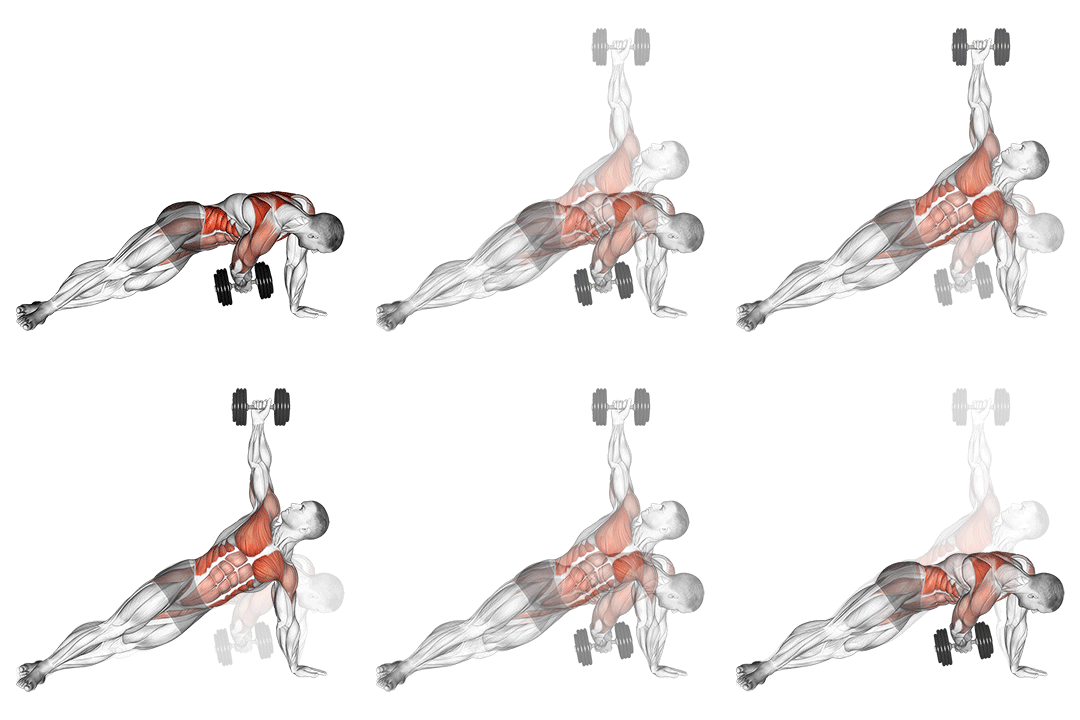
How to Perform Dumbbell Side Plank With Rear Fly
- Start by lying on your side with your legs extended and stacked on top of each other.
- Place your forearm on the ground directly below your shoulder, keeping your elbow bent at a 90-degree angle.
- Hold a dumbbell in your top hand, with your arm extended straight down towards the ground.
- Engage your core and lift your hips off the ground, creating a straight line from your head to your heels.
- While maintaining the side plank position, lift the dumbbell up towards the ceiling, squeezing your shoulder blades together.
- Lower the dumbbell back down to the starting position.
- Repeat for the desired number of repetitions, then switch sides.
Ranked Dumbbell Side Plank With Rear Fly Alternatives
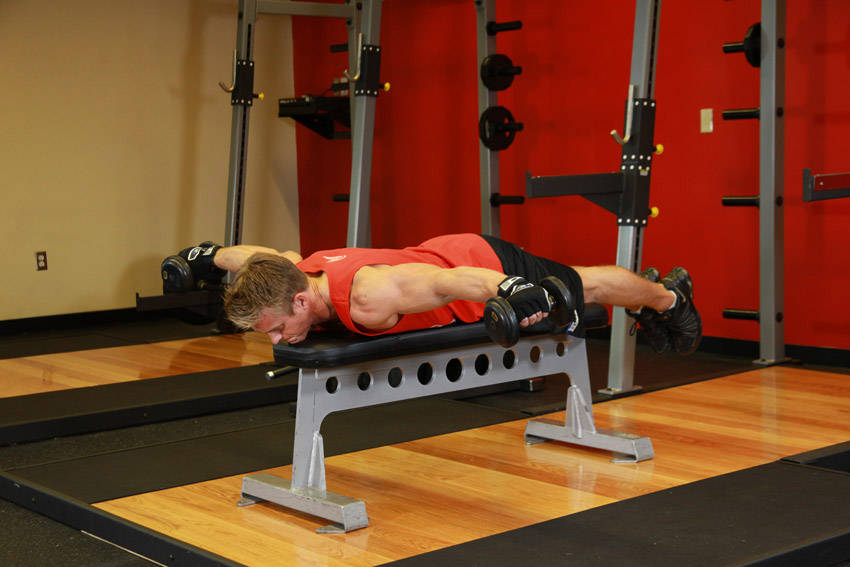
1. Lying Rear Delt Raise
70.7% MatchHow to perform this exercise
- While holding a dumbbell in each hand, lay with your chest down on a flat bench.
- Position the palms of the hands in a neutral manner (palms facing your torso) as you keep the arms extended with the elbows slightly bent. This will be your starting position.
- Now raise the arms to the side until your elbows are at shoulder height and your arms are roughly parallel to the floor as you exhale. Tip: Maintain your arms perpendicular to the torso while keeping them extended throughout the movement. Also, keep the contraction at the top for a second.
- Slowly lower the dumbbells to the starting position as you inhale.
- Repeat for the recommended amount of repetitions and then switch to the other arm.
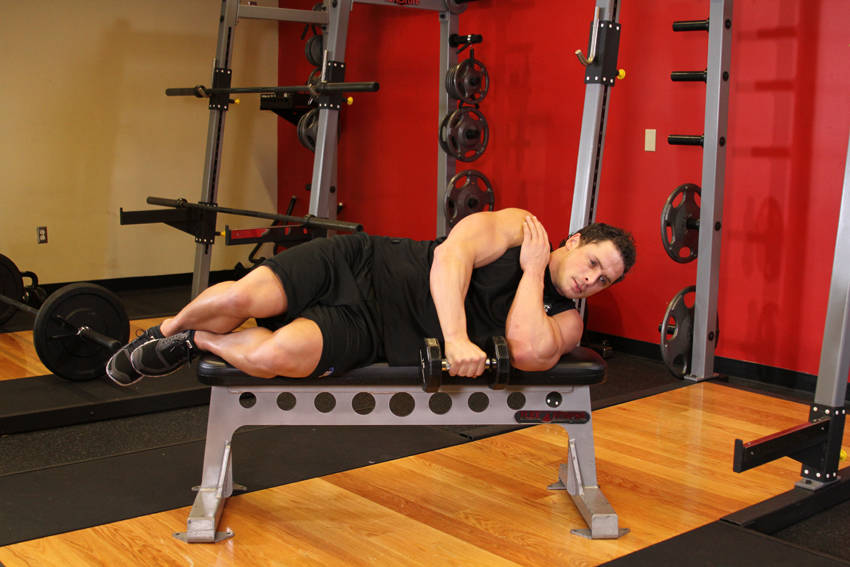
2. Lying One-Arm Lateral Raise
69.9% MatchHow to perform this exercise
- While holding a dumbbell in one hand, lay with your chest down on a flat bench. The other hand can be used to hold to the leg of the bench for stability.
- Position the palm of the hand that is holding the dumbbell in a neutral manner (palms facing your torso) as you keep the arm extended with the elbow slightly bent. This will be your starting position.
- Now raise the arm with the dumbbell to the side until your elbow is at shoulder height and your arm is roughly parallel to the floor as you exhale. Tip: Maintain your arm perpendicular to the torso while keeping your arm extended throughout the movement. Also, keep the contraction at the top for a second.
- Slowly lower the dumbbell to the starting position as you inhale.
- Repeat for the recommended amount of repetitions.
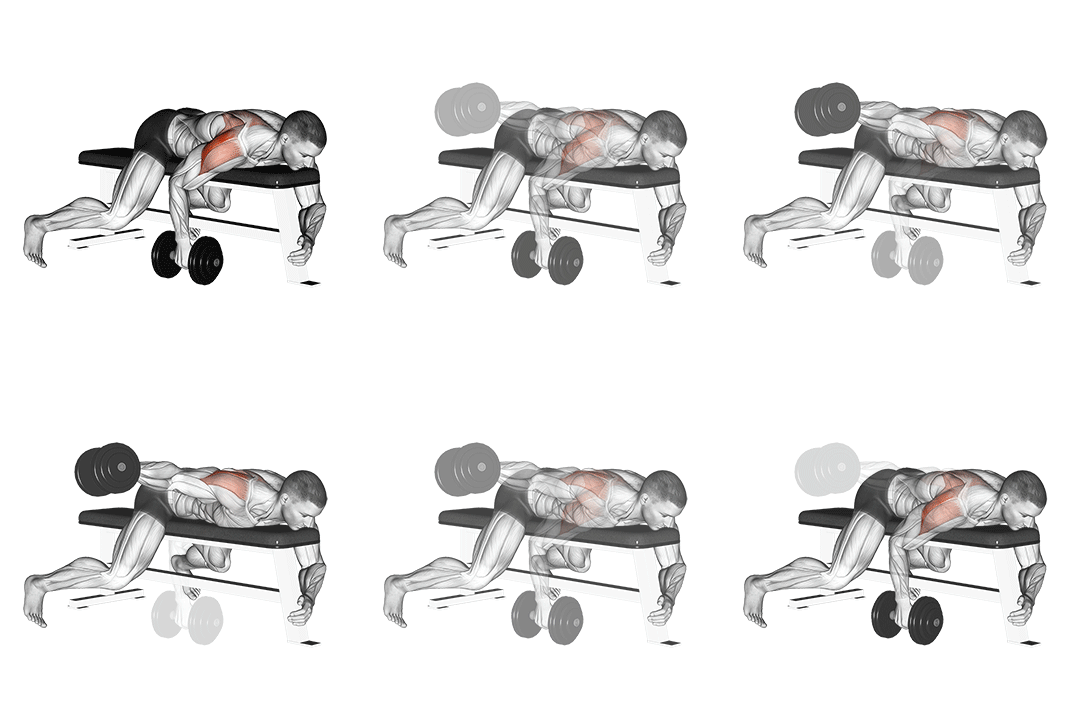
3. Dumbbell Lying One Arm Rear Lateral Raise
69.1% MatchHow to perform this exercise
- Lie face down on a flat bench with a dumbbell in one hand, hanging towards the floor.
- Keep your arm straight and lift the dumbbell out to the side, away from your body.
- Pause for a moment at the top, then slowly lower the dumbbell back down to the starting position.
- Repeat for the desired number of repetitions, then switch to the other arm.
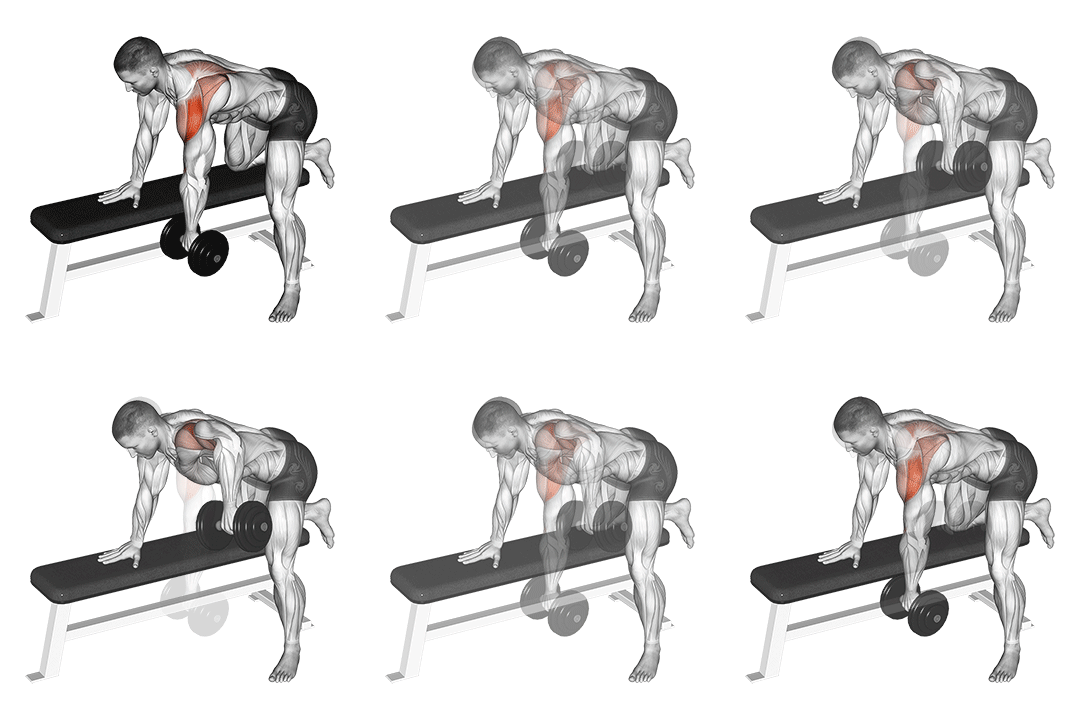
4. Dumbbell Rear Delt Row_shoulder
67.6% MatchHow to perform this exercise
- Stand with your feet shoulder-width apart and knees slightly bent.
- Hold a dumbbell in each hand with your palms facing your body.
- Bend forward at the waist, keeping your back straight and your core engaged.
- Extend your arms straight down towards the floor, with a slight bend in your elbows.
- Raise the dumbbells out to the sides, squeezing your shoulder blades together.
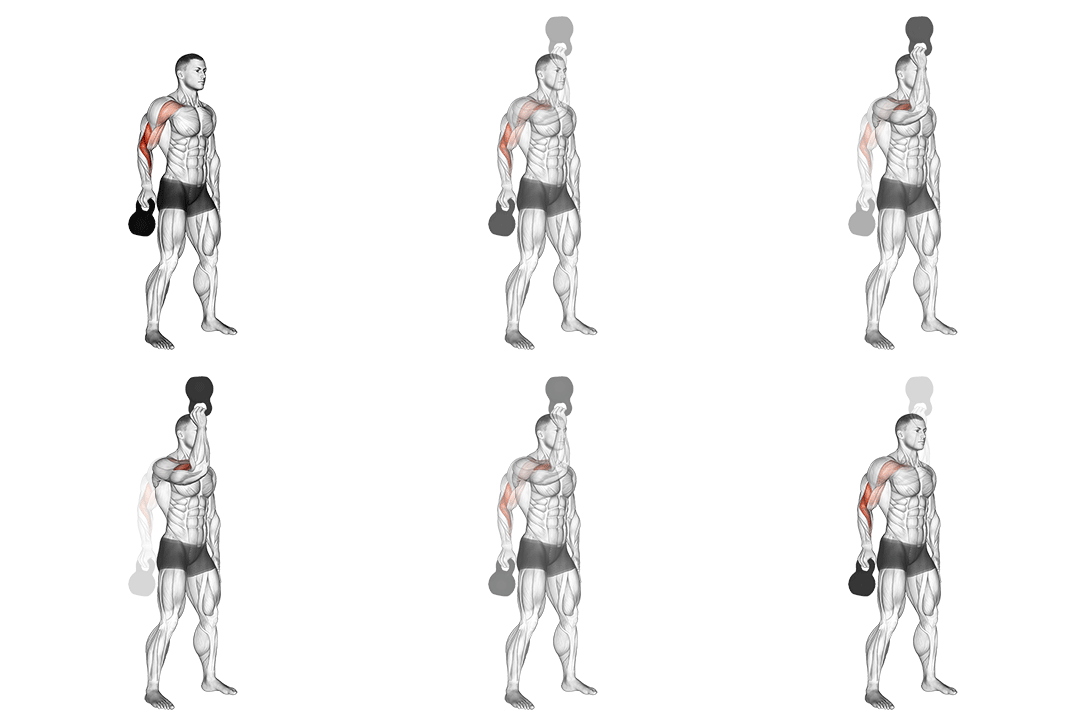
5. Kettlebell Bottoms Up Clean From The Hang Position
65.7% MatchHow to perform this exercise
- Stand with your feet shoulder-width apart, holding a kettlebell in one hand with an overhand grip.
- Bend your knees slightly and hinge forward at the hips, keeping your back straight and chest up.
- Allow the kettlebell to hang down between your legs, with your arm fully extended.
- In one fluid motion, explosively extend your hips and knees while pulling the kettlebell up towards your shoulder.
- As the kettlebell reaches shoulder height, rotate your wrist so that the bottom of the kettlebell is facing up.
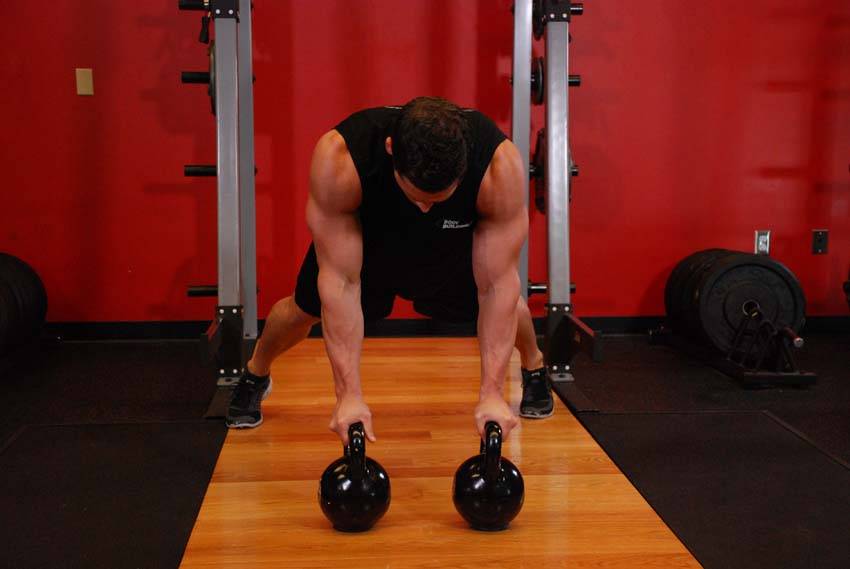
6. Alternating Renegade Row
64% MatchHow to perform this exercise
- Place two kettlebells on the floor about shoulder width apart. Position yourself on your toes and your hands as though you were doing a pushup, with the body straight and extended. Use the handles of the kettlebells to support your upper body. You may need to position your feet wide for support.
- Push one kettlebell into the floor and row the other kettlebell, retracting the shoulder blade of the working side as you flex the elbow, pulling it to your side.
- Then lower the kettlebell to the floor and begin the kettlebell in the opposite hand. Repeat for several reps.
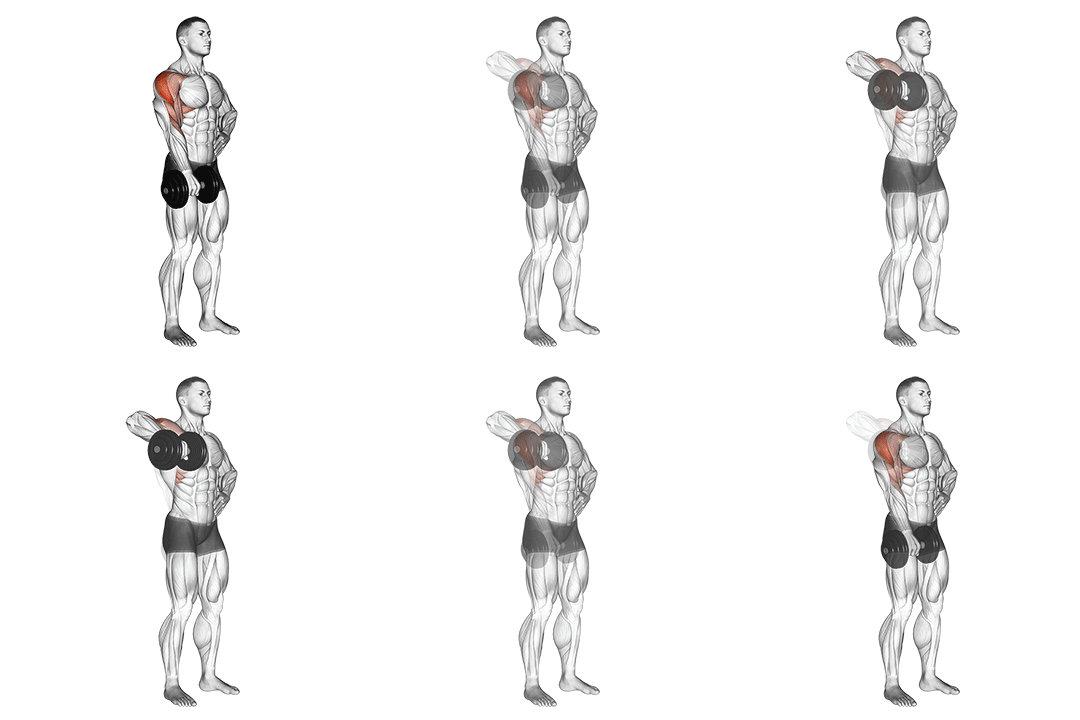
7. Dumbbell One Arm Upright Row
64% MatchHow to perform this exercise
- Stand with your feet shoulder-width apart, holding a dumbbell in one hand with an overhand grip.
- Let the dumbbell hang at arm's length in front of your thighs, with your palm facing your body.
- Keeping your back straight and your core engaged, exhale and lift the dumbbell straight up towards your chin, leading with your elbow.
- Pause for a moment at the top, then inhale and slowly lower the dumbbell back down to the starting position.
- Repeat for the desired number of repetitions, then switch to the other arm.
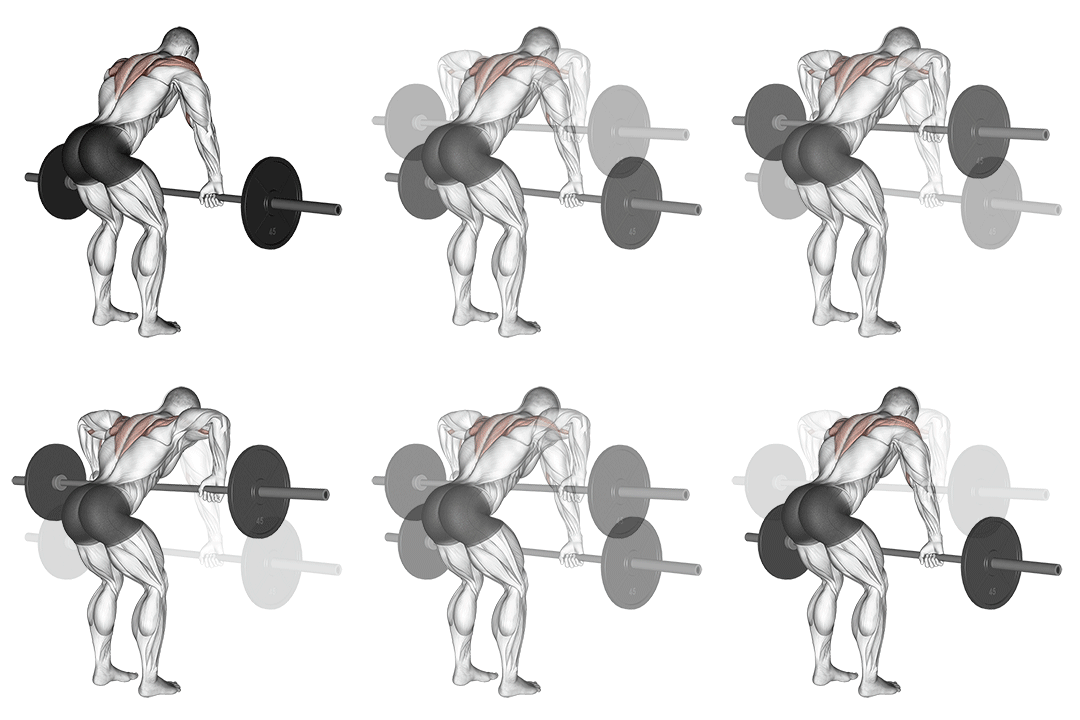
8. Barbell Rear Delt Row
63.6% MatchHow to perform this exercise
- Stand with your feet shoulder-width apart and knees slightly bent.
- Hold a barbell with an overhand grip, hands slightly wider than shoulder-width apart.
- Bend forward at the hips, keeping your back straight and chest up.
- Pull the barbell towards your chest, squeezing your shoulder blades together.
- Pause for a moment at the top, then slowly lower the barbell back to the starting position.
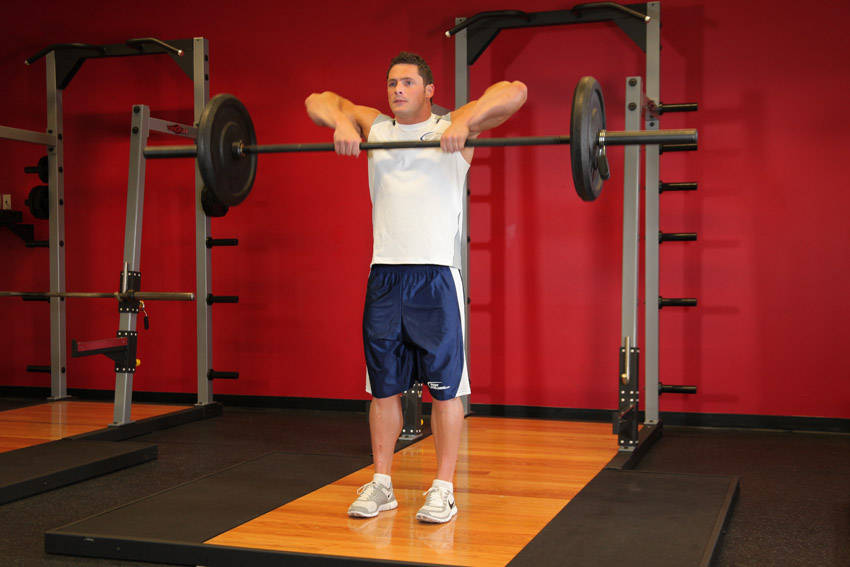
9. Upright Barbell Row
62.2% MatchHow to perform this exercise
- Grasp a barbell with an overhand grip that is slightly less than shoulder width. The bar should be resting on the top of your thighs with your arms extended and a slight bend in your elbows. Your back should also be straight. This will be your starting position.
- Now exhale and use the sides of your shoulders to lift the bar, raising your elbows up and to the side. Keep the bar close to your body as you raise it. Continue to lift the bar until it nearly touches your chin. Tip: Your elbows should drive the motion, and should always be higher than your forearms. Remember to keep your torso stationary and pause for a second at the top of the movement.
- Lower the bar back down slowly to the starting position. Inhale as you perform this portion of the movement.
- Repeat for the recommended amount of repetitions.
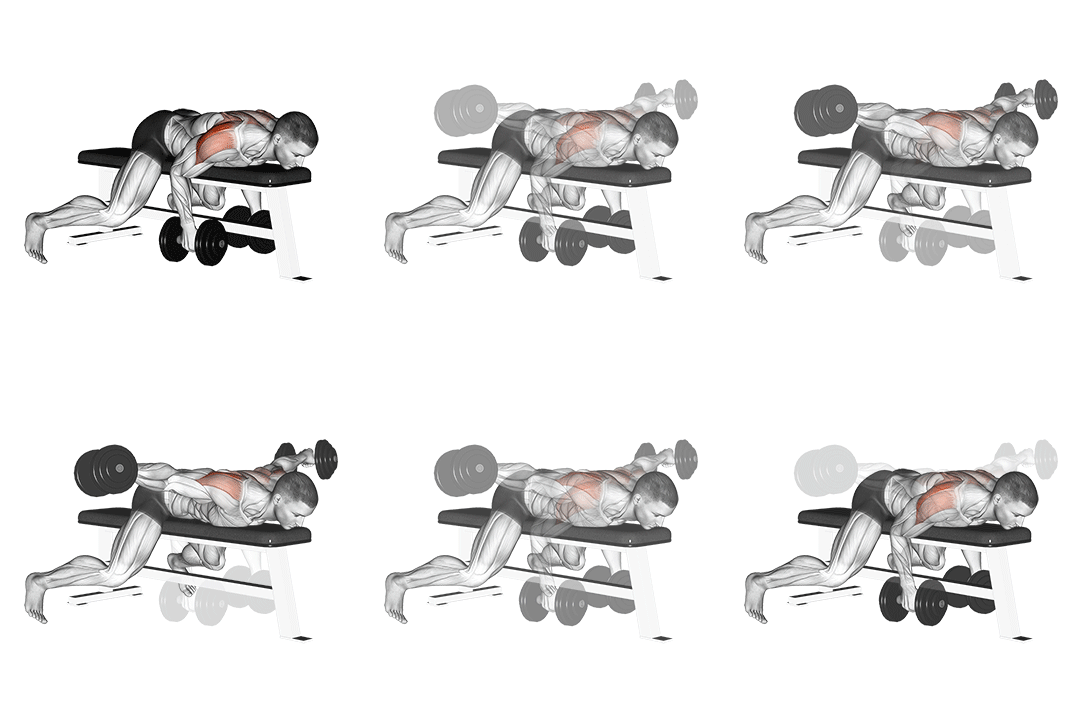
10. Dumbbell Lying Rear Lateral Raise
62.1% MatchHow to perform this exercise
- Lie face down on a flat bench with a dumbbell in each hand, palms facing each other.
- Extend your arms straight down towards the floor, keeping a slight bend in your elbows.
- Engaging your shoulder muscles, lift your arms out to the sides until they are parallel to the floor.
- Pause for a moment at the top, then slowly lower your arms back down to the starting position.
- Repeat for the desired number of repetitions.
Why You Might Need a Dumbbell Side Plank With Rear Fly Alternative
You might substitute the Dumbbell Side Plank With Rear Fly due to shoulder pain, limited equipment, core weakness, or balance deficits. The original combines lateral trunk stability with a posterior-delt pull, which demands scapular control and rotator cuff strength; if any link is weak you risk compensation. Choose a replacement if you feel shoulder impingement, excessive lumbar rotation, or inability to maintain a neutral spine. Use cues such as bracing the core, keeping the hips stacked, and maintaining a slight elbow bend to reduce joint shear and preserve posterior deltoid activation while you progress.
How to Choose the Right Substitute
Select a substitute by matching the key mechanics: horizontal abduction of the humerus, scapular retraction, and external rotation. Prioritize exercises that maintain scapulothoracic rhythm, e.g., hinge at the hips for bent-over flies to emphasize posterior delts without demanding side-plank stability. Consider equipment, unilateral vs bilateral loading, and moment arm: a long lever (arm extended) increases deltoid torque, so shorten the lever to reduce load. If shoulder stability is the limiter, pick scapular-focused moves like face pulls or prone Y raises and use slow eccentrics to foster motor control.
Frequently Asked Questions
What muscles does Dumbbell Side Plank With Rear Fly work?
The move targets the posterior deltoid, upper back (rhomboids and mid-trapezius), and the rotator cuff while the side-plank component engages the obliques and glute medius for pelvic stability. Biomechanically it combines horizontal shoulder abduction with scapular retraction and anti-rotation core demand.
What is the best bodyweight alternative to Dumbbell Side Plank With Rear Fly?
A side-lying T-raise or side plank with a T-raise is the top bodyweight option: lie on your side, lift the arm into a T while keeping the elbow soft and scapula retracted. That preserves posterior-delt horizontal abduction and trains the obliques for anti-rotation without weights.
Can I build muscle without doing Dumbbell Side Plank With Rear Fly?
Yes. You can hypertrophy the posterior delts and upper back with other compound and isolation movements, bent-over rear-delt flies, face pulls, prone Y raises, and single-arm cable rows, by using progressive overload and controlled tempo. Focus on full scapular retraction and slow eccentrics to maximize muscle activation.
More Exercise Alternatives
Find Alternatives for Any Exercise
Use the exercise substitution finder to compare ranked alternatives for your available equipment and training preference.
Try the Exercise Substitution Finder →