

10 Best Exercise Ball Alternating Arm Ups Alternatives for Home Gyms
What can you do instead of Exercise Ball Alternating Arm Ups? Use movements that preserve unilateral shoulder extension and trunk anti-rotation, such as single-arm dumbbell rows, TRX one-arm rows, lat pulldowns, bent-over rows, or single-arm cable pulldowns. Cue: brace your core, retract the scapula, and drive the elbow past the torso to engage the lats.
Original Exercise: Exercise Ball Alternating Arm Ups
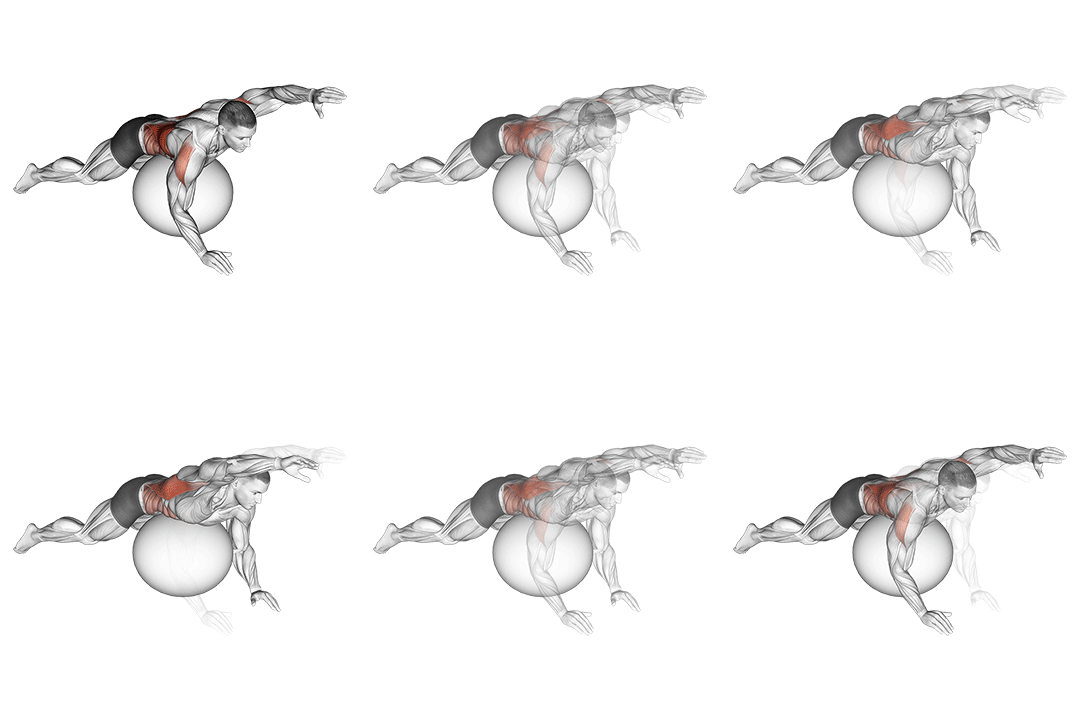
How to Perform Exercise Ball Alternating Arm Ups
- Sit on the stability ball with your feet flat on the ground and your back straight.
- Hold a dumbbell in each hand with your palms facing inwards and your arms extended down by your sides.
- Engage your core and slowly lift one arm up towards your shoulder, keeping your elbow slightly bent.
- Pause for a moment at the top, then slowly lower your arm back down to the starting position.
- Repeat the movement with the other arm.
- Continue alternating arms for the desired number of repetitions.
Ranked Exercise Ball Alternating Arm Ups Alternatives
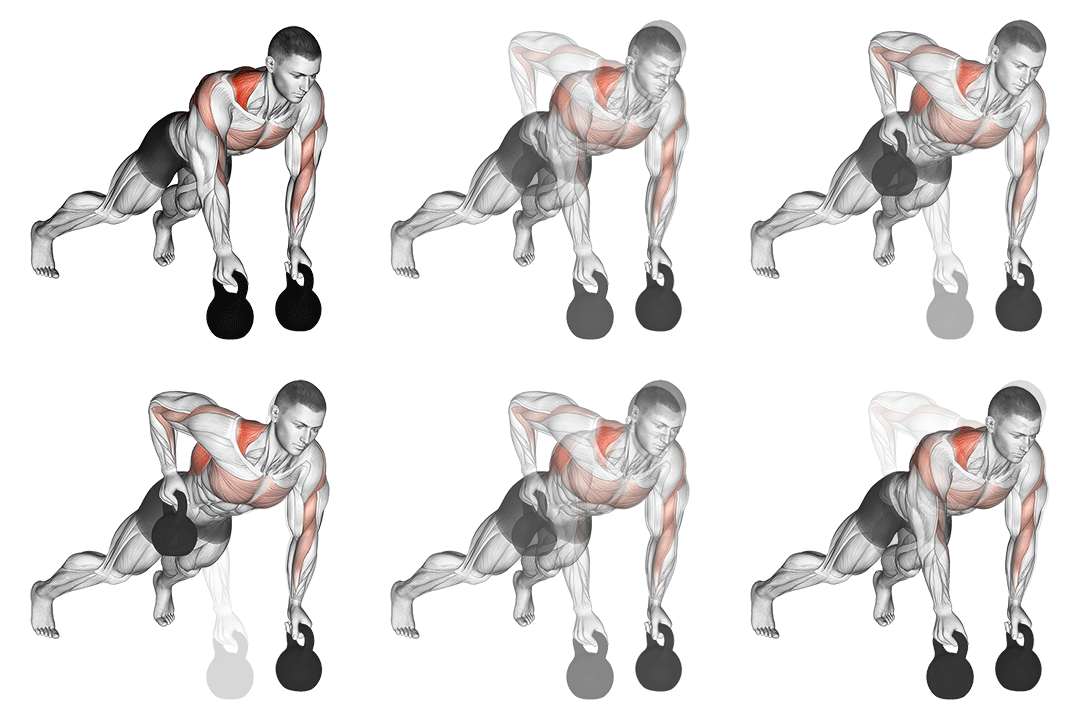
1. Kettlebell Alternating Renegade Row
89.4% MatchHow to perform this exercise
- Start in a high plank position with your hands gripping the kettlebells and your feet hip-width apart.
- Engage your core and keep your body in a straight line from head to heels.
- Pull one kettlebell up towards your chest, keeping your elbow close to your body.
- Lower the kettlebell back down to the starting position and repeat with the other arm.
- Continue alternating arms for the desired number of repetitions.
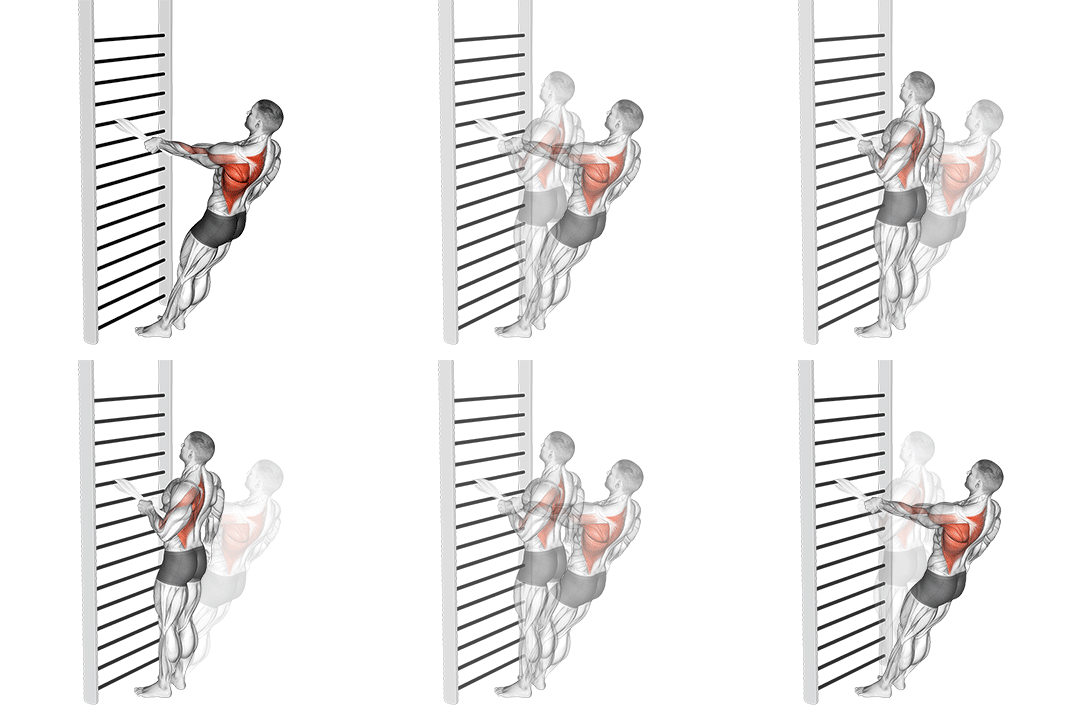
2. Bodyweight Standing One Arm Row (with Towel)
85% MatchHow to perform this exercise
- Stand with your feet shoulder-width apart, knees slightly bent, and hold a towel with one hand.
- Bend forward at the hips, keeping your back straight and your core engaged.
- Pull the towel towards your chest, squeezing your shoulder blades together.
- Pause for a moment at the top, then slowly lower the towel back to the starting position.
- Repeat for the desired number of repetitions, then switch to the other arm.
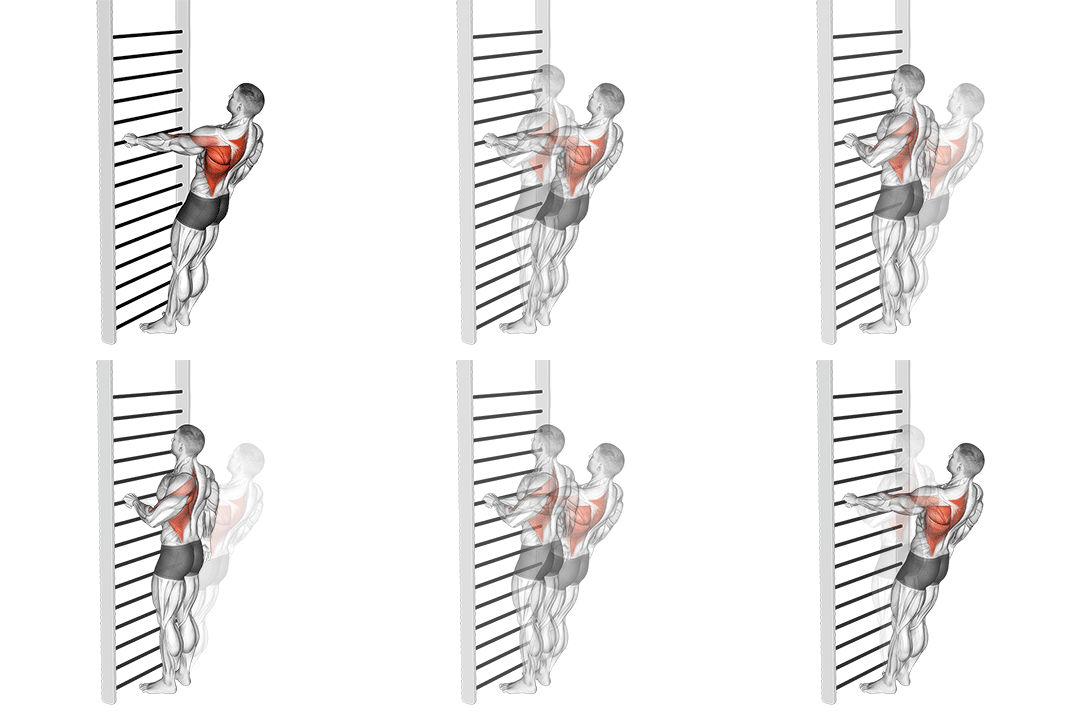
3. Bodyweight Standing One Arm Row
84.2% MatchHow to perform this exercise
- Stand with your feet shoulder-width apart, knees slightly bent, and hold a dumbbell in one hand.
- Bend forward at the hips, keeping your back straight and your core engaged.
- Let the dumbbell hang straight down in front of you, with your arm fully extended.
- Pull the dumbbell up towards your chest, keeping your elbow close to your body.
- Squeeze your shoulder blades together at the top of the movement.
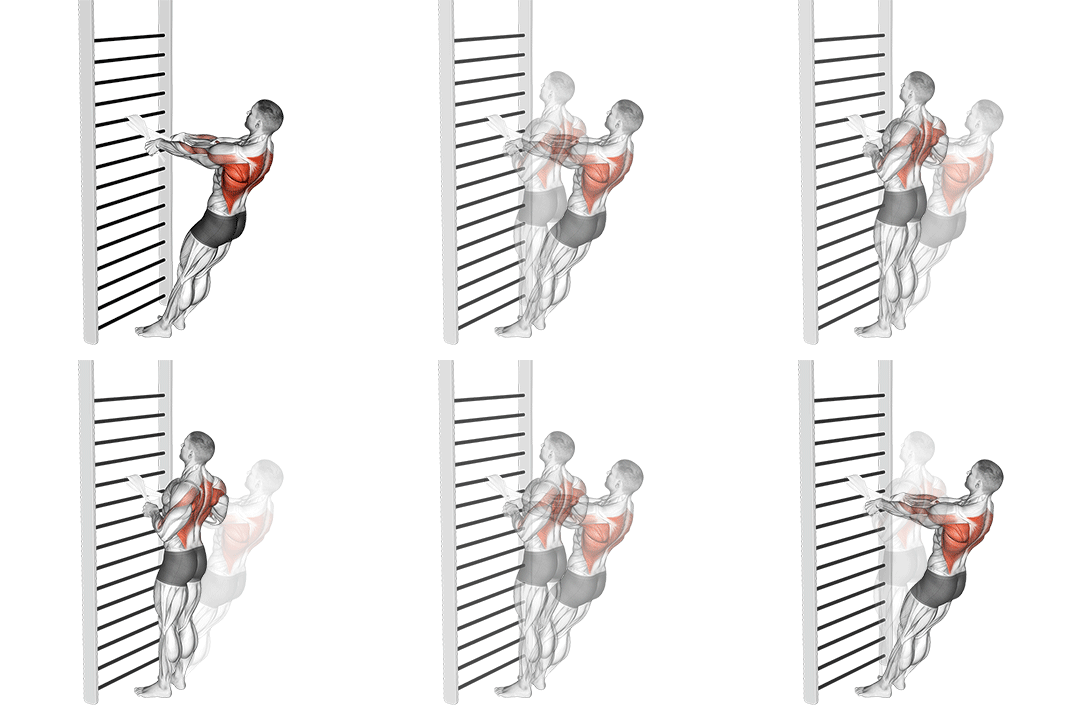
4. Bodyweight Standing Row (with Towel)
83.7% MatchHow to perform this exercise
- Stand with your feet shoulder-width apart and hold a towel in front of you with both hands.
- Bend your knees slightly and hinge forward at the hips, keeping your back straight.
- Pull the towel towards your chest, squeezing your shoulder blades together.
- Pause for a moment at the top, then slowly release the tension and return to the starting position.
- Repeat for the desired number of repetitions.
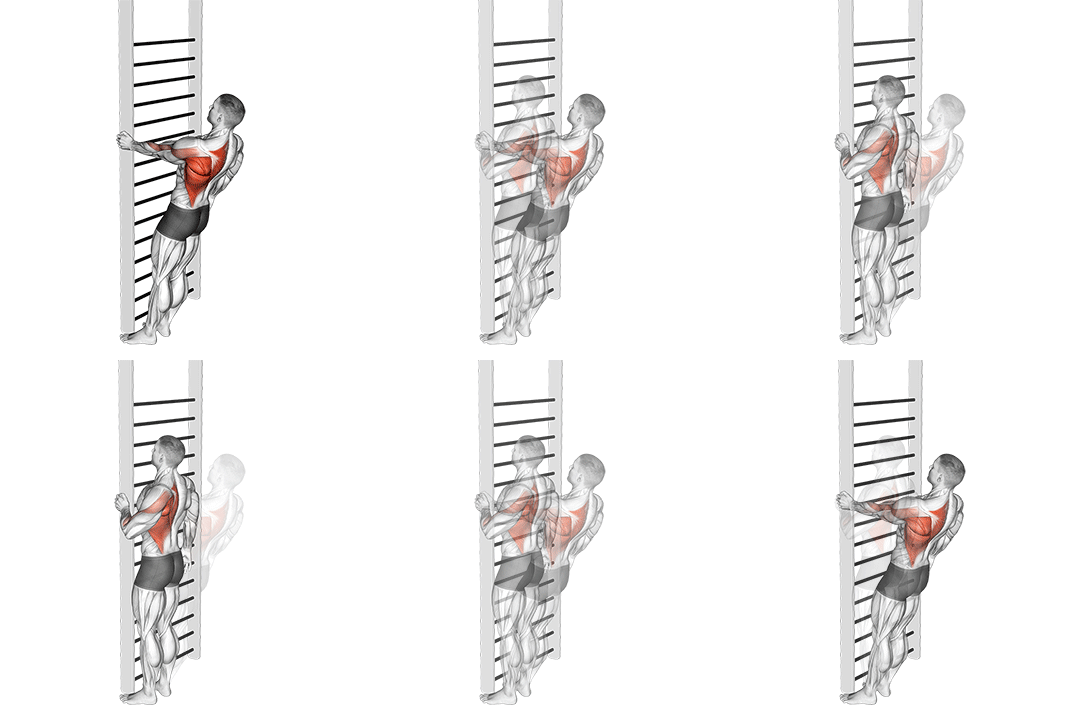
5. Bodyweight Standing Close-grip One Arm Row
79.7% MatchHow to perform this exercise
- Stand with your feet shoulder-width apart, knees slightly bent, and hold a dumbbell in one hand with a neutral grip.
- Bend forward at the hips, keeping your back straight and your core engaged.
- Pull the dumbbell up towards your chest, keeping your elbow close to your body and squeezing your shoulder blades together.
- Pause for a moment at the top, then slowly lower the dumbbell back down to the starting position.
- Repeat for the desired number of repetitions, then switch sides.
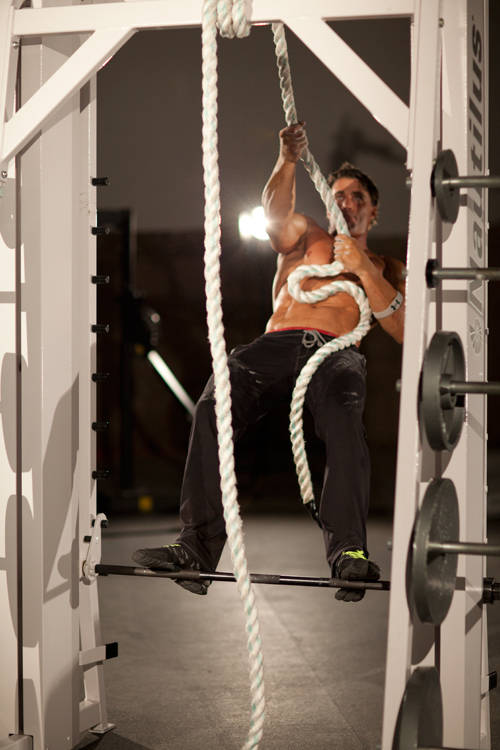
6. London Bridges
79.4% MatchHow to perform this exercise
- Attach a climbing rope to a high beam or cross member. Below it, ensure that the smith machine bar is locked in place with the safeties and cannot move. Alternatively, a secure box could also be utilized.
- Stand on the bar, using the rope to balance yourself. This will be your starting position.
- Keeping your body straight, lean back and lower your body by slowly going hand over hand with the rope. Continue until you are perpendicular to the ground.
- Keeping your body straight, reverse the motion, going hand over hand back to the starting position.
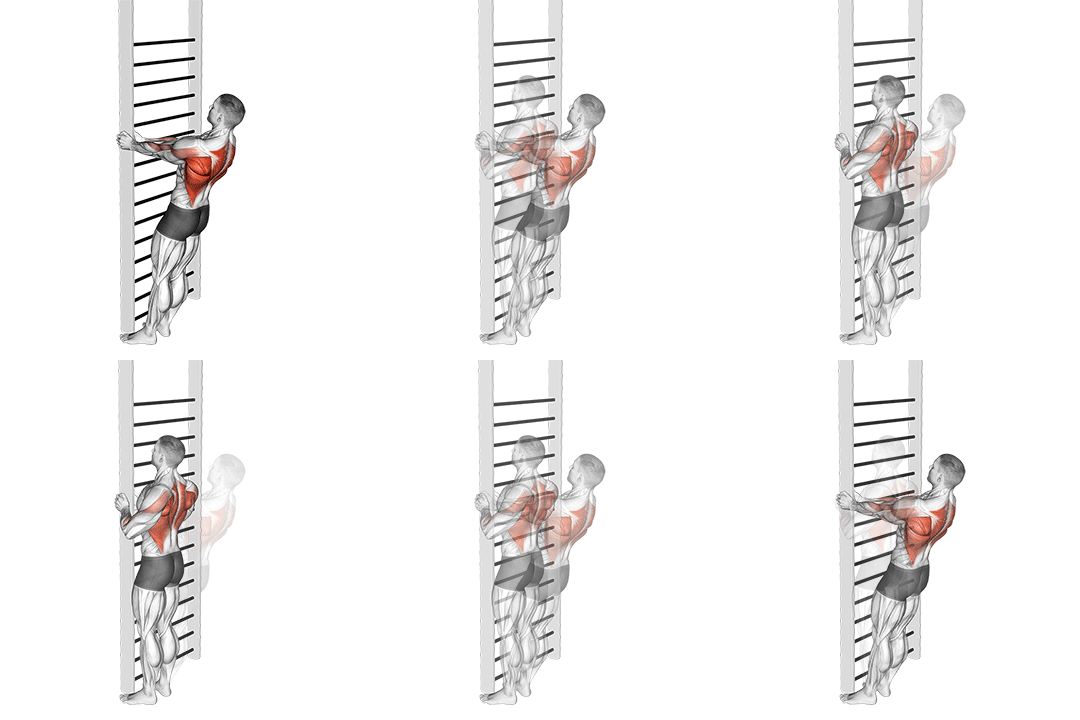
7. Bodyweight Standing Close-grip Row
78.9% MatchHow to perform this exercise
- Stand with your feet shoulder-width apart and knees slightly bent.
- Bend forward at the waist, keeping your back straight and your core engaged.
- Extend your arms straight in front of you, gripping the bar or handles with a close grip.
- Pull the bar or handles towards your body, squeezing your shoulder blades together.
- Pause for a moment at the top of the movement, then slowly release and return to the starting position.
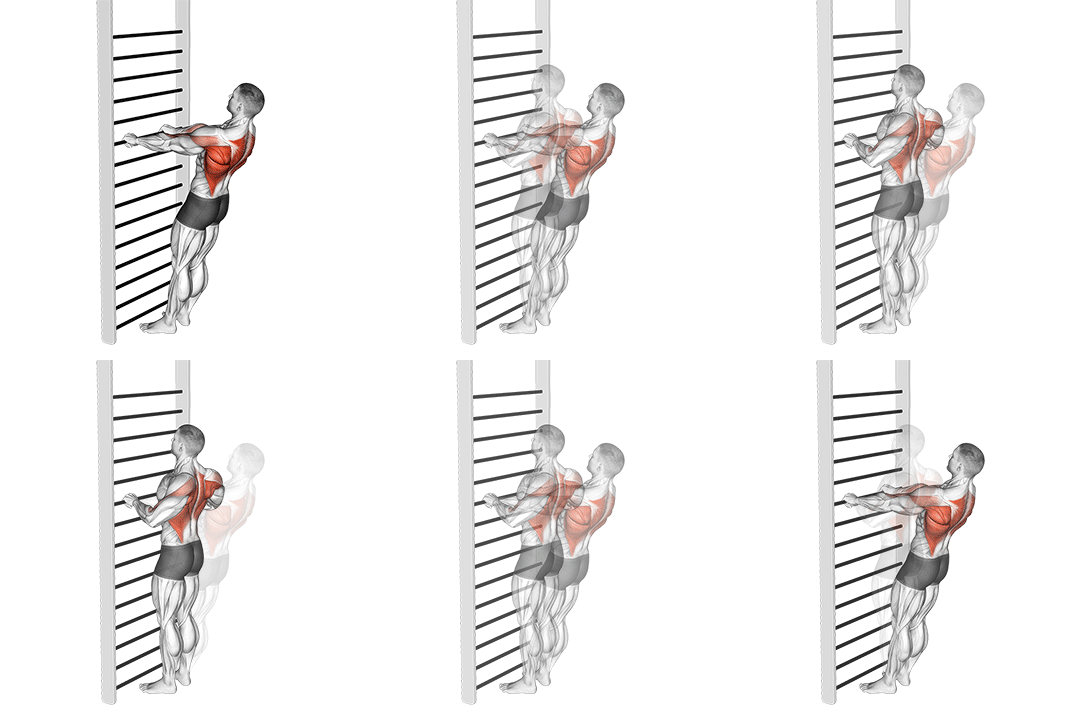
8. Bodyweight Standing Row
78.9% MatchHow to perform this exercise
- Stand with your feet shoulder-width apart and knees slightly bent.
- Grasp a bar or handles with an overhand grip, palms facing down.
- Keep your back straight and core engaged.
- Pull the bar or handles towards your body, squeezing your shoulder blades together.
- Pause for a moment at the top of the movement.
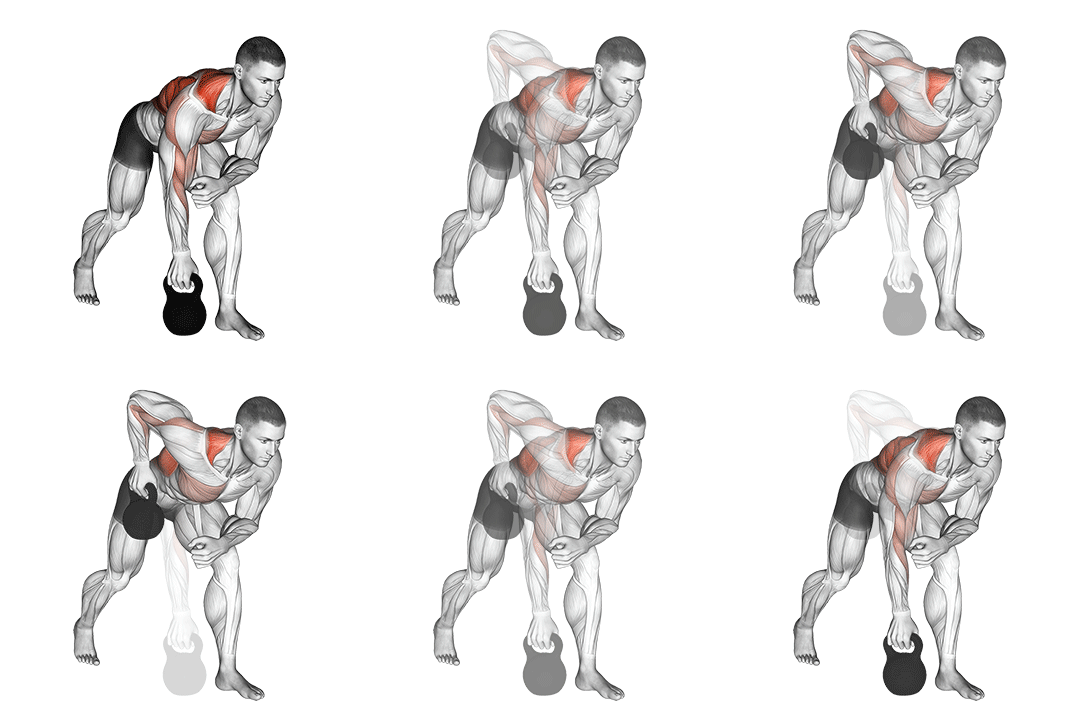
9. Kettlebell One Arm Row
72.9% MatchHow to perform this exercise
- Stand with your feet shoulder-width apart, holding a kettlebell in one hand with an overhand grip.
- Bend your knees slightly and hinge forward at the hips, keeping your back straight and your core engaged.
- Pull the kettlebell up towards your chest, keeping your elbow close to your body and squeezing your shoulder blades together.
- Pause for a moment at the top, then slowly lower the kettlebell back down to the starting position.
- Repeat for the desired number of repetitions, then switch sides and repeat with the other arm.
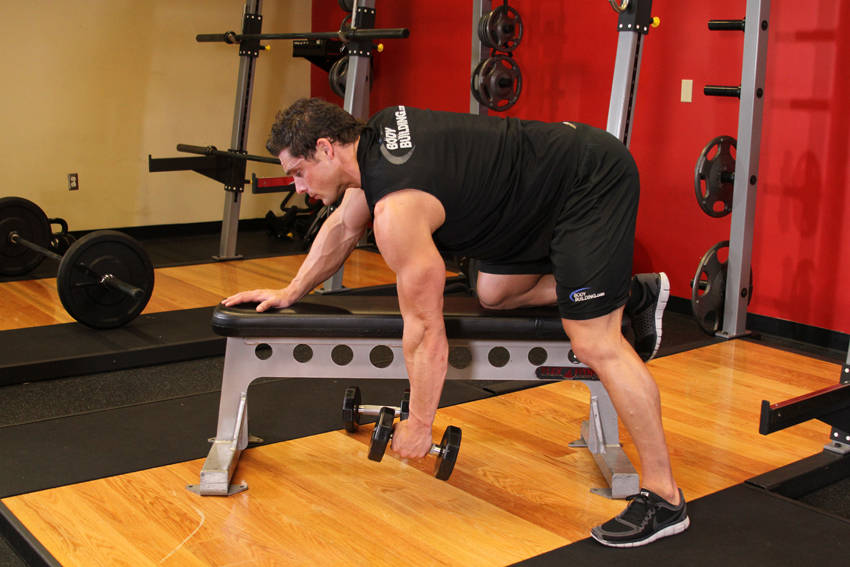
10. One-Arm Dumbbell Row
72.3% MatchHow to perform this exercise
- Choose a flat bench and place a dumbbell on each side of it.
- Place the right leg on top of the end of the bench, bend your torso forward from the waist until your upper body is parallel to the floor, and place your right hand on the other end of the bench for support.
- Use the left hand to pick up the dumbbell on the floor and hold the weight while keeping your lower back straight. The palm of the hand should be facing your torso. This will be your starting position.
- Pull the resistance straight up to the side of your chest, keeping your upper arm close to your side and keeping the torso stationary. Breathe out as you perform this step. Tip: Concentrate on squeezing the back muscles once you reach the full contracted position. Also, make sure that the force is performed with the back muscles and not the arms. Finally, the upper torso should remain stationary and only the arms should move. The forearms should do no other work except for holding the dumbbell; therefore do not try to pull the dumbbell up using the forearms.
- Lower the resistance straight down to the starting position. Breathe in as you perform this step.
Why You Might Need a Exercise Ball Alternating Arm Ups Alternative
Common reasons to substitute include lack of a stability ball, shoulder or neck pain from unsupported prone lifting, or the need for heavier progressive overload. The exercise demands unilateral shoulder extension and anti-rotation stability; if you can't safely maintain spinal alignment or scapular control the lats won't receive full tension. Replacements let you change the pull plane (horizontal vs vertical), add external load, or provide chest support to reduce lumbar shear. For rehab or pain, pick supported variants that limit shoulder impingement and emphasize scapular depression and controlled eccentric lengthening.
How to Choose the Right Substitute
Choose a substitute by matching movement pattern, loading capacity, and stability needs. For similar mechanics pick a horizontal pull (inverted row or single-arm dumbbell row); for vertical width choose pull-ups or lat pulldowns. Consider equipment: cables give constant tension, dumbbells allow unilateral load, and bands offer portability. Prioritize options that allow progressive overload and preserve scapular depression, cue to pull the elbow down and back while keeping the torso rigid. For shoulder issues, select supported variations that remove lumbar shear and permit slow eccentrics.
Frequently Asked Questions
What muscles does Exercise Ball Alternating Arm Ups work?
It primarily targets the latissimus dorsi, with secondary activation of the posterior deltoid, rhomboids, and teres major; the erector spinae and obliques stabilize the trunk. Biomechanically the move emphasizes unilateral shoulder extension and adduction, cue to retract the scapula and avoid lumbar extension to maximize lat loading.
What is the best bodyweight alternative to Exercise Ball Alternating Arm Ups?
The inverted row is the best bodyweight substitute because it preserves the horizontal pull and core stabilization demands. Set chest-to-bar height, keep a rigid plank from heels to head, and squeeze the scapula together as you pull; elevating the feet increases difficulty and lat recruitment.
Can I build muscle without doing Exercise Ball Alternating Arm Ups?
Yes. You can build back muscle using progressive overload with rows, pull-ups, and pulldowns while maintaining full ROM and proper scapular mechanics. Cue to drive the elbow down-and-back on each rep and increase load, volume, or tempo to progressively increase mechanical tension on the lats.
More Exercise Alternatives
Find Alternatives for Any Exercise
Use the exercise substitution finder to compare ranked alternatives for your available equipment and training preference.
Try the Exercise Substitution Finder →