

10 Best Glute Ham Raise Alternatives for Limited Equipment
The Glute Ham Raise is done kneeling with a machine. Ranked closest by our scoring: the Floor Glute-ham Raise, the Self Assisted Inverse Leg Curl and the Self Assisted Inverse Leg Curl (On Floor).
Updated Ranked by our 12-factor similarity model How it works
Original Exercise: Glute Ham Raise
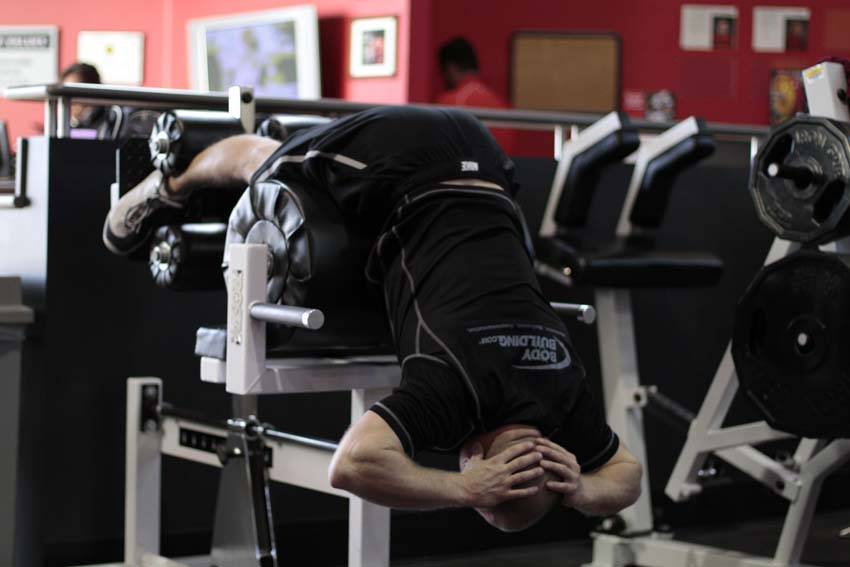
- Primary muscle
- Hamstrings
- Equipment
- Machine
- Difficulty
- Advanced
- Type
- Compound
Secondary muscles: Calves, Glutes
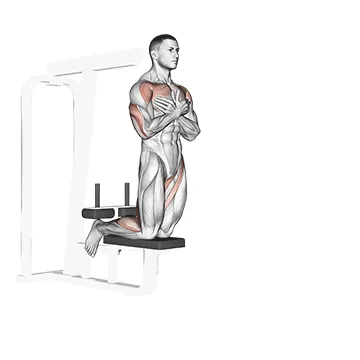
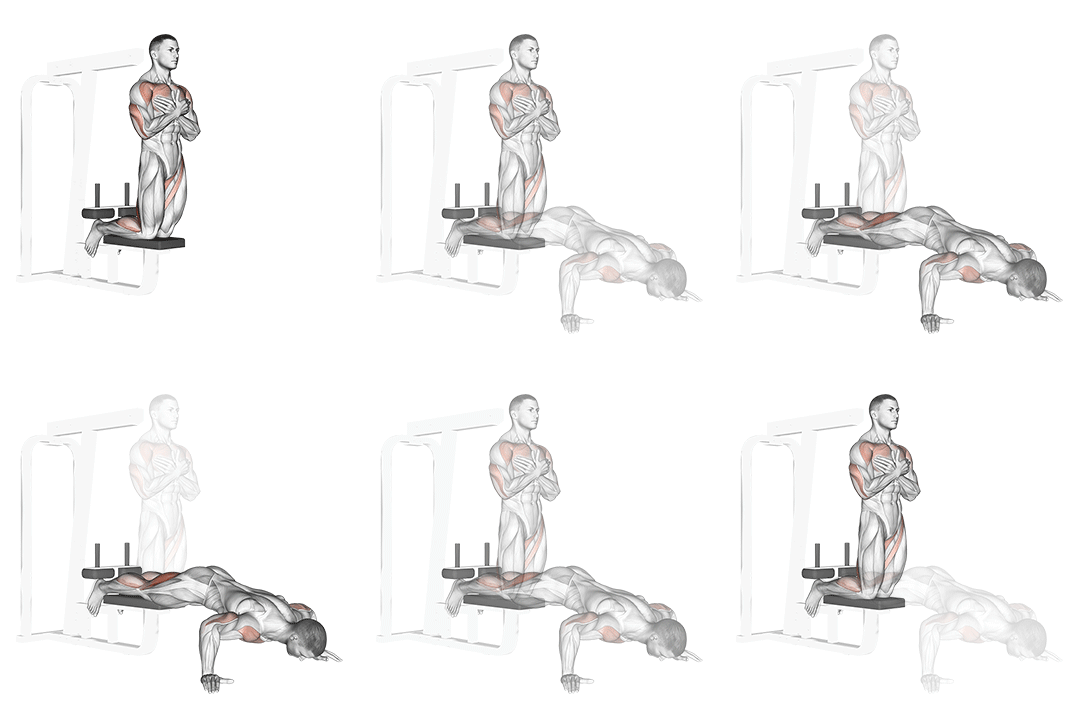
How to perform Glute Ham Raise
- Begin by adjusting the equipment to fit your body. Place your feet against the footplate in between the rollers as you lie facedown. Your knees should be just behind the pad.
- Start from the bottom of the movement. Keep your back arched as you begin the movement by flexing the knees. Drive your toes into the foot plate as you do so. Keep your upper body straight, and continue until your body is upright.
- Return to the starting position, keeping your descent under control.
Ranked Glute Ham Raise Alternatives
10 substitutes, ranked by how closely each one matches the Glute Ham Raise on movement pattern, muscles worked, equipment and body position. The higher the score, the less you change. Open "How to perform this exercise" on a card for the steps; every card title links to that exercise's own alternatives page.
Best match 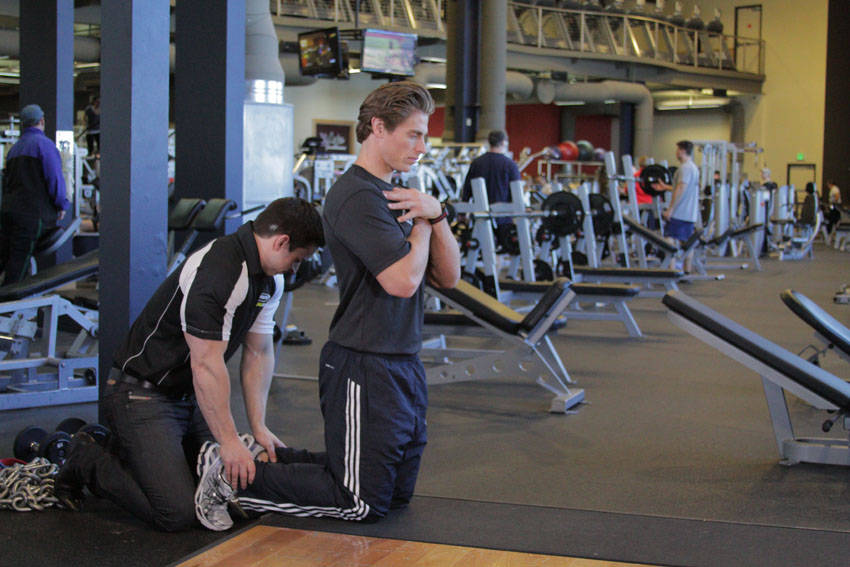
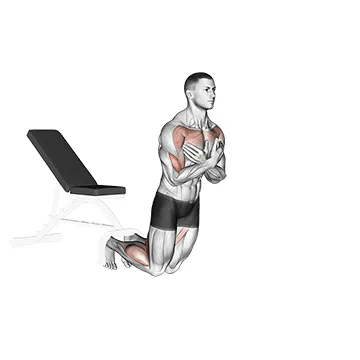
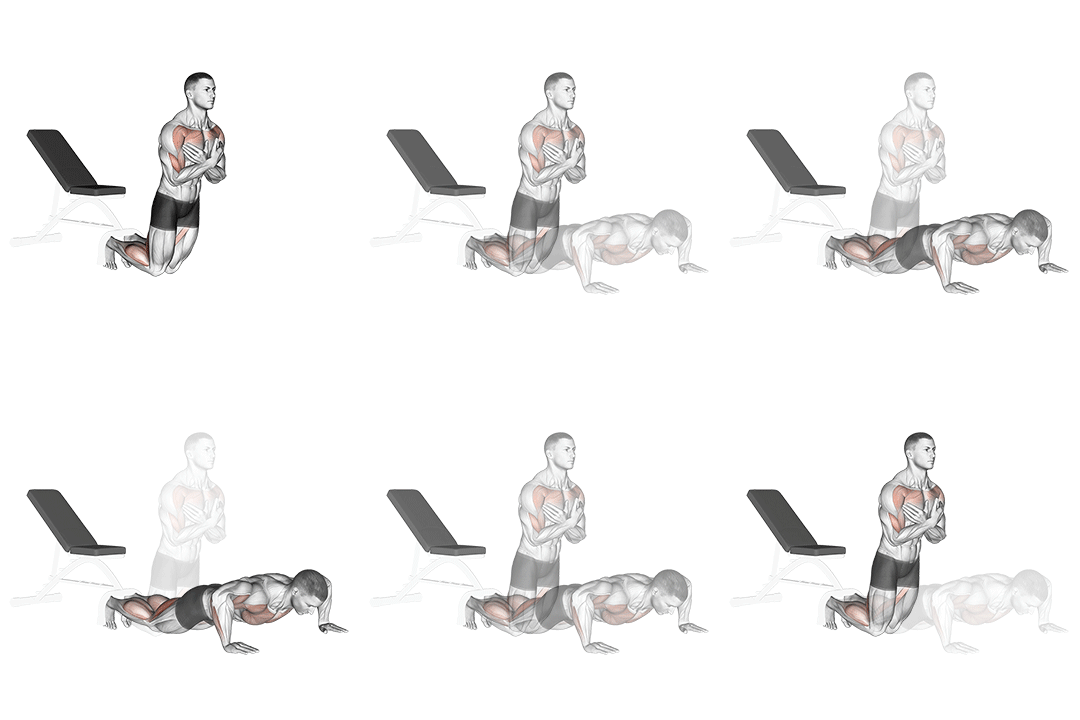
1. Floor Glute-ham Raise
90% match- Hamstrings
- Machine
- Advanced
- Compound
Pick this when you want an easier version that still works the hamstrings.
How to perform this exercise
- You can use a partner for this exercise or brace your feet under something stable.
- Begin on your knees with your upper legs and torso upright. If using a partner, they will firmly hold your feet to keep you in position. This will be your starting position.
- Lower yourself by extending at the knee, taking care to NOT flex the hips as you go forward.
- Place your hands in front of you as you reach the floor. This movement is very difficult and you may be unable to do it unaided. Use your arms to lightly push off the floor to aid your return to the starting position.
Sets and reps: 3 to 5 sets of 5 to 8 reps.
Why this matches
- Primary muscle: hamstrings, the same as the Glute Ham Raise
- Equipment: a machine, the same as the Glute Ham Raise
- Body position: kneeling, the same as the Glute Ham Raise
2. Self Assisted Inverse Leg Curl
79% match- Hamstrings
- Bodyweight
- Intermediate
- Isolation
Use this when you have nothing to train with, because it works the hamstrings with bodyweight alone.
How to perform this exercise
- Lie flat on your back on a mat or bench with your legs extended.
- Place your hands by your sides or under your glutes for support.
- Bend your knees and lift your feet off the ground, bringing your thighs towards your chest.
- Pause for a moment at the top, then slowly lower your legs back to the starting position.
- Repeat for the desired number of repetitions.
Sets and reps: 3 sets of 10 to 15 reps.
Why this matches
- Primary muscle: hamstrings, the same as the Glute Ham Raise
- Equipment: bodyweight only, not a machine
- Body position: kneeling, the same as the Glute Ham Raise
- Hamstrings
- Bodyweight
- Beginner
- Isolation
How to perform this exercise
- Lie flat on your back with your legs extended and your arms by your sides.
- Bend your knees and place your feet flat on the ground, hip-width apart.
- Lift your hips off the ground, engaging your glutes and hamstrings.
- Slowly curl your legs towards your glutes, keeping your hips lifted.
- Pause for a moment at the top, then slowly extend your legs back to the starting position.
- Lower your hips back down to the ground.
- Repeat for the desired number of repetitions.
Sets and reps: 3 sets of 8 to 12 reps, and add reps before you add load.
Why this matches
- Primary muscle: hamstrings, the same as the Glute Ham Raise
- Equipment: bodyweight only, not a machine
- Body position: kneeling, the same as the Glute Ham Raise
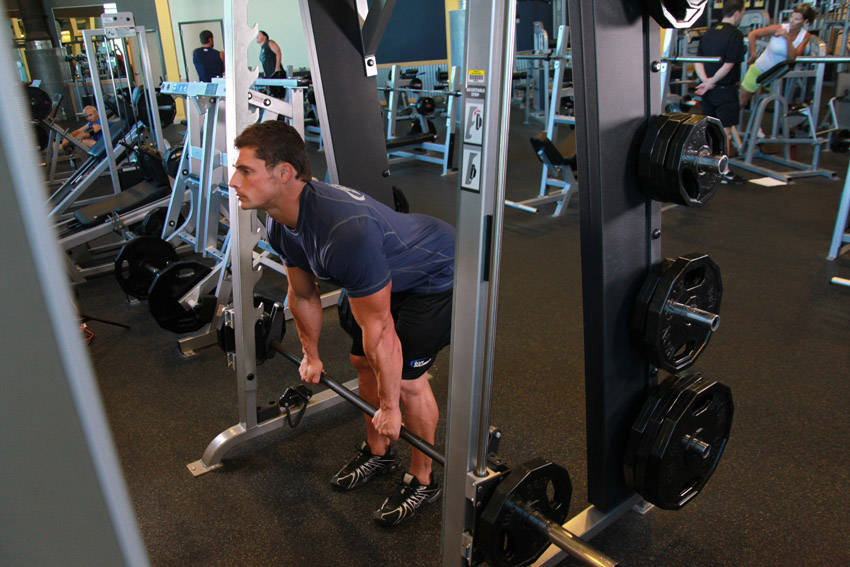
- Hamstrings
- Smith-machine
- Intermediate
- Compound
A good swap when you have a Smith machine to work with, and it still works the hamstrings.
How to perform this exercise
- To begin, set the bar on the smith machine to a height that is around the middle of your thighs. Once the correct height is chosen and the bar is loaded, grasp the bar using a pronated (palms forward) grip that is shoulder width apart. You may need some wrist wraps if using a significant amount of weight.
- Lift the bar up by fully extending your arms while keeping your back straight. Stand with your torso straight and your legs spaced using a shoulder width or narrower stance. The knees should be slightly bent. This is your starting position.
- Keeping the knees stationary, lower the barbell to over the top of your feet by bending at the waist while keeping your back straight. Keep moving forward as if you were going to pick something from the floor until you feel a stretch on the hamstrings. Exhale as you perform this movement
- Start bringing your torso up straight again as soon as you feel the hamstrings stretch by extending your hips and waist until you are back at the starting position. Inhale as you perform this movement.
- Repeat for the recommended amount of repetitions.
Sets and reps: 3 or 4 sets of 6 to 10 reps.
Why this matches
- Primary muscle: hamstrings, the same as the Glute Ham Raise
- Equipment: a machine, the same as the Glute Ham Raise
- Body position: standing, not kneeling
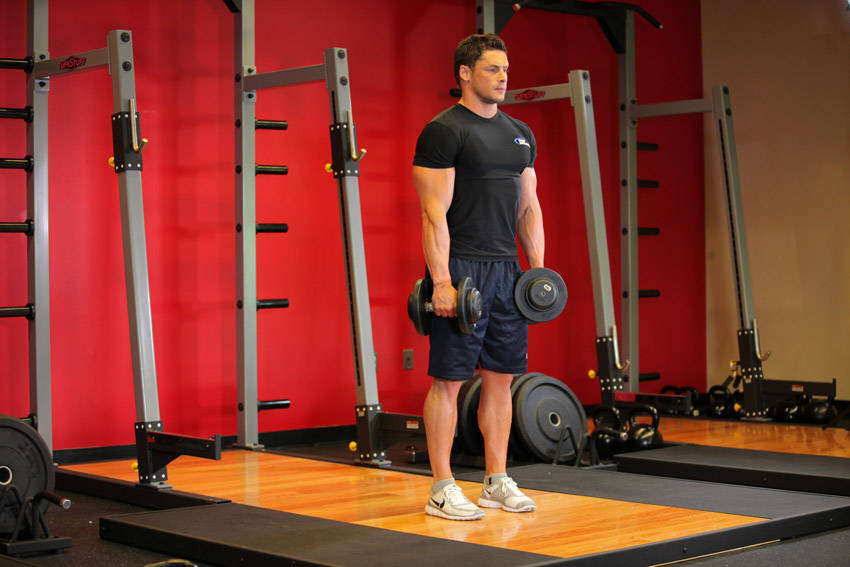
5. Stiff-legged Dumbbell Deadlift
76% match- Hamstrings
- Dumbbell
- Intermediate
- Compound
A good swap when you have dumbbells to work with, and it still works the hamstrings.
How to perform this exercise
- Grasp a couple of dumbbells holding them by your side at arm's length.
- Stand with your torso straight and your legs spaced using a shoulder width or narrower stance. The knees should be slightly bent. This is your starting position.
- Keeping the knees stationary, lower the dumbbells to over the top of your feet by bending at the waist while keeping your back straight. Keep moving forward as if you were going to pick something from the floor until you feel a stretch on the hamstrings. Exhale as you perform this movement
- Start bringing your torso up straight again by extending your hips and waist until you are back at the starting position. Inhale as you perform this movement.
- Repeat for the recommended amount of repetitions.
Sets and reps: 3 or 4 sets of 6 to 10 reps.
Why this matches
- Primary muscle: hamstrings, the same as the Glute Ham Raise
- Equipment: free weights, not a machine
- Body position: standing, not kneeling
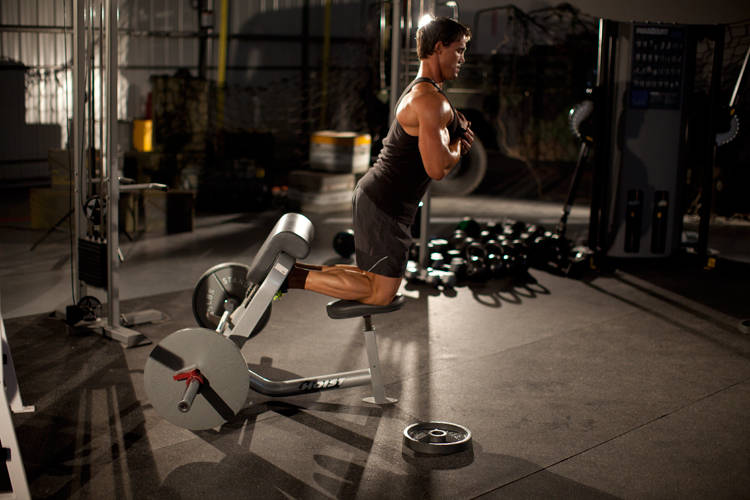
6. Natural Glute Ham Raise
73% match- Hamstrings
- Bodyweight
- Advanced
- Compound
How to perform this exercise
- Using the leg pad of a lat pulldown machine or a preacher bench, position yourself so that your ankles are under the pads, knees on the seat, and you are facing away from the machine. You should be upright and maintaining good posture.
- This will be your starting position. Lower yourself under control until your knees are almost completely straight.
- Remaining in control, raise yourself back up to the starting position.
- If you are unable to complete a rep, use a band, a partner, or push off of a box to aid in completing a repetition.
Sets and reps: 3 or 4 sets of 6 to 10 reps.
Why this matches
- Primary muscle: hamstrings, the same as the Glute Ham Raise
- Equipment: bodyweight only, not a machine
- Body position: kneeling, the same as the Glute Ham Raise
- Balance: harder to stay steady on than the Glute Ham Raise
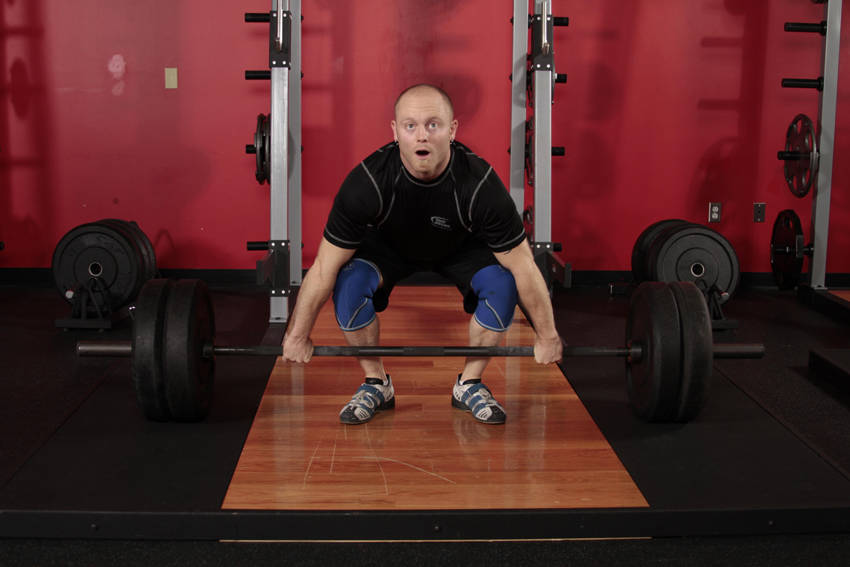
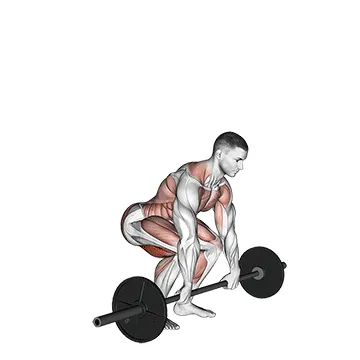
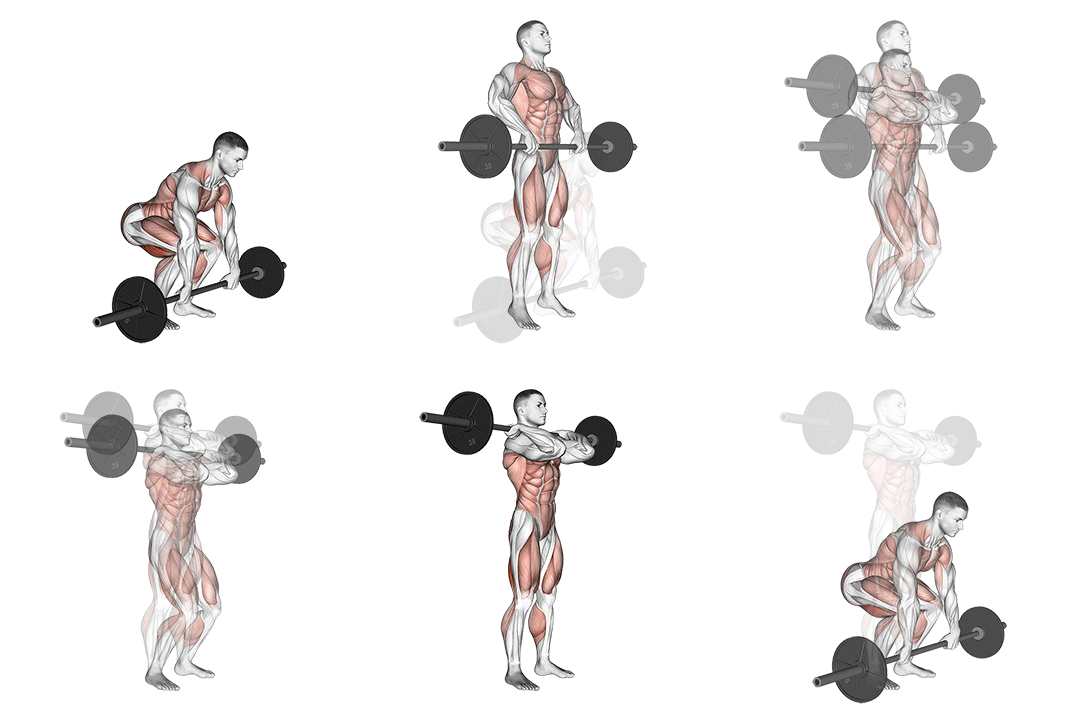
7. Clean
73% match- Hamstrings
- Barbell
- Advanced
- Compound
A good swap when you have a barbell to work with, and it still works the hamstrings.
How to perform this exercise
- With a barbell on the floor close to the shins, take an overhand (or hook) grip just outside the legs. Lower your hips with the weight focused on the heels, back straight, head facing forward, chest up, with your shoulders just in front of the bar. This will be your starting position.
- Begin the first pull by driving through the heels, extending your knees. Your back angle should stay the same, and your arms should remain straight. Move the weight with control as you continue to above the knees.
- Next comes the second pull, the main source of acceleration for the clean. As the bar approaches the mid-thigh position, begin extending through the hips. In a jumping motion, accelerate by extending the hips, knees, and ankles, using speed to move the bar upward. There should be no need to actively pull through the arms to accelerate the weight; at the end of the second pull, the body should be fully extended, leaning slightly back, with the arms still extended.
- As full extension is achieved, transition into the third pull by aggressively shrugging and flexing the arms with the elbows up and out. At peak extension, aggressively pull yourself down, rotating your elbows under the bar as you do so. Receive the bar in a front squat position, the depth of which is dependent upon the height of the bar at the end of the third pull. The bar should be racked onto the protracted shoulders, lightly touching the throat with the hands relaxed. Continue to descend to the bottom squat position, which will help in the recovery.
- Immediately recover by driving through the heels, keeping the torso upright and elbows up. Continue until you have risen to a standing position.
Sets and reps: 3 to 5 sets of 5 to 8 reps.
Why this matches
- Primary muscle: hamstrings, the same as the Glute Ham Raise
- Equipment: free weights, not a machine
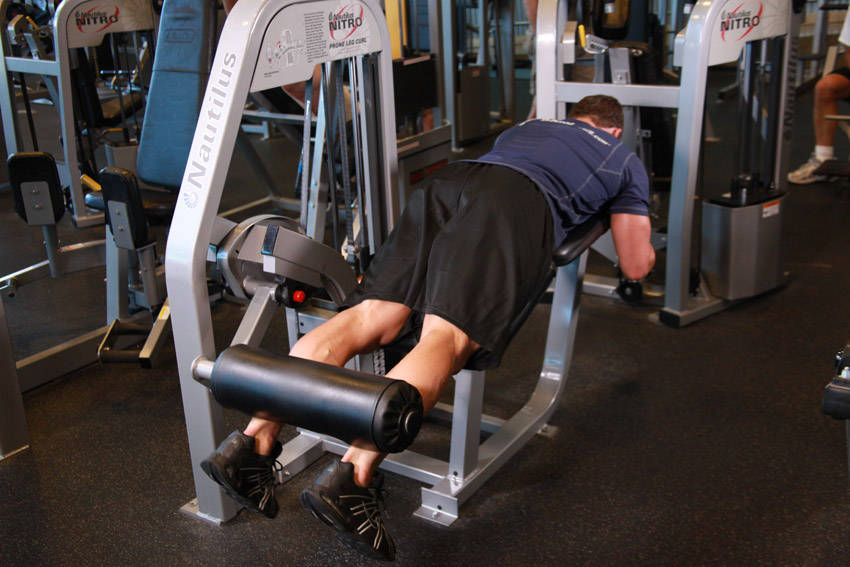
8. Lying Leg Curls
73% match- Hamstrings
- Machine
- Intermediate
- Isolation
How to perform this exercise
- Adjust the machine lever to fit your height and lie face down on the leg curl machine with the pad of the lever on the back of your legs (just a few inches under the calves). Tip: Preferably use a leg curl machine that is angled as opposed to flat since an angled position is more favorable for hamstrings recruitment.
- Keeping the torso flat on the bench, ensure your legs are fully stretched and grab the side handles of the machine. Position your toes straight (or you can also use any of the other two stances described on the foot positioning section). This will be your starting position.
- As you exhale, curl your legs up as far as possible without lifting the upper legs from the pad. Once you hit the fully contracted position, hold it for a second.
- As you inhale, bring the legs back to the initial position. Repeat for the recommended amount of repetitions.
Sets and reps: 3 sets of 10 to 15 reps.
Why this matches
- Primary muscle: hamstrings, the same as the Glute Ham Raise
- Equipment: a machine, the same as the Glute Ham Raise
- Body position: lying face down, not kneeling
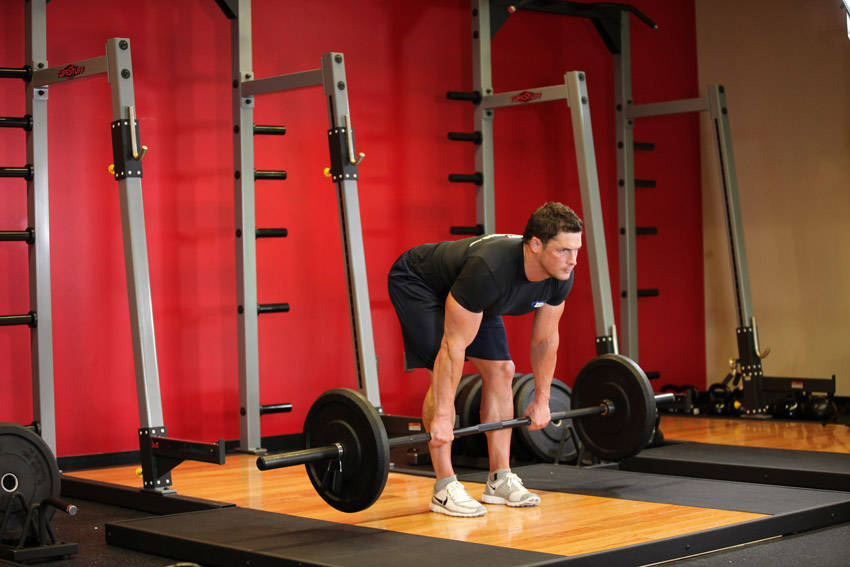
9. Stiff-legged Barbell Deadlift
72% match- Hamstrings
- Barbell
- Intermediate
- Compound
How to perform this exercise
- Grasp a bar using an overhand grip (palms facing down). You may need some wrist wraps if using a significant amount of weight.
- Stand with your torso straight and your legs spaced using a shoulder width or narrower stance. The knees should be slightly bent. This is your starting position.
- Keeping the knees stationary, lower the barbell to over the top of your feet by bending at the hips while keeping your back straight. Keep moving forward as if you were going to pick something from the floor until you feel a stretch on the hamstrings. Inhale as you perform this movement.
- Start bringing your torso up straight again by extending your hips until you are back at the starting position. Exhale as you perform this movement.
- Repeat for the recommended amount of repetitions.
Sets and reps: 3 or 4 sets of 6 to 10 reps.
Why this matches
- Primary muscle: hamstrings, the same as the Glute Ham Raise
- Equipment: free weights, not a machine
- Body position: standing, not kneeling
10. Power Clean
72% match- Hamstrings
- Barbell
- Advanced
- Compound
How to perform this exercise
- Start with the barbell on the ground in front of you, with your feet shoulder-width apart.
- Bend down and grip the barbell with an overhand grip, slightly wider than shoulder-width apart.
- Keep your back straight and chest up as you lift the barbell off the ground, extending your hips and knees.
- As the barbell reaches your mid-thigh, explosively pull it upwards, shrugging your shoulders and pulling your elbows high and to the sides.
- As the barbell reaches its highest point, quickly drop underneath it, rotating your elbows around and catching the barbell on your shoulders in a front squat position.
- Stand up with the barbell, fully extending your hips and knees.
- Lower the barbell back down to the starting position, keeping control of the weight throughout the movement.
- Repeat for the desired number of repetitions.
Sets and reps: 3 to 5 sets of 5 to 8 reps.
Why this matches
- Primary muscle: hamstrings, the same as the Glute Ham Raise
- Equipment: free weights, not a machine
- Body position: standing, not kneeling
Why You Might Need a Glute Ham Raise Alternative
People substitute the glute ham raise for several practical and clinical reasons. Gyms often lack a dedicated GHR machine, and some lifters experience knee or lumbar pain when forcing the combined hip-extension/knee-flexion pattern. Alternatives let you isolate hip hinge mechanics or place more emphasis on eccentric control to stimulate distal hamstring fibers. For rehab or pain management choose movements with lower shear forces, hinge from the hips with a neutral spine and bend the knees only where pain-free. For strength and hypertrophy, pick exercises that let you progressively overload (heavier RDLs or weighted Nordic eccentrics) while maintaining proper hip position and slow eccentrics to maximize hamstring activation.
Glute Ham Raise FAQ
What muscles does Glute Ham Raise work?
The glute ham raise targets the hamstrings (biceps femoris, semitendinosus, semimembranosus) while also recruiting the glutes and lower back for hip extension. It combines eccentric knee flexion with concentric hip extension, so focus on controlling the hip hinge and knee bend to maximize hamstring activation.
What is the best bodyweight alternative to Glute Ham Raise?
The Nordic hamstring curl is the best bodyweight alternative because it loads eccentric knee flexion intensely. Anchor your feet, keep hips extended, and lower slowly with hands ready to catch so the eccentric portion stimulates the hamstrings effectively.
Find Alternatives for Any Exercise
Search the exercise database and filter the ranked substitutes by the equipment you own.
Similarity scores compare exercise metadata such as movement pattern, muscles, equipment and body position. They are not a safety rating or a check that you own the equipment. Learn about our methodology