

10 Best Kettlebell Sumo High Pull Alternatives for Home or Gym
If you can't do the kettlebell sumo high pull, choose movements that preserve hip drive, scapular elevation and trap loading, such as a dumbbell high pull or barbell upright row. Cue a strong hip hinge, explosive extension, and drive the elbows high while keeping a neutral spine to maintain upper-trap activation and safe biomechanics.
Original Exercise: Kettlebell Sumo High Pull
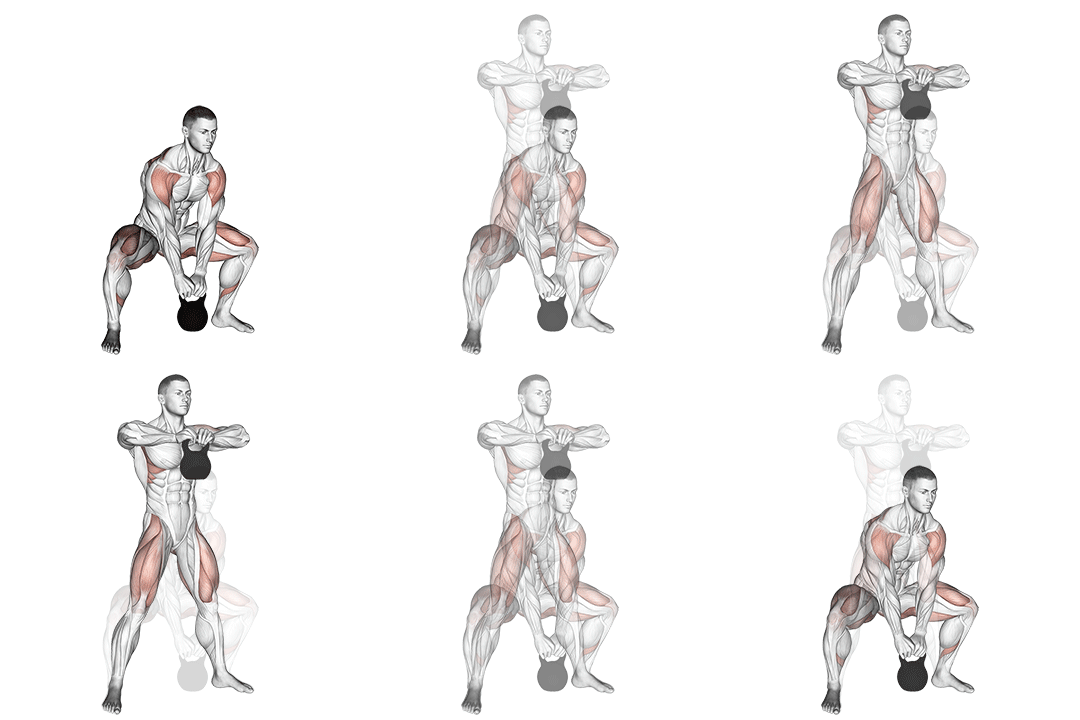
How to Perform Kettlebell Sumo High Pull
- Stand with your feet wider than shoulder-width apart, toes pointing outwards.
- Hold a kettlebell with both hands in front of your body, arms extended downwards.
- Bend your knees and lower your hips into a squat position, keeping your back straight.
- Drive through your heels and explosively extend your hips and knees, pulling the kettlebell up towards your chin.
- As you pull the kettlebell up, keep your elbows high and wide, and squeeze your shoulder blades together.
- Lower the kettlebell back down to the starting position and repeat for the desired number of repetitions.
Ranked Kettlebell Sumo High Pull Alternatives
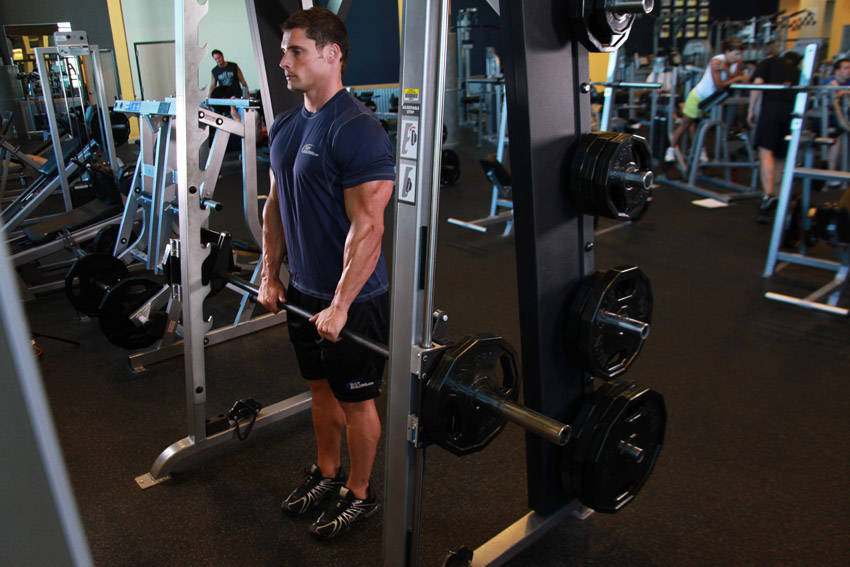
1. Smith Machine Upright Row
79.9% MatchHow to perform this exercise
- To begin, set the bar on the smith machine to a height that is around the middle of your thighs. Once the correct height is chosen and the bar is loaded, grasp the bar using a pronated (palms forward) grip that is shoulder width apart. You may need some wrist wraps if using a significant amount of weight.
- Lift the barbell up and fully extend your arms with your back straight. There should be a slight bend at the elbows. This is the starting position.
- Use your side shoulders to lift the bar as you exhale. The bar should be close to the body as you move it up. Continue to lift it until it nearly touches your chin. Tip: Your elbows should drive the motion. As you lift the bar, your elbows should always be higher than your forearms. Also, keep your torso stationary and pause for a second at the top of the movement.
- Lower the bar back down slowly to the starting position. Inhale as you perform this portion of the movement.
- Repeat for the recommended amount of repetitions.
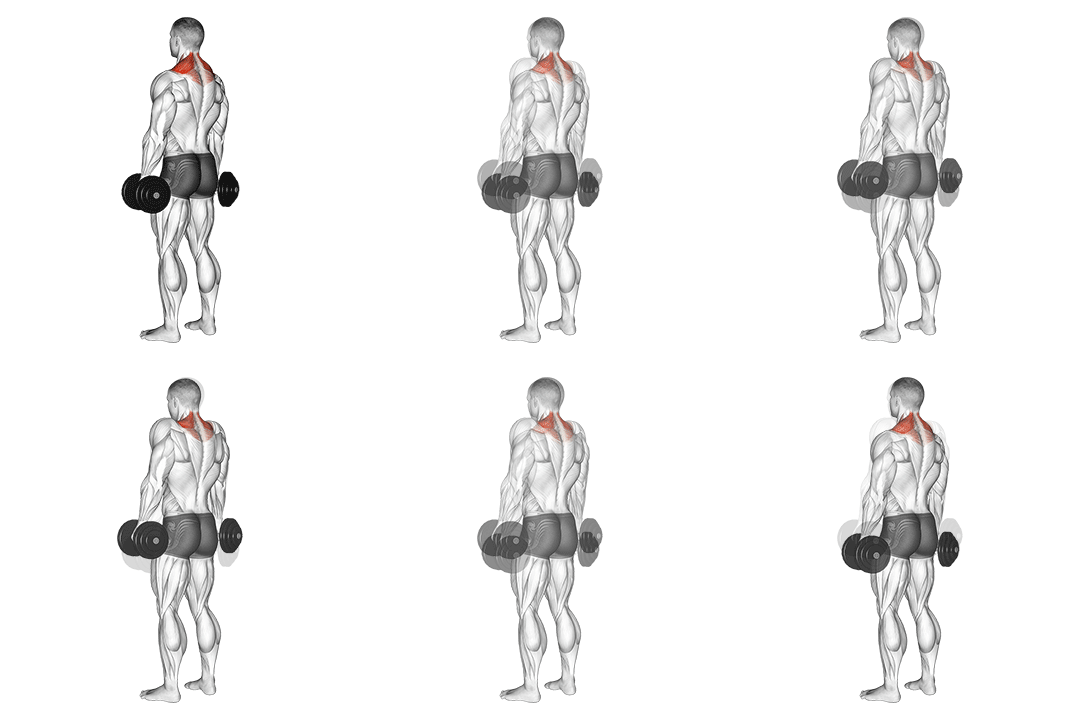
2. Dumbbell Shrug
72.2% MatchHow to perform this exercise
- Stand with your feet shoulder-width apart and hold a dumbbell in each hand with your palms facing your body.
- Keep your arms straight and let the dumbbells hang by your sides.
- Raise your shoulders as high as possible, as if you are trying to touch your ears with your shoulders.
- Hold the contraction for a second, then slowly lower your shoulders back down to the starting position.
- Repeat for the desired number of repetitions.
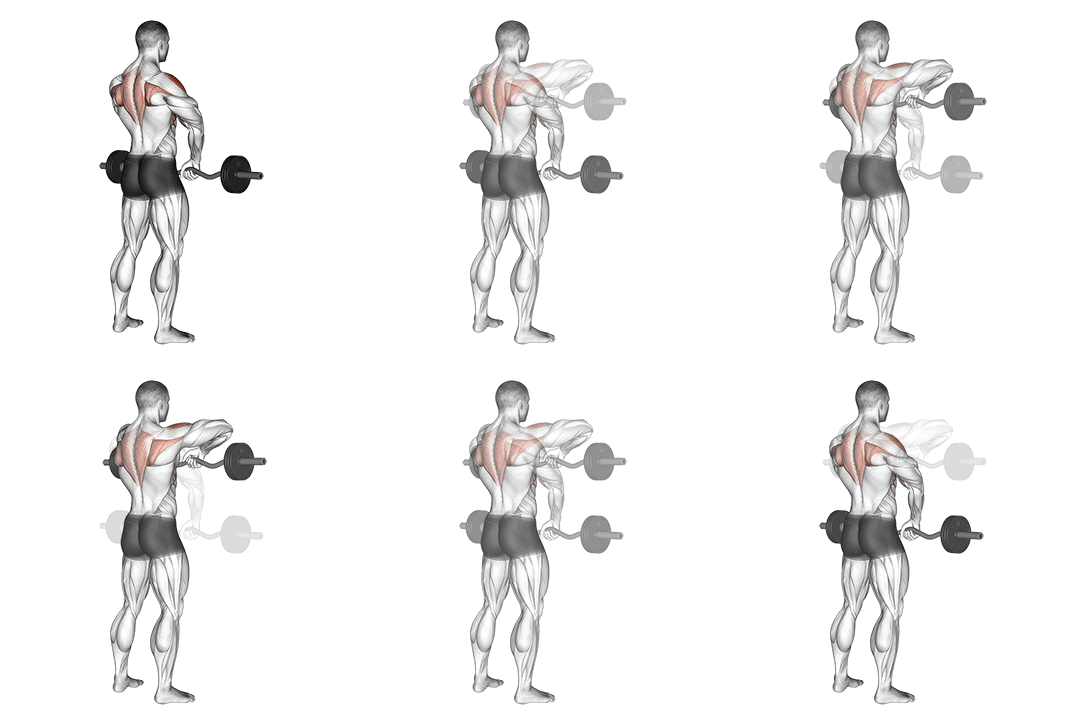
3. Barbell Upright Row
69.3% MatchHow to perform this exercise
- Stand with your feet shoulder-width apart and hold a barbell with an overhand grip, hands slightly wider than shoulder-width apart.
- Let the barbell hang in front of your thighs, arms fully extended.
- Keeping your back straight and core engaged, exhale and lift the barbell straight up towards your chin, leading with your elbows.
- Pause for a moment at the top, then inhale and slowly lower the barbell back down to the starting position.
- Repeat for the desired number of repetitions.
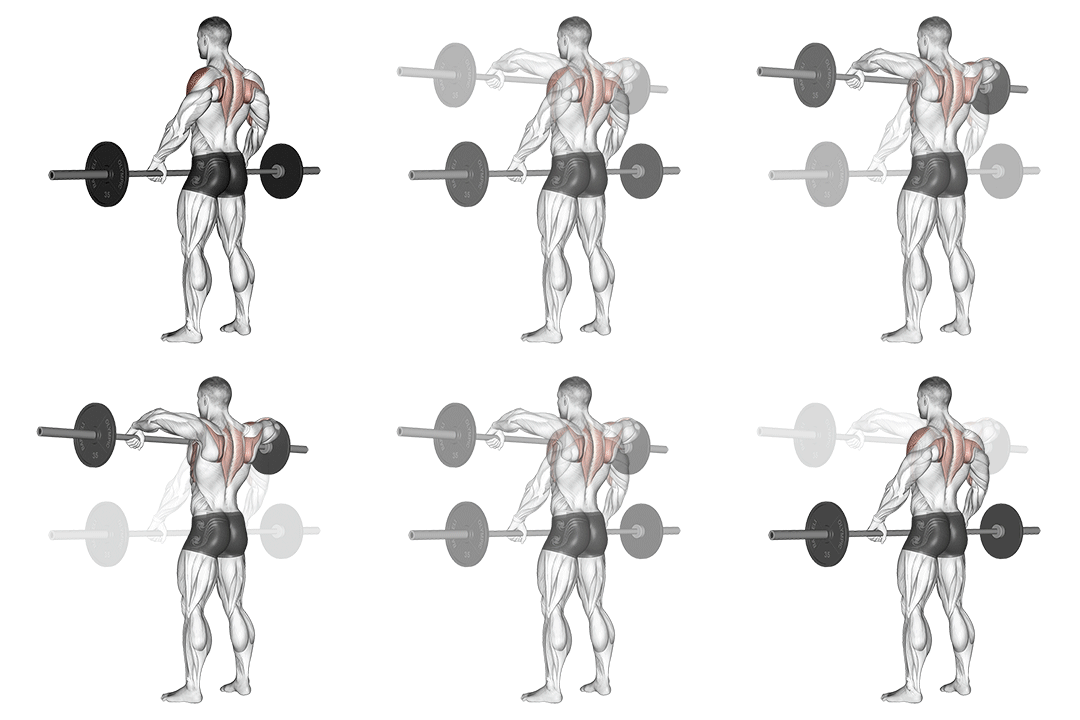
4. Barbell Wide-grip Upright Row
69.3% MatchHow to perform this exercise
- Stand with your feet shoulder-width apart and hold a barbell with an overhand grip, hands wider than shoulder-width apart.
- Let the barbell hang in front of your thighs, arms fully extended.
- Keeping your back straight, exhale and lift the barbell straight up towards your chin, leading with your elbows.
- Pause for a moment at the top, then inhale and slowly lower the barbell back down to the starting position.
- Repeat for the desired number of repetitions.
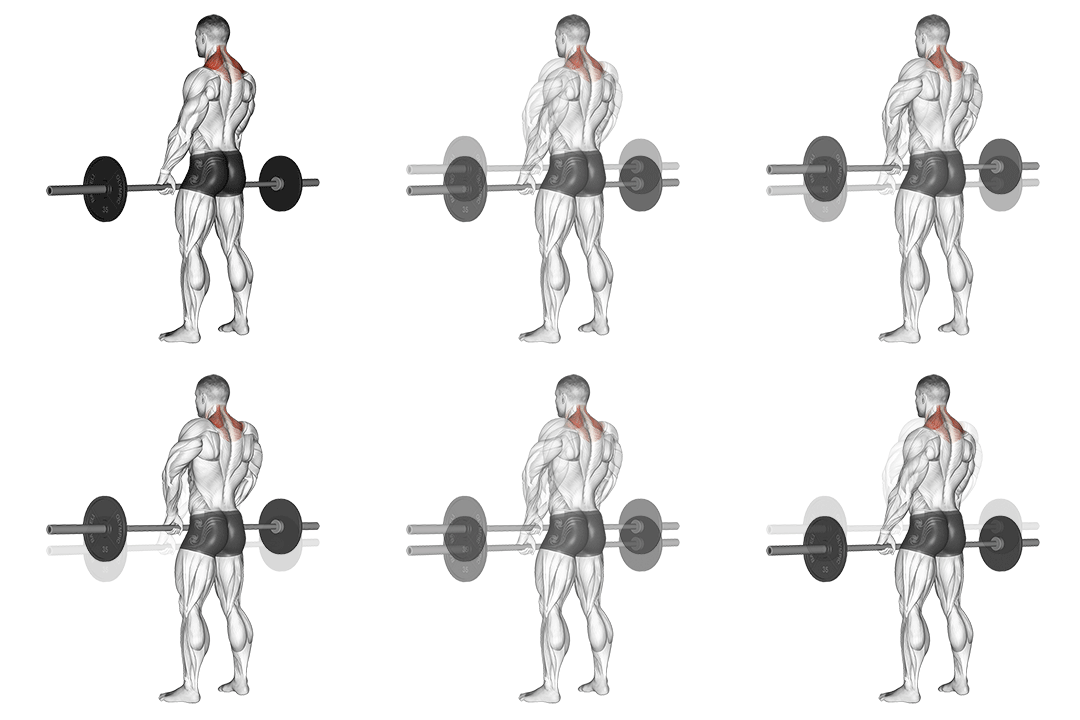
5. Barbell Shrug
68.2% MatchHow to perform this exercise
- Stand with your feet shoulder-width apart and hold a barbell in front of you with an overhand grip.
- Keep your arms straight and your back straight throughout the exercise.
- Lift your shoulders up towards your ears as high as possible, squeezing your traps at the top.
- Hold for a moment, then slowly lower your shoulders back down to the starting position.
- Repeat for the desired number of repetitions.
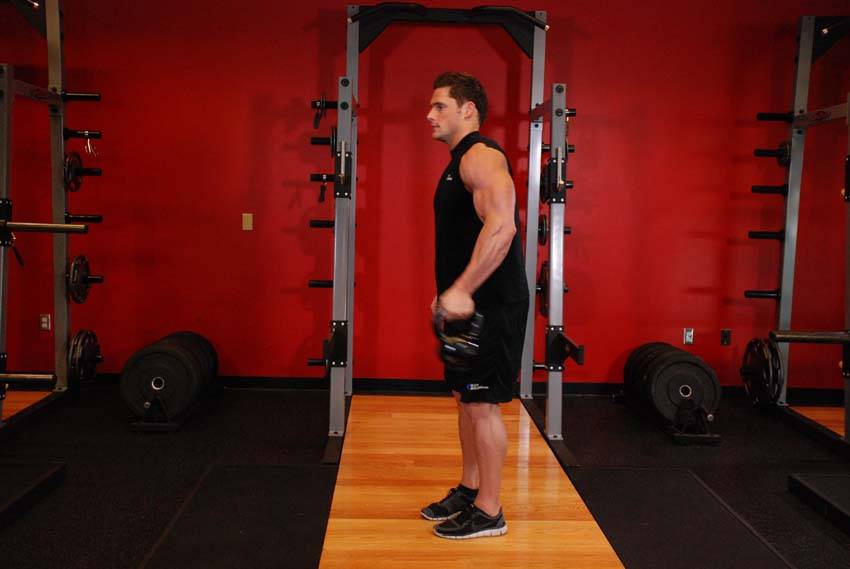
6. Bottoms-Up Clean From The Hang Position
67.7% MatchHow to perform this exercise
- Initiate the exercise by standing upright with a kettlebell in one hand.
- Swing the kettlebell back forcefully and then reverse the motion forcefully. Crush the kettlebell handle as hard as possible and raise the kettlebell to your shoulder.
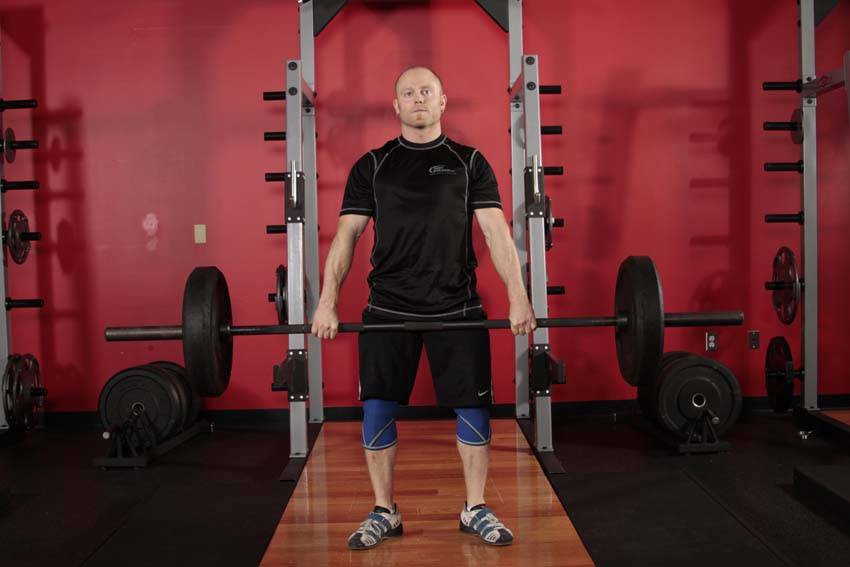
7. Hang Clean - Below The Knees
64.9% MatchHow to perform this exercise
- Begin with a shoulder width, double overhand or hook grip, with the bar hanging just below the knees. Your back should be straight and inclined slightly forward.
- Begin by aggressively extending through the hips, knees and ankles, driving the weight upward. As you do so, shrug your shoulders towards your ears. As full extension is achieved, transition into the third pull by aggressively shrugging and flexing the arms with the elbows up and out.
- At peak extension, aggressively pull yourself down, rotating your elbows under the bar as you do so. Receive the bar in a front squat position, the depth of which is dependent upon the height of the bar at the end of the third pull. The bar should be racked onto the protracted shoulders, lightly touching the throat with the hands relaxed. Continue to descend to the bottom squat position, which will help in the recovery.
- Immediately recover by driving through the heels, keeping the torso upright and elbows up. Continue until you have risen to a standing position.
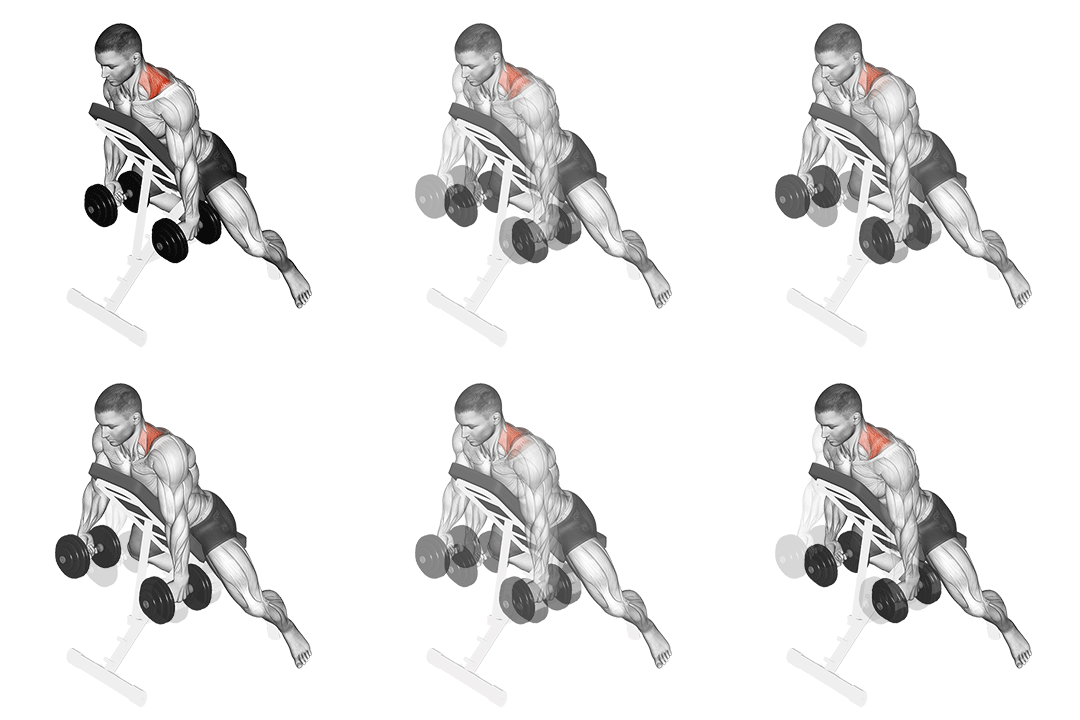
8. Dumbbell Decline Shrug
64.2% MatchHow to perform this exercise
- Set up a decline bench at a 45-degree angle.
- Lie face down on the bench with your chest and stomach resting against it.
- Hold a dumbbell in each hand with your arms fully extended towards the floor.
- Keeping your arms straight, raise your shoulders towards your ears as high as possible.
- Hold the contraction for a moment, then slowly lower the dumbbells back to the starting position.
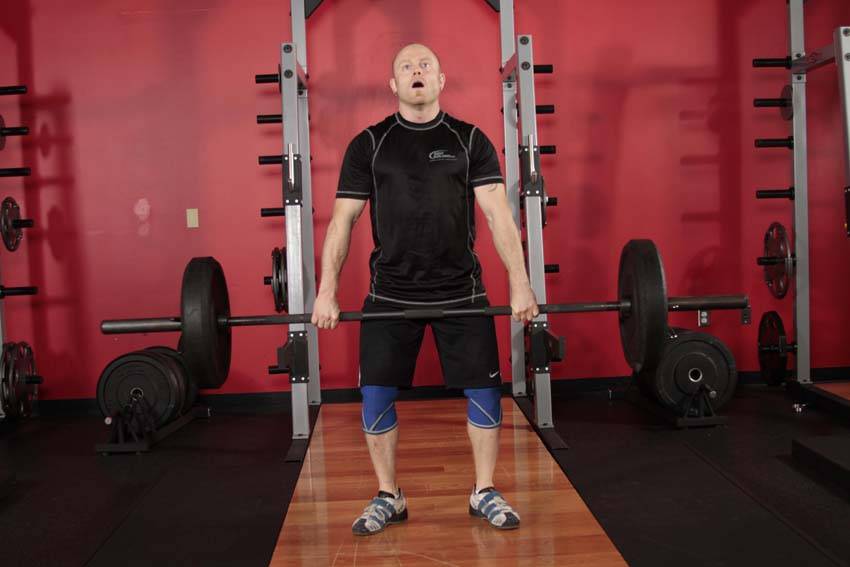
9. Hang Clean
64.1% MatchHow to perform this exercise
- Begin with a shoulder width, double overhand or hook grip, with the bar hanging at the mid thigh position. Your back should be straight and inclined slightly forward.
- Begin by aggressively extending through the hips, knees and ankles, driving the weight upward. As you do so, shrug your shoulders towards your ears.
- Immediately recover by driving through the heels, keeping the torso upright and elbows up. Continue until you have risen to a standing position.
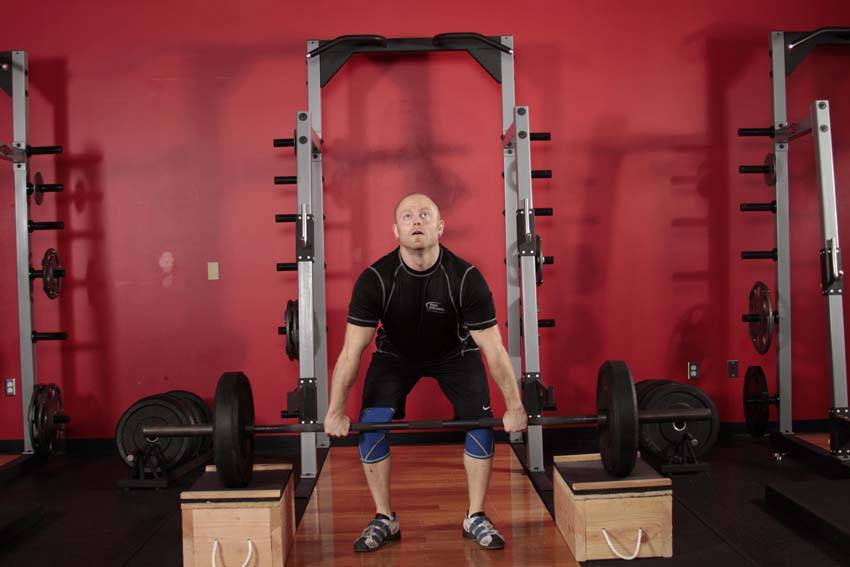
10. Power Clean From Blocks
64.1% MatchHow to perform this exercise
- With a barbell on boxes of the desired height, take a grip just outside the legs. Lower your hips with the weight focused on the heels, back straight, head facing forward, chest up, with your shoulders just in front of the bar. This will be your starting position.
- Begin the first pull by driving through the heels, extending your knees. Your back angle should stay the same, and your arms should remain straight. As the bar approaches the mid-thigh position, begin extending through the hips.
- In a jumping motion, accelerate by extending the hips, knees, and ankles, using speed to move the bar upward. There should be no need to actively pull through the arms to accelerate the weight. At the end of the second pull, the body should be fully extended, leaning slightly back, with the arms still extended.
- As full extension is achieved, transition into the third pull by aggressively shrugging and flexing the arms with the elbows up and out. At peak extension, pull yourself under the bar far enough that it can be racked onto the shoulders, rotating your elbows under the bar as you do so. The bar should be racked onto the protracted shoulders, lightly touching the throat with the hands relaxed.
- Immediately recover by driving through the heels, keeping the torso upright and elbows up. Continue until you have risen to a standing position, and complete the repetition by returning the weight to the boxes.
Why You Might Need a Kettlebell Sumo High Pull Alternative
You may need substitutes due to shoulder impingement, low-back pain, lack of kettlebells, or programming variety. The sumo high pull combines a hip-driven triple extension with rapid scapular elevation to load the upper traps; that coupling can stress the glutes, lumbar spine or rotator cuff if technique degrades. Choosing alternatives lets you separate the hip-power component from trap isolation. For example, use a Romanian deadlift plus a controlled dumbbell shrug to preserve hip hinge mechanics while isolating upper-trap elevation. Cue a neutral spine, hinge at the hips, and finish with a deliberate shrug to target trapezius fibers without excessive shoulder rotation.
How to Choose the Right Substitute
Match the substitute to the movement trait you most need: power, trap hypertrophy, or safety. If you want power and triple extension, pick explosive variations (dumbbell high pull or kettlebell swing plus high shrug) and cue aggressive hip drive and fast elbow elevation. If you prioritize hypertrophy or shoulder health, choose heavy shrugs or controlled upright rows with a 1–2 second pause at the top to increase time under tension and scapular loading. Consider equipment, unilateral needs, and whether you must limit shoulder elevation; use neutral grips or reduce range if impingement is an issue.
Frequently Asked Questions
What muscles does Kettlebell Sumo High Pull work?
The kettlebell sumo high pull primarily targets the upper trapezius through explosive scapular elevation and also recruits posterior deltoids, rhomboids, and the posterior chain via hip extension. Cue a powerful hip hinge and finish with a forceful shrug to maximize trap recruitment and maintain safe lumbar biomechanics.
What is the best bodyweight alternative to Kettlebell Sumo High Pull?
A practical bodyweight alternative is a handstand or wall-supported handstand scapular shrug, which emphasizes scapular elevation and upper-trap activation without external load. Maintain a rigid core, keep shoulders stacked over wrists, and perform controlled scapular shrugs (retract then elevate) to replicate trap engagement.
Can I build muscle without doing Kettlebell Sumo High Pull?
Yes, you can build traps and upper-back muscle with weighted shrugs, upright rows, and rowing variations that provide progressive overload and targeted scapular elevation. Focus on increasing load or time under tension, cue deliberate scapular elevation and retention at the top, and progressively add volume to drive hypertrophy.
More Exercise Alternatives
Find Alternatives for Any Exercise
Use the exercise substitution finder to compare ranked alternatives for your available equipment and training preference.
Try the Exercise Substitution Finder →