

10 Best Lever Seated Hip Abduction Alternatives for Gyms and Home
If you can’t perform the lever seated hip abduction, use standing band abductions, side-lying hip raises, cable abductions, seated band walks, or lateral step-ups. Focus on initiating movement from the lateral hip and gluteus medius, keep the pelvis level, and control the eccentric phase to maximize abductor activation and reduce compensatory lumbar movement.
Original Exercise: Lever Seated Hip Abduction
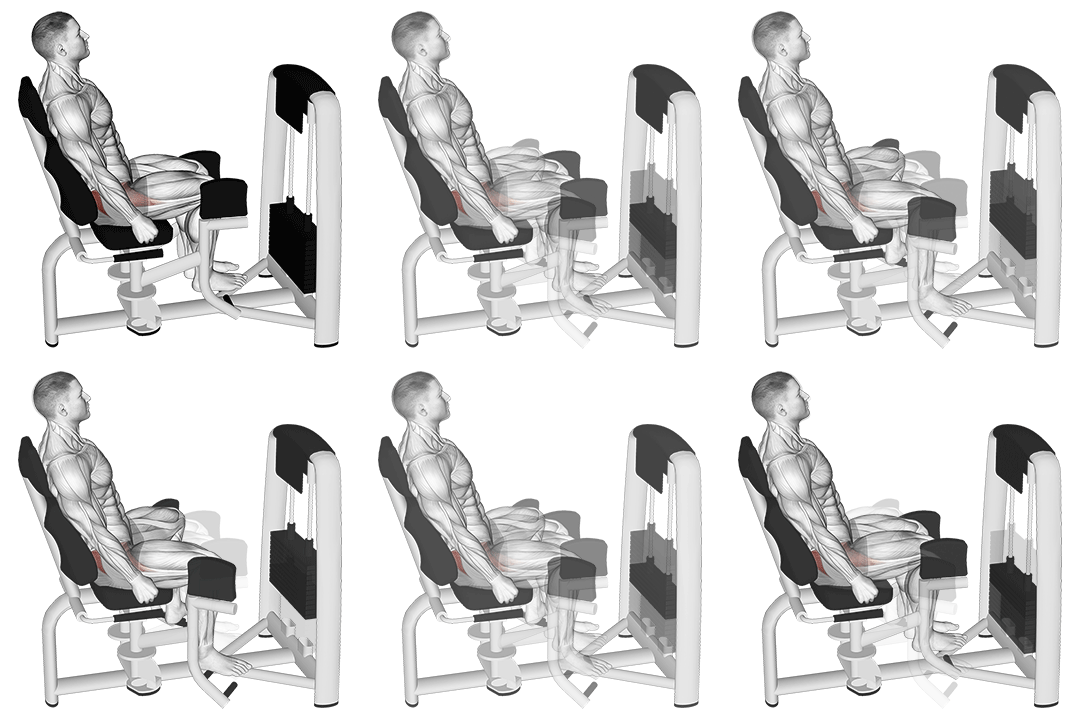
How to Perform Lever Seated Hip Abduction
- Adjust the seat height so that your knees are at a 90-degree angle.
- Sit on the machine with your back against the backrest and your feet on the footrests.
- Place your hands on the side handles for stability.
- Engage your abductors and slowly push your legs apart, away from the midline of your body.
- Pause for a moment at the end of the movement, then slowly bring your legs back together to the starting position.
- Repeat for the desired number of repetitions.
Ranked Lever Seated Hip Abduction Alternatives
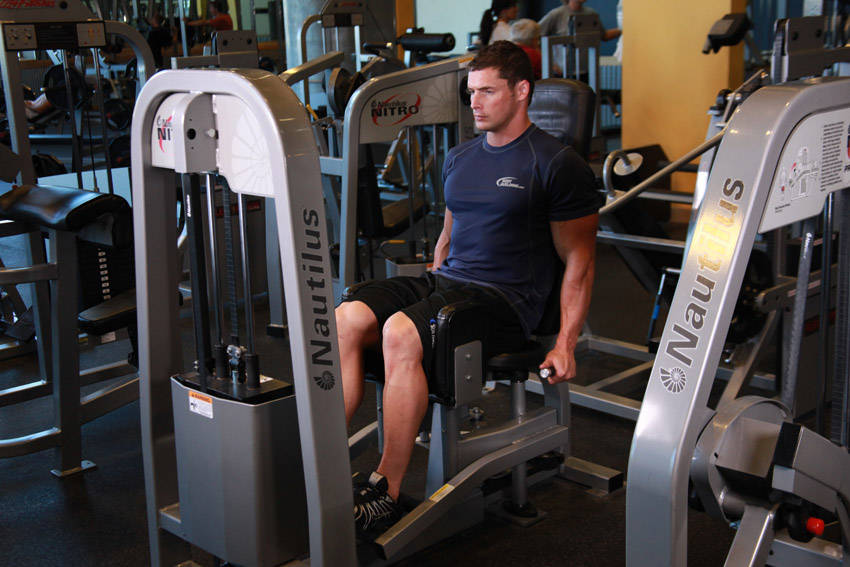
1. Thigh Abductor
98.7% MatchHow to perform this exercise
- To begin, sit down on the abductor machine and select a weight you are comfortable with. When your legs are positioned properly, grip the handles on each side. Your entire upper body (from the waist up) should be stationary. This is the starting position.
- Slowly press against the machine with your legs to move them away from each other while exhaling.
- Feel the contraction for a second and begin to move your legs back to the starting position while breathing in. Note: Remember to keep your upper body stationary to prevent any injuries from occurring.
- Repeat for the recommended amount of repetitions.
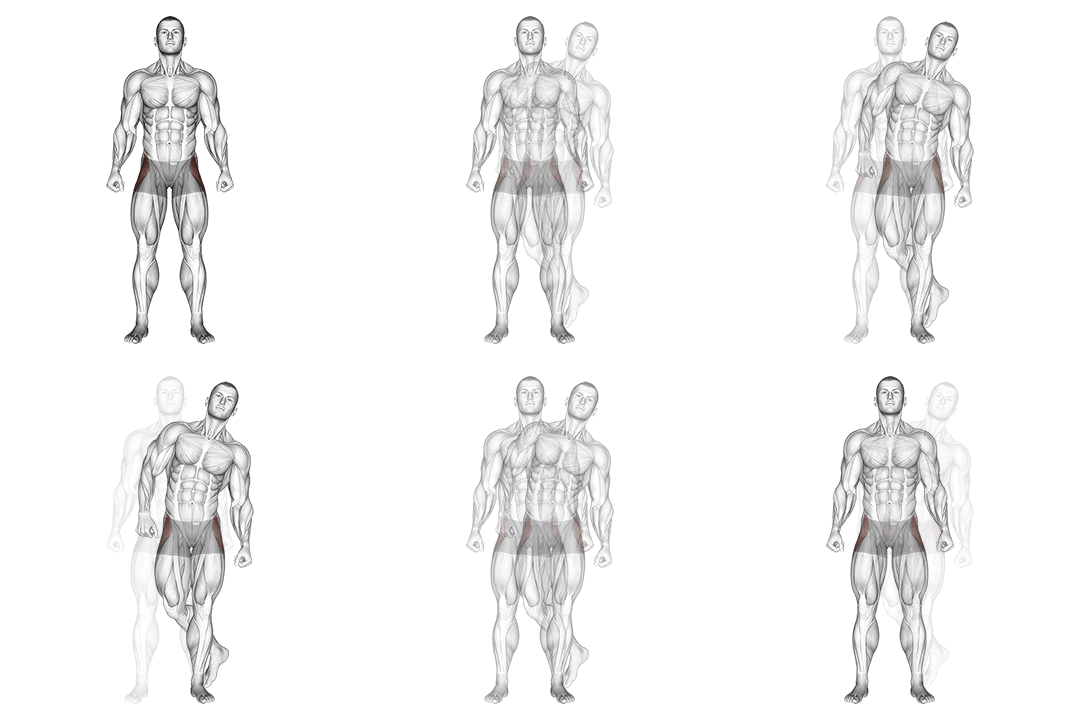
2. Straight Leg Outer Hip Abductor
70.6% MatchHow to perform this exercise
- Lie on your side with your legs straight and stacked on top of each other.
- Place your bottom arm under your head for support.
- Engage your core and lift your top leg as high as possible without rotating your hips or leaning backward.
- Pause for a moment at the top, then slowly lower your leg back down to the starting position.
- Repeat for the desired number of repetitions, then switch sides.
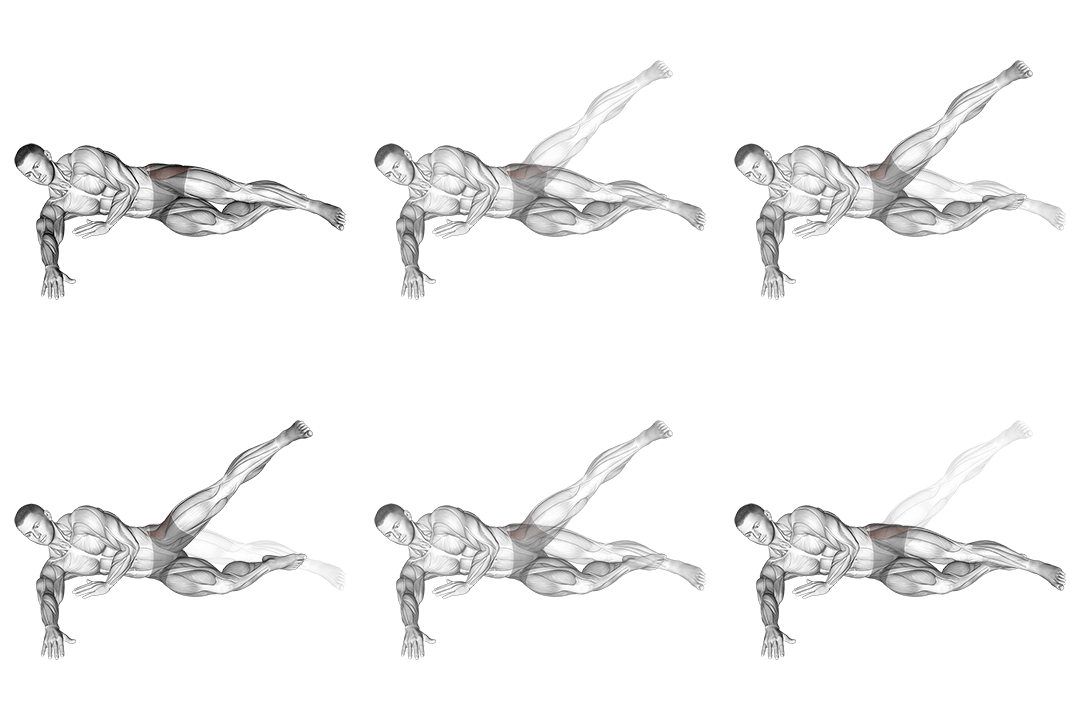
3. Side Hip Abduction
69.4% MatchHow to perform this exercise
- Stand with your feet shoulder-width apart and your hands on your hips.
- Shift your weight to one leg and lift the opposite leg out to the side, keeping it straight.
- Pause for a moment at the top, then slowly lower your leg back down to the starting position.
- Repeat on the other side.
- Continue alternating sides for the desired number of repetitions.
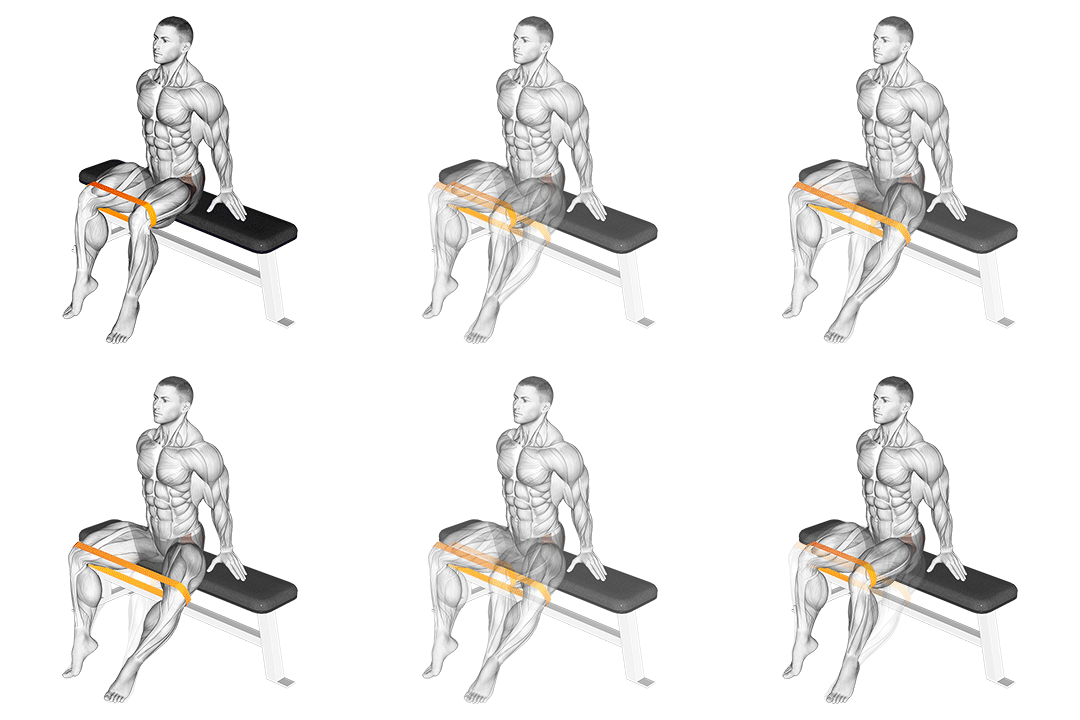
4. Resistance Band Seated Hip Abduction
65.2% MatchHow to perform this exercise
- Sit on a chair or bench with your back straight and feet flat on the ground.
- Wrap the resistance band around your thighs, just above your knees.
- Place your hands on the sides of the chair or bench for support.
- Engage your abductors (outer thigh muscles) and slowly push your knees apart, against the resistance of the band.
- Pause for a moment at the end of the movement, then slowly bring your knees back together.
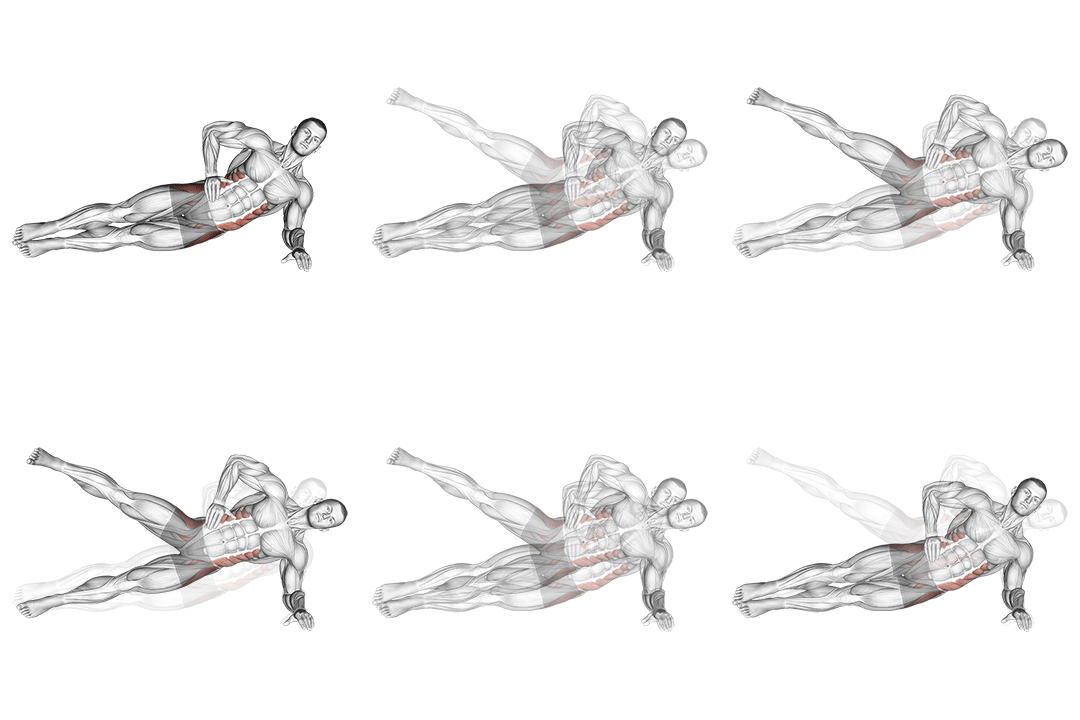
5. Side Bridge Hip Abduction
58.3% MatchHow to perform this exercise
- Lie on your side with your legs extended and stacked on top of each other.
- Prop yourself up on your forearm, keeping your elbow directly below your shoulder.
- Engage your core and lift your hips off the ground, creating a straight line from your head to your feet.
- While keeping your core engaged, lift your top leg as high as possible without rotating your hips.
- Pause for a moment at the top, then lower your leg back down.
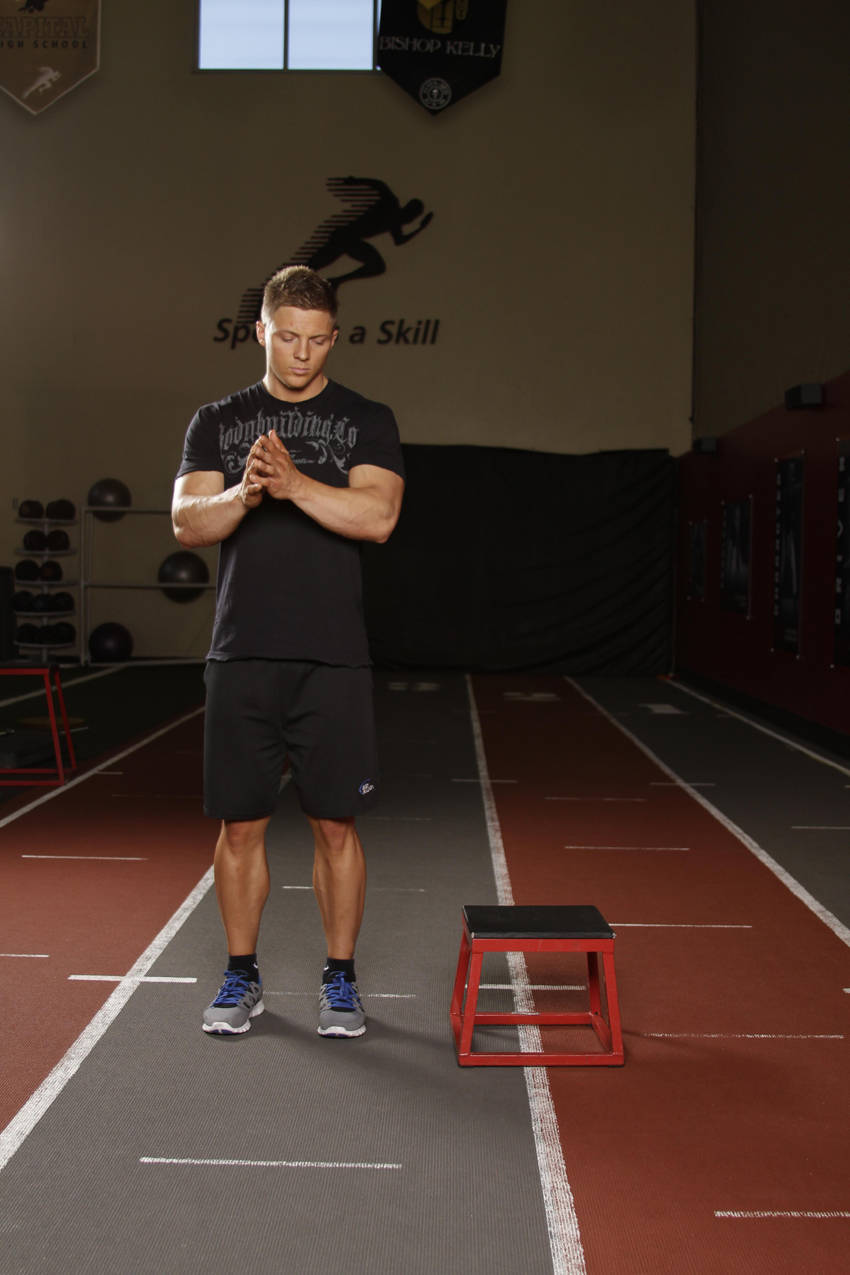
6. Lateral Box Jump
51.9% MatchHow to perform this exercise
- Assume a comfortable standing position, with a short box positioned next to you. This will be your starting position.
- Quickly dip into a quarter squat to initiate the stretch reflex, and immediately reverse direction to jump up and to the side.
- Bring your knees high enough to ensure your feet have good clearance over the box.
- Land on the center of the box, using your legs to absorb the impact.
- Carefully jump down to the other side of the box, and continue going back and forth for several repetitions.
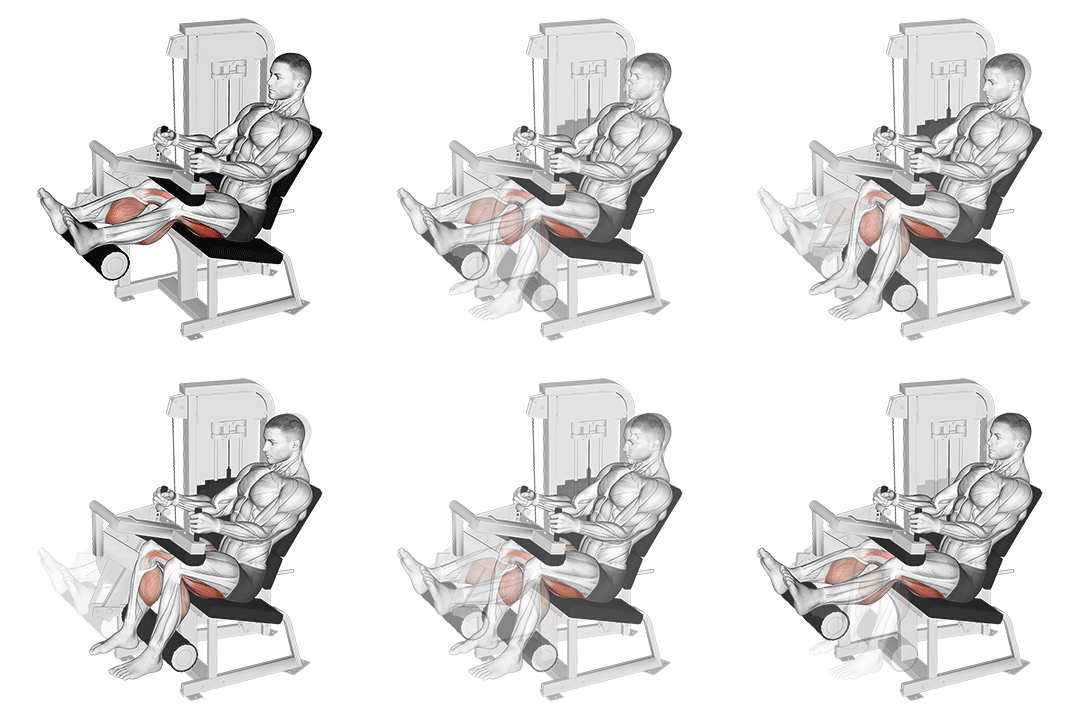
7. Lever Seated Leg Curl
50% MatchHow to perform this exercise
- Adjust the machine to fit your body and sit on it with your back against the backrest.
- Place your lower legs under the padded lever, just above your ankles.
- Grasp the handles on the sides of the machine for support.
- Keeping your upper legs stationary, exhale and curl your legs up as far as possible.
- Hold the contracted position for a brief pause as you squeeze your hamstrings.
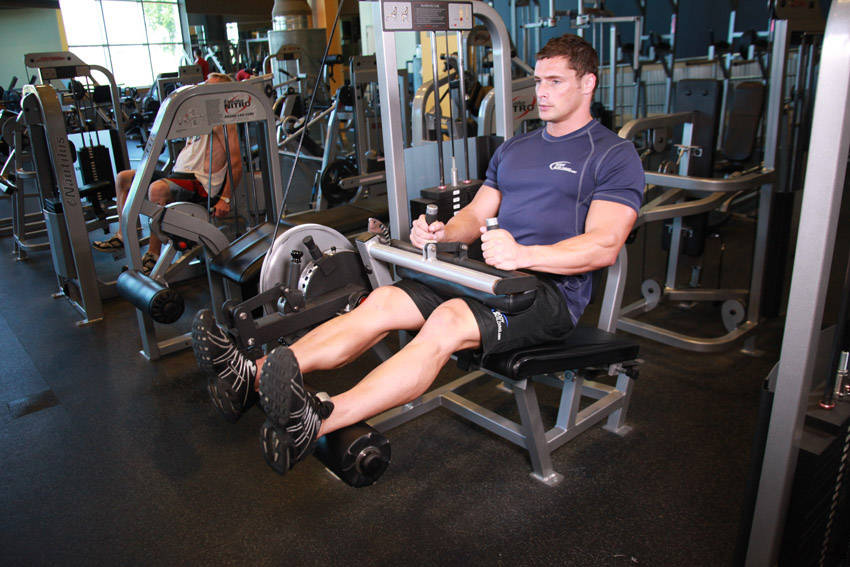
8. Seated Leg Curl
50% MatchHow to perform this exercise
- Adjust the machine lever to fit your height and sit on the machine with your back against the back support pad.
- Place the back of lower leg on top of padded lever (just a few inches under the calves) and secure the lap pad against your thighs, just above the knees. Then grasp the side handles on the machine as you point your toes straight (or you can also use any of the other two stances) and ensure that the legs are fully straight right in front of you. This will be your starting position.
- As you exhale, pull the machine lever as far as possible to the back of your thighs by flexing at the knees. Keep your torso stationary at all times. Hold the contracted position for a second.
- Slowly return to the starting position as you breathe in.
- Repeat for the recommended amount of repetitions.
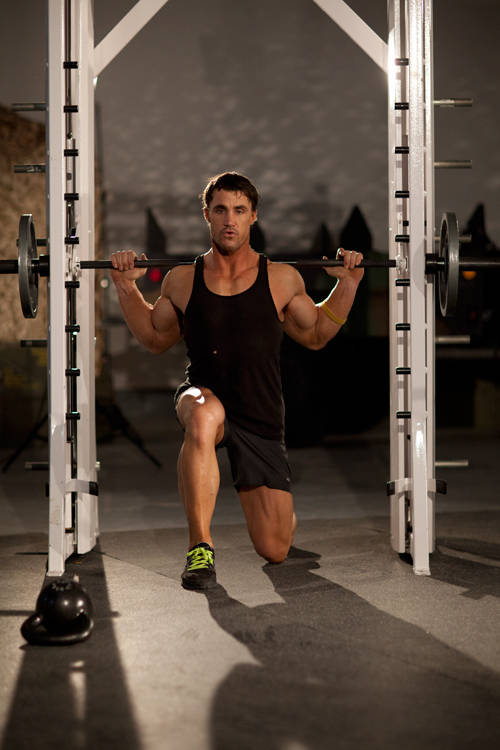
9. Lunge Sprint
48.9% MatchHow to perform this exercise
- Adjust a bar in a Smith machine to an appropriate height. Position yourself under the bar, racking it across the back of your shoulders. Unrack the bar, and then split your feet, moving one foot forward and one foot back. This will be your starting position.
- Lower your back knee nearly to the ground, flexing the knees and lowering your hips as you do so.
- At the bottom of the descent, immediately reverse direction. Explosively drive through the heel of your front foot with light pressure from your back foot. Jump up and reverse the position of your legs.
- Repeat for the recommended amount of repetitions.
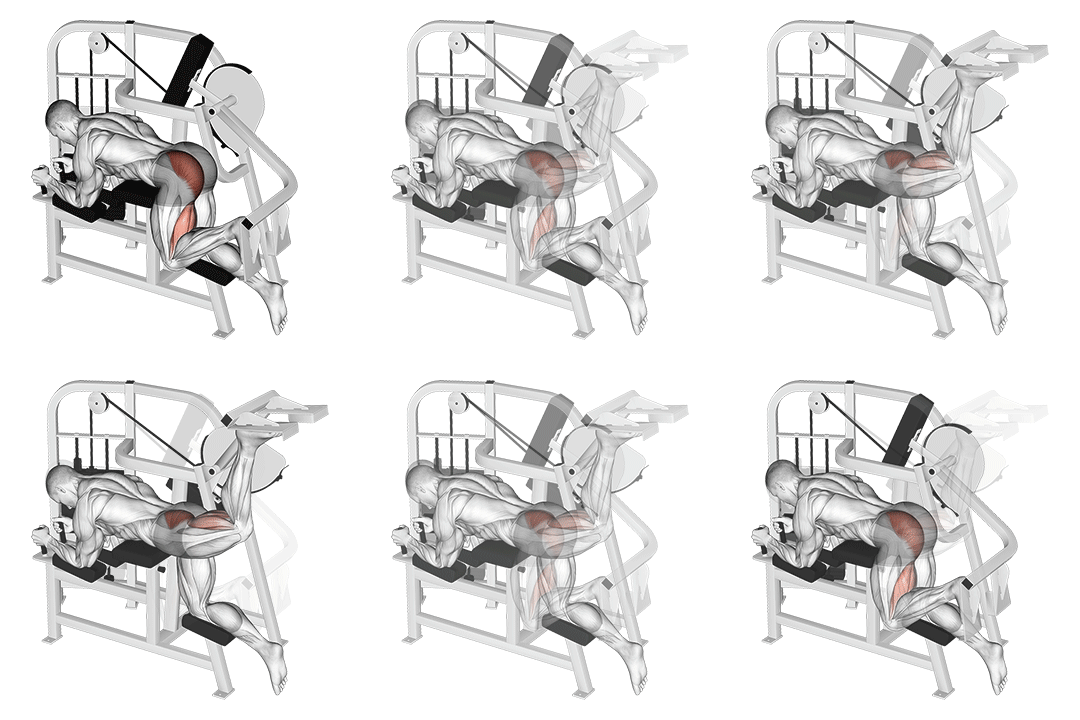
10. Lever Hip Extension V. 2
48.9% MatchHow to perform this exercise
- Adjust the machine to fit your body and sit on it with your back against the backrest.
- Place your feet on the footrests and grip the handles for stability.
- Engage your glutes and hamstrings, then push against the footrests to extend your hips and raise your legs backward.
- Pause for a moment at the top, then slowly lower your legs back to the starting position.
- Repeat for the desired number of repetitions.
Why You Might Need a Lever Seated Hip Abduction Alternative
You might substitute the lever seated hip abduction because the machine isn’t available, you feel lateral hip pain, or you prefer a functional or unilateral option. Injuries like hip impingement or lower-back irritation often require reduced load and altered range of motion; choose movements that minimize lumbar involvement and emphasize pelvic stability. Equipment limits, no lever machine, push you toward bands, cables, or bodyweight drills. Preferences for carryover to walking, running, or single-leg sports push you toward standing or step variations that train frontal-plane control and hip abductor eccentric strength.
How to Choose the Right Substitute
Select a substitute by matching the primary demands: isolation versus functional strength, load progression, and pain tolerance. For pure abductor isolation pick side-lying raises or band abductions and cue a long leg with heel forward to bias the gluteus medius. For load progression and measurable overload choose cable abductions or a low-resistance machine; keep the pelvis squared and avoid lumbar tilt. If you need functional carryover pick lateral step-ups or single-leg Romanian deadlifts and focus on controlled hip abduction during the drive phase. Monitor muscle activation, you should feel work at the lateral hip, not the low back.
Frequently Asked Questions
What muscles does Lever Seated Hip Abduction work?
The exercise primarily targets the gluteus medius and minimus, with assistance from the tensor fasciae latae. It isolates hip abduction in the frontal plane, so cue an upright torso and initiate movement from the lateral hip to avoid substituting with lumbar extension.
What is the best bodyweight alternative to Lever Seated Hip Abduction?
Side-lying hip abduction is the top bodyweight swap; lie on your side, stack hips, keep the top leg straight, lead with the heel and lift 30–45 degrees. Slow the lowering phase for a 3-second eccentric to increase gluteus medius activation and maintain a neutral pelvis.
Can I build muscle without doing Lever Seated Hip Abduction?
Yes, you can hypertrophy the abductors using progressive overload on alternatives like cable abductions, heavy band walks, or weighted lateral step-ups. Emphasize progressive resistance, proper tempo, and cues such as initiating from the lateral hip and keeping the pelvis level to ensure targeted abductor recruitment.
More Exercise Alternatives
Find Alternatives for Any Exercise
Use the exercise substitution finder to compare ranked alternatives for your available equipment and training preference.
Try the Exercise Substitution Finder →