

10 Resistance Band Seated Hip Abduction Alternatives for Limited Gear
The Resistance Band Seated Hip Abduction is done seated with a band. Ranked closest by our scoring: the Lever Seated Hip Abduction, the Thigh Abductor and the Straight Leg Outer Hip Abductor.
Updated Ranked by our 12-factor similarity model How it works
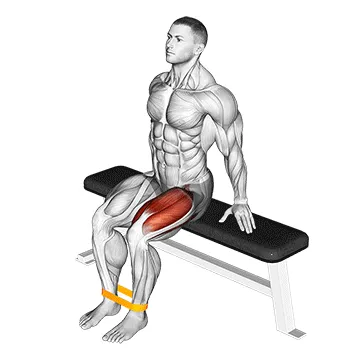
Original Exercise: Resistance Band Seated Hip Abduction
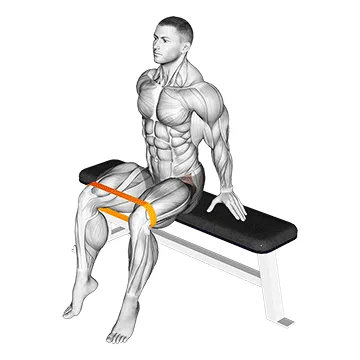
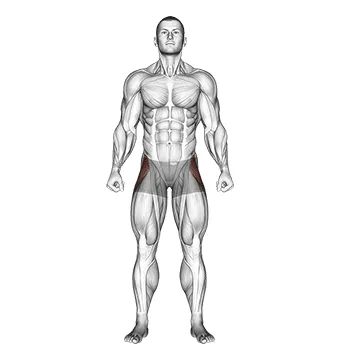
- Primary muscle
- Abductors
- Equipment
- Band
- Difficulty
- Beginner
- Type
- Isolation
Secondary muscles: Glutes, Hamstrings
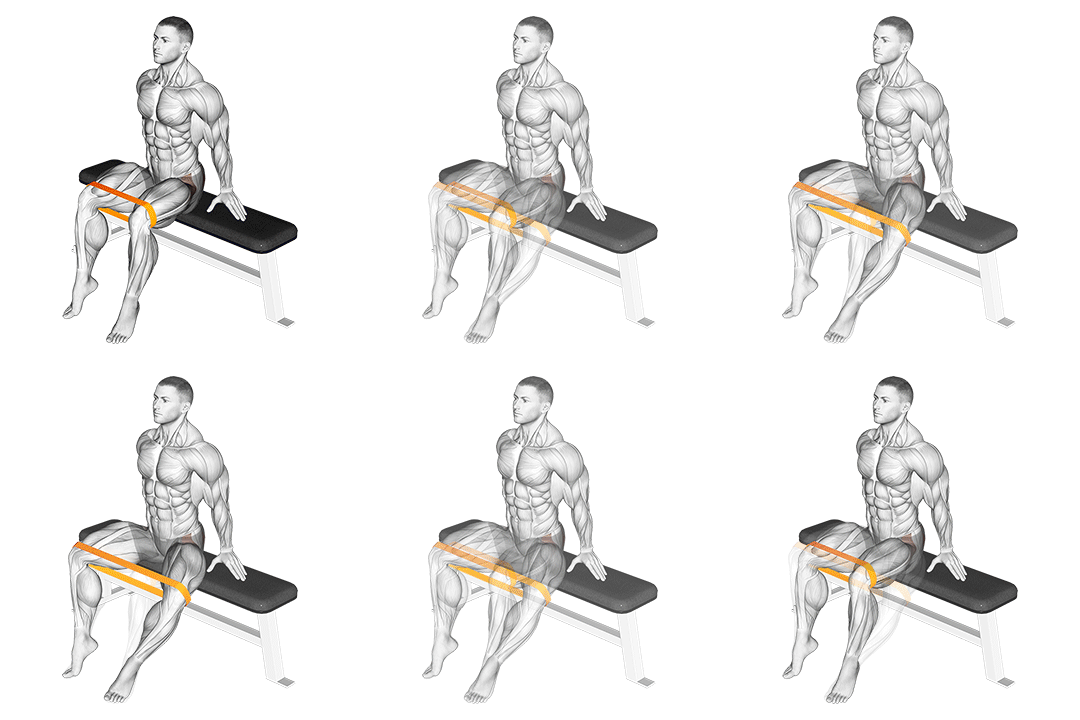
How to perform Resistance Band Seated Hip Abduction
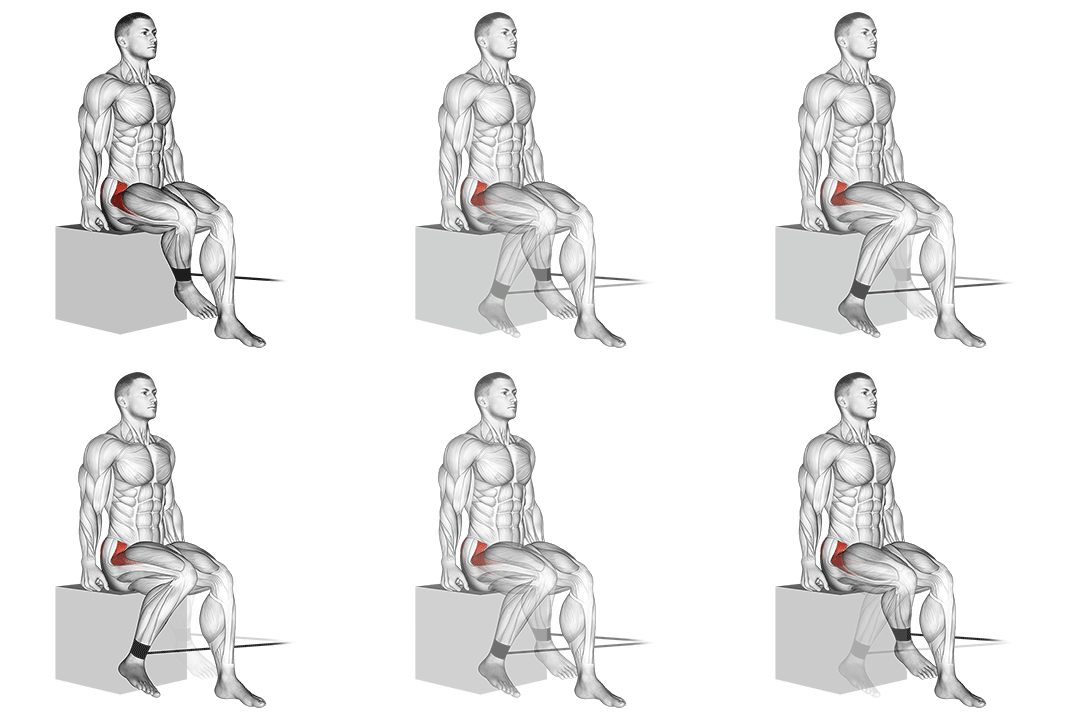
- Sit on a chair or bench with your back straight and feet flat on the ground.
- Wrap the resistance band around your thighs, just above your knees.
- Place your hands on the sides of the chair or bench for support.
- Engage your abductors (outer thigh muscles) and slowly push your knees apart, against the resistance of the band.
- Pause for a moment at the end of the movement, then slowly bring your knees back together.
- Repeat for the desired number of repetitions.
Ranked Resistance Band Seated Hip Abduction Alternatives
10 substitutes, ranked by how closely each one matches the Resistance Band Seated Hip Abduction on movement pattern, muscles worked, equipment and body position. The higher the score, the less you change. Open "How to perform this exercise" on a card for the steps; every card title links to that exercise's own alternatives page.
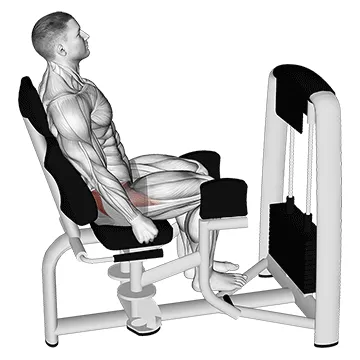
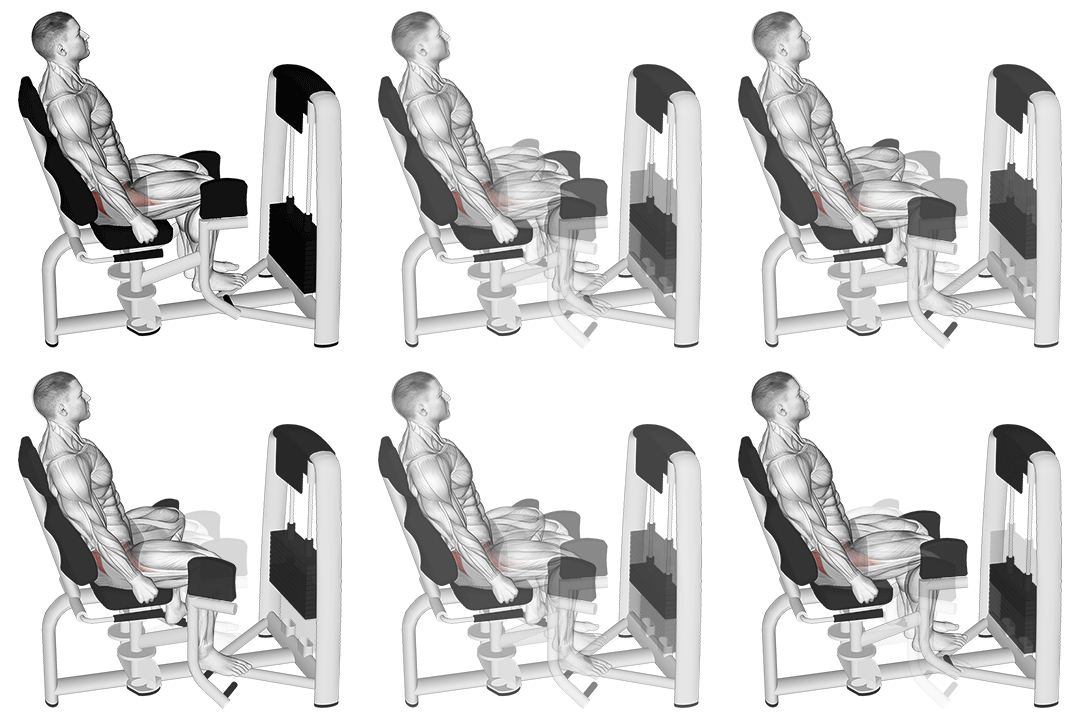
Best match 1. Lever Seated Hip Abduction
65% match- Abductors
- Lever
- Beginner
- Isolation
A good swap when you have a lever machine to work with, and it still works the abductors.
How to perform this exercise
- Adjust the seat height so that your knees are at a 90-degree angle.
- Sit on the machine with your back against the backrest and your feet on the footrests.
- Place your hands on the side handles for stability.
- Engage your abductors and slowly push your legs apart, away from the midline of your body.
- Pause for a moment at the end of the movement, then slowly bring your legs back together to the starting position.
- Repeat for the desired number of repetitions.
Sets and reps: 3 sets of 10 to 15 reps.
Why this matches
- Primary muscle: abductors, the same as the Resistance Band Seated Hip Abduction
- Equipment: a machine, not a band
- Body position: seated, the same as the Resistance Band Seated Hip Abduction
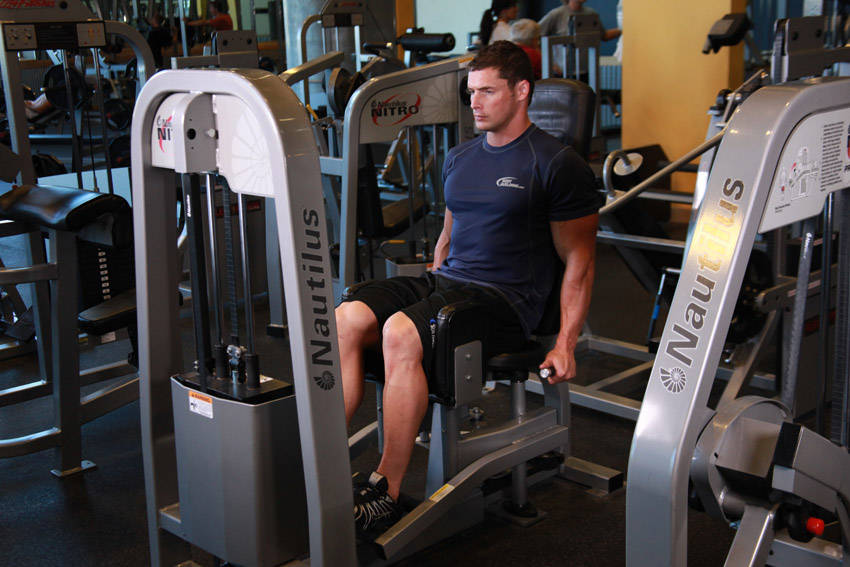
2. Thigh Abductor
64% match- Abductors
- Machine
- Beginner
- Isolation
A good swap when you have a machine to work with, and it still works the abductors.
How to perform this exercise
- To begin, sit down on the abductor machine and select a weight you are comfortable with. When your legs are positioned properly, grip the handles on each side. Your entire upper body (from the waist up) should be stationary. This is the starting position.
- Slowly press against the machine with your legs to move them away from each other while exhaling.
- Feel the contraction for a second and begin to move your legs back to the starting position while breathing in. Note: Remember to keep your upper body stationary to prevent any injuries from occurring.
- Repeat for the recommended amount of repetitions.
Sets and reps: 3 sets of 10 to 15 reps.
Why this matches
- Primary muscle: abductors, the same as the Resistance Band Seated Hip Abduction
- Equipment: a machine, not a band
- Body position: seated, the same as the Resistance Band Seated Hip Abduction
- Balance: easier to stay steady on than the Resistance Band Seated Hip Abduction
3. Resistance Band Leg Extension
56% match- Quads
- Band
- Beginner
- Isolation
A looser match: it uses the same equipment, but it works the quads rather than the abductors.
How to perform this exercise
- Attach the resistance band to a sturdy anchor point and secure it around your ankle.
- Stand facing the anchor point with your feet shoulder-width apart.
- Keeping your core engaged and your upper body stable, extend your leg straight out in front of you.
- Pause for a moment at the top, then slowly return your leg to the starting position.
- Repeat for the desired number of repetitions, then switch legs.
Sets and reps: 3 sets of 10 to 15 reps.
Why this matches
- Primary muscle: quads, not abductors
- Equipment: a band, the same as the Resistance Band Seated Hip Abduction
- Body position: seated, the same as the Resistance Band Seated Hip Abduction
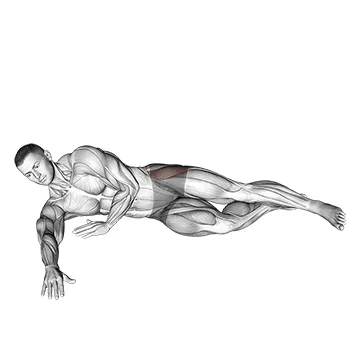
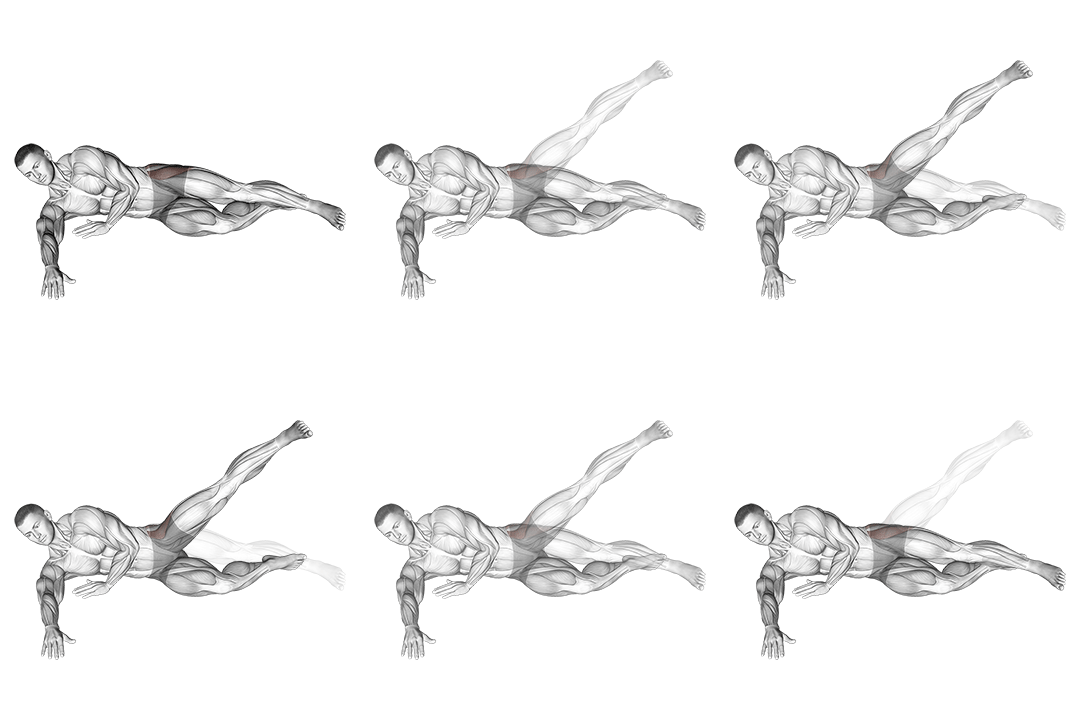
4. Straight Leg Outer Hip Abductor
47% match- Abductors
- Bodyweight
- Beginner
- Isolation
Pick this when you want to work the abductors one side at a time.
How to perform this exercise
- Lie on your side with your legs straight and stacked on top of each other.
- Place your bottom arm under your head for support.
- Engage your core and lift your top leg as high as possible without rotating your hips or leaning backward.
- Pause for a moment at the top, then slowly lower your leg back down to the starting position.
- Repeat for the desired number of repetitions, then switch sides.
Sets and reps: 3 sets of 8 to 12 reps on each side, and add reps before you add load.
Why this matches
- Primary muscle: abductors, the same as the Resistance Band Seated Hip Abduction
- Equipment: bodyweight only, not a band
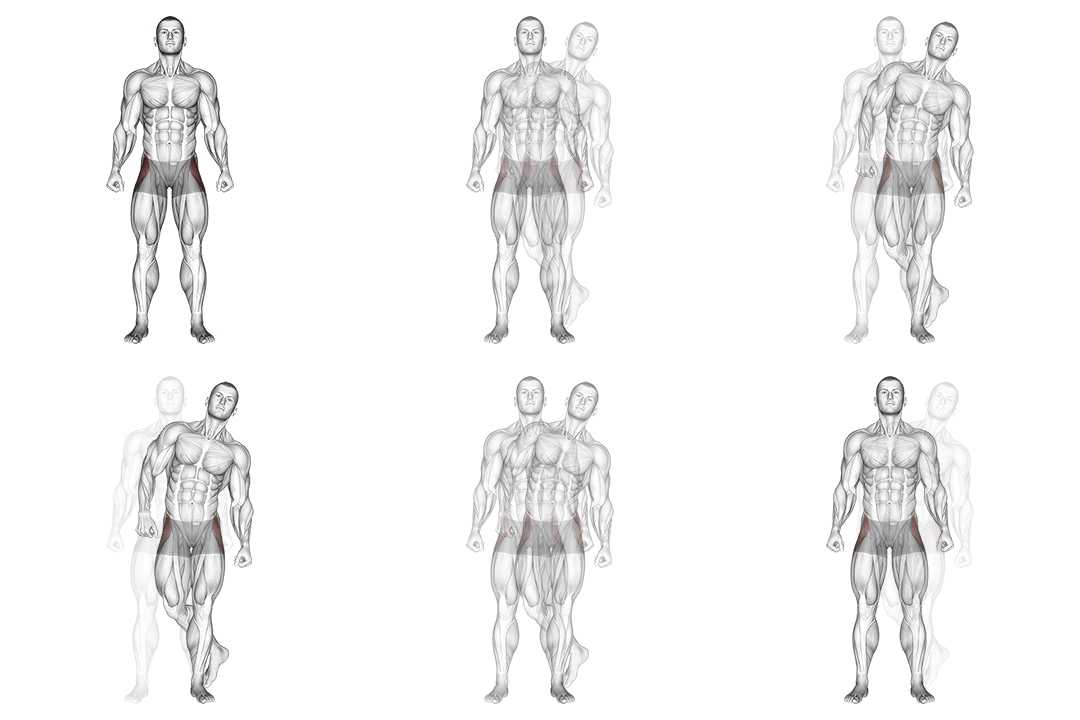
5. Side Hip Abduction
46% match- Abductors
- Bodyweight
- Beginner
- Isolation
How to perform this exercise
- Stand with your feet shoulder-width apart and your hands on your hips.
- Shift your weight to one leg and lift the opposite leg out to the side, keeping it straight.
- Pause for a moment at the top, then slowly lower your leg back down to the starting position.
- Repeat on the other side.
- Continue alternating sides for the desired number of repetitions.
Sets and reps: 3 sets of 8 to 12 reps on each side, and add reps before you add load.
Why this matches
- Primary muscle: abductors, the same as the Resistance Band Seated Hip Abduction
- Equipment: bodyweight only, not a band
- Body position: standing, not seated
- Balance: harder to stay steady on than the Resistance Band Seated Hip Abduction
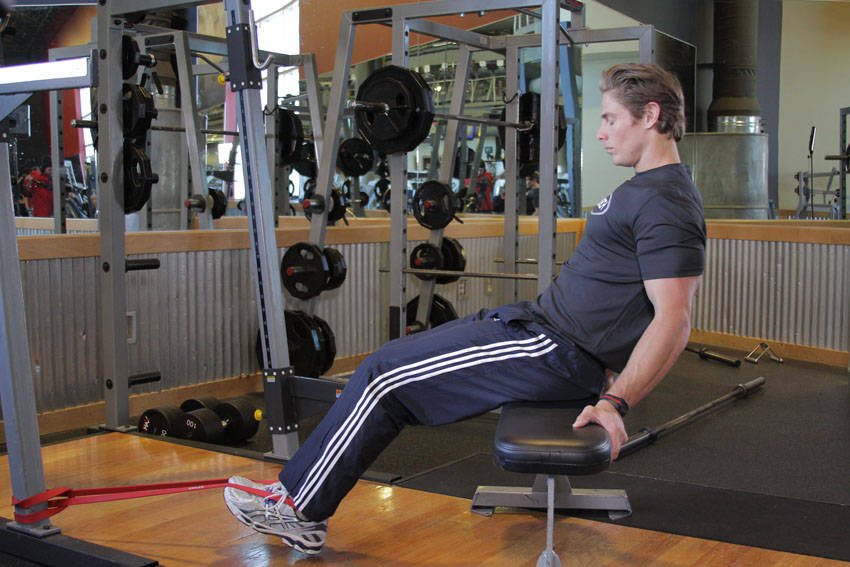
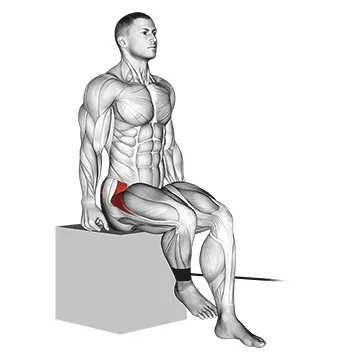
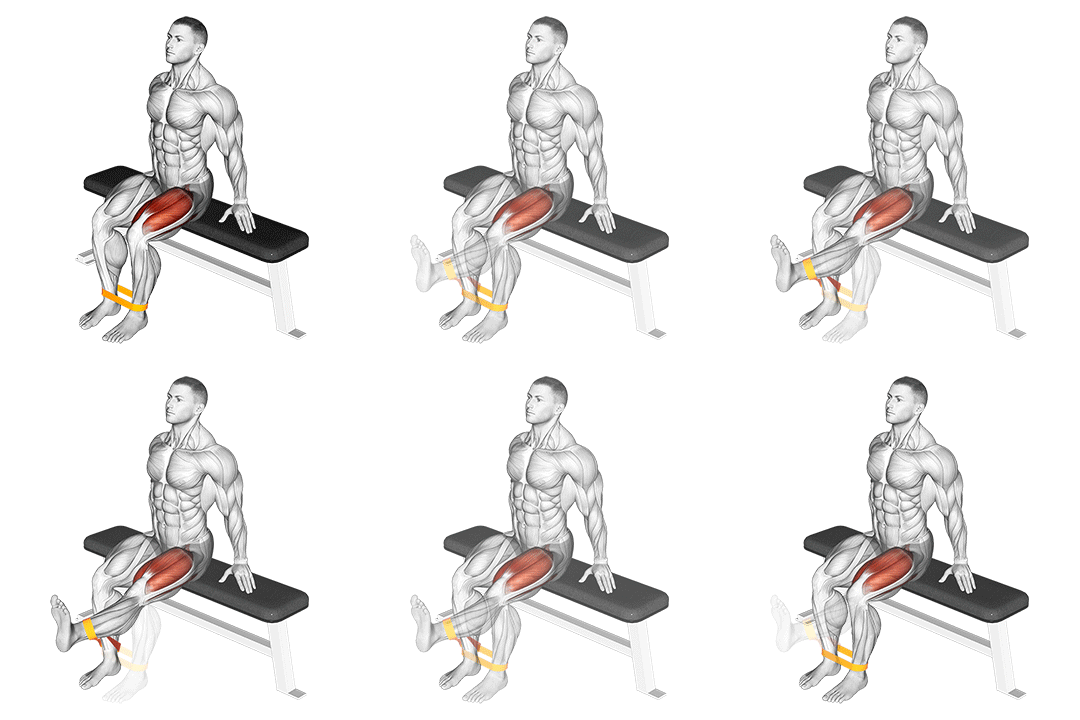
6. Seated Band Hamstring Curl
45% match- Hamstrings
- Band
- Beginner
- Isolation
A looser match: it uses the same equipment, but it works the hamstrings rather than the abductors.
How to perform this exercise
- Secure a band close to the ground and place a bench a couple feet away from it.
- Seat yourself on the bench and secure the band behind your ankles, beginning with your legs straight. This will be your starting position.
- Flex the knees, bringing your feet towards the bench. You may need to lean back slightly to keep your feet from striking the floor.
- Pause at the completion of the movement, and then slowly return to the starting position.
Sets and reps: 3 sets of 10 to 15 reps.
Why this matches
- Primary muscle: hamstrings, not abductors
- Equipment: a band, the same as the Resistance Band Seated Hip Abduction
- Body position: seated, the same as the Resistance Band Seated Hip Abduction
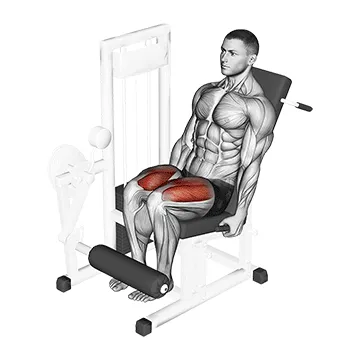
7. Lever Leg Extension
45% match- Quads
- Lever
- Beginner
- Isolation
A looser match: it works the quads rather than the abductors.
How to perform this exercise
- Adjust the seat height and backrest of the machine to fit your body.
- Sit on the machine with your back against the backrest and your feet on the footpad.
- Grasp the handles or sidebars for stability.
- Extend your legs forward by straightening your knees, lifting the weight.
- Pause for a moment at the top, then slowly lower the weight back to the starting position.
- Repeat for the desired number of repetitions.
Sets and reps: 3 sets of 10 to 15 reps.
Why this matches
- Primary muscle: quads, not abductors
- Equipment: a machine, not a band
- Body position: seated, the same as the Resistance Band Seated Hip Abduction
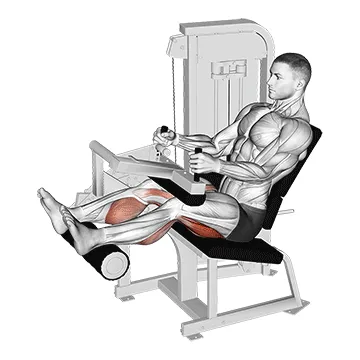
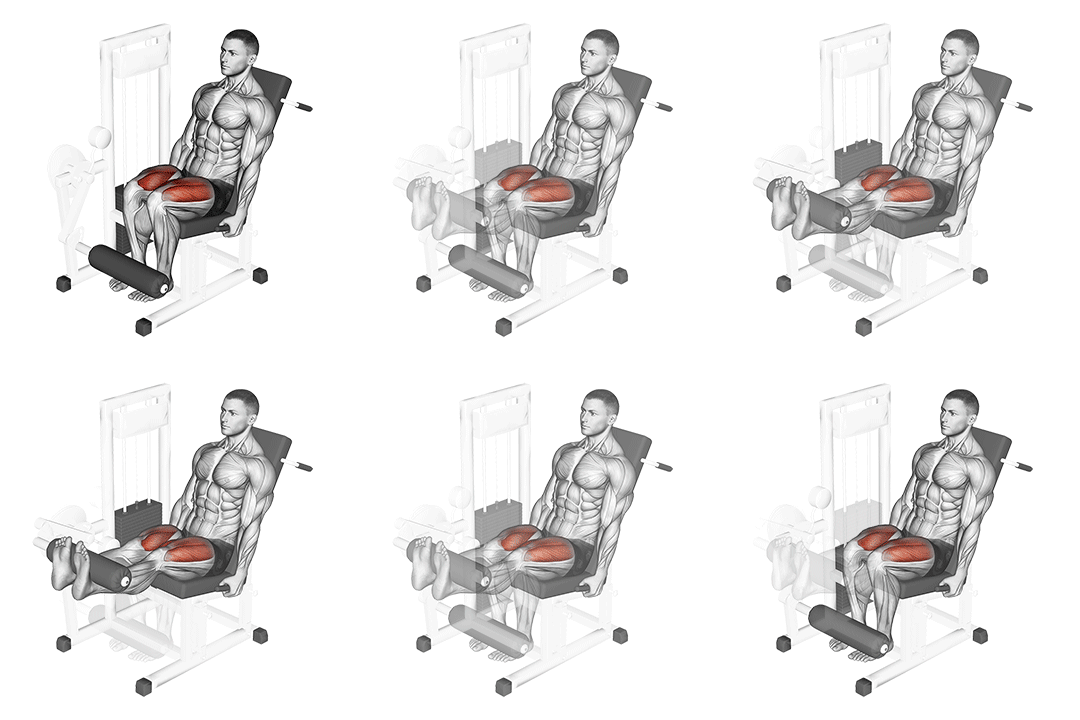
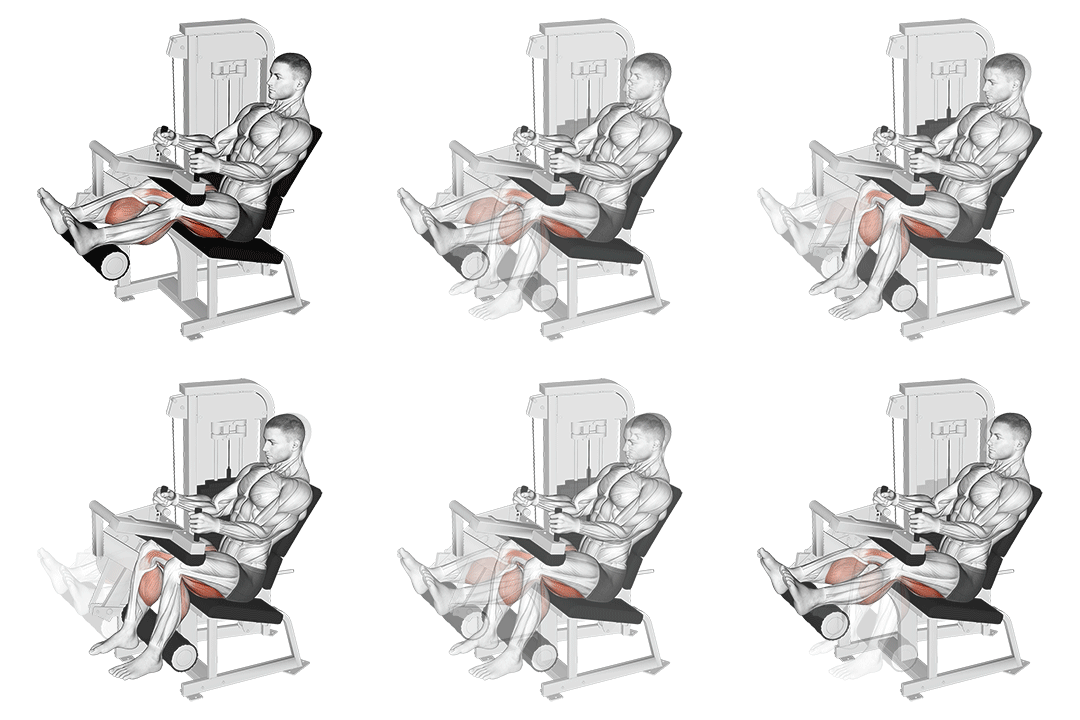
8. Lever Seated Leg Curl
45% match- Hamstrings
- Lever
- Beginner
- Isolation
How to perform this exercise
- Adjust the machine to fit your body and sit on it with your back against the backrest.
- Place your lower legs under the padded lever, just above your ankles.
- Grasp the handles on the sides of the machine for support.
- Keeping your upper legs stationary, exhale and curl your legs up as far as possible.
- Hold the contracted position for a brief pause as you squeeze your hamstrings.
- Inhale and slowly lower the lever back to the starting position.
- Repeat for the desired number of repetitions.
Sets and reps: 3 sets of 10 to 15 reps.
Why this matches
- Primary muscle: hamstrings, not abductors
- Equipment: a machine, not a band
- Body position: seated, the same as the Resistance Band Seated Hip Abduction
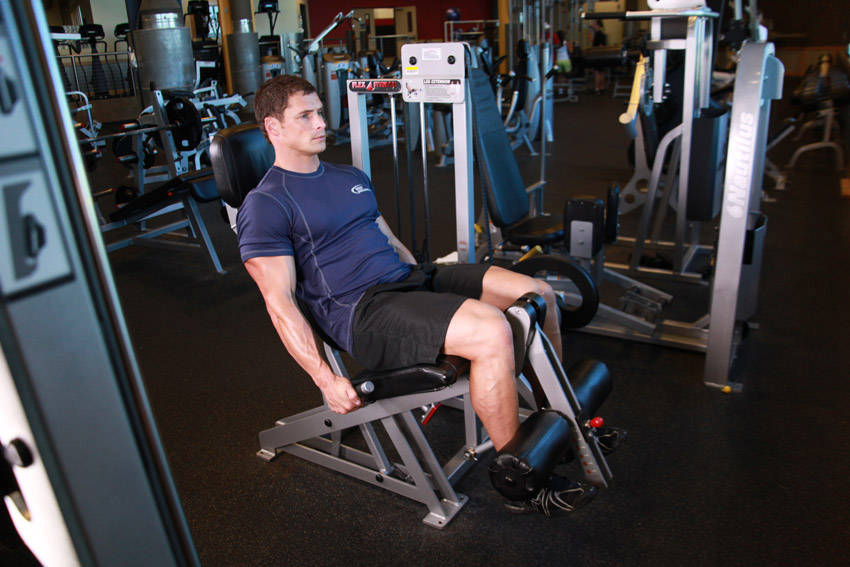
9. Leg Extensions
44% match- Quads
- Machine
- Beginner
- Isolation
How to perform this exercise
- For this exercise you will need to use a leg extension machine. First choose your weight and sit on the machine with your legs under the pad (feet pointed forward) and the hands holding the side bars. This will be your starting position. Tip: You will need to adjust the pad so that it falls on top of your lower leg (just above your feet). Also, make sure that your legs form a 90-degree angle between the lower and upper leg. If the angle is less than 90-degrees then that means the knee is over the toes which in turn creates undue stress at the knee joint. If the machine is designed that way, either look for another machine or just make sure that when you start executing the exercise you stop going down once you hit the 90-degree angle.
- Using your quadriceps, extend your legs to the maximum as you exhale. Ensure that the rest of the body remains stationary on the seat. Pause a second on the contracted position.
- Slowly lower the weight back to the original position as you inhale, ensuring that you do not go past the 90-degree angle limit.
- Repeat for the recommended amount of times.
Sets and reps: 3 sets of 10 to 15 reps.
Why this matches
- Primary muscle: quads, not abductors
- Equipment: a machine, not a band
- Body position: seated, the same as the Resistance Band Seated Hip Abduction
- Balance: easier to stay steady on than the Resistance Band Seated Hip Abduction
- Glutes
- Band
- Beginner
- Isolation
How to perform this exercise
- Sit on a chair or bench with your back straight and feet flat on the ground.
- Place a resistance band around your thighs, just above your knees.
- Keep your knees bent at a 90-degree angle and your feet shoulder-width apart.
- Engage your glutes and slowly rotate your knees outward, pushing against the resistance of the band.
- Pause for a moment at the end of the movement, then slowly return to the starting position.
- Repeat for the desired number of repetitions.
Sets and reps: 3 sets of 10 to 15 reps on each side.
Why this matches
- Primary muscle: glutes, not abductors
- Equipment: a band, the same as the Resistance Band Seated Hip Abduction
- Body position: seated, the same as the Resistance Band Seated Hip Abduction
Why You Might Need a Resistance Band Seated Hip Abduction Alternative
You might substitute this isolation move because of pain, recent surgery, limited equipment, or a need for progressive overload. For example, hip osteoarthritis or knee issues can make seated band tension uncomfortable, while standing cable abduction lets you load the abductors without a seated compressive position. Alternates also let you shift emphasis across muscles: side-lying raises increase gluteus medius activation, clamshells bias external rotators, and banded lateral walks train hip stabilization under tension. Technique cue: keep the femur neutral, avoid hiking the pelvis, and focus on driving the femur laterally to maximize glute medius recruitment.
How to Choose the Right Resistance Band Seated Hip Abduction Substitute
Select a substitute by matching biomechanics, available equipment, and your training goal. If you need pure isolation and minimal spinal load, choose side-lying hip abductions or clamshells and cue a long spine and active glute squeeze. If you want functional carryover and higher load, pick standing cable or banded lateral walks and maintain an upright torso while pushing the femur out laterally. Consider range of motion, progressive loading (add band tension or weight), and whether you need single-leg stability work; always prioritize a cue to prevent pelvic hiking and keep the working hip in neutral rotation.
Resistance Band Seated Hip Abduction FAQ
What muscles does Resistance Band Seated Hip Abduction work?
The exercise primarily targets the gluteus medius and minimus, with secondary contribution from the tensor fasciae latae (TFL). It places the femur in lateral motion (frontal-plane abduction), so you should feel the load on the lateral hip rather than the quads.
What is the best bodyweight alternative to Resistance Band Seated Hip Abduction?
Side-lying hip abduction is the best bodyweight substitute because it isolates the gluteus medius without equipment. Lie on your side, keep the top foot flexed, lift the top leg with the heel leading, and avoid rotating the hip to maintain direct lateral femur movement.
Find Alternatives for Any Exercise
Search the exercise database and filter the ranked substitutes by the equipment you own.
Similarity scores compare exercise metadata such as movement pattern, muscles, equipment and body position. They are not a safety rating or a check that you own the equipment. Learn about our methodology