

10 Best Lever Shrug Alternatives for Gym and Home Training
The Lever Shrug is done standing with a lever machine. Ranked closest by our scoring: the Lever Gripless Shrug, Cable Shrugs and the Band Shrug.
Updated Ranked by our 12-factor similarity model How it works
Original Exercise: Lever Shrug
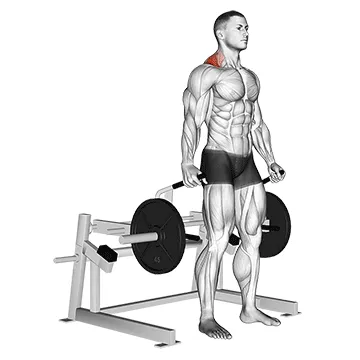
- Primary muscle
- Traps
- Equipment
- Lever
- Difficulty
- Beginner
- Type
- Isolation
Secondary muscles: Shoulders
How to perform Lever Shrug
- Adjust the seat height and position yourself on the leverage machine with your back against the pad.
- Grasp the handles with an overhand grip and keep your arms straight.
- Keeping your back straight, lift your shoulders up towards your ears as high as possible.
- Hold the contraction for a moment, then slowly lower your shoulders back down to the starting position.
- Repeat for the desired number of repetitions.
Ranked Lever Shrug Alternatives
10 substitutes, ranked by how closely each one matches the Lever Shrug on movement pattern, muscles worked, equipment and body position. The higher the score, the less you change. Open "How to perform this exercise" on a card for the steps; every card title links to that exercise's own alternatives page.
Best match 1. Lever Gripless Shrug
95% match- Traps
- Lever
- Beginner
- Isolation
The same equipment, taken with a neutral grip.
How to perform this exercise
- Adjust the seat height and position yourself on the machine with your back against the pad.
- Grasp the handles or bars with an overhand grip, keeping your arms straight.
- Keeping your back straight, lift your shoulders up towards your ears as high as possible.
- Hold the contraction for a moment, then slowly lower your shoulders back down to the starting position.
- Repeat for the desired number of repetitions.
Sets and reps: 3 sets of 10 to 15 reps.
Why this matches
- Primary muscle: traps, the same as the Lever Shrug
- Equipment: a machine, the same as the Lever Shrug
- Body position: standing, the same as the Lever Shrug
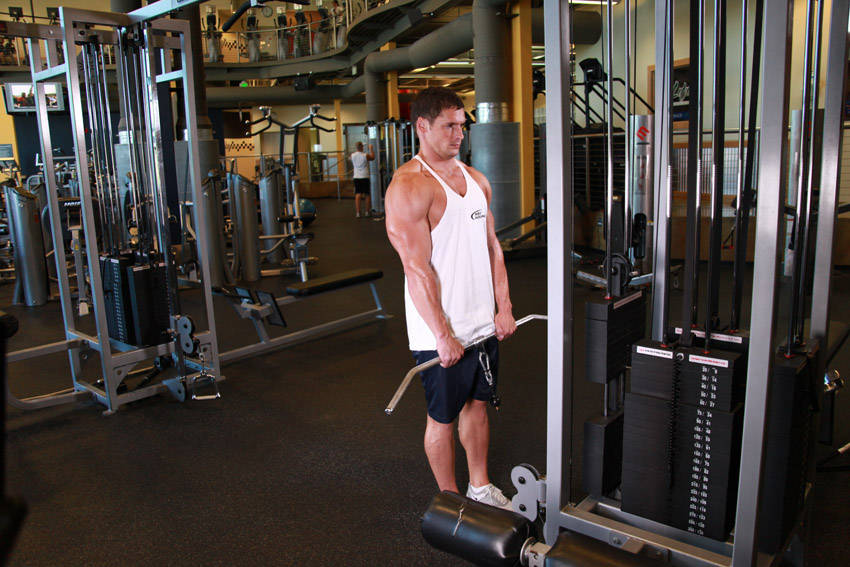
2. Cable Shrugs
89% match- Traps
- Cable
- Beginner
- Isolation
A good swap when you have a cable machine to work with, and it still works the traps.
How to perform this exercise
- Grasp a cable bar attachment that is attached to a low pulley with a shoulder width or slightly wider overhand (palms facing down) grip.
- Stand erect close to the pulley with your arms extended in front of you holding the bar. This will be your starting position.
- Lift the bar by elevating the shoulders as high as possible as you exhale. Hold the contraction at the top for a second. Tip: The arms should remain extended at all times. Refrain from using the biceps to help lift the bar. Only the shoulders should be moving up and down.
- Lower the bar back to the original position.
- Repeat for the recommended amount of repetitions.
Sets and reps: 3 sets of 10 to 15 reps.
Why this matches
- Primary muscle: traps, the same as the Lever Shrug
- Equipment: a cable, not a machine
- Body position: standing, the same as the Lever Shrug
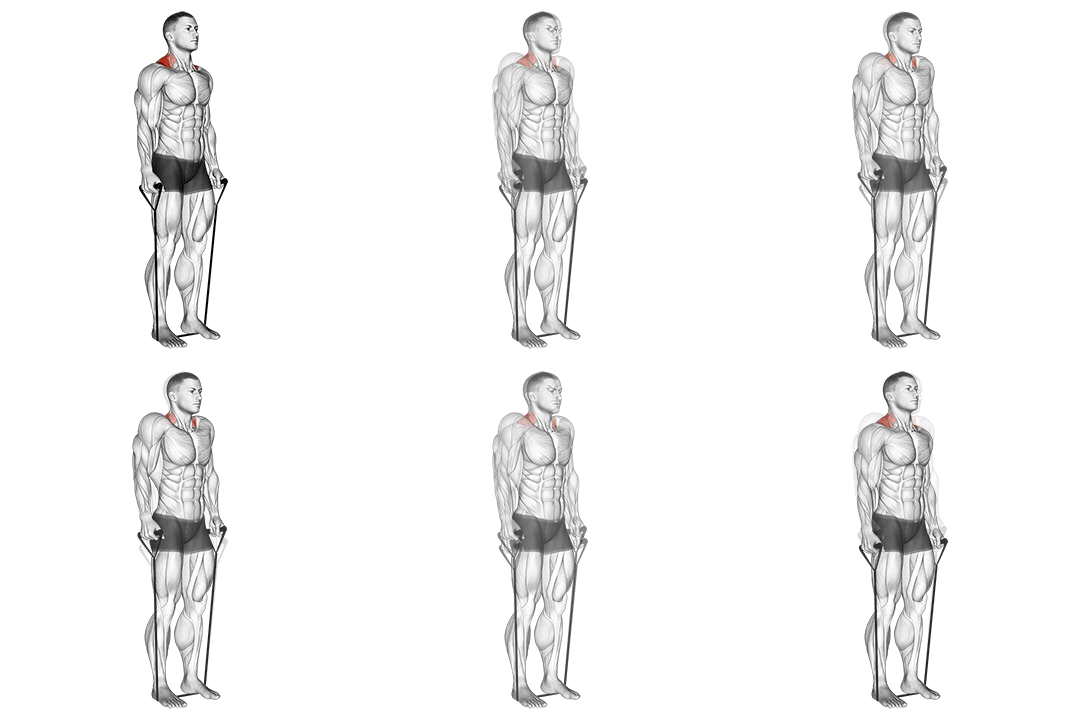
3. Band Shrug
84% match- Traps
- Band
- Beginner
- Isolation
A good swap when you have a band to work with, and it still works the traps.
How to perform this exercise
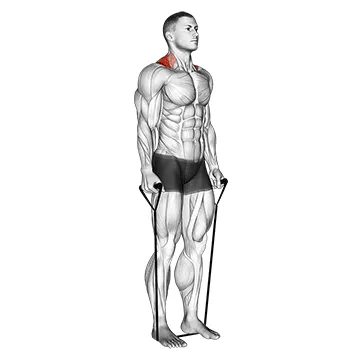
- Stand with your feet shoulder-width apart and place the band under your feet, holding the ends with your hands.
- Keep your arms straight and relaxed, and let the band hang in front of your thighs.
- Engage your traps by shrugging your shoulders upward, lifting the band as high as possible.
- Hold the contraction for a moment, then slowly lower your shoulders back down to the starting position.
- Repeat for the desired number of repetitions.
Sets and reps: 3 sets of 10 to 15 reps.
Why this matches
- Primary muscle: traps, the same as the Lever Shrug
- Equipment: a band, not a machine
- Body position: standing, the same as the Lever Shrug
- Balance: harder to stay steady on than the Lever Shrug
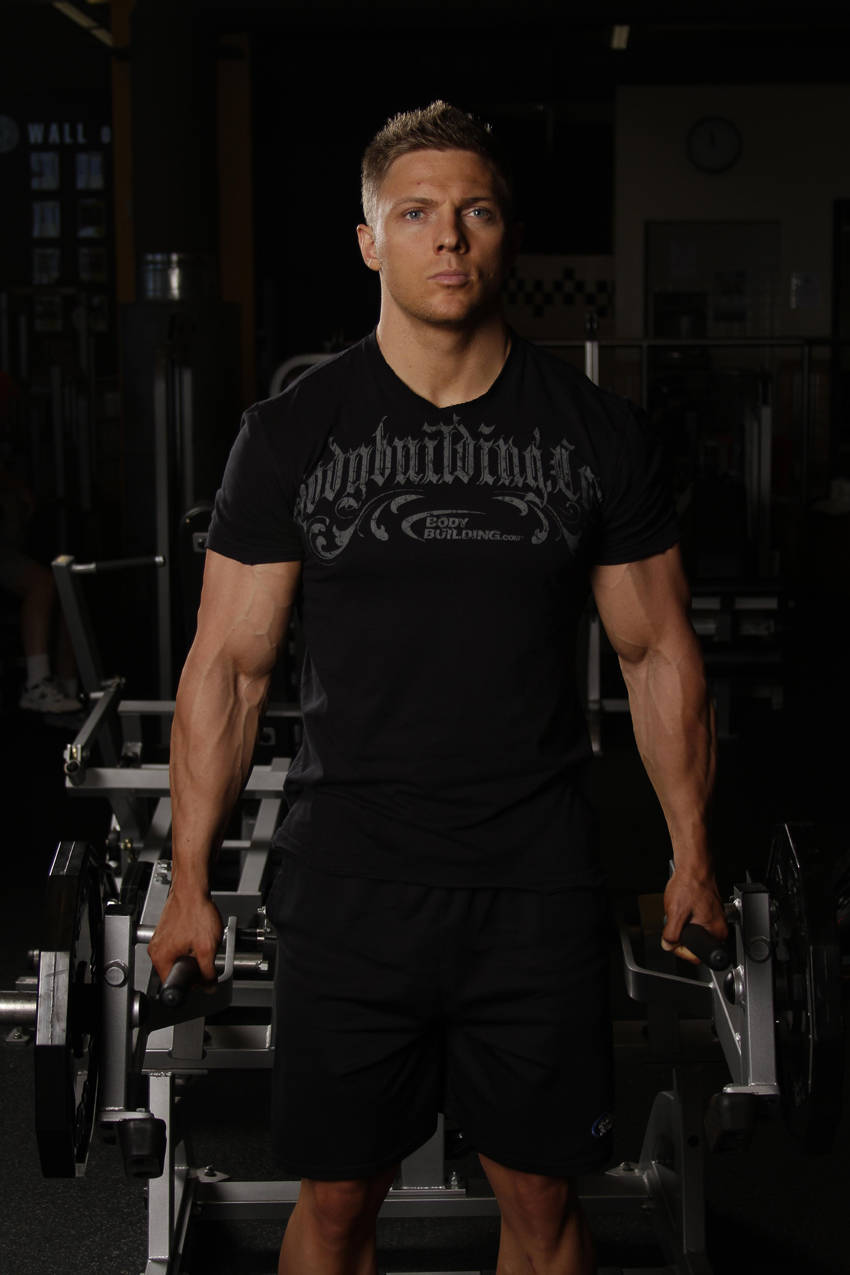
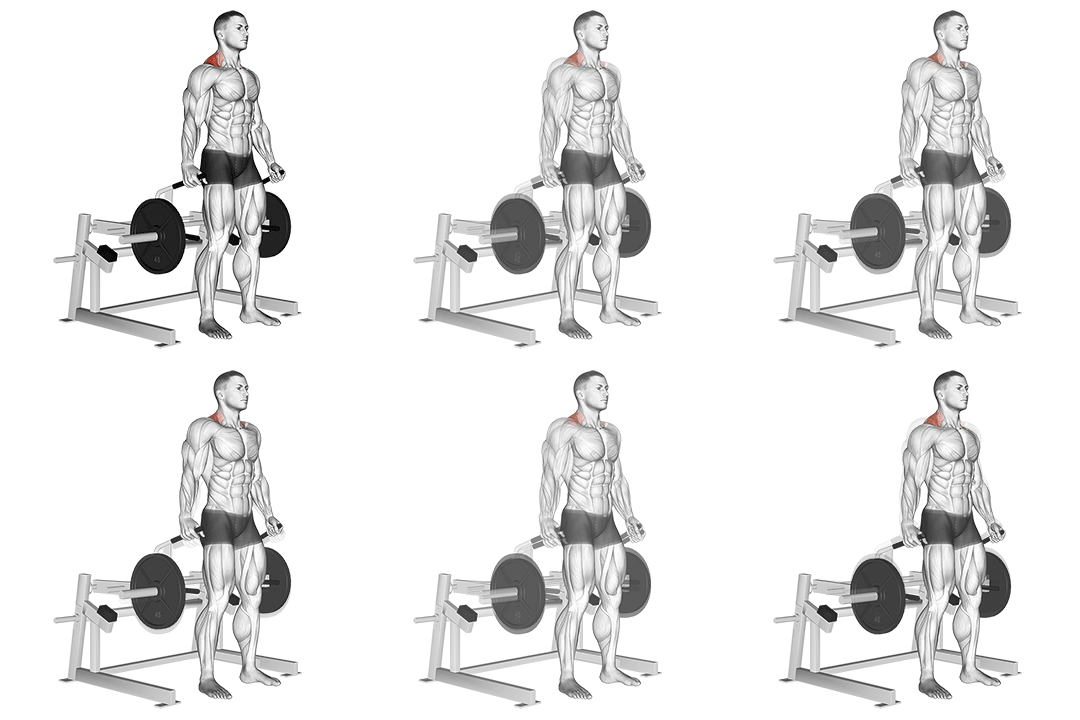
4. Leverage Shrug
79% match- Traps
- Machine
- Beginner
- Isolation
A good swap when you have a machine to work with, and it still works the traps.
How to perform this exercise
- Load the pins to an appropriate weight. Position yourself directly between the handles.
- Grasp the top handles with a comfortable grip, and then lower your hips as you take a breath. Look forward with your head and keep your chest up.
- Drive through the floor with your heels, extending your hips and knees as you rise to a standing position. Keep your arms straight throughout the movement, finishing with your shoulders back. This will be your starting position.
- Raise the weight by shrugging the shoulders towards your ears, moving straight up and down.
- Pause at the top of the motion, and then return the weight to the starting position.
Sets and reps: 3 sets of 10 to 15 reps.
Why this matches
- Primary muscle: traps, the same as the Lever Shrug
- Equipment: a machine, the same as the Lever Shrug
- Body position: standing, the same as the Lever Shrug
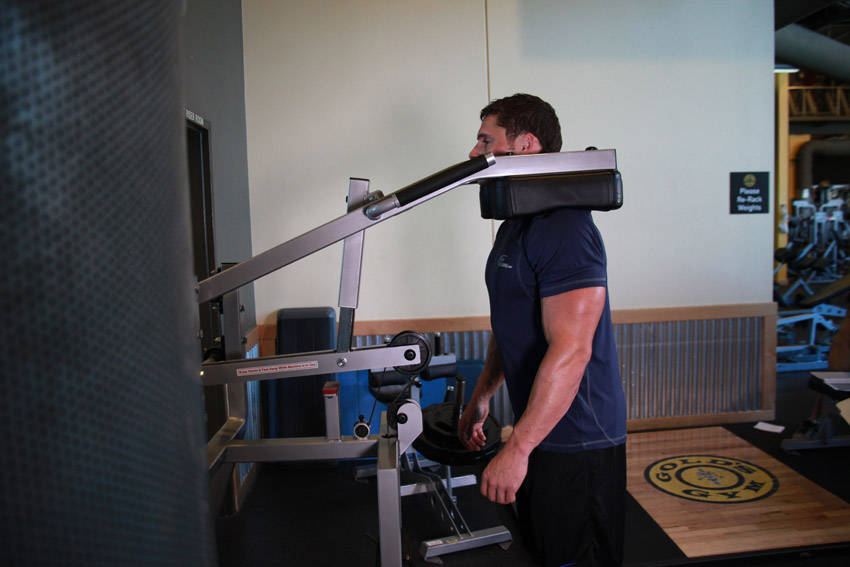
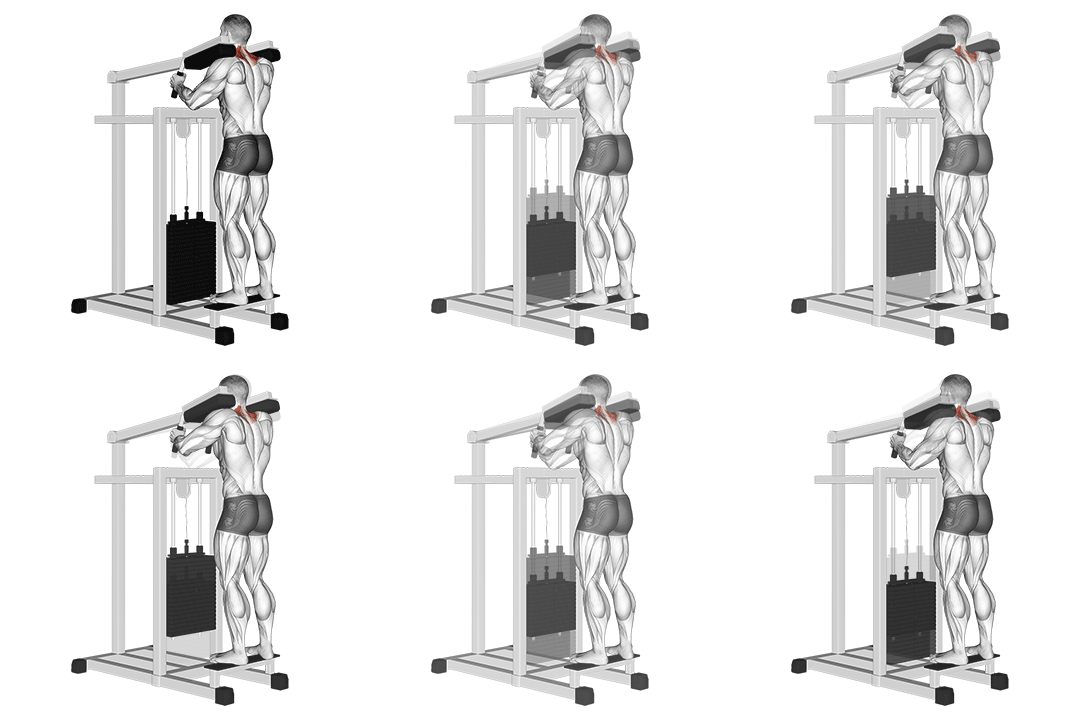
5. Calf-machine Shoulder Shrug
79% match- Traps
- Machine
- Beginner
- Isolation
How to perform this exercise
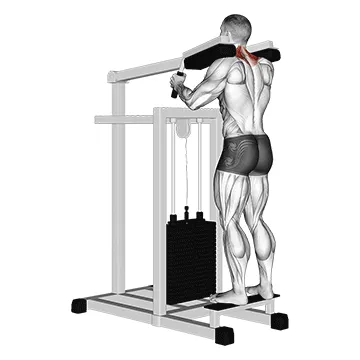
- Position yourself on the calf machine so that the shoulder pads are above your shoulders. Your torso should be straight with the arms extended normally by your side. This will be your starting position.
- Raise your shoulders up towards your ears as you exhale and hold the contraction for a full second.
- Slowly return to the starting position as you inhale.
- Repeat for the recommended amount of repetitions.
Sets and reps: 3 sets of 10 to 15 reps.
Why this matches
- Primary muscle: traps, the same as the Lever Shrug
- Equipment: a machine, the same as the Lever Shrug
- Body position: standing, the same as the Lever Shrug
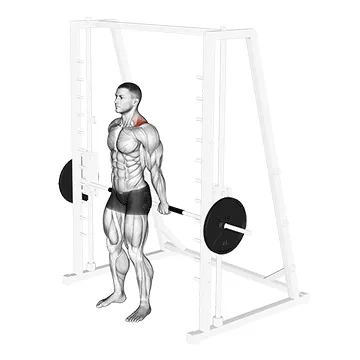
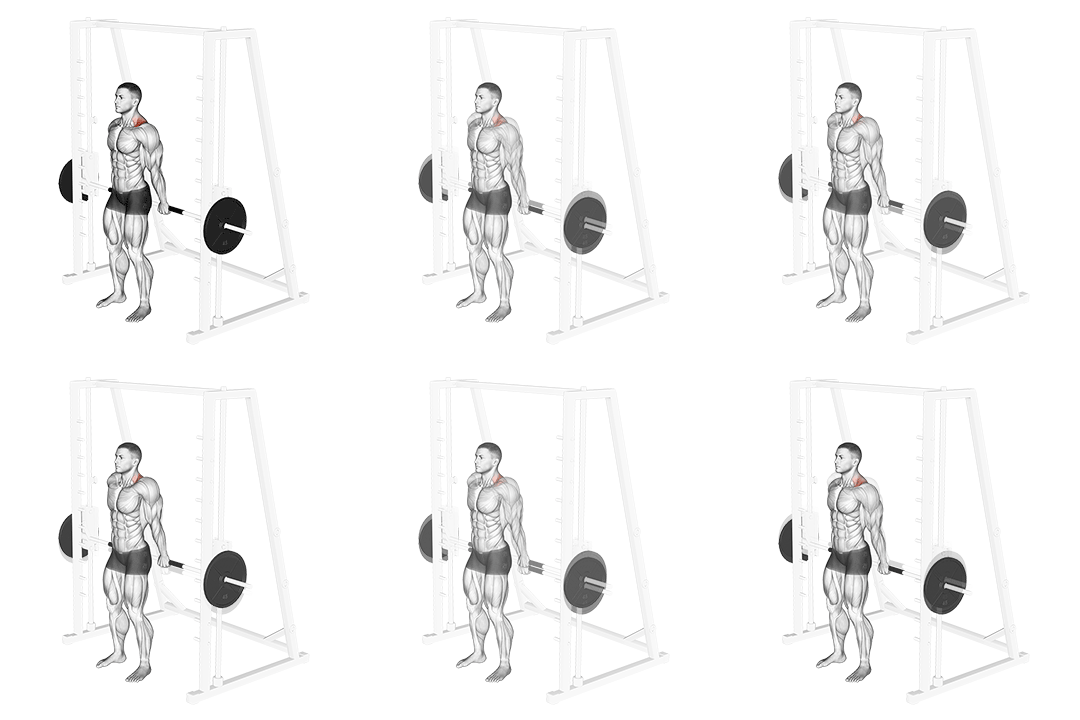
6. Smith Back Shrug
75% match- Traps
- Smith-machine
- Beginner
- Isolation
A good swap when you have a Smith machine to work with, and it still works the traps.
How to perform this exercise
- Stand with your feet shoulder-width apart and your knees slightly bent.
- Grasp the barbell with an overhand grip, hands slightly wider than shoulder-width apart.
- Keep your arms straight and allow the barbell to hang in front of your thighs.
- Lift your shoulders straight up towards your ears, squeezing your traps at the top.
- Hold for a moment, then lower your shoulders back down to the starting position.
- Repeat for the desired number of repetitions.
Sets and reps: 3 sets of 10 to 15 reps.
Why this matches
- Primary muscle: traps, the same as the Lever Shrug
- Equipment: a machine, the same as the Lever Shrug
- Body position: standing, the same as the Lever Shrug
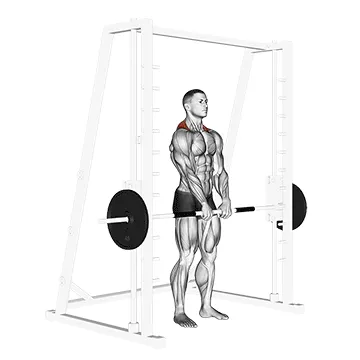
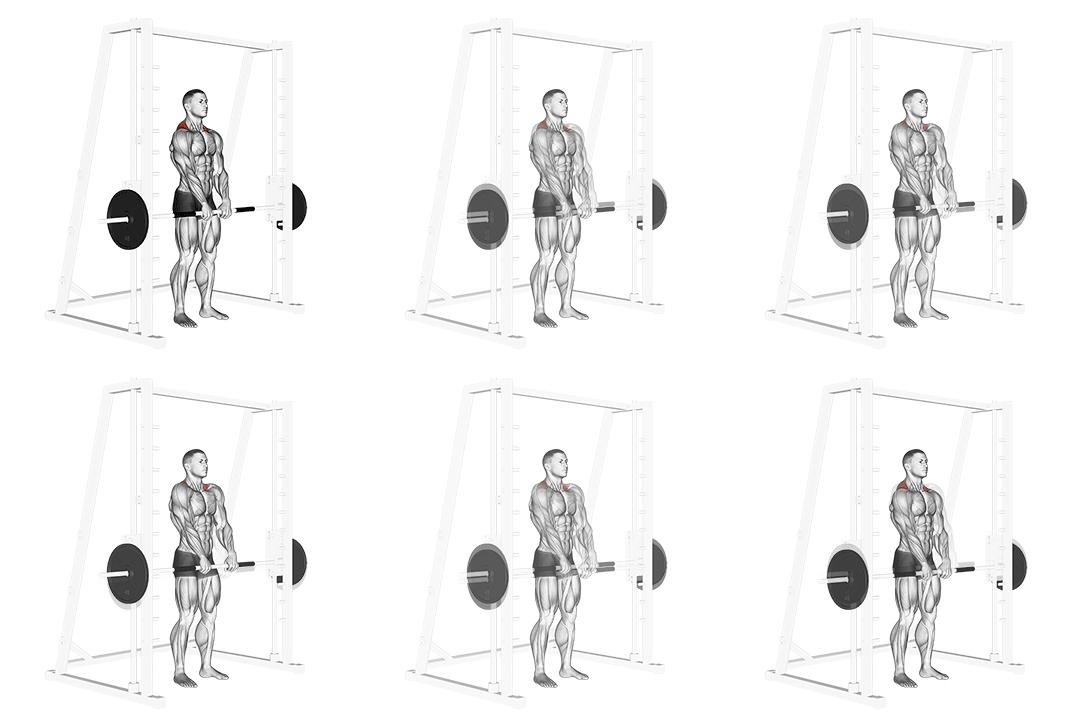
7. Smith Shrug
75% match- Traps
- Smith-machine
- Beginner
- Isolation
How to perform this exercise
- Stand with your feet shoulder-width apart and your knees slightly bent.
- Grasp the barbell with an overhand grip, hands slightly wider than shoulder-width apart.
- Keep your arms straight and your shoulders relaxed.
- Lift your shoulders up towards your ears, squeezing your traps at the top.
- Hold for a moment, then slowly lower your shoulders back down to the starting position.
- Repeat for the desired number of repetitions.
Sets and reps: 3 sets of 10 to 15 reps.
Why this matches
- Primary muscle: traps, the same as the Lever Shrug
- Equipment: a machine, the same as the Lever Shrug
- Body position: standing, the same as the Lever Shrug
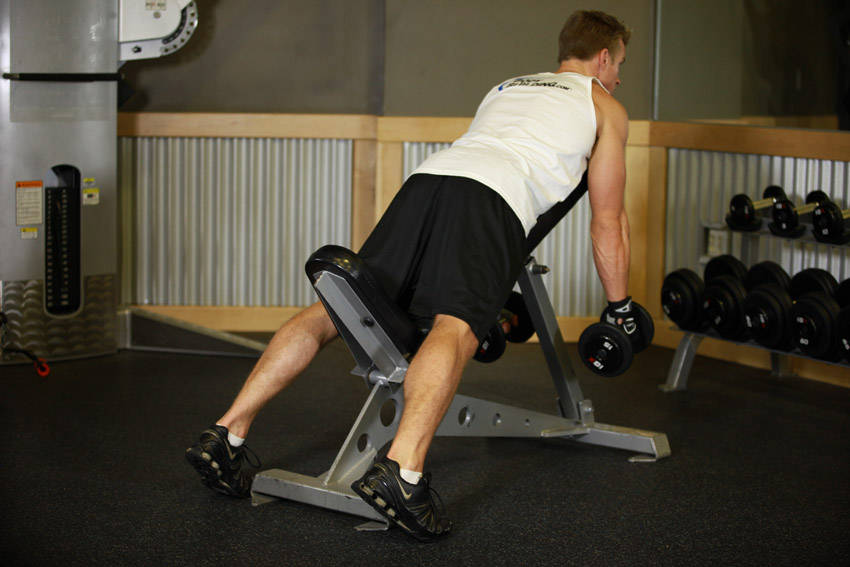
8. Middle Back Shrug
69% match- Trapezius
- Dumbbell
- Beginner
- Isolation
How to perform this exercise
- Lie facedown on an incline bench while holding a dumbbell in each hand. Your arms should be fully extended hanging down and pointing towards the floor. The palms of your hands should be facing each other. This will be your starting position.
- As you exhale, squeeze your shoulder blades together and hold the contraction for a full second. Tip: This movement is just like the reverse action of a hug, or trying to perform rear laterals as if you had no arms.
- As you inhale go back to the starting position.
- Repeat for the recommended amount of repetitions.
Sets and reps: 3 sets of 10 to 15 reps.
Why this matches
- Primary muscle: trapezius, not traps
- Equipment: free weights, not a machine
- Balance: harder to stay steady on than the Lever Shrug
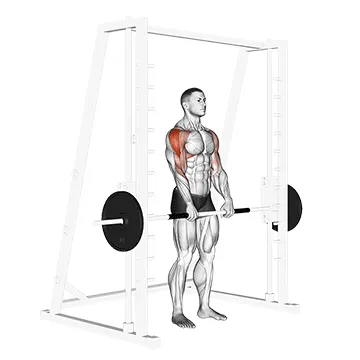
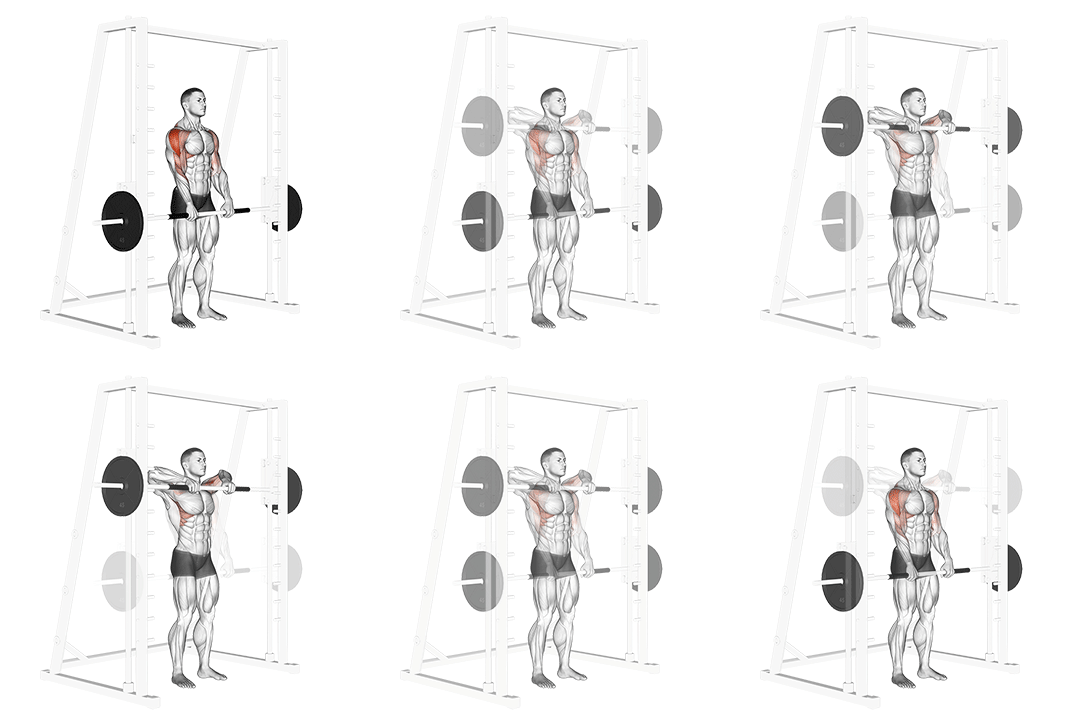
9. Smith Upright Row
68% match- Delts
- Smith-machine
- Intermediate
- Compound
How to perform this exercise
- Stand with your feet shoulder-width apart, facing the smith machine.
- Grasp the barbell with an overhand grip, hands slightly wider than shoulder-width apart.
- Keep your back straight and your core engaged.
- Pull the barbell up towards your chin, leading with your elbows.
- Pause for a moment at the top, then slowly lower the barbell back down to the starting position.
- Repeat for the desired number of repetitions.
Sets and reps: 3 or 4 sets of 6 to 10 reps.
Why this matches
- Primary muscle: delts, not traps
- Equipment: a machine, the same as the Lever Shrug
- Body position: standing, the same as the Lever Shrug
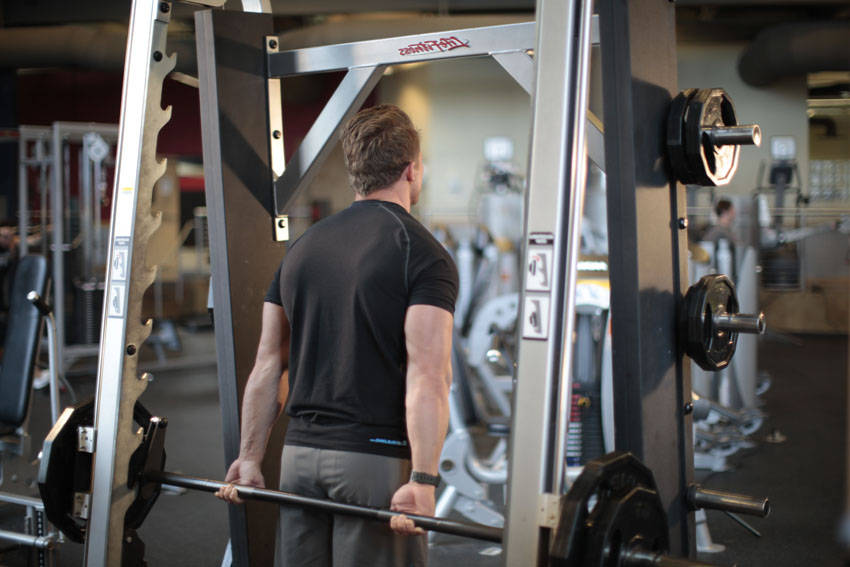
- Traps
- Machine
- Beginner
- Isolation
How to perform this exercise
- With the bar at thigh level, load an appropriate weight.
- Stand with the bar behind you, taking a shoulder-width, pronated grip on the bar and unhook the weight. You should be standing up straight with your head and chest up and your arms extended. This will be your starting position.
- Initiate the movement by shrugging your shoulders straight up. Do not flex the arms or wrist during the movement.
- After a brief pause return the weight to the starting position.
- Repeat for the desired number of repetitions before engaging the hooks to rack the weight.
Sets and reps: 3 sets of 10 to 15 reps.
Why this matches
- Primary muscle: traps, the same as the Lever Shrug
- Equipment: a machine, the same as the Lever Shrug
- Body position: standing, the same as the Lever Shrug
Lever Shrug FAQ
What muscles does Lever Shrug work?
The Lever Shrug primarily targets the upper trapezius, with secondary activation of the levator scapulae and, to a lesser extent, the middle traps and rhomboids. Biomechanically it produces scapular elevation, cue: drive the shoulder girdle straight up without excessive neck extension to isolate upper-trap fibers.
Find Alternatives for Any Exercise
Search the exercise database and filter the ranked substitutes by the equipment you own.
Similarity scores compare exercise metadata such as movement pattern, muscles, equipment and body position. They are not a safety rating or a check that you own the equipment. Learn about our methodology