

10 Best Middle Back Stretch Alternatives for Limited Mobility
The Middle Back Stretch is done standing. Ranked closest by our scoring: the Back Pec Stretch, the Standing Lateral Stretch and the Rhomboids-smr.
Instead of the Middle Back Stretch you can use thoracic extensions, foam-rolling, wall angels, cat–cow, and prone Y raises to target the trapezius and posterior chain. For example, perform thoracic extensions over a foam roller, driving the chest upward and squeezing the shoulder blades to feel upper/mid-trap activation.
Updated Ranked by our 12-factor similarity model How it works
Original Exercise: Middle Back Stretch
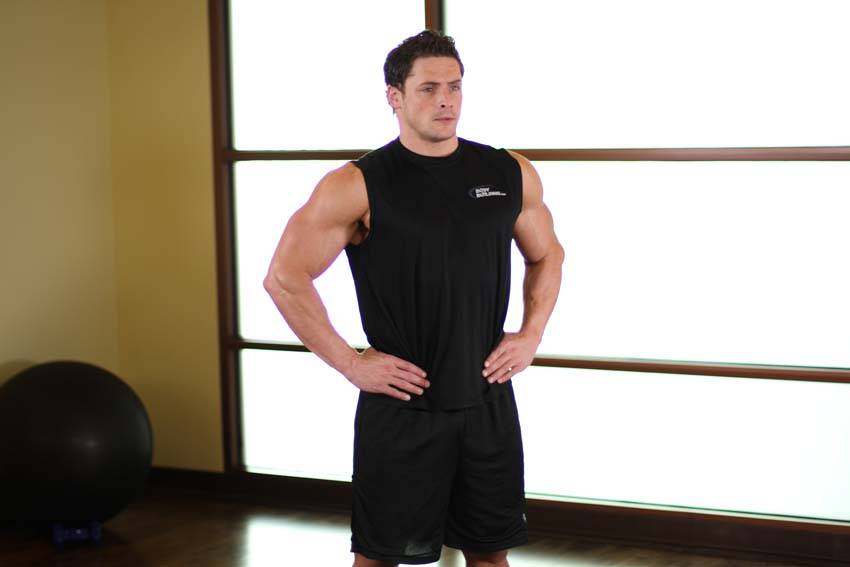
- Primary muscle
- Trapezius
- Equipment
- Bodyweight
- Difficulty
- Beginner
- Type
- Isolation
Secondary muscles: Abdominals, Lats, Lower Back
How to perform Middle Back Stretch
- Stand so your feet are shoulder width apart and your hands are on your hips.
- Twist at your waist until you feel a stretch. Hold for 10 to 15 seconds, then twist to the other side.
Ranked Middle Back Stretch Alternatives
10 substitutes, ranked by how closely each one matches the Middle Back Stretch on movement pattern, muscles worked, equipment and body position. The higher the score, the less you change. Open "How to perform this exercise" on a card for the steps; every card title links to that exercise's own alternatives page.
1. Back Pec Stretch
85% match- Lats
- Bodyweight
- Beginner
- Isolation
A looser match: it uses the same equipment, but it works the lats rather than the trapezius.
How to perform this exercise
- Stand tall with your feet shoulder-width apart.
- Extend your arms straight out in front of you, parallel to the ground.
- Cross your arms in front of your body, with your right arm over your left arm.
- Interlock your fingers and rotate your palms away from your body.
- Slowly raise your arms up and away from your body, feeling a stretch in your back and chest.
- Hold the stretch for 15-30 seconds, then release.
- Repeat on the opposite side.
Sets and reps: Hold for 20 to 30 seconds, 3 sets.
Why this matches
- Movement: static stretch, the same as the Middle Back Stretch
- Primary muscle: lats, not trapezius
- Equipment: bodyweight only, the same as the Middle Back Stretch
- Body position: standing, the same as the Middle Back Stretch
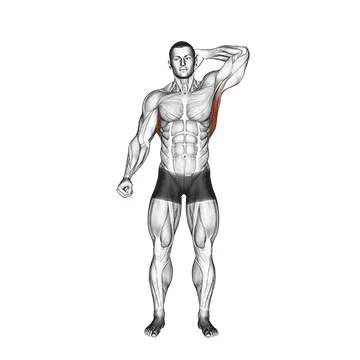
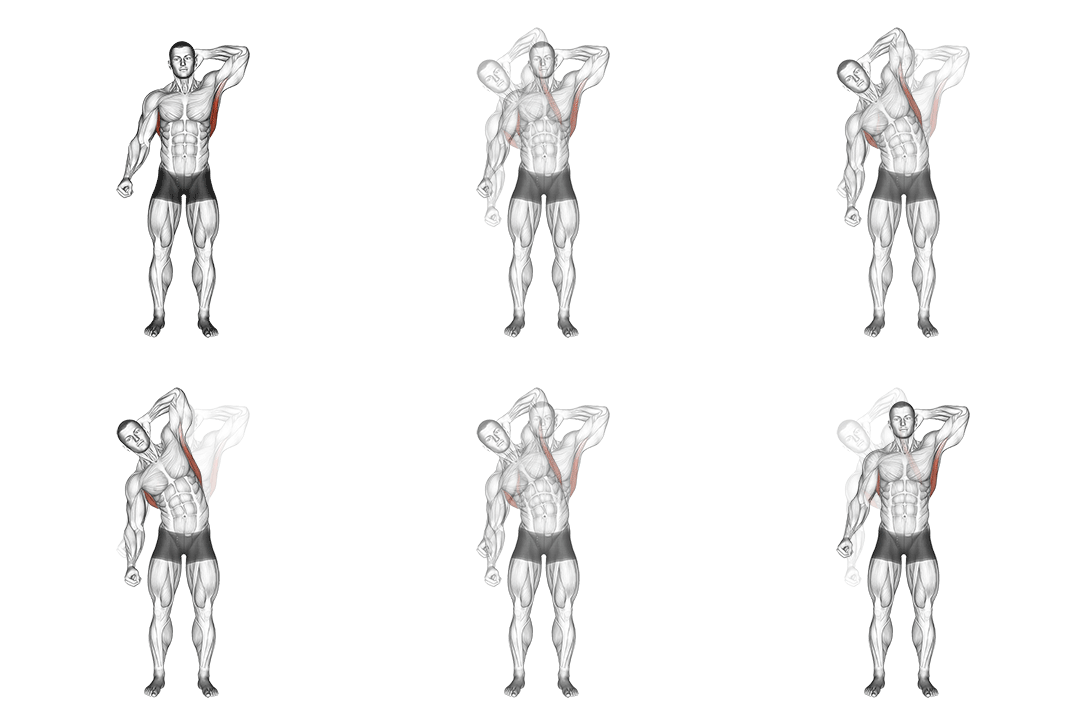
2. Standing Lateral Stretch
84% match- Lats
- Bodyweight
- Beginner
- Isolation
How to perform this exercise
- Stand with your feet shoulder-width apart and your knees slightly bent.
- Extend your arms straight out to the sides, parallel to the ground.
- Slowly lean your upper body to one side, feeling a stretch in your side and lats.
- Hold the stretch for 15-30 seconds.
- Return to the starting position and repeat on the other side.
- Repeat for the desired number of repetitions.
Sets and reps: 3 sets of 8 to 12 reps, and add reps before you add load.
Why this matches
- Movement: static stretch, the same as the Middle Back Stretch
- Primary muscle: lats, not trapezius
- Equipment: bodyweight only, the same as the Middle Back Stretch
- Body position: standing, the same as the Middle Back Stretch
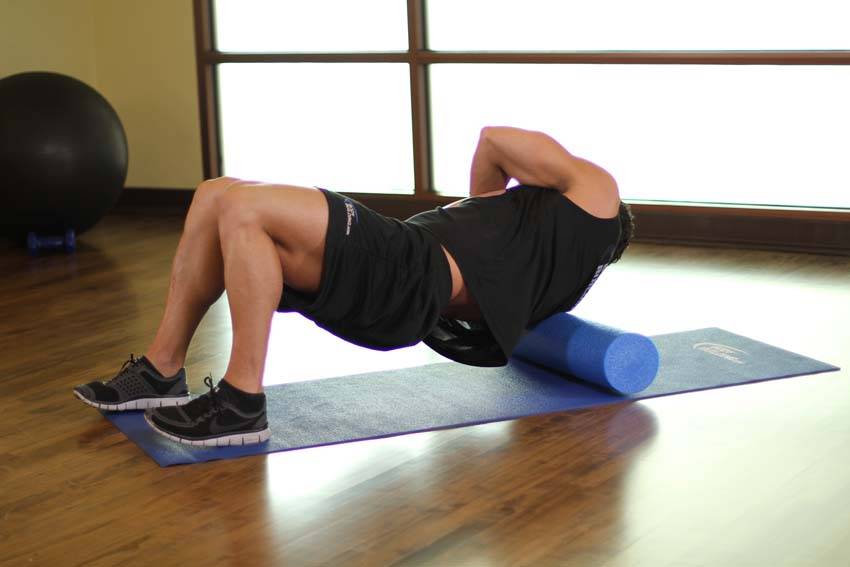
3. Rhomboids-smr
77% match- Middle Back
- Foam-roll
- Beginner
- Isolation
A looser match: it works the middle back rather than the trapezius.
How to perform this exercise
- Lay down with your back on the floor. Place a foam roll underneath your upper back, and cross your arms in front of you, protracting your shoulders. This will be your starting position.
- Raise your hips off of the ground, placing your weight onto the foam roll. Shift your weight to one side at a time, rolling over your middle and upper back. Pause at points of tension for 10-30 seconds.
Sets and reps: Hold for 20 to 30 seconds, 3 sets.
Why this matches
- Primary muscle: middle back, not trapezius
- Equipment: bodyweight only, the same as the Middle Back Stretch
- Body position: lying on your back, not standing
4. Roller Side Lat Stretch
73% match- Lats
- Foam-roll
- Beginner
- Isolation
A looser match: it works the lats rather than the trapezius.
How to perform this exercise
- Stand with your feet shoulder-width apart and hold the roller with both hands in front of your body.
- Bend your knees slightly and hinge forward at the hips, keeping your back straight.
- Extend your arms forward and roll the roller down towards your feet, feeling a stretch in your lats.
- Hold the stretch for a few seconds, then slowly roll the roller back up to the starting position.
- Repeat for the desired number of repetitions.
Sets and reps: 3 sets of 8 to 12 reps on each side, and add reps before you add load.
Why this matches
- Movement: static stretch, the same as the Middle Back Stretch
- Primary muscle: lats, not trapezius
- Equipment: bodyweight only, the same as the Middle Back Stretch
- Body position: standing, the same as the Middle Back Stretch
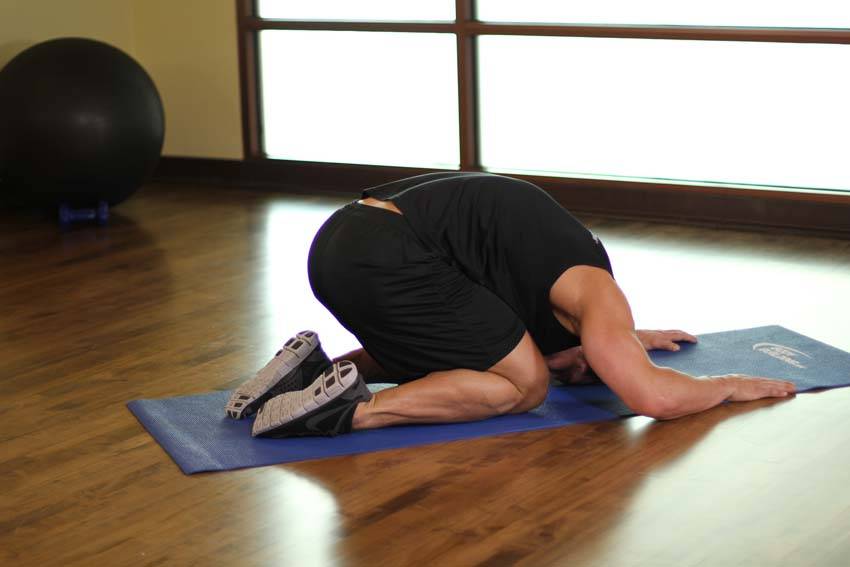
5. Child's Pose
73% match- Abs
- Bodyweight
- Beginner
- Isolation
A looser match: it uses the same equipment, but it works the abs rather than the trapezius.
How to perform this exercise
- Get on your hands and knees, walk your hands in front of you.
- Lower your buttocks down to sit on your heels. Let your arms drag along the floor as you sit back to stretch your entire spine.
- Once you settle onto your heels, bring your hands next to your feet and relax. "breathe" into your back. Rest your forehead on the floor. Avoid this position if you have knee problems.
Sets and reps: 3 sets of 8 to 12 reps, and add reps before you add load.
Why this matches
- Primary muscle: abs, not trapezius
- Equipment: bodyweight only, the same as the Middle Back Stretch
- Body position: kneeling, not standing
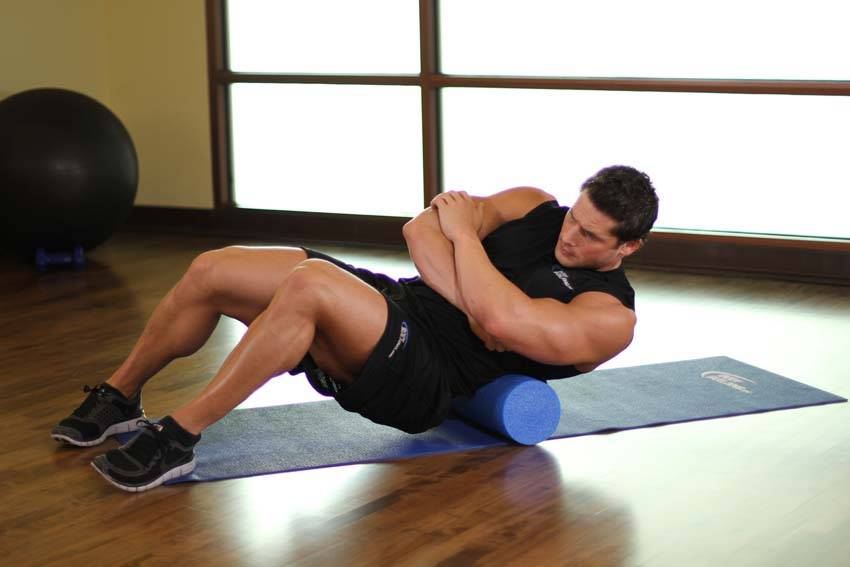
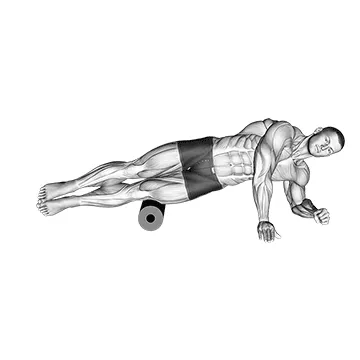
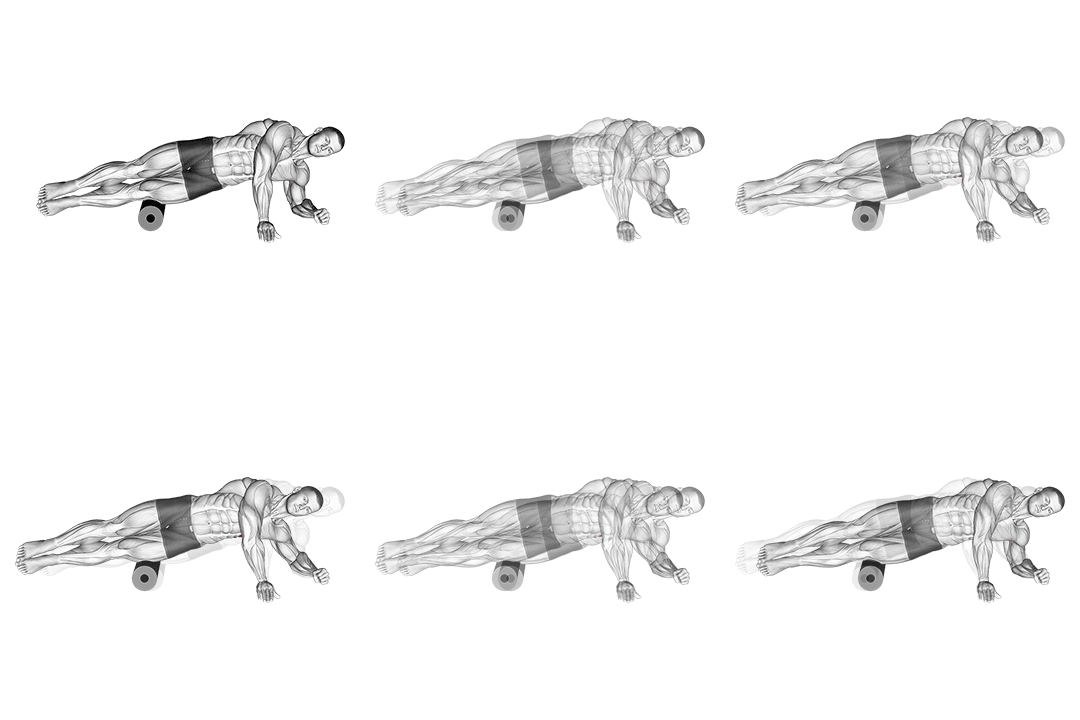
6. Latissimus Dorsi-smr
73% match- Lats
- Foam-roll
- Beginner
- Isolation
How to perform this exercise
- While lying on the floor, place a foam roll under your back and to one side, just behind your arm pit. This will be your starting position.
- Keep the arm of the side being stretched behind and to the side of you as you shift your weight onto your lats, keeping your upper body off of the ground. Hold for 10-30 seconds, and switch sides.
Sets and reps: 3 sets of 8 to 12 reps, and add reps before you add load.
Why this matches
- Primary muscle: lats, not trapezius
- Equipment: bodyweight only, the same as the Middle Back Stretch
- Body position: lying face down, not standing
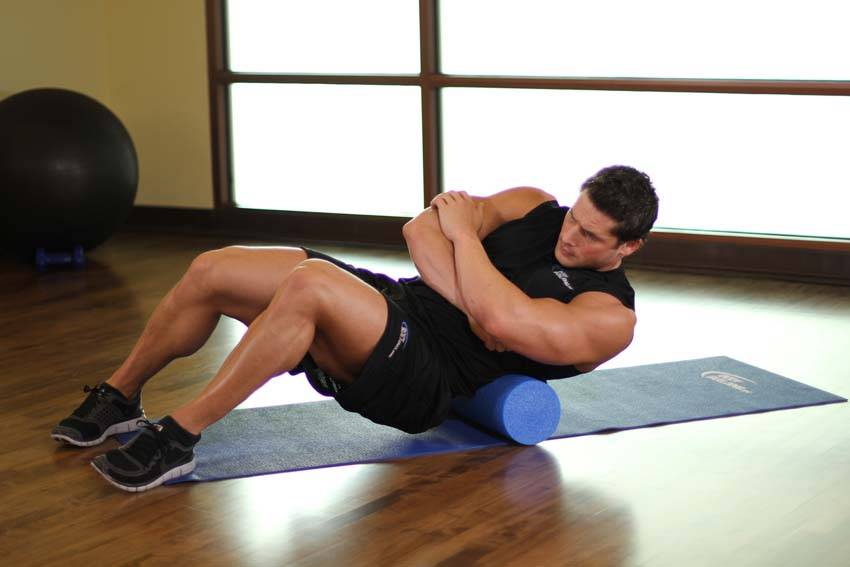
7. Lower Back-smr
73% match- Lower Back
- Foam-roll
- Beginner
- Isolation
A looser match: it works the lower back rather than the trapezius.
How to perform this exercise
- In a seated position, place a foam roll under your lower back. Cross your arms in front of you and protract your shoulders. This will be your starting position.
- Raise your hips off of the floor and lean back, keeping your weight on your lower back. Now shift your weight slightly to one side, keeping your weight off of the spine and on the muscles to the side of it. Roll over your lower back, holding points of tension for 10-30 seconds. Repeat on the other side.
Sets and reps: 3 sets of 8 to 12 reps, and add reps before you add load.
Why this matches
- Primary muscle: lower back, not trapezius
- Equipment: bodyweight only, the same as the Middle Back Stretch
- Body position: lying on your back, not standing
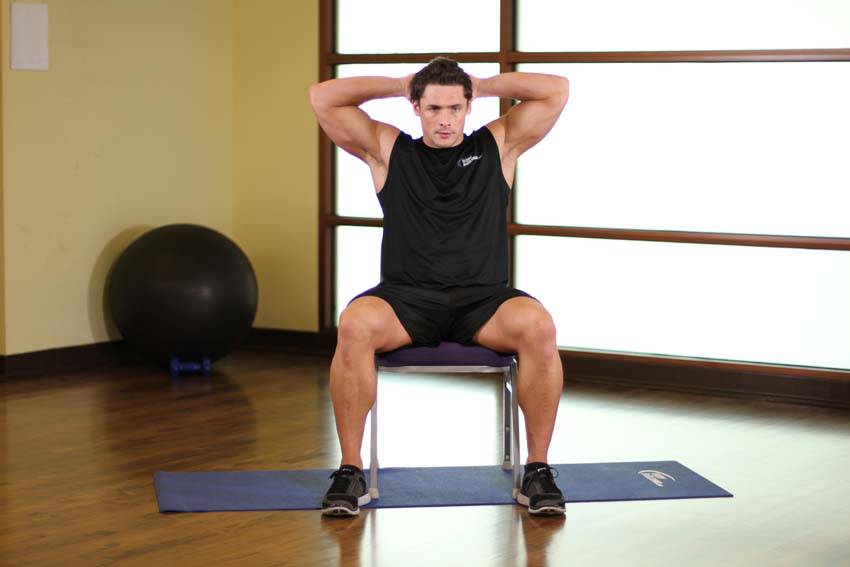
8. Spinal Stretch
73% match- Lats
- Foam-roll
- Beginner
- Isolation
How to perform this exercise
- Sit in a chair so your back is straight and your feet planted on the floor.
- Interlace your fingers behind your head, elbows out and your chin down.
- Twist your upper body to one side about 3 times as far as you can. Then lean forward and twist your torso to reach your elbow to the floor on the inside of your knee.
- Return to upright position and then repeat for your other side.
Sets and reps: 3 sets of 8 to 12 reps, and add reps before you add load.
Why this matches
- Movement: static stretch, the same as the Middle Back Stretch
- Primary muscle: lats, not trapezius
- Equipment: bodyweight only, the same as the Middle Back Stretch
- Body position: seated, not standing
9. Seated Lower Back Stretch
72% match- Lats
- Bodyweight
- Beginner
- Isolation
How to perform this exercise
- Sit on the edge of a chair with your feet flat on the ground.
- Place your hands on your thighs or on the sides of the chair for support.
- Slowly lean forward from your hips, keeping your back straight.
- Feel the stretch in your lower back and hold for 20-30 seconds.
- Slowly return to the starting position and repeat for the desired number of repetitions.
Sets and reps: 3 sets of 8 to 12 reps, and add reps before you add load.
Why this matches
- Movement: static stretch, the same as the Middle Back Stretch
- Primary muscle: lats, not trapezius
- Equipment: bodyweight only, the same as the Middle Back Stretch
- Body position: seated, not standing
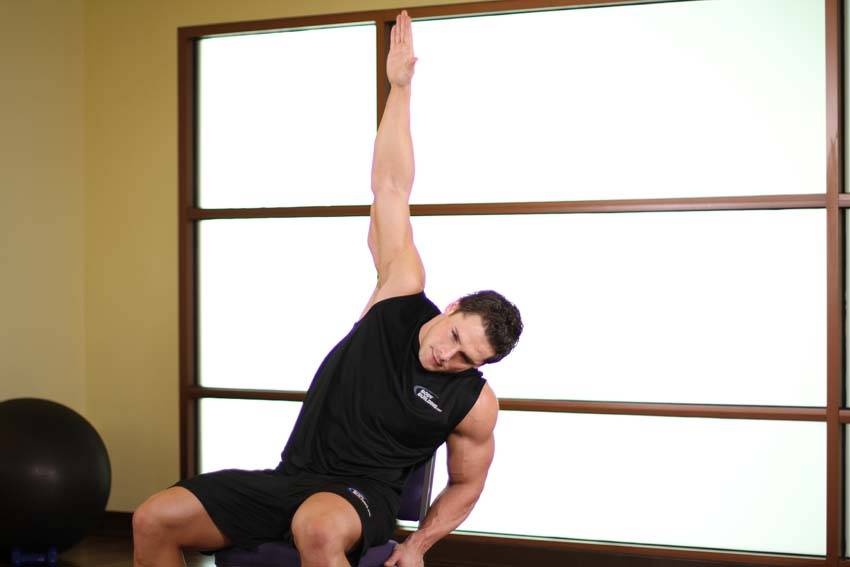
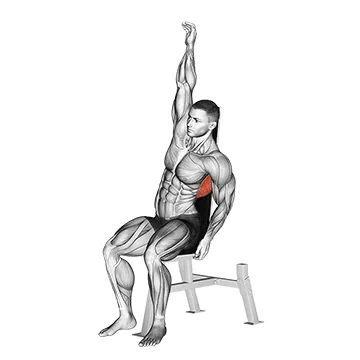
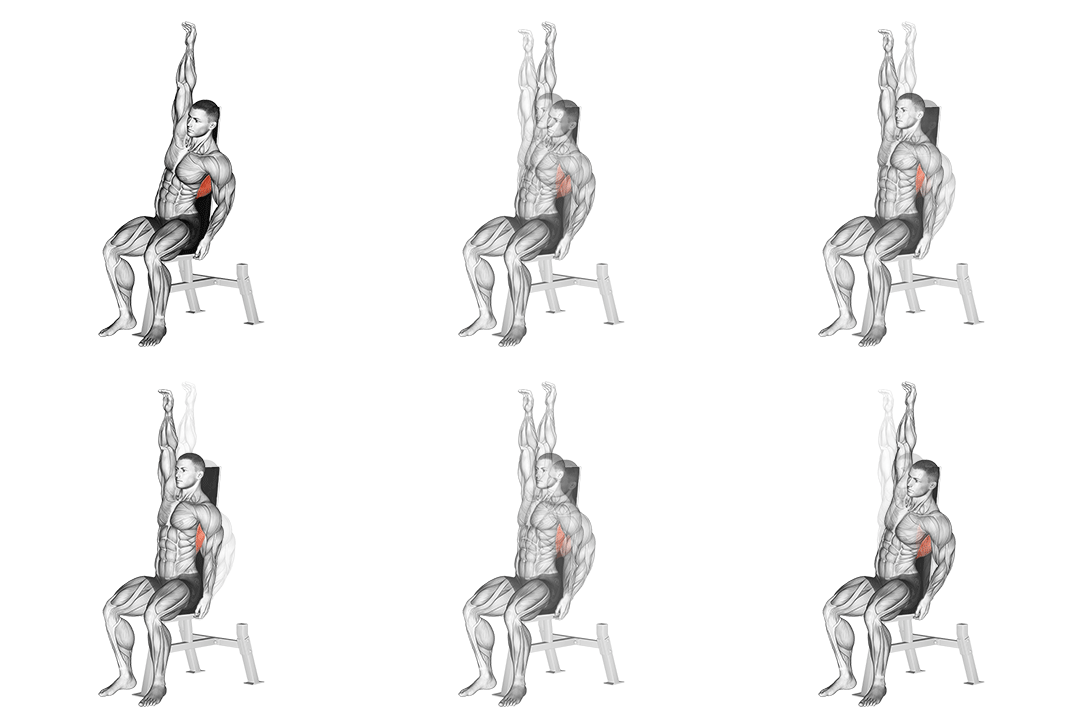
10. Chair Lower Back Stretch
72% match- Lats
- Other
- Beginner
- Isolation
How to perform this exercise
- Sit upright on a chair.
- Bend to one side with your arm over your head. You can hold onto the chair with your free hand.
- Hold for 10 seconds, and repeat for your other side.
Sets and reps: 3 sets of 8 to 12 reps, and add reps before you add load.
Why this matches
- Movement: static stretch, the same as the Middle Back Stretch
- Primary muscle: lats, not trapezius
- Equipment: bodyweight only, the same as the Middle Back Stretch
- Body position: seated, not standing
Why You Might Need a Middle Back Stretch Alternative
You may need substitutes because of shoulder pain, limited thoracic extension, acute neck issues, or lack of equipment. Some people avoid the Middle Back Stretch when it provokes cervical extension or scapular impingement. Choose movements that separate thoracic motion from neck motion and emphasize scapular retraction and posterior deltoid engagement. For pain-prone clients use slow, controlled mobilizations (perform cat–cow with 3–5 second holds) to restore range without forcing end-range stretch. For strength or posture goals pick loaded or isometric options like wall angels with a 2–3 second hold to train trapezius activation and scapular upward rotation.
How to Choose the Right Middle Back Stretch Substitute
Match the substitute to your primary need: mobility, pain relief, or strength. For mobility pick thoracic extensions or foam-roller passovers and cue chest drive while keeping the chin tucked to avoid neck strain. For pain relief use rhythmic cat–cow with diaphragmatic breathing and a slow 3-second tempo to reduce neural irritation. For strength or postural carryover select wall angels or prone Y raises and progressively add holds or light resistance bands to increase trapezius recruitment. Always assess scapular control, if the shoulder blade winging appears, regress to scapular squeezes until control improves.
Middle Back Stretch FAQ
What muscles does Middle Back Stretch work?
The exercise primarily targets the trapezius (middle fibers) and the rhomboids by promoting scapular retraction and thoracic extension. You also get passive lengthening of the posterior shoulder capsule and activation of the erector spinae when extending the thoracic spine.
What is the best bodyweight alternative to Middle Back Stretch?
Thoracic extensions on a foam roller are the best bodyweight alternative: place the roller under your upper back, hands behind your head, and drive the chest up while keeping the chin tucked to isolate thoracic motion. This cue maintains trapezius engagement without cervical overextension.
Can I build muscle without doing Middle Back Stretch?
Yes. Building trapezius and mid-back muscle requires progressive overload and movement patterns that load scapular retractors, such as prone Y raises, rows, or weighted wall slides. Focus on increasing time under tension or resistance while cueing a strong scapular squeeze to drive hypertrophy.
Find Alternatives for Any Exercise
Search the exercise database and filter the ranked substitutes by the equipment you own.
Similarity scores compare exercise metadata such as movement pattern, muscles, equipment and body position. They are not a safety rating or a check that you own the equipment. Learn about our methodology