

10 Best Neck Side Stretch Alternatives for Neck Pain Relief
The Neck Side Stretch is done seated. Ranked closest by our scoring: the Side Push Neck Stretch, the Chin To Chest Stretch and the Side Neck Stretch. Two harder versions, the Isometric Neck Exercise - Front And Back and the Isometric Neck Exercise - Sides, are listed below as progressions rather than swaps.
Each substitute is scored on movement pattern, muscles worked, equipment and body position. Read how we rank alternatives
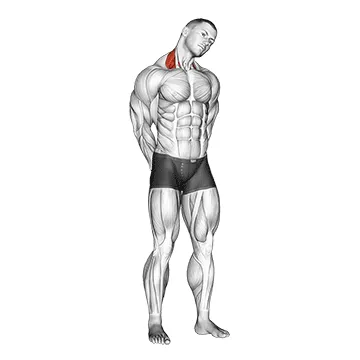
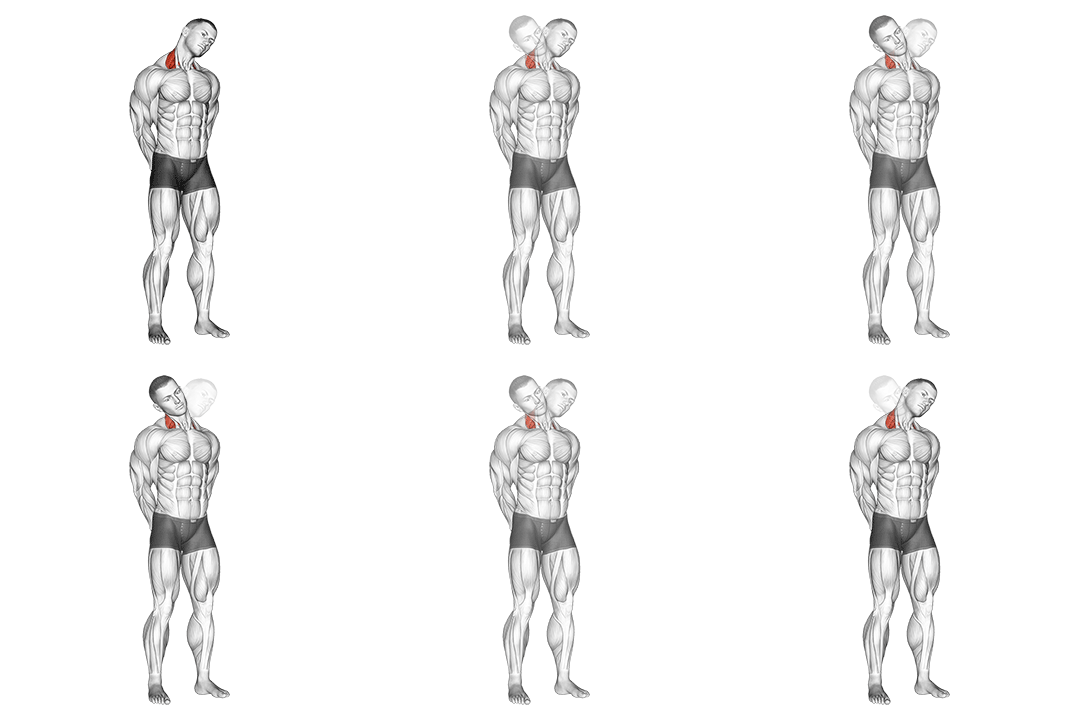
How to Do the Neck Side Stretch
The steps for the Neck Side Stretch itself, so you can judge how close each substitute below really is.
Neck, with trapezius, sternocleidomastoid · Bodyweight · Beginner · Isolation
- Stand or sit up straight with your shoulders relaxed.
- Tilt your head to one side, bringing your ear towards your shoulder.
- Hold the stretch for 15-30 seconds.
- Repeat on the other side.
- Perform 2-4 sets on each side.
The 10 Best Neck Side Stretch Alternatives
10 substitutes, ranked by how closely each one matches the Neck Side Stretch on movement pattern, muscles worked, equipment and body position. The higher the score, the less you change. Cards with a "How to perform it" link open to show the steps; every card title links to that exercise's own alternatives page. Harder versions are tagged as progressions and kept out of the top spot even when they score higher.
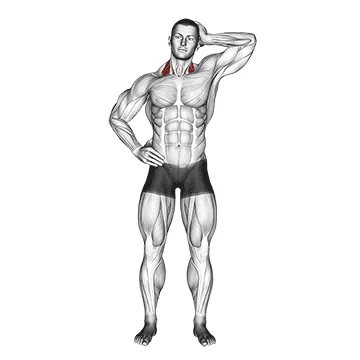
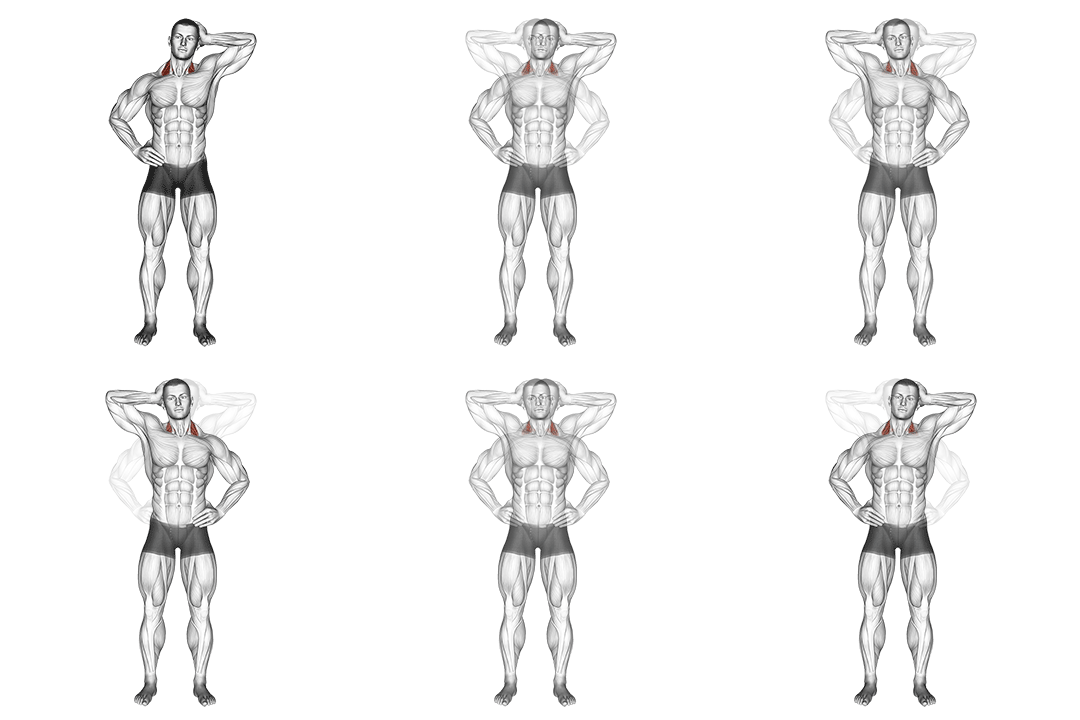
1. Side Push Neck Stretch
84% matchNeck · Beginner · Isolation
Pick this when you want to work the neck one side at a time.
- Bodyweight
How to perform it
- Stand or sit up straight with your shoulders relaxed.
- Tilt your head to the right, bringing your right ear towards your right shoulder.
- Place your right hand on the left side of your head and gently apply pressure to increase the stretch.
- Hold the stretch for 15-30 seconds.
- Repeat on the other side, tilting your head to the left and applying pressure with your left hand.
- Repeat the stretch 2-3 times on each side.
Sets and reps: Hold for 20 to 30 seconds on each side, 3 sets.
Why this matches
- Movement: static stretch, the same as the Neck Side Stretch
- Primary muscle: neck, the same as the Neck Side Stretch
- Equipment: bodyweight only, the same as the Neck Side Stretch
- Body position: standing, not seated
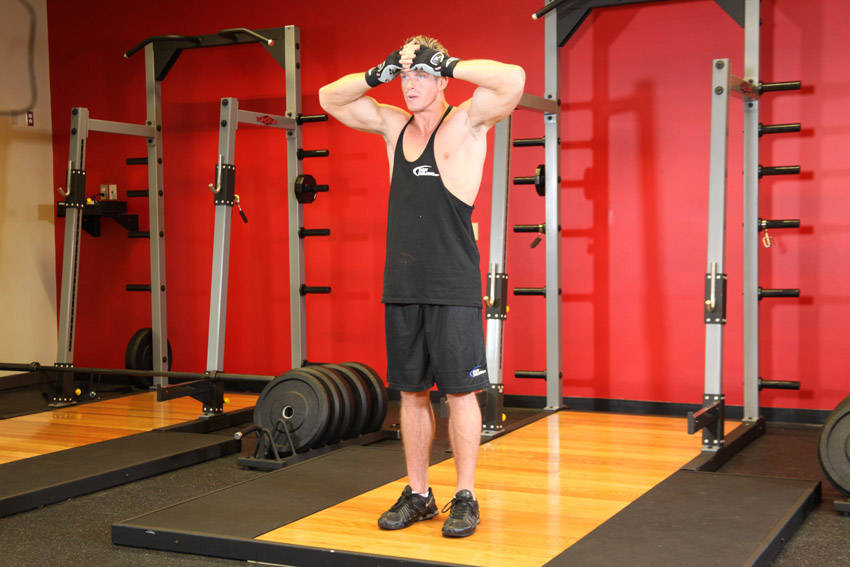
Progression
Neck · Beginner · Isolation
Pick this when you want a harder version that still works the neck.
- Bodyweight
How to perform it
- With your head and neck in a neutral position (normal position with head erect facing forward), place both of your hands on the front side of your head.
- Now gently push forward as you contract the neck muscles but resisting any movement of your head. Start with slow tension and increase slowly. Keep breathing normally as you execute this contraction.
- Hold for the recommended number of seconds.
- Now release the tension slowly.
- Rest for the recommended amount of time and repeat with your hands placed on the back side of your head.
Sets and reps: Hold for 20 to 30 seconds, 3 sets.
Why this matches
- Primary muscle: neck, the same as the Neck Side Stretch
- Equipment: bodyweight only, the same as the Neck Side Stretch
- Body position: seated, the same as the Neck Side Stretch
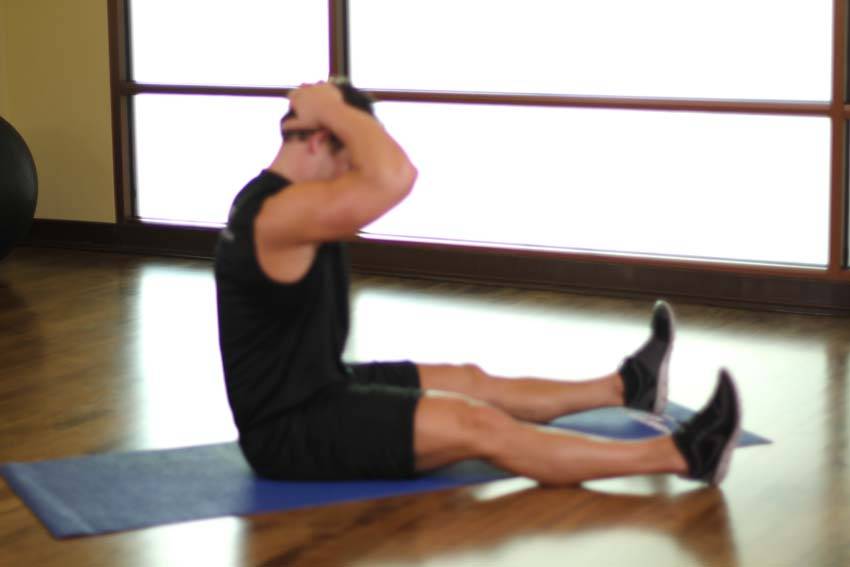
4. Chin To Chest Stretch
76% matchNeck · Beginner · Isolation
It uses the same equipment and still works the neck.
- Bodyweight
How to perform it
- Get into a seated position on the floor.
- Place both hands at the rear of your head, fingers interlocked, thumbs pointing down and elbows pointing straight ahead. Slowly pull your head down to your chest. Hold for 20-30 seconds.
Sets and reps: Hold for 30 to 60 seconds and repeat 2 or 3 times.
Why this matches
- Movement: static stretch, the same as the Neck Side Stretch
- Primary muscle: neck, the same as the Neck Side Stretch
- Equipment: bodyweight only, the same as the Neck Side Stretch
- Body position: seated, the same as the Neck Side Stretch
5. Side Neck Stretch
70% matchNeck · Beginner · Isolation
Neck · Beginner · Isolation
Neck · Beginner · Isolation
8. Neck-smr
57% matchNeck · Beginner · Isolation
9. V-sit On Floor
37% matchAbs · Advanced · Compound
10. Bench Dips
34% matchTriceps · Intermediate · Compound
Why You Might Need a Neck Side Stretch Alternative
You might substitute the Neck Side Stretch for pain, limited cervical rotation, post-surgical precautions, or discomfort with overhead posture. Some people feel nerve tension with deep neck flexion, so an isometric lateral hold or an assisted upper-trap stretch avoids excessive neural glide while still loading the levator scapulae. Use a controlled 5–10 second isometric press (head into hand) to activate deep neck stabilizers without large ranges. Maintain neutral thoracic alignment and avoid rotating beyond 45° to prevent compensatory upper-back motion and overloading the facet joints.
How to Choose the Right Neck Side Stretch Substitute
Select a substitute based on your goal: mobility, pain relief, or strength. For mobility and tissue lengthening, use assisted stretches that place the head in rotation plus slight flexion to follow the levator scapulae fiber line (rotate 45°, tuck chin, lower head). For pain or nerve sensitivity, choose low-amplitude isometrics (press head laterally into hand for 5–10s) to recruit musculature without overstretching. If scapular elevation is part of your problem, pair the neck stretch with scapular depressions (pull shoulder down with opposite hand) to reduce levator activation and isolate the neck.
Neck Side Stretch FAQ
What muscles does Neck Side Stretch work?
The Neck Side Stretch primarily targets the levator scapulae and also lengthens the upper trapezius and scalenes. The levator scapulae originates on cervical transverse processes and elevates and ipsilaterally flexes the neck, so the stretch combines rotation plus slight flexion to follow those fibers.
Can I build muscle without doing Neck Side Stretch?
Yes. The Neck Side Stretch is an isolation stretch, not a hypertrophy exercise. To strengthen neck musculature you can perform progressive isometric holds and resisted neck movements (manual resistance or band); cue a firm 5–10 second contraction with neutral spine to load the levator scapulae and scalenes safely.
Find Alternatives for Any Exercise
Search the exercise database and filter the ranked substitutes by the equipment you own.