

10 Best Side Bridge Alternatives for Core Strength
The Side Bridge is done lying face down. Ranked closest by our scoring: the Front Plank With Twist, the Shoulder Tap and the Bodyweight Incline Side Plank. Three harder versions, the Spider Crawl, the V-sit On Floor and the Flag, are listed below as progressions rather than swaps.
Updated Ranked by our 12-factor similarity model How it works
Original Exercise: Side Bridge
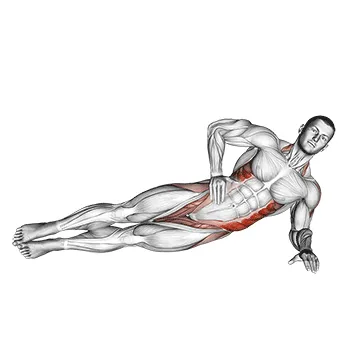
- Primary muscle
- Abs
- Equipment
- Bodyweight
- Difficulty
- Intermediate
- Type
- Compound
Secondary muscles: Obliques, Glutes
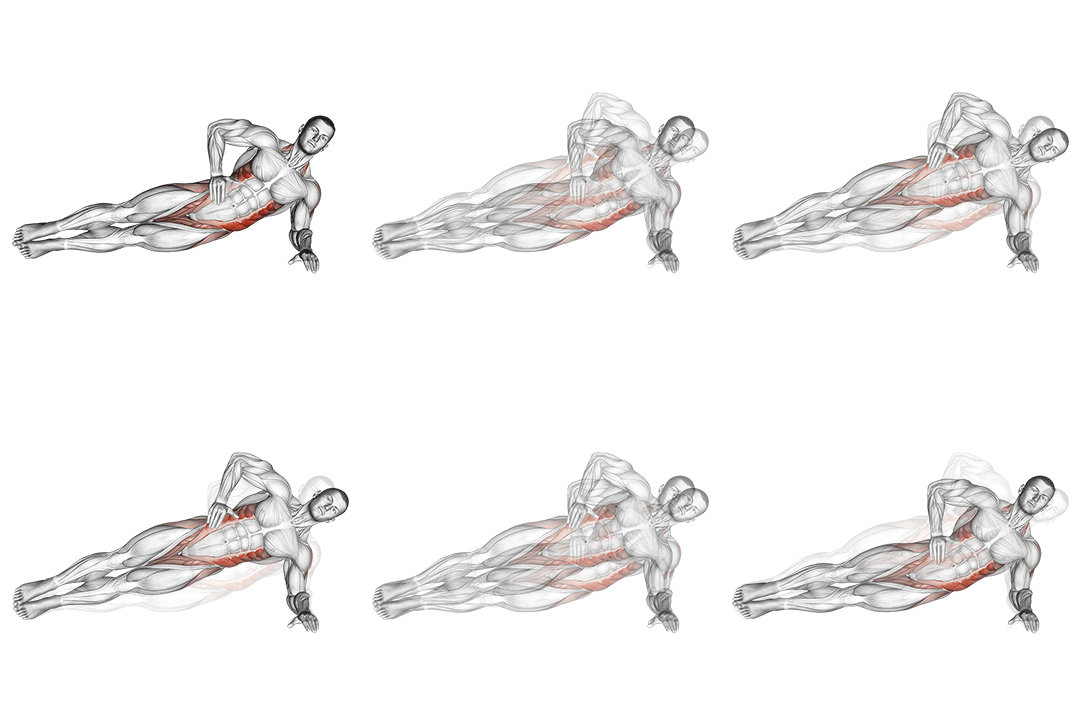
How to perform Side Bridge
- Lie on your side with your legs extended and stacked on top of each other.
- Place your forearm on the ground directly below your shoulder, with your elbow bent at a 90-degree angle.
- Engage your core and lift your hips off the ground, creating a straight line from your head to your feet.
- Hold this position for the desired amount of time.
- Lower your hips back down to the starting position.
- Repeat on the other side.
Ranked Side Bridge Alternatives
10 substitutes, ranked by how closely each one matches the Side Bridge on movement pattern, muscles worked, equipment and body position. The higher the score, the less you change. Open "How to perform this exercise" on a card for the steps; every card title links to that exercise's own alternatives page. Harder versions are tagged as progressions and kept out of the top spot even when they score higher.
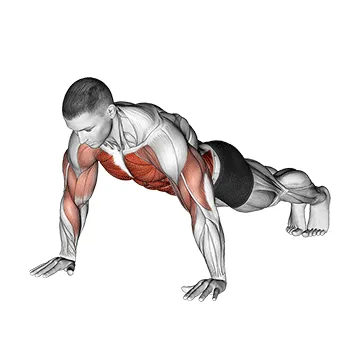
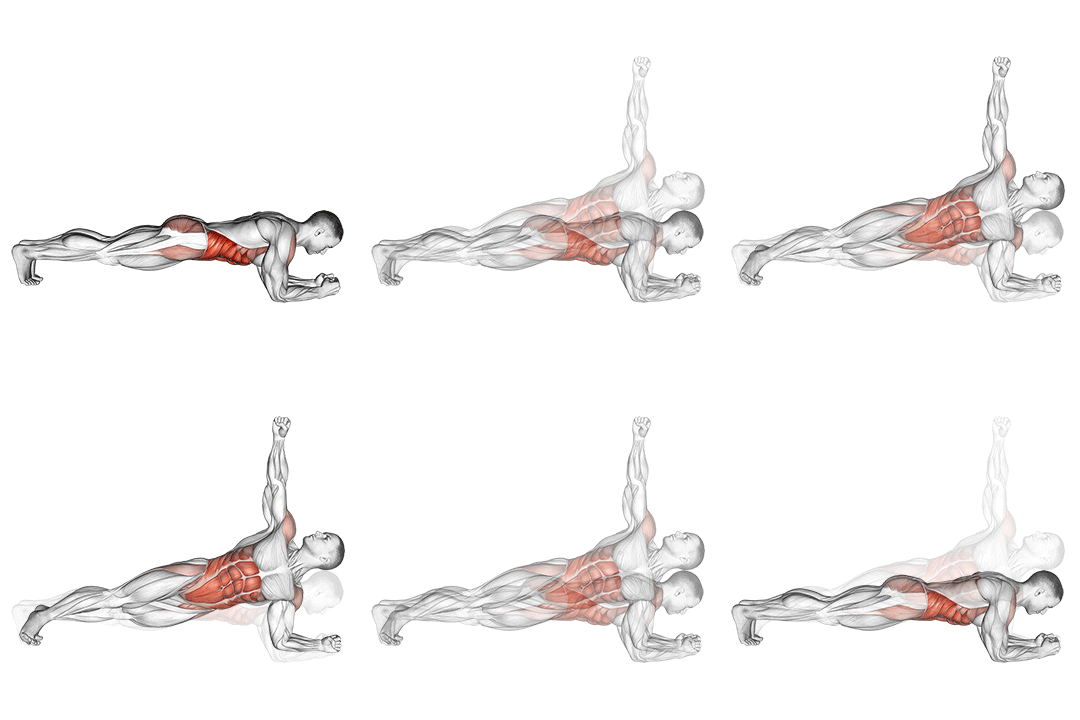
Best match 1. Front Plank With Twist
93% match- Abs
- Bodyweight
- Intermediate
- Compound
It uses the same equipment and still works the abs.
How to perform this exercise
- Start in a high plank position with your hands directly under your shoulders and your body in a straight line from head to toe.
- Engage your core and glutes to maintain a stable position.
- Rotate your torso to the right, lifting your right arm and extending it towards the ceiling.
- Keep your hips and legs stable as you twist.
- Hold for a moment, then return to the starting position.
- Repeat the twist on the left side.
- Continue alternating sides for the desired number of repetitions.
Sets and reps: 3 or 4 sets of 6 to 10 reps on each side.
Why this matches
- Movement: an anti-extension hold, close to the Side Bridge
- Primary muscle: abs, the same as the Side Bridge
- Equipment: bodyweight only, the same as the Side Bridge
- Body position: lying face down, the same as the Side Bridge
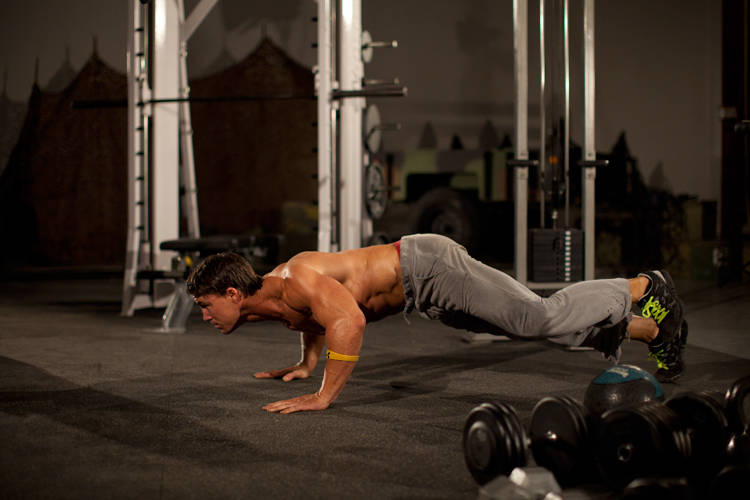
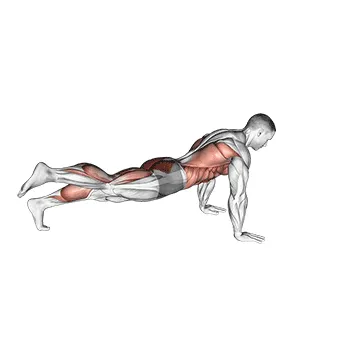
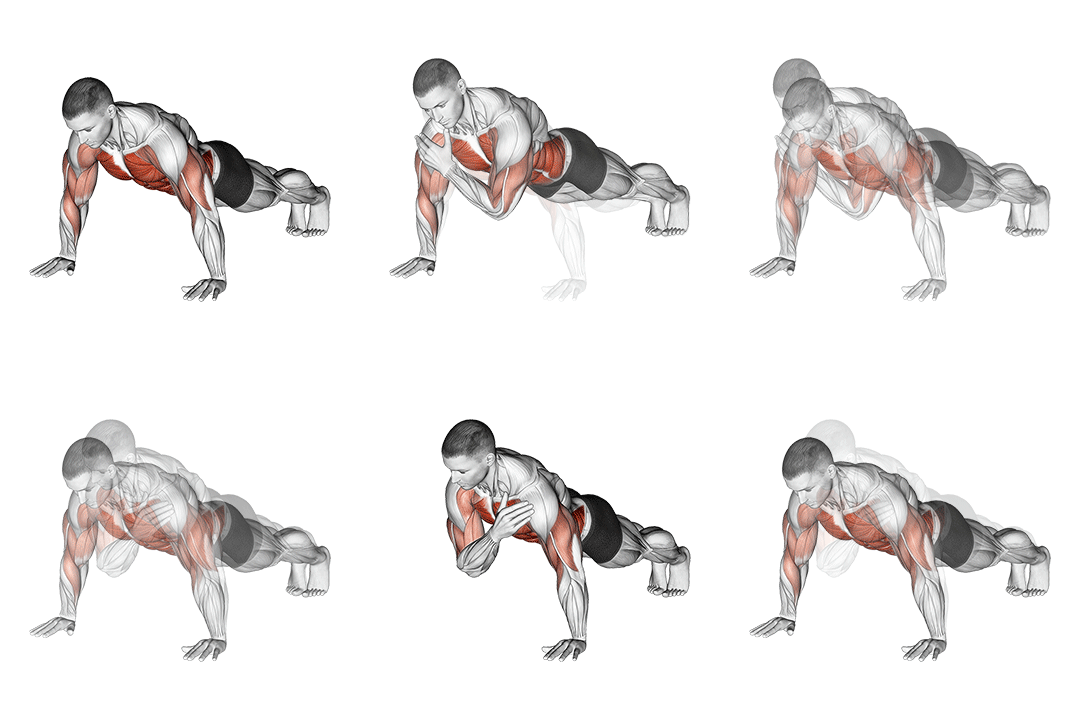
2. Shoulder Tap
92% match- Abs
- Bodyweight
- Intermediate
- Compound
How to perform this exercise
- Start in a high plank position with your hands directly under your shoulders and your body in a straight line.
- Engage your core and lift your right hand off the ground, reaching across to tap your left shoulder.
- Place your right hand back on the ground and repeat with your left hand tapping your right shoulder.
- Continue alternating shoulder taps while keeping your hips and torso stable.
- Repeat for the desired number of repetitions.
Sets and reps: 3 or 4 sets of 6 to 10 reps on each side.
Why this matches
- Movement: an anti-extension hold, close to the Side Bridge
- Primary muscle: abs, the same as the Side Bridge
- Equipment: bodyweight only, the same as the Side Bridge
- Body position: lying face down, the same as the Side Bridge
Progression
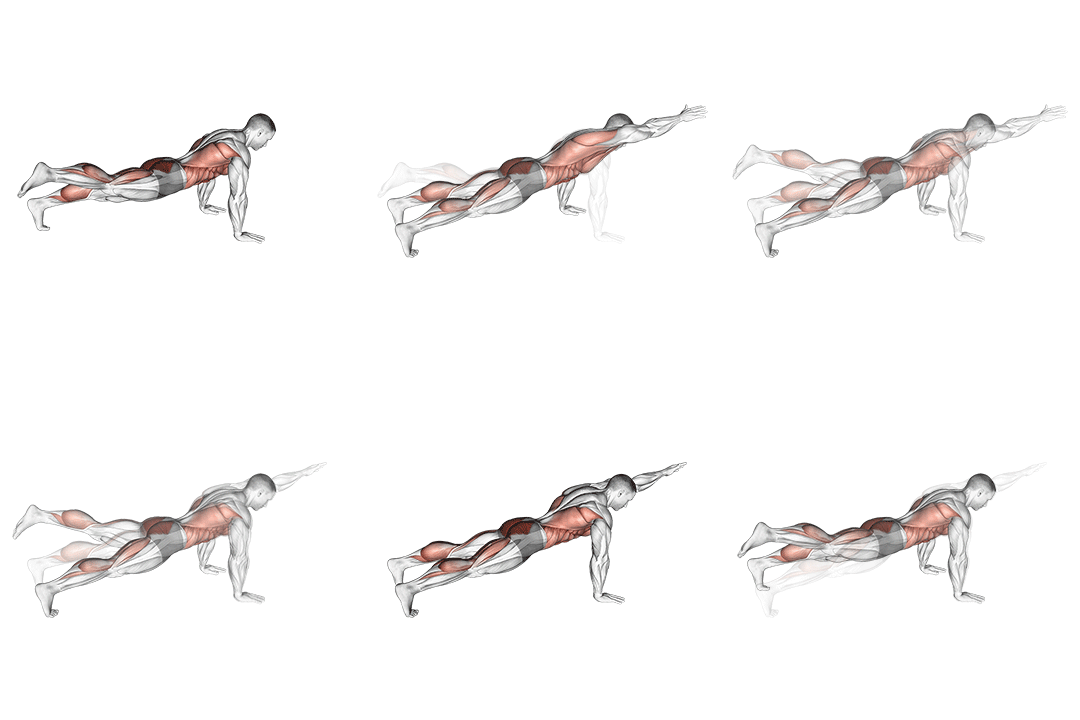
3. Spider Crawl
91% match- Abs
- Bodyweight
- Advanced
- Compound
Pick this when you want a harder version that still works the abs.
How to perform this exercise
- Begin in a prone position on the floor. Support your weight on your hands and toes, with your feet together and your body straight. Your arms should be bent to 90 degrees. This will be your starting position.
- Initiate the movement by raising one foot off of the ground. Externally rotate the leg and bring the knee toward your elbow, as far forward as possible.
- Return this leg to the starting position and repeat on the opposite side.
Sets and reps: Hold for 20 to 30 seconds on each side, 3 sets.
Why this matches
- Movement: an anti-extension hold, close to the Side Bridge
- Primary muscle: abs, the same as the Side Bridge
- Equipment: bodyweight only, the same as the Side Bridge
- Body position: lying face down, the same as the Side Bridge
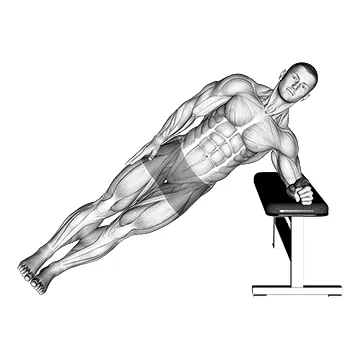
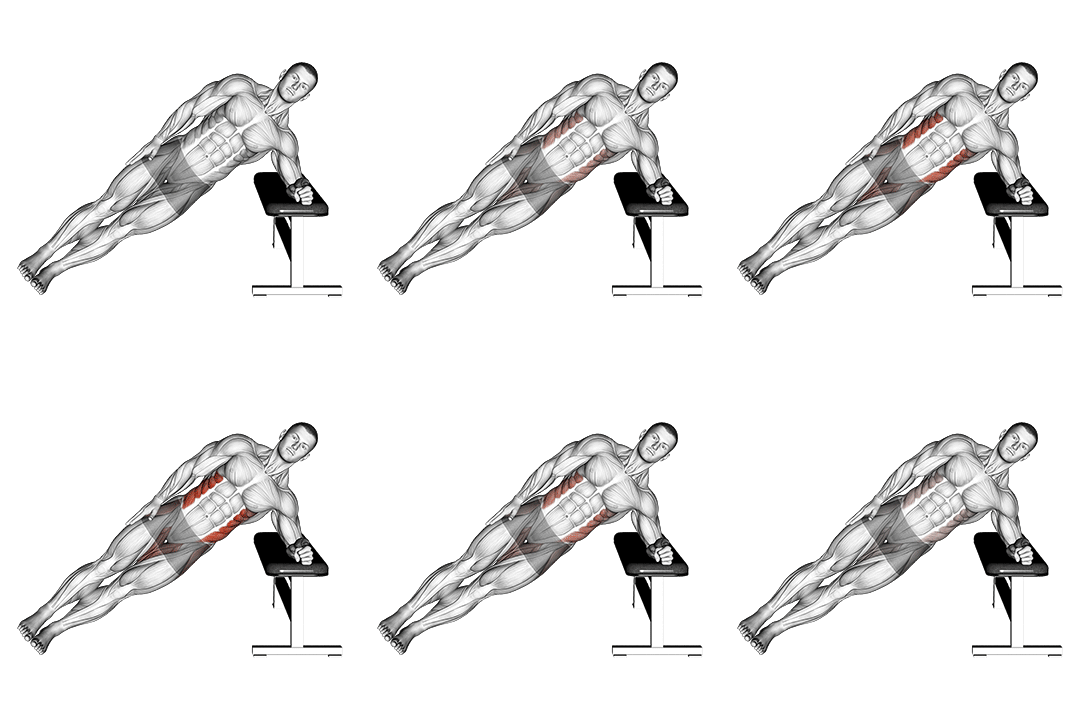
4. Bodyweight Incline Side Plank
84% match- Abs
- Bodyweight
- Intermediate
- Compound
Pick this when you want an easier version that still works the abs.
How to perform this exercise
- Start by lying on your side with your legs extended and stacked on top of each other.
- Place your forearm on the ground directly below your shoulder, with your elbow bent at a 90-degree angle.
- Engage your core and lift your hips off the ground, creating a straight line from your head to your feet.
- Hold this position for the desired amount of time.
- Lower your hips back down to the ground and repeat on the other side.
Sets and reps: Hold for 20 to 30 seconds on each side, 3 sets.
Why this matches
- Movement: a lateral hold, close to the Side Bridge
- Primary muscle: abs, the same as the Side Bridge
- Equipment: bodyweight only, the same as the Side Bridge
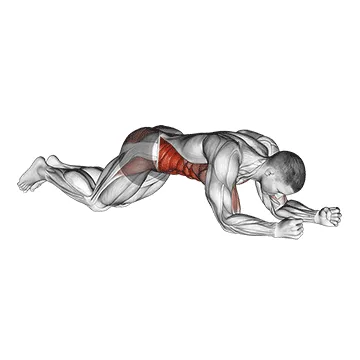
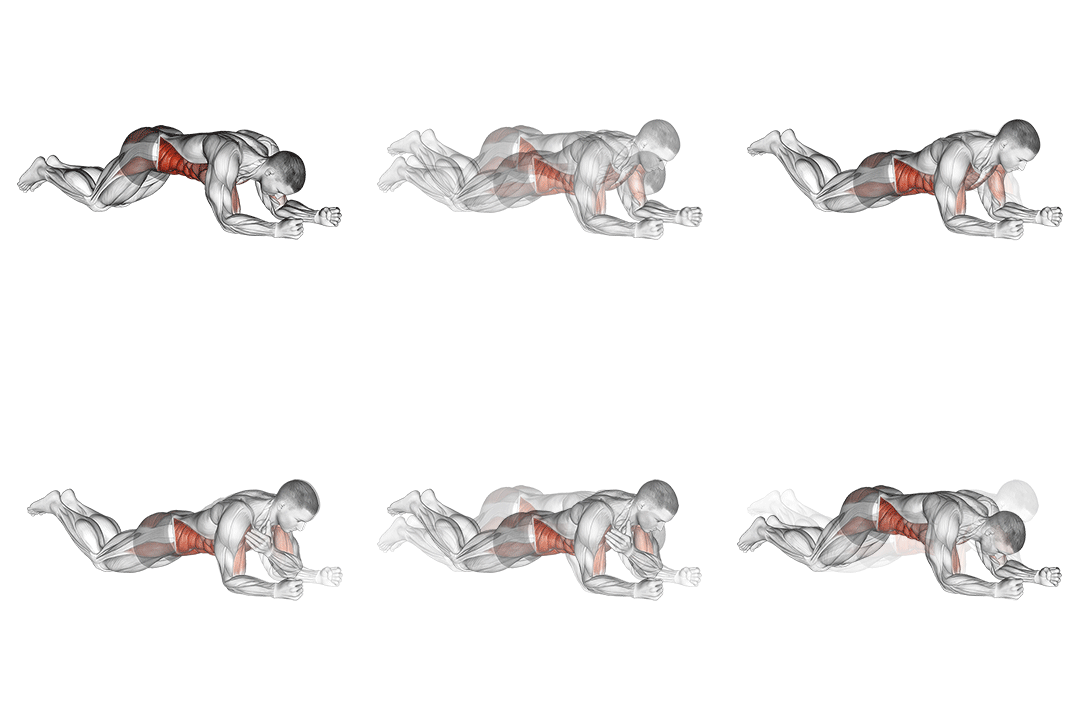
5. Kneeling Plank Tap Shoulder
79% match- Abs
- Bodyweight
- Intermediate
- Compound
The same equipment, done kneeling instead.
How to perform this exercise
- Start in a kneeling position with your hands on the ground, shoulder-width apart.
- Extend your legs behind you, resting on your toes, and lift your body into a plank position.
- Keeping your core engaged and your hips stable, lift one hand off the ground and tap the opposite shoulder.
- Return the hand to the ground and repeat with the other hand.
- Continue alternating sides for the desired number of repetitions.
Sets and reps: 3 or 4 sets of 6 to 10 reps on each side.
Why this matches
- Movement: an anti-extension hold, close to the Side Bridge
- Primary muscle: abs, the same as the Side Bridge
- Equipment: bodyweight only, the same as the Side Bridge
- Body position: kneeling, not lying face down
Progression
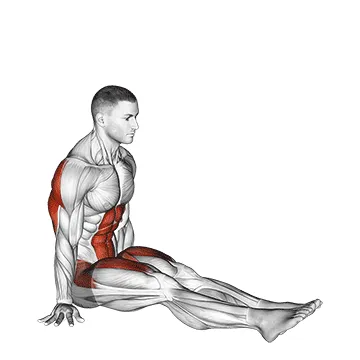
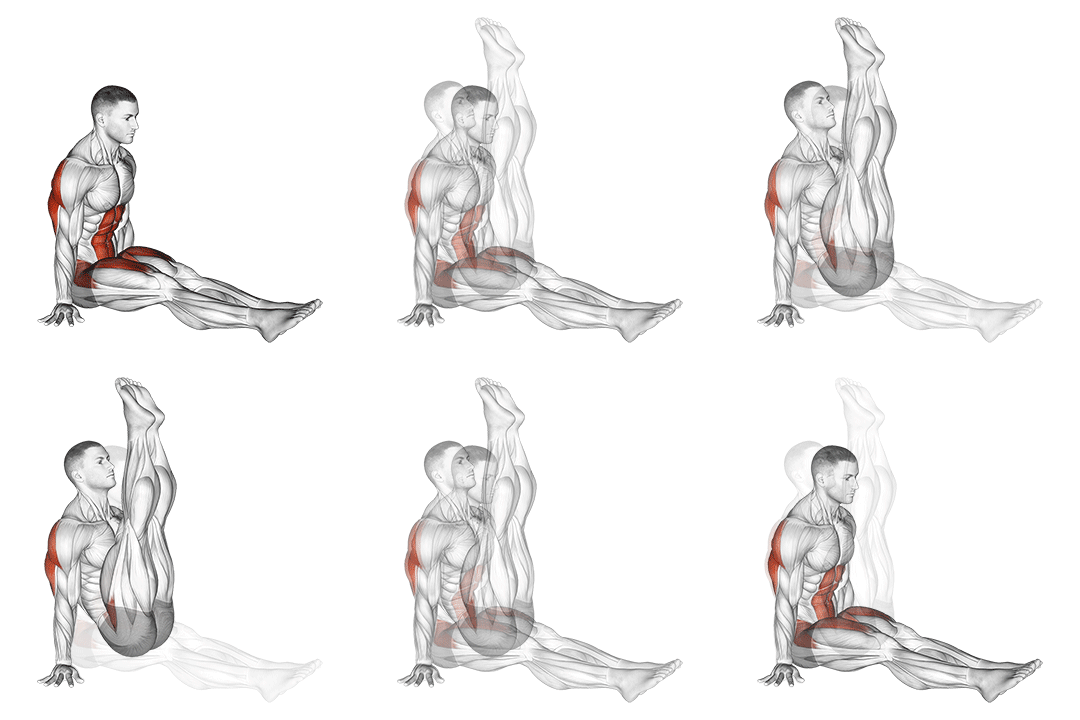
6. V-sit On Floor
79% match- Abs
- Bodyweight
- Advanced
- Compound
How to perform this exercise
- Sit on the floor with your legs extended in front of you.
- Lean back slightly and lift your legs off the ground, keeping them straight.
- Simultaneously, lift your upper body off the ground and reach your arms towards your legs.
- Hold this position for a few seconds, then slowly lower your upper body and legs back down to the starting position.
- Repeat for the desired number of repetitions.
Sets and reps: 3 or 4 sets of 6 to 10 reps.
Why this matches
- Movement: anti-rotation hold, the same as the Side Bridge
- Primary muscle: abs, the same as the Side Bridge
- Equipment: bodyweight only, the same as the Side Bridge
- Body position: seated, not lying face down
Progression
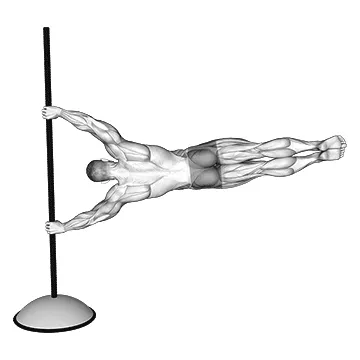
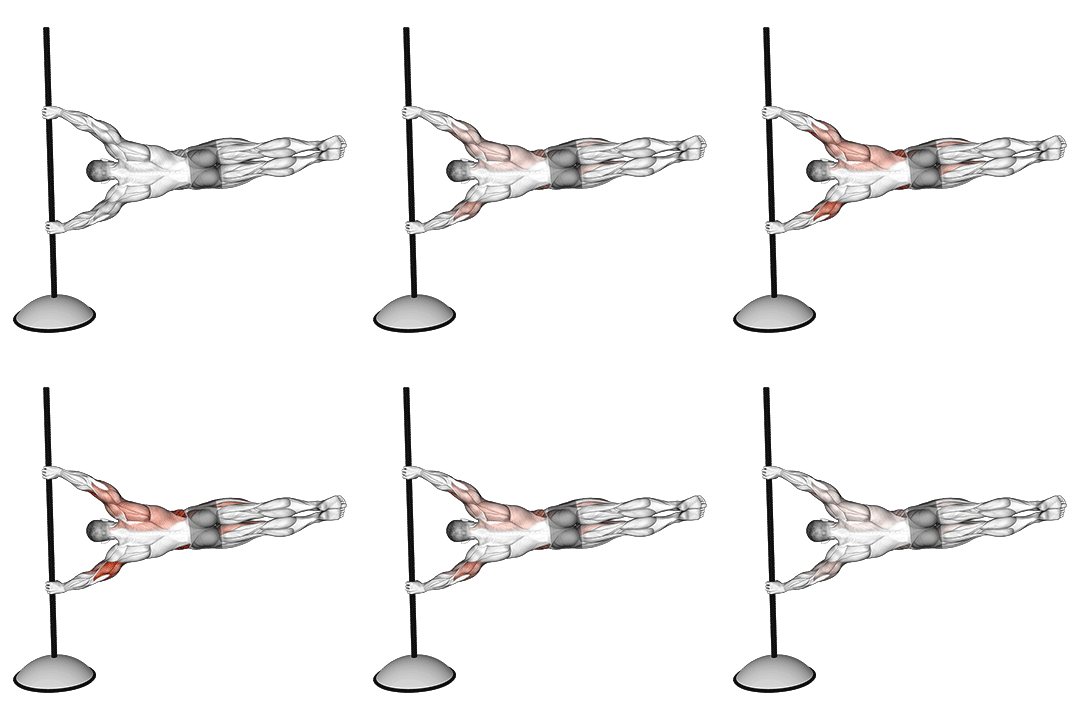
7. Flag
79% match- Abs
- Bodyweight
- Advanced
- Compound
How to perform this exercise
- Start by gripping a vertical pole with both hands, palms facing each other, and arms fully extended.
- Engage your core and lift your legs off the ground, keeping them straight.
- Using your core and upper body strength, raise your legs until they are parallel to the ground.
- Hold this position for as long as you can, maintaining a straight body line.
- Slowly lower your legs back down to the starting position.
- Repeat for the desired number of repetitions.
Sets and reps: Hold for 20 to 30 seconds on each side, 3 sets.
Why this matches
- Movement: anti-rotation hold, the same as the Side Bridge
- Primary muscle: abs, the same as the Side Bridge
- Equipment: bodyweight only, the same as the Side Bridge
- Body position: hanging, not lying face down
- Balance: harder to stay steady on than the Side Bridge
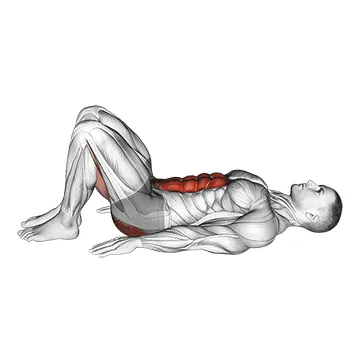
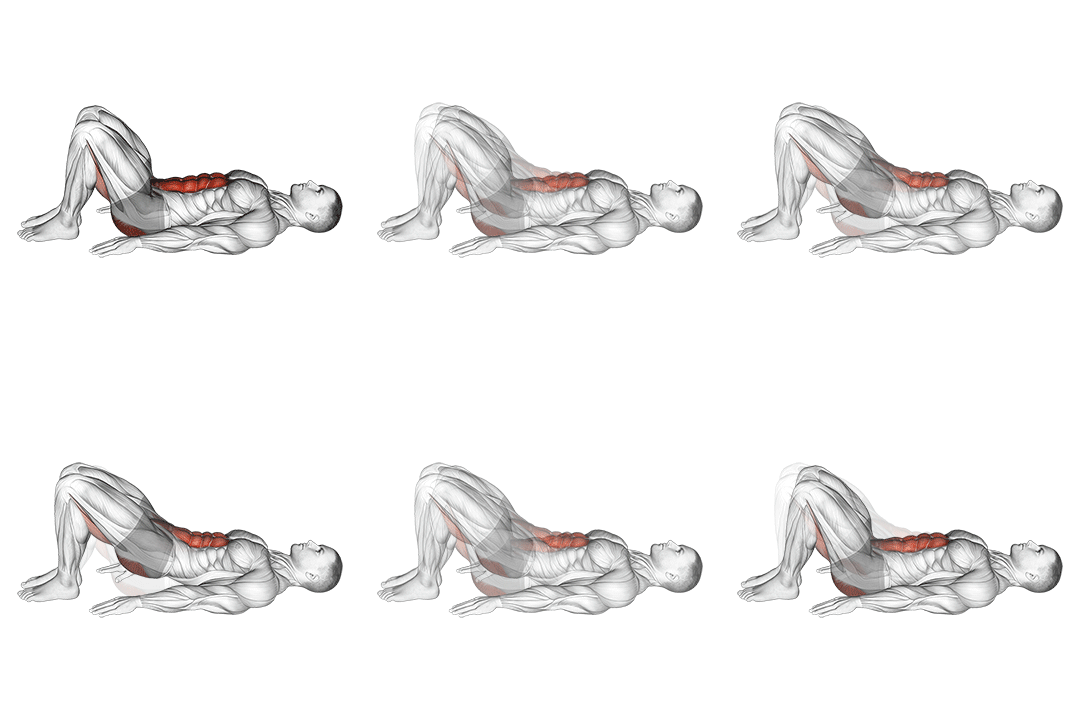
8. Pelvic Tilt
74% match- Abs
- Bodyweight
- Beginner
- Isolation
How to perform this exercise
- Lie flat on your back with your knees bent and feet flat on the ground.
- Place your hands by your sides.
- Engage your abs and tilt your pelvis upward, pressing your lower back into the ground.
- Hold this position for a few seconds, focusing on contracting your abs.
- Release the tilt and return to the starting position.
- Repeat for the desired number of repetitions.
Sets and reps: 3 sets of 8 to 12 reps, and add reps before you add load.
Why this matches
- Primary muscle: abs, the same as the Side Bridge
- Equipment: bodyweight only, the same as the Side Bridge
- Body position: lying on your back, not lying face down
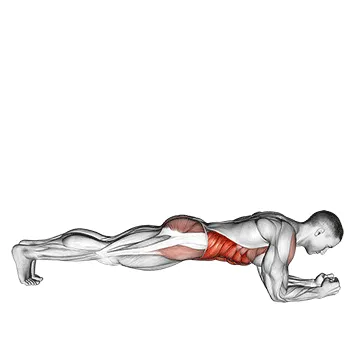
9. Power Point Plank
71% match- Abs
- Bodyweight
- Intermediate
- Isolation
How to perform this exercise
- Start in a high plank position with your hands directly under your shoulders and your body in a straight line from head to toe.
- Engage your core and squeeze your glutes to maintain a stable position.
- Lower your body down onto your forearms, one arm at a time, maintaining a straight line from head to toe.
- Hold this position for the desired amount of time, keeping your core and glutes engaged.
- To return to the starting position, push through your forearms and lift your body back up into a high plank position.
- Repeat for the desired number of repetitions.
Sets and reps: Hold for 20 to 30 seconds on each side, 3 sets.
Why this matches
- Movement: an anti-extension hold, close to the Side Bridge
- Primary muscle: abs, the same as the Side Bridge
- Equipment: bodyweight only, the same as the Side Bridge
- Body position: lying face down, the same as the Side Bridge
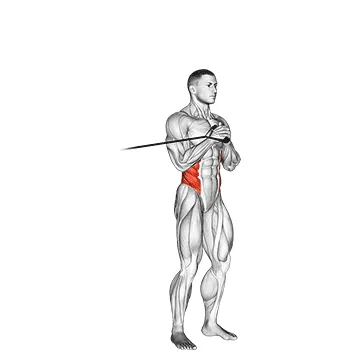
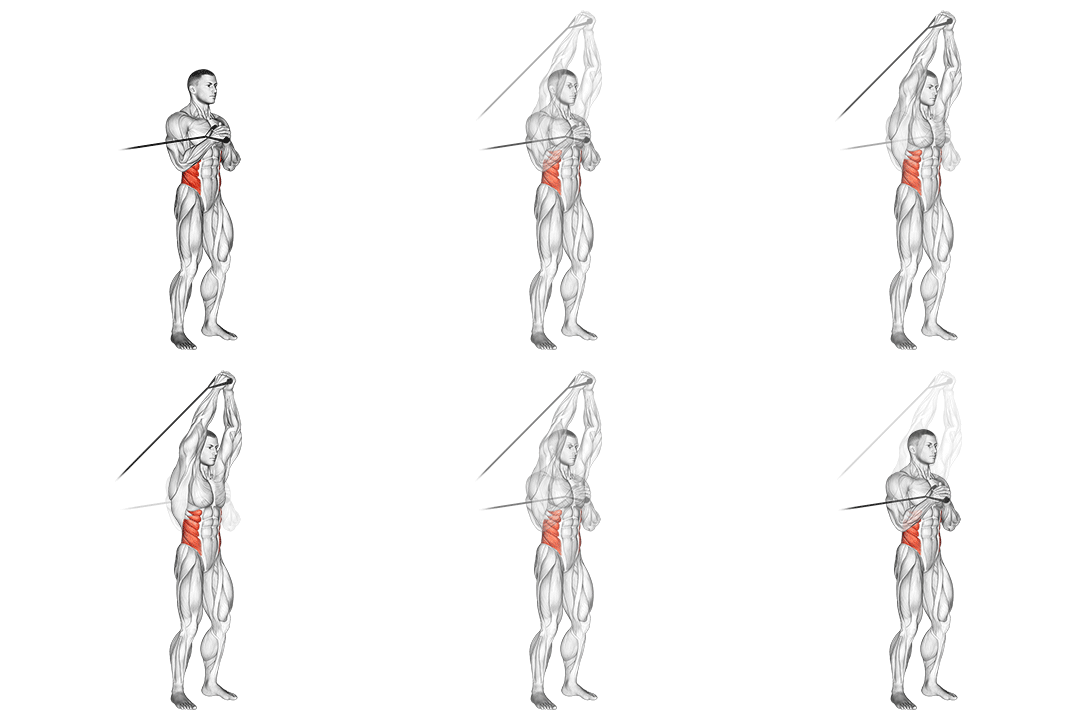
10. Band Vertical Pallof Press
68% match- Abs
- Band
- Intermediate
- Isolation
How to perform this exercise
- Stand with your feet shoulder-width apart and wrap the band around a sturdy object at chest height.
- Hold the band with both hands and step away from the anchor point, creating tension in the band.
- Position yourself perpendicular to the anchor point, with your side facing the band.
- Extend your arms straight out in front of you, keeping your hands at chest height.
- Engage your core and press the band away from your chest, fully extending your arms.
- Hold the position for a few seconds, then slowly bring the band back towards your chest.
- Repeat for the desired number of repetitions, then switch sides.
Sets and reps: 3 sets of 10 to 15 reps.
Why this matches
- Movement: anti-rotation hold, the same as the Side Bridge
- Primary muscle: abs, the same as the Side Bridge
- Equipment: a band, not bodyweight only
- Body position: standing, not lying face down
- Balance: easier to stay steady on than the Side Bridge
Why You Might Need a Side Bridge Alternative
You may substitute Side Bridge V. 2 for several practical reasons: shoulder or wrist pain, limited hip mobility, lack of progress, or no desire to train a static unilateral hold. Alternatives let you preserve oblique loading while adjusting intensity and range of motion. For example, side plank with hip dips increases dynamic range while maintaining anti-lateral-flexion demand on the obliques; hollow holds bias anterior core endurance and reduce shoulder strain. Use cues like “drive the elbow into the floor” for a forearm side plank or “pull the ribs toward the pelvis” for hollow holds to preserve the targeted muscle activation and safe biomechanics.
How to Choose the Right Side Bridge Substitute
Choose a substitute based on your limiting factor and training goal. If shoulder stability limits you, pick hollow holds or windshield wipers to unload the shoulder while still taxing the obliques. If hip control is the issue, use side plank with controlled hip dips to train pelvic stability and glute medius activation; cue: “squeeze the top hip and lift through the glute.” For hypertrophy focus, increase time under tension or add slow eccentrics (e.g., slow hip dips). Prioritize movements that keep the ribs stacked and maintain single‑side bracing to replicate the Side Bridge V. 2 muscle activation pattern.
Side Bridge FAQ
What muscles does Side Bridge V. 2 work?
Side Bridge V. 2 primarily targets the obliques and the lateral stabilizers of the waist, including the external and internal obliques and gluteus medius. It also recruits the transverse abdominis and erector spinae for spinal support when you brace and stack the ribs over the pelvis.
What is the best bodyweight alternative to Side Bridge V. 2?
The standard side plank is the closest bodyweight alternative because it preserves unilateral anti‑lateral‑flexion and oblique activation. Cue: press the forearm into the floor, stack the feet, and lift the hips so the top hip, shoulder, and ankle form a straight line.
Can I build muscle without doing Side Bridge V. 2?
Yes. You can hypertrophy the obliques and lateral chain with progressive bodyweight variations like weighted side plank progressions, slow eccentric hip dips, or high‑rep windshield wipers. Focus on increasing time under tension and ensuring full activation by bracing the core and maintaining pelvic alignment.
Find Alternatives for Any Exercise
Search the exercise database and filter the ranked substitutes by the equipment you own.
Similarity scores compare exercise metadata such as movement pattern, muscles, equipment and body position. They are not a safety rating or a check that you own the equipment. Learn about our methodology