

10 Best Single-leg Leg Extension Alternatives for Home or Gym
Can’t do Single-leg Leg Extension? Use single-leg and quad-focused compounds: Bulgarian split squats, weighted step-ups, sissy squats, front squats, or walking lunges. Emphasize controlled knee extension and keep the tibia vertical to load the quadriceps, drive through the heel to bias vastus lateralis and medialis during extension.
Original Exercise: Single-leg Leg Extension
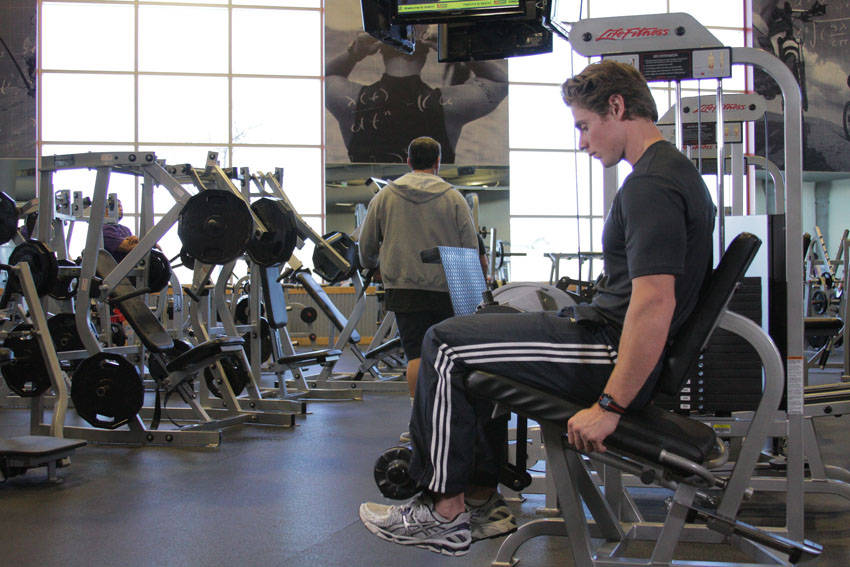
How to Perform Single-leg Leg Extension
- Seat yourself in the machine and adjust it so that you are positioned properly. The pad should be against the lower part of the shin but not in contact with the ankle. Adjust the seat so that the pivot point is in line with your knee. Select a weight appropriate for your abilities.
- Maintaining good posture, fully extend one leg, pausing at the top of the motion.
- Return to the starting position without letting the weight stop, keeping tension on the muscle.
- Repeat for the desired number of repetitions.
Pro Tips
- Category: Strength
- Force: Push
- Movement type: Isolation
Ranked Single-leg Leg Extension Alternatives
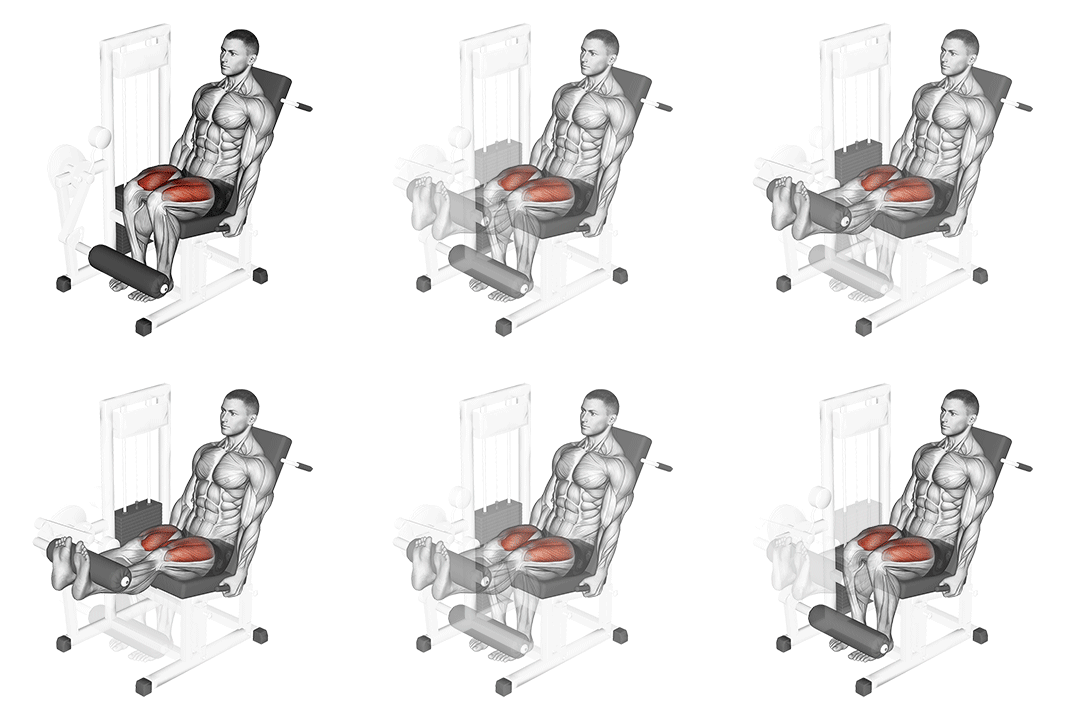
1. Lever Leg Extension
75.9% MatchHow to perform this exercise
- Adjust the seat height and backrest of the machine to fit your body.
- Sit on the machine with your back against the backrest and your feet on the footpad.
- Grasp the handles or sidebars for stability.
- Extend your legs forward by straightening your knees, lifting the weight.
- Pause for a moment at the top, then slowly lower the weight back to the starting position.
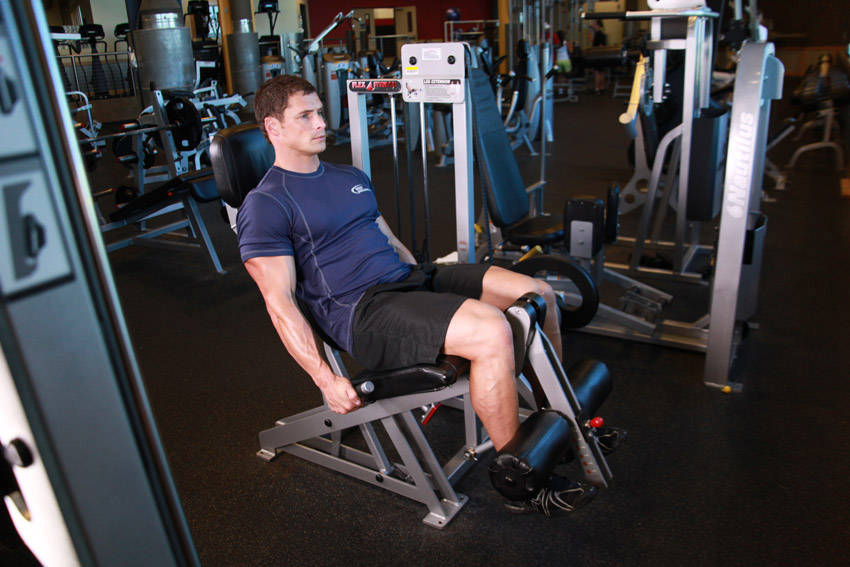
2. Leg Extensions
70.1% MatchHow to perform this exercise
- For this exercise you will need to use a leg extension machine. First choose your weight and sit on the machine with your legs under the pad (feet pointed forward) and the hands holding the side bars. This will be your starting position. Tip: You will need to adjust the pad so that it falls on top of your lower leg (just above your feet). Also, make sure that your legs form a 90-degree angle between the lower and upper leg. If the angle is less than 90-degrees then that means the knee is over the toes which in turn creates undue stress at the knee joint. If the machine is designed that way, either look for another machine or just make sure that when you start executing the exercise you stop going down once you hit the 90-degree angle.
- Using your quadriceps, extend your legs to the maximum as you exhale. Ensure that the rest of the body remains stationary on the seat. Pause a second on the contracted position.
- Slowly lower the weight back to the original position as you inhale, ensuring that you do not go past the 90-degree angle limit.
- Repeat for the recommended amount of times.
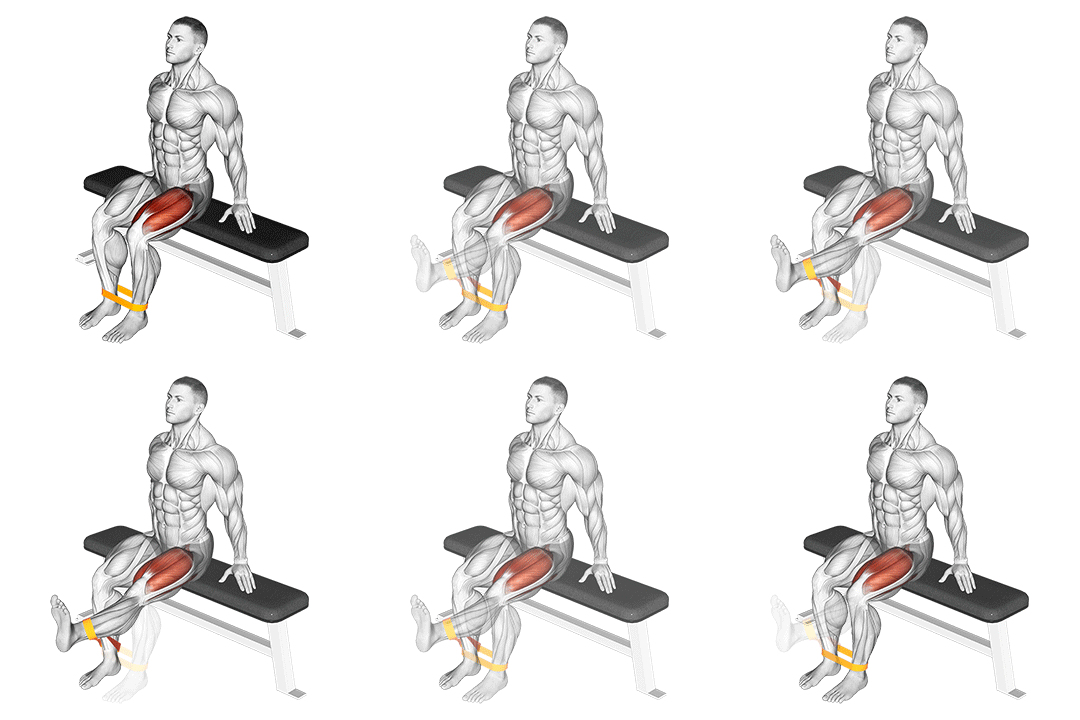
3. Resistance Band Leg Extension
66.7% MatchHow to perform this exercise
- Attach the resistance band to a sturdy anchor point and secure it around your ankle.
- Stand facing the anchor point with your feet shoulder-width apart.
- Keeping your core engaged and your upper body stable, extend your leg straight out in front of you.
- Pause for a moment at the top, then slowly return your leg to the starting position.
- Repeat for the desired number of repetitions, then switch legs.
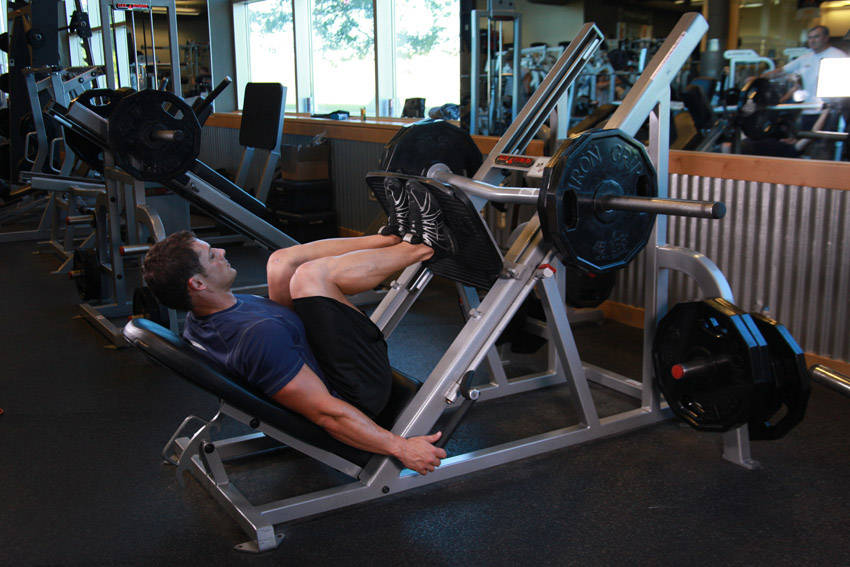
4. Narrow Stance Leg Press
57.4% MatchHow to perform this exercise
- Using a leg press machine, sit down on the machine and place your legs on the platform directly in front of you at a less-than-shoulder-width narrow stance with the toes slightly pointed out. Your feet should be around 3 inches or less apart. Tip: Keep your head up at all times and also maintain the back on the pad at all times.
- Lower the safety bars holding the weighted platform in place and press the platform all the way up until your legs are fully extended in front of you. Tip: Make sure that you do not lock your knees. Your torso and the legs should make a perfect 90-degree angle. This will be your starting position.
- As you inhale, slowly lower the platform until your upper and lower legs make a 90-degree angle.
- Pushing mainly with the heels of your feet and using the quadriceps go back to the starting position as you exhale.
- Repeat for the recommended amount of repetitions and ensure to lock the safety pins properly once you are done. You do not want that platform falling on you fully loaded.
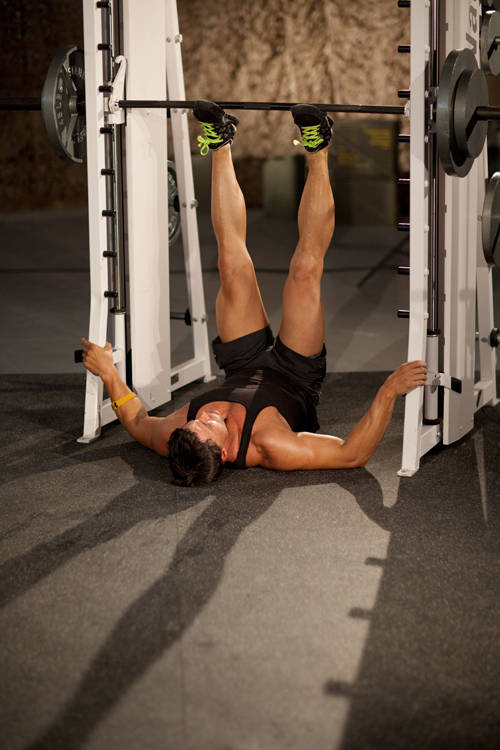
5. Smith Machine Leg Press
55.6% MatchHow to perform this exercise
- Position a Smith machine bar a couple feet off of the ground. Ensure that it is resting on the safeties. After loading the bar to an appropriate weight, lie underneath the bar. Place the middle of your feet on the bar, tucking your knees to your chest. This will be your starting position.
- Begin the movement by driving through your feet to move the bar upward, extending the hips and knees. Do not lock out your knees.
- At the top of the motion, pause briefly before returning to the starting position.
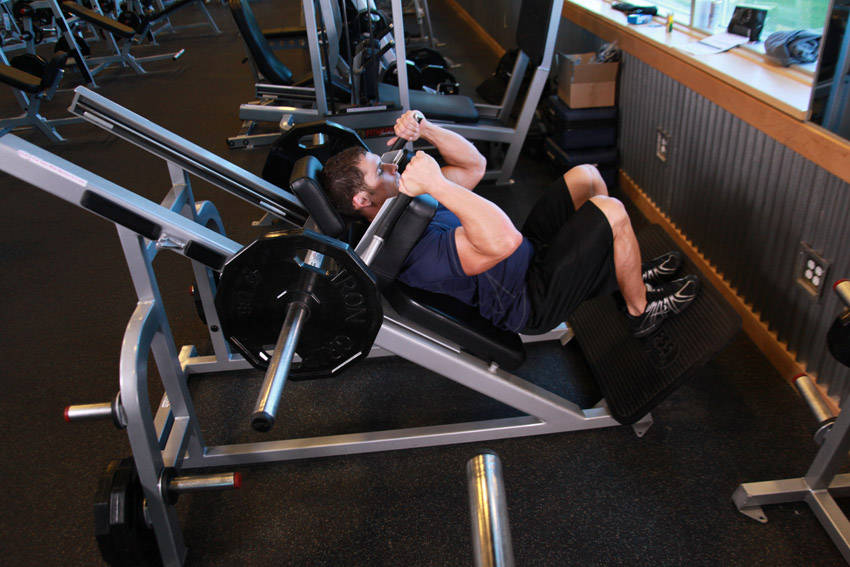
6. Narrow Stance Hack Squats
49.4% MatchHow to perform this exercise
- Place the back of your torso against the back pad of the machine and hook your shoulders under the shoulder pads provided.
- Position your legs in the platform using a less than shoulder width narrow stance with the toes slightly pointed out. Your feet should be around 3 inches or less apart. Tip: Keep your head up at all times and also maintain the back on the pad at all times.
- Place your arms on the side handles of the machine and disengage the safety bars (which on most designs is done by moving the side handles from a facing front position to a diagonal position).
- Now straighten your legs without locking the knees. This will be your starting position.
- Begin to slowly lower the unit by bending the knees as you maintain a straight posture with the head up (back on the pad at all times). Continue down until the angle between the upper leg and the calves becomes slightly less than 90-degrees (which is the point in which the upper legs are below parallel to the floor). Inhale as you perform this portion of the movement.
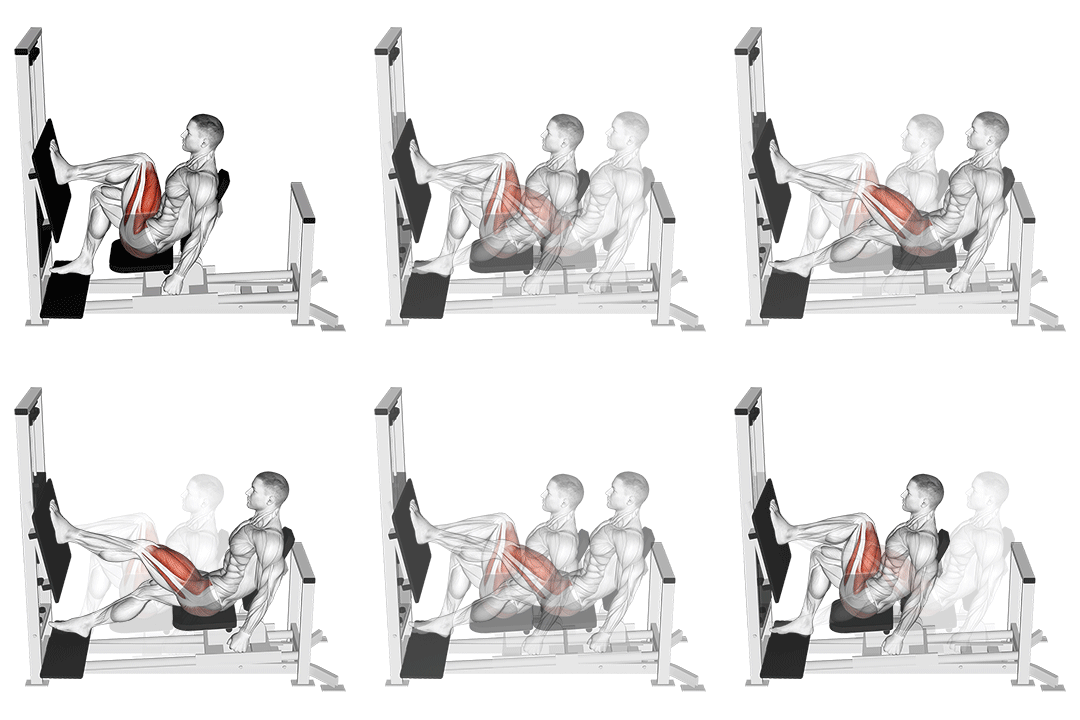
7. Lever Horizontal One Leg Press
49.4% MatchHow to perform this exercise
- Adjust the seat of the machine so that your knees are at a 90-degree angle when your feet are on the footplate.
- Sit on the machine with your back against the backrest and your feet shoulder-width apart on the footplate.
- Place your hands on the handles or sides of the machine for stability.
- Push the footplate away from your body by extending your leg, keeping your back against the backrest.
- Pause for a moment at the fully extended position, then slowly bend your leg to return to the starting position.
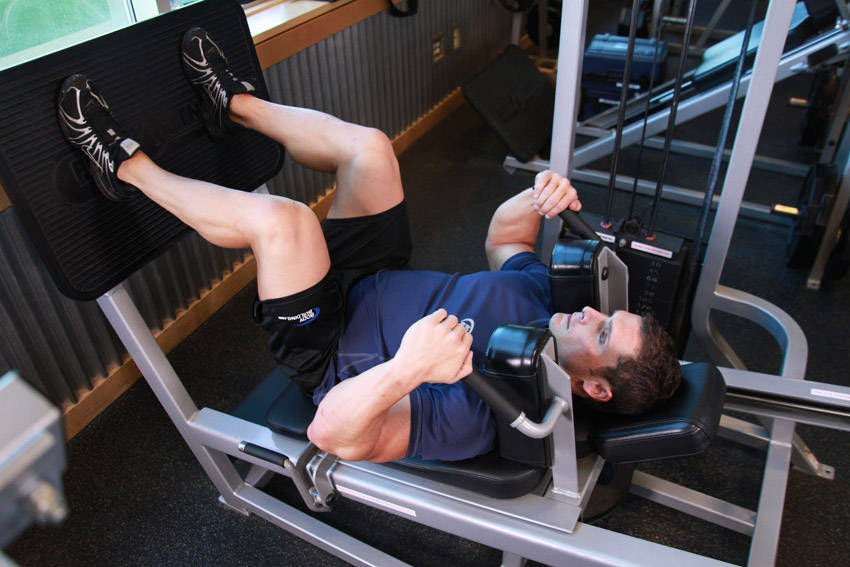
8. Lying Machine Squat
48.9% MatchHow to perform this exercise
- Adjust the leg machine to a height that will allow you to get inside it with your knees bent and the thighs slightly below parallel.
- Once you select the weight, position yourself inside the machine face up with the knees bent and thighs slightly below parallel to the platform. Make sure that the knees do not go past the toes. The angle created between the hamstrings and the calves should be one that is slightly less than 90 degrees (since your starting position requires you to start slightly below parallel). Your back and your head should be resting on the machine while your shoulders are pressed under the shoulder pads.
- Place your hands by the handles and position your feet slightly pointing out at a shoulder width position. This will be your starting position.
- While pressing with the balls of the feet as you breathe out, make your whole body erect as you squeeze the quads. Hold the contracted position for a second. Tip: Since you are starting below parallel, you can opt to use your hands to help you up by pressing on your thighs only on the first repetition.
- Slowly squat down as you inhale but instead of going all the way down to the starting position, just stop once your thighs are parallel to the platform. The angle between your hamstrings and calves should be a 90-degree angle.
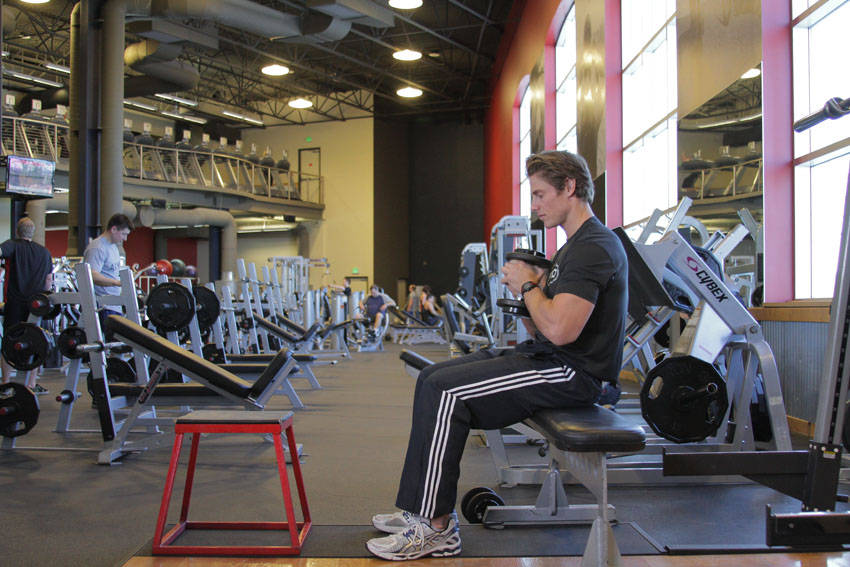
9. Dumbbell Seated Box Jump
45.4% MatchHow to perform this exercise
- Position a box a couple feet to the side of a bench. Hold a dumbbell to your chest with both hands and seat yourself on the bench facing the box. This will be your starting position.
- Plant your feet firmly on the ground as you lean forward, extending through the hips and knees to jump up and forward.
- Land on the box with both feet, absorbing the impact by allowing the hips and knees to bend.
- Step down and return to the starting position.
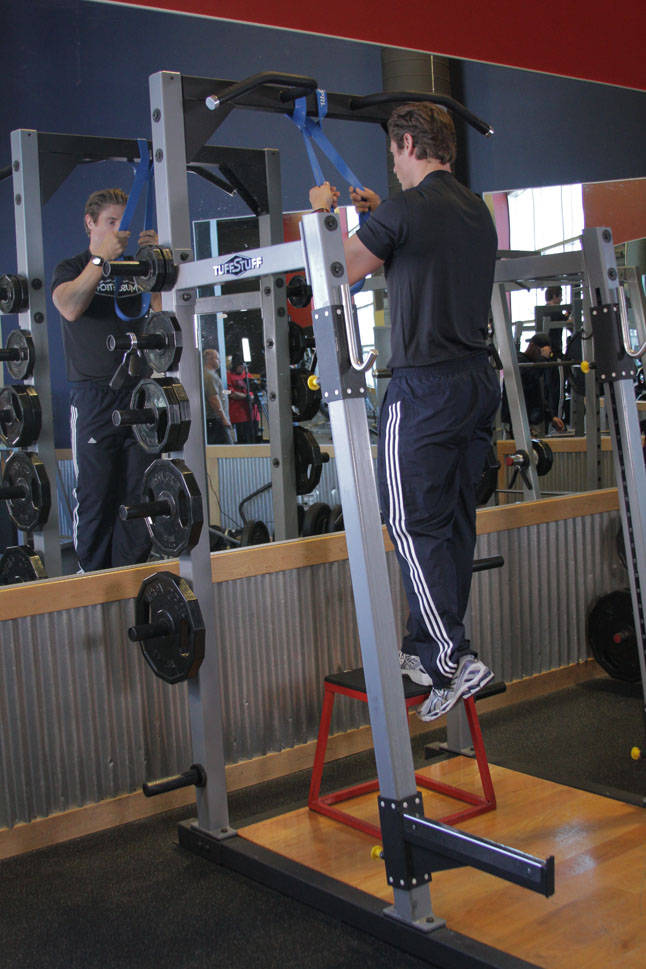
10. Single-Leg High Box Squat
43.2% MatchHow to perform this exercise
- Position a box in a rack. Secure a band or rope in place above the box.
- Standing in front of it, step onto the box to a full standing position, letting your other leg remain unsupported. Hold onto the band for balance
- . Continue stepping up and down on the same leg before switching to the opposite side.
Why You Might Need a Single-leg Leg Extension Alternative
You might substitute Single-leg Leg Extensions because the machine isn’t available, because open-chain loading irritates the patellofemoral joint, or because you want better carryover to squatting and gait. Compound single-leg moves shift load through the hip and ankle, recruiting glutes and hamstrings in addition to the quads and reducing isolated anterior shear on the knee. For rehab or pain management, pick low-load variants and control the eccentric (3–4 second descent) to maintain quad activation without spikes in joint compression. For functional strength, use weighted step-ups or Bulgarian split squats with a vertical shin cue to emphasize quad torque while also training balance and hip stability.
How to Choose the Right Substitute
Decide based on your goal, equipment, and joint tolerance. If you want pure quad isolation and have no knee pain, sissy squats or controlled front squats with an upright torso and knees tracking toes will maximize vastus medialis and lateralis activation. For load progression and functional strength, choose Bulgarian split squats or weighted step-ups and increase load by 5–10% when you can complete target sets. If you have patellar issues, prioritize low-load high-rep tempo work and limit peak knee flexion; cue a vertical tibia and avoid forward knee collapse. Always test a substitute with lighter loads and assess pain and muscle activation before progressing.
Frequently Asked Questions
What muscles does Single-leg Leg Extension work?
Single-leg Leg Extension primarily targets the quadriceps group: rectus femoris, vastus lateralis, vastus medialis, and vastus intermedius. The movement is open-chain knee extension, so it isolates knee extensors with minimal hip extension involvement.
What is the best bodyweight alternative to Single-leg Leg Extension?
Sissy squats are the best bodyweight alternative for quad isolation, lean back slightly, keep shins vertical, and drive the knees forward while maintaining a neutral spine to target the quads. If you need more balance challenge and lower-body strength, use Bulgarian split squats with bodyweight, cueing a vertical shin and controlled descent.
Can I build muscle without doing Single-leg Leg Extension?
Yes. You can build quad muscle with progressive overload using compound and unilateral movements like front squats, Bulgarian split squats, weighted step-ups, and slow eccentrics to increase time under tension. Focus on increasing sets, reps, or load while ensuring the knee tracks over the toes to maximize quad recruitment.
More Exercise Alternatives
Find Alternatives for Any Exercise
Use the exercise substitution finder to compare ranked alternatives for your available equipment and training preference.
Try the Exercise Substitution Finder →