

10 Best Standing Dumbbell Calf Raise Alternatives for Calf Size
The Standing Dumbbell Calf Raise is done standing with dumbbells. Ranked closest by our scoring: the Donkey Calf Raise, the Bodyweight Standing Calf Raise and the Standing Calf Raise (On A Staircase).
Updated Ranked by our 12-factor similarity model How it works
Original Exercise: Standing Dumbbell Calf Raise
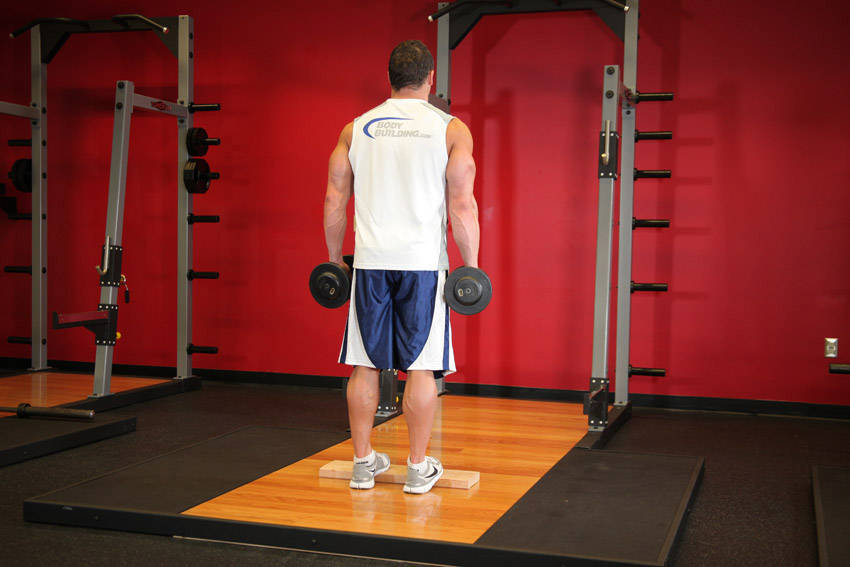
- Primary muscle
- Calves
- Equipment
- Dumbbell
- Difficulty
- Beginner
- Type
- Isolation
How to perform Standing Dumbbell Calf Raise
- Stand with your torso upright holding two dumbbells in your hands by your sides. Place the ball of the foot on a sturdy and stable wooden board (that is around 2-3 inches tall) while your heels extend off and touch the floor. This will be your starting position.
- With the toes pointing either straight (to hit all parts equally), inwards (for emphasis on the outer head) or outwards (for emphasis on the inner head), raise the heels off the floor as you exhale by contracting the calves. Hold the top contraction for a second.
- As you inhale, go back to the starting position by slowly lowering the heels.
- Repeat for the recommended amount of times.
Ranked Standing Dumbbell Calf Raise Alternatives
10 substitutes, ranked by how closely each one matches the Standing Dumbbell Calf Raise on movement pattern, muscles worked, equipment and body position. The higher the score, the less you change. Open "How to perform this exercise" on a card for the steps; every card title links to that exercise's own alternatives page.
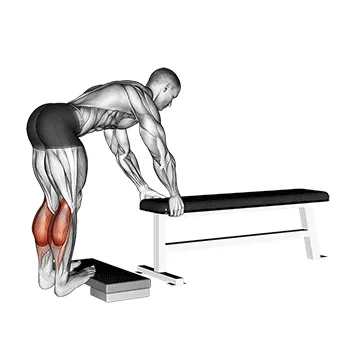
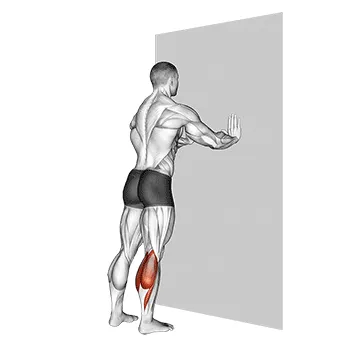
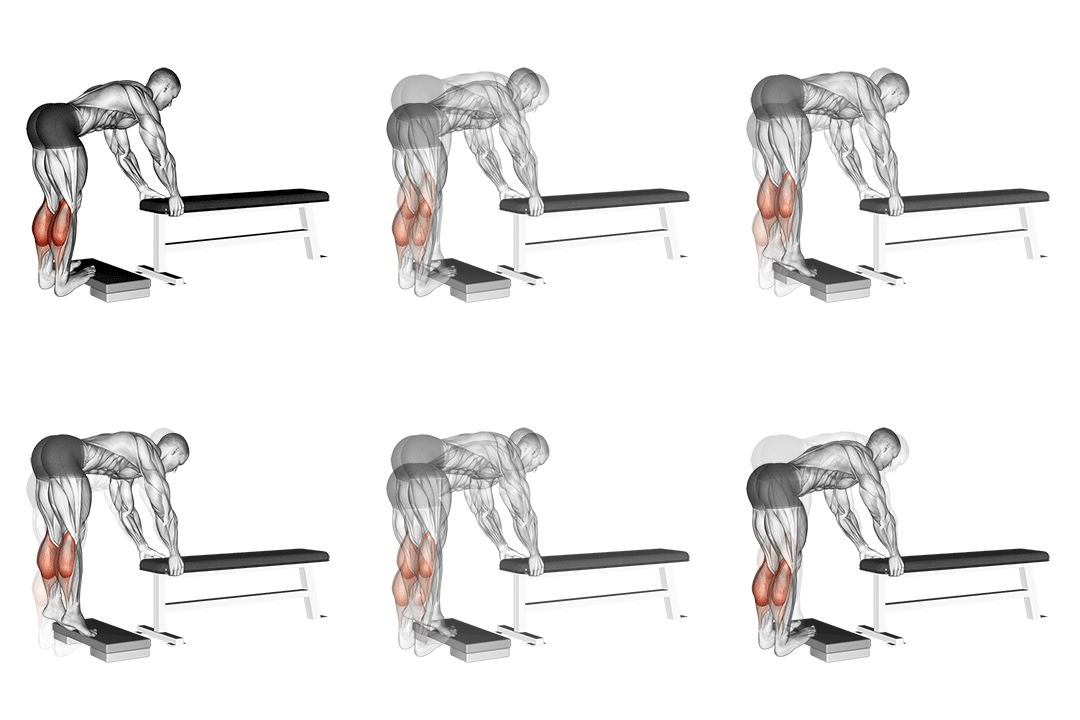
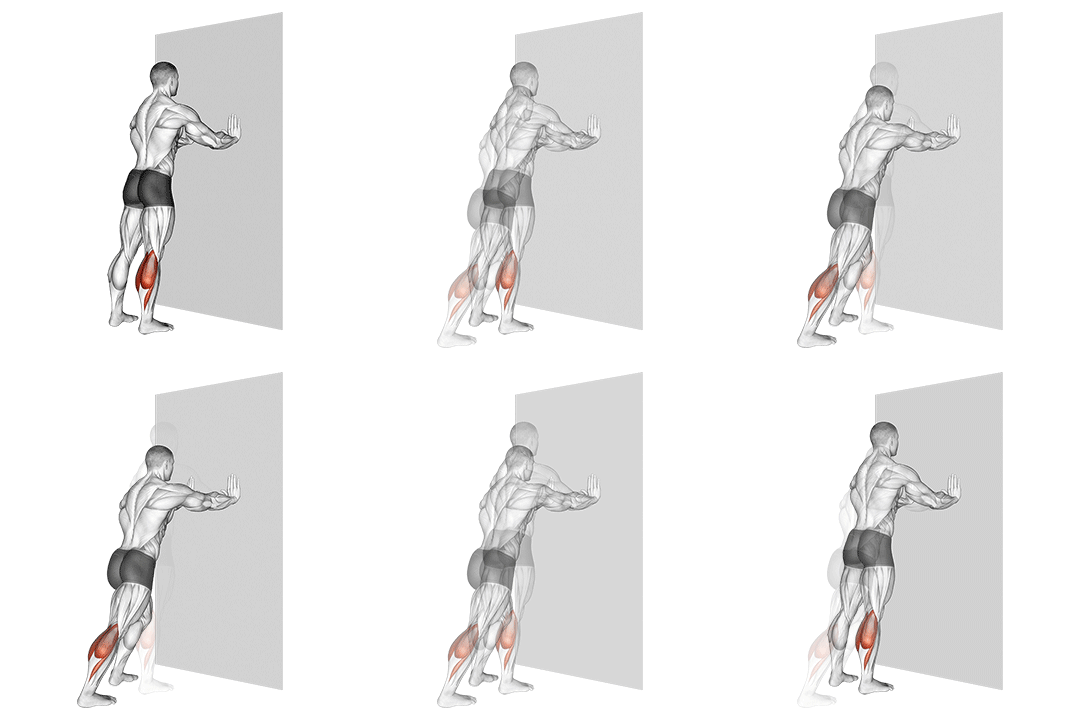
Best match 1. Donkey Calf Raise
84% match- Calves
- Bodyweight
- Beginner
- Isolation
Use this when you have nothing to train with, because it works the calves with bodyweight alone.
How to perform this exercise
- Stand with your toes on an elevated surface, such as a step or block.
- Place your hands on a stable support, such as a wall or railing, for balance.
- Raise your heels as high as possible, lifting your body weight onto the balls of your feet.
- Pause for a moment at the top, then slowly lower your heels back down to the starting position.
- Repeat for the desired number of repetitions.
Sets and reps: 3 sets of 8 to 12 reps, and add reps before you add load.
Why this matches
- Primary muscle: calves, the same as the Standing Dumbbell Calf Raise
- Equipment: bodyweight only, not free weights
- Body position: standing, the same as the Standing Dumbbell Calf Raise
- Balance: easier to stay steady on than the Standing Dumbbell Calf Raise
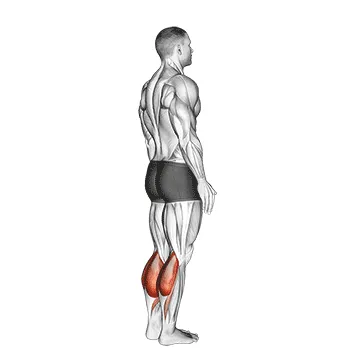
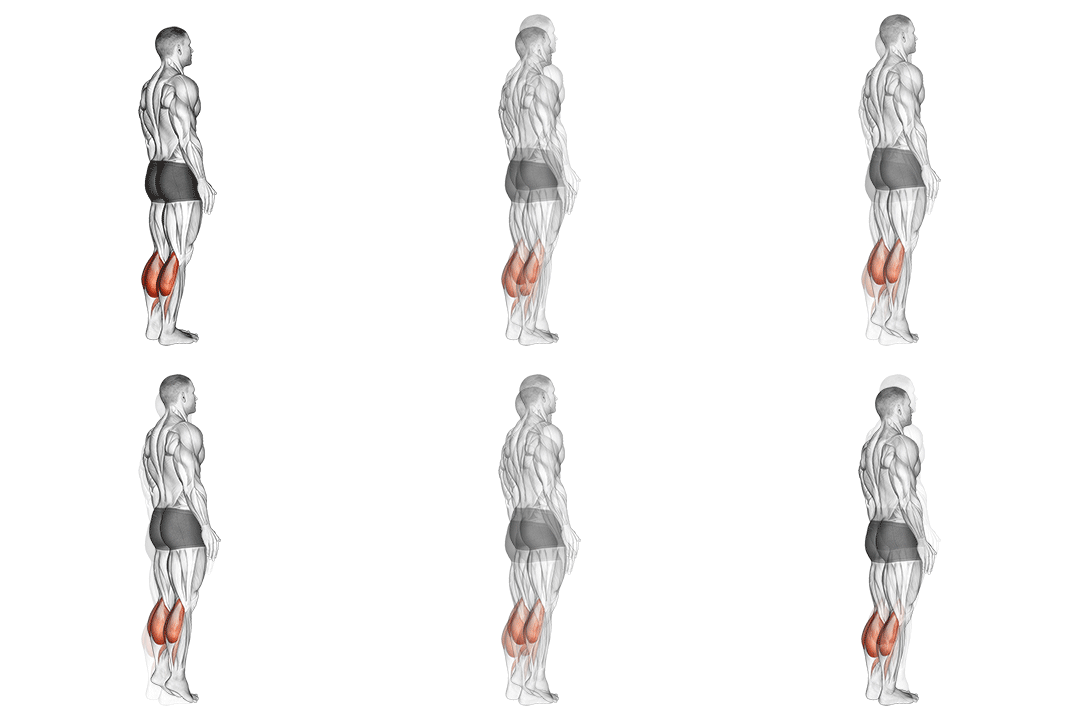
2. Bodyweight Standing Calf Raise
84% match- Calves
- Bodyweight
- Beginner
- Isolation
How to perform this exercise
- Stand with your feet shoulder-width apart, toes pointing forward.
- Place your hands on a wall or stable surface for balance.
- Slowly raise your heels off the ground, lifting your body weight onto the balls of your feet.
- Pause for a moment at the top, then slowly lower your heels back down to the starting position.
- Repeat for the desired number of repetitions.
Sets and reps: 3 sets of 8 to 12 reps, and add reps before you add load.
Why this matches
- Primary muscle: calves, the same as the Standing Dumbbell Calf Raise
- Equipment: bodyweight only, not free weights
- Body position: standing, the same as the Standing Dumbbell Calf Raise
- Balance: easier to stay steady on than the Standing Dumbbell Calf Raise
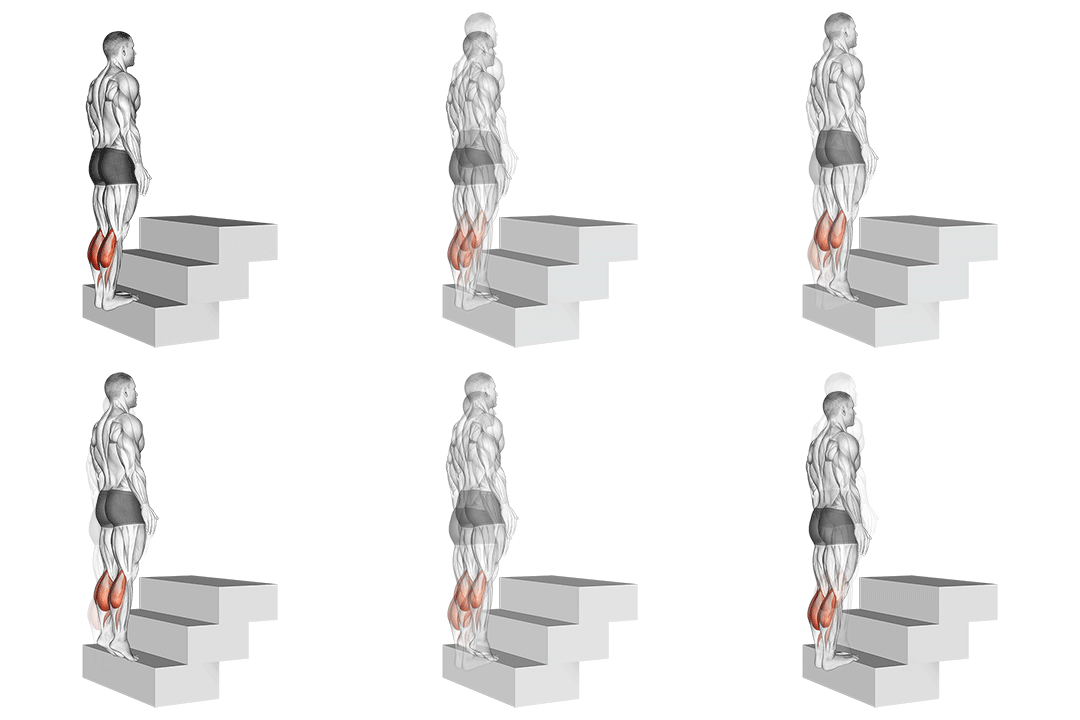
- Calves
- Bodyweight
- Beginner
- Isolation
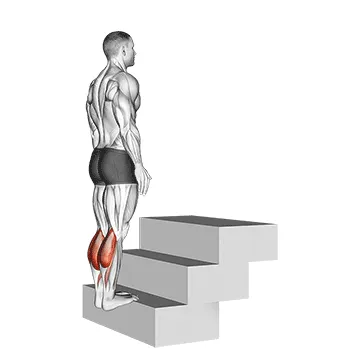
How to perform this exercise
- Stand on the edge of a step or a sturdy platform with your heels hanging off and your toes on the step.
- Hold onto a railing or wall for balance if needed.
- Slowly raise your heels as high as possible, lifting your body weight onto the balls of your feet.
- Pause for a moment at the top, then slowly lower your heels back down to the starting position.
- Repeat for the desired number of repetitions.
Sets and reps: 3 sets of 8 to 12 reps, and add reps before you add load.
Why this matches
- Primary muscle: calves, the same as the Standing Dumbbell Calf Raise
- Equipment: bodyweight only, not free weights
- Body position: standing, the same as the Standing Dumbbell Calf Raise
4. Standing Calves
70% match- Calves
- Bodyweight
- Beginner
- Isolation
How to perform this exercise
- Stand with your feet shoulder-width apart, toes pointing forward.
- Raise your heels off the ground as high as possible, standing on your toes.
- Hold the position for a moment, then slowly lower your heels back down to the starting position.
- Repeat for the desired number of repetitions.
Sets and reps: 3 sets of 8 to 12 reps, and add reps before you add load.
Why this matches
- Primary muscle: calves, the same as the Standing Dumbbell Calf Raise
- Equipment: bodyweight only, not free weights
- Body position: standing, the same as the Standing Dumbbell Calf Raise
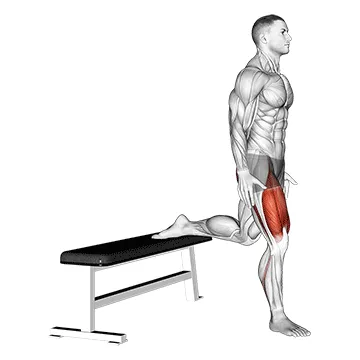
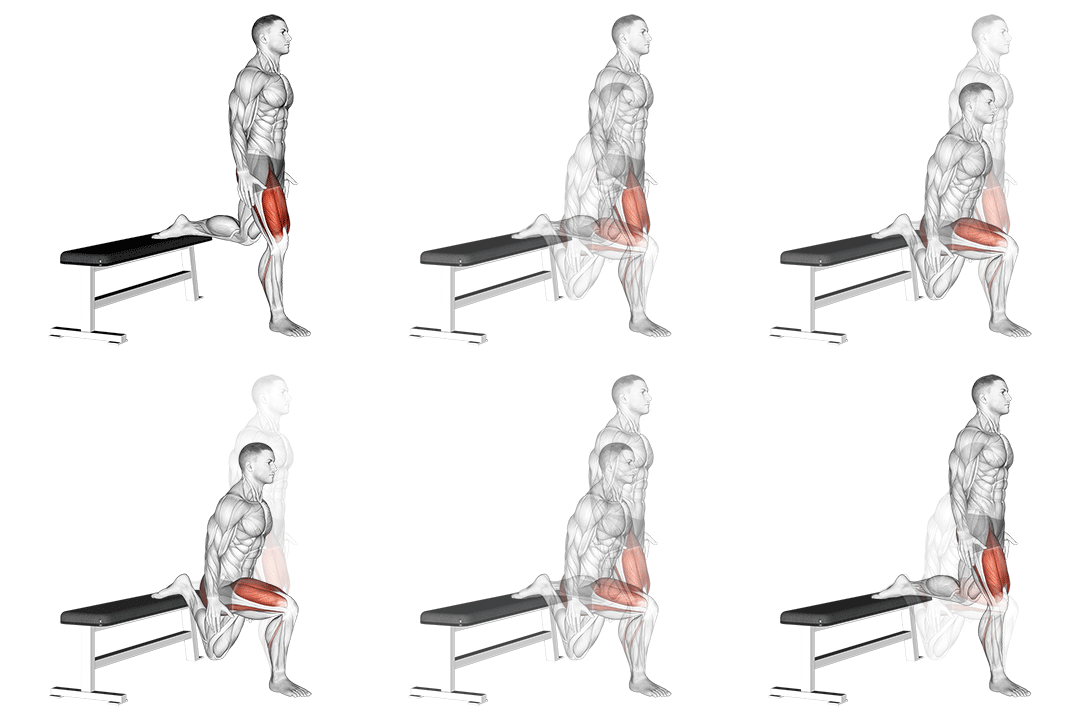
5. Quads
69% match- Quads
- Bodyweight
- Beginner
- Compound
A looser match: it works the quads rather than the calves.
How to perform this exercise
- Stand with your feet shoulder-width apart.
- Lower your body by bending your knees and pushing your hips back as if sitting on a chair.
- Keep your chest up and your back straight.
- Lower yourself until your thighs are parallel to the ground.
- Push through your heels to return to the starting position.
- Repeat for the desired number of repetitions.
Sets and reps: 3 sets of 8 to 12 reps, and add reps before you add load.
Why this matches
- Primary muscle: quads, not calves
- Equipment: bodyweight only, not free weights
- Body position: standing, the same as the Standing Dumbbell Calf Raise
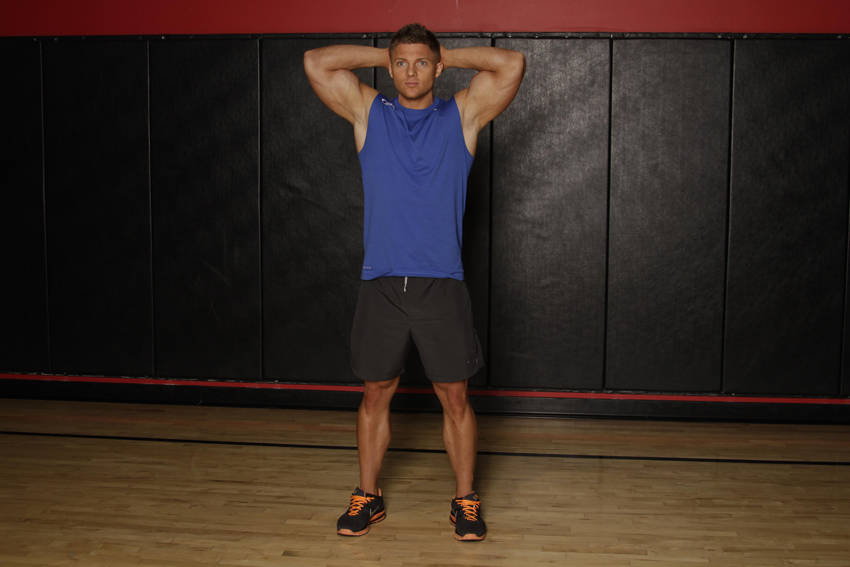
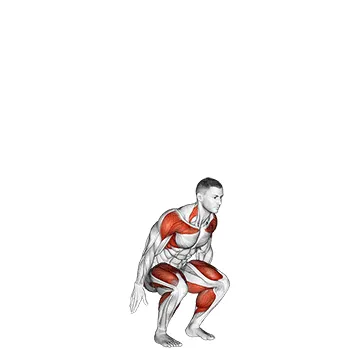
6. Bodyweight Squat
63% match- Quads
- Bodyweight
- Beginner
- Compound
How to perform this exercise
- Stand with your feet shoulder width apart. You can place your hands behind your head. This will be your starting position.
- Begin the movement by flexing your knees and hips, sitting back with your hips.
- Continue down to full depth if you are able,and quickly reverse the motion until you return to the starting position. As you squat, keep your head and chest up and push your knees out.
Sets and reps: 3 sets of 8 to 12 reps, and add reps before you add load.
Why this matches
- Primary muscle: quads, not calves
- Equipment: bodyweight only, not free weights
- Body position: standing, the same as the Standing Dumbbell Calf Raise
- Balance: easier to stay steady on than the Standing Dumbbell Calf Raise
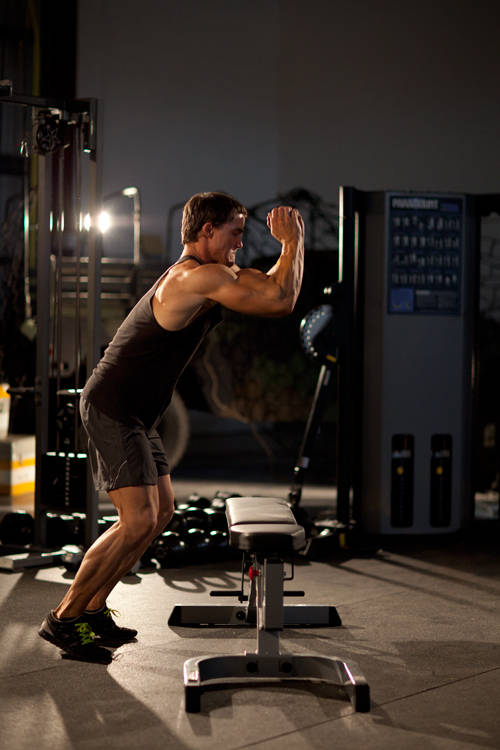
7. Bench Jump
63% match- Quads
- Bodyweight
- Intermediate
- Compound
How to perform this exercise
- Begin with a box or bench 1-2 feet in front of you. Stand with your feet shoulder width apart. This will be your starting position.
- Perform a short squat in preparation for the jump; swing your arms behind you.
- Rebound out of this position, extending through the hips, knees, and ankles to jump as high as possible. Swing your arms forward and up.
- Jump over the bench, landing with the knees bent, absorbing the impact through the legs.
- Turn around and face the opposite direction, then jump back over the bench.
Sets and reps: 3 or 4 sets of 6 to 10 reps.
Why this matches
- Primary muscle: quads, not calves
- Equipment: bodyweight only, not free weights
- Body position: standing, the same as the Standing Dumbbell Calf Raise
- Balance: harder to stay steady on than the Standing Dumbbell Calf Raise
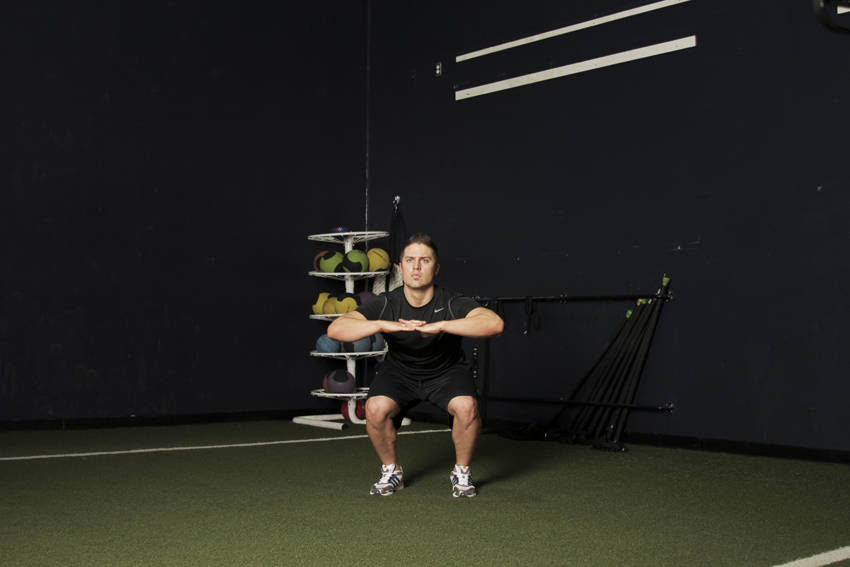
8. Knee Tuck Jump
63% match- Hamstrings
- Bodyweight
- Intermediate
- Compound
How to perform this exercise
- Begin in a comfortable standing position with your knees slightly bent. Hold your hands in front of you, palms down with your fingertips together at chest height. This will be your starting position.
- Rapidly dip down into a quarter squat and immediately explode upward. Drive the knees towards the chest, attempting to touch them to the palms of the hands.
- Jump as high as you can, raising your knees up, and then ensure a good land be re-extending your legs, absorbing impact through be allowing the knees to rebend.
Sets and reps: 3 or 4 sets of 6 to 10 reps.
Why this matches
- Primary muscle: hamstrings, not calves
- Equipment: bodyweight only, not free weights
- Body position: standing, the same as the Standing Dumbbell Calf Raise
- Balance: harder to stay steady on than the Standing Dumbbell Calf Raise
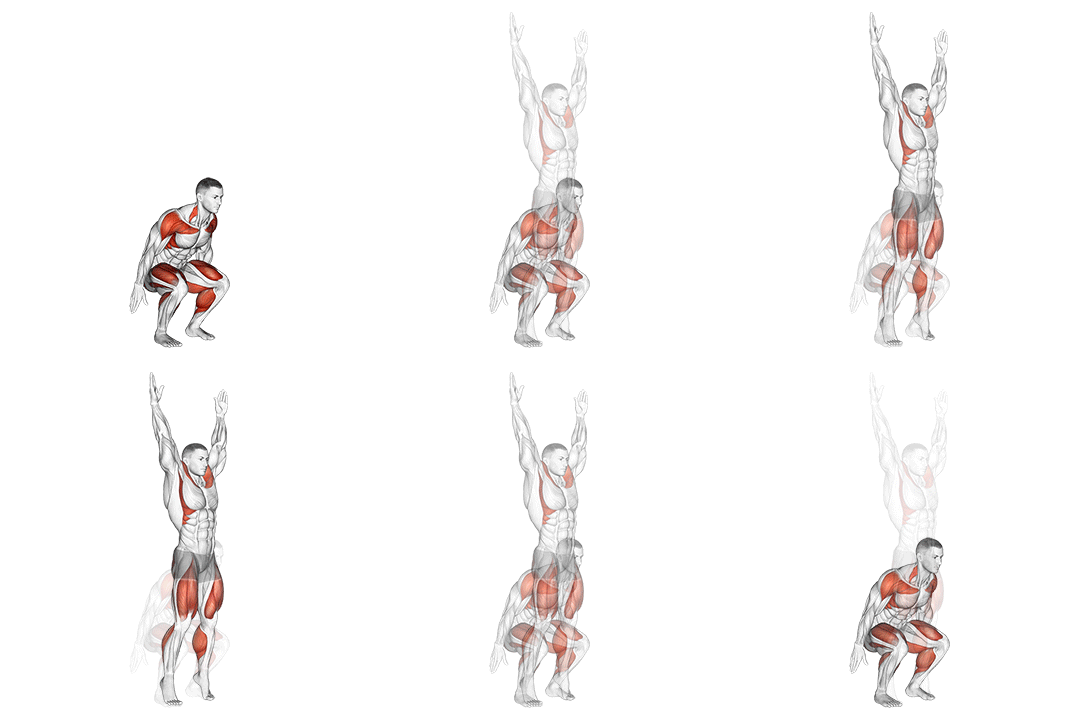
9. Squat To Overhead Reach
63% match- Quads
- Bodyweight
- Beginner
- Compound
How to perform this exercise
- Stand with your feet shoulder-width apart and toes slightly turned out.
- Lower your body down into a squat position by bending your knees and pushing your hips back.
- As you come up from the squat, extend your arms overhead, reaching towards the ceiling.
- Return to the starting position by lowering your arms and bending your knees to squat down again.
- Repeat for the desired number of repetitions.
Sets and reps: 3 sets of 8 to 12 reps, and add reps before you add load.
Why this matches
- Primary muscle: quads, not calves
- Equipment: bodyweight only, not free weights
- Body position: standing, the same as the Standing Dumbbell Calf Raise
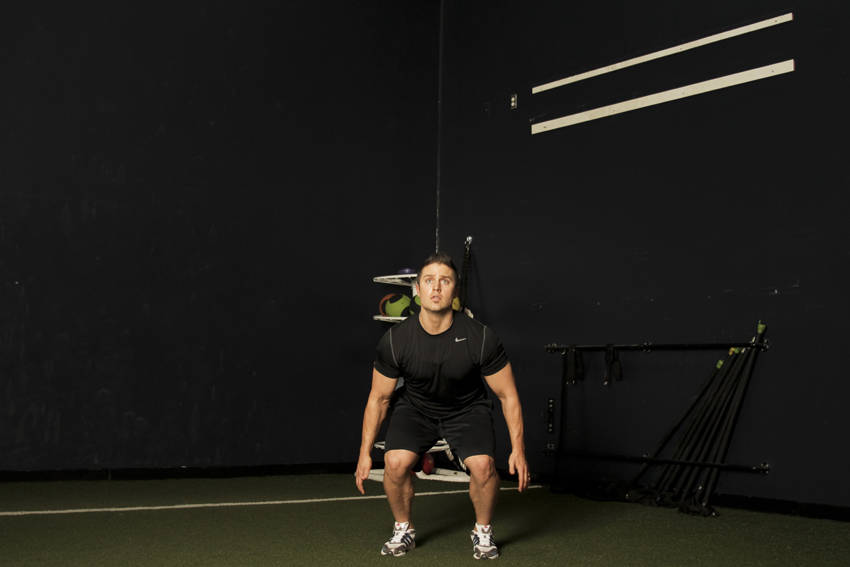
10. Rocket Jump
63% match- Quads
- Bodyweight
- Advanced
- Compound
How to perform this exercise
- Begin in a relaxed stance with your feet shoulder width apart and hold your arms close to the body.
- To initiate the move, squat down halfway and explode back up as high as possible.
- Fully extend your entire body, reaching overhead as far as possible. As you land, absorb your impact through the legs.
Sets and reps: 3 or 4 sets of 6 to 10 reps.
Why this matches
- Primary muscle: quads, not calves
- Equipment: bodyweight only, not free weights
- Body position: standing, the same as the Standing Dumbbell Calf Raise
- Balance: harder to stay steady on than the Standing Dumbbell Calf Raise
Why You Might Need a Standing Dumbbell Calf Raise Alternative
Most people reach for a swap here because they do not have a raised board to stretch their heels off, because every dumbbell in the gym is taken, or because they train calves at home with a resistance band and nothing else. The Standing Dumbbell Calf Raise needs that raised platform to get the ankle stretch that makes it work, and a flat floor cannot give you the same stretch. Every swap here is still a standing calf raise for the same calves; what changes is what you stand on or what you hold. Some put you on a single dumbbell instead of a board, others load a barbell, a band, a lever machine or a sled, and one has you stand on a barbell lying on the floor.
Find Alternatives for Any Exercise
Search the exercise database and filter the ranked substitutes by the equipment you own.
Similarity scores compare exercise metadata such as movement pattern, muscles, equipment and body position. They are not a safety rating or a check that you own the equipment. Learn about our methodology